

P0021 on 2009 Lincoln MKS 3.7L: Causes and Fixes for Over-Advanced Camshaft Timing
On a 2009 Lincoln MKS with the 3.7L V6, code P0021 is almost always caused by low/dirty engine oil or a faulty Bank 2 intake VCT solenoid. An oil change is the first step. If the code persists, replacing the VCT solenoid on the radiator-side of the engine is the most common fix, with the part costing around $40-$90. Be aware that this code can also be an early symptom of a failing internal water pump leaking coolant into the oil.
- P0021 on the 2009 MKS 3.7L means the intake camshaft on the front (radiator side) bank is too far advanced.
- Before buying any parts, check your engine oil. Low, old, or incorrect oil is the number one cause of this code.
- The most common failed part is the Bank 2 intake VCT solenoid, which often gets stuck from oil debris.
- A critical, underlying issue on this specific engine can be a failing internal water pump, which leaks coolant into the oil and can cause this code as an early symptom of major engine trouble.
What's Unique About the 2009-2009 Lincoln MKS
The 3.7L Cyclone V6 in the Lincoln MKS is known for its Variable Camshaft Timing (VCT) system being highly sensitive to oil quality and level. Ford/Lincoln has issued multiple Technical Service Bulletins (TSBs) acknowledging that small debris or sludge in the oil can cause the VCT solenoids to stick, directly leading to codes like P0021. A critical issue unique to the transverse 3.7L engine is the internal, timing-chain-driven water pump; its seal failure can contaminate the oil with coolant, causing VCT system malfunctions and potentially catastrophic engine damage. This design was used for packaging reasons in front-wheel and all-wheel drive vehicles.
Symptoms You May Notice
- Check Engine Light illuminated
- Rough or unstable idle
- Poor acceleration and loss of power
- Reduced fuel economy
- Engine hesitation or stalling, especially at stops
- Rattling noise from the engine on startup
- Vehicle may enter 'limp mode' with reduced power
- Replacing the Camshaft Position Sensor. The sensor is usually just accurately reporting the timing problem created by a different component (like the VCT solenoid or low oil pressure). The code itself does not typically indicate a sensor failure.
Most Likely Causes
- Low, Dirty, or Incorrect Viscosity Engine Oil 🔴 High Probability The VCT system in the Cyclone V6 is hydraulically operated and extremely sensitive to oil pressure and cleanliness. TSBs from Ford/Lincoln confirm that oil debris is a primary cause of VCT solenoid issues. Long idle times can accelerate oil degradation and contribute to this problem.
How to confirm: Check the oil level on the dipstick. Inspect the oil's color and consistency. If it is low, dark, gritty, or has a milky/frothy appearance (indicating coolant contamination), the oil is the problem.
Typical fix: Perform an engine oil and filter change using the manufacturer-specified oil viscosity (SAE 5W-20 for the 2009 MKS 3.7L). This simple step resolves the code in many cases.
Est. part cost: $30-$70 - Sticking or Failed VCT Solenoid (Bank 2 Intake) 🔴 High Probability This is a well-documented failure item across the Ford/Lincoln lineup with this engine family, cited in multiple TSBs as a common cause for VCT codes. The solenoids get clogged with small debris from the oil, causing them to stick.
How to confirm: After an oil change, if P0021 returns, the solenoid is the next suspect. A common diagnostic technique is to swap the Bank 2 intake solenoid with the Bank 1 intake solenoid. If the code changes to P0011, the solenoid is confirmed faulty. Additionally, TSB SSM 50067 suggests using a scan tool to cycle the solenoid 10 times to try and clear debris before replacement.
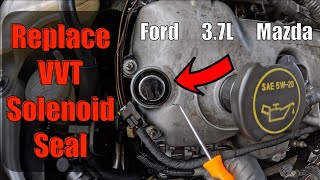
Typical fix: Replace the Bank 2 (front/radiator side) intake VCT solenoid. It is recommended to also replace the valve cover gasket and solenoid seal during this repair to 🎬 See this walkthrough on replacing the VCT solenoid seal prevent leaks.
Est. part cost: $40-$90
Rare But Worth Checking
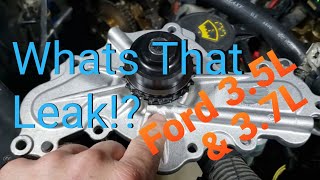
- Failed Internal Water Pump: This is a critical and known failure point for the transverse 3.7L Cyclone engine. The pump is driven by the timing chain, and when 🎬 Watch: How to spot signs of a failing internal water pump its seal fails, it leaks coolant directly into the engine oil. This contaminated oil (often looking milky or like a milkshake) quickly damages VCT components and can lead to catastrophic engine failure if not addressed immediately. Repair costs reported by owners are typically in the $1,800-$2,400 range.
- Worn Timing Chain or Failed Cam Phaser: While less common than a solenoid failure, a stretched timing chain or a mechanically failed camshaft phaser (stuck in the advanced position) can also cause P0021. This is usually accompanied by a persistent rattling noise from the engine, especially on cold starts. However, a sticky VCT solenoid should be ruled out first as it can sometimes cause similar noises.
Diagnosis Steps
- Check the engine oil level and condition. If it's low, dirty, or the wrong viscosity, perform an oil and filter change with SAE 5W-20 oil, clear the code, and see if it returns.
- If the oil is milky or frothy, stop immediately. This indicates coolant contamination, likely from a failed internal water pump, which requires professional repair.
- If the oil is fine and the code returns, inspect the wiring and connector for the Bank 2 (front, radiator side) intake VCT solenoid for damage or corrosion.
- If you have an advanced scan tool, follow the procedure in TSB SSM 50067: use the tool's functions to command the Bank 2 intake VCT solenoid to cycle on and off 10 times to dislodge potential debris. Clear codes and re-test.
- To definitively confirm a faulty solenoid, swap the Bank 2 intake VCT solenoid with the Bank 1 intake VCT solenoid (rear, firewall side). Clear the codes and drive the vehicle.
- If the code changes to P0011 (Bank 1 Over-Advanced), the solenoid you moved is faulty and must be replaced.
- If the code P0021 returns after the swap, the problem is not the solenoid. The issue is likely mechanical, pointing to a faulty camshaft phaser or a timing chain problem, which requires professional diagnosis.
Parts You'll Likely Need
- Variable Camshaft Timing (VCT) Solenoid
(OEM #AT4Z-6M280-B (may be superseded by AT4Z-6M280-A))— This is the most common part to fail for this code, typically by sticking due to debris in the engine oil. Part number AT4Z-6M280-B is widely listed, with some applications now using AT4Z-6M280-A.
Trusted brands: Motorcraft, Dorman
OEM price range: $60-$100
Aftermarket price range: $40-$80 - Valve Cover Gasket Set
(OEM #BR3Z-6584-C)— The VCT solenoid is located under the valve cover, so the gasket must be replaced when accessing the solenoid to prevent oil leaks.
Trusted brands: Motorcraft, Fel-Pro, Mahle
OEM price range: $25-$50
Aftermarket price range: $15-$35
Related Codes That Often Appear With This One
- P0011 — This is the equivalent code for Bank 1. If both P0011 and P0021 are present, it strongly points to a systemic issue like very low or dirty oil affecting the entire engine. It will also appear if you swap a faulty Bank 2 solenoid to Bank 1 for diagnosis.
- P0018 — This is a crankshaft-camshaft correlation code for Bank 2. Its presence with P0021 can indicate a more significant mechanical timing issue, such as a stretched timing chain. However, Ford TSB 16-0038 specifically advises that this code combination often points directly to a faulty Bank 2 intake VCT solenoid.
- P0022 — This is the 'over-retarded' code for the same camshaft (Bank 2 Intake). Seeing both P0021 and P0022 intermittently can point to a VCT solenoid that is sticking erratically, a wiring issue, or a phaser that is not responding correctly.
Technical Service Bulletins (TSBs) & Recalls
- SSM 50067: Notes that P0021 can be caused by small debris causing the VCT solenoid to stick. Crucially, it advises technicians to use a scan tool to cycle the affected VCT solenoid 10 times (Pinpoint Test HK12) to attempt to clear debris before replacing the component.
- SSM 47170: An earlier TSB with similar guidance to SSM 50067, highlighting that this is a long-standing known issue and recommending an oil change and diagnosis before part replacement.
- TSB 16-0038: Advises that when P0021 is present with P0018, the most likely cause is a faulty Bank 2 intake VCT solenoid, which can prevent misdiagnosis of a larger timing chain issue.
Platform-Specific Known Issues
- The 3.7L Cyclone V6 in this vehicle features an internal water pump driven by the timing chain. A known and critical failure of this pump's seal can cause coolant to mix with the engine oil, leading to sludging, VCT system failure (triggering P0021), and eventual catastrophic engine damage if not caught early.
Mechanic-Grade Diagnostic Values
- VCT Solenoid Internal Resistance — expected: 6.9 to 7.9 Ohms at 68°F (20°C). A broader acceptable range is 5.0 to 14.0 Ohms.. Failure: A reading of 0 ohms (short), OL/infinite ohms (open), or a value outside the specified range indicates a faulty solenoid coil.
- VCT Solenoid Connector Voltage (Key On, Engine Off) — expected: Battery voltage (approx. 12V, should be greater than 10.5V) on the power supply pin.. Failure: Low or no voltage points to a wiring issue, a blown fuse, or a problem with the PCM power relay.
- Engine Oil Pressure at Hot Idle — expected: Minimum of 15-25 PSI.. Failure: Pressure below 15 PSI at operating temperature indicates a systemic oil delivery problem (e.g., worn oil pump, clogged pickup tube, or internal water pump failure causing oil dilution) that will prevent the VCT system from functioning correctly.
Scan Tool Commands That Help
- Ford IDS (or equivalent like FORScan): VCT Solenoid On/Off Cycle Test (Pinpoint Test HK12) — This is a specific diagnostic function recommended by Ford in TSBs like SSM 50067. It should be used after an oil change but before replacing the VCT solenoid. The command rapidly cycles the solenoid 10 times to dislodge small debris that may be causing it to stick, which can sometimes resolve the code without part replacement.
Wiring & Ground Locations
- VCT Solenoid Connector — On the VCT solenoid itself, which is located under the Bank 2 (front/radiator side) valve cover. It is a 2-pin connector.. This connector provides power and the control signal from the PCM. Check for corrosion, oil saturation, or damage. One pin should have battery voltage with key-on, and the other is the ground-side control from the PCM.
- G101 — Located at the left front of the engine compartment.. This is a primary chassis and engine ground. A loose or corroded connection here can cause a variety of intermittent electrical issues for engine management sensors and actuators, including the VCT system.
- G102 — Located at the right rear of the engine compartment.. Another primary engine-area ground. Poor grounding can lead to incorrect sensor readings and improper actuator function, potentially triggering false timing codes.
- Battery Junction Box (BJB) — Located on the left side of the engine compartment.. This box contains the main fuses and relays for the engine management system, including the PCM power relay which supplies voltage to the VCT solenoids. A fault within the BJB could interrupt power to the circuit.
Real Owner Repair Stories
- S197 Mustang Forum user (Ford Mustang with 3.7L V6 (same engine family), modified with aftermarket camshafts and an engine tune.) — Check Engine Light with code P0021 after installing new camshafts.
❌ Tried (didn't work) Initial diagnosis pointed towards standard causes like sensors or solenoids.
✅ What actually fixed it The aftermarket engine tune was incorrect. The tuner had forgotten the engine was fitted with camshaft phaser limiters (required for the previous aggressive cams but not the new ones). Updating the tune to reflect the correct hardware immediately resolved the P0021 code. - MyG37 Forum user 'm3clubracer' (Infiniti G37 (different vehicle, but demonstrates a universal VVT diagnostic principle)) — P0021 (cam timing) and P0524 (low oil pressure) codes, limp mode.
❌ Tried (didn't work) Initially focused only on the timing components (solenoids, sensors).
✅ What actually fixed it A mechanical oil pressure test revealed the true root cause. The pressure was 5.5 PSI at idle, far below the 14+ PSI spec. The cause was failed internal oil gallery gaskets, a known issue on that engine. Replacing the gaskets restored oil pressure to 26.5 PSI and resolved the conditions causing the codes. This highlights that P0021 can be a symptom of a systemic pressure loss, not just a faulty solenoid.
OEM Part Supersession History
AT4Z-6M280-B→AT4Z-6M280-A— Part revision and update. The -A revision is listed as the current service part in many catalogs for 2011+ models, while the -B part is also widely listed.
Heads up: The parts are physically interchangeable. However, TSB 16-0038 from Ford lists different part numbers for intake vs. exhaust solenoids on some applications, making it critical to verify the correct part for the specific position (Bank 2 Intake) using the vehicle's VIN at a dealership.
Diagnostic Flowchart
Other Known Issues on This Vehicle
Issues unrelated to this code that are worth knowing about as an owner of this generation:
- Internal Water Pump Failure 🔴 High — A widely documented failure, often occurring after 80,000-150,000 miles. When the seal fails, coolant leaks into the oil pan, leading to sludge and potential catastrophic engine failure.
- Transmission Performance and Reliability 🟠 Medium — Owners frequently complain about slow or harsh shifting, particularly when putting the car in reverse. This can be caused by low fluid, failing shift solenoids, or speed sensors.
- PCM Failure From Bad Ignition Coils 🟠 Medium — On 2009-2010 models, a failed ignition coil can short and send a voltage spike to the Powertrain Control Module (PCM), damaging the driver circuit for that coil. This typically requires repairing or replacing the PCM along with all coils and plugs.
- Poor Rear Visibility 🟡 Low — A common design complaint is that the high rear deck and thick C-pillars create significant blind spots, making reversing and parking difficult.
Used vs. New Parts: Buying Guide for This Vehicle
When a used part is the smart pick: For this repair, using used parts is generally not recommended for the core components. A used valve cover is a perfectly acceptable choice if the original is damaged during removal. However, the electronic and hydraulic components that cause the fault should be purchased new.
Donor-vehicle mileage cap: roughly under 80000 miles for the part to have meaningful remaining life.
What to inspect on the donor part:
- For a valve cover: Ensure there are no cracks, especially around bolt holes, and that the gasket mating surface is not warped or deeply scored.
- For a VCT solenoid: Avoid used. If absolutely necessary, inspect the mesh screens for any tears or metallic debris. A clean screen does not guarantee function, as it can be internally stuck.
OEM-only on this vehicle (don't cheap out):
- Internal Water Pump: Due to the catastrophic failure mode and high labor cost, only a new OEM Motorcraft pump should be used.
- Timing Chain/Phasers: Given the high labor cost, using used timing components is extremely risky and not recommended. If not using OEM, use a high-quality OE-Fix kit from a reputable brand.
Aftermarket brands forum-validated for this vehicle:
- VCT Solenoid: Dorman, NTK, Walker Products are commonly available aftermarket options with generally positive reviews.
- Valve Cover Gasket: Fel-Pro, Mahle are reputable brands for sealing components.
Brands owners have reported issues with on this vehicle:
- Unbranded, no-name VCT solenoids from online marketplaces should be avoided, as their internal calibration and durability are unverified and can lead to repeat failures.
Real Owner Stories
Aggregated from forums and TSBs cited above. Mileages and costs reflect what owners reported in those sources.
2008 Ford Edge 3.5L
Symptoms: Vehicle experiencing a combination of codes P0018, P0021, and P0022.
What fixed it: The owner was advised that this combination strongly points to a VCT solenoid issue on Bank 2, which is a primary component to check after verifying oil condition.
Source hint: Ford Edge Forum
2009 Mazda CX-9 3.7L — ~120000 miles
Symptoms: Internal water pump failure leading to coolant-contaminated oil and VCT system codes.
What fixed it: Water pump replacement.
Cost: $3000-$3000
Source hint: BobIsTheOilGuy.com - Thread 'Ford 3.5L / 3.7L water pump failures?'
2011 Lincoln MKX 3.7L
Symptoms: Discovery of oil in the coolant due to internal water pump failure.
What fixed it: Replacement of the internal water pump and timing components.
Cost: $1800-$2400
Source hint: Reddit r/Ford - Thread '3.7 V6 internal water pump. Worth it to fix?'
Related OBD-II Codes
Frequently Asked Questions
Does TSB SSM 50067 apply to my 2009 Lincoln MKS 3.7L if I have a P0021 code?
I have P0021 and P0018 together; does this mean my timing chain is stretched?
What oil should I use for my 2009 MKS 3.7L to prevent VCT issues?
My oil looks milky and I have a P0021 code. What does this mean for my Lincoln?
Can I just clean the VCT solenoid instead of replacing it?
Is there a way to confirm the solenoid is bad before I buy a new one?
Helpful Videos
Used OEM Parts in Stock
New Aftermarket Parts Available


The information in this article is provided for general reference and educational purposes only. Vehicle specifications, procedures, and part compatibility can vary by production date, trim level, and region. Always consult your vehicle's factory service manual and verify part numbers before purchasing or performing repairs. Safety-critical components such as airbags, seat belts, and braking systems should be installed by a qualified professional.
- Lincoln MKS:
- 🎬 Helpful Videos
- 🛍️ Shop This Part
- What's Unique About the 2009-2009 Lincoln MKS
- Symptoms You May Notice
- Most Likely Causes
- Rare But Worth Checking
- Diagnosis Steps
- Parts You'll Likely Need
- Related Codes That Often Appear With This One
- Technical Service Bulletins (TSBs) & Recalls
- Platform-Specific Known Issues
- Mechanic-Grade Diagnostic Values
- Scan Tool Commands That Help
- Wiring & Ground Locations
- Real Owner Repair Stories
- OEM Part Supersession History
- Diagnostic Flowchart
- Other Known Issues on This Vehicle
- Used vs. New Parts: Buying Guide for This Vehicle
- Real Owner Stories
- 2008 Ford Edge 3.5L
- 2009 Mazda CX-9 3.7L — ~120000 miles
- 2011 Lincoln MKX 3.7L
- Related OBD-II Codes
- Frequently Asked Questions
- 🎟️ Get 5% Off