

P0021 on 2013-2019 Ford Taurus 3.5L: Causes and Fixes for Over-Advanced Cam Timing
On a 2013-2019 Ford Taurus with the 3.5L V6, code P0021 is most often caused by low or dirty engine oil, or a faulty Variable Camshaft Timing (VCT) solenoid on Bank 2 (the cylinder bank near the radiator). Always check the oil first; an oil change is a common fix. If the oil is fine, the VCT solenoid is the next likely culprit, costing around $40-$90 for the part.
- Always check your engine oil level and condition first. A simple oil change with the correct 5W-30 or 5W-20 oil is the most common and cheapest fix.
- The most likely failed part is the Bank 2 (radiator side) intake VCT solenoid. You can confirm this by swapping it with the Bank 1 solenoid to see if the code follows (changes to P0011).
- This code can be an early warning for a failing internal water pump, a known issue on this engine. If the oil looks 'milky' or you are losing coolant, the vehicle needs immediate professional service to avoid engine failure.
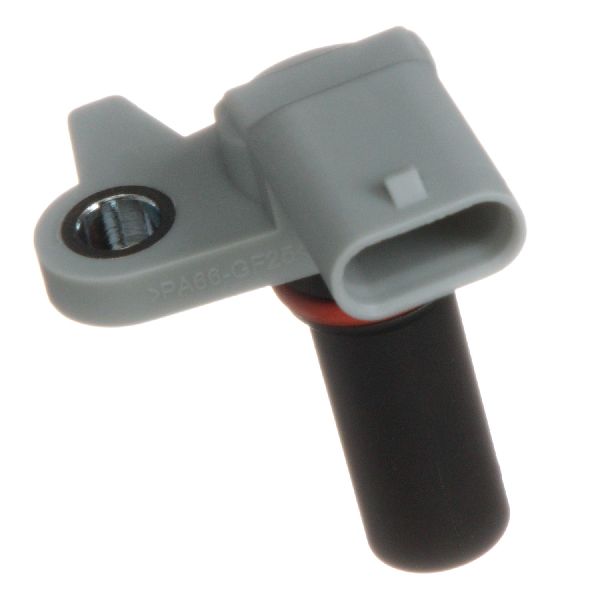
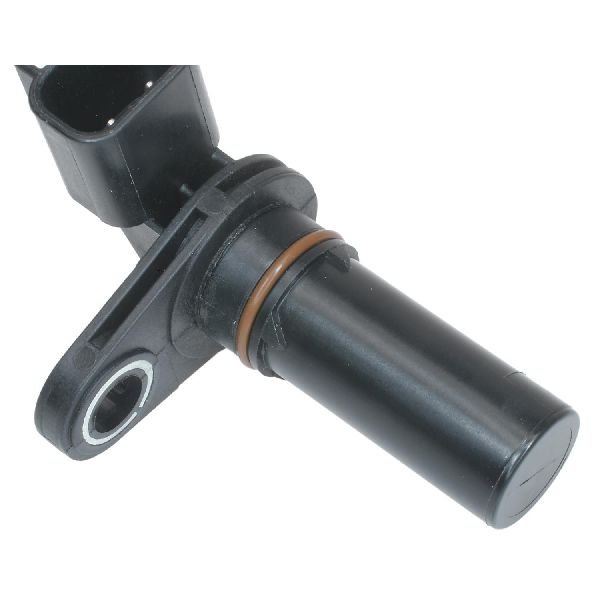
- Do not replace the camshaft position sensor; it is almost never the cause of this specific code.
What's Unique About the 2013-2019 Ford Taurus
The 3.5L Cyclone V6 engine, used in both naturally aspirated and EcoBoost forms in the Taurus, has a Variable Camshaft Timing (VCT) system that is notoriously sensitive to oil quality and level. Ford has issued multiple Technical Service Bulletins (TSBs) acknowledging that even small amounts of debris or sludge in the oil can cause the VCT solenoids to stick, leading directly to codes like P0021. Additionally, this engine family features an internal, timing-chain-driven water pump; a failure can leak coolant directly into the oil, causing widespread VCT system problems and potentially catastrophic engine damage.
Symptoms You May Notice
- Check Engine Light is on
- Rough or unstable idle
- Engine hesitation or stalling, especially when coming to a stop
- Reduced fuel economy
- Rattling or knocking noise from the engine, particularly on cold startup
- Hard starting condition
- Replacing the camshaft position sensor. The sensor is usually just accurately reporting the timing problem that is being caused by an oil issue or a faulty VCT solenoid/phaser.
- Assuming a major timing job is needed immediately. Due to the high frequency of solenoid failure, diagnostic steps like an oil change and solenoid swap/test should always be performed first.
Most Likely Causes
- Low, Dirty, or Incorrect Viscosity Engine Oil 🔴 High Probability The Ford VCT system is hydraulic and highly sensitive to oil pressure and cleanliness. Multiple TSBs and countless owner forums confirm that oil debris is a primary cause of VCT solenoid issues on this engine.
How to confirm: Check the oil dipstick for proper level. Inspect the oil's color and consistency; if it is dark black, gritty, or appears 'milky' (indicating coolant contamination), it must be changed. An engine flush may be beneficial if sludge is suspected.
Typical fix: Perform an engine oil and filter change using the manufacturer-specified oil (typically SAE 5W-30 or 5W-20, check owner's manual) and a quality filter. Clear the codes and test drive.
Est. part cost: $40-$80 - Sticking or Failed VCT Solenoid (Oil Control Valve) 🔴 High Probability This is the most common component failure for P0021. As noted in Ford TSBs SSM 50067 and 47170, these solenoids are prone to sticking from small particles in the engine oil.
How to confirm: After confirming the oil is good, the most definitive DIY test is to swap the Bank 2 (radiator side) intake VCT solenoid with the Bank 1 (firewall side) intake solenoid. If the code changes to P0011 (the Bank 1 equivalent), the solenoid is faulty. A more advanced method uses a scan tool to actively cycle the solenoid to see if it frees up, per TSB SSM 50067.
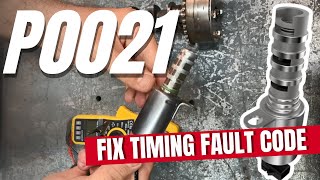
Typical fix: Replace the Bank 2 intake VCT solenoid. This requires removing the valve cover for access. 🎬 See this walkthrough on how to replace the VCT solenoid. Many technicians and experienced owners recommend replacing both solenoids (intake and exhaust) on the bank at the same time, or even all four, as they are wear items exposed to the same conditions.
Est. part cost: $40-$90
Rare But Worth Checking
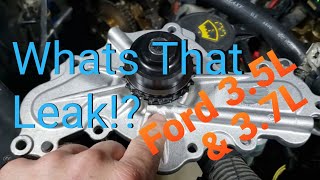
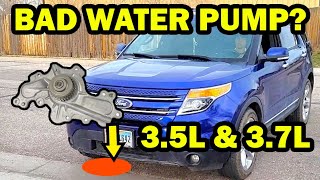
- Failing Internal Water Pump: This is a critical failure point on the 3.5L Cyclone V6. The water pump is inside the timing cover and driven by the timing chain. A failed seal can leak coolant directly into the engine oil, causing oil contamination that triggers VCT codes like P0021 and can quickly lead to major engine damage. A key diagnostic clue is to inspect the weep hole located on the engine block just above and behind the alternator; any sign of dried coolant 'crusties' indicates the internal seals are failing.
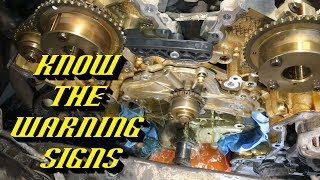
- Stretched Timing Chain or Failed Cam Phaser: While less common than a solenoid failure, a stretched timing chain or a mechanically failed cam phaser can cause this code. This is a more complex and expensive repair, often accompanied by a rattling noise, especially on cold starts. The presence of codes P0018 or P0016 alongside P0021 increases the likelihood of a base mechanical timing issue.
Diagnosis Steps
- Check Engine Oil: Verify the oil level is correct and the oil is clean. If it's low, dirty, or the wrong viscosity, perform an oil and filter change, clear the code, and see if it returns. If oil appears milky, suspect internal water pump failure and stop.
- Scan Tool Analysis: Use a scan tool (like FORScan for DIY) to monitor desired vs. actual camshaft position. Look for PIDs like VCT_INT_CMD2 (commanded) and VCT_INT_ACT2 (actual). A large, persistent difference under various RPMs points to a problem.
- Cycle The Solenoid (TSB Step): Before replacement, use a bidirectional scan tool to access the PCM's diagnostic routines. Per Ford TSB SSM 50067, use the VCT solenoid test (often found under Pinpoint Test HK11) to cycle the affected solenoid 10 times to attempt to clear debris.
- Swap VCT Solenoids: If the oil is good, swap the Bank 2 (radiator side) intake VCT solenoid with the Bank 1 (firewall side) intake solenoid. Clear the codes and drive the vehicle. If the code changes to P0011, the solenoid is faulty and must be replaced.
- Inspect Wiring: If the code remains P0021 after the swap, inspect the wiring harness and connector for the Bank 2 VCT solenoid for any damage, corrosion, or loose connections. A forum user once fixed a similar issue by finding they had reversed the intake/exhaust connectors after a repair.
- Mechanical Inspection: If all of the above steps fail, the problem is likely mechanical. Check the water pump weep hole for coolant leaks. Further diagnosis points towards a faulty camshaft phaser, a stretched timing chain, or an oil pressure problem, which typically requires professional diagnosis and teardown.
Parts You'll Likely Need
- Variable Camshaft Timing (VCT) Solenoid
(OEM #AT4Z-6M280-B (supercedes AT4Z-6M280-A))— This is the most common part to fail for code P0021 on this engine, typically by sticking due to oil debris. The -B version is a revised part.
Trusted brands: Motorcraft, Dorman
OEM price range: $50-$90
Aftermarket price range: $30-$60 - Engine Oil Filter
(OEM #FL-500S)— An oil and filter change is the first and most crucial step in diagnosing and fixing VCT-related codes.
Trusted brands: Motorcraft, Wix, Mobil 1
OEM price range: $10-$15
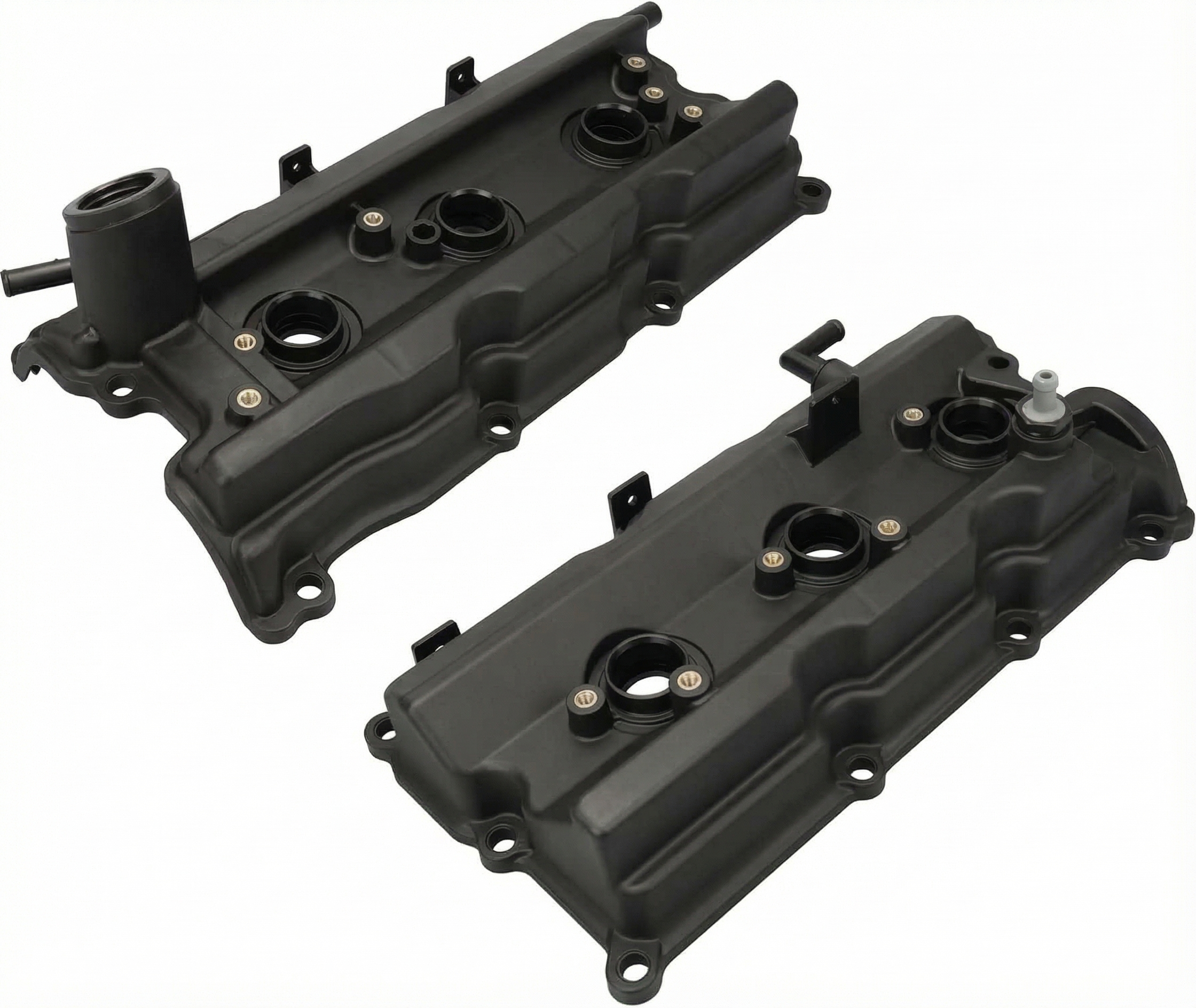
Aftermarket price range: $5-$12 - Valve Cover Gasket Kit — The valve cover must be removed to access the VCT solenoids on the 3.5L V6. The gasket is a one-time use item and must be replaced to prevent oil leaks.
Trusted brands: Fel-Pro, Mahle
OEM price range: $40-$70
Aftermarket price range: $25-$50
Related Codes That Often Appear With This One
- P0011 — The equivalent code for Bank 1. Seeing both P0011 and P0021 together strongly suggests a systemic problem like very low oil level, low oil pressure, or severe oil contamination affecting both banks.
- P0018 — A crankshaft/camshaft correlation error for Bank 2. Ford TSB 16-0038 notes that when P0018 and P0021 appear together on low-mileage 3.5L GTDI engines, the recommended fix is to replace the Bank 2 intake VCT solenoid.
Technical Service Bulletins (TSBs) & Recalls
- SSM 50067 / SSM 47170: For 2015-2021 vehicles, this TSB notes that P0021 (and many other VCT codes) can be caused by small debris causing the VCT solenoid to stick. It advises against immediate component replacement, instead recommending a technician first use a scan tool to cycle the affected solenoid 10 times to attempt to clear the debris.
- TSB 16-0038: For some 2016 3.5L GTDI engines with low mileage, this bulletin advises replacing the Bank 2 intake VCT solenoid if codes P0018 and P0021 are present together, suggesting the solenoid is the likely cause over a more severe mechanical timing fault.
Platform-Specific Known Issues
- Internal Water Pump Failure: The 3.5L Cyclone V6 features a timing-chain-driven water pump located inside the timing cover. A seal failure can cause coolant to leak directly into the engine oil, which can cause VCT system faults and lead to catastrophic engine failure if not addressed. Check for coolant residue at the weep hole behind the alternator.
- VCT System Sensitivity: This engine's VCT system is highly dependent on oil pressure and cleanliness. Delayed oil changes or using the incorrect oil viscosity are very common triggers for code P0021.
Mechanic-Grade Diagnostic Values
- VCT Solenoid Internal Resistance — expected: 6.9 to 7.9 Ohms. A general acceptable range is often cited as 5-14 Ohms.. Failure: A reading of OL (Open Loop/infinite resistance) or near zero ohms indicates a broken or shorted internal coil, respectively.
- VCT Solenoid Connector Voltage (Key On, Engine Off) — expected: Approximately 12V (battery voltage) on one pin (power supply).. Failure: No voltage on the power supply pin points to a wiring issue, a blown fuse (e.g., Fuse F16 in the underhood fuse box), or a PCM power relay fault.
- FORScan Live Data: Camshaft Position Variance — expected: PIDs VCT_INT_ACT2 (Bank 2 Intake Actual) and VCT_INT_CMD2 (Bank 2 Intake Commanded) should track each other closely. The error PID (e.g., VCT_INT_ERR2) should be near 0 degrees at idle and under stable load.. Failure: A large and persistent deviation between commanded and actual positions, especially an error greater than 5-10 degrees, indicates a fault. A large negative error on VCT_INT_ERR2 (e.g., -45 degrees) can indicate an over-advanced condition.
- Engine Oil Pressure (at operating temperature) — expected: Minimum of 20 psi at 1500 RPM for the 3.5L EcoBoost.. Failure: Pressure below this specification will cause the VCT system to malfunction and set timing codes, as the phasers are hydraulically actuated.
Scan Tool Commands That Help
- Ford IDS / FORScan: VCT Solenoid On/Off Test (Bidirectional Control) — This is a key diagnostic step. While the engine is idling, you can command the Bank 2 intake solenoid on. A healthy solenoid and clear oil passages will cause the engine to stumble or run rough. If there is no change in engine operation, it confirms a stuck solenoid, a wiring/connector issue, or a blocked oil passage.
- Ford IDS / FORScan: Pinpoint Test HK11 / HK12: VCT Solenoid Cycle Test — As recommended by Ford TSBs (SSM 50067), this function should be used after an oil change but before replacing parts. It rapidly cycles the VCT solenoid up to 10 times to dislodge small debris that may be causing it to stick. This can sometimes resolve the code without any parts replacement.
- Ford IDS / FORScan: Clear/Reset Keep Alive Memory (KAM) — This should be performed after replacing any VCT system components, such as solenoids or phasers. It forces the PCM to relearn the new components' operational characteristics and timing strategies from a baseline state.
Wiring & Ground Locations
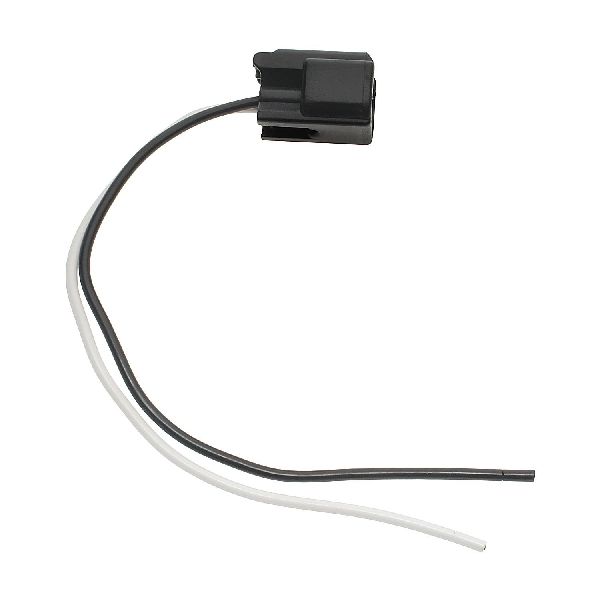
- VCT Solenoid Connector (Bank 2) — On the front (radiator side) valve cover. The intake solenoid has a black connector, while the exhaust has a white/gray connector.. This is the primary point for electrical testing (voltage and resistance). It's crucial to ensure it is not damaged, corroded, or loose. The color-coding prevents accidentally swapping the intake and exhaust connectors during a repair.
- G104 / G105 — Typically located on the right-side (passenger) frame rail area, sometimes near or behind the battery.. These are major chassis and engine ground points. A corroded or loose ground here can cause a variety of electrical issues, including erratic sensor readings and incorrect solenoid operation, potentially leading to VCT codes.
Real Owner Repair Stories
- YouTube channel 'Truck Lab' (2019 Ford F-150 3.5L EcoBoost) — Check Engine Light, occasional power loss, and a cold start rattle.
❌ Tried (didn't work) Initial thought was a cam phaser failure due to the cold start rattle.
✅ What actually fixed it Diagnostics using FORScan showed the Bank 2 intake cam position was lazy and had a large error. The final fix was replacing the single faulty Bank 2 intake VCT solenoid. This not only cleared the P0018 and P0021 codes but also eliminated the cold start rattle, which is often misdiagnosed as requiring a full phaser replacement.
OEM Part Supersession History
AT4Z-6M280-A→AT4Z-6M280-B, AT4Z-6M280-C— Part revision and improvement. Later versions may have updated internal components or materials to improve durability and resistance to sticking.
Heads up: The -B and -C revisions are direct replacements for the -A part and are fully compatible. It is always recommended to use the latest available revision.
Model Year Variations Within This Range
- 2013-2019: The 2013 model year marked a significant refresh for the Taurus. For the 3.5L V6, this is when Ford added Twin Independent Variable Camshaft Timing (Ti-VCT), which increased horsepower from 263 to 288. Vehicles from 2013 onward have four VCT solenoids (intake and exhaust on both banks), making VCT-related codes like P0021 applicable.
Diagnostic Flowchart
Real Owner Stories
Aggregated from forums and TSBs cited above. Mileages and costs reflect what owners reported in those sources.
Ford Taurus SHO (3.5L EcoBoost)
Symptoms: Check engine light with codes P0021 and P052A. Owner noted the car 'runs poor' and there was a noise of concern. Another user suggested the noise sounded like a loose chain hitting the timing cover.
What fixed it: The dealership diagnosed a failed front turbo which caused the timing chain to stretch. The reported solution was a complete engine replacement.
Cost: $3875
Source hint: shoforum.com - 4 codes. How screwed am I?
2018 Ford F-150 (3.5L EcoBoost)
Symptoms: Experienced P0018 and P0021 after having cam phaser work done.
What fixed it: Diagnosed as a deeper mechanical timing problem rather than a simple solenoid failure, underscoring the importance of diagnosing all related DTCs first.
Source hint: Ford F150 Forum: 2018 3.5 EB issues, codes P0018 and P0021
Related OBD-II Codes
Frequently Asked Questions
Does TSB SSM 50067 apply to my 2015-2019 Ford Taurus for code P0021?
I have a 2016 Taurus 3.5L EcoBoost with both P0021 and P0018 codes. What does this mean?
Why is the internal water pump a major concern when diagnosing P0021 on the 3.5L Cyclone V6?
How can I test if the Bank 2 VCT solenoid is the actual cause of P0021 on my Taurus?
Can dirty oil really cause a P0021 code on the 3.5L V6?
Helpful Videos
Used OEM Parts in Stock
New Aftermarket Parts Available


The information in this article is provided for general reference and educational purposes only. Vehicle specifications, procedures, and part compatibility can vary by production date, trim level, and region. Always consult your vehicle's factory service manual and verify part numbers before purchasing or performing repairs. Safety-critical components such as airbags, seat belts, and braking systems should be installed by a qualified professional.
- Ford Taurus:
- 🎬 Helpful Videos
- 🛍️ Shop This Part
- What's Unique About the 2013-2019 Ford Taurus
- Symptoms You May Notice
- Most Likely Causes
- Rare But Worth Checking
- Diagnosis Steps
- Parts You'll Likely Need
- Related Codes That Often Appear With This One
- Technical Service Bulletins (TSBs) & Recalls
- Platform-Specific Known Issues
- Mechanic-Grade Diagnostic Values
- Scan Tool Commands That Help
- Wiring & Ground Locations
- Real Owner Repair Stories
- OEM Part Supersession History
- Model Year Variations Within This Range
- Diagnostic Flowchart
- Real Owner Stories
- Ford Taurus SHO (3.5L EcoBoost)
- 2018 Ford F-150 (3.5L EcoBoost)
- Related OBD-II Codes
- Frequently Asked Questions
- 🎟️ Get 5% Off