

P0021 on 2015-2021 Ford Edge V6: 'A' Camshaft Position Timing Over-Advanced Causes and Fixes
On a 2015-2021 Ford Edge with a V6 engine, code P0021 is most often caused by low/dirty engine oil or a faulty Variable Camshaft Timing (VCT) solenoid on Bank 2 (the cylinder bank closer to the radiator). An oil change using the correct Ford-specified oil and filter is the first step. If that fails, replacing the Bank 2 intake VCT solenoid is the next most common fix, with the part costing between $25 and $100.
- P0021 on a V6 Ford Edge points to the intake camshaft on Bank 2 (front of the engine bay) being too far advanced.
- Before buying any parts, check your engine oil. Low, old, or incorrect oil is the most common cause.
- The next most likely culprit is a faulty Bank 2 intake VCT solenoid, which is a relatively inexpensive and accessible part to replace.
- If you hear engine rattling, the problem could be more severe, like a bad cam phaser or timing chain, which requires professional repair.
- This code only applies to the 2.7L and 3.5L V6 engines in the 2015-2021 Edge.
What's Unique About the 2015-2021 Ford EDGE
For the second-generation Ford Edge, this code specifically applies to the 2.7L EcoBoost and 3.5L V6 engines, as the 2.0L 4-cylinder only has one bank (Bank 1). Ford's VCT systems are known to be highly sensitive to oil condition. Ford has issued multiple Technical Service Bulletins (TSBs) indicating that small debris in the oil can cause the VCT solenoids to stick, leading to timing codes (SSM 50067, SSM 47170). This makes performing regular oil changes with the correct Ford-specified oil (e.g., Motorcraft SAE 5W-30 Synthetic Blend meeting WSS-M2C946-A for the 3.5L) especially critical on these engines to prevent sludge and debris from clogging the narrow oil passages 🎬 Watch: A quick VVT solenoid test for Ford engines. within the solenoids and phasers.
Diagnostic Flowchart
Tap your situation to follow the diagnostic path that matches what you're seeing on this vehicle.
Symptoms You May Notice
- Check Engine Light is on
- Rough idling or stalling, especially when warm or at a stop.
- Hesitation or loss of power during acceleration
- Decreased fuel economy.
- Rattling, ticking, or knocking noise from the engine, particularly on startup or at idle
- Engine may be hard to start
- Replacing the camshaft position sensor when the actual problem is the VCT solenoid or oil quality.
- Immediately assuming a stretched timing chain without first diagnosing the much cheaper and more common VCT solenoid failure.
- Replacing the cam phaser without also replacing the timing chain, guides, and tensioners, which can lead to premature failure of the new parts.
Most Likely Causes
- Low, Dirty, or Incorrect Viscosity Engine Oil 🔴 High Probability The VCT system is entirely dependent on clean oil at the correct pressure to function. Ford TSBs (SSM 50067, 47170) repeatedly confirm that oil debris is a primary cause of sticking VCT solenoids, making this the most important and simplest first check.
How to confirm: Check the oil level on the dipstick and inspect its condition and service history. If the oil is dark, sludgy, below the minimum level, or past its recommended change interval, it is the likely cause.
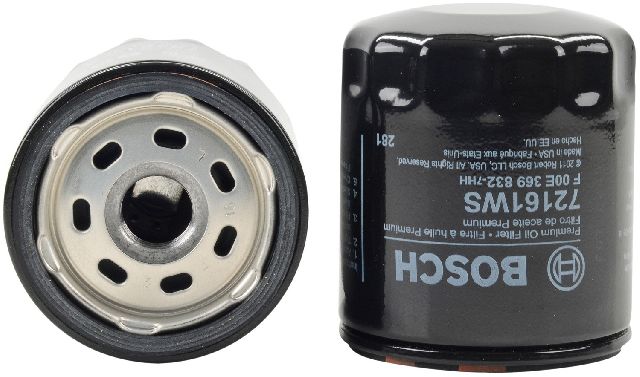
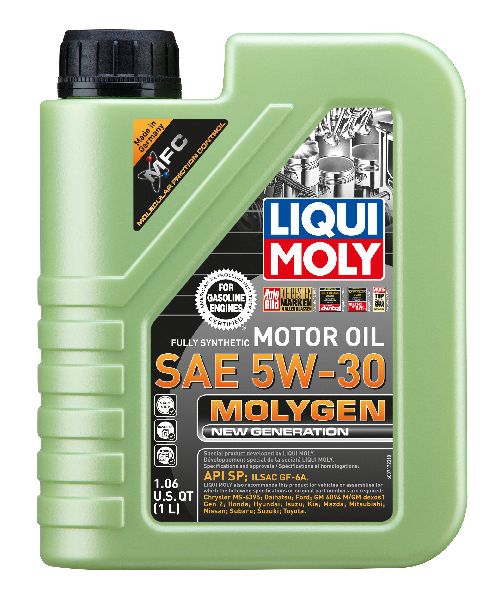
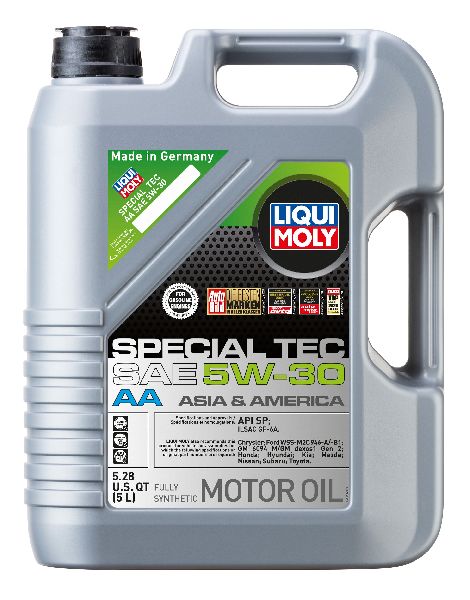
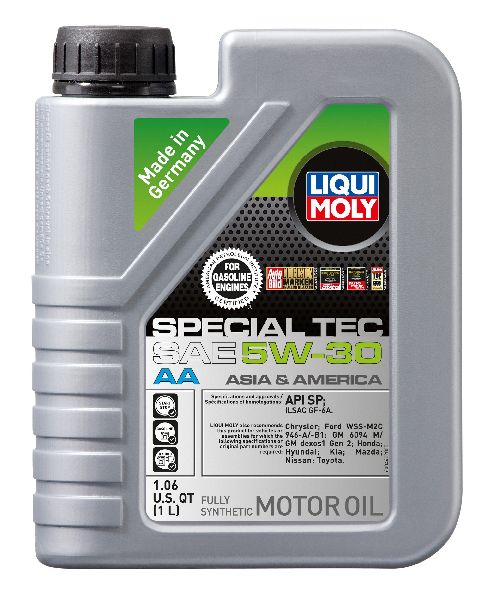
Typical fix: Perform an oil and filter change using the manufacturer-specified oil and a quality filter. For the 3.5L V6, this is typically a Motorcraft SAE 5W-30 Synthetic Blend oil meeting Ford's WSS-M2C946-A specification. Reset the code and drive to see if it returns.
Est. part cost: $40-$90 - Faulty Variable Camshaft Timing (VCT) Solenoid 🔴 High Probability As noted in Ford TSBs, these solenoids are a common failure point as they can get stuck or become weak due to debris or age, preventing proper oil flow to the cam phaser. They contain fine mesh screens that can become clogged.
How to confirm: A mechanic can use a high-level scan tool to command the VCT system and monitor the response. A common DIY method is to swap the Bank 2 intake solenoid with the Bank 1 intake solenoid. If the code changes to P0011 (the equivalent code for Bank 1), the solenoid is confirmed to be faulty. Resistance can also be tested with a multimeter, typically reading between 5-15 ohms.
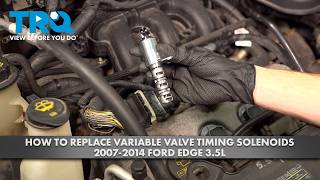
Typical fix: Replace the Bank 2 intake VCT solenoid. On the 2.7L EcoBoost, this is often possible without removing the valve cover. On the 3.5L V6, the valve cover must be removed to access the solenoid.
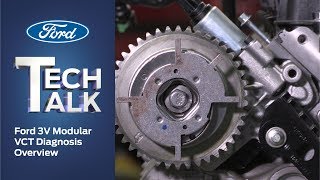
Est. part cost: $30-$110 - Failing Camshaft Phaser 🟡 Medium Probability The phaser is the mechanical gear that actually rotates the camshaft. It can fail mechanically, get clogged with sludge, or have its internal locking pin break, causing it to get stuck in an advanced position. This is a well-documented issue on Ford V6 engines.
How to confirm: This is an advanced diagnosis. If a new solenoid and fresh oil do not resolve the P0021 code, and especially if rattling noises are present, the phaser is the next likely culprit. Diagnosis requires significant engine disassembly to inspect the timing components.
Typical fix: Replace the camshaft phaser for Bank 2. This is a very labor-intensive job and it is highly recommended to replace the timing chain, tensioners, and guides at the same time. This is often referred to as a full 'timing job'.
Est. part cost: $150-$500 for the phaser, but a full timing kit can be $500-$1200+.
Rare But Worth Checking
- Stretched Timing Chain or Failed Tensioner: While often replaced with the phasers, a stretched chain or a failed hydraulic tensioner on its own can cause enough timing slack to trigger this code, even if the phaser itself is functional. This is a major repair.
- Faulty Camshaft Position Sensor: It's possible for the sensor to fail and send incorrect data to the PCM. One owner on a Reddit forum noted finding 'grey gunk' on the sensor. However, this is far less common than a mechanical or hydraulic issue within the VCT system. Often, a failing sensor will trigger its own specific codes.
- Clogged Oil Passages: In engines with a history of poor maintenance and oil sludge, the small oil passages leading to the VCT solenoid and cam phaser in the cylinder head can become blocked, starving the components of the oil pressure needed to operate.
Diagnosis Steps
- Verify the code with a reliable OBD-II scanner. Note any other codes present.
- Check Engine Oil: This is the most critical first step. Check the oil level and condition. Is it low, dark, or sludgy? When was the last oil change? If in doubt, perform an oil and filter change with the correct Ford-specified viscosity oil (e.g., SAE 5W-30 for 3.5L) and a quality filter. Clear the codes and test drive.
- Listen to the Engine: Start the engine and listen for rattling, ticking, or knocking noises. A rattle on startup that goes away can be a sign of a failing phaser. A constant noise suggests a more severe timing chain or guide issue.
- Inspect VCT Solenoid Wiring: Inspect the wiring harness and connector for the Bank 2 intake VCT solenoid for damage, corrosion, or loose connections.
- Test the VCT Solenoid: The most effective DIY method is to swap the Bank 2 intake solenoid with the Bank 1 intake solenoid. They are typically identical parts. Clear the codes and drive the vehicle. If the code returns as P0011 ('A' Camshaft Position Timing Over-Advanced Bank 1), you have confirmed the solenoid is faulty. If P0021 returns, the problem lies elsewhere.
- Advanced Scan Tool Diagnosis: A professional scan tool can command the VCT solenoids on and off while monitoring the camshaft angle PIDs (Parameter IDs) to see if the camshaft is responding as commanded. This can isolate a solenoid, phaser, or oil flow issue.
- Professional Inspection: If the above steps do not identify the problem, the issue is likely internal (cam phaser, timing chain, tensioner, guides). This requires removing the valve cover(s) and potentially the engine front/timing cover for a full inspection of the timing components. This is best left to a professional.
Parts You'll Likely Need
- Engine Variable Valve Timing (VVT) Solenoid
(OEM #3.5L V6: AT4Z-6M280-A (Bank 2 / RH Intake) | 2.7L EcoBoost: FT4Z-6M280-B)— This is the most common point of failure besides oil condition, as confirmed by multiple Ford TSBs and extensive owner reports. It gets stuck or clogged, preventing proper oil flow to the cam phaser.
Trusted brands: Motorcraft, Dorman, Standard Motor Products (SMP)
OEM price range: $50-$110
Aftermarket price range: $25-$70 - Engine Oil and Filter
(OEM #Oil Spec: WSS-M2C946-A (3.5L V6))— Clean oil of the correct viscosity is essential for the VCT system to function. Dirty or low oil is a primary cause of VCT-related fault codes.
Trusted brands: Motorcraft, Mobil 1, Castrol
OEM price range: $50-$90
Aftermarket price range: $40-$70
Related Codes That Often Appear With This One
- P0018 — This code indicates a Crankshaft/Camshaft correlation error on Bank 2. It frequently appears with P0021 when the timing deviation is significant, strongly pointing towards a jumped tooth, stretched timing chain, or a severely malfunctioning phaser.
- P0300, P0304, P0305, P0306 — These are random or specific misfire codes for Bank 2 cylinders (4, 5, and 6). Incorrect camshaft timing disrupts the air/fuel mixture and spark timing, leading to incomplete combustion and misfires on the affected bank.
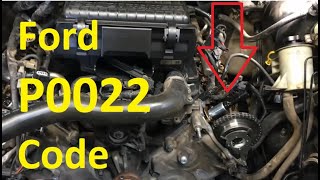
- P0022 — This code is for 'Camshaft Position Timing Over-Retarded (Bank 2)'. While the opposite of P0021, seeing both intermittently could suggest a VCT solenoid that is sticking erratically or a phaser that is moving uncontrollably.
Technical Service Bulletins (TSBs) & Recalls
- SSM 54366: A general bulletin listing P0021 among many other VCT codes, directing technicians to standard workshop manual diagnostic procedures.
- SSM 50067: States that P0021 may be due to small debris causing the VCT solenoid to stick and advises an oil/filter change before other repairs.
- SSM 47170: Similar to SSM 50067, points to oil debris causing a stuck VCT solenoid and recommends an oil change as the first step.
- TSB-16-0093: Notes that some 2016 Edge vehicles with the 3.5L engine may exhibit an illuminated MIL with code P0021 (among others) at very low mileage (less than 2000 miles).
Platform-Specific Known Issues
- VCT Solenoid Debris Sensitivity: Ford TSBs SSM 50067 and SSM 47170 explicitly state that P0021 can be caused by small debris causing the VCT solenoid to stick. The primary recommendation is an oil and filter change before any component replacement.
- Repair Accessibility: 2.7L vs 3.5L: On the 2.7L EcoBoost V6, the VCT solenoids are typically accessible from the top of the engine after removing the engine cover, making replacement a relatively simple DIY job. On the 3.5L V6, the solenoids are located under the valve covers, requiring significantly more labor to access and replace.
- Low Mileage Failures (TSB 16-0093): Specifically for 2016 models with the 3.5L engine, TSB 16-0093 notes that P0021 and other timing codes can appear on vehicles with very low mileage (under 2,000 miles), indicating potential early life component issues.
Mechanic-Grade Diagnostic Values
- VCT Solenoid Internal Resistance — expected: Generally between 7 to 14 ohms. One source cites 6.9 to 7.9 ohms at 68°F (20°C), while another states 7.8 ohms is acceptable.. Failure: A reading of 0 ohms indicates a short, while a reading of infinity (OL) indicates an open circuit. Either requires replacement of the solenoid.
- VCT Solenoid Connector Voltage (Key On, Engine Off) — expected: Approximately 12V (Battery Voltage) on the power supply pin.. Failure: Significantly lower or no voltage indicates a wiring or fuse issue upstream of the solenoid.
- Engine Oil Pressure (3.5L Engine) — expected: At normal operating temperature: 10–15 psi (69–103 kPa) at idle; 30–40 psi (207–276 kPa) at 2,000 rpm.. Failure: Pressure below these specifications can indicate worn internal engine components or oil pump issues, which will starve the VCT system and cause timing codes.
- Scan Tool PID: VCT_INT_DIF2 (ANGL) — expected: Should be close to zero degrees at idle and during steady-state driving.. Failure: A consistent, significant deviation from zero indicates a difference between the commanded and actual camshaft angle, pointing to a mechanical issue (phaser) or hydraulic problem (solenoid/blockage).
Scan Tool Commands That Help
- Ford IDS (Integrated Diagnostic System): Monitor PIDs: VCT_INT_ACT2 (ANGL) and VCT_INT_DIF2 (ANGL) — Use these Parameter IDs to watch the commanded vs. actual angle of the Bank 2 intake camshaft in real-time. This helps determine if the fault is electrical (solenoid not responding) or mechanical/hydraulic (phaser stuck or slow to respond despite command).
- Ford IDS (Integrated Diagnostic System) or other high-level scan tool: VCT Solenoid On/Off Command (Bidirectional Control) — This function allows a technician to manually command the VCT solenoid on and off while the engine is idling. A change in idle quality or a stall indicates the solenoid is mechanically functioning and oil is flowing. No change in idle suggests a stuck solenoid or a clogged oil passage.
- Power Probe or 12V Jumper Wires: Bench Test Solenoid Actuation — With the solenoid removed from the vehicle, you can apply 12V power and ground to its two pins to audibly and visually confirm that the internal plunger is moving. A distinct 'click' should be heard. This confirms the solenoid's electrical-to-mechanical actuation is working.
Wiring & Ground Locations
- Bank 2 VCT Solenoid Connector — On the 3.5L V6, it is located on the front-facing (radiator side) valve cover, requiring removal of the valve cover for access. On the 2.7L EcoBoost, it is typically accessible on the top/front of the engine without removing the valve cover.. This is the primary electrical connection for the component most likely to have failed. Checking for 12V power at this connector with the key on is a critical diagnostic step.
Real Owner Repair Stories
- Ford Edge Forum (2011 Ford Edge Limited AWD (with 3.5L V6)) — Rough idle, check engine light with codes P0018 and P0021.
❌ Tried (didn't work) Initial diagnosis and information gathering.
✅ What actually fixed it A forum member advised the owner to swap the cam solenoids from Bank 1 to Bank 2. If the code moves to Bank 1 (P0011), it confirms the solenoid is the faulty component. This is a standard, effective DIY diagnostic step before purchasing parts. - Reddit /r/AskMechanics (2009 Ford Edge (similar 3.5L V6 engine)) — Rough idle, occasional stalling at red lights, codes P0018 and P0021.
✅ What actually fixed it A commenter with a similar 2008 model reported that the ultimate fix was a full timing job, replacing the timing chain and related components, as the timing had jumped.
OEM Part Supersession History
FT4Z-6M280-A→FT4Z-6M280-B— Part revision or update by the manufacturer.
Heads up: FT4Z-6M280-B is the replacement for the VCT solenoid on the 2.7L and 3.0L EcoBoost engines.AT4Z-6M280-B→AT4Z-6M280-A— Part revision or update. Note that in this case, the letter 'A' appears to be the newer part, superseding 'B'.
Heads up: AT4Z-6M280-A is the VCT solenoid for the 3.5L and 3.7L V6 engines.
Model Year Variations Within This Range
- 2015-2021: The 2.7L EcoBoost V6 and the naturally aspirated 3.5L Ti-VCT V6 use different VCT solenoids with different part numbers (FT4Z-6M280-B for 2.7L, AT4Z-6M280-A for 3.5L). The 2019 model year refresh dropped the 3.5L V6 option for the non-ST Edge, making the 2.7L EcoBoost the only V6 available in the Edge ST.
Helpful Videos
![How to Fix P0021 Engine Code in 4 Minutes [2 DIY Methods / Only $6.43]](https://img.youtube.com/vi/T8aepJyvnbg/mqdefault.jpg)


Used OEM Parts in Stock


New Aftermarket Parts Available


The information in this article is provided for general reference and educational purposes only. Vehicle specifications, procedures, and part compatibility can vary by production date, trim level, and region. Always consult your vehicle's factory service manual and verify part numbers before purchasing or performing repairs. Safety-critical components such as airbags, seat belts, and braking systems should be installed by a qualified professional.
- Ford EDGE:
- 🎬 Helpful Videos
- 🛍️ Shop This Part
- What's Unique About the 2015-2021 Ford EDGE
- Diagnostic Flowchart
- Symptoms You May Notice
- Most Likely Causes
- Rare But Worth Checking
- Diagnosis Steps
- Parts You'll Likely Need
- Related Codes That Often Appear With This One
- Technical Service Bulletins (TSBs) & Recalls
- Platform-Specific Known Issues
- Mechanic-Grade Diagnostic Values
- Scan Tool Commands That Help
- Wiring & Ground Locations
- Real Owner Repair Stories
- OEM Part Supersession History
- Model Year Variations Within This Range
- 🎟️ Get 5% Off