

P0021 on 2008-2013 Chevrolet Corvette 6.2L LS3: Why This Code is Unlikely and What to Check Instead
The code P0021 is for a 'Bank 2' camshaft and should not appear on a single-cam LS3 V8 engine. If you have camshaft timing issues, you will almost certainly see code P0011. This issue only affects models with an automatic transmission, as they are equipped with Variable Valve Timing (VVT). The most common cause is a faulty Camshaft Position Actuator Solenoid, an ~$40-$90 part that is relatively easy to replace.
- P0021 is for a 'Bank 2' camshaft and is highly unlikely to appear on a single-cam LS3 engine; the correct code for this fault would be P0011.
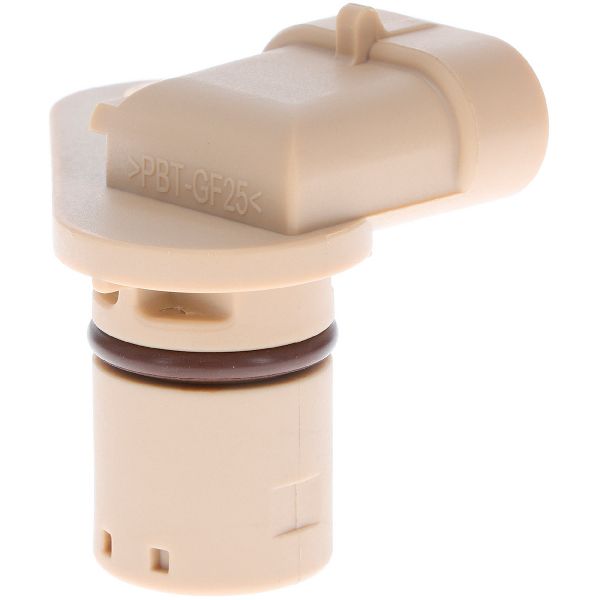
- The most probable cause of a camshaft timing code on this engine is a faulty Camshaft Position Actuator Solenoid (VVT Solenoid), OEM Part No. 12681018.
- Always check the engine oil level and condition first, as low or dirty oil is a common cause of VVT system problems.
- Replacing the VVT solenoid is a straightforward DIY job located on the front of the engine, held by a single 10mm bolt.
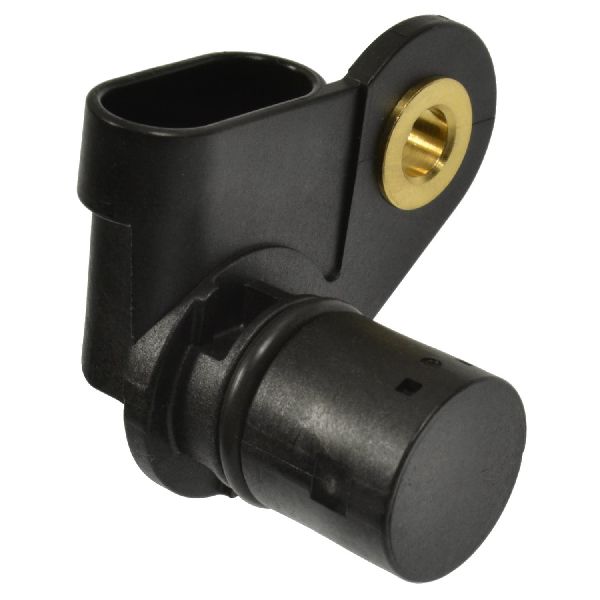
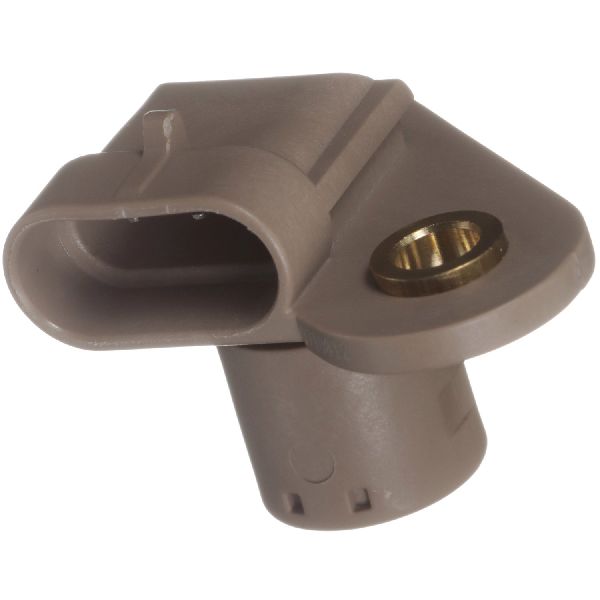
- Do not confuse the VVT solenoid with the Camshaft Position Sensor; replacing the sensor is a common misdiagnosis that will not fix this code.
What's Unique About the 2008-2013 Chevrolet Corvette
The 6.2L LS3 V8 is a single-cam-in-block (pushrod) engine, meaning it has only one camshaft that operates the valves for all cylinders. The generic P0021 code refers to a 'Bank 2' camshaft, which does not exist on this engine. Extensive research of Corvette forums and repair databases shows no documented cases of P0021 on the LS3 Corvette; instead, any camshaft timing fault on this platform logs a P0011 code ('Bank 1'). Therefore, if your scanner shows P0021, it is crucial to double-check the code or suspect the scanner is misinterpreting the data, as the actual problem and diagnostic path for this engine fall under code P0011.
Symptoms You May Notice
- Check Engine Light is on
- Rough or unstable idle
- Engine hesitation or stumbling during acceleration
- Noticeable loss of power
- Reduced fuel economy
- Engine stalling at low speeds
- Hard starting
- Rattling noise from the engine on startup.
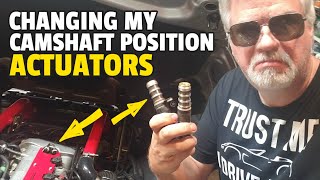
- Replacing the Camshaft Position Sensor instead of the Camshaft Position Actuator Solenoid. The sensor reads the position, while the solenoid controls it. This code is almost always a control (solenoid) or hydraulic (oil) issue, not a sensor reading issue. 🎬 Watch: Why you shouldn't replace parts before watching this.
Most Likely Causes
- Faulty Camshaft Position Actuator Solenoid (VVT Solenoid) 🔴 High Probability This solenoid controls oil flow to the cam phaser. It is a very common failure point across many GM vehicles with VVT, where it can become clogged with debris or fail electrically, causing it to stick in the advanced position.
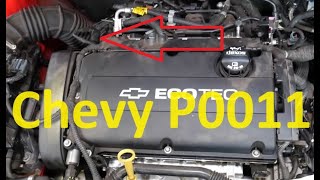
How to confirm: Using a capable scan tool, command the solenoid on and off while monitoring the desired vs. actual camshaft angle. If there's no change, or if the change is slow, the solenoid is likely faulty. You can also remove it (one 10mm bolt on the front timing cover) and test it directly by applying 12V to see if the internal plunger moves. 🎬 See this video for common Chevy P0011 causes and fixes. Inspect the small filter screens on the solenoid for sludge or metallic debris. The solenoid's internal resistance should be between 8 and 13 Ohms.
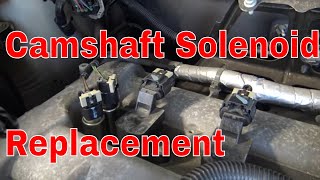
Typical fix: Replace the Camshaft Position Actuator Solenoid. It is located on the front of the engine on the timing cover, held in by a single bolt.
Est. part cost: $40-$90 - Low, Dirty, or Incorrect Viscosity Engine Oil 🟡 Medium Probability The entire Variable Valve Timing (VVT) system is hydraulic and relies on clean engine oil at the correct pressure to function. Old, sludgy, or low oil can clog the fine mesh screens on the solenoid and the small passages in the cam phaser. Using an oil viscosity thicker than the specified 5W-30 can also trigger this code, especially after an oil change, as the thicker oil cannot flow quickly enough.
How to confirm: Check the engine oil dipstick for level and inspect the oil's condition. If the oil is dark, thick, or below the 'add' line, this is a likely contributor. The LS3 requires a full synthetic 5W-30 oil that meets GM's Dexos1 specification. If the code appeared shortly after an oil change, verify the correct oil was used.
Typical fix: Perform an oil and filter change using a quality full synthetic oil that meets GM's specifications (Dexos1 Gen 2 or newer). Clear the codes and drive the vehicle to see if the code returns.
Est. part cost: $50-$100 - Failing Camshaft Phaser ⚪ Low Probability The phaser is the mechanical gear that actually rotates the camshaft. While generally durable, the internal locking pin can fail or internal components can wear, causing it to get stuck in an advanced position. This is much less common than a solenoid failure.
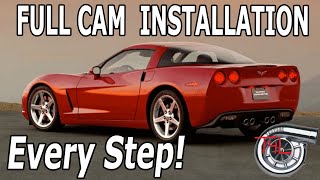
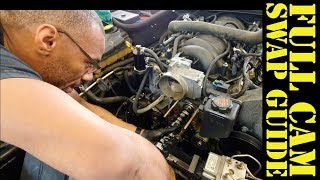
How to confirm: This is typically diagnosed after confirming the oil is clean and the VVT solenoid is functioning correctly. Diagnosis often requires an oscilloscope to analyze cam/crank correlation or physical inspection, which involves removing the timing cover. 🎬 Watch: A complete guide to accessing the Corvette camshaft. A rattling noise from the top of the engine at startup is a strong indicator.
Typical fix: Replace the camshaft phaser, which is a labor-intensive job that should also include replacing the timing chain and tensioner. The camshaft bolt is a torque-to-yield fastener and must be replaced.
Est. part cost: $150-$300
Rare But Worth Checking
- Stretched Timing Chain: While not as common as the solenoid, a stretched timing chain can cause the camshaft timing to be out of sync with the crankshaft, leading to this code, especially on higher-mileage engines. This would typically present with rattling noises on startup.
- Faulty Camshaft Position Sensor: It is rare for the sensor itself to cause an over-advanced code. The sensor's job is to report the position, not control it. A sensor failure typically results in different codes related to the sensor circuit itself (e.g., P0341). Forum users frequently warn against misdiagnosing the solenoid as the sensor.
Diagnosis Steps
- Verify the code with a scanner. Confirm if it is P0021 or, more likely, P0011. A P0021 code on this engine is almost certainly a scanner error.
- Check engine oil level and condition. If low, dirty, or not the correct viscosity (5W-30 Dexos1), perform an oil and filter change, clear the code, and re-test. This simple step resolves the issue in many cases.
- Using a bidirectional scan tool, monitor the 'Desired vs. Actual Camshaft Position Angle' PIDs. The values should track within +/- 4 degrees. Command the 'Camshaft Position Actuator Solenoid Test'. A functioning system will cause the engine to stumble or stall. No change in engine operation points to a fault.
- Inspect the wiring and connector for the Camshaft Position Actuator Solenoid on the front timing cover for any damage, corrosion, or looseness. Check for battery voltage at the power pin with the key on, engine off.
- Remove the solenoid (held by one 10mm bolt). Inspect the screens for metallic debris or sludge. Test the solenoid's resistance with a multimeter; it should be between 8-13 Ohms. Clean if dirty, but replacement is recommended if clogged or if it fails electrical tests.
- If the solenoid and oil are good, verify engine oil pressure with a mechanical gauge. At hot idle, pressure should be at least 20-25 PSI. Low pressure indicates a more serious issue like a failing oil pump.
- If all other tests pass, the issue may be mechanical. Further diagnosis would involve checking timing chain slack and inspecting the camshaft phaser, which is an advanced repair requiring timing cover removal.
Parts You'll Likely Need
- Camshaft Position Actuator Solenoid (VVT Solenoid)
(OEM #12636175 (Superseded by 12681018))— This electro-hydraulic valve is the most common failure point for VVT system issues on the LS3 engine. It gets clogged with debris or fails electrically, causing incorrect camshaft timing.
Trusted brands: ACDelco, Delphi, Standard Motor Products
OEM price range: $60-$90
Aftermarket price range: $40-$70
Related Codes That Often Appear With This One
- P0011 — P0011 is the 'Bank 1' equivalent of P0021. On a single-cam LS3 engine, P0011 is the code you would actually expect to see for this condition, not P0021.
- P0014 — This code is for 'B' Camshaft Position - Timing Over-Advanced (Bank 1). Since the LS3 only has one camshaft and this code refers to the same system, it's also unlikely but related.
- P0521 — This code for 'Engine Oil Pressure Sensor/Switch Range/Performance' can appear alongside P0011, strongly indicating the root cause is related to low oil pressure, which directly affects the VVT system's operation.
Technical Service Bulletins (TSBs) & Recalls
- PIP5096C: A general GM bulletin that mentions codes P0011, P0014, P0021, and P0024 can be caused by an out-of-spec camshaft actuator solenoid. It recommends replacing the solenoid with an updated part from a different supplier rather than just swapping it with another one from the same engine, as the new part has different clearances. This bulletin also suggests inspecting the engine EUN sticker for specific sequence numbers during the inspection process.
- Bulletin #N192266190 02: This manufacturer bulletin notes that while a vehicle is stopped, conditions triggering P0011, P0021, P0014, or P0024 can cause the engine to run rough, run at reduced power, or in rare cases, stall.
- Bulletin #N192266190: A manufacturer service bulletin describes a start event that causes drivability concerns such as rough running, potential reduced engine power, or stalling when these DTCs are set.
- Bulletin #PIP5568E: This preliminary information from the manufacturer communicates an investigation into the cause and correction for this group of DTCs (P0011, P0014, P0021, P0024) setting together or in pairs.
Mechanic-Grade Diagnostic Values
- Camshaft Position Actuator Solenoid Resistance — expected: 8 to 13 Ohms. Failure: A reading of OL (open circuit), near zero (shorted), or outside the specified range.
- Scan Tool: Desired vs. Actual Camshaft Position Angle — expected: Values should match within +/- 4 degrees at hot idle.. Failure: A persistent variance greater than 4-6 degrees, or a variance over 8 degrees for more than 20 seconds, which can trigger the code.
- VVT Solenoid Connector Voltage (Key On, Engine Off) — expected: ~12.6V (Battery Voltage) on the power supply pin.. Failure: No voltage or significantly low voltage, indicating a problem with the fuse or wiring harness.
- Engine Oil Pressure (Mechanical Gauge, Hot Idle) — expected: At least 20-25 PSI.. Failure: Pressure below 20 PSI indicates insufficient pressure to operate the VVT system correctly, pointing towards issues like a worn oil pump.
Scan Tool Commands That Help
- GDS2 / Tech2: Camshaft Position Actuator Solenoid Test — This is a bidirectional control used to functionally test the VVT solenoid and cam phaser. When activated at idle, it commands the solenoid to advance the cam timing. A healthy system will cause a noticeable change in engine RPM, a rough idle, or may even stall the engine. If there is no change, it confirms a fault in the solenoid, its circuit, oil passages, or the phaser itself.
- ECM Reprogramming: As noted in Bulletin #N192266190 02, dealers may resolve these timing codes by reprogramming the engine control module (ECM).
Wiring & Ground Locations
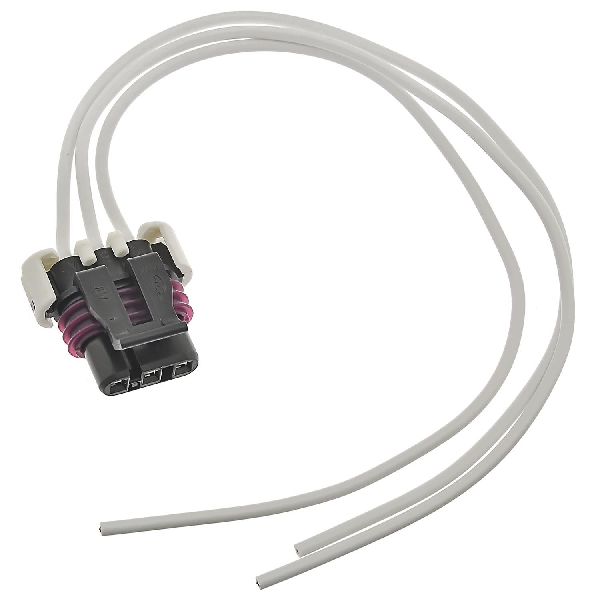
- VVT Solenoid Connector — On the front timing cover of the engine, plugging into the Camshaft Position Actuator Solenoid.. This 2-pin connector provides power and control to the solenoid. One pin receives 12V+ from a fuse, and the other is a Pulse-Width Modulated (PWM) ground controlled by the ECM. Checking for 12V here is a primary step in diagnosing an unresponsive solenoid.
- G105, G106, G107 — Various locations on the engine block.. These are primary engine block grounds. A loose or corroded engine ground can cause a host of electrical issues, including erratic behavior from sensors and actuators like the VVT solenoid. While not a common cause for this specific code, they should be checked if other electrical issues are present.
Real Owner Repair Stories
- CorvetteForum User (2009 Chevrolet Corvette (C6)) — P0011 code and rough running.
❌ Tried (didn't work) Performing an oil change., Replacing the Camshaft Position SENSOR.
✅ What actually fixed it Replacing the Camshaft Position Actuator SOLENOID (the VVT solenoid) resolved the issue, confirming the common misdiagnosis between the two components. - CorvetteForum User (2008 Corvette (C6)) — Persistent P0011 code.
❌ Tried (didn't work) Replacing VVT solenoid., Checking oil level and condition.
✅ What actually fixed it A mechanical oil pressure test revealed low pressure caused by a failing oil pump. Replacing the oil pump permanently resolved the P0011 code.
Documented NHTSA Reports
While the Corvette is a single-bank engine, related GM platforms provide insight into this code. NHTSA ODI #11694201 describes a situation where an owner received error code P0021 indicating the "A" camshaft position timing was over-advanced in Bank 2 of the engine, with the issue occurring three times before dealer intervention.
OEM Part Supersession History
12636175→12681018— GM regularly updates service parts to integrate new materials and technologies for improved reliability and performance.12633123, 12734067→12681018— Part consolidation and design updates for various GM V6 and V8 engines using VVT.
Model Year Variations Within This Range
- 2008-2013: The presence of the Variable Valve Timing (VVT) system itself is the key variation. LS3 engines paired with an automatic transmission have VVT and are susceptible to this fault. LS3 engines paired with a manual transmission do not have VVT, and therefore cannot set this code.
Diagnostic Flowchart
Other Known Issues on This Vehicle
Issues unrelated to this code that are worth knowing about as an owner of this generation:
- Harmonic Balancer Failure / Wobble 🔴 High — Common across all C6 model years (LS2 and LS3). The rubber bonding between the inner and outer rings of the balancer fails, causing a visible wobble and a persistent 'chirping' sound from the belt. If it separates, it can cause significant engine damage. (Ref: TSB 05-06-01-001 (for early 2005 bolt issue, but wobble is a separate, widespread problem).)
- Fuel Sending Unit Failure 🟠 Medium — Very common. Sulfur buildup on the fuel level sensors in the twin tanks causes the fuel gauge to read empty, typically right after a fill-up, and triggers a 'Service Fuel System' message. The gauge may return to normal after some driving. (Ref: GM released updated parts, but the issue persists for many. It's a labor-intensive fix as the tanks must be dropped.)
- LS7 Valve Guide Wear (Z06 Specific) 🔴 High — Specific to the 7.0L LS7 engine in the C6 Z06, not the LS3. Premature wear of the valve guides could lead to excessive oil consumption, noise, and potentially catastrophic engine failure if a valve head drops. (Ref: No recall, but GM acknowledged the issue and many heads were replaced under warranty or by owners.)
- Cracked Lower Radiator Support 🟡 Low — Common due to the car's low ride height. The aluminum radiator support cradle is fragile and can easily crack or break from hitting parking curbs, speed bumps, or road debris. This can cause the front bumper to sag.
Used vs. New Parts: Buying Guide for This Vehicle
When a used part is the smart pick: For this specific repair, using used parts is not recommended. The primary failure components are either inexpensive electronic parts that wear out or major internal mechanical parts where the history is unknown.
Donor-vehicle mileage cap: roughly under 80000 miles for the part to have meaningful remaining life.
What to inspect on the donor part:
- For a VVT solenoid, never buy used. The part is inexpensive and a high-failure item.
- For a cam phaser, never buy used. It is a critical wear item and the labor to install it is too high to risk using a part with unknown history.
OEM-only on this vehicle (don't cheap out):
- Camshaft Phaser: Due to the complexity and critical nature of this part, only an OEM (ACDelco) phaser should be used to ensure proper operation and longevity.
- Camshaft Phaser Bolt: This is a torque-to-yield (TTY) bolt and MUST be replaced with a new OEM bolt any time it is removed. Never reuse the old bolt.
Aftermarket brands forum-validated for this vehicle:
- VVT Solenoid: ACDelco (OEM), Delphi, Standard Motor Products (SMP)
Brands owners have reported issues with on this vehicle:
- Unknown, no-name online marketplace brands for the VVT solenoid. While cheap, they have a high rate of premature failure and can cause repeat repairs.
Real Owner Stories
Aggregated from forums and TSBs cited above. Mileages and costs reflect what owners reported in those sources.
2009 Chevrolet Corvette 6.2L LS3
Symptoms: The car was running rough and the Check Engine Light came on for code P0011.
What fixed it: The owner initially replaced the camshaft position sensor with no success. The issue was finally resolved by replacing the camshaft position actuator solenoid.
Source hint: CorvetteForum: P0011 on C6 - Solenoid vs. Sensor
2010 Chevrolet Camaro SS (LS3 platform mate)
Symptoms: The vehicle was supercharged and modified, triggering a P0011 code.
What fixed it: The discussion highlighted that VVT system modifications and specific tuning are required to resolve the code on modified LS3 platforms.
Source hint: Camaro5 Forum: 2010 supercharged, P0011 code
Related OBD-II Codes
Frequently Asked Questions
My 2009 Corvette is showing P0021, but I heard this code might be a scanner error. Is that true?
Is there a specific GM technical service bulletin for VVT solenoid issues on the Corvette?
Can using the wrong oil viscosity in my LS3 trigger a P0021 or P0011 code?
I have a rattling noise from the front of my engine at startup along with the code. What does that mean?
Where is the VVT solenoid located on the 2008-2013 Corvette 6.2L?
What electrical readings should I look for when testing the Corvette's VVT solenoid?
Helpful Videos
We Have This Part in Stock


The information in this article is provided for general reference and educational purposes only. Vehicle specifications, procedures, and part compatibility can vary by production date, trim level, and region. Always consult your vehicle's factory service manual and verify part numbers before purchasing or performing repairs. Safety-critical components such as airbags, seat belts, and braking systems should be installed by a qualified professional.
- Chevrolet Corvette:
- 🎬 Helpful Videos
- 🛍️ Shop This Part
- What's Unique About the 2008-2013 Chevrolet Corvette
- Symptoms You May Notice
- Most Likely Causes
- Rare But Worth Checking
- Diagnosis Steps
- Parts You'll Likely Need
- Related Codes That Often Appear With This One
- Technical Service Bulletins (TSBs) & Recalls
- Mechanic-Grade Diagnostic Values
- Scan Tool Commands That Help
- Wiring & Ground Locations
- Real Owner Repair Stories
- Documented NHTSA Reports
- OEM Part Supersession History
- Model Year Variations Within This Range
- Diagnostic Flowchart
- Other Known Issues on This Vehicle
- Used vs. New Parts: Buying Guide for This Vehicle
- Real Owner Stories
- 2009 Chevrolet Corvette 6.2L LS3
- 2010 Chevrolet Camaro SS (LS3 platform mate)
- Related OBD-II Codes
- Frequently Asked Questions
- 🎟️ Get 5% Off