

P0019 on 2020-2022 Subaru Outback 2.4L Turbo: Causes, TSB, and Fixes
For a 2020-2022 Subaru Outback with the 2.4L Turbo engine, code P0019 is most often caused by outdated Engine Control Module (ECM) software. The first step should always be contacting a Subaru dealer to see if your vehicle needs the software update specified in Technical Service Bulletin (TSB) 09-120-24R. If the software is current, the next most likely causes are low/dirty engine oil or a faulty oil control valve (OCV) on the driver's side. This issue is also common on platform mates like the A
- Before any repairs, contact a Subaru dealer with your VIN to check if your Outback needs the ECM software update from TSB 09-120-24R, as this is the most common fix.
- Always check your engine oil level and condition first. Low or dirty oil is a frequent and simple-to-fix cause of this code.
- If software and oil are good, the next most likely culprit is the driver's side (Bank 2) exhaust Oil Control Valve (OCV).
- Do not immediately replace the camshaft or crankshaft sensors, as they are more often misdiagnosed than the actual cause of the problem.
What's Unique About the 2020-2022 Subaru Outback
For the 2020-2022 Outback with the FA24F engine, this code has a well-documented history of being caused by overly sensitive diagnostic logic in the ECM. Unlike many other vehicles where P0019 immediately points to a mechanical fault like a stretched timing chain, the first step for this specific Subaru platform should always be to check if the ECM reprogram has been performed. Subaru issued TSB 09-120-24R to address this with a software update that contains "enhanced logic for the self-diagnosis program" to remedy this and other related codes (P0016, P0017, P0018, and P0087).
Symptoms You May Notice
- Check Engine Light is on
- Rough or erratic idle
- Reduced engine power and hesitation on acceleration
- Decreased fuel economy
- Engine may stall at low speeds or when putting the clutch in.
- EyeSight and other driver-assist systems may be disabled.
- Rattling noise from the engine on startup or during operation.
- Replacing the camshaft or crankshaft position sensors without proper diagnosis. The code indicates a correlation fault, which is often caused by the system that controls timing (ECM software, OCV, oil pressure) rather than the sensors that monitor it.
Most Likely Causes
- Outdated Engine Control Module (ECM) Software 🔴 High Probability Subaru has officially acknowledged this issue via TSBs #09-120-24 and its revision #09-120-24R, indicating the original software logic was too sensitive and could falsely set P0019 and related codes. This TSB applies to 2020-2022 Legacy and Outback models.
How to confirm: Contact a Subaru dealership with your vehicle's VIN. They can verify if your car is covered by the TSB and requires the software update. This should be the first step before any parts are replaced. Some owners have reported needing to specifically mention the TSB number to the service advisor.
Typical fix: A Subaru dealer reprograms the ECM with the updated software files. This is typically a one-hour labor charge and may be covered under the 8-year/80,000-mile federal emissions warranty.
Est. part cost: $0 - Low or Dirty Engine Oil 🟡 Medium Probability Subaru's Active Valve Control System (AVCS), which controls cam timing, is operated by oil pressure. Low, dirty, or incorrect viscosity oil can impede the function of the OCVs and cam phasers, leading to correlation codes. In some forum discussions, non-OEM oil filters have also been anecdotally blamed for causing oil flow issues.
How to confirm: Check the engine oil level on the dipstick and note its condition. If the level is low or the oil appears dark, sludgy, or past its service interval, this is a likely contributor.
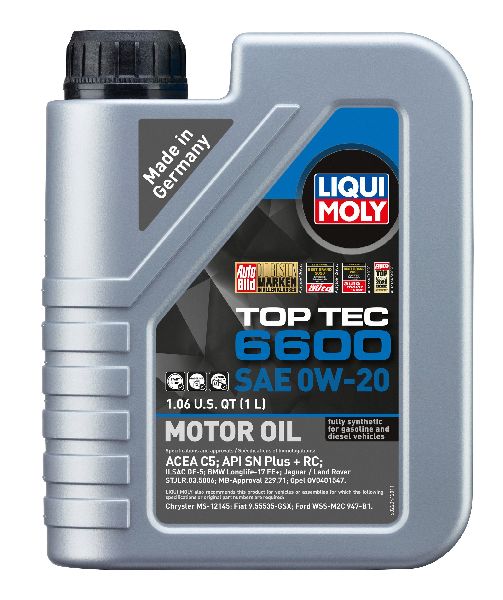
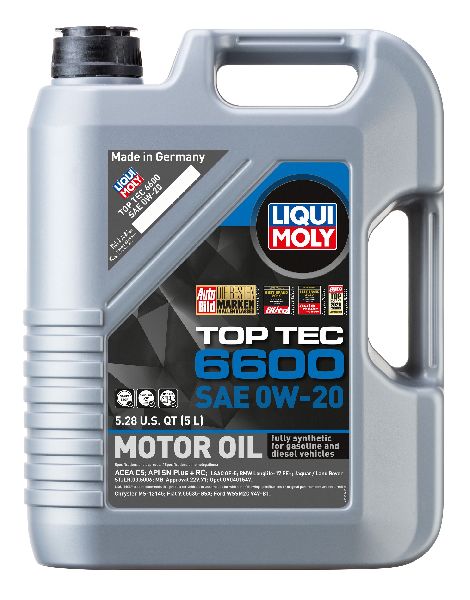
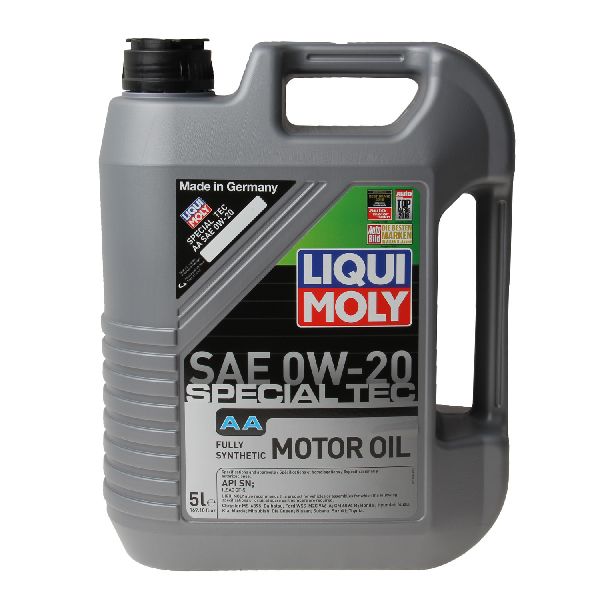
Typical fix: Perform an oil and filter change using the manufacturer-specified oil grade 🎬 Watch: Step-by-step oil change guide for the 6th Gen Outback. (0W-20 synthetic) and a quality filter. Clear the codes and drive to see if the issue returns.
Est. part cost: $40-$80 - Faulty Oil Control Valve (OCV) / VVT Solenoid 🟡 Medium Probability The OCV for the Bank 2 exhaust camshaft can become clogged with sludge or fail electrically, preventing it from properly directing oil flow to the cam phaser. These solenoids are a known failure point on many Subaru engines.
How to confirm: A mechanic can test the OCV's resistance (typically 6.9-7.9 ohms) or command it with a scan tool. A common DIY method is to swap the suspect OCV with an identical one from another position (e.g., the intake side on the same bank) and see if the code 'follows' the part (e.g., changes to P0018).
Typical fix: Replace the Bank 2 (driver's side) exhaust Oil Control Valve. This is located on the lower front of the engine on the driver's side.
Est. part cost: $90-$150
Rare But Worth Checking
- Stretched Timing Chain: While less common on newer vehicles, significant mileage or a history of poor maintenance (e.g., infrequent oil changes) can lead to chain stretch. This causes a permanent timing correlation issue that sensors and OCVs cannot correct.
- Faulty Camshaft Position Sensor: The sensor itself can fail, but it's more often misdiagnosed. The code indicates a correlation problem (a disagreement between two sensors), not necessarily a failure of one specific sensor. Test the sensor and its wiring before replacing it.
- Damaged or Slipped Reluctor Ring: The reluctor ring (or tone ring) on the camshaft or crankshaft has teeth that the position sensors read. If this ring is damaged, cracked, or has slipped from its position, it will send incorrect data to the ECM, triggering a correlation code.
Diagnosis Steps
- Contact a Subaru dealer with your VIN to check if TSB 09-120-24R applies to your vehicle. If it does and hasn't been performed, this is the first and most likely fix. Be persistent, as some owners report service advisors are not initially aware of it.
- Check the engine oil level and condition. If low, dirty, or overdue for a change, perform an oil and filter change with 0W-20 synthetic oil and a high-quality filter. Clear the code and see if it returns.
- If the code persists, inspect the wiring and connector for the Bank 2 (driver's side) exhaust oil control valve for damage, corrosion, or oil intrusion.
- Test the Bank 2 exhaust OCV. This can be done by checking its resistance with a multimeter (should be around 6.9-7.9 ohms) or by swapping it with the intake OCV on the same bank and seeing if the code changes to P0018.
- If the OCV is confirmed to be faulty, replace it. It is held on by several bolts, one of which may be a hex/Allen head bolt.
- If all the above steps do not resolve the issue, a more in-depth diagnosis is needed to check for mechanical timing problems, such as a stretched timing chain, a faulty cam phaser (actuator), or a damaged reluctor ring.
Parts You'll Likely Need
- Oil Control Valve (OCV) / VVT Solenoid
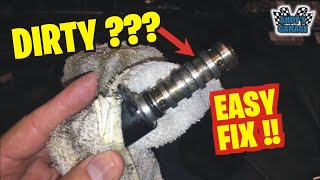
(OEM #10921AA230 (Note: This is a common Subaru OCV part number, confirm fitment for FA24F with dealer))— This solenoid controls oil flow to the cam phaser and is a common failure point if the issue is not software-related. It can get stuck or clogged with debris from the oil. 🎬 See how to clean a solenoid before buying a replacement.
Trusted brands: Subaru Genuine, Denso, Hitachi
OEM price range: $90-$150
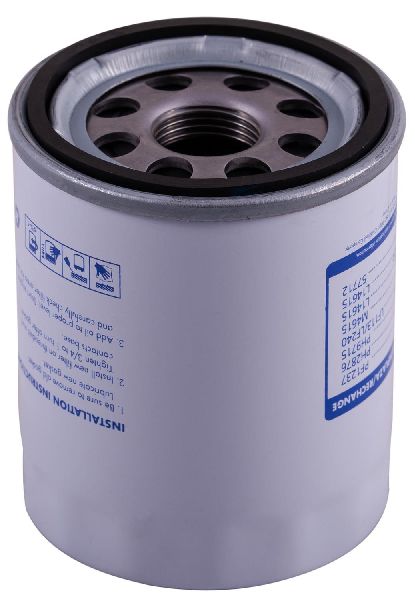
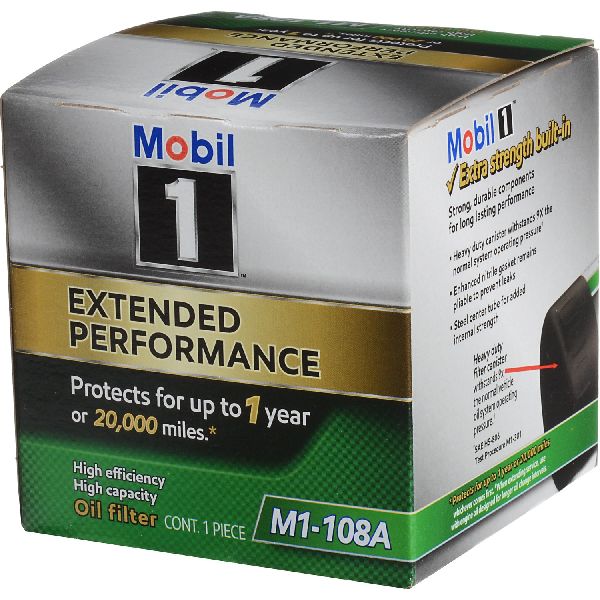
Aftermarket price range: $60-$100 - Engine Oil and Filter — Low or dirty oil is a primary trigger for all VVT-related codes on Subaru engines as the system is dependent on oil pressure and cleanliness.
Trusted brands: Subaru Genuine, Idemitsu (OEM supplier), Mobil 1, Pennzoil Platinum
OEM price range: $40-$60
Aftermarket price range: $30-$50
Related Codes That Often Appear With This One
- P0018 — This is the correlation code for the intake camshaft on the same bank (Bank 2). Seeing both P0018 and P0019 together strongly points to an issue affecting the entire driver's side, such as the ECM software fault, a clogged oil passage, or a timing chain issue on that side. The TSB covers both codes.
- P0016 / P0017 — These are the equivalent timing correlation codes for Bank 1 (passenger side). If codes for both banks appear simultaneously, it suggests a widespread problem like severe oil contamination, a stretched timing chain, or the ECM software fault, as TSB 09-120-24R covers all four codes.
- P0087 — This code for 'Fuel Rail/System Pressure – Too Low' is also addressed in TSB 09-120-24R. The ECM reprogram contains logic to 'optimize stabilization of fuel pressure', so seeing it alongside P0019 further points to the software update being the required fix.
Technical Service Bulletins (TSBs) & Recalls
- 09-120-24R: Revised 03/04/25. Announces new ECM reprogramming files to remedy DTCs P0016, P0017, P0018, P0019, and P0087 due to overly sensitive diagnostic logic and to optimize fuel pressure stabilization.
- TSB Bulletin #09-120-24: Dated 07/08/24, this bulletin announces the availability of new reprogramming files for the Engine Control Module (ECM) specifically developed to remedy DTCs P0016, P0017, P0018, P0019, and P0087.
Platform-Specific Known Issues
- A primary issue for this code on 2020-2022 Outbacks is a known software problem. Subaru issued TSBs 09-120-24 and the revised 09-120-24R, which provide an ECM reprogram to correct overly sensitive diagnostic logic that could falsely trigger P0016, P0017, P0018, and P0019.
- Owners have reported that even after an oil change, the code may persist until the TSB is performed, confirming the software logic as the root cause in many cases.
Mechanic-Grade Diagnostic Values
- Mode $06 Diagnostic Value (MID $36, TID $8D/$8E) — expected: Value should be less than 1000.. Failure: A value of 1000 or greater indicates a confirmed fault in the AVCS system for Bank 2.
- Live Data - VVT Advance/Retard Angle (AVCS Exhaust Left) — expected: At idle, the value should be close to 0 degrees. During a drive cycle, it should change in response to engine load and RPM, and its behavior should mirror the 'AVCS Exhaust Right' value.. Failure: A value that is stuck, erratic, lagging, or significantly different from the corresponding right-side value points to a hydraulic or mechanical issue on Bank 2.
- Camshaft Position Sensor Voltage — expected: A fluctuating signal between 0.5V and 4.5V when viewing the waveform on an oscilloscope.. Failure: A flatline voltage or a signal that does not change with engine RPM suggests a failed sensor or wiring issue.
Hidden / Shadow Codes Worth Checking
- Mode $06, MID $35/$36: This is not a hidden code but a diagnostic mode that provides raw test results from the ECM's self-diagnostics. For Subaru AVCS issues, Monitor IDs (MID) $35 (Bank 1) and $36 (Bank 2) contain specific Test IDs (TID) for cam correlation. A value of 1000 or more on the relevant TID indicates a failure. (see via Subaru Select Monitor (SSM) or an advanced aftermarket scan tool with Mode $06 capabilities.)
Scan Tool Commands That Help
- Subaru Select Monitor (SSM) or equivalent: Current Data Display & Save -> 'AVCS Exhaust Left'/'Exh. VVT Retard Ang. L' — Use this to monitor the live, real-time angle of the Bank 2 exhaust camshaft. Comparing the actual angle ('AVCS Exhaust Left') to the target angle and to the opposite bank ('AVCS Exhaust Right') is critical for diagnosing if the issue is hydraulic (OCV), mechanical (phaser), or electrical.
- Subaru Select Monitor (SSM) or equivalent: Clear Memory / Reset ECU — This function should be used after any repair, such as replacing an OCV or performing an oil change, to clear the learned values and force the ECM to re-adapt. Some forum users report that a simple code clear is not enough and a full ECU reset is needed.
Wiring & Ground Locations
- Bank 2 Exhaust OCV Connector — On the front of the driver's side (Bank 2) cylinder head. It is the lower of the two OCV connectors on that side.. This is the direct electrical connection for the solenoid causing the fault. It should be inspected for oil contamination, which is a known issue on some Subaru engines, as well as corrosion or damaged pins.
- Engine Ground 'GE-1' — A grounding bolt located on the top of the engine, under the intake manifold area.. A loose or corroded main engine ground can cause a host of bizarre, seemingly unrelated electrical issues and fault codes. A 2021 Outback owner reported that a loose 'GE-1' ground bolt caused nonsensical diagnostic codes and various system failures until it was tightened. While not a direct cause of P0019, poor grounding can affect sensor readings and ECU operation, making it a critical check if other diagnostics are inconclusive.
Real Owner Repair Stories
- AscentForums.com user (2020 Subaru Ascent (Same FA24F Engine)) — Check Engine Light with codes P0018 and P0019.
❌ Tried (didn't work) Dealer performed the TSB software update., Dealer replaced the Bank 2 (driver's side) OCVs.
✅ What actually fixed it The code returned after the TSB and OCV replacement. The dealer then replaced the AVCS Cam Sprocket (the phaser/actuator) on the Bank 2 exhaust camshaft, which finally resolved the code. This indicates the mechanical part of the phaser had failed.
When the Usual Fixes Don't Work
- While the TSB for an ECM reprogram is the most common fix, it is not a guaranteed solution. In a documented case on a vehicle with the same FA24F engine, a dealer performed the TSB, but the P0019 code returned. The issue persisted after also replacing the Oil Control Valve (OCV). The ultimate fix was the replacement of the mechanical AVCS cam sprocket (phaser) itself, indicating a hardware failure that the software and solenoid could not overcome.
OEM Part Supersession History
10921AA230→10921AA231, then 10921AA23B— The part has been updated several times. Later revisions often include improved internal seals to prevent oil leakage into the connector, a known issue on some Subaru engines.
Heads up: While the part number listed in Pass 2 (10921AA230) is a common Subaru OCV, it does not appear to be the primary fitment for the 2020-2022 FA24F engine. Part number 10921AA23B is listed for the Ascent and 2.4L Outback. Always confirm the exact part number with a dealer using the vehicle's VIN before ordering.
Diagnostic Flowchart
Real Owner Stories
Aggregated from forums and TSBs cited above. Mileages and costs reflect what owners reported in those sources.
2020 Subaru Outback XT (FA24F 2.4L Turbo)
Symptoms: Check Engine Light, EyeSight disabled, codes P0018 and P0019 present.
What fixed it: The owner found TSB #09-120-24 online, went back to the dealer, and had them perform the ECM reprogram as specified in the bulletin, which resolved the issue.
Source hint: subaruoutback.org
2020 Subaru Ascent (FA24F 2.4L Turbo)
Symptoms: Check Engine Light with code P0019.
What fixed it: Took the vehicle to a Subaru dealer. The dealer identified the issue as related to the software TSB and reprogrammed the ECM.
Cost: ~1 hour of shop labor
Source hint: Reddit r/AskMechanics
Related OBD-II Codes
Frequently Asked Questions
Does TSB 09-120-24R apply to my 2020-2022 Subaru Outback?
Will my emissions warranty cover the ECM software update for P0019?
Why is my EyeSight system disabled when the P0019 code triggers?
What oil should I use to prevent AVCS issues on my FA24F engine?
Where is the Bank 2 exhaust Oil Control Valve (OCV) located on the 2.4L Turbo?
How can I test if the OCV is causing my P0019 code?
Helpful Videos
We Have This Part in Stock


The information in this article is provided for general reference and educational purposes only. Vehicle specifications, procedures, and part compatibility can vary by production date, trim level, and region. Always consult your vehicle's factory service manual and verify part numbers before purchasing or performing repairs. Safety-critical components such as airbags, seat belts, and braking systems should be installed by a qualified professional.
- Subaru Outback:
- 🎬 Helpful Videos
- 🛍️ Shop This Part
- What's Unique About the 2020-2022 Subaru Outback
- Symptoms You May Notice
- Most Likely Causes
- Rare But Worth Checking
- Diagnosis Steps
- Parts You'll Likely Need
- Related Codes That Often Appear With This One
- Technical Service Bulletins (TSBs) & Recalls
- Platform-Specific Known Issues
- Mechanic-Grade Diagnostic Values
- Hidden / Shadow Codes Worth Checking
- Scan Tool Commands That Help
- Wiring & Ground Locations
- Real Owner Repair Stories
- When the Usual Fixes Don't Work
- OEM Part Supersession History
- Diagnostic Flowchart
- Real Owner Stories
- 2020 Subaru Outback XT (FA24F 2.4L Turbo)
- 2020 Subaru Ascent (FA24F 2.4L Turbo)
- Related OBD-II Codes
- Frequently Asked Questions
- 🎟️ Get 5% Off