

P0019 on 2015-2021 Ford F-150: Crankshaft-Camshaft Correlation Causes and Fixes
On a 2015-2021 Ford F-150, code P0019 is most often caused by a faulty Variable Camshaft Timing (VCT) solenoid on Bank 2, often due to dirty or low engine oil. Replacing a VCT solenoid costs about $150-$400 at a shop. A stretched timing chain is another common, but more expensive, cause, particularly on higher mileage 3.5L EcoBoost engines.
- P0019 means the driver's side exhaust camshaft timing is out of sync with the crankshaft.
- Always check your engine oil level and condition first; low or dirty oil is a primary cause of this issue.
- The most likely part to fail is the VCT solenoid on the driver's side, often due to debris in the oil as noted in multiple Ford TSBs.
- If you hear a rattling noise from the engine, especially on startup, suspect a stretched timing chain, which is a more serious and expensive repair.
- Don't immediately replace the camshaft position sensor; it's more likely reporting a mechanical problem than being faulty itself.
What's Unique About the 2015-2021 Ford F-150

For the 2015-2021 F-150, this code is frequently linked to the Variable Camshaft Timing (VCT) system. Ford has issued multiple Technical Service Bulletins (TSBs) stating that small debris in the engine oil can cause the VCT solenoids to stick, leading to this and other related timing codes. TSB SSM 50067 specifically advises technicians to cycle the affected solenoid 10 times with a diagnostic tool to attempt to clear debris before replacement. Additionally, the 3.5L EcoBoost engines in this generation are known for timing chain stretch and cam phaser failure at higher mileage, which is a more serious potential cause for P0019.
Diagnostic Flowchart

Tap your situation to follow the diagnostic path that matches what you're seeing on this vehicle.
Symptoms You May Notice
- Check Engine Light is on.
- Rough or fluctuating idle.
- Hesitation or sluggish acceleration.
- Reduced fuel economy.
- Engine rattling noise, especially on startup (cold start rattle) or at idle.
- Engine may stall, run rough, or backfire.
- Replacing the camshaft position sensor when the root cause is a sticking VCT solenoid or a stretched timing chain. The sensor is often just doing its job by reporting the timing error.
Most Likely Causes

- Low or Dirty Engine Oil 🔴 High Probability The VCT system is hydraulic and extremely sensitive to oil pressure and cleanliness. Ford's TSBs point to debris in oil as a primary factor for VCT solenoid failure. Using the incorrect oil viscosity can also cause this issue.
How to confirm: Check the oil level on the dipstick and examine its condition. If it's low, dark, or sludgy, this is a likely contributor.
Typical fix: Change the engine oil and filter using the correct grade (e.g., 5W-30 for EcoBoost, 5W-20 for 5.0L) and reset the code.
Est. part cost: $40-$80 - Failing Variable Camshaft Timing (VCT) Solenoid 🔴 High Probability Ford has issued multiple TSBs for the 2015-2021 F-150 indicating that VCT solenoids can stick due to small debris in the oil, causing a range of timing codes including P0019.
How to confirm: Use a scan tool to monitor desired vs. actual cam angle for Bank 2 Exhaust. You can also swap the Bank 2 exhaust solenoid with the intake solenoid to see if the code changes to P0018. A temporary fix described by owners involves disconnecting the solenoid and pulsing it with a 12V power source to free it up.
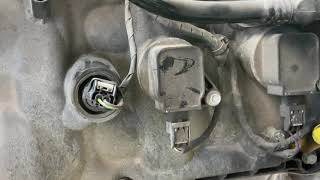
Typical fix: Replace the VCT solenoid for the Bank 2 exhaust camshaft. 🎬 Watch: Step-by-step guide to replacing the VCT solenoid. TSB SSM 50067 recommends attempting to cycle the solenoid 10 times with a scan tool first to dislodge debris.
Est. part cost: $35-$140 - Stretched Timing Chain 🟡 Medium Probability Higher mileage F-150s, particularly those with the 3.5L EcoBoost engine, are known to experience timing chain stretch, which directly causes cam/crank correlation codes.
How to confirm: A rattling noise from the front of the engine on startup is a key symptom. 🎬 See how to identify and address the cold start rattle. Confirmation requires removing the valve cover or timing cover to physically inspect the chain for slack. This is an involved diagnosis.
Typical fix: Replace the timing chain, tensioners, guides, and cam phasers at the same time. This is a significant repair, with forum members reporting dealer quotes from $2,500 to over $6,000.
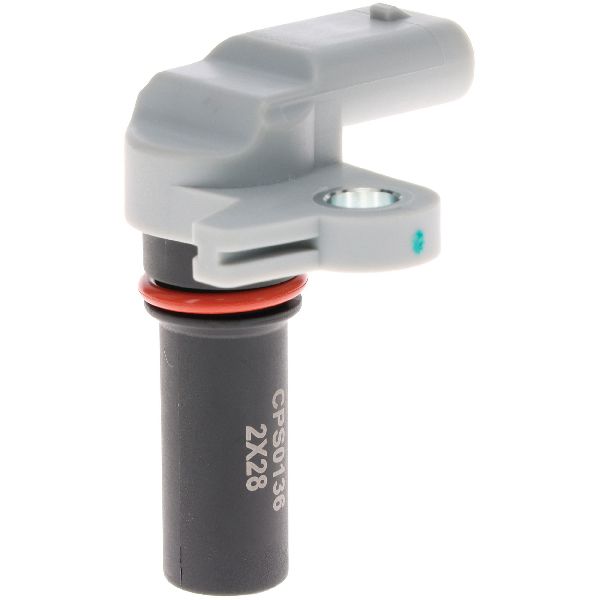
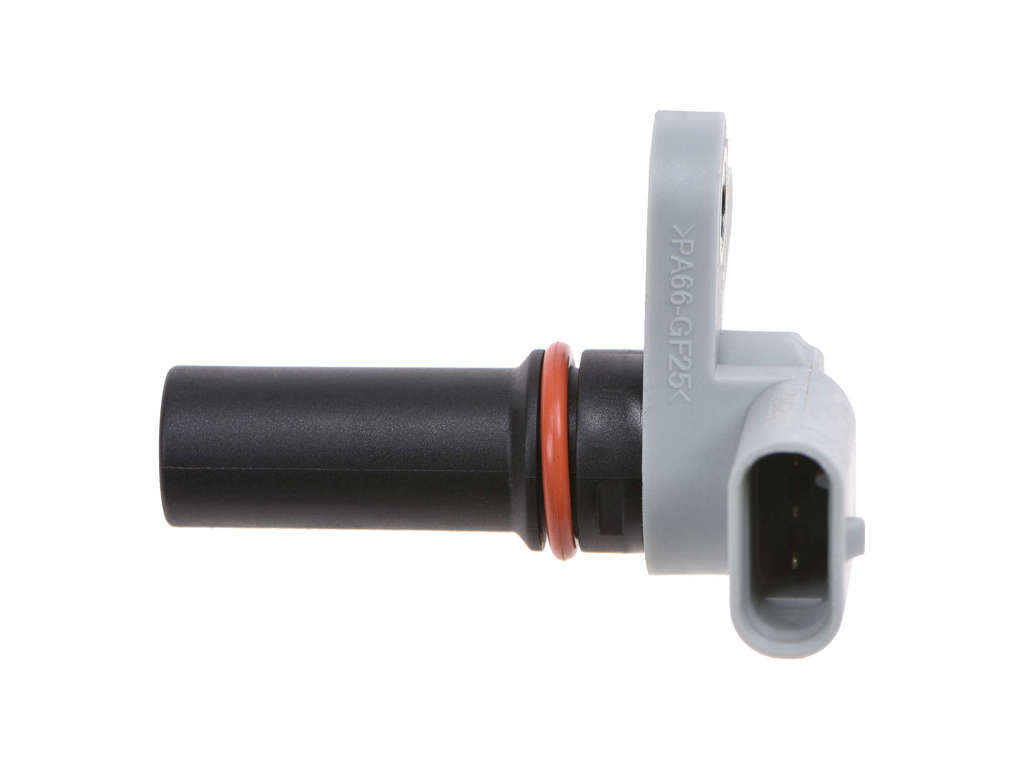
Est. part cost: $500-$1200 - Failed Camshaft Position Sensor (Bank 2, Sensor B) ⚪ Low Probability
How to confirm: After confirming oil level and VCT solenoid function, test the sensor's signal with a multimeter or oscilloscope. A forum user notes that replacing the sensor is often not the fix, as the sensor is usually just reporting the fault correctly.
Typical fix: Replace the camshaft position sensor on the driver's side valve cover for the exhaust cam.
Est. part cost: $25-$60
Rare But Worth Checking
- Worn Camshaft Phaser (VCT Actuator): The phaser is the gear at the end of the camshaft that actually adjusts the timing. It can fail mechanically, getting stuck in one position or developing internal oil leaks. It is highly recommended to replace all four phasers during a timing chain job to avoid future failures.
- Wiring Harness Damage: Damage or corrosion in the wiring to the VCT solenoid or camshaft position sensor can cause signal loss and trigger the code. A visual inspection of the harness is a key diagnostic step.
- Faulty Powertrain Control Module (PCM): This is extremely rare. The PCM should only be considered after all other mechanical and electrical causes have been ruled out.
Diagnosis Steps
- Check engine oil level and condition. Top up or perform an oil change with the manufacturer-specified oil if it is low or dirty. This is the simplest and most critical first step.
- Use an OBD-II scanner to check for any other pending or stored trouble codes. Codes for other camshafts (like P0016, P0017, P0018) can point towards a larger timing system problem like a stretched chain.
- Inspect the wiring and connectors for the Bank 2 (driver's side) camshaft position sensor and VCT solenoid for any visible damage, corrosion, or loose connections.
- Using a scan tool with live data, monitor the desired versus actual camshaft angle for the Bank 2 exhaust camshaft. A large, persistent discrepancy indicates a problem.
- Test the VCT solenoid. Per TSB SSM 50067, first try commanding the solenoid on and off 10 times with a scan tool to clear debris. If that fails, swap the exhaust solenoid with the intake solenoid on the same bank and clear codes. If the code changes to P0018 (Bank 2, Intake), the solenoid is faulty. Some owners also test by applying 12V directly to the solenoid pins to listen for a click.
- If the solenoid is good, test the camshaft position sensor's resistance and signal with a multimeter or oscilloscope.
- If all sensors and solenoids test good, the problem is likely mechanical. Listen for a startup rattle, which strongly indicates a timing chain issue. Confirmation requires removing the valve cover to inspect the timing chain for slack and the cam phasers for damage. This is an advanced step.
Parts You'll Likely Need
- Engine Variable Valve Timing (VCT) Solenoid
(OEM #HL3Z-6M280-A (For 2017+ 3.5L EcoBoost & 2018+ 5.0L), AT4Z-6M280-A (For 3.3L V6))— This is the most common failure point according to Ford's own TSBs, often getting stuck due to oil debris. Part numbers vary by engine and year.
Trusted brands: Motorcraft, Dorman
OEM price range: $40-$90
Aftermarket price range: $20-$60 - Timing Chain Kit — For higher-mileage vehicles, especially with the 3.5L EcoBoost, a stretched timing chain is a significant cause of this code. A kit usually includes the chain(s), guides, and tensioners.
Trusted brands: Motorcraft, Cloyes
OEM price range: $600-$1000
Aftermarket price range: $300-$500 - Camshaft Phaser (VCT Actuator) — Often fails along with or causes timing chain issues. It's the mechanical gear that adjusts cam timing. It is highly recommended to replace all phasers when doing a timing chain job to prevent a costly re-do. 🎬 Watch: Complete walkthrough for timing chain and phaser replacement.
Trusted brands: Motorcraft, Dorman
OEM price range: $150-$250 each
Aftermarket price range: $80-$150 each - Camshaft Position Sensor — While less common to fail than the solenoid, a faulty sensor can send incorrect data to the PCM, triggering the code. It is often misdiagnosed as the cause.
Trusted brands: Motorcraft, NTK, Bosch
OEM price range: $25-$60
Aftermarket price range: $15-$40
Related Codes That Often Appear With This One
- P0016 — Crank/Cam correlation error on Bank 1, Intake Cam. Often appears with other timing codes when there is a systemic issue like a stretched chain or low oil pressure.
- P0017 — Crank/Cam correlation error on Bank 1, Exhaust Cam. Indicates the timing issue may not be isolated to just one bank.
- P0018 — Crank/Cam correlation error on Bank 2, Intake Cam. This code points to a problem on the same bank as P0019, making a stretched chain or phaser issue more likely.
- P054D — Cold Start 'B' Camshaft Position Timing Over-Retarded Bank 2. This code is very specific to the exhaust cam on bank 2 and often appears with P0019, pointing strongly to a VCT or mechanical timing issue on that specific camshaft.
- P0025 — Camshaft Position 'B' - Timing Over-Retarded (Bank 2). This code frequently appears with P0019 and points specifically to an issue with the exhaust camshaft on the driver's side.
- P0300, P0305, P0306, P0307, P0308 — Random/multiple misfire codes, often on the cylinders of the affected bank (Bank 2 is cylinders 5, 6, 7, 8). Incorrect cam timing leads to poor combustion and misfires.
Technical Service Bulletins (TSBs) & Recalls

- SSM 50067: Notes that various timing DTCs including P0019 on 2015-2021 models can be due to debris causing the VCT solenoid to stick.
- SSM 48423: Similar to SSM 50067, points to debris in oil causing VCT solenoid issues for 2015-2020 models.
- SSM 47170: An earlier bulletin for some 2018 models also citing debris causing VCT solenoids to stick.
- SSM 54366: Covers 2015-2021 models and directs technicians to specific diagnostic tests for a list of timing codes including P0019.
- TSB-16-0093: An early TSB for 2016 models with low mileage exhibiting timing codes including P0019.
Platform-Specific Known Issues
- Multiple Technical Service Bulletins (TSBs), including SSM 50067, SSM 48423, and SSM 47170, have been issued for 2015-2021 Ford vehicles. They state that codes P0011, P0012, P0014, P0015, P0016, P0017, P0018, P0019, P0021, P0022, P0024 and/or P0025 may be caused by small debris causing the VCT solenoid to stick. The suggested procedure in SSM 50067 is to use a scan tool to cycle the solenoid 10 times to try and clear it before replacement.
- TSB 16-0038 specifically addresses these codes on low-mileage (<2000 miles) 2016 F-150s with the 3.5L GTDI engine and directs technicians to replace the specific VCT solenoid corresponding to the code. For P0019, it advises replacing the bank 2 exhaust VCT solenoid.
Mechanic-Grade Diagnostic Values
- VCT Solenoid Resistance — expected: 5-15 Ohms. Failure: A reading outside this range, or an open/short circuit, indicates a faulty solenoid coil.
- Camshaft Position Sensor (2-wire inductive) Resistance — expected: 205 - 579 Ohms (based on 5.4L 3V engine). Failure: A reading outside this range suggests the sensor is faulty. This value is from a similar Ford engine and should be used as a guideline.
- Camshaft Position Sensor (3-wire Hall effect) Harness Voltage — expected: ~5V or ~12V on the reference wire with key on, engine off.. Failure: No voltage indicates a wiring or PCM issue upstream of the sensor.
Hidden / Shadow Codes Worth Checking
- VCT_EXH_ERR_B2 (and similar PIDs): This is not a standard DTC but a specific Parameter ID (PID) within Ford's diagnostic software (IDS). It shows the exact degree of error between the desired and actual camshaft angle for the Bank 2 exhaust cam in real-time. Monitoring this provides more granular data than a simple fault code. (see via Ford Integrated Diagnostic System (IDS) scan tool, or high-end aftermarket scanners with Ford-specific live data capabilities.)
Scan Tool Commands That Help
- Ford IDS (or equivalent high-end scanner): VCT Solenoid On/Off Command (Actuator Test) — As recommended by Ford TSBs, this command cycles the solenoid to try and dislodge debris. It's also used during live testing; activating the Bank 2 exhaust solenoid at idle should cause the engine to hesitate or stall, confirming the solenoid is mechanically moving. No change in engine operation points to a stuck solenoid or oil flow blockage.
- Ford IDS: Data Logger with Histogram Mode — To diagnose intermittent VCT anomalies. A technician can log the VCT error PIDs (e.g., VCT_EXH_ERR_B2) over a drive cycle. The histogram will visually display how often and how severe the timing error is, helping to distinguish a minor, occasional stick from a major mechanical fault.
Wiring & Ground Locations

- Body-to-Frame Ground Strap — Underneath the truck, often on the passenger side below the door area, connecting the cab body to the steel frame.. Corrosion at this major ground point can cause a host of unpredictable electrical issues and communication errors between modules, including the PCM. A video on a 2020 F-150 showed this ground heavily corroded.
- Passenger Kick Panel Ground Stud — Located behind the interior kick panel on the passenger side, near the Body Control Module (BCM).. This is a primary interior grounding point for numerous electronic modules. While not directly for the engine sensors, a poor ground here can affect the BCM and other systems that communicate with the PCM, potentially causing network errors that could be misinterpreted.
- PCM Connector C175E — At the Powertrain Control Module (PCM), typically located in the engine bay near the firewall.. For advanced diagnosis, technicians can test the camshaft sensor circuit directly at the PCM. On an older F-150, the cam sensor wires were located at pins 44 and 5 of this connector. This allows for checking the entire circuit for opens or shorts back to the source. Pin locations will vary by year and engine, requiring a model-specific diagram.
When the Usual Fixes Don't Work
- While Ford's Technical Service Bulletins (e.g., SSM 50067) for P0019 correctly identify sticking VCT solenoids due to oil debris as a common cause, a significant amount of anecdotal evidence from owners of 3.5L EcoBoost models points to this being a premature diagnosis. Many owners report that replacing solenoids provides only a temporary fix, with the code returning until a full timing chain and cam phaser replacement is performed. In these cases, the VCT solenoid is not the root cause but rather a symptom of a larger mechanical timing system failure (chain stretch or phaser lock pin failure) that the TSBs do not fully address as the primary issue.
OEM Part Supersession History
HL3Z-6C525-A (Exhaust), HL3Z-6256-A (Intake)→ML3Z-6C525-A (Exhaust), ML3Z-6256-A (Intake)— Redesign to fix the 'cold start rattle' issue common on Gen 2 3.5L EcoBoost engines. The new design is often described as having a 'cap over spring'.
Heads up: Using the old 'HL3Z' phasers on a repair may lead to a repeat failure of the cold start rattle.Stock 5.0L VCT Solenoids→M-6297-M50A (Ford Performance High Strength VCT Solenoids)— Provides a more robust build and stronger mounting design for high-performance or racing applications, but also used as a heavy-duty replacement for stock.
Heads up: For 2018-2020 5.0L F-150s, this specific kit is noted to fit the INTAKE solenoid position only, which is a critical detail to avoid incorrect installation.
Model Year Variations Within This Range
- 2018-2021: The 5.0L V8 was updated to the 3rd Generation 'Coyote'. It features a dual fuel system (direct and port injection), a higher 12.0:1 compression ratio, and Plasma Transferred Wire Arc (PTWA) cylinder liners instead of sleeves. These changes affect fuel system components, engine management, and internal parts compared to the 2015-2017 Gen 2 engine.
- 2017-2021: The 3.5L EcoBoost was updated to its 2nd Generation. Like the 5.0L, it gained a dual fuel system (direct and port injection). It also features redesigned turbochargers and significant changes to the VCT system, including the notoriously problematic cam phasers that were later superseded.
- 2018-2021: The base 3.5L naturally-aspirated V6 was replaced by the all-new 3.3L Ti-VCT V6. This engine has a different architecture and its own specific VCT components and part numbers.
Helpful Videos
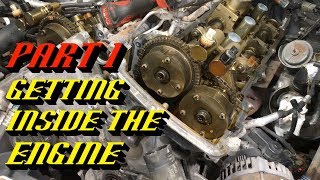
Used OEM Parts in Stock
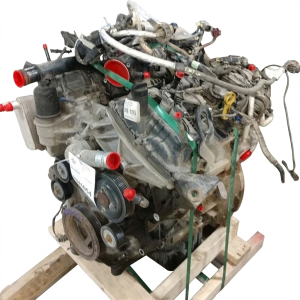
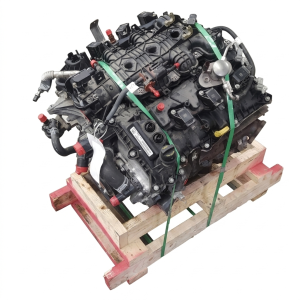
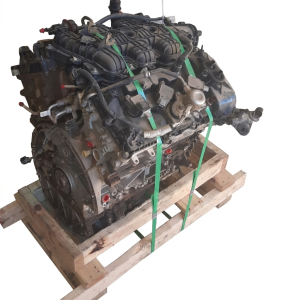
New Aftermarket Parts Available

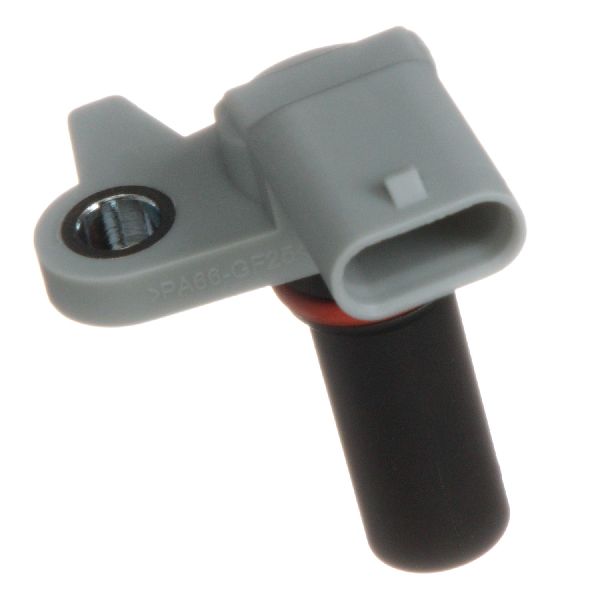

The information in this article is provided for general reference and educational purposes only. Vehicle specifications, procedures, and part compatibility can vary by production date, trim level, and region. Always consult your vehicle's factory service manual and verify part numbers before purchasing or performing repairs. Safety-critical components such as airbags, seat belts, and braking systems should be installed by a qualified professional.
- Ford F-150:
- 🎬 Helpful Videos
- 🛍️ Shop This Part
- What's Unique About the 2015-2021 Ford F-150
- Diagnostic Flowchart
- Symptoms You May Notice
- Most Likely Causes
- Rare But Worth Checking
- Diagnosis Steps
- Parts You'll Likely Need
- Related Codes That Often Appear With This One
- Technical Service Bulletins (TSBs) & Recalls
- Platform-Specific Known Issues
- Mechanic-Grade Diagnostic Values
- Hidden / Shadow Codes Worth Checking
- Scan Tool Commands That Help
- Wiring & Ground Locations
- When the Usual Fixes Don't Work
- OEM Part Supersession History
- Model Year Variations Within This Range
- 🎟️ Get 5% Off