

P0019 on 2011-2023 Dodge Challenger 3.6L: Crank/Cam Correlation Fixes
P0019 on a 3.6L Challenger means the driver's side exhaust camshaft is out of sync. The most common cause is low or dirty engine oil. If oil is good, the next likely culprit is a faulty VVT solenoid, a ~$40 part that's relatively easy to replace. Deeper issues like a stretched timing chain or loose oil galley plugs are possible but less common.
- Always check your engine oil level and condition first; it's the most common and cheapest fix.
- P0019 points to the driver's side exhaust camshaft.
- Swapping the VVT solenoid and camshaft sensor with their intake-side counterparts is a free and effective way to diagnose faulty components.
- If the code persists after checking oil and testing the solenoid/sensor, the problem is likely a more serious mechanical issue like a stretched timing chain, which requires professional diagnosis.
What's Unique About the 2011-2023 Dodge Challenger
The 3.6L Pentastar V6 relies heavily on clean oil at the correct pressure to operate its Variable Valve Timing (VVT) system. This makes it particularly sensitive to oil maintenance, and even using a non-OEM spec oil filter can cause issues. While sensor or solenoid failures are common across many engines, the Pentastar has a known history of timing chain stretch at higher mileage (over 100,000 miles). Additionally, a specific and well-documented issue to watch for is oil galley plugs under the driver's side valve cover that can loosen, causing a localized oil pressure drop to the VVT components and triggering this code. Another known weakness is rocker arm bearing failure, which can cause the infamous 'Pentastar tick' and, in some cases, lead to camshaft damage that contributes to timing codes.
Generation note: The 2011-2023 Dodge Challenger is a single generation (LC), but the 3.6L Pentastar engine was updated in 2016 (upgraded to Pentastar UG). While the fundamental design and causes for P0019 remain the same, earlier models (pre-2014) are sometimes cited as being more prone to timing chain and rocker arm issues. The upgraded engine features a new two-step variable valve lift (VVL) system, increased VVT authority (from 50 to 70 degrees), and a higher compression ratio, but the diagnostic approach for this code is nearly identical. A TSB (09-002-14 Rev. B) was issued for 2011-2013 models for potential left cylinder head failure, which could indirectly relate to timing codes.
Symptoms You May Notice
- Check Engine Light is on.
- Rough or fluctuating idle.
- Hesitation or stumbling during acceleration.
- Reduced engine power.
- Decreased fuel economy.
- Engine may stall, especially at low speeds.
- Engine may be hard to start.
- Rattling noise from the engine on startup, which could indicate a timing chain or phaser issue.
- Replacing the camshaft position sensor when the actual problem is low/dirty oil or a faulty VVT solenoid.
- Replacing sensors and solenoids repeatedly when the root cause is a stretched timing chain or loose oil galley plugs.
- Mistaking an oil leak from the common oil filter housing crack for a rear main seal leak.
Most Likely Causes
- Low, Dirty, or Incorrect Viscosity Engine Oil 🔴 High Probability The Pentastar's VVT system is hydraulically operated and highly sensitive to oil pressure and cleanliness. This is the #1 cause of VVT-related codes.
How to confirm: Check the engine oil dipstick. The oil should be at the full mark, light in color, and have the correct viscosity (typically 5W-20 or 5W-30, check owner's manual). Also, ensure a quality OEM-spec oil filter is being used, as cheap filters are known to cause oil pressure problems.
Typical fix: Perform an engine oil and filter change with high-quality, manufacturer-specified oil and a new OEM-equivalent filter.
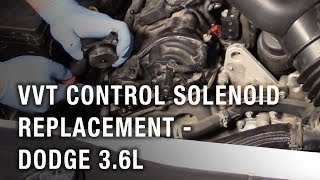
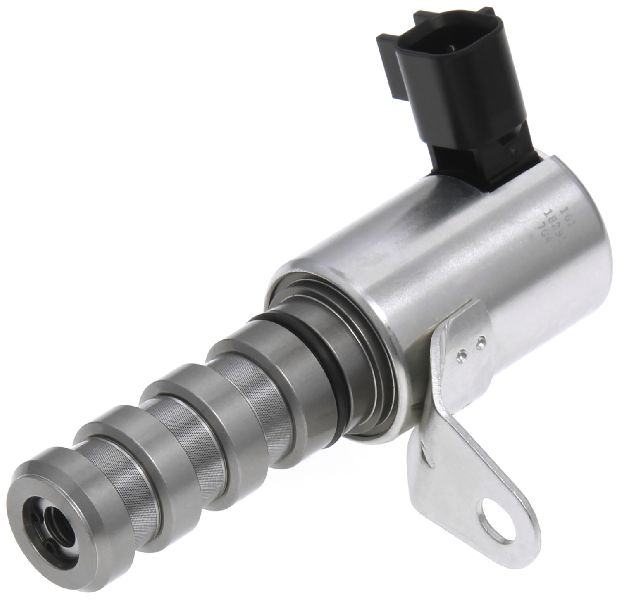
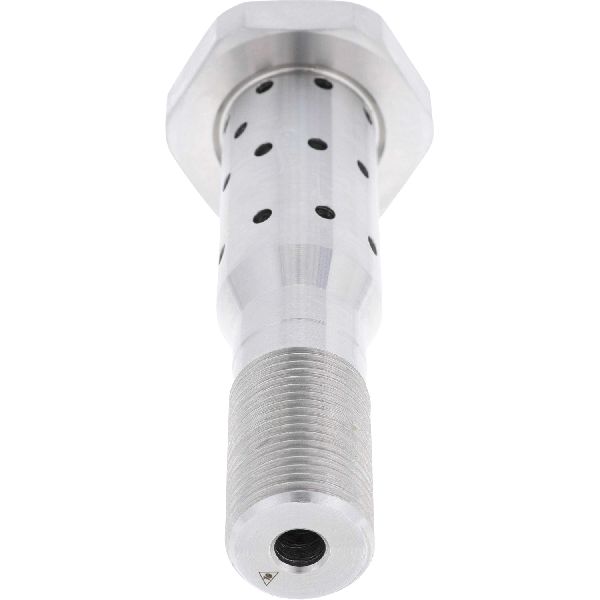
Est. part cost: $40-$80 - Faulty VVT Solenoid (Oil Control Valve) 🔴 High Probability This solenoid controls oil flow to the cam phaser. 🎬 Watch: Locate the VVT solenoids on your Challenger engine. It's a common failure point that can get clogged with sludge or fail electronically.
How to confirm: Swap the Bank 2 exhaust solenoid with the Bank 2 intake solenoid. Clear the codes and drive the vehicle. If the code changes to P0018 (Bank 2 Intake), the solenoid is bad. You can also test its resistance with a multimeter; it should typically be between 6.9 and 7.9 ohms.
Typical fix: Replace the VVT solenoid for the Bank 2 exhaust camshaft.
Est. part cost: $25-$60 - Failed Camshaft Position Sensor 🟡 Medium Probability The sensor provides the critical position data to the PCM. Like any electronic sensor, it can fail with age and heat cycles.
How to confirm: Swap the Bank 2 exhaust camshaft sensor with the intake sensor on the same bank (all four cam sensors are identical on the 3.6L). If the code changes to P0018, the sensor is faulty. A scan tool can also show erratic readings from the sensor.
Typical fix: Replace the Bank 2 exhaust camshaft position sensor.
Est. part cost: $20-$50 - Stretched Timing Chain or Worn Timing Components 🟡 Medium Probability Timing chain stretch is a known issue on higher-mileage 3.6L Pentastar engines, typically over 100,000 miles. The tensioners can no longer compensate for the slack, causing a correlation fault. A cold-start rattle is a classic symptom.
How to confirm: This is a mechanical issue requiring significant disassembly. A mechanic will remove the timing cover to physically inspect for chain slack, worn guides, and tensioner extension. A scan tool may show a consistent timing deviation that doesn't change with oil pressure, often exceeding 8-10 degrees.
Typical fix: Replace the primary and secondary timing chains, guides, and tensioners. This is a labor-intensive job.
Est. part cost: $250-$500
Rare But Worth Checking
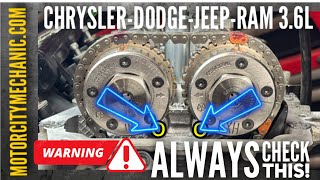
- Loose Oil Galley Plugs: Under the Bank 2 (driver's side) valve cover, there are oil galley plugs (13mm bolts) that can back out, causing a loss of oil pressure to the phasers on that bank. If you have the valve cover off for another repair, it is critical to check that these plugs are tight. Technicians recommend torquing them to 156 in-lbs (13 ft-lbs).
- Failed Camshaft Phaser: The phaser itself can fail mechanically, getting stuck in one position or having broken internal locking pins. This is less common than a solenoid failure but is a definite possibility if other steps don't resolve the code.
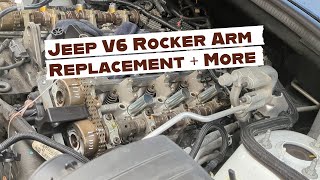
- Failed Rocker Arms / Lifters: A well-known issue on the 3.6L Pentastar is the failure of needle bearings in the rocker arms, causing a 'Pentastar tick'. This can damage the camshaft lobes, and while it more commonly causes misfire codes, it can sometimes contribute to timing correlation codes. 🎬 Watch: How to replace rocker arms and fix the tick.
- Failed Crankshaft Position Sensor: While possible, it's less likely to cause a single-bank code like P0019. A failing crankshaft sensor usually affects all bank correlations and may present with other codes like P0016, P0017, and P0018 simultaneously.
Diagnosis Steps
- Check Engine Oil: Verify the oil level is full and the oil is clean and of the correct viscosity. Ensure a quality oil filter is installed. If in doubt, perform an oil and filter change. This is the #1 fix.
- Scan for Codes: Use an OBD-II scanner to confirm P0019 and look for any other related codes. Note the freeze frame data.
- Inspect Wiring: Visually inspect the wiring harness and connector for the Bank 2 (driver's side) exhaust camshaft position sensor and VVT solenoid. Look for any signs of damage, corrosion, or loose connections.
- Test the VVT Solenoid: The easiest test is to swap the exhaust VVT solenoid with the intake VVT solenoid on the same bank. Clear the codes and drive the vehicle. If the code returns as P0018, the solenoid you moved is faulty and needs replacement.
- Test the Camshaft Sensor: If the solenoid swap doesn't isolate the problem, perform the same test with the camshaft position sensors. Swap the exhaust and intake sensors on Bank 2. If the code changes to P0018, the sensor is bad.
- Check Oil Galley Plugs: If the issue persists, remove the Bank 2 valve cover and inspect the oil galley plugs to ensure they are tight (torque to 156 in-lbs). 🎬 See why checking these loose oil galley plugs is critical. While the cover is off, inspect the rocker arms and camshaft lobes for unusual wear.
- Mechanical Timing Inspection: If all else fails, the problem is likely mechanical (stretched chain, bad phaser). This requires using a scan tool to monitor cam/crank deviation and likely removing the timing cover to inspect the components. This is best left to a professional unless you are an experienced DIYer.
Parts You'll Likely Need
- VVT Solenoid / Oil Control Valve (Bank 2 Exhaust)
(OEM #5184332AA)— This is one of the most common failure points for VVT-related codes on the Pentastar engine. It can get clogged or fail electronically. Note: This part number also corresponds to the valve lash adjuster/lifter. The VVT solenoid is a different part.
Trusted brands: Mopar, Dorman, Hitachi
OEM price range: $40-$60
Aftermarket price range: $25-$45
Related Codes That Often Appear With This One
- P0018 — Crank/Cam Correlation for Bank 2, Intake Cam. If seen with P0019, it points to a problem affecting the entire bank, like a stretched timing chain or a bank-wide oil pressure issue (e.g., loose galley plugs).
- P0349 — Camshaft Position Sensor 'B' Circuit Intermittent (Bank 2). This code points more directly to a fault with the sensor itself or its wiring harness, rather than a mechanical correlation issue.
- P000D — 'B' Camshaft Position Slow Response (Bank 2). This often accompanies correlation codes and points towards an oil pressure or VVT solenoid/phaser issue preventing the cam from moving into its commanded position quickly enough.
Technical Service Bulletins (TSBs) & Recalls
- TSB 09-002-14 Rev. B: While not directly for P0019, this TSB addresses misfire codes (P0300, P0302, P0304, P0306) on the left cylinder bank (Bank 2) for 2011-2013 3.6L engines due to excessive cylinder leakage, which may require cylinder head replacement. This was covered under an extended warranty (X56) for 10 years/150,000 miles. A severe mechanical issue on Bank 2 could potentially trigger timing codes.
- TSB Bulletin #09-009-16: This manufacturer bulletin notes that P0019 (Crankshaft Position - Camshaft Position Correlation Bank 2 Sensor 2) may be set in the PCM alongside other timing-related codes like P0017 or P000A.
Platform-Specific Known Issues
- Loose Oil Galley Plugs: A well-documented issue where 13mm bolts plugging oil galleys under the valve covers can back out. This causes a localized oil pressure drop to the VVT phasers on that bank, directly leading to codes like P0019 even if overall engine oil pressure is normal.
- Rocker Arm Bearing Failure ('Pentastar Tick'): The needle bearings in the rocker arms are a known failure point, especially on pre-2016 engines. This creates a distinct ticking noise and can lead to camshaft lobe damage, misfires, and potentially timing correlation codes.
Mechanic-Grade Diagnostic Values
- VVT Solenoid (Oil Control Valve) Coil Resistance — expected: 6.9 to 7.9 Ohms at 68°F (20°C). Some sources cite a broader acceptable range of 5 to 14 Ohms.. Failure: A reading of OL (open circuit/infinity) or near zero ohms (short circuit) indicates a failed solenoid.
- Camshaft Position Sensor (CMP) Supply Voltage — expected: ~5V DC (Key On, Engine Off) at the sensor connector.. Failure: Voltage significantly below 5V suggests a wiring or PCM issue, not a sensor failure.
- Camshaft Position Sensor Ground Circuit Resistance — expected: Less than 3.0 Ohms to a known good chassis ground.. Failure: High or infinite resistance (OL) indicates an open or corroded ground wire.
- Cam/Crank Difference (Live Scan Tool Data) — expected: Close to 0 degrees at idle.. Failure: A consistent deviation of over 8-10 degrees at idle can trigger the code and points towards a mechanical timing issue (stretched chain, slipped tone ring).
- Engine Oil Pressure (for VVT operation) — expected: Minimum 5 PSI at warm idle (600 RPM). Minimum 30 PSI at 1200 RPM. Normal warm idle is often 27-35 PSI.. Failure: Pressure below the minimum specifications can cause VVT system malfunctions and trigger correlation codes.
Scan Tool Commands That Help
- wiTECH (Dealer Scan Tool): VVT System Test / Actuator Test — This function commands the VVT solenoids through their range of motion to verify mechanical and electrical operation, helping to distinguish between a faulty solenoid, a wiring issue, or a mechanical problem with the phaser.
- Advanced Aftermarket Scanners (e.g., Autel, Launch): VVT Solenoid Activation / Actuator Test — Many professional-grade aftermarket scanners can perform bidirectional control to activate the VVT solenoids. Listening for a click from the solenoid when activated confirms the electrical circuit and coil are likely functional.
Wiring & Ground Locations
- Bank 2 Exhaust Camshaft Position Sensor Connector — On the top of the driver's side (Bank 2) valve cover, towards the rear of the engine near the firewall.. This is the primary connector for the sensor providing the Bank 2 exhaust cam position signal. All voltage, ground, and signal tests for this sensor circuit begin here.
- Bank 2 Exhaust VVT Solenoid Connector — On the front of the driver's side (Bank 2) cylinder head.. This connector provides the 12V power and PCM control signal to the solenoid that actuates the Bank 2 exhaust cam phaser. Testing for voltage here confirms the integrity of the circuit from the PCM.
- Engine Block/Chassis Grounds (e.g., G103, G300) — There are multiple critical ground points. One is on the passenger side of the engine block. Another is under the driver's seat (G300). A ground strap also connects the engine to the chassis.. A poor engine ground can cause unstable voltage references for multiple sensors, including the camshaft and crankshaft position sensors, leading to erratic behavior and false correlation codes.
Real Owner Repair Stories
- Reddit user in r/MechanicAdvice (2013 Jeep Grand Cherokee 3.6L Pentastar (related engine with similar design)) — Initial lifter tick, which progressed to code P0018 (Bank 2 Intake) and P0300 (Random Misfire) after a large repair.
❌ Tried (didn't work) Replaced all cams, lifters, rockers, VVT phasers, actuators, and timing components with aftermarket parts., Replaced the Bank 2 exhaust cam sensor., Replaced the PCM.
✅ What actually fixed it The user suspected the root cause was the use of aftermarket timing components, which are known to cause issues on Pentastar engines. The final resolution was not posted, but the strong implication from technicians in the thread was that replacing the aftermarket parts with OEM Mopar timing components was the necessary next step.
OEM Part Supersession History
5184332AA→This part number is for the Valve Lash Adjuster (Tappet/Lifter), not the VVT Solenoid. It is often confused in parts catalogs and forum discussions.— N/A
Heads up: This part is commonly misidentified as the VVT solenoid. While a failing lifter can cause related engine noise and performance issues, it is not the direct cause or fix for a P0019 correlation code unless it has led to camshaft damage.05184294AE→Current part number for the Camshaft Position Sensor.— Standard part revisions over time.
Model Year Variations Within This Range
- 2016-2023: The updated Pentastar UG (Upgrade) engine, introduced in 2016, features a more complex valvetrain. It adds a two-step Variable Valve Lift (VVL) system to the intake side and increases the VVT phaser authority from 50 to 70 degrees. The timing chains were also changed to a smaller design. While the P0019 code's meaning is the same, disassembly and parts (like timing tools, chains, and intake rocker arms) are not interchangeable with pre-2016 models.
Diagnostic Flowchart
Other Known Issues on This Vehicle
Issues unrelated to this code that are worth knowing about as an owner of this generation:
- Cracked Oil Filter Housing/Cooler Assembly 🔴 High — Extremely common across all 3.6L Pentastar applications. The original plastic housing becomes brittle from heat cycles and cracks, causing significant oil and/or coolant leaks into the engine valley.
- Rocker Arm Bearing Failure ('Pentastar Tick') 🔴 High — Very common, especially on 2011-2016 models. Needle bearings in the rocker arms fail, causing a ticking noise, camshaft damage, and misfires. Often attributed to extended oil change intervals. (Ref: A class-action lawsuit was filed regarding this issue.)
- Left Cylinder Head Failure (2011-2013 models) 🔴 High — Affected a significant number of early Pentastar engines, causing misfires on Bank 2 (cylinders 2, 4, 6). (Ref: TSB 09-002-14 Rev. B; Covered by Extended Warranty X56 (10 years/150,000 miles).)
- Leaking Vacuum Pump 🟠 Medium — The brake booster vacuum pump, located on the back of the cylinder head, can develop oil leaks. This is often misdiagnosed as a rear main seal leak because the oil drips down the back of the engine.
- Melting Fuel Pump Connector 🟠 Medium — Reported on some Challenger/Charger models, the electrical connector on top of the fuel pump assembly can overheat and melt, causing intermittent no-start conditions.
Used vs. New Parts: Buying Guide for This Vehicle
When a used part is the smart pick: For this specific repair, used parts are generally not recommended for the core components. However, a used valve cover assembly from a low-mileage donor could be a cost-effective option if the original is damaged during a repair.
Donor-vehicle mileage cap: roughly under 60000 miles for the part to have meaningful remaining life.
What to inspect on the donor part:
- For a valve cover, check for cracks, especially around bolt holes and the PCV valve area.
- Ensure all mounting points are intact and not stripped.
- Verify the donor vehicle did not have signs of a major internal engine failure (e.g., metal shavings in the oil cap).
OEM-only on this vehicle (don't cheap out):
- Timing Chain & Components: Aftermarket timing kits for the Pentastar are notoriously problematic and a common cause of repeat failures. Always use OEM Mopar parts for chains, guides, and tensioners.
- Camshaft/Crankshaft Position Sensors: While some aftermarket brands are reliable, sensors are critical for engine management. Using OEM Mopar sensors eliminates a variable during diagnosis and prevents issues with incorrect voltage signals.
- Cam Phasers: Similar to timing chains, aftermarket phasers can cause persistent correlation codes. Stick with OEM Mopar.
Aftermarket brands forum-validated for this vehicle:
- VVT Solenoid: Hitachi (often the OEM supplier), Dorman (generally considered a reliable alternative for this part).
Brands owners have reported issues with on this vehicle:
- Unnamed/white-box timing chain kits from online marketplaces are a significant risk and should be avoided.
Real Owner Stories
Aggregated from forums and TSBs cited above. Mileages and costs reflect what owners reported in those sources.
2015 Jeep (3.6L Pentastar V6)
Symptoms: Distinct ticking noise coming from the engine (Pentastar Tick).
What fixed it: Replacement of failed rocker arms to prevent camshaft lobe damage.
Source hint: YouTube - 'Chrysler 3.6 pentastar V6 rocker arm failure, tips and tricks.'
2011-2023 Dodge Challenger (3.6L Pentastar V6)
Symptoms: Persistent P0019 code even after clearing monitors.
What fixed it: Investigation into potential timing chain stretch or oil pressure issues beyond simple sensor swaps.
Source hint: Reddit r/MechanicAdvice - 'All monitors cleared, still throwing P0019 code'
2011-2023 Dodge Challenger (3.6L Pentastar V6)
Symptoms: P0019 code triggered by localized oil pressure loss at the phasers.
What fixed it: Tightening the 13mm oil galley plugs under the valve cover (torque to 156 in-lbs) that had backed out.
Source hint: YouTube - 'WARNING: Chrysler, Dodge, Jeep, Ram 3.6L Pentastar engine loose oil galley bolts...'
2011-2023 Dodge Challenger (3.6L Pentastar V6) — ~120000 miles
Symptoms: Rattling noise from the engine on startup and a consistent timing deviation on a scan tool exceeding 8-10 degrees.
What fixed it: Replacement of the primary and secondary timing chains, guides, and tensioners.
Source hint: Stretched Timing Chain or Worn Timing Components section
Related OBD-II Codes
Frequently Asked Questions
I have a 2012 Dodge Challenger with a misfire on Bank 2; could this be related to my P0019 code?
My 3.6L Pentastar has a loud ticking noise and a P0019 code. What is the likely cause?
Could a simple oil change really fix a P0019 on my Challenger?
Is there a specific mechanical part under the valve cover that causes P0019 even if my oil pressure is fine?
How can I tell if my P0019 is a bad sensor or a bad VVT solenoid without buying parts?
At what mileage does the timing chain usually start causing P0019 on the 3.6L Pentastar?
Helpful Videos



We Have This Part in Stock


The information in this article is provided for general reference and educational purposes only. Vehicle specifications, procedures, and part compatibility can vary by production date, trim level, and region. Always consult your vehicle's factory service manual and verify part numbers before purchasing or performing repairs. Safety-critical components such as airbags, seat belts, and braking systems should be installed by a qualified professional.
- Dodge Challenger:
- 🎬 Helpful Videos
- 🛍️ Shop This Part
- What's Unique About the 2011-2023 Dodge Challenger
- Symptoms You May Notice
- Most Likely Causes
- Rare But Worth Checking
- Diagnosis Steps
- Parts You'll Likely Need
- Related Codes That Often Appear With This One
- Technical Service Bulletins (TSBs) & Recalls
- Platform-Specific Known Issues
- Mechanic-Grade Diagnostic Values
- Scan Tool Commands That Help
- Wiring & Ground Locations
- Real Owner Repair Stories
- OEM Part Supersession History
- Model Year Variations Within This Range
- Diagnostic Flowchart
- Other Known Issues on This Vehicle
- Used vs. New Parts: Buying Guide for This Vehicle
- Real Owner Stories
- 2015 Jeep (3.6L Pentastar V6)
- 2011-2023 Dodge Challenger (3.6L Pentastar V6)
- 2011-2023 Dodge Challenger (3.6L Pentastar V6)
- 2011-2023 Dodge Challenger (3.6L Pentastar V6) — ~120000 miles
- Related OBD-II Codes
- Frequently Asked Questions
- 🎟️ Get 5% Off