

P0019 on 2010-2017 Chevrolet Equinox V6: Stretched Timing Chain Causes and Fixes
On a 2010-2017 Equinox with a V6 engine, P0019 almost always means the timing chains have stretched. This is a serious, well-known issue requiring a complex and expensive repair. Low or dirty oil is a major contributor. Expect a shop to charge between $1,800 and $3,500 for a complete timing chain kit replacement. Do not drive the vehicle, as a chain failure can cause catastrophic engine damage.
- P0019 on a V6 Equinox is a serious code that almost certainly means you have a stretched timing chain.
- Do not drive the vehicle. A chain failure can destroy the engine, turning a costly repair into a complete engine replacement.
- Do not waste money replacing the camshaft or crankshaft sensors; they are almost never the cause of this code on this engine.
- The only correct fix is a complete timing chain replacement (all chains, tensioners, and guides), which is an expensive, professional-level job.
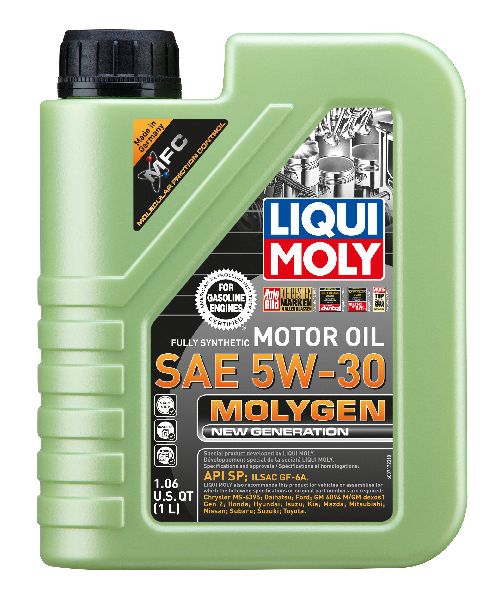
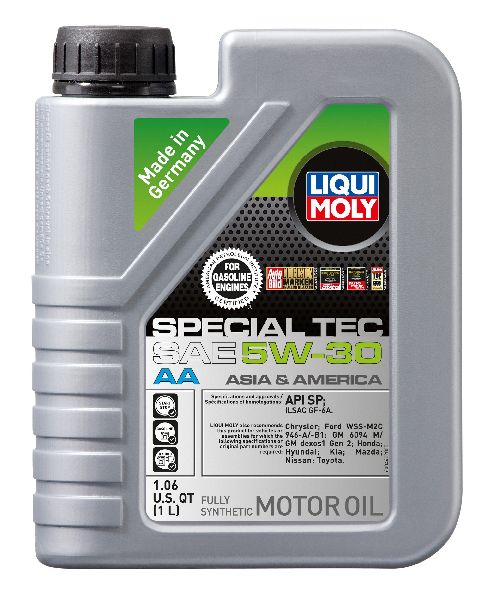
- To help prevent this issue, use high-quality, full synthetic oil that meets the GM Dexos specification and change it every 5,000 miles, regardless of what the oil life monitor says.
What's Unique About the 2008-2017 Chevrolet Equinox
The GM High Feature V6 engine family (including the 3.0L LF1 and 3.6L LFX) has a well-documented history of premature timing chain stretching. This issue was often made worse by the factory's optimistic Oil Life Monitor (OLM) system, which could recommend oil change intervals that were too long, leading to oil degradation and poor lubrication of the chains, guides, and tensioners. As a result, code P0019 on this specific platform is almost a direct diagnosis of a stretched timing chain, rather than a faulty sensor or solenoid, which are common misdiagnoses on other vehicles.
Generation note: The specified year range (2008-2017) covers the end of the first generation (2008-2009) and the full second generation (2010-2017) Equinox. However, the specified 3.0L LF1 and 3.6L LFX V6 engines were only available in the second-generation models (2010-2012 for the 3.0L, 2013-2017 for the 3.6L). This guide focuses on these second-generation V6 models, which share the timing chain issue with their platform mate, the GMC Terrain.
Symptoms You May Notice
- Check Engine Light is on
- Engine rattling, scraping, or "chainsaw" noise, especially on a cold start.
- Rough or unstable idle.
- Reduced engine power and poor acceleration.
- Increased fuel consumption.
- Engine may hesitate, stall, or be difficult to start.
- Service Stabilitrak warning message may appear.
- Replacing the camshaft position sensor. The sensor is usually doing its job correctly by reporting the timing discrepancy. Replacing it will not fix the underlying mechanical issue.
- Replacing the crankshaft position sensor. Similar to the camshaft sensor, this part is rarely the cause of a correlation code.
- Replacing only one component, like a single VVT solenoid, without addressing the high probability of a stretched timing chain.
- Performing an oil change and expecting it to fix a chain that has already stretched past its service limit.
Most Likely Causes
- Stretched Timing Chains 🔴 High Probability The original timing chains on the GM High Feature V6 engine family were susceptible to premature wear, a design issue acknowledged by GM through multiple TSBs like #12-06-01-009F. 🎬 Watch: Learn about GM's extended warranty and TSBs for these codes. The issue was most prevalent on pre-2012 models before an updated chain design was implemented.
How to confirm: Use a professional scan tool to monitor camshaft deviation data (Camshaft Position Variance). A variance of more than 4-5 degrees from the desired position at idle strongly indicates a stretched chain. A rattling noise from the front (passenger side) of the engine on cold starts is also a key indicator. Physical inspection after removing the front engine cover is the definitive confirmation.
Typical fix: Replace all three timing chains, all guides, and all tensioners with a new, updated kit. It is critical to use the newer design parts.
Est. part cost: $300-$700 - Failed Timing Chain Tensioners or Guides 🔴 High Probability The hydraulic tensioners rely on clean oil at the proper pressure to keep the chains tight. If they weaken or fail, the chain becomes slack. The plastic guides can also become brittle and break. This is typically addressed during a full timing chain job. Manufacturer bulletin Bulletin #PIP3423P notes that technicians should specifically inspect for loose timing chains or tensioners when P0019 is set.
How to confirm: This is confirmed during a physical inspection when replacing the timing chains. The tensioners will appear fully extended or may not hold pressure. Pieces of broken plastic guides are often found in the oil pan.
Typical fix: Replace as part of a complete timing chain kit. It is not recommended to replace only the tensioners or guides.
Est. part cost: $50-$150 (part of kit) - Low or Dirty Engine Oil 🟡 Medium Probability The entire variable valve timing (VVT) system, including the cam phasers and chain tensioners, is operated by oil pressure. Extended oil change intervals, often encouraged by the original Oil Life Monitor (OLM) calibration, lead to sludge and oil breakdown, starving these critical components of proper lubrication and causing accelerated wear.
How to confirm: Check the oil level on the dipstick and inspect its condition. If the level is low or the oil is dark, gritty, or sludgy, this is a likely contributor.
Typical fix: Perform an oil and filter change using a high-quality full synthetic oil matching GM's Dexos specification (e.g., 5W-30). Note: This will not fix a chain that is already stretched, but it is a critical first step and preventative measure. Experts now recommend 5,000-mile intervals regardless of the OLM reading.
Est. part cost: $50-$100
Rare But Worth Checking
- Faulty Camshaft Position Actuator Solenoid (VVT Solenoid): This is a rare cause for this specific code on this engine. The solenoid can get stuck or clogged with debris, but it's much less common than chain stretch. A common diagnostic step is to swap the Bank 2 exhaust solenoid with another one (e.g., Bank 1 exhaust) and see if the code follows to the new location. If it does, the solenoid is bad.
- Slipped Crankshaft Reluctor Wheel: Mentioned in GM TSB #PIP3423P, the tone ring on the crankshaft that the sensor reads can physically move, causing a correlation error. This is very rare and difficult to diagnose, sometimes requiring a borescope through the crank sensor hole or removal of the oil pan to visually inspect its position relative to the crankshaft throw.
Diagnosis Steps
- Check the engine oil level and condition. Top off or change if necessary with the correct full synthetic Dexos-approved oil. Clear the codes and see if P0019 returns. If it does, the chain is already stretched.
- Using a professional-grade scan tool, check for other related timing codes like P0008, P0009, P0016, P0017, or P0018. The presence of multiple codes makes a mechanical chain issue almost certain. Bulletin #PIP3423P confirms that these codes often set together when timing components fail.
- In the scan tool's live data, monitor the camshaft position deviation PIDs (e.g., 'Camshaft Position Variance') for all four cams. If the Bank 2 Exhaust cam shows a deviation of more than 4-5 degrees at idle, the timing chain is stretched.
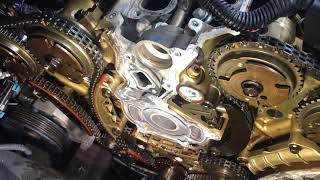
- Listen for a distinct rattling or scraping noise from the passenger side of the engine bay, especially during a cold start. This sound is a classic symptom of a loose timing chain. 🎬 See a mechanic diagnose a stretched chain on a GMC Terrain.
- If scan tool data confirms a deviation, do not replace sensors. The next step is to proceed with the mechanical repair of replacing the timing chain kit.
- As a less likely diagnostic step, if cam deviation is minimal, you can swap the Bank 2 exhaust VVT solenoid with the Bank 1 exhaust solenoid. If the code changes to P0017, the solenoid is faulty.
- If the timing chains are replaced and the code persists, investigate the rare possibility of a slipped crankshaft reluctor wheel as per TSB #PIP3423P.
Parts You'll Likely Need
- Engine Timing Chain Kit
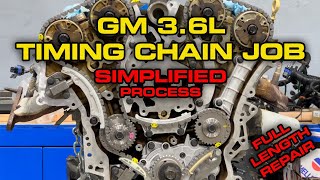
(OEM #ACDelco 12693218 (supersedes 12651450 for LF1), ACDelco 12700437 (for LFX))— This is the definitive fix. A complete kit replaces all wearable components (3 chains, 3 tensioners, all guides, gaskets, seals) to restore proper mechanical engine timing. 🎬 Watch: A full-length walkthrough of the timing chain replacement process. Using the updated parts is critical.
Trusted brands: ACDelco (OEM), Cloyes (e.g., 9-0753S), Gates, Melling
OEM price range: $400-$700
Aftermarket price range: $250-$500 - Engine Oil and Filter
(OEM #Dexos1 Full Synthetic 5W-30)— Fresh, clean oil is required after the repair to ensure the new components are properly lubricated. It's also a critical preventative measure.
Trusted brands: ACDelco, Mobil 1, Valvoline
OEM price range: $50-$100
Aftermarket price range: $40-$80
Related Codes That Often Appear With This One
- P0008 — This is a general engine position system performance code for Bank 1 and is often the first code to appear when timing chains begin to stretch.
- P0018 — This is the correlation code for the *intake* camshaft on the same bank (Bank 2). Seeing P0018 and P0019 together strongly points to a timing issue on Bank 2, likely a stretched secondary chain for that bank.
- P0016 / P0017 — These are the equivalent correlation codes for Bank 1 (intake and exhaust). Seeing codes for both banks (e.g., P0017 and P0019) indicates a widespread timing problem, almost certainly a stretched primary timing chain that feeds both banks.
- P0009 — This is the general engine position system performance code for Bank 2. It is functionally similar to P0008 but for the bank closer to the firewall.
Technical Service Bulletins (TSBs) & Recalls
- TSB #12-06-01-009F: Announces the availability of updated, comprehensive timing chain kits to address premature wear issues that cause codes like P0008, P0017, P0018, and P0019. It specifies which components to replace.
- TSB #PIP3423P (and later revisions): Instructs technicians to check for a slipped crankshaft reluctor wheel if timing correlation DTCs are present but the chains are found to be tight. This bulletin specifically lists P0019 as a code requiring inspection for loose timing chains or tensioners.
- TSB #18-NA-125: Provides information on how the Oil Life Monitor (OLM) calculates oil life, noting that starting in 2013, the system is capped at 7,500 miles.
Platform-Specific Known Issues
- The GM High Feature V6 engines (3.0L LF1, 3.6L LFX) are known for premature timing chain stretch, an issue acknowledged by GM with Technical Service Bulletins.
- The factory Oil Life Monitor (OLM) system often encouraged oil change intervals that were too long (sometimes over 10,000 miles), leading to oil breakdown that accelerated chain wear. Owners and experts now advise using high-quality full synthetic oil and changing it every 5,000 miles to prolong the life of the timing components.
- GM issued a special coverage adjustment for some vehicles with these engines, extending the warranty on the timing chains to 10 years or 120,000 miles. Owners should check with a dealer with their VIN to see if their vehicle was covered.
Mechanic-Grade Diagnostic Values
- Camshaft Position Actuator Solenoid (VVT Solenoid) Resistance — expected: 8 to 12 Ohms at room temperature.. Failure: A reading outside this range, or an open (infinite) or short (near-zero) reading, indicates a failed solenoid coil.
- Scan Tool Camshaft Angle Variance (Desired vs. Actual) — expected: Near 0 degrees at a stable idle.. Failure: A persistent variance greater than 4-5 degrees on the Bank 2 exhaust cam indicates a mechanical timing issue (stretched chain). The code may set with a deviation as low as 7-9 degrees.
- Camshaft Position Sensor Voltage (Live Data) — expected: Typically fluctuates between 0.5V and 4.5V as the engine runs.. Failure: A value that is stuck, out of range, or shows a noisy/erratic signal on an oscilloscope points to a sensor or wiring issue.
Scan Tool Commands That Help
- GDS2 / Professional Scan Tool: Camshaft Position Actuator Control — This bidirectional test allows a technician to command the Bank 2 exhaust solenoid on and off while the engine is running. If the solenoid and oil passages are working, activating it should cause the engine to run rough or stall. No change in engine operation points to a faulty solenoid, a clogged oil passage, or a wiring issue. This is a crucial step to rule out a simple solenoid failure before condemning the timing chains.
- GDS2 / Professional Scan Tool: Camshaft Position Correlation Test — This is an automated diagnostic function within the GM software that verifies if a timing correlation issue exists. It can be run after repairs to confirm the fix or during diagnosis to validate the presence of a fault under specific operating conditions.
Wiring & Ground Locations
- G110 — On the left rear of the engine (Bank 2), above the exhaust manifold on the 3.6L LFX.. This is a critical engine ground located on Bank 2, the same bank where the P0019 fault is detected. A loose or corroded connection at G110 can directly affect the signal integrity of the Bank 2 camshaft sensor and VVT solenoid, potentially causing erratic readings or a false code.
- G109 / G104 — On the right front of the engine (Bank 1).. This is a primary engine ground. While not on the affected bank, a poor connection here can introduce electrical noise into the overall system, potentially affecting ECM calculations and sensor readings. It's good practice to check all major engine grounds when diagnosing electrical faults.
- G112 — Located on the left rear of the engine.. Another key engine ground point. Ensuring all engine-to-chassis and battery-to-block grounds are clean and tight is a fundamental step before replacing any components, as a bad ground can mimic sensor or module failure.
- ECM Connector C1 (X1) — The Engine Control Module (ECM) is located on the right front of the engine compartment.. The Bank 2 Exhaust Cam Actuator Solenoid control circuit is on a specific pin of this connector (e.g., Pin 12 on some models). This is the central point for testing circuit continuity and voltage between the ECM and the component, ruling out wiring harness issues.
Real Owner Repair Stories
- YouTube comment section / Forum discussions (2013 Chevrolet Traverse 3.6L LFX (Same engine family)) — P0008, P0017, P0019 codes present. Classic timing chain rattle on startup.
❌ Tried (didn't work) Initial replacement of all timing chains, guides, and tensioners with an aftermarket kit.
✅ What actually fixed it The P0019 code (and others) persisted after the timing chain job. The mechanic discovered the aftermarket primary chain tensioner was faulty out of the box and not holding oil pressure correctly. Replacing the new, faulty aftermarket tensioner with an OEM ACDelco tensioner finally resolved the codes. - YouTube Channel - 'Maybe we diagnosed it wrong! GM 3.6 cam sensor faults.' (GM 3.6L vehicle (specific model not stated, but engine is relevant)) — Camshaft position sensor codes (P0346 initially).
❌ Tried (didn't work) Replacing the camshaft position sensor with a new OEM sensor., Replacing the sensor again with a second new OEM sensor., Replacing the sensor with a CarQuest aftermarket sensor.
✅ What actually fixed it The technician discovered that multiple new sensors, including two from the GM dealer and one aftermarket, were faulty out of the box. The issue was only resolved after finding a known-good sensor from another vehicle and installing it. This highlights the possibility of receiving bad replacement parts, even OEM ones, which can severely complicate diagnosis.
OEM Part Supersession History
12651450→12693218— Updated timing chain kit for 3.0L LF1 engines to address premature stretching.Varies by year→ACDelco 12700437 (example for LFX)— Updated timing chain kit for 3.6L LFX engines with improved chain and guide design.
Heads up: GM TSB #12-06-01-009 specifically notes that when replacing chains for stretch-related codes (like P0019), it is often unnecessary to replace the idler sprockets, camshaft actuators, or crankshaft gear, as they are not typically worn. Replacing only the chains, guides, and tensioners from the kit is often sufficient.
Model Year Variations Within This Range
- 2010-2012: These models primarily used the 3.0L LF1 V6 engine. The timing chain issues were particularly prevalent in these earlier years, leading to multiple TSBs and updated part designs.
- 2013-2017: These models used the 3.6L LFX V6, which featured some improvements to the timing chain system from the factory. While still susceptible to the issue, especially with poor maintenance, the failure rate is generally considered lower than on the earlier 3.0L and 3.6L (LLT) engines.
Diagnostic Flowchart
Real Owner Stories
Aggregated from forums and TSBs cited above. Mileages and costs reflect what owners reported in those sources.
Chevrolet Equinox
Symptoms: Owner sought estimates for a timing chain and guides repair.
What fixed it: Timing chain job (quoted estimate).
Cost: $1200-$1500
Source hint: https://www.chevroletforum.com/forum/equinox-23/estimates-timing-chain-guides-repair-103348/
Chevrolet Camaro LFX
Symptoms: Timing codes persisted even after a complete timing chain replacement.
What fixed it: Diagnosed and repaired a slipped crankshaft reluctor wheel.
Source hint: https://www.camaro5.com/forums/showthread.php?t=587849
2013 Cadillac SRX
Symptoms: Vehicle presented with P0019 and P0024 codes.
What fixed it: Technician referenced a bulletin regarding a bad batch of VVT solenoids, though noted that chain stretch was the more likely root cause.
Source hint: https://www.reddit.com/r/MechanicAdvice/comments/s2g9t2/my_soninlaws_2013_cadillac_srx_p0019_and_p0024/
Related OBD-II Codes
Frequently Asked Questions
Does GM have a recall or extended warranty for the timing chain issue on my Equinox?
What does TSB #12-06-01-009F mean for my 3.0L/3.6L V6?
I replaced the timing chains on my Equinox but P0019 came back. What else could it be?
Can I just follow the factory Oil Life Monitor (OLM) to prevent timing chain stretch?
How can I confirm my Equinox's timing chain is stretched without tearing down the engine?
Could a bad VVT solenoid cause P0019 on my 3.6L LFX?
Helpful Videos
Used OEM Parts in Stock
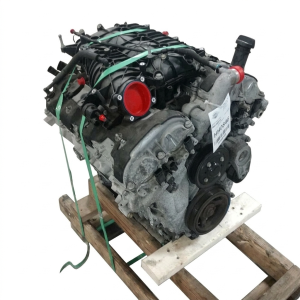
New Aftermarket Parts Available



The information in this article is provided for general reference and educational purposes only. Vehicle specifications, procedures, and part compatibility can vary by production date, trim level, and region. Always consult your vehicle's factory service manual and verify part numbers before purchasing or performing repairs. Safety-critical components such as airbags, seat belts, and braking systems should be installed by a qualified professional.
- Chevrolet Equinox:
- 🎬 Helpful Videos
- 🛍️ Shop This Part
- What's Unique About the 2008-2017 Chevrolet Equinox
- Symptoms You May Notice
- Most Likely Causes
- Rare But Worth Checking
- Diagnosis Steps
- Parts You'll Likely Need
- Related Codes That Often Appear With This One
- Technical Service Bulletins (TSBs) & Recalls
- Platform-Specific Known Issues
- Mechanic-Grade Diagnostic Values
- Scan Tool Commands That Help
- Wiring & Ground Locations
- Real Owner Repair Stories
- OEM Part Supersession History
- Model Year Variations Within This Range
- Diagnostic Flowchart
- Real Owner Stories
- Chevrolet Equinox
- Chevrolet Camaro LFX
- 2013 Cadillac SRX
- Related OBD-II Codes
- Frequently Asked Questions
- 🎟️ Get 5% Off