

P0018 on 2009-2016 Hyundai Genesis: Crank-Cam Correlation Causes and Fixes
P0018 on a Hyundai Genesis indicates a timing mismatch between the crankshaft and the Bank 2 intake camshaft. The most common causes are low or dirty engine oil, or a faulty Oil Control Valve (OCV). An oil change and OCV replacement are the most likely fixes, costing between $100 and $300 for parts. In some higher mileage cases, it can signify a stretched timing chain.
- Always start by checking your engine oil. A simple oil change with the correct, high-quality oil can sometimes fix this code.
- The most likely failed part is the Bank 2 intake Oil Control Valve (OCV). It's relatively inexpensive and accessible.
- Swapping the Bank 2 OCV with the Bank 1 OCV is a reliable, no-cost diagnostic step to confirm a faulty valve.
- If you hear a rattling noise from the engine, especially on a cold start, it's a strong indicator of a stretched timing chain, which is a more serious and expensive repair.
What's Unique About the 2009-2016 Hyundai Genesis

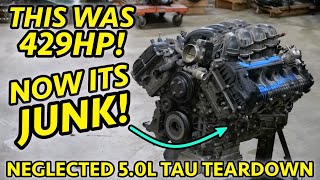
The Hyundai Genesis models in this year range use a Continuous Variable Valve Timing (CVVT) system that is highly dependent on clean engine oil and correct oil pressure to function. For both the Lambda V6 and Tau V8 engines, issues like sludge buildup from extended oil change intervals or using the wrong oil viscosity can quickly lead to timing correlation codes like P0018. A teardown of a 5.0L Tau V8 with only 94k miles showed extreme sludge and metal contamination in the oil filter due to poor maintenance, which directly impacts the CVVT system. 🎬 Watch: See how poor maintenance destroys the Tau V8 engine. While the underlying cause is often simple (oil-related), a stretched timing chain is also a known, more serious possibility on higher-mileage examples, a repair that can be labor-intensive.
Generation note: This guide covers the first generation (BH, 2009-2014) and the second generation (DH, 2015-2016) of the Hyundai Genesis sedan. The 4.6L V8 was exclusive to the first generation. The 5.0L V8 was introduced in 2012. The causes and diagnostic procedures for P0018 are broadly similar across these generations and engine types as they share similar CVVT system designs. However, Lambda II engines (2009+) feature Dual CVVT, adding complexity over earlier single-CVVT versions.
Symptoms You May Notice
- Check Engine Light is on
- Rough or erratic idle
- Reduced engine power and poor acceleration
- Engine may hesitate or stall
- Decreased fuel mileage
- Rattling or knocking noise from the engine, especially on startup
- Engine is hard to start or won't start
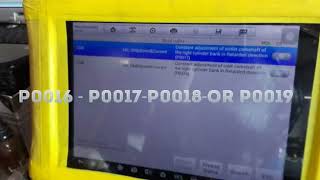
- Replacing the camshaft or crankshaft position sensor when the actual problem is oil-related (low/dirty oil or a bad OCV). Always check the oil and OCVs first, as they are the most common and cheapest fixes. 🎬 Watch: 4 DIY methods to fix the P0018 engine code.
- Assuming a timing chain job is needed immediately. While possible, the much more common OCV and oil issues should be ruled out completely before committing to expensive mechanical repairs.
Most Likely Causes

- Low, Dirty, or Incorrect Viscosity Engine Oil 🔴 High Probability The CVVT system uses oil pressure to adjust cam timing. Sludge from infrequent oil changes or incorrect oil can clog the small passages in the Oil Control Valves (OCVs) or cam phasers. Some owners report the code appearing immediately after an oil change at a non-dealer shop, suggesting aftermarket cartridge filters may sometimes cause oil pressure issues, a concern noted in Hyundai TSBs for other noises.
How to confirm: Check the oil level and condition on the dipstick. If the oil is low, black, or sludgy, or if it's been a long time since the last oil change, this is the most likely starting point. A user on Reddit noted their code was triggered by having no oil on the dipstick.
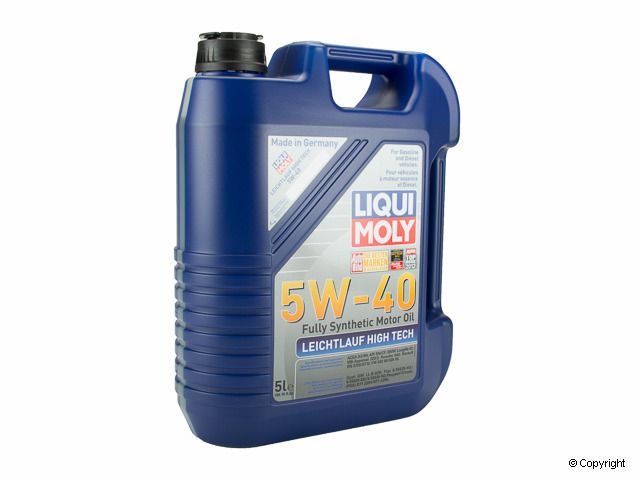
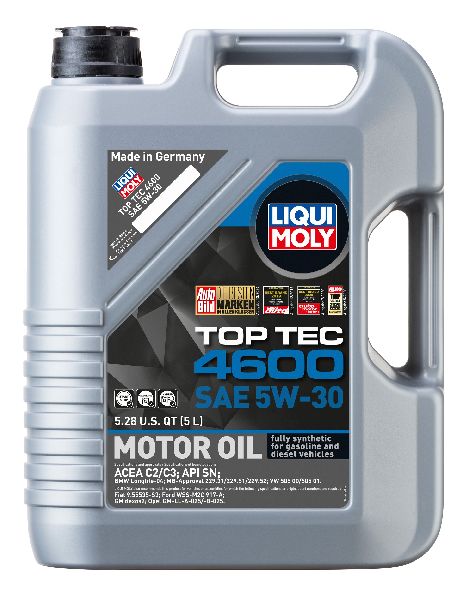
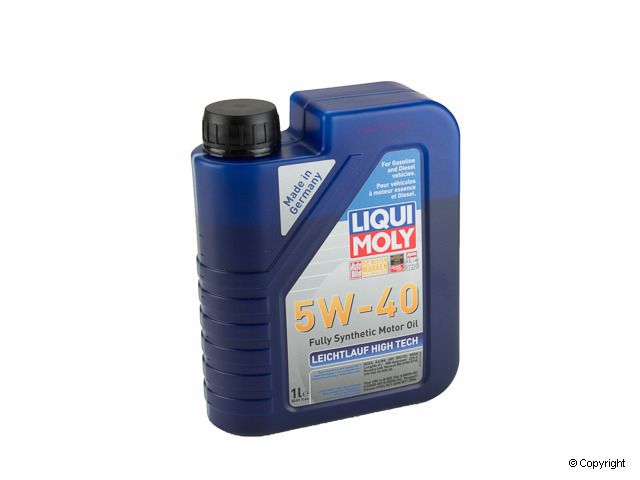
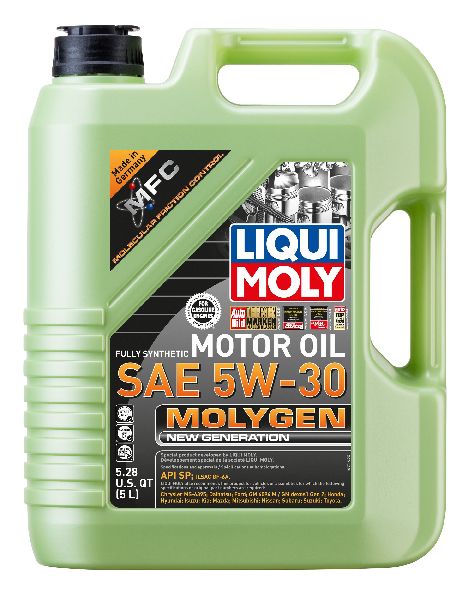
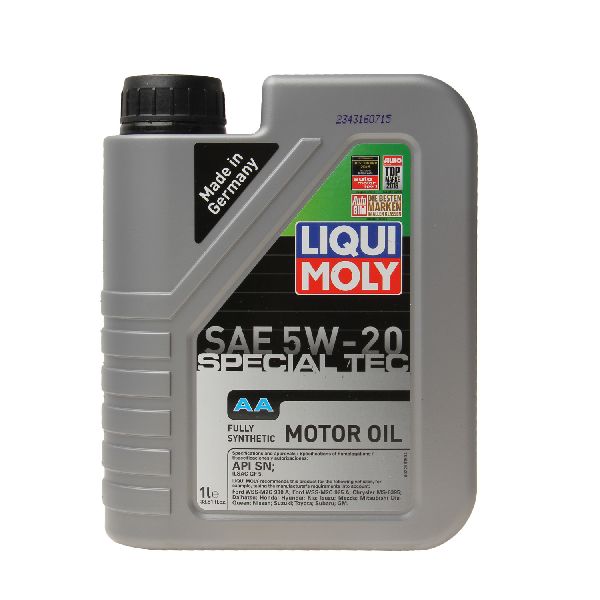
Typical fix: Perform an engine oil and filter change using a high-quality full synthetic oil that meets Hyundai's specifications (e.g., 5W-30 or 5W-20 depending on engine and year). Always use a quality OEM or equivalent oil filter.
Est. part cost: $40-$90 - Faulty Camshaft Oil Control Valve (OCV) / VVT Solenoid 🔴 High Probability The OCV is an electronic solenoid that can get clogged with oil sludge or fail electrically, causing it to stick open or closed. This is a very common failure point across Hyundai/Kia vehicles with CVVT.
How to confirm: You can test the solenoid's resistance with a multimeter. According to Hyundai TSB 09-EM-002, the resistance should be between 6.7-7.9 ohms depending on the supplier (Delphi or Denso). A common diagnostic technique is to swap the Bank 2 intake OCV with the Bank 1 intake OCV. If the trouble code changes to P0016 (Bank 1), the OCV is faulty.
Typical fix: Replace the Bank 2 intake Oil Control Valve. It's often recommended to replace both intake OCVs at the same time. The part is located on the front of the valve cover for the respective bank.
Est. part cost: $60-$150 - Stretched Timing Chain or Failed Tensioner 🟡 Medium Probability Over time, especially on higher-mileage vehicles (over 100k miles), the timing chain can stretch or the hydraulic tensioners can weaken, creating slack and causing timing correlation errors. This is a known issue on some Hyundai engines, and if the timing jumps a tooth, it will throw this code.
How to confirm: This is an involved diagnosis. A mechanic would typically remove the valve cover to inspect for chain slack. A rattling noise on cold startup is a common symptom. In a forum thread, a user with P0018 and P0019 on an Audi (similar V6 design) confirmed timing was correct at 0 RPM but was likely off when running, pointing to a tensioner or phaser issue.
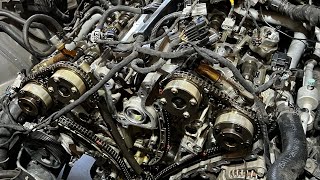
Typical fix: Replace the timing chain, tensioners, and guides. This is a labor-intensive job that can sometimes 🎬 See this walkthrough of a 3.8L timing chain replacement. require engine removal on the V6 models.
Est. part cost: $400-$1200 - Faulty Camshaft Position Sensor (CMP) ⚪ Low Probability
How to confirm: The sensor's output can be checked with an oscilloscope. Swapping the Bank 2 sensor with the Bank 1 sensor is a less reliable test, as a true timing issue will still be reported by the swapped sensor, but it can sometimes identify an intermittently failing sensor.
Typical fix: Replace the Bank 2 intake camshaft position sensor.
Est. part cost: $50-$120
Rare But Worth Checking
- Failed CVVT Cam Phaser/Actuator: The gear itself at the end of the camshaft can fail mechanically or become clogged with sludge. This is less common than an OCV failure but can happen if the engine has been run with dirty oil for an extended period. This repair is complex and expensive, often done along with a timing chain replacement.
- Faulty Crankshaft Position Sensor (CKP): It is rare for the CKP sensor to cause a single-bank code like P0018 without other codes present. However, if the sensor is failing intermittently, it could contribute to correlation errors.
- Damaged or Shifted Crankshaft Reluctor Wheel: The reluctor wheel (or tone ring) that the crankshaft position sensor reads can become damaged or shift its position on the crankshaft, leading to incorrect timing signals. This is a rare but possible cause.
Diagnosis Steps

- Check Engine Oil: Verify the oil level is correct and the oil is clean. If low, dirty, or the wrong type, perform an oil and filter change with manufacturer-specified oil (e.g., full synthetic 5W-30). Clear the code and see if it returns.
- Scan for Other Codes: Check for any other related codes that could provide more clues (e.g., P0019, P0016).
- Inspect OCV Wiring: Check the wiring and connector for the Bank 2 intake Oil Control Valve (OCV) for any damage or loose connections.
- Test/Swap the OCV: Swap the Bank 2 intake OCV with the Bank 1 intake OCV. Clear the codes and drive the vehicle. If the code changes to P0016, the OCV you moved is faulty and needs to be replaced. Alternatively, test the OCV resistance with a multimeter; it should be around 6.7-7.9 ohms.
- Test the Camshaft Position Sensor: If the OCV is not the issue, you can perform a similar swap with the camshaft position sensors between banks to see if the code follows the sensor.
- Inspect Mechanical Timing: If the above steps do not resolve the issue, the problem is likely mechanical. This involves removing the valve cover and potentially the timing cover to inspect the timing chain for slack, and checking the cam phasers and reluctor wheels. This step is best performed by a professional mechanic.
Parts You'll Likely Need

- Engine Oil and Filter — The CVVT system is sensitive to oil condition. This is the first and most important step.
Trusted brands: Pennzoil Platinum, Mobil 1, Castrol EDGE, Hyundai OEM Filter
OEM price range: $60-$100
Aftermarket price range: $40-$80 - Camshaft Oil Control Valve (OCV)
(OEM #3.8L V6 (Bank 2 Intake): 24375-3C111 or 24375-3C100. 4.6L/5.0L V8 (Bank 2 Intake): 24375-3F100. Always verify by VIN.)— This solenoid is a very common failure point, either by clogging or electrical fault.
Trusted brands: Hyundai/Kia OEM, Dorman
OEM price range: $80-$150
Aftermarket price range: $40-$90 - Timing Chain Kit — If the chain has stretched or the tensioners have failed, a complete kit is needed to restore proper timing.
Trusted brands: Hyundai/Kia OEM
OEM price range: $400-$1200
Aftermarket price range: $300-$800
Related Codes That Often Appear With This One
- P0019 — P0019 is the correlation code for Bank 2, Sensor B (the exhaust camshaft). If both P0018 and P0019 are present, it points more strongly toward a base timing issue (like a stretched chain or jumped tooth) affecting the entire bank, rather than a single sensor or OCV.
- P0016 — P0016 is the equivalent correlation code for Bank 1. If you see both P0016 and P0018, it could indicate a widespread oiling problem, a faulty crankshaft position sensor, or a more severe timing chain issue affecting the entire engine.
Technical Service Bulletins (TSBs) & Recalls
- Hyundai TSB 09-EM-002: While not for P0018 specifically, this bulletin provides the official test procedure for Oil Control Valves (OCVs), including the resistance specification (6.7-7.9 ohms), which is a primary diagnostic step for this code.
- Subaru TSB 11-130-13R: This is a Subaru bulletin for similar correlation codes (P0016/17/18/19). It provides an excellent diagnostic flowchart that is conceptually applicable to the Genesis, emphasizing checking for oil level/quality, debris in the OCV, and proper oil filter usage before moving to mechanical inspection.
Platform-Specific Known Issues
- There have been numerous recalls and TSBs related to engine issues on various Hyundai models. Notably, a class-action lawsuit alleges that 3.3L Lambda II GDI engines (a close relative of the 3.8L) can suffer from premature wear and catastrophic failure due to internal metal debris circulating in the oil. While not specific to P0018, this highlights the engine family's sensitivity to oil quality and internal cleanliness, which are root causes of this code.
- A teardown of a 5.0L Tau V8 with under 100k miles showed severe oil sludge and metal contamination from extended oil change intervals, destroying internal components and clogging CVVT passages. This serves as a real-world example of how neglect leads directly to timing-related fault codes.
Mechanic-Grade Diagnostic Values
- Camshaft vs. Crankshaft Deviation (2012 Genesis BH) — expected: Less than 7 degrees of deviation between adapted CMP value and set value.. Failure: If | Adapted CMP – Set value | > 7 Degrees, the ECM may set DTC P0018.
- Camshaft vs. Crankshaft Deviation after install (2012 Genesis BH) — expected: Less than 20 degrees of deviation from the initial learned installation value.. Failure: If | Adapted CMP – Set value – Adapted CMP during install diagnosis | > 20 Degrees, the ECM may set DTC P0018.
- Timing Misalignment vs. Oil Temperature (2012 Genesis Coupe BK) — expected: Less than 1 tooth of misalignment when oil is hot (80-90°C).. Failure: The threshold for setting a code is 1 tooth of misalignment when oil is between 80-90°C (176-194°F), but loosens to 2 teeth of misalignment when the oil is colder or hotter than that range.
Hidden / Shadow Codes Worth Checking
- P0018pd: This is a 'pending' code. It indicates that the fault condition has been detected during the current or last driving cycle, but the full criteria for illuminating the Check Engine Light (e.g., happening on two consecutive trips) have not yet been met. (see via Most standard OBD-II scanners can display pending codes in a separate menu from the main 'stored' or 'active' codes.)
Scan Tool Commands That Help
- Hyundai GDS (Global Diagnostic System): Resetting Auto T/A values / Resetting adaptive values — This function should be used after replacing components like OCVs, camshaft sensors, or performing major engine work. It erases the PCM's learned values, forcing it to relearn based on the new parts, which is critical for optimal performance.
- Hyundai GDS (Global Diagnostic System): Actuation Test / Active Test — This allows a technician to command the CVVT OCV solenoids to operate directly from the scan tool. This can confirm if the solenoid is physically responding to commands, helping to isolate a bad solenoid from a wiring or PCM issue.
- Hyundai GDS (Global Diagnostic System): Flight Record / Data Analysis — For intermittent faults, this function can record live data from various sensors during a drive cycle. After the fault occurs, the recording can be reviewed to analyze sensor readings at the exact moment of the failure, which is invaluable for diagnosis.
Wiring & Ground Locations
- GE03 — Engine compartment, on the left front of the engine compartment.. A poor engine ground can cause erratic sensor readings and unpredictable behavior from electronically controlled devices like the OCVs. Ensuring this primary ground is clean and tight is a fundamental electrical check.
- GE04 — Engine compartment, on the lower right rear of the engine compartment.. Similar to GE03, this is another critical engine ground point. Voltage drops across bad grounds can lead to incorrect sensor data being sent to the PCM, potentially triggering correlation codes.
- Bank 2 CMP & OCV Connectors — On the front of the Bank 2 (driver's side) valve cover. The CMP sensor is typically a 3-pin connector, while the OCV is a 2-pin connector.. These are the primary connection points to test for power, ground, and signal at the components themselves. Wiggling these connectors while the engine is running can help identify intermittent connection issues.
Real Owner Repair Stories
- Reddit user on r/genesiscoupe (Genesis Coupe (year not specified, but BK generation 2010-2016)) — Persistent P0018 code and terrible startup noise.
❌ Tried (didn't work) The original poster had already replaced the timing chain multiple times without success.
✅ What actually fixed it For the commenting user, the final fix was replacing the cam phaser assembly itself, not just the chain or OCV solenoid. - Reddit user on r/MechanicAdvice (2014 Hyundai Santa Fe 3.3L V6 (Lambda engine family), ~124k miles) — P0018 Check Engine Light, history of oil consumption.
❌ Tried (didn't work) A major repair 15 months prior for the same code involved replacing the Bank 2 intake camshaft because the alignment pin had sheared off due to a low oil situation.
✅ What actually fixed it When the code returned 15 months later despite correct oil levels, the dealership diagnosed a faulty VVT solenoid (OCV) as the next likely failure point. This story shows how an initial oiling problem can cause a cascade of failures over time, first the mechanical camshaft and later the electronic solenoid. - 2CarPros Forum user (2014 Hyundai Genesis Coupe 3.8L V6) — P0018 and P0019 codes present simultaneously.
❌ Tried (didn't work) The user replaced the Bank 2 OCVs (both intake and exhaust implied by the codes).
✅ What actually fixed it The user reported that replacing the OCVs did not fix the issue, and the codes remained. The advising expert suggested the next step is a mechanical timing inspection, as having both intake and exhaust codes on one bank points strongly to a base timing issue (stretched chain/bad tensioner) rather than individual component failure. The thread ends here, but confirms that OCV replacement is not always the fix.
When the Usual Fixes Don't Work
- In one documented case on a Genesis Coupe, a user replaced the timing chain multiple times to fix a P0018 code, but the problem persisted. The final solution was replacing the entire cam phaser assembly, indicating that the phaser itself had failed internally in a way that a new chain could not correct. This shows that even when a stretched chain is suspected, the phaser can be the true root cause.
Documented NHTSA Reports
- NHTSA ODI #11606626 describes a situation where P0018 was pulled alongside misfire codes, resulting in a dealership recommendation to replace the left intake camshaft, CVVT, and timing chain.
- NHTSA ODI #11434884 reports that after a diagnosis of P0018 and misfires on cylinders 2, 4, and 6, a dealer determined the CVVT timing chain and tensioners were bad.
- NHTSA ODI #11618527 notes a case where a mechanic identified a "minor timing issue" associated with code P0018 that prevented the vehicle from passing emissions.
- NHTSA ODI #11572245 reports a catastrophic engine failure at 113,000 miles where the engine lost power and entered limp mode with a P0018 code, showing no compression in bank 2 cylinders.
OEM Part Supersession History
24375-3C100→24375-3C111 (Verify by VIN)— Part revision or supplier change. Functionality is the same.
Heads up: While often interchangeable, it is critical to verify the correct part number for your specific engine (3.8L vs 4.6L/5.0L) and VIN, as there are multiple OCV part numbers for the Lambda and Tau engine families (e.g., 24375-3F100 for V8s).
Model Year Variations Within This Range
- 2009-2011 (approx.): Early 3.8L Lambda V6 engines in the Genesis (BH) were based on the Lambda II MPI design, which featured Dual CVVT (intake and exhaust). This is more complex than the first-generation Lambda engines (pre-2009) which only had intake CVVT.
- 2012-2016: Starting around 2012, Hyundai introduced Gasoline Direct Injection (GDI) versions of the 3.8L V6 (Lambda II GDI) and 5.0L V8 (Tau GDI). These engines have higher compression ratios and different fuel systems. While the CVVT principles are similar, part numbers for sensors and solenoids may differ from their MPI counterparts.
Diagnostic Flowchart
Used vs. New Parts: Buying Guide for This Vehicle
When a used part is the smart pick: For this specific repair, sourcing used parts is generally not recommended for any of the core causative components. The only parts where a used component might be considered are purely cosmetic or basic structural items like an engine cover or a wiring harness connector if the original is physically broken.
Donor-vehicle mileage cap: roughly under 50000 miles for the part to have meaningful remaining life.
What to inspect on the donor part:
- For any considered part, verify the donor vehicle had no signs of engine sludge or poor maintenance.
- Check for a documented service history if possible.
- Avoid parts from engines that experienced catastrophic failure.
OEM-only on this vehicle (don't cheap out):
- Engine Oil Filter: Due to TSBs and forum reports of aftermarket filters causing oil pressure issues that trigger CVVT codes, using an OEM Hyundai/Kia filter is strongly advised.
- Timing Chain and Tensioners: This is a high-labor, critical repair. The risk of premature failure with unverified aftermarket kits is too high. Use OEM to ensure longevity.
- Cam Phasers (CVVT Actuators): These are complex, oil-pressure-driven components. Aftermarket quality is inconsistent; OEM is the reliable choice.
Aftermarket brands forum-validated for this vehicle:
- Dorman (For Oil Control Valves/Solenoids)
Brands owners have reported issues with on this vehicle:
- Unnamed/white-box oil filters
- No-name electronic sensors and solenoids from online marketplaces
Real Owner Stories
Aggregated from forums and TSBs cited above. Mileages and costs reflect what owners reported in those sources.
Hyundai Genesis
Symptoms: The P0018 code appeared after the owner discovered there was no oil showing on the dipstick. An oil change made the light go away, but it returned.
What fixed it: The initial oil change was a temporary fix. Another user in the same discussion recommended using a genuine OEM oil filter, as aftermarket filters can sometimes cause this code.
Source hint: Reddit r/MechanicAdvice - 'What does engine code P0018 mean and can I keep driving the car?'
2014 Hyundai Genesis Coupe
Symptoms: Check Engine Light was on with codes P0018 and P0019.
What fixed it: The owner replaced the Oil Control Valve (OCV), but the code remained. The presence of both codes on the same bank suggests the actual problem is more likely a base timing issue, like a stretched timing chain.
Source hint: 2CarPros - '2014 Hyundai Genesis Coupe Codes P0019 and P0018, How to Repair'
Hyundai Genesis 5.0L V8 — 94000 miles
Symptoms: Severe oil sludge and metal contamination were found throughout the engine, clogging CVVT passages and causing timing component failure.
What fixed it: The engine was destroyed due to severe neglect from extended oil change intervals. This serves as an example of failure, not a successful repair.
Source hint: YouTube - 'NEGLECTED HYUNDAI MUSCLE!? EQUUS 5.0L TAU V8 Destroyed by Extended Oil Change Intervals'
Hyundai Genesis Coupe
Symptoms: A persistent P0018 code that could not be resolved.
What fixed it: Mechanics changed the timing chain multiple times, but the code did not go away. This highlights a difficult diagnosis where the most common mechanical fix was not the solution, pointing towards other potential causes like the cam phaser or sensor.
Source hint: Reddit r/genesiscoupe - 'P0018'
Related OBD-II Codes
Frequently Asked Questions
My mechanic says I need a new timing chain, but my Genesis only has 100,000 miles. Is this a common failure?
I got an oil change at a non-Hyundai shop and my Check Engine Light came on with code P0018 right after. Could the oil change be the cause?
How can I test the Oil Control Valve (OCV) on my Genesis myself?
Is it safe to continue driving my Genesis with an active P0018 code?
Why is the timing chain replacement so expensive for this car?
I have both P0018 and P0019 codes. Does this point to a specific problem?
Helpful Videos


![How to Fix P0018 Engine Code in 6 Minutes [4 DIY Methods / Only $6.99]](https://img.youtube.com/vi/Q5hH0fs65Y8/mqdefault.jpg)
We Have This Part in Stock

The information in this article is provided for general reference and educational purposes only. Vehicle specifications, procedures, and part compatibility can vary by production date, trim level, and region. Always consult your vehicle's factory service manual and verify part numbers before purchasing or performing repairs. Safety-critical components such as airbags, seat belts, and braking systems should be installed by a qualified professional.
- Hyundai Genesis:
- 🎬 Helpful Videos
- 🛍️ Shop This Part
- What's Unique About the 2009-2016 Hyundai Genesis
- Symptoms You May Notice
- Most Likely Causes
- Rare But Worth Checking
- Diagnosis Steps
- Parts You'll Likely Need
- Related Codes That Often Appear With This One
- Technical Service Bulletins (TSBs) & Recalls
- Platform-Specific Known Issues
- Mechanic-Grade Diagnostic Values
- Hidden / Shadow Codes Worth Checking
- Scan Tool Commands That Help
- Wiring & Ground Locations
- Real Owner Repair Stories
- When the Usual Fixes Don't Work
- Documented NHTSA Reports
- OEM Part Supersession History
- Model Year Variations Within This Range
- Diagnostic Flowchart
- Used vs. New Parts: Buying Guide for This Vehicle
- Real Owner Stories
- Hyundai Genesis
- 2014 Hyundai Genesis Coupe
- Hyundai Genesis 5.0L V8 — 94000 miles
- Hyundai Genesis Coupe
- Related OBD-II Codes
- Frequently Asked Questions
- 🎟️ Get 5% Off