

P0016 on 2020-2024 GMC Yukon: Crank/Cam Timing, Lifter Failure, and Engine Recall Explained
P0016 on a GMC Yukon is a critical code indicating a mechanical timing issue, not a simple sensor fault. The most likely causes are a stretched timing chain, failed Dynamic Fuel Management (DFM) lifters, or, on 2021-2024 6.2L models, a major internal engine defect related to the crankshaft or connecting rods, which is covered by a safety recall. Do not drive the vehicle; immediate professional diagnosis is required as this code is the specific trigger for an engine replacement under the recall.
- P0016 on a 2020-2024 Yukon is a critical warning of a mechanical engine problem and should be addressed immediately.
- Do not assume the problem is a bad sensor; the most common causes are a stretched timing chain or failed DFM lifters.
- If you own a 2021-2024 Yukon with the 6.2L V8, check with a GM dealer to see if your vehicle is part of Safety Recall N252494002, as this code could indicate a defect requiring engine replacement.
- Regular oil changes with high-quality, OEM-spec synthetic oil are crucial for the health of the VVT and DFM systems.
- Continued driving with this code can lead to catastrophic engine failure, turning a costly repair into a complete vehicle loss.
What's Unique About the 2020-2024 Gmc YUKON
On this specific generation of GMC Yukon with the 5.3L or 6.2L V8, code P0016 is an exceptionally serious warning. These engines are known for issues with their Dynamic Fuel Management (DFM) systems, where specialized lifters can fail at extremely low mileage, causing misfires and potential camshaft damage. Furthermore, a major safety recall (N252494002) was issued for many 2021-2024 6.2L L87 engines due to manufacturing defects, specifically sediment contamination in crankshaft oil galleries and out-of-specification connecting rods. These defects can lead to catastrophic engine failure, and the diagnostic procedure for this recall explicitly uses DTC P0016 as the determining factor for a complete engine replacement. GM received over 28,000 field complaints related to this engine issue. GM also issued a TSB (#N252510320) for a software update that adds a specific Driver Information Center (DIC) warning message if P0016 is set, underscoring the code's severity on these vehicles.
Diagnostic Flowchart
Tap your situation to follow the diagnostic path that matches what you're seeing on this vehicle.
Generation note: This range covers the end of the fourth generation (2020 model year) and the beginning of the fifth generation (2021-2024). The V8 engines (L83/L86 in 2020, L84/L87 in 2021+) are from the same EcoTec3 family and share similar architecture. The 2021+ models with DFM are particularly prone to lifter failures, and the 2021-2024 6.2L L87 is subject to a major engine recall. The L84 (5.3L) and L87 (6.2L) engines introduced in 2019 feature Dynamic Fuel Management (DFM), an evolution of the previous Active Fuel Management (AFM) system.
Symptoms You May Notice
- Check Engine Light is on.
- A distinct rattling, clanking, or sharp ticking noise from the engine, especially noticeable on a cold start, that may initially go away as the engine warms up.
- Rough or unstable idle, sometimes feeling like a mild camshaft has been installed.
- Engine hesitation, stuttering, or reduced power.
- Engine cranks but fails to start.
- Vehicle stalling unexpectedly while driving.
- Replacing the camshaft position sensor or crankshaft position sensor. These sensors are usually accurately reporting a real mechanical problem, and replacing them will not fix the code.
- Swapped electrical connectors after a previous repair. TSB 19-NA-150 notes that the connectors for the intake cam actuator solenoid and the intake actuator park lock solenoid are identical and can be easily swapped, which will set P0016 immediately.
Most Likely Causes
- Failed Dynamic Fuel Management (DFM) Lifters 🔴 High Probability The complex DFM lifters are a well-documented, widespread failure point on 2021+ GM V8s, often failing with very low mileage (under 10,000 miles). A lifter can become stuck, collapse, or have its roller bearing fail, which then damages the camshaft lobe, directly affecting timing and triggering P0016.
How to confirm: Diagnosis starts with listening for a characteristic ticking/knocking noise. A mechanic will then likely perform a compression test and proceed to remove the valve covers and cylinder heads to physically inspect the lifters and camshaft for damage.
Typical fix: Replacement of all 16 lifters (both DFM and standard) and the camshaft if it has been damaged. It is common for dealers to only replace the lifters on the failed bank, which can lead to the other bank failing soon after. Some owners outside of warranty opt for a DFM delete kit, which involves replacing the DFM lifters with standard lifters and reprogramming the ECM to disable the system. 🎬 See a mechanic's permanent fix for GM lifter failure
Est. part cost: $500-$1500 - Stretched Timing Chain or Failed Tensioner 🟡 Medium Probability While less common than lifter issues on these specific model years, timing chain stretch is a known issue on the GM V8 family, often accelerated by extended oil change intervals. A failed tensioner can allow the chain to jump a tooth, causing an immediate and significant timing error.
How to confirm: A mechanic must remove the engine front cover to physically inspect the chain for slack and verify the timing marks on the sprockets are aligned. Broken pieces of plastic from the timing chain guides may be found in the oil pan.
Typical fix: Replacement of the timing chain, sprockets, guides, and tensioner as a complete kit.
Est. part cost: $200-$450 - Low Engine Oil Level or Incorrect Viscosity 🟡 Medium Probability The camshaft phasing (VVT) system and DFM system are both hydraulically operated by engine oil pressure. Low oil level, dirty oil, or incorrect viscosity can starve these components, causing them to malfunction and trigger a correlation code. The 6.2L engine recall remedy for vehicles that pass inspection involves switching to a higher viscosity 0W-40 oil, highlighting the oil's importance.
How to confirm: Check the oil level on the dipstick and verify its condition. Confirm the correct oil type is being used per the owner's manual.
Typical fix: Perform an oil and filter change with the correct OEM-specified full synthetic oil and a quality filter.
Est. part cost: $50-$120 - Faulty Camshaft Position Actuator Solenoid (VVT Solenoid) 🟡 Medium Probability This solenoid controls oil flow to the cam phaser. It can become clogged with sludge from poor maintenance or engine debris (e.g., from a failing lifter) or fail electronically, preventing the camshaft from adjusting its timing correctly.
How to confirm: A mechanic can command the solenoid with a scan tool to check for response. It can also be removed and tested for resistance and proper mechanical operation. A typical resistance value is between 8 and 13 ohms.
Typical fix: Replacement of the Bank 1 intake VVT solenoid.
Est. part cost: $40-$100
Rare But Worth Checking
- Internal Engine Defect (6.2L L87 Engine): For 2021-2024 models with the 6.2L V8, this code is the primary indicator of a critical manufacturing defect in the crankshaft or connecting rods, as outlined in GM Safety Recall N252494002. The defect can cause a loss of propulsion. If a dealer confirms P0016 is active on an affected vehicle, the mandated repair is a complete engine replacement.
- Failed Camshaft Phaser: The mechanical phaser sprocket on the camshaft can fail internally, getting stuck in one position or losing its ability to adjust timing. This is less common than a solenoid failure but is a possible cause, especially if a timing chain replacement is being performed.
- Slipped Crankshaft Reluctor Wheel: GM has issued service bulletins (e.g., PIP3423P, PIP5183) for other engine families where the crankshaft reluctor wheel, which is press-fit onto the crank, can physically move. This causes a persistent P0016 code even after timing chains are replaced, as the sensor is reading from a misaligned target. The fix requires crankshaft replacement.
Diagnosis Steps
- Verify the engine oil level and condition. An oil change with the manufacturer-specified grade (note that 0W-40 is the recall remedy for some 6.2L engines) is a critical first step.
- Use a professional scan tool to confirm P0016 and check for any other DTCs, especially misfire codes (P0300-P0308) or other timing codes (P0017).
- For 6.2L L87 engines, immediately have a GM dealer check the vehicle's VIN against recall N252494002. The diagnostic path is dictated by this recall.
- Listen carefully for any rattling, clanking, or ticking noises from the engine, especially during a cold start.
- Using a scan tool (like GDS2), monitor the Desired vs. Actual camshaft position angles. At idle, both should be near 0 degrees. A significant, persistent variance or a value that doesn't change indicates a problem.
- Inspect the wiring and connectors for the camshaft position sensor, crankshaft position sensor, and VVT solenoid for any damage, corrosion, or being swapped.
- If the above steps do not identify the cause, a mechanical inspection is required. This involves removing the engine front cover to check timing chain alignment and tension.
- If timing components are intact, further inspection of the valvetrain, including the DFM lifters and camshaft, is necessary, which requires removing the cylinder heads.
Parts You'll Likely Need
- Engine Assembly (6.2L L87) — For 2021-2024 6.2L models, if P0016 is confirmed, this is the official repair under GM Safety Recall N252494002.
Trusted brands: ACDelco (GM Genuine)
OEM price range: $7000-$9000 (often covered by recall)
Aftermarket price range: N/A - Dynamic Fuel Management (DFM) Valve Lifters (Set of 16)
(OEM #12690246 (Verify with VIN))— Failed DFM lifters are a primary cause of valvetrain issues that can lead to timing correlation problems. All lifters and often the camshaft are replaced.
Trusted brands: ACDelco, Eaton, Michigan Motorsports
OEM price range: $30-$60 per lifter
Aftermarket price range: $20-$40 per lifter
Related Codes That Often Appear With This One
- P0017 — This is the correlation code for the exhaust camshaft on the same bank. If a timing chain has stretched or slipped, it often affects both cams, causing both codes to appear together.
- P0300-P0308 — Cylinder misfire codes (e.g., P0300 for random misfire, or P0301-P0308 for specific cylinders) are common when timing is incorrect or if DFM lifters have failed.
Technical Service Bulletins (TSBs) & Recalls
- Pertains to 2021-2024 6.2L L87 engines. Mandates an engine inspection. If DTC P0016 is present, the dealer must replace the entire engine due to potential manufacturing defects in the crankshaft or connecting rods. If P0016 is not present, the remedy is to change the engine oil to 0W-40 and install a new oil cap.
- A software update for the Engine Control Module (ECM) that adds a specific Driver Information Center (DIC) warning message when P0016 is set. This provides a more explicit warning to the driver beyond the standard Check Engine Light, underscoring the code's severity.
- Extends coverage for vehicles that have undergone the recall actions. It instructs dealers that if a vehicle presents with a P0016 code or a seized engine and shows no signs of owner neglect (like low oil), the engine is to be replaced under this coverage.
- Warns technicians that after an engine repair, it's possible to swap two identical electrical connectors for the intake cam actuator and park lock solenoids. This mistake will immediately cause a P0016 code to set.
Platform-Specific Known Issues
- The 6.2L L87 Engine Recall (N252494002): A significant portion of 2021-2024 Yukons with the 6.2L engine are under a safety recall for internal defects. The presence of code P0016 is the direct trigger for a dealer to perform a full engine replacement under this recall. Owners should immediately check their VIN on the NHTSA or GM recall website.
- Low-Mileage DFM Lifter Failure: A widespread and well-documented issue on the 5.3L L84 and 6.2L L87 engines is the failure of the Dynamic Fuel Management (DFM) lifters. Owners report failures happening at mileages as low as 4,000-10,000 miles. The repair often involves replacing the lifters, pushrods, and sometimes the camshaft. A common owner complaint is that dealers may only replace the failed bank of lifters, leaving the vehicle susceptible to a repeat failure on the opposite bank.
Mechanic-Grade Diagnostic Values
- Camshaft Position Actuator Solenoid (VVT Solenoid) Resistance — expected: 8 to 13 Ohms. Failure: A reading significantly outside this range, or an open/short circuit, indicates a failed solenoid.
- Camshaft Position Actuator Solenoid Voltage (Key On, Engine Off) — expected: 10 to 12 Volts DC on the power supply wire (often brown). Failure: No voltage indicates a wiring or ECM power supply issue, not a faulty solenoid.
- Scan Tool Cam/Crank Correlation Data at Idle — expected: Desired CMP, CMP Angle, and CMP Variance parameters should all display less than 1 degree.. Failure: A persistent variance greater than a few degrees (GM service info notes a deviation of 11-14 degrees can equal one jumped tooth) points to a mechanical timing issue.
Scan Tool Commands That Help
- GDS2 (or equivalent professional scan tool): Camshaft Position Actuator Output Control — Used to functionally test the VVT system. A technician can command the CMP actuator to a specific angle (e.g., 25 degrees) and observe if the 'Actual CMP Angle' parameter matches the 'Desired CMP' command. If the actual angle does not change, it points to a stuck phaser, a bad solenoid, or an oil pressure problem.
Wiring & Ground Locations
- Bank 1 Intake Cam Actuator vs. Park Lock Solenoid Connectors — On the front and top of the Bank 1 (driver's side) cylinder head area.. According to GM TSB 19-NA-150, these two connectors are identical and can be easily swapped during reassembly after a repair. Swapping them will cause a hard P0016 fault and a rough idle immediately upon starting the engine.
OEM Part Supersession History
Various older AFM lifter part numbers (e.g., 12639516, 12619820)→HL-7025 (Elgin), 12698946 (GM)— Introduction of Dynamic Fuel Management (DFM) engines in 2019 required a new lifter design. The newer DFM lifter is backward-compatible with older AFM engines, but the original AFM lifters will NOT work in a DFM engine.
Heads up: Using an older AFM-only lifter in a newer DFM (L84/L87) engine will cause system malfunction. The new DFM lifter (e.g., Elgin HL-7025) is the correct replacement for both DFM and can also be used for older AFM applications.
Model Year Variations Within This Range
- 2020: The 2020 model year was the last of the fourth-generation Yukon. Its 5.3L (L83) and 6.2L (L86) engines used Active Fuel Management (AFM).
- 2021-2024: The fifth-generation Yukon introduced the updated 5.3L (L84) and 6.2L (L87) engines. These engines feature Dynamic Fuel Management (DFM), a more advanced cylinder deactivation system that is a known source of lifter failures leading to codes like P0016. The DFM system uses different lifters than the prior AFM system.
Helpful Videos

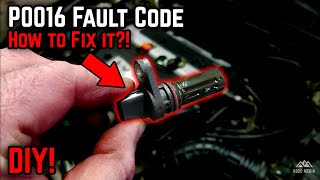
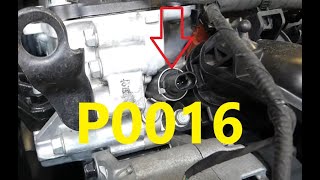
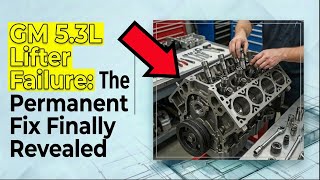
Used OEM Parts in Stock

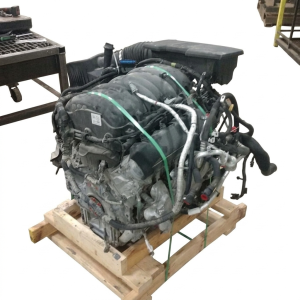

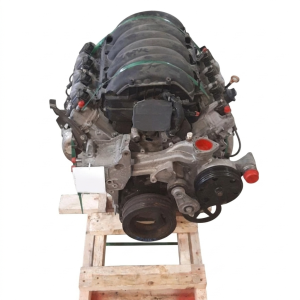

New Aftermarket Parts Available


The information in this article is provided for general reference and educational purposes only. Vehicle specifications, procedures, and part compatibility can vary by production date, trim level, and region. Always consult your vehicle's factory service manual and verify part numbers before purchasing or performing repairs. Safety-critical components such as airbags, seat belts, and braking systems should be installed by a qualified professional.
- Gmc YUKON:
- 🎬 Helpful Videos
- 🛍️ Shop This Part
- What's Unique About the 2020-2024 Gmc YUKON
- Diagnostic Flowchart
- Symptoms You May Notice
- Most Likely Causes
- Rare But Worth Checking
- Diagnosis Steps
- Parts You'll Likely Need
- Related Codes That Often Appear With This One
- Technical Service Bulletins (TSBs) & Recalls
- Platform-Specific Known Issues
- Mechanic-Grade Diagnostic Values
- Scan Tool Commands That Help
- Wiring & Ground Locations
- OEM Part Supersession History
- Model Year Variations Within This Range
- 🎟️ Get 5% Off