

P0016 on 2012-2018 Ford Focus 1.6L: Crank/Cam Correlation Causes and Fixes
On a 2012-2018 Ford Focus with the 1.6L engine, code P0016 often points to a mechanical timing issue or a problem within the Variable Camshaft Timing (VCT) system. The most common causes are a stretched timing belt, a faulty VCT solenoid, or a failing camshaft/crankshaft sensor. Ford's official service interval for the timing belt is long (up to 150,000 miles), but failures can occur sooner. A full timing belt service can cost over $1000, while a VCT solenoid is a more affordable DIY fix.
- P0016 on your Ford Focus is a serious code that should be addressed immediately to prevent severe engine damage.
- The most likely causes are a stretched timing belt, a faulty VCT solenoid, or a bad cam/crank sensor.
- Do not immediately assume it's a sensor fault. The first steps should be to check engine oil level and condition.
- Due to the engine's interference design, verifying the mechanical timing is a critical diagnostic step that should be performed by a qualified technician.
- If the timing belt is due for replacement (check your owner's manual for the service interval), it is a prime suspect for this code.
What's Unique About the 2012-2018 Ford Focus
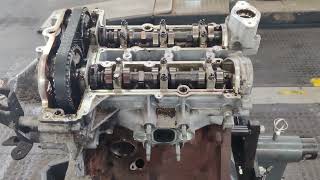
The 1.6L EcoBoost engine in the Ford Focus is an interference engine that uses a timing belt, not a chain. This makes correct timing critical, as a slipped or broken belt can cause catastrophic engine damage. Ford specifies a long timing belt replacement interval of up to 150,000 miles (240,000 km) or 10 years, but many owners and mechanics recommend a shorter interval as a precaution. Furthermore, this engine uses a Variable Camshaft Timing (VCT) system that relies on oil pressure. Ford has issued Technical Service Bulletins (TSBs) for this engine and its platform mates (like the Escape and Fusion) indicating that debris can cause VCT solenoids to stick, leading to correlation codes like P0016. [TSB SSM 54366, TSB SSM 48423, TSB SSM 47170] A Reddit user noted that a mechanic's failure to use the proper crankshaft pulley alignment tool during a timing belt job immediately caused a P0016 code, highlighting the sensitivity of this procedure. A critical design aspect is that the crankshaft and camshaft sprockets are not keyed to their shafts, relying solely on the friction from the main crank bolt and timing tools for alignment.
Symptoms You May Notice
- Check Engine Light is on
- Engine runs rough or misfires
- Reduced engine power and acceleration
- Engine is hard to start or cranks but won't start
- Stalling or hesitating engine
- Decreased fuel economy
- Rattling or chattering noise from the engine, especially on startup
- Engine cuts out or jerks above a certain RPM (e.g., 3000 RPM)
- Replacing the camshaft or crankshaft position sensors when the actual fault is a mechanical timing issue (stretched belt or bad tensioner). It's crucial to verify mechanical timing before replacing sensors.
- Assuming the timing is correct after a recent service without confirming the proper locking tools were used. A Reddit thread highlights a case where a mechanic failed to use the crankshaft pulley alignment tool, causing an immediate P0016 code.
Most Likely Causes
- Stretched or Slipped Timing Belt 🔴 High Probability The 1.6L EcoBoost uses a timing belt with a very long recommended service interval (150,000 miles or 10 years). However, belts can stretch, and tensioners can fail before this point, causing the timing to jump. One owner on a forum noted their belt was showing cracks at 130k miles. This is a primary suspect for P0016, especially on higher-mileage vehicles.
How to confirm: A technician must perform a physical inspection by removing the timing cover to check the belt's condition, tension, and alignment marks on the cam and crank sprockets. This requires special tools as the sprockets are not keyed.
Typical fix: Replace the timing belt, tensioner, and idler pulleys. It is also highly recommended to replace the water pump at the same time, as it is driven by the timing belt.
Est. part cost: $150-$300 for a complete kit - Faulty Variable Camshaft Timing (VCT) Solenoid 🟡 Medium Probability Ford TSBs SSM 48423, SSM 47170, and SSM 54366 note that small debris in the oil can cause VCT solenoids to stick, leading to various cam correlation codes, including P0016. [TSB SSM 54366, TSB SSM 48423, TSB SSM 47170] This is a common issue on Ford VCT systems due to their reliance on clean oil and tight tolerances. A technician noted finding debris from a cheap aftermarket oil filter clogging a VCT actuator.
How to confirm: A technician can command the solenoid on and off with a scan tool to check its response. The solenoid can also be removed and inspected for debris on its screen or tested for resistance with a multimeter. A known good resistance is between 7 to 14 ohms. One test showed a reading of 7.8 ohms.
Typical fix: Clean or replace the faulty VCT solenoid (also called an oil control valve). An engine oil and filter change is recommended to remove contaminants. The OEM part number for the intake solenoid is CN1Z-6M280-F (supersedes CN1Z-6M280-A and CN1Z-6M280-C).
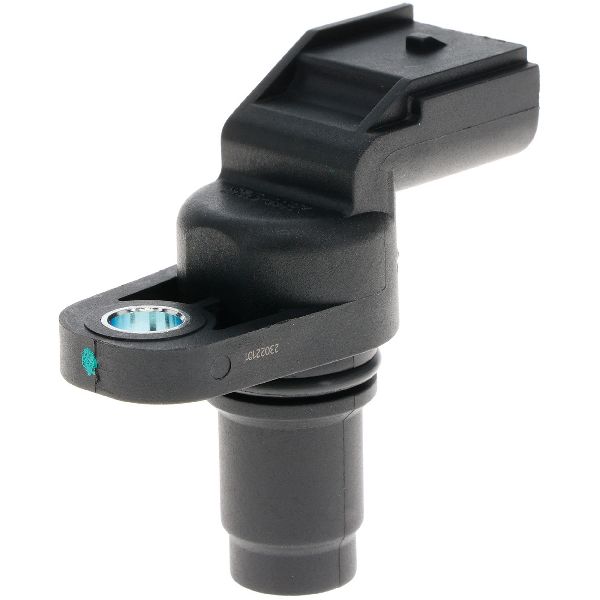
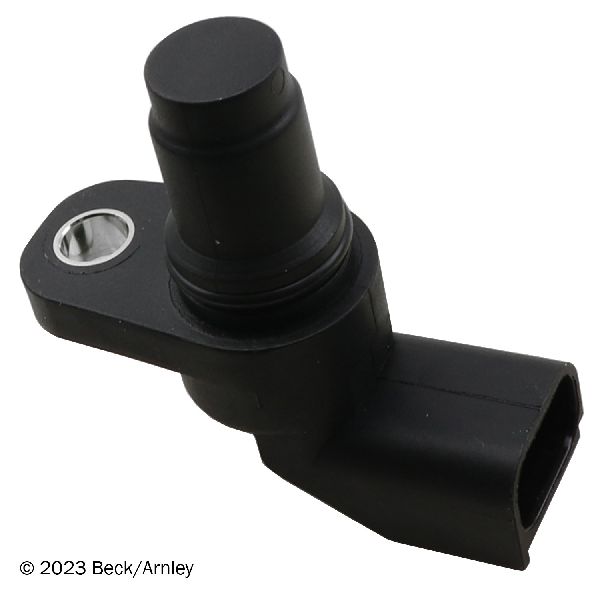
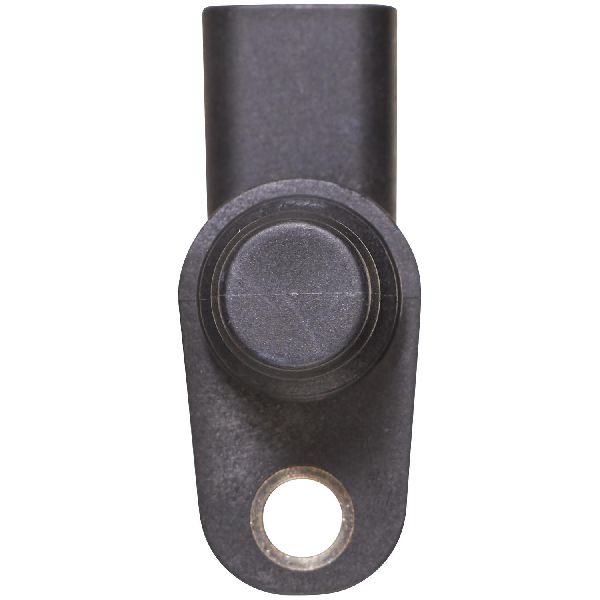
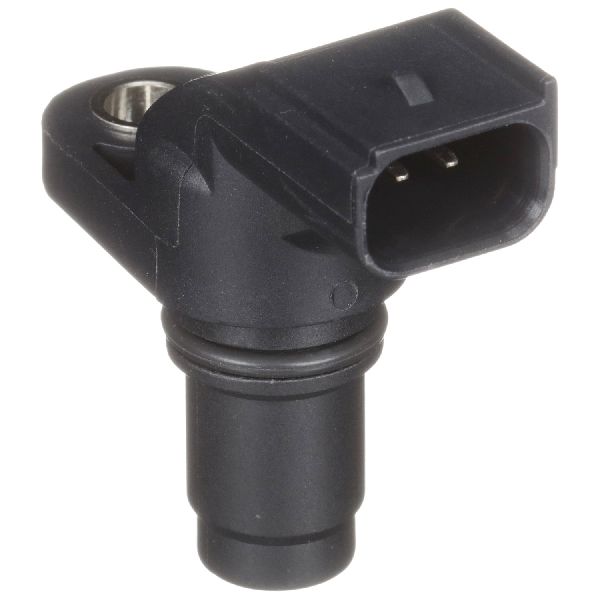
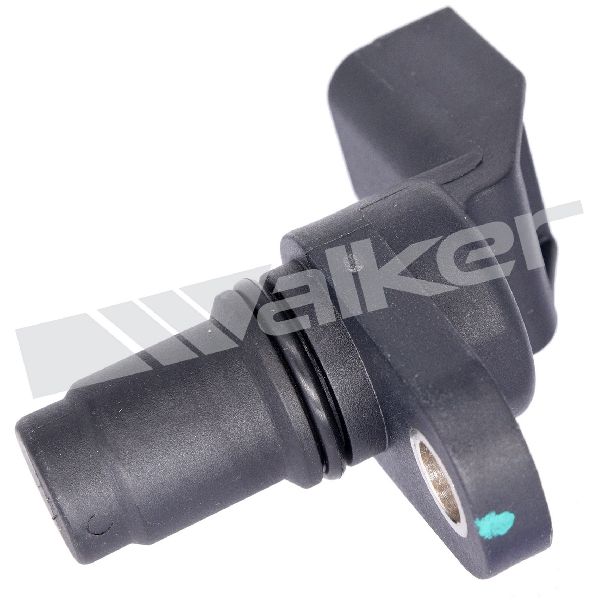
Est. part cost: $25-$70 - Failing Camshaft Position (CMP) Sensor 🟡 Medium Probability Sensors are electronic components that can fail over time due to heat cycles and vibration. A faulty sensor can send incorrect data to the PCM, causing a correlation code even if the mechanical timing is correct.
How to confirm: Use a scan tool to monitor the live data from the sensor for erratic signals. For a 3-wire Hall-effect sensor, with the ignition on, the signal wire should read around 4.8-5.0 volts and drop to 0 when a metal object is passed in front of it. The reference voltage from the PCM should be between 4.5 and 5.5V.
Typical fix: Replace the Bank 1 intake camshaft position sensor.
Est. part cost: $20-$60 - Low or Dirty Engine Oil ⚪ Low Probability The VCT system is hydraulic and relies on clean oil at the correct pressure to function. If oil is low, degraded, or the wrong viscosity, it can't operate the cam phasers correctly, leading to a correlation error.
How to confirm: Check the engine oil level on the dipstick and inspect its condition. If it is low, black, or sludgy, this could be the cause.
Typical fix: Perform an engine oil and filter change using the manufacturer-specified oil viscosity (e.g., Motorcraft Synthetic Blend).
Est. part cost: $40-$80 - Failing Crankshaft Position (CKP) Sensor ⚪ Low Probability
How to confirm: The CKP sensor provides the primary reference signal. A technician can use an oscilloscope to analyze its waveform for dropouts or inconsistencies. A failing CKP sensor often causes more severe issues like no-start conditions.
Typical fix: Replace the crankshaft position sensor.
Est. part cost: $30-$80
Rare But Worth Checking
- Failed Camshaft Phaser (VCT Actuator): The phaser itself can become stuck or fail mechanically. This is a more involved repair than the solenoid and often produces a distinct rattling noise. A user on PassionFord forums discussed live data showing an exhaust cam jumping to -20 degrees, pointing towards a faulty pulley (phaser).
- Damaged Reluctor Wheel/Tone Ring: The tone rings on the camshaft or crankshaft, which the sensors read, can become damaged or slip, sending incorrect position data to the PCM. This is uncommon but can happen, especially if other engine work was recently performed.
- Incorrect Timing After Service: If the P0016 code appears immediately after a timing belt replacement, it is highly likely the timing was set incorrectly. The 1.6L EcoBoost requires a specific set of locking tools because the crank and cam pulleys do not have keyways. Failure to use these tools properly will result in a correlation error.
Diagnosis Steps
- Verify Oil Level and Condition: Check the engine oil dipstick. If the oil is low, dirty, or the wrong viscosity, correct this first, clear the codes, and see if the problem returns. This is the simplest first step.
- Scan for Other Codes: Check for any other related codes (like P0011, P0014, P0017, P0340) that can help pinpoint the issue to a specific component or a broader timing problem.
- Inspect Sensor Wiring: Visually inspect the wiring and connectors for the camshaft and crankshaft position sensors for any damage, corrosion, or loose connections.
- Analyze Sensor Data: Use a scan tool with live data capabilities to monitor the signals from the cam and crank sensors. Look for dropouts or erratic readings that would indicate a faulty sensor. The VCT advanced error PID should be close to 0° (+/- 5°).
- Test the VCT Solenoid: Command the intake VCT solenoid on and off using a bidirectional scan tool to check for a response. Alternatively, remove the solenoid, check its screen for sludge or debris, and test its resistance (should be 7-14 ohms). TSBs suggest debris is a common cause. [TSB SSM 48423, TSB SSM 47170]
- Verify Mechanical Timing: This is the most critical step. An experienced technician should use the correct Ford-specific locking tools to verify that the timing marks on the crankshaft and camshaft sprockets are perfectly aligned. Check the timing belt for wear, damage, and proper tension.
- Check Oil Pressure: If timing and components seem correct, test the engine's oil pressure with a mechanical gauge to ensure it's within spec. Low oil pressure can starve the VCT system.
Parts You'll Likely Need
- Timing Belt Kit (Belt, Tensioner, Idlers) — The timing belt is a primary cause of this code due to stretching or tensioner failure. A complete kit is the correct way to service it. RepairPal estimates the replacement cost between $718 and $924. KBB estimates a dealer cost up to $1287.
Trusted brands: Motorcraft, Gates, Continental
OEM price range: $200-$300
Aftermarket price range: $100-$200 - Variable Camshaft Timing (VCT) Solenoid / Oil Control Valve
(OEM #CN1Z-6M280-F)— These solenoids are a known failure point, often getting stuck due to oil debris, as noted in multiple Ford TSBs. It is a common and relatively inexpensive part to replace.
Trusted brands: Motorcraft, Dorman
OEM price range: $40-$70
Aftermarket price range: $25-$50 - Camshaft Position Sensor — A faulty sensor can send incorrect signals, leading to a P0016 code even if mechanical timing is perfect. It's a common point of failure but should be tested before replacement.
Trusted brands: Motorcraft, Bosch, NTK
OEM price range: $30-$60
Aftermarket price range: $20-$40
Related Codes That Often Appear With This One
- P0011 — Intake Camshaft Position Timing - Over-Advanced (Bank 1). This code is often seen with P0016 as both relate to the intake cam timing control on Bank 1 and can be caused by a faulty VCT solenoid. [TSB SSM 54366]
- P0014 — Exhaust Camshaft Position Timing - Over-Advanced (Bank 1). If both intake and exhaust cam codes are present, it points more strongly toward a base timing issue (belt) or an oil pressure problem affecting the entire VCT system.
- P0340 — Camshaft Position Sensor 'A' Circuit (Bank 1). This code indicates a problem with the sensor's circuit itself, which could appear alongside P0016 if the sensor has failed electrically.
- P0017 — Crankshaft Position - Camshaft Position Correlation (Bank 1, Sensor B). This code relates to the exhaust camshaft. If seen with P0016, it strongly suggests a base mechanical timing issue (e.g., slipped timing belt) affecting both camshafts.
Technical Service Bulletins (TSBs) & Recalls
- SSM 54366
- SSM 48423
- SSM 47170
- TSB 13-5-33
Platform-Specific Known Issues
- The 1.6L EcoBoost engine requires special tools to lock the camshafts and crankshaft in place during a timing belt service. Attempting this job without the correct tools can easily lead to incorrect timing and engine damage.
- Ford has issued multiple Technical Service Bulletins (TSBs) related to VCT codes (P0011-P0025), including P0016, caused by debris in the VCT solenoids. [SSM 54366, SSM 48423, SSM 47170]
Mechanic-Grade Diagnostic Values
- VCT Solenoid Internal Resistance — expected: 7 to 14 Ohms. Failure: A reading outside this range, or an open/short circuit.
- Camshaft Position Sensor (3-wire) Signal Voltage — expected: Approx. 4.8 to 5.0 Volts with ignition on, engine off.. Failure: The voltage should drop to 0 when a metal object is passed in front of the sensor. If the voltage does not change or is constantly 0, the sensor is likely faulty.
- Camshaft Position Sensor (3-wire) Reference Voltage — expected: 4.5 to 5.5 Volts. Failure: Voltage below this range indicates a wiring or PCM issue.
- Scan Tool VCT Advanced Error PID — expected: Should hover around 0° (+/- 5°). Failure: A consistent deviation greater than 5 degrees indicates a timing or VCT system problem.
Scan Tool Commands That Help
- Ford IDS (or equivalent professional scanner): VCT Solenoid On/Off Command — Used to functionally test the VCT solenoid. When the solenoid is commanded on/off at idle, a noticeable change in engine idle quality should occur if the solenoid and phaser are working.
- Ford IDS (or equivalent professional scanner): Monitor VCT PIDs (VCT_ADV_ERR) — To check the live difference between desired and actual camshaft timing. This helps determine if the fault is active and how severe the correlation error is.
Wiring & Ground Locations
- Main Engine Ground — There will be a primary ground strap from the chassis to the engine block or cylinder head. Specific location varies slightly but is critical for all sensor signals.. A poor engine ground can cause floating or incorrect readings from the crankshaft and camshaft position sensors, leading to false correlation codes.
- CMP and CKP Sensor Connectors — The CMP sensor is on the top of the valve cover; the CKP sensor is typically located on the engine block near the crankshaft pulley.. These connectors are the primary points of failure for wiring issues. Inspect for oil contamination, corrosion, or loose pins, which can disrupt the sensor signals to the PCM.
Real Owner Repair Stories
- Reddit user in /r/FordFocus (Ford Focus 1.6L EcoBoost 150HP) — Check Engine Light with P0016, engine jerking/cutting out above 3000 RPM.
❌ Tried (didn't work) The code appeared immediately after a timing belt and water pump replacement.
✅ What actually fixed it The mechanic admitted to not using the special 'crankshaft pulley alignment tool' during the timing belt job. The implied fix was to have the timing procedure redone correctly using all the required special tools to fix the misalignment. - Ford Owners Club user 'aliislekzade' (2006 Ford Focus Mk2 1.6 Ti-VCT (similar VCT system)) — P0016 code appeared, would clear, and then return, especially at higher RPM.
❌ Tried (didn't work) Replacing the camshaft sensors (light went off for a week, then returned).
✅ What actually fixed it Replacing the timing belt resolved the P0016 code and a subsequent P0341 code. The engine noise disappeared and it ran 'like new'.
OEM Part Supersession History
CN1Z-6M280-A, CN1Z-6M280-C→CN1Z-6M280-F— Standard part revision and improvement by the manufacturer.
Diagnostic Flowchart
Other Known Issues on This Vehicle
Issues unrelated to this code that are worth knowing about as an owner of this generation:
- Coolant Intrusion / Cracked Cylinder Block 🔴 High — A well-documented issue for 1.5L, 1.6L, and 2.0L EcoBoost engines of this era. An open-deck engine block design can allow coolant to leak into the cylinders, causing misfires, white smoke, and eventual engine failure. (Ref: Recall 17V209 was issued for some 1.6L vehicles for overheating risks that could lead to a cracked cylinder head. TSB 19-2346 addresses a similar issue on the 2.0L engine.)
- Overheating Due to Cooling System Faults 🔴 High — Recalls were issued for early 2010s models with the 1.6L engine due to a risk of overheating that could lead to engine fires. This was sometimes related to coolant hose or head gasket issues. (Ref: Recall 17V209)
- Failing Turbochargers 🟠 Medium — Turbo failure is not rampant but can occur, often due to oil contamination or lubrication issues. Symptoms include whining noises, loss of power, and increased oil consumption.
Used vs. New Parts: Buying Guide for This Vehicle
When a used part is the smart pick: Used parts can be a cost-effective option for electronic components that do not have mechanical wear surfaces, such as Camshaft Position Sensors (CMP), Crankshaft Position Sensors (CKP), and VCT Solenoids. These parts are generally reliable if sourced from a lower-mileage, running donor vehicle.
Donor-vehicle mileage cap: roughly under 80000 miles for the part to have meaningful remaining life.
What to inspect on the donor part:
- For sensors and solenoids, inspect the plastic connectors for brittleness or cracks.
- Check the o-rings on VCT solenoids for pliability; brittle o-rings suggest high heat exposure.
- On VCT solenoids, ensure the mesh screens are intact and free of metallic debris (light sludge is cleanable).
- Ask for the donor vehicle's VIN to verify mileage and check for reported accidents.
OEM-only on this vehicle (don't cheap out):
- Timing Belt
- Timing Belt Tensioner
- Idler Pulleys
- Crankshaft Pulley Bolt (This is a Torque-to-Yield bolt and MUST be replaced).
Aftermarket brands forum-validated for this vehicle:
- Timing Belt Kits: Gates is a widely respected OEM supplier and a trusted aftermarket brand for timing components.
- Sensors/Solenoids: NTK is often cited as a reliable brand for sensors and solenoids.
Brands owners have reported issues with on this vehicle:
- Unnamed 'no-name' oil filters have been reported to break down internally, sending debris into oil passages and clogging VCT components.
- Avoid unbranded, exceptionally cheap electronic sensors and solenoids from online marketplaces, as their internal components and calibration may not meet OEM specifications, leading to persistent or new codes.
Real Owner Stories
Aggregated from forums and TSBs cited above. Mileages and costs reflect what owners reported in those sources.
2012-2018 Ford Focus 1.6L EcoBoost
Symptoms: A P0016 code appeared immediately after a timing belt service was performed.
What fixed it: The timing had to be reset using the proper crankshaft pulley alignment tool, which the previous mechanic had failed to use.
Source hint: Reddit: P0016 Code after timing belt change on 1.6 EcoBoost
2012-2018 Ford Focus 1.6L EcoBoost — 130000 miles
Symptoms: The owner inspected the timing belt during routine maintenance and found it was showing visible cracks.
What fixed it: Replacement of the timing belt, tensioner, and idler pulleys before a jump in timing occurred.
Source hint: Reddit: 1.6 EcoBoost Timing Belt
2011 Ford Focus 1.6L EcoBoost
Symptoms: The vehicle was throwing both P0016 and P0017 fault codes simultaneously.
What fixed it: Correction of the base timing (timing belt) as the dual codes pointed to a shared mechanical timing issue rather than a single sensor.
Source hint: Ford Owners Club: P0016 & P0017 fault codes
Related OBD-II Codes
Frequently Asked Questions
I have a 2012 Ford Focus 1.6L EcoBoost; which TSBs should my mechanic look at for P0016?
Is it true that the timing belt on my 1.6L EcoBoost lasts 150,000 miles?
What is the specific part number for the intake VCT solenoid if I need to replace it?
Can a cheap oil filter cause a P0016 code on my Focus?
Why do I need special tools to check the timing on my 1.6L EcoBoost?
What should the resistance be when testing the VCT solenoid with a multimeter?
Helpful Videos
We Have This Part in Stock


The information in this article is provided for general reference and educational purposes only. Vehicle specifications, procedures, and part compatibility can vary by production date, trim level, and region. Always consult your vehicle's factory service manual and verify part numbers before purchasing or performing repairs. Safety-critical components such as airbags, seat belts, and braking systems should be installed by a qualified professional.
- Ford Focus:
- 🎬 Helpful Videos
- 🛍️ Shop This Part
- What's Unique About the 2012-2018 Ford Focus
- Symptoms You May Notice
- Most Likely Causes
- Rare But Worth Checking
- Diagnosis Steps
- Parts You'll Likely Need
- Related Codes That Often Appear With This One
- Technical Service Bulletins (TSBs) & Recalls
- Platform-Specific Known Issues
- Mechanic-Grade Diagnostic Values
- Scan Tool Commands That Help
- Wiring & Ground Locations
- Real Owner Repair Stories
- OEM Part Supersession History
- Diagnostic Flowchart
- Other Known Issues on This Vehicle
- Used vs. New Parts: Buying Guide for This Vehicle
- Real Owner Stories
- 2012-2018 Ford Focus 1.6L EcoBoost
- 2012-2018 Ford Focus 1.6L EcoBoost — 130000 miles
- 2011 Ford Focus 1.6L EcoBoost
- Related OBD-II Codes
- Frequently Asked Questions
- 🎟️ Get 5% Off