

P0016 on 2015-2021 Ford F-150 5.0L: Crankshaft/Camshaft Correlation Causes and Fixes
On the 5.0L Coyote V8, P0016 usually points to a sticking Variable Camshaft Timing (VCT) solenoid, often due to oil condition or small debris. Replacing the four VCT solenoids is a common fix for around $100-$150 in parts. If that doesn't work, it could be a stretched timing chain or failed cam phaser, a much more expensive repair that can cost between $3,500 and $6,000 at a dealership.
- P0016 on your 5.0L F-150 means the engine timing is out of sync on the passenger-side intake cam.
- Always check your oil level and condition first; low or dirty oil is a common cause of VCT system problems.
- The most likely part to fail is a VCT solenoid, which is a moderately priced repair. It's wise to replace all four at once.
- A rattling noise on cold starts is a strong indicator of a more serious stretched timing chain, which is a very expensive repair.
- Use parts that are correct for your engine's generation (pre- or post-2018).
What's Unique About the 2015-2021 Ford F-150
The Ford 5.0L Coyote V8 uses a sophisticated Twin Independent Variable Camshaft Timing (Ti-VCT) system with four camshafts, four phasers, and four VCT solenoids. This complexity creates more potential failure points than simpler engines. While the related EcoBoost engines are famous for timing chain stretch causing P0016, the 5.0L Coyote more frequently experiences issues with sticking VCT solenoids, as documented in multiple Ford Technical Service Bulletins (SSM 48423, SSM 47170, SSM 54366). These bulletins state that small debris in the oil can cause the solenoids to stick. However, timing chain and phaser failures are still a known, albeit less frequent, issue that requires major engine work.
Generation note: This range covers the 13th generation F-150 (2015-2020) and the first year of the 14th generation (2021). The 5.0L Coyote engine was significantly updated in 2018 (Gen 3), adding dual-fuel (port and direct) injection. This change affects timing components, so ensure you purchase parts specific to your vehicle's model year (pre- or post-2018). For example, the VCT solenoids have different part numbers for 2015-2017 vs. 2018+ models.
Symptoms You May Notice
- Check Engine Light illuminated
- Rough or erratic idle
- Engine stalling, especially at low speeds
- Reduced engine power and sluggish acceleration
- Decreased fuel economy
- Rattling or ticking noise from the front of the engine on cold starts
- Replacing only the camshaft position sensor without checking for mechanical timing or VCT solenoid issues. The sensor is often reporting a real problem, not failing itself.
Most Likely Causes
- Low, incorrect, or dirty engine oil 🔴 High Probability The Ti-VCT system is hydraulic and highly sensitive to oil pressure and cleanliness. Old or incorrect viscosity oil can cause VCT solenoids to respond slowly or stick. The 2018-2020 models are also prone to excessive oil consumption (TSB 19-2365), with some owners reporting 5 quarts low between oil changes, which can trigger cam-related codes.
How to confirm: Check the oil level and condition on the dipstick. Review service records for the last oil change date and the type of oil used. The recommended oil for this engine is typically a 5W-20 or 5W-30 synthetic blend meeting Ford specifications.
Typical fix: Perform an oil and filter change using the correct OEM-specified Motorcraft oil and filter.
Est. part cost: $50-$90 - Sticking or Failed VCT Solenoid (Oil Control Valve) 🔴 High Probability Ford has issued multiple TSBs (SSM 48423, SSM 47170, SSM 54366) indicating that small debris in the oil can cause VCT solenoids to stick, leading to correlation codes like P0016.
How to confirm: A technician can use a high-level scan tool like FORScan or IDS to command the VCT solenoids on and off to check for response, as suggested in TSBs. Another method is to swap the suspect solenoid with another one (e.g., from the other bank) and see if the trouble code follows the solenoid.
Typical fix: Replace the VCT solenoid for Bank 1 Intake. It is common practice to replace all four VCT solenoids at the same time. OEM Part Numbers: For 2015-2017 models, the standard part is BR3Z-6M280-F (supersedes BR3Z-6M280-E). 2018+ models use different part numbers.
Est. part cost: $25-$50 for one, $90-$150 for a set of four. - Stretched Timing Chain / Worn Guides or Tensioner 🟡 Medium Probability Over time, especially with extended oil change intervals, the timing chains can stretch. This causes slack in the system that the hydraulic tensioners cannot compensate for, altering the cam/crank correlation.
How to confirm: This is a difficult diagnosis. A classic symptom is a 1-5 second rattle on cold starts. A technician can remove the valve cover to inspect chain slack or use a scan tool to monitor camshaft deviation PIDs (like VCT_INT_DIF) at idle. Confirmation requires significant engine disassembly.
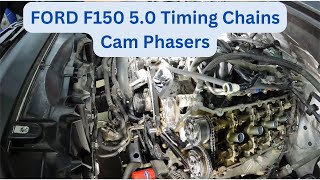
Typical fix: Replace all timing chains, guides, tensioners, and often the cam phasers at the same time. This is a major repair. A dealership quote for a complete timing job is often in the $3,500-$4,000 range, with some independent shops quoting up to $6,000.
Est. part cost: $700-$1,200 for a complete OEM kit. - Failed Cam Phaser (VCT Actuator) ⚪ Low Probability The phasers are the mechanical gears that actually adjust the cam timing. They can fail internally, get stuck, or have their locking pins wear out, causing erratic timing control.
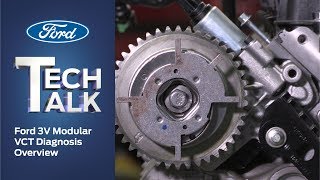
How to confirm: A technician can monitor desired vs. actual cam angle PIDs 🎬 See this Ford tech talk on VCT system diagnosis with a scan tool. A large, erratic deviation, especially one that is slow to react to commands, points to a phaser issue. This is often diagnosed during a timing chain inspection.
Typical fix: Replace the failed phaser. It is highly recommended to replace all four phasers along with the timing chains, guides, and tensioners.
Est. part cost: $150-$250 per phaser. - Failed Camshaft Position Sensor ⚪ Low Probability
How to confirm: Test the sensor's resistance, which should be between 200 to 1000 ohms for a typical two-wire sensor. Swapping the sensor with an identical one from another location (if possible) can also help diagnose.
Typical fix: Replace the Bank 1 intake camshaft position sensor.
Est. part cost: $20-$50
Rare But Worth Checking
- Damaged Crankshaft Reluctor Wheel/Tone Ring: The tone ring on the crankshaft, which the sensor reads, can be damaged or slip, sending incorrect position data to the PCM. This is rare but can happen, especially if the crankshaft pulley bolt was improperly serviced.
- PCM Fault: In very rare cases, the Powertrain Control Module itself may be faulty. This should only be considered after all other mechanical and electrical possibilities have been exhaustively ruled out.
Diagnosis Steps
- Check Engine Oil: Verify the oil level is correct and the oil is clean and of the correct viscosity (typically 5W-20 or 5W-30). If the oil is low, old, or incorrect, perform an oil and filter change with OEM-spec products first, clear the codes, and drive to see if the code returns.
- Scan Tool Analysis: Use a professional scan tool to monitor live data for VCT PIDs (Parameter IDs). Observe the desired vs. actual angles for the Bank 1 intake cam at idle and while driving. A large discrepancy points towards a mechanical or hydraulic issue. Specifically watch the VCT_ADV_ERR (VCT Advance Error) PID; it should be close to 0 degrees. A consistent deviation of more than +/- 5 degrees indicates a problem.
- Test VCT Solenoids: Per Ford's own TSBs (like SSM 48423), use a scan tool to command the Bank 1 intake VCT solenoid on and off (cycle it ~10 times). Listen for a clicking sound indicating it is actuating. This may clear small debris. If it fails to respond or the scan tool test fails, the solenoid is likely bad.
- Inspect Sensors and Wiring: Visually inspect the camshaft position sensor, crankshaft position sensor, and their wiring harnesses for any damage, corrosion, or loose connections. Check for continuity on the signal return circuit between the CMP sensor and the PCM; resistance should be less than 5 ohms.
- Mechanical Inspection: If the above steps do not resolve the issue, a mechanical inspection is required. This involves removing the valve cover(s) and timing cover to physically inspect the timing chain for slack, check the tensioners and guides for wear, and verify the base engine timing.
- Timing Component Replacement: If a stretched chain, worn guide, or bad phaser is found, replace all timing components as a complete kit. This is a labor-intensive job with dealer quotes often ranging from $3,500 to $4,000.
Parts You'll Likely Need
- Variable Camshaft Timing (VCT) Solenoid
(OEM #BR3Z-6M280-F)— These solenoids are a known failure point, often getting stuck due to oil debris, as noted in Ford TSBs. [SSM 48423]
Trusted brands: Motorcraft
Related Codes That Often Appear With This One
- P0017 — Crank/Cam Correlation error for the Bank 1 Exhaust camshaft. Often appears with P0016 if there is a timing chain or oil pressure issue affecting the entire bank.
- P0018 / P0019 — These are the equivalent correlation codes for Bank 2 (driver's side). If all four codes appear, it strongly suggests a base timing issue like a stretched primary chain or a major oil pressure problem.
- P0011 / P0012 / P0021 / P0022 — These codes indicate a camshaft is over-advanced or over-retarded, which is a direct result of the VCT system not working correctly. They are often caused by the same faulty solenoids or phasers that trigger P0016.
Technical Service Bulletins (TSBs) & Recalls
- SSM 54366: Notes P0016 on 2015-2021 vehicles and refers to a specific pinpoint test in the service manual.
- SSM 48423: Suggests P0016 on 2015-2020 vehicles may be caused by debris sticking in the VCT solenoid.
- TSB18-2058: Mentions P0016 on 2018 5.0L engines built before Jan 3, 2018, sometimes with no drivability concerns.
- SSM 47170: Similar to SSM 48423, points to debris in the VCT solenoid as a potential cause for P0016.
- TSB-16-0093: Notes P0016 on low-mileage 2016 engines.
Platform-Specific Known Issues
- Ford TSB SSM 48423 and SSM 47170 specifically note that P0016 (and related codes) on 2015-2020 models may be due to small debris causing the VCT solenoid to stick. The recommended procedure is to attempt to clear the debris using a scan tool before replacing parts.
- Ford TSB TSB18-2058 notes that some 2018 5.0L engines may exhibit P0016 with no drivability symptoms, pointing to a potential PCM calibration or early production issue.
Mechanic-Grade Diagnostic Values
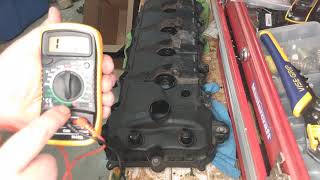
- VCT Solenoid internal resistance — expected: 7.0 - 8.0 ohms. Failure: A reading outside this range indicates a faulty solenoid.
- Camshaft Position Sensor (2-wire VR type) resistance — expected: 200 - 1000 ohms. Failure: A reading of zero indicates a short circuit; an infinite reading indicates an open circuit.
- CMP Sensor Signal Return Circuit Resistance (to PCM) — expected: Less than 5 ohms. Failure: Resistance greater than 5 ohms indicates an open or high-resistance circuit that needs repair.
- Scan Tool PID: VCT Advance Error (VCT_ADV_ERR) — expected: Should hover around 0 degrees at idle and during steady-state driving.. Failure: A consistent deviation of more than +/- 5 degrees for an excessive time indicates the phaser is not achieving its commanded position.
Scan Tool Commands That Help
- Ford IDS / FORScan: VCT Solenoid Duty Cycle Command / On-Off Test — As noted in Ford TSBs, cycling the VCT solenoids on and off about 10 times with a scan tool can dislodge small debris and may temporarily or permanently fix the issue. If the engine idle does not change or no click is heard when commanding the solenoid, it indicates a failed solenoid or circuit.
Real Owner Repair Stories
- Ford F150 Forum user 'rolandlf150texas' (2019 F-150 5.0L with 40k miles) — Check engine light with a cam sensor circuit error (P0390, Bank 2, but relevant principle).
❌ Tried (didn't work) Replacing the camshaft position sensor.
✅ What actually fixed it The user was advised by a friend to check the oil. The truck was found to be 5 quarts low on oil. Topping off the oil to the correct level resolved the code and the issue without replacing any more parts. This highlights the extreme sensitivity of the VCT system to oil level and pressure, especially on 2018+ models known for oil consumption.
OEM Part Supersession History
BR3Z-6M280-E→BR3Z-6M280-F— Standard part revision by Ford.
Heads up: The -F revision is the current replacement for the -E and -D versions for 2015-2017 5.0L engines.
Model Year Variations Within This Range
- 2015-2017 (Gen 2 Coyote): These engines use port fuel injection only. The timing components, including VCT solenoids (BR3Z-6M280-F) and phasers, are specific to this generation.
- 2018-2021 (Gen 3 Coyote): These engines feature a dual-fuel system (port and direct injection), a higher compression ratio (12:1), and different cylinder bore. This results in different part numbers for timing components, including VCT solenoids and phasers, which are not interchangeable with Gen 2. These models are also subject to a TSB for excessive oil consumption, which can be a primary cause for VCT-related codes.
Diagnostic Flowchart
Other Known Issues on This Vehicle
Issues unrelated to this code that are worth knowing about as an owner of this generation:
- Excessive Oil Consumption 🔴 High — Common on 2018-2020 models. Some owners report consumption greater than 1 quart per 3,000 miles. (Ref: TSB 19-2365)
- 10R80 Transmission Harsh/Delayed Shifting 🟠 Medium — Widespread on 2017-2020 models, though can affect later years. Symptoms include hard shifts (especially 3-5), jerking, and delayed engagement from Park. (Ref: TSB 24-2046, TSB 25-2018)
- Engine Knock or "Coyote Tick" 🟡 Low — A light ticking noise is often considered normal injector noise. However, louder knocking on 2018 models has been a source of owner complaints, though Ford has stated it is not detrimental.
- 10R80 Transmission Whine/Whistle at Low Speeds 🟠 Medium — Affects early 2020 models built between Oct 2019 and Dec 2019. Caused by an issue with the output shaft transmission bearing. (Ref: TSB 20-2083)
Used vs. New Parts: Buying Guide for This Vehicle
When a used part is the smart pick: For this specific repair, using used parts is generally not recommended. The critical components (solenoids, phasers, chains) are wear items and are highly sensitive to the previous engine's oil quality and maintenance history. The cost savings do not outweigh the risk of premature failure and having to repeat a labor-intensive job.
Donor-vehicle mileage cap: roughly under 30000 miles for the part to have meaningful remaining life.
What to inspect on the donor part:
- If considering a used sensor or external component, ensure there is no physical damage, corrosion on the pins, or cracking on the housing.
- For VCT solenoids, the screens must be perfectly clean and intact, with no signs of sludge or debris.
OEM-only on this vehicle (don't cheap out):
- Timing Chains
- Timing Chain Tensioners
- Cam Phasers
- VCT Solenoids
Aftermarket brands forum-validated for this vehicle:
- Melling (for high-volume oil pumps, often recommended during a full timing job)
Brands owners have reported issues with on this vehicle:
- Dorman (Multiple forum threads report issues with Dorman VCT solenoids and phasers failing prematurely or not performing like OEM, leading to repeat repairs).
Real Owner Stories
Aggregated from forums and TSBs cited above. Mileages and costs reflect what owners reported in those sources.
2013 Ford F-150 5.0L V8
Symptoms: P0016 code present; vehicle required a full timing system overhaul.
What fixed it: Replacement of timing chains and phasers.
Cost: $5,000-$6,000
Source hint: Reddit r/f150: Cost for timing chain and phaser replacement?
2019 Ford F-150 XLT 4x4 5.0L V8
Symptoms: VCT-related error codes including P0012 (and related correlation issues).
What fixed it: Technician followed Ford SSM advice to cycle the VCT solenoids 10 times with a scan tool to clear debris.
Source hint: F150forum.com: 2019 XLT 4x4 5.0 V8 P0012 error code
2016 Ford F-150 5.0L V8 — ~10000 miles
Symptoms: P0016 code on a low-mileage engine.
What fixed it: Diagnostic and repair procedures outlined in TSB-16-0093.
Source hint: TSB-16-0093
Related OBD-II Codes
Frequently Asked Questions
My 2018 F-150 5.0L is throwing P0016 but drives fine. Is there a specific fix for this?
I heard debris can cause P0016 on the Coyote V8. Do I need to replace the VCT solenoids immediately?
What is the recommended oil for my 2015-2021 F-150 5.0L to prevent VCT issues?
My 2019 F-150 is consuming a lot of oil. Could this be related to my P0016 code?
How much does it cost to fix a timing chain stretch issue on a 5.0L Coyote?
Can I just swap the sensors to see if the P0016 code moves?
Helpful Videos
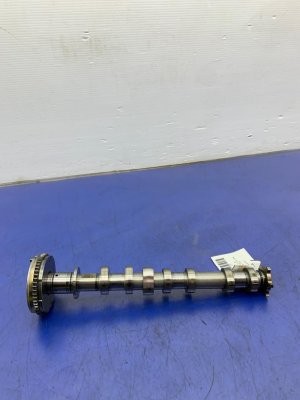
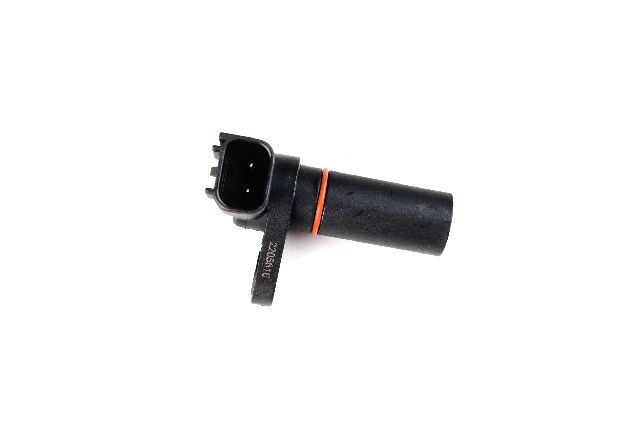
Used OEM Parts in Stock
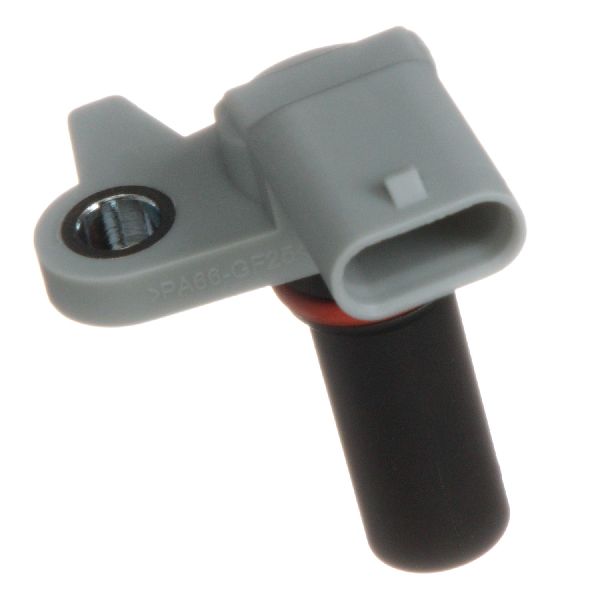
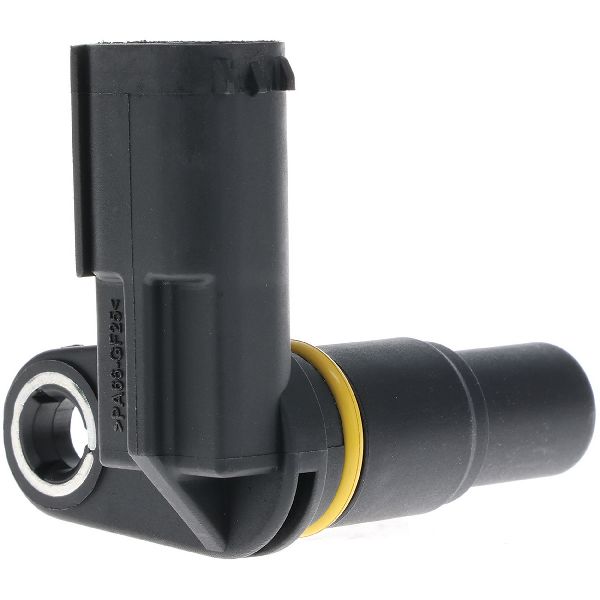
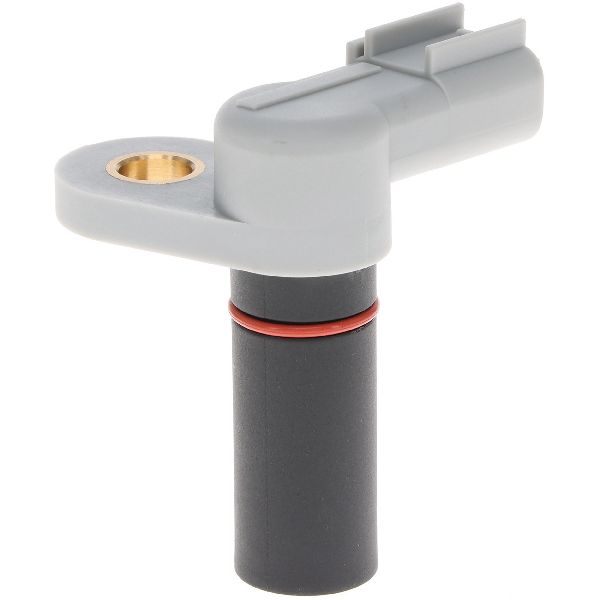
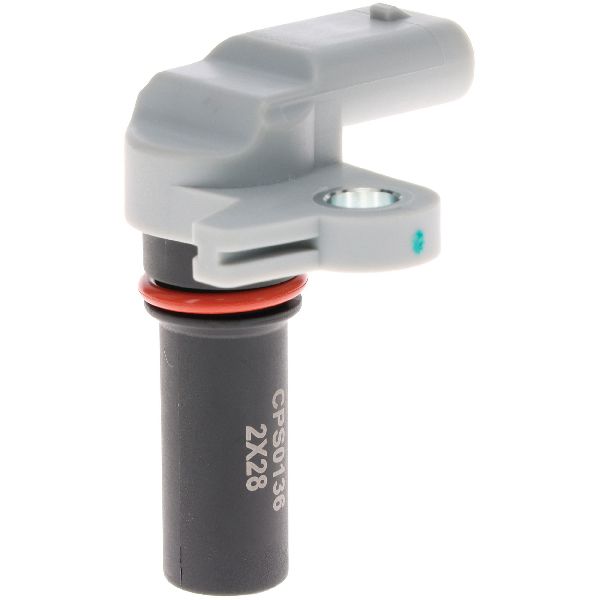
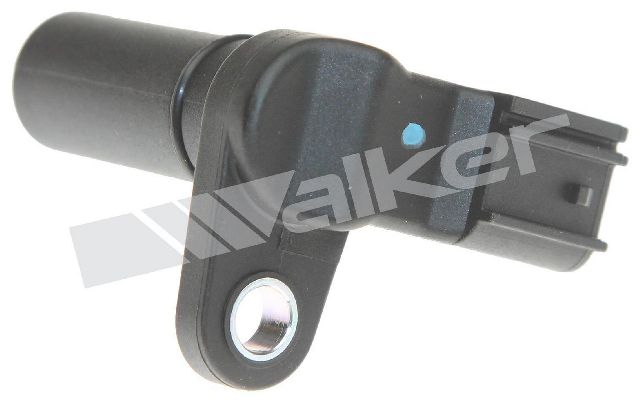
New Aftermarket Parts Available

The information in this article is provided for general reference and educational purposes only. Vehicle specifications, procedures, and part compatibility can vary by production date, trim level, and region. Always consult your vehicle's factory service manual and verify part numbers before purchasing or performing repairs. Safety-critical components such as airbags, seat belts, and braking systems should be installed by a qualified professional.
- Ford F-150:
- 🎬 Helpful Videos
- 🛍️ Shop This Part
- What's Unique About the 2015-2021 Ford F-150
- Symptoms You May Notice
- Most Likely Causes
- Rare But Worth Checking
- Diagnosis Steps
- Parts You'll Likely Need
- Related Codes That Often Appear With This One
- Technical Service Bulletins (TSBs) & Recalls
- Platform-Specific Known Issues
- Mechanic-Grade Diagnostic Values
- Scan Tool Commands That Help
- Real Owner Repair Stories
- OEM Part Supersession History
- Model Year Variations Within This Range
- Diagnostic Flowchart
- Other Known Issues on This Vehicle
- Used vs. New Parts: Buying Guide for This Vehicle
- Real Owner Stories
- 2013 Ford F-150 5.0L V8
- 2019 Ford F-150 XLT 4x4 5.0L V8
- 2016 Ford F-150 5.0L V8 — ~10000 miles
- Related OBD-II Codes
- Frequently Asked Questions
- 🎟️ Get 5% Off