

P0016 on 2012-2020 Chevrolet Sonic 1.4L Turbo: Causes and Fixes for Cam/Crank Correlation
On the 1.4L Turbo Sonic, P0016 almost always means the timing chain has stretched. A rattling noise on startup is the classic symptom. The fix is a full timing chain kit replacement, which is a labor-intensive job costing between $800 and $2,000 at a shop. Ignoring it can lead to catastrophic engine failure.
- P0016 on a 1.4L Turbo Sonic is a serious code that should be addressed immediately to prevent severe engine damage.
- The most likely cause is a stretched timing chain, often confirmed by a rattling noise when the engine is started cold.
- Always check the engine oil level and condition first, as low or dirty oil can cause VVT system faults.
- Before committing to a major timing job, swapping the inexpensive VVT solenoids is a smart and easy diagnostic step.
- This repair is not recommended for DIYers unless they are highly experienced and have the required special timing tools.
What's Unique About the 2012-2020 Chevrolet Sonic

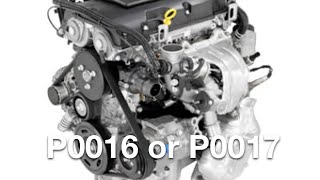
The 1.4L Turbo (LUV) Ecotec engine used in the Sonic, Chevrolet Cruze, and Buick Encore is well-documented for having issues with premature timing chain stretch. While many engines can have this code from a bad sensor, on this specific platform, the code is very frequently a direct result of a physical timing problem. A distinct rattling or slapping noise from the passenger side of the engine for a few seconds on a cold startup is a classic sign of a loose timing chain and a failing hydraulic tensioner, which is the most common root cause of P0016.
🎬 Watch: Hear the classic timing chain rattle in this video.Symptoms You May Notice
- Check Engine Light is on
- Rattling or slapping noise from the engine on cold startups, lasting a few seconds
- Rough or unstable idle
- Reduced engine power and poor acceleration
- Engine may hesitate or stall
- Engine cranks but may be hard to start or won't start at all
- Replacing only the camshaft or crankshaft position sensors without first checking for mechanical timing issues. On this engine, P0016 is most often a mechanical fault, not an electrical one.
- Replacing VVT solenoids when the root cause is a stretched timing chain. While a cheap first step, many owners report the code returning until the chain is replaced.
Most Likely Causes

- Stretched Timing Chain and/or Failed Tensioner 🔴 High Probability The timing chains and hydraulic tensioners used on the 1.4L LUV engine are a known common failure point, often showing wear prematurely. The chain slack allows the camshaft timing to deviate from the crankshaft, triggering the code.
How to confirm: Listen for a distinct rattle from the passenger side of the engine on a cold start. A mechanic can confirm by removing the valve cover and observing excessive slack in the chain or by removing the timing cover to physically inspect the chain, guides, and tensioner and verify the timing marks.
Typical fix: Replace the timing chain, tensioner, and all related guides as a complete kit. This is a significant repair, often taking around 8 hours.
Est. part cost: $80-$250 - Low or Dirty Engine Oil 🟡 Medium Probability The camshaft phasers (actuators) that adjust timing are hydraulic and operated by engine oil pressure. Low levels or oil that is dirty, old, or the wrong viscosity can impede their function, cause sludge, and trigger a correlation code.
How to confirm: Check the oil level on the dipstick and review vehicle service records. If the oil is low or the change interval is overdue, this is a likely contributing factor. An oil change is the first and cheapest diagnostic step.
Typical fix: Perform an oil and filter change using the manufacturer-specified full synthetic 5W-30 oil. Clear codes and see if the problem returns.
Est. part cost: $40-$80 - Failed Camshaft Position Actuator Solenoid (VVT Solenoid) ⚪ Low Probability These solenoids can become clogged with sludge from dirty oil or fail electrically, preventing proper VVT system operation. Their failure can cause timing to be stuck in one position, leading to a correlation error.
How to confirm: The intake and exhaust solenoids are identical and accessible on top of the engine. Swap their positions, clear the codes, and drive. If the code changes to P0017 (Exhaust Cam Correlation), the solenoid is confirmed to be faulty.
Typical fix: Replace the faulty solenoid. It is often recommended to replace both intake and exhaust solenoids at the same time. Use OEM parts, as aftermarket versions have high failure rates.
Est. part cost: $20-$50
Rare But Worth Checking
- Failed Camshaft or Crankshaft Position Sensor: While less common than mechanical timing issues on this engine, a sensor can fail. The intake and exhaust camshaft sensors are identical and can be swapped as a diagnostic test. If the code changes to a sensor circuit code (like P0365), the sensor is bad.
- Failed Camshaft Phaser/Actuator: The gear at the end of the camshaft that actually adjusts the timing can fail internally. This is usually diagnosed after a timing chain replacement does not fix the code. It can get stuck or have a broken internal locking pin.
- Missing Camshaft Actuator Oil Sleeve: Per GM TSB #PIP4543D, a small plastic oil control sleeve located behind the camshaft actuator can be lost or damaged during other engine repairs. Its absence prevents the VVT system from controlling cam phasing correctly, directly causing a P0016 code.
Diagnosis Steps

- Check engine oil level and condition. Ensure it is full and clean. If in doubt, perform an oil and filter change with full synthetic 5W-30 oil.
- Listen carefully for a rattling or scraping noise from the passenger side of the engine during a cold start. This sound strongly indicates a loose timing chain.
- Scan for any other stored trouble codes. Codes like P0017 or P0011 can help confirm the area of the fault. The presence of both P0016 and P0017 almost guarantees a base timing (chain) problem.
- As a simple diagnostic step, swap the intake and exhaust VVT solenoids. They are identical and located on top of the valve cover. Clear the codes. If P0016 returns as P0017, the solenoid is bad.
- If the code remains P0016, you can also swap the identical intake and exhaust camshaft position sensors. If the code changes, the sensor is the issue.
- If none of the above steps resolve the issue, the cause is almost certainly a mechanical timing problem. The valve cover and timing cover must be removed to inspect the timing chain, guides, and tensioner for wear, damage, or slack. This requires special timing tools to lock the cams and crank.
Parts You'll Likely Need

- Engine Timing Chain Kit
(OEM #55562234)— This is the most common cause of P0016 on the 1.4L Turbo engine due to a known issue with chain stretch and tensioner failure. A complete kit includes the chain, guides, and tensioner.
Trusted brands: ACDelco (GM), Cloyes
OEM price range: $150-$250
Aftermarket price range: $80-$150 - Camshaft Position Actuator Solenoid (Intake)
(OEM #12679099 (replaces 12655420))— A clogged or failed solenoid can cause timing correlation issues and is a relatively inexpensive part to replace as a diagnostic step. OEM is recommended as aftermarket units have a high failure rate.
Trusted brands: ACDelco, Delphi
OEM price range: $35-$50
Aftermarket price range: $20-$40 - Intake Camshaft Position Sensor
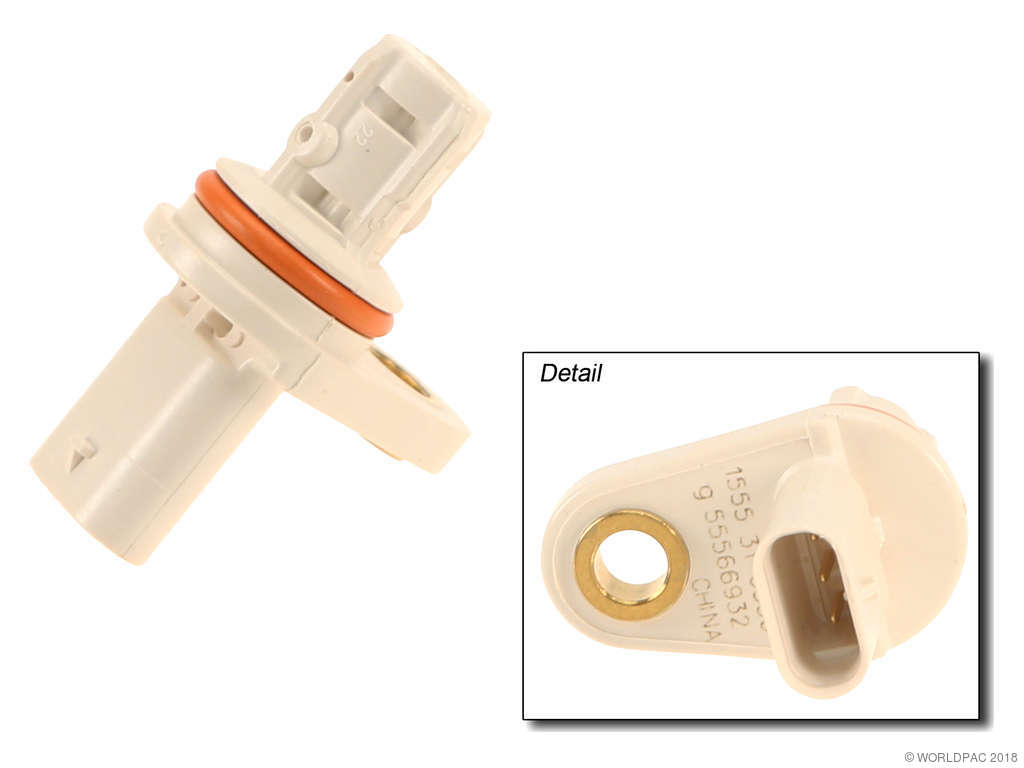
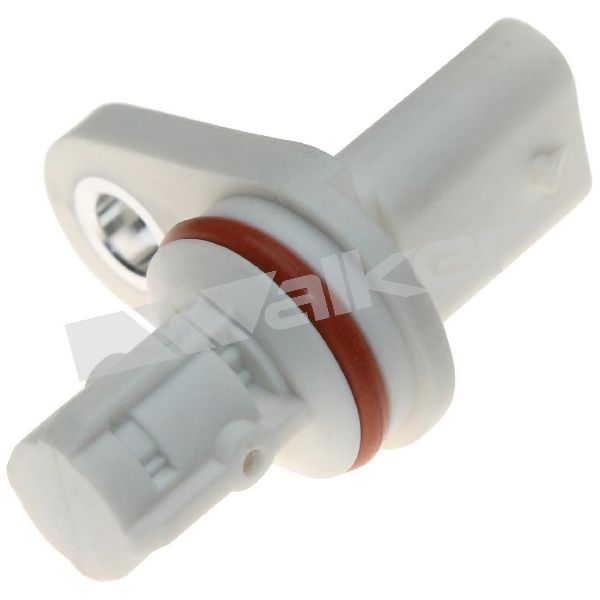
(OEM #55565708)— Though less common, a sensor failure can cause this code. It's often replaced after ruling out VVT solenoids but before committing to a timing chain job.
Trusted brands: ACDelco, Bosch, NTK
OEM price range: $40-$60
Aftermarket price range: $20-$45
Related Codes That Often Appear With This One
- P0017 — This is the correlation code for the exhaust camshaft. If the timing chain has stretched or jumped, it often affects both cams, causing both P0016 and P0017 to appear together, strongly indicating a base timing issue.
- P0011 — This code indicates the intake camshaft timing is over-advanced. It can be caused by a sticking VVT solenoid or oil pressure issues, which are also potential causes of P0016.
Technical Service Bulletins (TSBs) & Recalls
- TSB #PIP4543D: Notes that a missing or damaged plastic oil sleeve for the camshaft actuator can cause P0016. This part can be lost during other top-end engine repairs. Manufacturer TSB Bulletin #PIP4543D specifically addresses concerns where P0011, P0014, P0016, or P0017 are stored in the engine control module following repairs involving the camshaft actuators.
- TSB #N232395330: While not for P0016 directly, this is a special coverage for turbocharger failure on 2017-2018 models, a related common issue on this engine.
Platform-Specific Known Issues
- The 1.4L LUV engine is an interference design, meaning if the timing chain breaks, the pistons will hit the valves, causing catastrophic engine damage.
- A rattling noise on startup that lasts for 1-3 seconds is a very strong indicator of a failing timing chain tensioner and stretched chain on this specific engine.
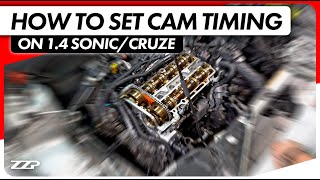
- Repair requires a special timing tool kit (available on Amazon and other retailers) to lock the camshafts and crankshaft in place, as there are no traditional timing marks on the sprockets.
Mechanic-Grade Diagnostic Values
- VVT (Camshaft Actuator) Solenoid Resistance — expected: Approximately 6 to 13 Ohms.. Failure: A reading significantly outside this range, such as an open circuit (infinite ohms) or a direct short (near zero), indicates a failed solenoid.
- Camshaft Position Sensor Connector Voltage (Key On, Engine Off) — expected: Pin 1 (Power Supply): Battery Voltage. Pin 2 (Signal): ~5 Volts. Pin 3: Ground.. Failure: Missing voltage on the power or signal pins, or a bad ground reading, points to a wiring issue or a problem with the ECM's 5V reference circuit.
- Crankshaft vs. Camshaft Sensor Waveform Alignment (Oscilloscope) — expected: At idle on a fully warmed-up engine, the 17th tooth signal of the crankshaft sensor (after the missing tooth gap) should align with the rising edge (high signal) of the camshaft sensor's waveform.. Failure: If these two points do not align, it is a definitive indication of a mechanical timing correlation error, confirming the P0016 code's validity.
Scan Tool Commands That Help
- GDS2 (GM Dealer Tool) or equivalent high-end scanner: Camshaft Position Actuator Solenoid Test — This bidirectional control allows a technician to command the VVT solenoid on and off with the engine running. A corresponding change in engine RPM or hesitation confirms the solenoid is mechanically working and that oil passages are likely clear. No change suggests a stuck solenoid or clogged passage.
- GDS2 (GM Dealer Tool) or equivalent high-end scanner: Crankshaft Position Variation Relearn — This procedure is required after replacing the crankshaft position sensor, timing chain, timing belt, or ECM. It calibrates the sensor to the specific variations of the crankshaft reluctor wheel to prevent misfire detection and correlation codes.
Wiring & Ground Locations
- Main Engine & Battery Grounds — On the chassis frame rail directly beneath the battery tray, in front of the transmission mount. The Sonic uses a two-piece design where the engine block ground and the battery negative cable ground attach to two separate studs a few inches apart.. Poor grounding can cause erratic sensor readings. Some owners report that cleaning these grounds and combining them onto a single, clean stud provides a more reliable ground path for the entire engine management system, potentially resolving intermittent electrical issues.
- G103 (Typical GM Location) — Often located on the cowl at the left rear of the engine compartment, near the brake booster.. This ground point often serves multiple modules, including the BCM and IPC. While not a direct cause, a poor connection here can contribute to widespread electrical gremlins.
- 7-pin Ignition Coil Wiring Harness Connector — The main electrical connector plugging into the ignition coil pack on top of the valve cover.. Per GM bulletin 16-NA-015 for the platform-mate Cruze, this connector can suffer from fretting corrosion, causing poor contact that leads to stumbling, hesitation, or stalling. While not a direct cause of P0016, the resulting engine instability can complicate diagnosis.
Real Owner Repair Stories
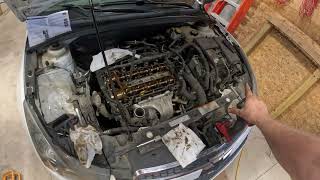
- YouTube - RDAllen (2014 Chevrolet Cruze 1.4L Turbo) — Check Engine Light with P0016, car not at 100% power.
❌ Tried (didn't work) Replaced the camshaft position sensor., Replaced the VVT solenoid (this improved the issue by ~90% but the code remained).
✅ What actually fixed it A full timing chain replacement. The video shows significant side-to-side slack in the old chain, confirming it had stretched. - YouTube - THE MOOSE'S WRENCH (2014 Chevrolet Trax 1.4L Turbo) — P0016 and P0017 codes, loud rattling from engine, running poorly.
❌ Tried (didn't work) The owner immediately suspected a timing issue due to the rattling and presence of both codes.
✅ What actually fixed it Disassembly revealed the timing chain was slapping excessively. The cause was a seized tensioner and broken plastic timing chain guides. The final fix was a complete timing chain kit replacement. - Sonic Owners Forum user 'SoggyWafle' (2014 Chevrolet Sonic 1.8L (Note: different engine, uses a timing belt)) — Persistent P0016 code that returned after clearing, shaky idle.
❌ Tried (didn't work) Replaced intake camshaft position sensor (ACDelco)., Replaced crankshaft position sensor (ACDelco).
✅ What actually fixed it After setting the engine to Top Dead Center (TDC), the owner discovered the intake camshaft timing mark was off by one tooth. The final fix was realigning the timing belt correctly on the cam gears.
Model Year Variations Within This Range
- 2011-2016 (and similar LUV engines): The 1.4L turbo engine came in two primary variants, LUJ and LUV. While they have minor internal and software differences, the diagnostic procedure and common failure points (timing chain, VVT system) for a P0016 code are identical.
- 2011-2014: A GM service bulletin (16-NA-015) was issued for the platform-mate Cruze for engine stumbling/stalling caused by fretting corrosion on the 7-pin ignition coil connector. Earlier models in the Sonic's generation may be more susceptible to this specific wiring harness issue.
Diagnostic Flowchart
Other Known Issues on This Vehicle
Issues unrelated to this code that are worth knowing about as an owner of this generation:
- PCV System Failure (Valve Cover & Intake Manifold) 🔴 High — Very common, often occurs between 60,000-120,000 miles. Symptoms include a hissing noise, rough idle, and codes P1101 or P0171. (Ref: GM Special Coverage 14882 / N182202780 covers the valve cover diaphragm on some model years.)
- Cracked Plastic Coolant Outlet / Thermostat Housing 🔴 High — Extremely common failure point leading to coolant leaks. The plastic becomes brittle from heat cycles. Often fails around 60,000-100,000 miles.
- Turbocharger Failure 🔴 High — Commonly presents with code P0299 (underboost), power loss, and whining noise. Often a secondary failure caused by the faulty PCV system. (Ref: GM Special Coverage N232395330 extends warranty to 10 years/120,000 miles for turbo failure on 2017-2018 models.)
- Leaking Water Pump 🟠 Medium — The water pump can leak coolant, sometimes covered under a special warranty extension from GM (10 years/150k miles on some vehicles). (Ref: Check for vehicle-specific special coverage policies.)
- Cracked/Leaking Coolant Reservoir Tank 🟠 Medium — The plastic coolant overflow tank can develop stress cracks over time, causing slow, hard-to-find coolant leaks.
Used vs. New Parts: Buying Guide for This Vehicle
When a used part is the smart pick: For this specific P0016 repair, using used parts is generally not recommended due to the high labor cost and the nature of the failures. The only potential exception would be for external, structural components like a valve cover if it were cracked during repair, but not for any of the core diagnostic parts.
Donor-vehicle mileage cap: roughly under 50000 miles for the part to have meaningful remaining life.
What to inspect on the donor part:
- For any electronic part (sensor/solenoid), ensure connectors are free of corrosion, oil contamination, and bent pins.
- Avoid any parts from a donor vehicle that shows signs of heavy oil sludge under the oil cap.
- Verify the donor vehicle did not have the same P0016 code or a startup rattle.
OEM-only on this vehicle (don't cheap out):
- Engine Timing Chain Kit: The primary failure is a design weakness. Using a new, high-quality OEM (ACDelco) or reputable OEM-equivalent (Cloyes) kit is critical to a lasting repair.
- Camshaft Position Actuator Solenoids (VVT): Forum and owner reports consistently indicate that cheap aftermarket solenoids have a very high failure rate, often failing shortly after installation. Stick with OEM/ACDelco or Delphi.
Aftermarket brands forum-validated for this vehicle:
- Cloyes (for Timing Chain Kits)
Brands owners have reported issues with on this vehicle:
- Unbranded or 'white-box' VVT solenoids and camshaft/crankshaft sensors from online marketplaces.
Real Owner Stories
Aggregated from forums and TSBs cited above. Mileages and costs reflect what owners reported in those sources.
2014 Chevrolet Cruze 1.4L Turbo LUV
Symptoms: Owner documented replacing sensors and VVT solenoids with limited success while dealing with a P0016 code.
What fixed it: A full timing chain replacement ultimately fixed the P0016 code.
Source hint: YouTube - RDAllen: 2014 1.4L Chevy Cruze LT Timing Chain Replacement - P0016 Code Fixed!
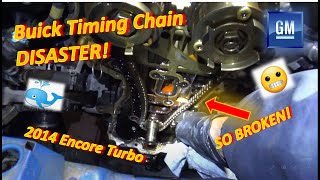
2014 Buick Encore 1.4L Turbo LUV
Symptoms: Engine exhibited a rattle and a P0016 code; upon inspection, the mechanic found a very loose timing chain.
What fixed it: Full timing job including chain replacement, requiring approximately 8 hours of labor and special tools.
Source hint: YouTube - Pine Hollow Auto Diagnostics: Buick Timing Chain DISASTER?! ('14 Encore 1.4L Turbo P0016-RATTLE)
2015 Chevrolet Sonic 1.4L Turbo LUV
Symptoms: The vehicle was not accelerating correctly.
What fixed it: The context cuts off the specific fix for this Reddit user, but identifies it as a P0016-related acceleration issue.
Source hint: reddit r/ChevySonic
Related OBD-II Codes
Frequently Asked Questions
I hear a rattling noise for a few seconds when I start my 1.4L Sonic in the morning. Is this related to P0016?
Can I just replace the sensors to fix P0016 on my Chevy Sonic?
Is there a TSB for the camshaft actuator on the 1.4L LUV engine?
Does my 2017 Chevrolet Sonic have any special coverage for engine-related failures?
What kind of oil should I use to prevent VVT and timing issues in my Sonic?
Do I need special tools to fix the timing on a 1.4L Turbo LUV engine?
Helpful Videos

We Have This Part in Stock



The information in this article is provided for general reference and educational purposes only. Vehicle specifications, procedures, and part compatibility can vary by production date, trim level, and region. Always consult your vehicle's factory service manual and verify part numbers before purchasing or performing repairs. Safety-critical components such as airbags, seat belts, and braking systems should be installed by a qualified professional.
- Chevrolet Sonic:
- 🎬 Helpful Videos
- 🛍️ Shop This Part
- What's Unique About the 2012-2020 Chevrolet Sonic
- Symptoms You May Notice
- Most Likely Causes
- Rare But Worth Checking
- Diagnosis Steps
- Parts You'll Likely Need
- Related Codes That Often Appear With This One
- Technical Service Bulletins (TSBs) & Recalls
- Platform-Specific Known Issues
- Mechanic-Grade Diagnostic Values
- Scan Tool Commands That Help
- Wiring & Ground Locations
- Real Owner Repair Stories
- Model Year Variations Within This Range
- Diagnostic Flowchart
- Other Known Issues on This Vehicle
- Used vs. New Parts: Buying Guide for This Vehicle
- Real Owner Stories
- 2014 Chevrolet Cruze 1.4L Turbo LUV
- 2014 Buick Encore 1.4L Turbo LUV
- 2015 Chevrolet Sonic 1.4L Turbo LUV
- Related OBD-II Codes
- Frequently Asked Questions
- 🎟️ Get 5% Off