

P0015 on 2011-2018 Volkswagen Jetta: Exhaust Cam Timing Causes and Fixes
On 2.0T TSI engines (GLI, ~2011-2013, codes CCTA/CBFA), this code is a serious warning for a failing timing chain tensioner that can cause catastrophic engine damage. On 1.8T and 2.5L engines, the cause is more likely low oil or a faulty camshaft adjuster solenoid (VVT solenoid), a ~$60-$150 part. For 2.5L owners, check for a common oil leak from the vacuum pump on the driver's side of the engine.
- For 2.0T Jetta GLI models (esp. 2011-2013), P0015 is a critical warning. Investigate the timing chain tensioner immediately to avoid engine failure.
- For all other Jetta engines (1.8T, 2.5L), start diagnosis by checking the engine oil level and condition.
- The second most likely cause after oil issues is a faulty camshaft adjuster magnet (VVT solenoid), which is a relatively simple and inexpensive part to replace.
- Do not replace the camshaft position sensor as a first step; it is more likely reporting a real mechanical issue than being faulty itself.
What's Unique About the 2011-2018 Volkswagen Jetta
The 2011-2018 Jetta (A6/Mk6 generation) used several different engines, and the cause of P0015 varies dramatically between them. For the 2.0T TSI engine (codes CCTA/CBFA) used in the GLI (primarily 2011-2013 models), this code is a notorious and urgent indicator of a failing timing chain tensioner, a defect that led to a class-action lawsuit. For the later 1.8T TSI (Gen 3) and the workhorse 2.5L 5-cylinder engines, the cause is more typically a less severe issue like a faulty VVT solenoid or oil pressure problems. The 2.5L is also prone to a significant oil leak from the brake vacuum pump, which can cause the low oil condition that triggers this code.
Generation note: While this range covers a single Jetta generation (A6/Mk6), it includes multiple, very different engines. The cause and severity of P0015 are highly dependent on which engine your Jetta has (e.g., 2.0T TSI CCTA/CBFA, 1.8T TSI Gen 3, 2.5L I5, or the base 2.0L SOHC).
Symptoms You May Notice
- Check Engine Light is on
- Rough or unstable idle
- Noticeable loss of power and poor acceleration
- Reduced fuel economy
- Engine may hesitate or stall
- Rattling noise from the engine on startup (especially on 2.0T TSI models)
- Replacing the camshaft position sensor first. The sensor is usually doing its job by reporting the timing error. The problem is typically mechanical or oil-related.
- On the 2.5L engine, misdiagnosing a vacuum pump leak as a more serious rear main seal leak.
Most Likely Causes
- Failing Timing Chain Tensioner (2.0T TSI Engine) 🔴 High Probability Early 2.0T TSI engines (engine codes CCTA/CBFA, approx. 2011-2013) were equipped with a faulty design of the timing chain tensioner that is known to fail without warning, causing the chain to lose tension. This was the subject of VW TSB 15-12-01 and a class-action lawsuit.
How to confirm: Listen for a sharp rattle from the passenger side of the engine on cold starts. A mechanic can remove a small inspection plug on the lower timing cover to visually inspect the tensioner's extension. Per TSB 15-12-01, a failed tensioner can be compressed by hand, whereas a good one cannot.
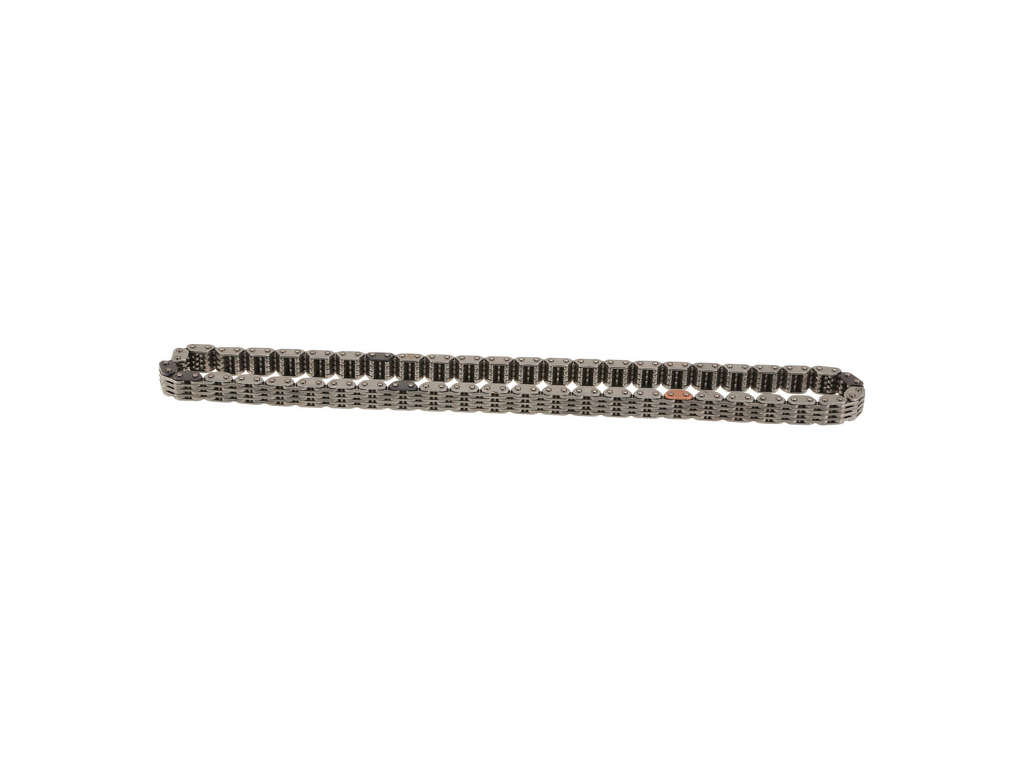
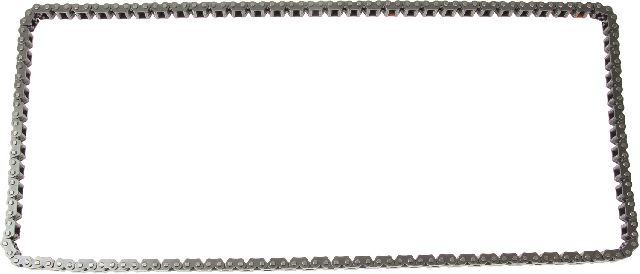
Typical fix: Replace the timing chain tensioner with the updated part (06K109467K), along with the timing chains and guides, as the chain is likely stretched. This is a labor-intensive job.
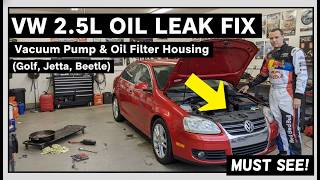
Est. part cost: $500-$900 for a full kit - Low, Dirty, or Incorrect Engine Oil 🟡 Medium Probability The VVT system is hydraulically operated by engine oil. If the oil level is low or the oil is dirty/sludgy, it cannot supply the necessary pressure to the camshaft phaser, causing a timing deviation. On 2.5L engines, a very common cause for oil loss is a leaking vacuum pump gasket on the driver's side of the engine head.
How to confirm: Check the engine oil dipstick. The oil should be full and relatively clean. On 2.5L models, inspect the area on top of the transmission, below the driver's side of the engine, for signs of a fresh oil leak from the vacuum pump.
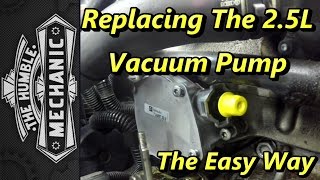
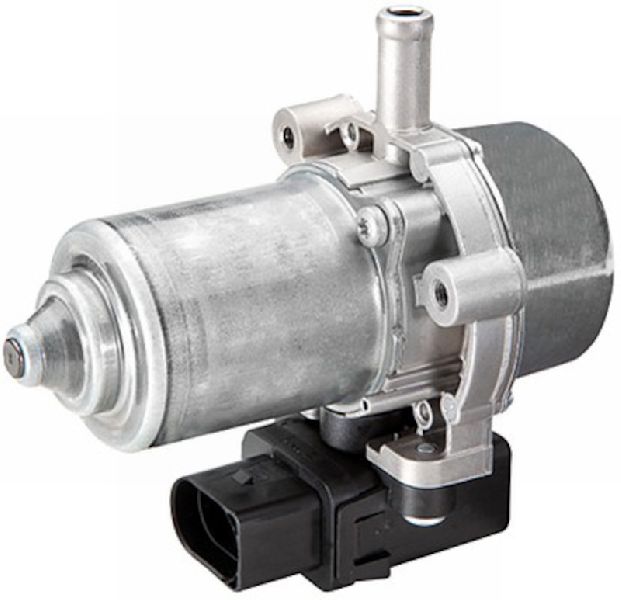
Typical fix: Perform an oil and filter change using the manufacturer-specified oil. For 2.5L, if the vacuum pump is leaking, replace its seal. 🎬 See the easy way to replace your 2.5L vacuum pump. Aftermarket seals are available.
Est. part cost: $60-$100 - Faulty Camshaft Adjuster Magnet (VVT Solenoid / Oil Control Valve) 🟡 Medium Probability This solenoid controls the flow of oil to the camshaft phaser. It can get clogged with debris from the oil or fail electrically. This is a common failure on the 1.8T and later 2.0T EA888 engines.
How to confirm: Unplug the solenoid and check for resistance with a multimeter. A great diagnostic step is to swap the intake and exhaust solenoids (if they are identical) and clear codes. If the code changes to P0012 (intake side), the solenoid is confirmed to be faulty.
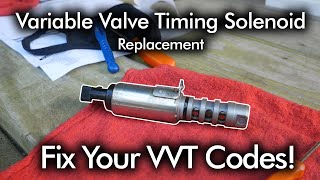
Typical fix: Replace the camshaft adjuster magnet. It is typically held in by a few bolts and is easily accessible on top of the engine. 🎬 Watch: How to replace the VVT solenoid to clear timing codes.
Est. part cost: $60-$150
Rare But Worth Checking
- Failed Camshaft Position Sensor: This is less common than other causes, as the sensor is usually just accurately reporting a mechanical problem. However, it can fail and send incorrect data to the ECM.
- Stretched Timing Chain (All Engines): While the tensioner is the primary failure point on early 2.0Ts, the chain itself can stretch over time on any engine, leading to timing correlation faults. This is usually confirmed by measuring timing deviation blocks with a VW-specific scan tool.
- Failed Camshaft Phaser (Actuator): The mechanical gear on the end of the camshaft that actually adjusts the timing can fail internally, getting stuck in one position. This is a more involved and expensive repair than the control solenoid.
- Clogged Oil Passages / VVT Solenoid Screen: Small mesh screens designed to protect the VVT solenoids can become clogged with sludge or debris, restricting oil flow and causing timing codes even if the solenoid itself is functional.
Diagnosis Steps
- Check Engine Oil: Verify the oil level is full and the oil is clean. Ensure the correct viscosity oil for your specific engine is being used. An oil change is a cheap first step.
- (2.5L Engine Only) Inspect for Vacuum Pump Leak: Carefully inspect the driver's side of the engine and the top of the transmission bell housing for signs of an oil leak. This is a very common source of oil loss on the 2.5L.
- Scan for Codes: Use an OBD-II scanner to confirm P0015 and check for any other related codes like P0017 or P0341.
- Listen to the Engine: On 2.0T TSI engines, listen carefully for a metallic rattle on startup, which points to the timing chain tensioner.
- Inspect and Test VVT Solenoid: Locate the exhaust camshaft adjuster magnet (VVT solenoid). Check its wiring. Consider swapping the intake and exhaust solenoids to see if the fault code moves to the intake camshaft (P0012).
- (2.0T TSI Only) Inspect Tensioner: If a tensioner failure is suspected, have a professional visually inspect the tensioner through the dedicated inspection port on the lower timing cover to check its extension level.
- Check Mechanical Timing: If other tests are inconclusive, the final step is to perform a full mechanical inspection of the timing chain/belt, guides, and phasers, which requires significant engine disassembly.
Parts You'll Likely Need
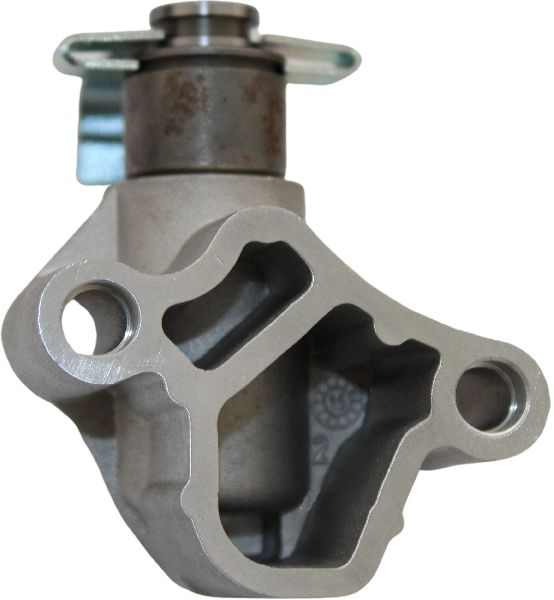
- Timing Chain Tensioner (Updated Version)
(OEM #06K109467K)— This is the primary failure point for P0015 on 2011-2013 Jetta GLI models with the 2.0T TSI engine (CCTA/CBFA). The original design was faulty and the updated part is required to prevent catastrophic failure.
Trusted brands: Genuine VW/Audi, INA, BorgWarner
OEM price range: $90-$140
Aftermarket price range: $50-$100 - Camshaft Adjuster Magnet (VVT Solenoid)
(OEM #06L109259D)— This solenoid controls cam timing and is a common failure on 1.8T and 2.0T EA888 engines, causing timing deviation codes. It's often clogged by debris or fails electrically.
Trusted brands: Genuine VW/Audi, INA, Bosch
OEM price range: $100-$160
Aftermarket price range: $50-$90 - Camshaft Position Sensor (2.5L Engine)
(OEM #07K907601A)— On the 2.5L 5-cylinder engine, a faulty camshaft position sensor can be a direct cause of this code if it's not reading the camshaft's position correctly.
Trusted brands: Bosch, NTK, Delphi
OEM price range: $80-$120
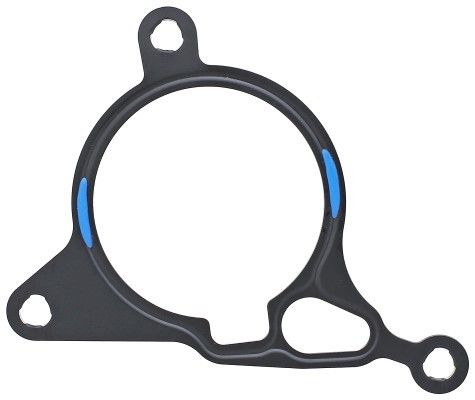
Aftermarket price range: $30-$60 - Vacuum Pump Reseal Kit (2.5L Engine)
(OEM #N/A (Not sold by VW))— Fixes the extremely common oil leak from the vacuum pump on 2.5L engines, which leads to low oil levels that can cause P0015. VW requires replacing the whole pump, but aftermarket seals are a cost-effective fix.
Trusted brands: RKX, URO Parts, Various eBay/Amazon sellers
OEM price range: $250+ (for whole pump)
Aftermarket price range: $20-$40 (for seal kit)
Related Codes That Often Appear With This One
- P0017 — Crankshaft Position - Camshaft Position Correlation. This code strongly suggests a mechanical timing issue, like a jumped or stretched timing chain, as the crank and cam signals do not align.
- P0341 — Camshaft Position Sensor 'A' Circuit Range/Performance. This points to a potential issue with the sensor itself or its wiring, which could be the root cause of the incorrect timing reading.
- P0016 — Crankshaft Position - Camshaft Position Correlation (Bank 1 Sensor 'A'). Similar to P0017, this indicates a base timing problem and often appears alongside other timing codes when the chain has stretched or jumped.
Technical Service Bulletins (TSBs) & Recalls
- VW TSB 15-12-01 / TPI 2028302: Addresses rattling noises, no-start conditions, and timing chain related problems on 2.0T TSI engines. It confirms the cause as a faulty tensioner and provides diagnostic steps to confirm failure by hand pressure.
Platform-Specific Known Issues
- A class-action lawsuit was filed against Volkswagen for the faulty timing chain tensioner in the 2.0T TSI engine (engine codes CCTA/CBFA), which affects 2011-2013 Jetta GLI models. Failure can occur suddenly and
Mechanic-Grade Diagnostic Values
- Camshaft Adjuster Magnet (N205/VVT Solenoid) Resistance — expected: 10-18 Ω. Failure: A reading outside this range indicates a faulty solenoid coil.
- Camshaft Phase Deviation (VCDS Measuring Block 93) — expected: 0 to -5.0 degrees at idle. Failure: A value consistently greater than -5.0 degrees (e.g., -6, -7) strongly indicates a stretched timing chain.
- Camshaft Oil Control Valve Resistance (Alternate Spec) — expected: 6.9 to 7.9 Ω at 68°F (20°C). Failure: No reading or a reading outside this specific range suggests the valve is faulty.
Scan Tool Commands That Help
- VCDS / ODIS: Read Measuring Value Block 93 (Camshaft Phase Adaptation) — This is the primary method for diagnosing timing chain stretch on EA888 engines without disassembly. A value exceeding -5 degrees at idle is a strong indicator that the chain needs replacement.
- VCDS / ODIS: Output Test: Camshaft Adjustment Valve (N205) — This bidirectional test forces the VVT solenoid to actuate, producing an audible click. It helps confirm if the solenoid is electrically functional and not seized, isolating the problem to the solenoid versus a wiring or oil passage issue.
- VCDS / ODIS: Basic Settings: Reset Camshaft Adaptation Values — This is a mandatory step after replacing the timing chain. It clears the old learned value for chain stretch from the ECM, preventing the computer from applying incorrect timing adjustments to the new chain.
Wiring & Ground Locations
- Engine/Transmission Ground Connection — Ground strap between the engine block/transmission case and the vehicle body/frame rail.. A poor engine ground can cause erratic voltage and signal noise for all engine sensors, including the camshaft and crankshaft position sensors, potentially leading to false correlation codes.
- Ground Connection on Cylinder Head — A ground point bolted directly to the cylinder head.. This is a primary ground point for sensors located on the top of the engine, such as the Camshaft Position Sensor (G40/G301) and the Camshaft Adjuster Magnet (N205). Corrosion or a loose connection here can directly cause sensor and actuator faults.
- Ground Connection in Engine Compartment, Right Side — Located on the right side frame rail/long member in the engine bay.. This serves as a chassis ground for various components in the engine bay. While less direct, a fault here can contribute to overall electrical instability.
OEM Part Supersession History
06H109259A / 06J109259A→06L109259D (latest common version)— Internal design improvements to the solenoid valve to increase reliability and prevent sticking.
Heads up: When replacing the very early 06J109259A part number with a newer version, the electrical connector may also need to be updated to part number 4H0973702A.06H109257A→06H109257C— This is the central control valve located inside the camshaft adjuster (phaser), not the external solenoid. Revisions were made to improve oil flow and prevent internal sticking.
Model Year Variations Within This Range
- 2011-2013 (GLI): These years primarily used the EA888 Gen 2 (CCTA/CBFA) 2.0T engine, which is highly susceptible to the timing chain tensioner failure. P0015 on these models is a critical warning.
- 2014-2018: These years saw the introduction of the EA888 Gen 3 1.8T and 2.0T engines. These engines feature significant updates, including a revised timing chain and tensioner design, dual valve timing (intake and exhaust), and an integrated exhaust manifold in the cylinder head. While still possible, a tensioner failure is less likely to be the primary cause of P0015 compared to a VVT solenoid or oil pressure issue.
Diagnostic Flowchart
Other Known Issues on This Vehicle
Issues unrelated to this code that are worth knowing about as an owner of this generation:
- 2.0T TSI Water Pump Failure 🔴 High — Very common. The plastic housing becomes brittle and cracks, causing coolant leaks. Often fails between 60,000 and 100,000 miles. (Ref: Subject of a class-action lawsuit and a warranty extension (8 years/80,000 miles).)
- 2.5L I5 Vacuum Pump Oil Leak 🟠 Medium — Extremely common. The pump's seal fails, causing an oil leak that drips onto the transmission, often mistaken for a rear main seal leak.
- 7-Speed Dry Clutch DSG (DQ200) Mechatronics Failure 🔴 High — Common on models equipped with this specific transmission. Can cause jerky shifting, loss of drive, and require expensive replacement. (Ref: Subject to recalls and service campaigns in various markets.)
- Worn Lower Control Arm Bushings 🟡 Low — Common wear item. Leads to clunking or knocking noises from the front suspension when going over bumps.
- Ignition Coil Pack Failure 🟠 Medium — A frequent cause of engine misfires across all engine types. Relatively easy to diagnose and replace.
- Clock Spring Failure 🟠 Medium — Common enough to prompt a recall. Results in a disabled driver's airbag, horn, and steering wheel buttons. (Ref: Recall issued for this component.)
Used vs. New Parts: Buying Guide for This Vehicle
When a used part is the smart pick: Used parts are generally not recommended for the key components related to this code due to the high failure rates of original designs. A used engine block, cylinder head, or transmission from a low-mileage donor could be a cost-effective choice if the original is catastrophically damaged.
Donor-vehicle mileage cap: roughly under 60000 miles for the part to have meaningful remaining life.
What to inspect on the donor part:
- Check for a documented service history, specifically regular oil changes with VW-spec oil.
- For 2.0T engines, ask for proof (receipts, service records) that the timing chain tensioner was updated to the newest revision.
- Inspect for oil leaks, especially around the timing covers and vacuum pump (2.5L).
- If possible, check the oil on the dipstick. Excessively dirty, sludgy, or glittery oil is a major red flag.
- Verify the part number on the component matches the required part for your specific vehicle and engine code.
OEM-only on this vehicle (don't cheap out):
- Timing Chain Tensioner: Never use a used tensioner. Only a new, updated OEM or OEM-supplier (like INA) part should be used to guarantee the fix.
- Timing Chain: Chains stretch over time. A used chain has no verifiable remaining life and is a high-risk part to install.
- Camshaft Position Sensor: The cost savings for a used sensor are minimal, and failure can cause significant diagnostic headaches. New OEM or OE-supplier (Bosch, NTK) is recommended.
Aftermarket brands forum-validated for this vehicle:
- INA (for VVT solenoids, tensioners, and timing components - often the original OEM supplier)
- Febi-Bilstein (for VVT solenoids and various engine components)
- Bosch (for sensors and electrical components)
- RKX (for the 2.5L vacuum pump reseal kit)
Brands owners have reported issues with on this vehicle:
- Unbranded, 'white-box' timing chain kits and VVT solenoids from online marketplaces are extremely high-risk. Failure of these cheap components can lead to catastrophic engine damage, negating any initial savings.
Real Owner Stories
Aggregated from forums and TSBs cited above. Mileages and costs reflect what owners reported in those sources.
2012 Volkswagen Jetta 2.5L
Symptoms: Check Engine Light was on with code P0015, caused by a persistent oil loss.
What fixed it: The source of the oil loss was the common vacuum pump leak. Replacing the vacuum pump seal resolved the oil loss and the associated code.
Source hint: Humble Mechanic: Replacing VW 2.5l Vacuum Pump ~ The Easy Way
2011 Volkswagen Jetta GLI 2.0T
Symptoms: A sharp, metallic rattle from the passenger side of the engine on cold starts, followed by a Check Engine Light for P0015. In some cases, failure can be sudden.
What fixed it: The faulty original timing chain tensioner was replaced with the updated part (06K109467K), along with the stretched timing chains and guides.
Source hint: Class-action lawsuit for faulty 2.0T TSI timing chain tensioner
2015 Volkswagen Jetta 1.8T
Symptoms: Check Engine Light on with a P0015 code, accompanied by a rough idle and poor acceleration.
What fixed it: After confirming the oil level was correct, the fault was traced to a clogged or failed exhaust VVT solenoid (Camshaft Adjuster Magnet), which was replaced.
Source hint: Reddit r/MechanicAdvice: Code P0015
Related OBD-II Codes
Frequently Asked Questions
My 2012 Jetta GLI is making a rattling noise on startup. Is this related to the P0015 code?
I have a 2.5L Jetta and keep getting P0015. What's the most common cause for my specific engine?
Is the timing chain tensioner failure on my 2013 Jetta GLI a known recall?
My mechanic suggested swapping the intake and exhaust VVT solenoids to diagnose P0015. Is this a valid test?
What is the updated part number for the faulty 2.0T TSI timing chain tensioner?
Could using the wrong engine oil cause a P0015 code on my Jetta?
Helpful Videos
We Have This Part in Stock

The information in this article is provided for general reference and educational purposes only. Vehicle specifications, procedures, and part compatibility can vary by production date, trim level, and region. Always consult your vehicle's factory service manual and verify part numbers before purchasing or performing repairs. Safety-critical components such as airbags, seat belts, and braking systems should be installed by a qualified professional.
- Volkswagen Jetta:
- 🎬 Helpful Videos
- 🛍️ Shop This Part
- What's Unique About the 2011-2018 Volkswagen Jetta
- Symptoms You May Notice
- Most Likely Causes
- Rare But Worth Checking
- Diagnosis Steps
- Parts You'll Likely Need
- Related Codes That Often Appear With This One
- Technical Service Bulletins (TSBs) & Recalls
- Platform-Specific Known Issues
- Mechanic-Grade Diagnostic Values
- Scan Tool Commands That Help
- Wiring & Ground Locations
- OEM Part Supersession History
- Model Year Variations Within This Range
- Diagnostic Flowchart
- Other Known Issues on This Vehicle
- Used vs. New Parts: Buying Guide for This Vehicle
- Real Owner Stories
- 2012 Volkswagen Jetta 2.5L
- 2011 Volkswagen Jetta GLI 2.0T
- 2015 Volkswagen Jetta 1.8T
- Related OBD-II Codes
- Frequently Asked Questions
- 🎟️ Get 5% Off