

P0014 on 2007-2010 Pontiac G5 2.4L: Exhaust Cam Timing Causes and Fixes
On a 2007-2010 Pontiac G5 with the 2.4L Ecotec engine, code P0014 is most often caused by a faulty exhaust camshaft actuator solenoid or low/dirty engine oil. Replacing the solenoid is a common DIY fix costing about $25-$60 for the part, and an oil change using 5W-30 oil should always be the first step before replacing any parts.
- Always check your engine oil first; use 5W-30. A simple oil change can fix this code.
- The most likely failed part is the exhaust camshaft actuator solenoid (P/N 12655421), an easy DIY replacement.
- Confirm a bad solenoid by swapping it with the intake solenoid and seeing if the code changes to P0011.
- A startup rattle noise points towards a more serious timing chain issue.
- Don't confuse the actuator *solenoid* with the camshaft position *sensor*; the solenoid is the common failure.
What's Unique About the 2007-2010 Pontiac G5
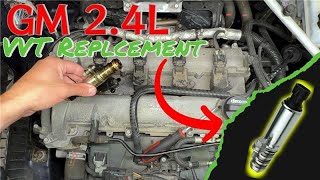
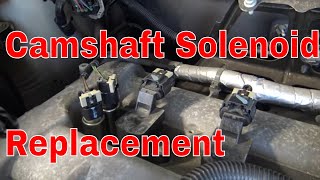
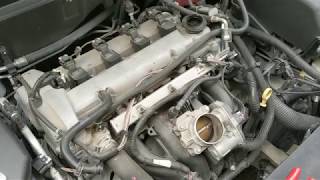
The 2.4L Ecotec engine (RPO code LE5) in the Pontiac G5 is well-known for its sensitivity to oil quality and level. The VVT system relies entirely on clean oil at the correct pressure to function. Due to this, the camshaft actuator solenoids are a very common failure point, often getting clogged by sludge or fine metal debris on their internal mesh screens, causing them to stick. Owners frequently report that an oil change is the first, and sometimes only, step needed to resolve this code, while solenoid replacement is the most common parts-based repair. The solenoids are easily accessible on top of the engine, held in by a single 10mm bolt each, making for a popular sub-30-minute DIY repair.
🎬 Watch: A quick walkthrough of the G5 solenoid replacement.Symptoms You May Notice
- Check Engine Light is on
- Rough or surging idle
- Poor engine performance and lack of power
- Reduced fuel economy
- Engine stalling at low speeds, especially when warm
- Hard starting
- Rattling or knocking noises from the engine, particularly a short rattle on startup.
- Replacing the camshaft position *sensor* when the actual problem is the camshaft position actuator *solenoid*. The solenoid is a far more common failure point for this specific code.
- Replacing a solenoid when the root cause is a stretched timing chain. If a startup rattle is present and the code returns quickly after a solenoid replacement, the timing chain system should be investigated.
Most Likely Causes
- Low or Dirty Engine Oil 🔴 High Probability The Ecotec's VVT system is hydraulically operated and highly sensitive to oil viscosity and cleanliness. Sludge or low levels directly impact the system's ability to adjust timing. One owner on a Cobalt forum noted the code appeared when their synthetic oil was 12 months old, even though the oil life monitor showed life remaining; an oil change fixed it.
How to confirm: Check the engine oil dipstick. If the oil is below the 'add' line, dark, gritty, or past its recommended change interval, this is the likely cause. The recommended oil is SAE 5W-30.
Typical fix: Perform an engine oil and filter change using the manufacturer-recommended 5W-30 oil. This is the cheapest and most important first step.
Est. part cost: $30-$70 - Failed Exhaust Camshaft Position Actuator Solenoid 🔴 High Probability These solenoids are a well-documented, high-failure item on the Ecotec engine. They have small internal passages and screens that can become clogged with debris from the engine oil, causing them to stick or fail electronically.
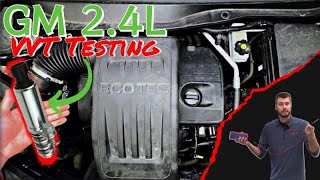
How to confirm: Swap the exhaust solenoid (rear position, typically black connector) with the intake solenoid (front position, typically gray connector). They are identical parts. Clear the codes and drive the vehicle. If the code changes to P0011 (Intake Camshaft Position), you have confirmed the solenoid is faulty. You can also test the solenoid's resistance with a multimeter; it should be between 8-13 ohms. 🎬 See how to test your VVT solenoids with a multimeter.
Typical fix: Replace the exhaust camshaft position actuator solenoid (Part No. 12655421). It is held in by a single 10mm bolt. It is often recommended to replace both intake and exhaust solenoids at the same time as a pair.
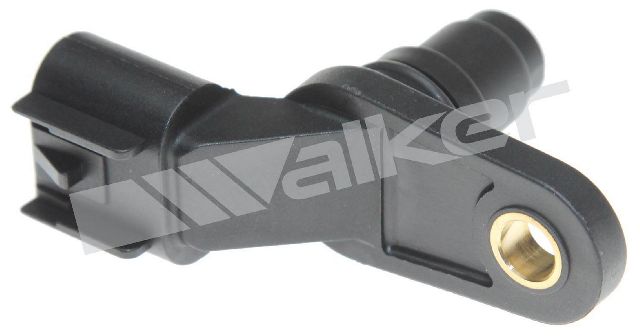
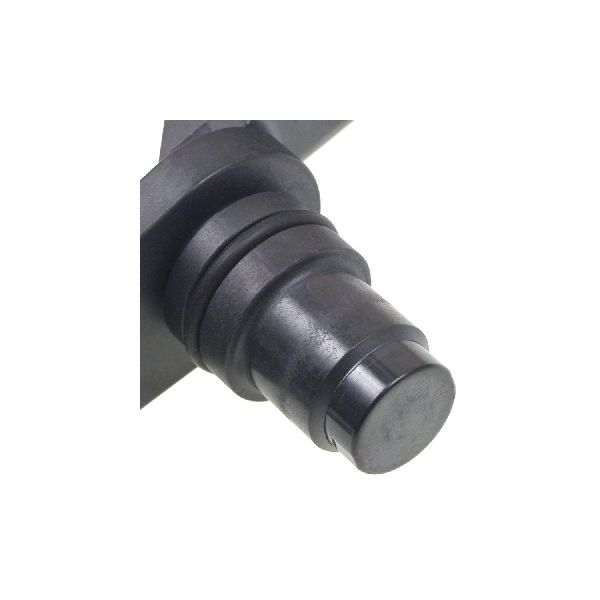
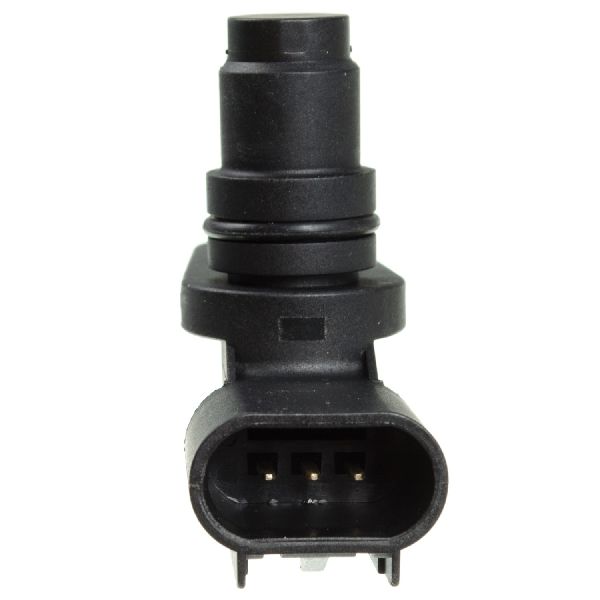
Est. part cost: $25-$60 - Failed Exhaust Camshaft Position Sensor ⚪ Low Probability This is an uncommon cause. The sensor's job is to report the camshaft's position. It usually reports the over-advanced condition correctly; the fault is rarely with the sensor itself.
How to confirm: Test the sensor's resistance and voltage output with a multimeter against the specifications in a service manual. This is typically done after a faulty solenoid has been ruled out.
Typical fix: Replace the exhaust camshaft position sensor.
Est. part cost: $20-$50
Rare But Worth Checking
- Stretched Timing Chain or Failed Tensioner: While less common than a solenoid failure, the Ecotec engine can be prone to timing chain issues, especially at higher mileage. If you hear a distinct rattling noise from the engine for 2-5 seconds on startup, this becomes a more likely cause. TSB #PIP4716F provides a diagnostic procedure for this noise. If codes P0016 or P0017 are also present, a timing chain issue is strongly indicated.
- Clogged Camshaft Phaser (Actuator): The phaser is the mechanical gear at the end of the camshaft that the solenoid controls. If oil passages within the phaser itself become blocked with sludge, it can get stuck in an over-advanced position. This is a more complex and expensive repair that often requires timing chain service.
- Wiring Issue: A damaged wire or loose/corroded connection at the solenoid connector can mimic a failed component. A visual inspection of the harness is always a good idea. Seeing P0013 and P0014 together points strongly to a wiring or solenoid electrical fault. 🎬 Watch: Fixing P0013 and P0014 codes on the 2.4L engine.
Diagnosis Steps
- Check the engine oil level and condition. Top off or perform an oil and filter change with 5W-30 oil if necessary. Clear the code and see if it returns.
- If the code returns, inspect the wiring and connector for the exhaust camshaft actuator solenoid (the 'B' solenoid, rear position on the valve cover) for any visible damage, corrosion, or oil contamination.
- Swap the exhaust (P0014) and intake (P0011) solenoids. They are located next to each other, each held by a 10mm bolt. Clear the codes and drive the vehicle.
- If the code changes to P0011, the solenoid you moved is faulty and must be replaced.
- If the code P0014 returns, the problem is not the solenoid. You can try removing and cleaning the solenoid screens with brake cleaner as a temporary measure.
- If the solenoid and wiring are good, the next step is to test the exhaust camshaft position sensor.
- If the sensor tests good and a startup rattle is present, the issue is likely more severe, such as a clogged camshaft phaser or a stretched timing chain. At this point, professional diagnosis is recommended.
Parts You'll Likely Need
- Exhaust Camshaft Position Actuator Solenoid
(OEM #12655421 (Superseded by 12679100))— This is the most common part to fail and directly cause the P0014 code on the 2.4L Ecotec engine.
Trusted brands: ACDelco (OEM), Delphi, Dorman (P/N: 917-216)
OEM price range: $40-$60
Aftermarket price range: $20-$40 - Intake Camshaft Position Actuator Solenoid
(OEM #12655420 (Superseded by 12679099))— It is highly recommended to replace both solenoids as a pair since they have been subjected to the same wear and conditions.
Trusted brands: ACDelco (OEM), Delphi, Dorman (P/N: 917-215)
OEM price range: $40-$60
Aftermarket price range: $20-$40
Related Codes That Often Appear With This One
- P0013 — This code indicates an electrical circuit problem (open or short) with the same exhaust camshaft actuator solenoid. Seeing P0013 and P0014 together strongly points to a failed solenoid or a wiring issue.
- P0011 — This is the equivalent code for the intake camshaft. If you see both P0011 and P0014, it could indicate a systemic issue like very low/dirty oil affecting both solenoids, or a more serious timing chain problem. It will also appear if you swap a bad exhaust solenoid to the intake side for diagnosis.
- P0016 / P0017 — These are correlation codes between the crankshaft and the camshafts. Their presence alongside P0014 makes a mechanical timing issue, like a stretched timing chain, a much more likely diagnosis.
Technical Service Bulletins (TSBs) & Recalls
- PIP4716F: A diagnostic procedure for a startup rattle noise that may occur alongside DTC P0014. It helps a technician differentiate between a timing chain issue and a problem with a belt-driven accessory.
Platform-Specific Known Issues
- Aftermarket Solenoid Color: While OEM solenoids are often color-coded (gray for intake, black for exhaust), popular aftermarket replacements like those from Dorman (917-215/917-216) may both be black. They are keyed differently and are not interchangeable, so rely on the part number and position (front=intake, rear=exhaust) rather than color.
Mechanic-Grade Diagnostic Values
- Camshaft Position Actuator Solenoid Resistance — expected: 8 to 13 Ohms at room temperature.. Failure: A reading outside this range, an open circuit (infinite resistance), or a wildly fluctuating reading when wiggling the connector indicates a faulty solenoid.
- Scan Tool Live Data: Desired vs. Actual Camshaft Position — expected: The 'Actual' position PID should closely follow the 'Desired' position PID as engine RPM and load change.. Failure: If the ECM commands a change and the 'Actual' value does not respond or is slow to respond, it indicates a stuck phaser or a non-functional solenoid.
- Camshaft Position Sensor Signal Voltage (at sensor connector) — expected: Using an oscilloscope, a clean digital square wave switching between ~0V and ~5V should be visible while the engine is running.. Failure: A missing waveform, a flat line at 0V or 5V, or a noisy/erratic signal indicates a failed sensor or wiring issue. A standard multimeter will show an average voltage (e.g., ~2.5V), which is not a definitive test.
Scan Tool Commands That Help
- GM Tech2 / GDS2 (or equivalent professional scanner): Camshaft Position Actuator Control / VVT Solenoid Test — Use this bidirectional command when the P0014 code returns after an oil change and solenoid swap. It allows you to manually command the solenoid to advance and retard the cam timing while monitoring the 'Desired' vs 'Actual' cam angle PIDs. This isolates the problem to either the hydraulic/mechanical function of the phaser or an intermittent electrical issue.
Wiring & Ground Locations
- Exhaust Camshaft Position (CMP) Actuator Solenoid Connector — On top of the engine, at the rear of the valve cover (closer to the firewall). It is typically the black electrical connector.. This is the direct electrical connection for the component most likely to cause P0014. Check for oil contamination, corrosion, or loose pins.
- G105 — On the lower left front of the transmission case.. This is a primary engine-to-chassis ground point. A poor connection here can cause a variety of erratic electrical behaviors and sensor reading faults for components grounded through the engine block.
- Engine Control Module (ECM) — Located in the engine compartment, on the left side, in front of the underhood fuse block.. The ECM sends the control signal to the solenoid and receives the position data from the sensor. Knowing its location is critical for tracing wiring harnesses for continuity or shorts.
Real Owner Repair Stories
- GMTNation Forum User (2007 TrailBlazer 4.2L I6 (different engine, but demonstrates the principle of oil starvation causing P0014)) — P0014 code, down on power, rough idle, erratic oil pressure from 0-40psi, and a knocking noise.
❌ Tried (didn't work) Cleaned MAF and throttle body, replaced the camshaft actuator solenoid (CPAS).
✅ What actually fixed it The P0014 code was a symptom of a catastrophic failure. The engine had run with extremely low oil (only 1 quart drained) due to a severely overdue oil change (8,000 miles). This caused a rod knock, indicating permanent internal engine damage requiring a rebuild or replacement. The story is a cautionary tale that P0014 can be the first sign of fatal oil starvation. - YouTube video by user 'd L' (2003 Chevy Trailblazer I6) — Persistent P0014 code returning annually for five years.
❌ Tried (didn't work) Repeatedly removing and cleaning the VVT solenoid would temporarily fix the issue for inspection, but the code always returned.
✅ What actually fixed it The owner performed an oil change using a mix of standard oil and two quarts of Lucas Oil stabilizer. This permanently resolved the code, suggesting the underlying issue was related to minor sludge or an inability to maintain sufficient oil pressure in the VVT system, which the high-viscosity additive corrected.
OEM Part Supersession History
12578518, 12628348, 12646784, 12655421→12679100— Part has been revised and updated by the manufacturer over time for improved reliability and performance.
Heads up: All previous part numbers are compatible and were the original equipment at the time, but 12679100 is the latest, most current service replacement part from GM.
Diagnostic Flowchart
Real Owner Stories
Aggregated from forums and TSBs cited above. Mileages and costs reflect what owners reported in those sources.
2009 Pontiac G5
Symptoms: Check Engine Light came on with codes P0013 and P0014. Cleared the codes, but they returned upon restarting the car later that night.
What fixed it: The user did not report a final fix; the codes returned even after replacing the camshaft sensor and the exhaust actuator solenoid.
Source hint: reddit.com - Pontiac g5 2009 codes keep coming back (r/CarHelp)
2009 Chevrolet Cobalt
Symptoms: Vehicle had code P0014 with no other codes present, and the car would not start. Oil level was fine and recently changed.
What fixed it: Unresolved in the report; the owner replaced the exhaust camshaft position actuator solenoid, but the car still would not start.
Source hint: Reddit r/MechanicAdvice
2008 Chevrolet Cobalt 2.4L
Symptoms: Received a P0014 code.
What fixed it: Replaced the exhaust solenoid and performed an oil change, but subsequently received both P0013 and P0014 codes, illustrating how a bad part or wiring issue can cause multiple codes.
Source hint: CobaltSS.net thread titled 'p0014-282663'
2.4L LE5 (Cobalt)
Symptoms: Check engine light came on with a P0014 code.
What fixed it: Replaced the exhaust solenoid located towards the back of the motor. It was held by a single 10mm bolt and took a maximum of 10 minutes to replace.
Source hint: CobaltSS.net thread titled 'Check engine light came-193433'
Related OBD-II Codes
Frequently Asked Questions
Does TSB PIP4716F apply to my 2007-2010 Pontiac G5 for code P0014?
What type of oil should I use to prevent P0014 on my 2.4L Ecotec?
I bought aftermarket Dorman solenoids for my G5, but they are both black. How do I know which is the exhaust solenoid?
How can I test if the exhaust camshaft actuator solenoid is causing my P0014 code?
What is the OEM part number for the exhaust camshaft position actuator solenoid?
Can low oil cause a P0014 code on my Pontiac G5?
Helpful Videos
We Have This Part in Stock



The information in this article is provided for general reference and educational purposes only. Vehicle specifications, procedures, and part compatibility can vary by production date, trim level, and region. Always consult your vehicle's factory service manual and verify part numbers before purchasing or performing repairs. Safety-critical components such as airbags, seat belts, and braking systems should be installed by a qualified professional.
- Pontiac G5:
- 🎬 Helpful Videos
- 🛍️ Shop This Part
- What's Unique About the 2007-2010 Pontiac G5
- Symptoms You May Notice
- Most Likely Causes
- Rare But Worth Checking
- Diagnosis Steps
- Parts You'll Likely Need
- Related Codes That Often Appear With This One
- Technical Service Bulletins (TSBs) & Recalls
- Platform-Specific Known Issues
- Mechanic-Grade Diagnostic Values
- Scan Tool Commands That Help
- Wiring & Ground Locations
- Real Owner Repair Stories
- OEM Part Supersession History
- Diagnostic Flowchart
- Real Owner Stories
- 2009 Pontiac G5
- 2009 Chevrolet Cobalt
- 2008 Chevrolet Cobalt 2.4L
- 2.4L LE5 (Cobalt)
- Related OBD-II Codes
- Frequently Asked Questions
- 🎟️ Get 5% Off