

P0014 on 2007-2009 Mercedes-Benz E63 AMG: Exhaust Camshaft Timing and M156 Fixes
On the M156 engine, P0014 is almost always caused by a failing camshaft adjuster on Bank 1 (passenger side). This is a very common and well-documented issue with this engine. Expect a loud rattling noise on startup as the internal locking plate wears out. The fix involves rebuilding or replacing the adjuster, which is a labor-intensive job requiring special timing tools.
- P0014 on an E63 AMG with the M156 engine is a strong indicator of a failing passenger-side exhaust camshaft adjuster.
- A key symptom is a metallic rattle from the engine for a few seconds after a cold start.
- Always check the simple things first: ensure engine oil is clean and at the correct level.
- Diagnose by swapping the solenoids and sensors before condemning the expensive adjuster.
- Repairing the camshaft adjuster is a complex job that requires special tools and should be left to a professional or highly experienced DIYer.
What's Unique About the 2007-2009 Mercedes-Benz E63 AMG
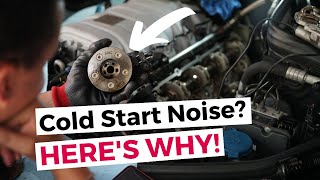
The 6.2L M156 V8 engine is legendary for its performance but also notorious for a specific flaw related to this code: premature failure of the camshaft adjusters. These components, which are responsible for altering the camshaft timing, contain internal locking plates and pins that wear out. The plate, made of a relatively soft metal, develops play where the locking pin engages, preventing the adjuster from maintaining the correct timing position at startup and low oil pressure. This wear produces a distinct and often loud rattling or ticking sound on cold starts that lasts for a few seconds, which is a classic symptom for M156 owners. While other causes are possible, a P0014 code on an M156 strongly points toward this known, widespread issue.
Symptoms You May Notice
- Check Engine Light is on.
- Loud, metallic rattling or ticking noise from the engine, especially on a cold start, that may last for a few seconds.
- Rough or unstable idle.
- Reduced engine power and sluggish acceleration.
- Hesitation or stumbling during acceleration.
- Increased fuel consumption.
- Hard starting or stalling.
- Replacing the camshaft position sensor first. While it's a possible cause, it's far less likely than a faulty adjuster or solenoid on the M156 engine. Swapping sensors is a better first step than outright replacement.
- Confusing the adjuster rattle with lifter tick. The adjuster rattle is typically a louder, more metallic sound that lasts for only a few seconds on startup. Worn lifters produce a lighter, more consistent ticking sound that may be present at all times.
Most Likely Causes
- Failing Camshaft Adjuster 🔴 High Probability The M156 engine is widely known for premature wear of the internal plates and locking pins within the camshaft adjusters, leading to excessive play and loss of timing control. The wear occurs in the softer metal of the plate where the locking pin sits, elongating the hole and causing slack.
How to confirm: Listen for a distinct rattling sound from the front of the engine on cold starts. A mechanic can use a stethoscope to pinpoint the noise to a specific adjuster. With the valve cover off, a technician can check for rotational play in the adjuster. The definitive diagnosis is visual inspection of the adjuster's internal plate after removal.
Typical fix: The adjuster must be replaced or rebuilt. Mercedes-Benz only sells the complete adjuster assembly. However, several aftermarket companies like 63 Motorsports and VRP Speed offer rebuild kits with upgraded, more durable plates made from harder steel (e.g., 4340HT billet steel) that provide a permanent solution. This is often the preferred repair as replacing with an OEM unit may lead to the same failure down the road. The job requires special timing tools to lock the engine at 40 degrees after top-dead-center.
Est. part cost: $600-$1200 for a new OEM adjuster, or $200-$500 for a high-quality aftermarket rebuild kit for all four adjusters. - Faulty Camshaft Adjuster Solenoid (Magnet) 🟡 Medium Probability
How to confirm: The solenoid can be tested with a multimeter for correct resistance (typically 5-15 Ω). A common and effective diagnostic step is to swap the exhaust solenoid with the intake solenoid on the same bank (Bank 1). Clear the codes and drive the car. If the fault code changes to P0011 or P0012 (intake timing), the solenoid is confirmed to be faulty.
Typical fix: Replace the faulty solenoid. This is a relatively simple part to access and replace on the front of the cylinder head, held in by three external Torx bolts.
Est. part cost: $50-$150 - Low or Dirty Engine Oil ⚪ Low Probability The VVT system is hydraulically operated by engine oil pressure. Incorrect oil viscosity or a low oil level can prevent the adjusters from moving correctly. Some owners on forums speculate that using higher viscosity oil (like 5W-40 instead of 0W-40) may help maintain oil pressure in high-mileage engines.
How to confirm: Check the engine oil level and condition. Ensure the oil meets Mercedes-Benz 229.5 specification. The M156 can be tricky to get an accurate oil reading on; check when fully warmed up on a level surface, waiting a few minutes after shutdown.
Typical fix: Perform an oil and filter change using a high-quality synthetic oil that meets Mercedes-Benz specifications.
Est. part cost: $80-$150 for oil and filter. - Faulty Camshaft Position Sensor ⚪ Low Probability
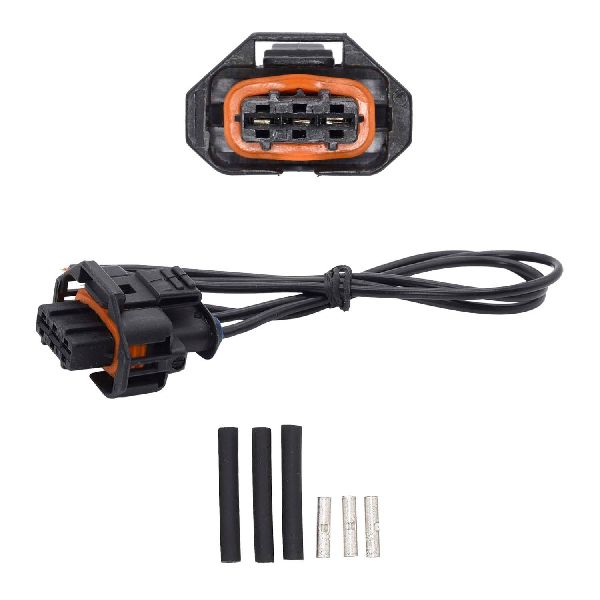
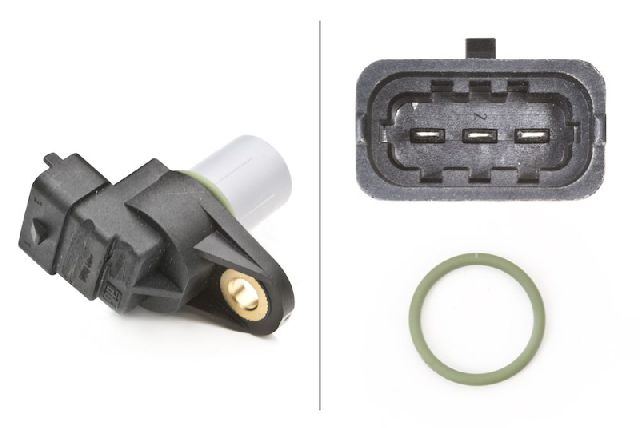
How to confirm: Swap the Bank 1 exhaust camshaft position sensor with the sensor from Bank 2 (driver's side). If the code changes to P0024 (indicating a Bank 2 exhaust issue), the sensor is faulty. This is a more reliable test than just replacing the part.
Typical fix: Replace the camshaft position sensor.
Est. part cost: $40-$100
Rare But Worth Checking
- Stretched Timing Chain or Worn Guides: While less common than adjuster failure, a stretched chain can cause timing deviations. This is a more significant issue to diagnose and repair, often requiring replacement of the chain, tensioners, and guides. This is usually a concern on very high mileage engines.
- Worn Camshaft Lobes and Hydraulic Lifters: The M156 engine is also known for camshaft and lifter (tappet) wear, especially around 100,000 miles. This typically causes a persistent ticking noise, not just a startup rattle, and may lead to misfire codes. While it's a separate issue from the adjuster plates, it's often addressed at the same time since the camshafts must be removed to replace the lifters.
Diagnosis Steps
- Read the code with an OBD-II scanner to confirm P0014 is present.
- Check the engine oil level and condition. If low, dirty, or overdue for a change, perform an oil and filter service with Mercedes-spec oil (e.g., MB 229.5). Clear the code and see if it returns.
- Listen carefully for a metallic rattling or ticking noise from the passenger-side front of the engine during a cold start. This is a strong indicator of a failing camshaft adjuster.
- If no noise is present, or for further diagnosis, swap the Bank 1 exhaust camshaft adjuster solenoid with the Bank 1 intake solenoid. Clear the codes and run the engine. If the code changes to P0012 (Intake Camshaft Over-Advanced), the solenoid is bad.
- If the code remains P0014, swap the Bank 1 exhaust camshaft position sensor with the Bank 2 exhaust sensor. Clear codes and run the engine. If the code changes to P0024 (Bank 2 Exhaust Over-Advanced), the sensor is bad.
- If the code persists as P0014 after these swaps, the camshaft adjuster itself is the most likely culprit. This requires professional diagnosis to confirm play in the adjuster, which involves removing the valve cover and using specialized timing tools to lock the engine and check for slack.
Parts You'll Likely Need
- Exhaust Camshaft Adjuster (Bank 1)
(OEM #A1560503047)— This is the most common point of failure on the M156 engine leading to cam timing codes. The internal locking mechanism wears out. It is highly recommended to service all four adjusters at the same time.
Trusted brands: Mercedes-Benz (OEM), INA
OEM price range: $600-$1200
Aftermarket price range: $400-$800 - Camshaft Adjuster Rebuild Kit (Plates) — A more permanent and cost-effective fix is to rebuild the adjusters with stronger aftermarket plates. This addresses the root design flaw.
Trusted brands: 63 Motorsports, VRP Speed, Weistec
OEM price range: N/A
Aftermarket price range: $300-$500 for a set of four plates - Camshaft Adjuster Solenoid / Magnet
(OEM #A2761560790 (supersedes A1561560090))— This solenoid controls oil flow to the adjuster. It can get clogged with debris or fail electronically, causing it to stick.
Trusted brands: Bosch, URO Parts
OEM price range: $70-$150
Aftermarket price range: $40-$90 - Camshaft Adjuster Central Bolt
(OEM #A1560520271)— These are torque-to-yield (TTY) bolts and are single-use only. They must be replaced any time an adjuster is removed or replaced.
Trusted brands: Mercedes-Benz (OEM)
OEM price range: $15-$30 each
Aftermarket price range: N/A
Related Codes That Often Appear With This One
- P0015 — This code is for 'B' Camshaft Position - Timing Over-Retarded (Bank 1). It can appear if the adjuster is failing and unable to hold its position correctly in either direction.
- P0024 — This is the same 'over-advanced' code but for Bank 2 (driver's side). It's common for adjusters on both banks to wear out around the same time, and it is highly recommended to rebuild or replace all four adjusters at once.
- P0300-P0308 — Misfire codes (P0300 for random, P0301-P0304 for Bank 1 cylinders) can be triggered because incorrect valve timing disrupts the combustion process, leading to an unstable air/fuel mixture.
Technical Service Bulletins (TSBs) & Recalls
- Mercedes-Benz TSB LI05.10-P-052324 (January 2009): Acknowledges a sporadically occurring rattling noise on startup due to intake camshaft adjusters or valve tappets. It provides different repair procedures based on the engine serial number, including replacing adjusters and, for earlier engines, intake camshafts as well.
Platform-Specific Known Issues
- Camshaft Adjuster Failure: The M156 is widely documented to have issues with the camshaft adjusters wearing out prematurely, causing a startup rattle and timing codes like P0014.
- Camshaft and Lifter Wear: This engine can also suffer from accelerated wear on the camshaft lobes and hydraulic lifters (tappets), particularly if oil changes are neglected or incorrect oil viscosity is used. This is a separate, but also common, top-end issue that is often addressed at the same time as the adjusters.
Mechanic-Grade Diagnostic Values
- Camshaft Adjuster Solenoid (Magnet) Resistance — expected: 6.9 to 7.9 Ω at 20°C (68°F). Failure: No reading (open circuit) or a reading significantly outside this range indicates a faulty solenoid.
- Engine Oil Pressure (M156) — expected: Must be above 4.4 bar (64 PSI) at 3000 RPM, per the factory maintenance manual.. Failure: Forum discussions indicate that with the commonly used 0W-40 oil, many M156 engines struggle to exceed 4.0 bar, which is below specification and may contribute to VVT and wear issues.
- Camshaft Position Adaptation Values (XENTRY/DAS) — expected: Values should be close to 0 degrees. At idle, intake cams should be around -15 degrees and exhaust cams around 28 degrees.. Failure: Values drifting towards the limit of +/- 6 degrees can indicate a stretched timing chain or a failing adjuster, even before a code is set. A value that is static and not fluctuating during operation can point to a bad sensor.
Scan Tool Commands That Help
- Mercedes XENTRY/DAS: Actual Values > Camshaft Position — This is used to monitor the live requested vs. actual positions of all four camshafts. A technician can observe if the Bank 1 exhaust cam is not reaching its target, is slow to respond, or has erratic readings, pointing towards an adjuster, solenoid, or sensor issue.
- Mercedes XENTRY/DAS: Adaptations > Camshaft Position Adaptation — After replacing adjusters, sensors, or timing components, the adaptation values for the camshafts can be reset. This forces the ECU to relearn the base positions. Viewing these learned adaptation values can also serve as a diagnostic tool to assess timing chain stretch over time.
- Mercedes XENTRY/DAS: Activations / Actuation — A technician can command the camshaft adjuster solenoids to activate. This helps verify if the solenoid is responding to ECU commands and can help differentiate between a wiring/ECU issue and a faulty solenoid itself.
Wiring & Ground Locations
- W11/1 — A braided ground strap running from the lower transmission bell housing (driver's side on LHD models) to the chassis.. A poor engine-to-chassis ground can introduce electrical noise and voltage drops, potentially affecting the readings of sensitive components like the camshaft and crankshaft position sensors, leading to erroneous timing codes.
- Engine Harness Connector for Bank 1 Camshaft Sensors/Solenoids — Located on the front of the Bank 1 (passenger side) cylinder head.. The wiring and connectors for the camshaft position sensor and the adjuster solenoid are in close proximity. Oil leaks from the solenoid covers or valve cover gaskets are common and can saturate the wiring, causing short circuits or connection failures that mimic a failed component.
Real Owner Repair Stories
- MBWorld.org Forums (C63 AMG (W204) with M156 engine, 90,000 miles) — Car throwing multiple timing codes including P0011, P0014, P0021, P0024 after a cylinder head rebuild.
❌ Tried (didn't work) Changing exhaust position cam sensors., Replacing the crankshaft position sensor., Checking solenoids for debris., Relearning cam positions with a scan tool.
✅ What actually fixed it The consensus from veteran forum members was that even though the codes appeared after other work, the mileage strongly indicated the root cause was worn camshaft adjusters. The recommendation was to rebuild all four adjusters, as it's unlikely for all four to fail electronically at once, but very common for them to be mechanically worn by 90,000 miles.
OEM Part Supersession History
A1561560090→A2761560790— The camshaft adjuster solenoid was updated. The newer part is used across various Mercedes engines.
Model Year Variations Within This Range
- 2007 vs 2008+: Early M156 engines (pre-Spring 2007 production) had a crankshaft with six counterweights. Later engines added two center counterweights for a total of eight, likely to improve torque characteristics in heavier vehicles. This does not directly affect the P0014 code but is a notable internal engine variation within the specified vehicle range.
Diagnostic Flowchart
Other Known Issues on This Vehicle
Issues unrelated to this code that are worth knowing about as an owner of this generation:
- Cylinder Head Bolt Failure 🔴 High — Affects M156 engines with serial numbers below 60-060658 (pre-2011/2012 models). The original bolts can corrode and break, allowing coolant to leak into the cylinders, potentially causing hydrolock and catastrophic engine failure.
- Camshaft and Hydraulic Lifter (Tappet) Wear 🔴 High — Commonly occurs around 80,000-100,000 miles. Soft camshaft lobes wear down against the hydraulic lifters, causing a persistent ticking noise, misfires, and eventual engine damage if not addressed. Requires camshaft and lifter replacement. (Ref: TSB LI05.10-P-052324 mentions valve tappet noise as a potential cause for startup rattles.)
- Intake Manifold Deterioration 🟠 Medium — The magnesium center plate of the intake manifold is prone to corrosion and cracking over time, causing vacuum leaks. Symptoms include a rough, hunting idle, hissing sounds, and lean condition codes (P0171/P0174).
- Crankcase Breather Valve (PCV) Failure 🟠 Medium — The diaphragm in the PCV valve deteriorates, typically around 60,000 miles, leading to high oil consumption, smoke from the exhaust, and lean codes. Replacement requires removing the intake manifold.
- Idler Pulley Failure 🟠 Medium — The plastic idler pulleys for the serpentine belt are a common failure point. When a pulley seizes, it can shred the belt, which can then damage other components like the thermostat housing, causing a sudden loss of coolant and power steering.
Used vs. New Parts: Buying Guide for This Vehicle
When a used part is the smart pick: For this specific fault on the M156 engine, using a salvaged part is only reasonable for external, easily accessible electronic components like the camshaft position sensor or the adjuster solenoid (magnet), provided they come from a low-mileage, verified running donor. Even then, the cost savings may be minimal compared to new aftermarket parts.
Donor-vehicle mileage cap: roughly under 50000 miles for the part to have meaningful remaining life.
What to inspect on the donor part:
- For solenoids, check that the connector pins are clean and straight.
- For sensors, ensure the plastic housing is not cracked or brittle.
- Ask for a video of the donor car running before disassembly if possible.
- Avoid parts from engines with known sludge or poor maintenance history.
OEM-only on this vehicle (don't cheap out):
- Camshaft Adjuster Central Bolts: These are torque-to-yield and must be new OEM parts for safety and proper torque.
Aftermarket brands forum-validated for this vehicle:
- 63 Motorsports (Adjuster Rebuild Kits)
- VRP Speed (Adjuster Rebuild Kits)
- Weistec (Adjuster Rebuild Kits)
- Bosch (Solenoids/Sensors)
Brands owners have reported issues with on this vehicle:
- Unknown/unbranded camshaft adjusters or rebuild kits from marketplaces like eBay or Amazon. The quality of the metal plate is critical to a long-term repair, and unverified suppliers are a significant risk.
Real Owner Stories
Aggregated from forums and TSBs cited above. Mileages and costs reflect what owners reported in those sources.
2007 Mercedes-Benz E63 AMG 6.2L M156 — 136000 miles
Symptoms: A classic 3-second metallic rattling noise during cold starts.
What fixed it: Replacement of the camshaft adjuster.
Source hint: MBWorld.org thread titled 'E63 possible bad Camshaft Adjuster?'
2007-2009 Mercedes-Benz E63 AMG 6.2L M156
Symptoms: Chasing a P0014 code; owner initially replaced the intake manifold gasket, PCV valve, and the solenoid magnet without success.
What fixed it: The owner eventually suspected the camshaft adjuster itself after other component replacements failed to clear the code.
Source hint: MBWorld.org thread titled 'NEED HELP !! w211 E63 AMG NOISE'
2012 Mercedes-Benz CLS63 AMG (M157/M156 context)
Symptoms: Startup rattle and timing issues.
What fixed it: Dealer recommended replacing adjusters, actuators, lifters, and head bolts.
Cost: $4900-$4900
Source hint: MBWorld.org thread titled 'Dreaded camshaft adjuster...'
2007-2009 Mercedes-Benz E63 AMG 6.2L M156
Symptoms: Internal wear of the adjuster plates where the locking pin sits, causing slack and timing errors.
What fixed it: DIY replacement of the adjuster plates using an upgraded kit from 63 Motorsports, following a procedure that locks the engine at 40 degrees.
Source hint: MBClub.uk thread titled 'M156 Cam Adjuster plates'
Related OBD-II Codes
Frequently Asked Questions
Does Mercedes-Benz TSB LI05.10-P-052324 apply to my 2007-2009 E63 AMG?
Is there a permanent fix for the M156 camshaft adjuster plate wear besides buying new OEM parts?
Can I use a different oil viscosity to help with the P0014 code and startup rattle?
How can I confirm if the P0014 code is a bad solenoid or the adjuster itself without taking the engine apart?
What special tools are required to replace the camshaft adjusters on the M156 engine?
Are the camshafts and lifters also a concern when dealing with P0014?
Helpful Videos
We Have This Part in Stock




The information in this article is provided for general reference and educational purposes only. Vehicle specifications, procedures, and part compatibility can vary by production date, trim level, and region. Always consult your vehicle's factory service manual and verify part numbers before purchasing or performing repairs. Safety-critical components such as airbags, seat belts, and braking systems should be installed by a qualified professional.
- Mercedes-Benz E63 AMG:
- 🎬 Helpful Videos
- 🛍️ Shop This Part
- What's Unique About the 2007-2009 Mercedes-Benz E63 AMG
- Symptoms You May Notice
- Most Likely Causes
- Rare But Worth Checking
- Diagnosis Steps
- Parts You'll Likely Need
- Related Codes That Often Appear With This One
- Technical Service Bulletins (TSBs) & Recalls
- Platform-Specific Known Issues
- Mechanic-Grade Diagnostic Values
- Scan Tool Commands That Help
- Wiring & Ground Locations
- Real Owner Repair Stories
- OEM Part Supersession History
- Model Year Variations Within This Range
- Diagnostic Flowchart
- Other Known Issues on This Vehicle
- Used vs. New Parts: Buying Guide for This Vehicle
- Real Owner Stories
- 2007 Mercedes-Benz E63 AMG 6.2L M156 — 136000 miles
- 2007-2009 Mercedes-Benz E63 AMG 6.2L M156
- 2012 Mercedes-Benz CLS63 AMG (M157/M156 context)
- 2007-2009 Mercedes-Benz E63 AMG 6.2L M156
- Related OBD-II Codes
- Frequently Asked Questions
- 🎟️ Get 5% Off