

P0014 on 2012-2018 Ford Focus: Exhaust Cam Timing Over-Advanced Causes and Fixes
On a 2012-2018 Ford Focus, P0014 is most often caused by a faulty exhaust VCT solenoid or low/dirty engine oil. Replacing the solenoid is a common fix, but requires removing the valve cover. Expect to pay $40-$80 for the part and budget for a new valve cover gasket as well.
- P0014 on your Focus means the exhaust camshaft timing is too far advanced.
- The most likely causes are low/dirty engine oil or a faulty exhaust VCT solenoid.
- Always check your oil level and condition first; an oil change is the cheapest and easiest first step.
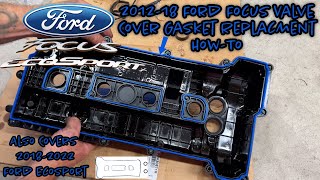
- To replace the VCT solenoid, the valve cover must be removed. Always replace the valve cover gasket at the same time.
- Swapping the identical intake and exhaust solenoids is the best way to confirm a bad solenoid before buying parts.
What's Unique About the 2012-2018 Ford Focus
The 2.0L Ti-VCT GDI engine in the third-generation Ford Focus has its Variable Camshaft Timing (VCT) solenoids located *under* the valve cover, unlike many other engines where they are externally accessible. This design makes replacement a more involved job requiring extra labor. Additionally, Ford has issued Technical Service Bulletins (TSBs) for this and similar model years, noting that debris in the oil can cause these VCT solenoids to stick, directly leading to codes like P0014. [TSB #SSM 48423] TSB SSM 48423 specifically recommends using a scan tool to cycle the solenoid 10 times to attempt to clear debris before replacing it. [TSB #SSM 48423]
Symptoms You May Notice
- Check Engine Light is on
- Rough or unstable idle
- Poor acceleration and reduced engine power
- Engine stalling, especially at low speeds
- Decreased fuel economy
- A rattling or whirring noise from the top of the engine that may increase in pitch with acceleration
- Replacing the camshaft position sensor. The sensor is correctly reporting the timing issue; it is not the cause of it. A faulty sensor would typically set a different code related to the sensor circuit itself. If the code persists after replacing the solenoid, the problem is more likely mechanical (phaser, timing chain) rather than electrical.
Most Likely Causes
- Low or Dirty Engine Oil 🔴 High Probability The Ti-VCT system is entirely dependent on clean oil and correct oil pressure to function. Ford TSBs specifically mention that small debris in the oil is a primary cause for the VCT solenoid to stick, triggering this code. [TSB #SSM 48423, TSB #SSM 47170] An oil change is often the first and most cost-effective diagnostic step.
How to confirm: Check the oil level on the dipstick and inspect its condition. If the oil is dark, gritty, below the minimum level, or past its recommended change interval, this is the likely starting point.
Typical fix: Perform an engine oil and filter change using the manufacturer-specified grade (5W-20 Synthetic Blend for this engine).
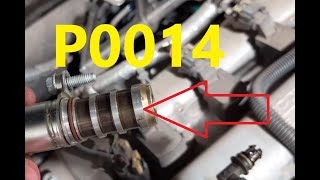
Est. part cost: $40-$70 - Faulty Exhaust VCT Solenoid 🔴 High Probability TSBs SSM 48423 and SSM 47170 directly state that small debris can cause the VCT solenoid to stick, leading to this code. [TSB #SSM 48423, TSB #SSM 47170] These solenoids are a very common failure point on the 2.0L Ti-VCT engine.
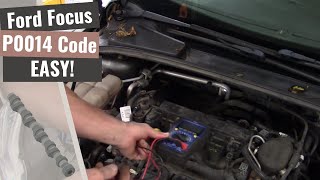
How to confirm: The definitive test is to swap the intake and exhaust VCT solenoids, as they are identical parts. Clear the codes and run the engine. If the code changes to P0011 (Intake Camshaft Over-Advanced), the solenoid is confirmed bad. You can also test the solenoid's resistance with a multimeter; it should typically be between 5 to 15 ohms.
Typical fix: Replace the exhaust VCT solenoid. This requires removing the valve cover, so the valve cover gasket and spark plug tube seals must also be replaced to prevent leaks. Before replacement, per TSB SSM 48423, a technician can use a scan tool to command the solenoid to cycle multiple times to try and dislodge debris. [TSB #SSM 48423]
Est. part cost: $40-$100 - Failing Camshaft Phaser 🟡 Medium Probability The phaser is the mechanical gear that the solenoid controls. It can wear out or become clogged with sludge over time, preventing it from returning to the base (zero advance) position.
How to confirm: This is typically diagnosed after confirming the oil and VCT solenoid are good. It often requires more advanced diagnostics, including observing live data with a scan tool and potentially inspecting the timing components. A persistent code after a solenoid swap points towards the phaser.
Typical fix: Replace the exhaust camshaft phaser, which is a significant job involving removal of the timing components.
Est. part cost: $100-$250
Rare But Worth Checking
- Stretched Timing Chain or Failed Tensioner: While less common than solenoid issues, a worn timing chain can cause camshaft correlation problems. This is a more serious mechanical issue that would likely be accompanied by rattling noises on startup. One owner reported this as the ultimate fix after replacing VCT solenoids did not solve the issue.
- Wiring or Connector Issue: Damage to the wiring harness leading to the VCT solenoid can cause an open or short, though this would more commonly trigger a circuit code like P0013. Check the connector at the valve cover for damage or corrosion.
- Internal Engine Failure: In a severe case documented by the NHTSA, codes P0012 and P0014 were associated with internal engine failures on a 2018 Focus, though this is a worst-case scenario. [ODI #11634319]
Diagnosis Steps
- Check Engine Oil: Verify the oil level is correct and the oil is clean. If in doubt, perform an oil and filter change with 5W-20 synthetic blend oil. This is the cheapest and easiest first step.
- Scan for Codes: Use an OBD-II scanner to confirm P0014 and check for any other related codes.
- Inspect Solenoid Wiring: Visually inspect the wiring harness connector at the valve cover for the VCT solenoids. Ensure it's secure and free of damage.
- (Optional) Cycle Solenoid: Per TSB SSM 48423, use a capable scan tool to access the PCM's pinpoint test HK11 and cycle the exhaust VCT solenoid 10 times to attempt to clear debris. [TSB #SSM 48423] Clear codes and re-test.
- Swap VCT Solenoids: Remove the valve cover. The intake and exhaust VCT solenoids are identical and interchangeable. Swap their positions. Reinstall the valve cover (you can temporarily reuse the old gasket for this test), clear the codes, and start the engine.
- Re-Scan for Codes: If the trouble code changes to P0011 ('A' Camshaft Position Over-Advanced), the solenoid you moved to the intake side is faulty and needs to be replaced.
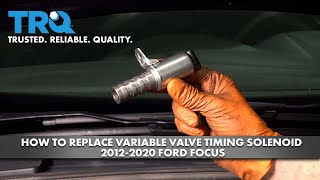
- Replace Solenoid and Gaskets: If the solenoid is confirmed bad, replace it with a new part. It is critical to also install a new valve cover gasket and spark plug tube seals to prevent oil leaks.
- Advanced Diagnosis: If the code returns after replacing the solenoid, the issue may be with the camshaft phaser, timing chain, or an oil pressure problem, which may require professional diagnosis.
Parts You'll Likely Need
- Variable Camshaft Timing (VCT) Solenoid
(OEM #CJ5Z-6M280-A)— This is the most common point of failure, often due to internal sticking caused by oil debris, as noted in Ford TSBs. [TSB #SSM 48423] The intake and exhaust solenoids are the same part. An updated part number may be CJ5Z-6M280-B.
Trusted brands: Motorcraft, Delphi, Standard Motor Products (SMP), Dorman
OEM price range: $40-$70
Aftermarket price range: $25-$50 - Valve Cover Gasket Kit
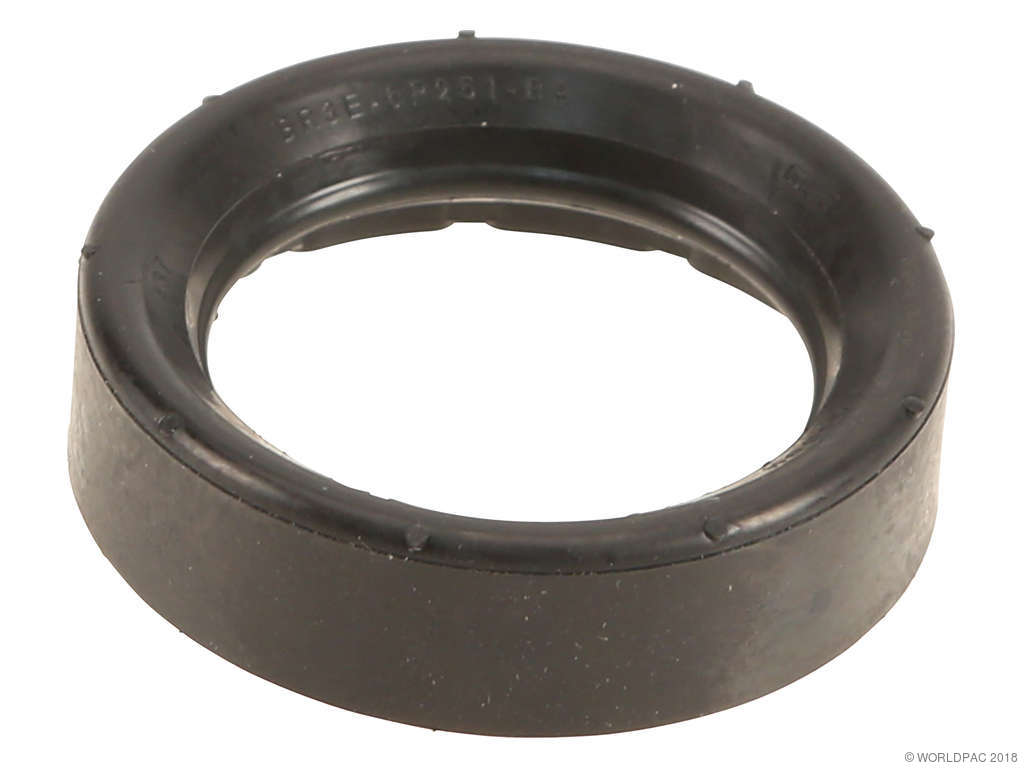
(OEM #CV6Z-6584-A)— The VCT solenoids are located under the valve cover, so the gasket must be replaced to prevent oil leaks after the repair. A kit typically includes the main gasket and spark plug tube seals.
Trusted brands: Motorcraft, Fel-Pro, Mahle
OEM price range: $40-$60
Aftermarket price range: $25-$45
Related Codes That Often Appear With This One
- P0011 — Intake Camshaft Position Timing Over-Advanced. If both intake and exhaust solenoids are failing or oil quality is very poor, both codes can appear. This code is also the expected result of swapping a bad exhaust solenoid to the intake side for diagnosis.
- P0015 — Exhaust Camshaft Position Timing Over-Retarded. This can appear intermittently with P0014 if the VCT solenoid is sticking erratically in both directions.
- P0016 / P0017 — Crankshaft/Camshaft Position Correlation. These codes indicate a more serious timing discrepancy that could point towards a stretched timing chain or incorrectly installed components.
Technical Service Bulletins (TSBs) & Recalls
- SSM 54366: Notes P0014 as a possible code and refers to pinpoint tests.
- SSM 48423: Suggests P0014 may be due to small debris causing the VCT solenoid to stick and advises cycling the solenoid to clear it before replacement. [TSB #SSM 48423]
- SSM 47170: An earlier version of the TSB also pointing to debris in the VCT solenoid as a cause for P0014. [TSB #SSM 47170]
Platform-Specific Known Issues
- TSB SSM 48423 and SSM 47170: Ford noted that for some 2015-2020 vehicles, P0014 (and other VCT codes) may be caused by small debris causing the VCT solenoid to stick. The bulletin advises against attempting repairs before performing proper diagnosis, specifically recommending cycling the solenoid with a scan tool to try and clear it. [TSB #SSM 48423, TSB #SSM 47170]
- TSB SSM 54366: This later bulletin also lists P0014 as a potential DTC on 2015-2021 models and refers technicians to specific diagnostic tests in the service manual. [TSB #SSM 54366]
Mechanic-Grade Diagnostic Values
- VCT Solenoid Internal Resistance — expected: 6.9 to 7.9 Ohms at 68°F (20°C) is a specific value cited, while a broader range of 5-15 Ohms is also mentioned as acceptable.. Failure: A reading of 0 ohms (short circuit) or infinite/OL (open circuit) indicates a failed solenoid.
- VCT Solenoid Voltage Supply (Key On, Engine Off) — expected: Approximately 12V (Battery Voltage) at Pin 1 (typically Green/Violet wire) of the solenoid connector, with the other pin connected to ground.. Failure: No voltage indicates a wiring or fuse issue upstream from the solenoid.
- Live Data: VCT_EXH_DIF (Exhaust Cam Angle Differential) — expected: Should be close to 0 degrees at idle and when not under load. A variance of +/- 5 degrees is generally acceptable.. Failure: A large, persistent differential between the desired and actual cam angle (e.g., stuck at 30 degrees) while the PCM is commanding 0% duty cycle indicates the cam is stuck in an advanced position.
- Live Data: VCT_EXH_DC (Exhaust Solenoid Duty Cycle) — expected: At idle, this should be at or near 0%. The PCM will increase the duty cycle percentage to command the phaser to advance the timing.. Failure: If the PCM commands a high duty cycle (e.g., 80%) but the cam angle doesn't change, it points to a stuck solenoid or phaser.
Scan Tool Commands That Help
- Ford IDS (or equivalent high-level scanner): VCT Solenoid Pinpoint Test (e.g., HK11 from TSB SSM 48423) — This bidirectional control commands the PCM to cycle the VCT solenoid on and off (typically 10 times). It is used to dislodge small debris that may be causing the solenoid to stick, potentially fixing the issue without parts replacement, as recommended by Ford's TSB. [TSB #SSM 48423]
- Ford IDS (or equivalent high-level scanner): VCT System Test — This function allows a technician to monitor the VCT system's response in real-time while commanding specific timing angles. It's used to verify if the solenoid and phaser are responding correctly to PCM commands, helping to isolate the fault between the electrical and mechanical components.
Wiring & Ground Locations
- VCT Solenoid Connector — Under the valve cover, connected directly to the top of the VCT solenoid.. This is the primary test point. Pin 1 is the 12V power supply (often Green/Violet wire) and Pin 2 is the control signal (ground) from the PCM (often Black/Yellow wire).
- Main Engine/Transmission Ground — A primary ground strap runs from the engine block (near the transmission bellhousing) to the chassis frame rail, located under the airbox.. A poor engine ground can cause erratic behavior and incorrect readings for many sensors and actuators controlled by the PCM, including the VCT solenoids. Cleaning this ground point is a common preventative maintenance step on these vehicles.
- G104 (Ground Point) — On the left front of the motor compartment, under the airbox assembly.. This is a major chassis ground point for multiple engine bay components. While a failure here would likely cause more widespread issues, ensuring it is clean and tight is crucial for stable sensor and actuator operation.
Real Owner Repair Stories
- Reddit user Artistic_Matter_4507 (Ford Focus (year not specified, but within the generation)) — Persistent P0012 and P0014 codes.
❌ Tried (didn't work) Replacing both VCT solenoids
✅ What actually fixed it The final diagnosis was a skipped timing chain, which required a timing chain replacement. - Reddit user in r/AskMechanics (2016 Ford Focus SE) — P0014 code, intermittent no-start, single click when turning key.
❌ Tried (didn't work) Timing chain replacement (performed twice by a shop), Charging battery, cleaning terminals, Swapping relays
✅ What actually fixed it The user's story was unresolved but highlights a case where both VCT solenoids and even a timing chain replacement did not fix the P0014, and the shop then diagnosed a bad PCM. This serves as a cautionary tale for complex cases.
When the Usual Fixes Don't Work
- While faulty solenoids and dirty oil are the most common culprits, there are documented cases where these fixes do not resolve the P0014 code. In one instance from a Reddit repair thread, a user replaced both VCT solenoids but the P0012 and P0014 codes persisted. The ultimate resolution was replacing a skipped timing chain, indicating a more severe mechanical failure. This underscores the importance of considering timing chain stretch or tensioner failure if solenoid replacement does not work.
OEM Part Supersession History
CJ5Z-6M280-A→CJ5Z-6M280-B, CM5Z-6M280-C— Part revisions are common to improve durability, material composition, or address known failure modes. The change from -A to -B is a documented update.
Model Year Variations Within This Range
- 2012-2018: The core 2.0L Ti-VCT GDI engine and VCT system remained largely consistent through the generation, including the 2015 model year refresh. The primary issues and fixes for P0014 apply across this entire range.
Diagnostic Flowchart
Other Known Issues on This Vehicle
Issues unrelated to this code that are worth knowing about as an owner of this generation:
- DPS6 'PowerShift' Automatic Transmission Failure 🔴 High — Extremely common on automatic models. Issues include shuddering, hesitation, jerky shifts, and complete failure of the clutch pack or Transmission Control Module (TCM). (Ref: Multiple TSBs (e.g., 15-0120, 13-9-4) and a major class-action lawsuit cover these issues for 2012-2016 models. Problems persisted in 2017-2018 models as well.)
- Canister Purge Valve Failure 🟠 Medium — Very common, leading to rough idle, difficulty starting after refueling, and potential fuel tank deformation. (Ref: Subject of NHTSA recalls 18V735 and 19V515, requiring a PCM software update and potential valve replacement.)
- Passenger-Side Engine Mount Collapse 🟠 Medium — Common after 50,000 miles. The hydraulic mount leaks and collapses, causing excessive engine vibration to be felt in the cabin, especially at idle. (Ref: No recall, but it is a widely documented failure. The mount grounds out on its bracket, transferring all engine vibration to the chassis.)
- Fuel System and Electrical Problems 🟡 Low — Numerous complaints exist regarding inaccurate fuel gauges and intermittent electrical faults, some of which are tied to the purge valve recall. (Ref: Recall 18S32 addresses fuel gauge and stalling issues related to the purge valve.)
Used vs. New Parts: Buying Guide for This Vehicle
When a used part is the smart pick: For this specific repair, using a used VCT solenoid is generally not recommended. The failure is often due to internal wear and clogging from oil debris, which would be an unknown factor in a used part from a junkyard.
Donor-vehicle mileage cap: roughly under 50000 miles for the part to have meaningful remaining life.
What to inspect on the donor part:
- Verify the donor vehicle had regular oil changes, if possible.
- Inspect the solenoid's screens for any tears or clogging.
- Test the resistance with a multimeter before purchase; it should be within 5-15 ohms.
OEM-only on this vehicle (don't cheap out):
- While not strictly 'OEM-only', using a Motorcraft VCT solenoid is highly recommended due to the critical nature of the part and the labor involved in accessing it. A failed aftermarket part would require repeating the entire job.
Aftermarket brands forum-validated for this vehicle:
- Dorman (specifically their OE FIX line if available)
- Delphi
- Standard Motor Products (SMP)
Brands owners have reported issues with on this vehicle:
- No-name, unbranded solenoids from online marketplaces are a significant risk due to inconsistent quality control.
Real Owner Stories
Aggregated from forums and TSBs cited above. Mileages and costs reflect what owners reported in those sources.
2012-2018 Ford Focus 2.0L Ti-VCT GDI
Symptoms: A distinct whirring sound from the engine, the check engine and oil lights illuminated, and significantly reduced acceleration.
What fixed it: The owner attempted an oil change which did not resolve the issue, indicating a likely solenoid or mechanical failure.
Source hint: Reddit r/FordFocus
Related OBD-II Codes
Frequently Asked Questions
My 2015 Ford Focus has code P0014; is there a specific Ford service bulletin for this?
Can I just swap the solenoids on my 2.0L Ti-VCT engine to see if one is bad?
What type of oil should I use in my 2012-2018 Focus to prevent VCT issues?
Does the P0014 code on my Focus require replacing the valve cover gasket?
Is P0014 related to the common transmission shuddering in these Focus models?
Could a bad engine mount cause the symptoms I'm feeling with P0014?
Helpful Videos

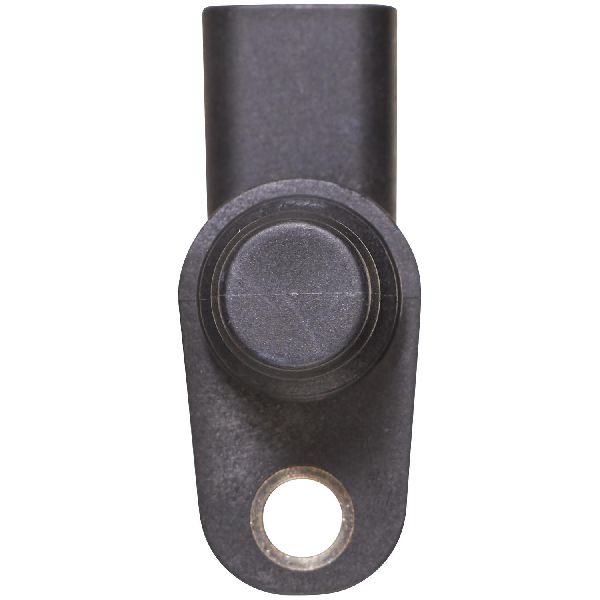
We Have This Part in Stock


The information in this article is provided for general reference and educational purposes only. Vehicle specifications, procedures, and part compatibility can vary by production date, trim level, and region. Always consult your vehicle's factory service manual and verify part numbers before purchasing or performing repairs. Safety-critical components such as airbags, seat belts, and braking systems should be installed by a qualified professional.
- Ford Focus:
- 🎬 Helpful Videos
- 🛍️ Shop This Part
- What's Unique About the 2012-2018 Ford Focus
- Symptoms You May Notice
- Most Likely Causes
- Rare But Worth Checking
- Diagnosis Steps
- Parts You'll Likely Need
- Related Codes That Often Appear With This One
- Technical Service Bulletins (TSBs) & Recalls
- Platform-Specific Known Issues
- Mechanic-Grade Diagnostic Values
- Scan Tool Commands That Help
- Wiring & Ground Locations
- Real Owner Repair Stories
- When the Usual Fixes Don't Work
- OEM Part Supersession History
- Model Year Variations Within This Range
- Diagnostic Flowchart
- Other Known Issues on This Vehicle
- Used vs. New Parts: Buying Guide for This Vehicle
- Real Owner Stories
- 2012-2018 Ford Focus 2.0L Ti-VCT GDI
- Related OBD-II Codes
- Frequently Asked Questions
- 🎟️ Get 5% Off