

P0014 on 2014-2019 Chevrolet Silverado 1500 5.3L: Causes and Fixes for Camshaft Timing
On the 2014-2019 Silverado 5.3L, code P0014 is most often caused by low/dirty engine oil or a faulty exhaust camshaft position actuator solenoid. Always check your oil first; if the level and quality are good, replacing the Bank 1 (driver's side) exhaust solenoid is the next logical step and a common, affordable DIY fix.
- First, check your oil. Low, old, or incorrect viscosity oil is the number one cause of P0014. Use full synthetic 0W-20 oil.
- The most likely failed part is the Bank 1 (driver's side) exhaust camshaft position actuator solenoid. It's affordable and relatively easy to replace.
- Do not immediately replace the camshaft position sensor; it is rarely the cause of this specific performance code.
- If an oil change and new solenoid don't fix the issue, the problem could be a more serious mechanical fault like a bad cam phaser or stretched timing chain, which requires professional diagnosis.
What's Unique About the 2014-2019 Chevrolet Silverado 1500
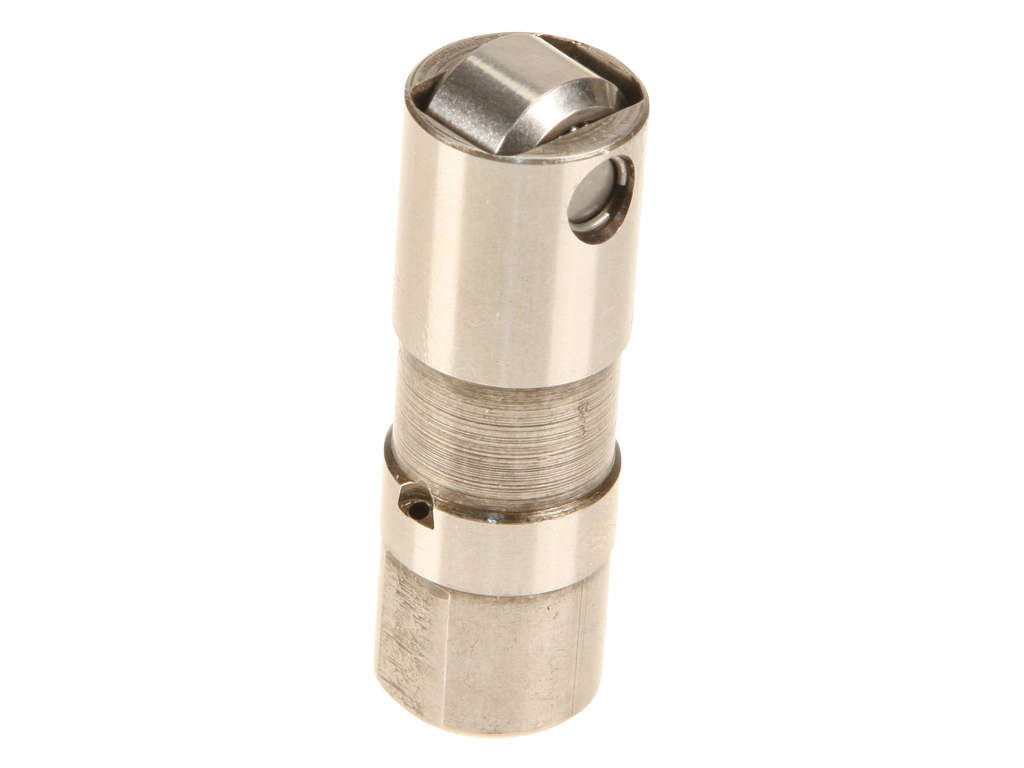
The L83 V8 engine, like many modern GM engines, uses a VVT system that is highly sensitive to oil quality and pressure. Issues with Active Fuel Management (AFM) lifters, while not a direct cause, can sometimes contribute to oil pressure fluctuations or introduce debris into the oil, which may indirectly affect the VVT system. For the L83, the most common failure point for a P0014 code, after ruling out oil issues, is the camshaft position actuator solenoid itself, which can become clogged with sludge or fail electronically.
Symptoms You May Notice
- Check Engine Light is on
- Rough or unstable idle
- Engine stalling, especially at low speeds
- Reduced engine power and poor acceleration
- Increased fuel consumption
- Rattling or ticking noise from the engine bay
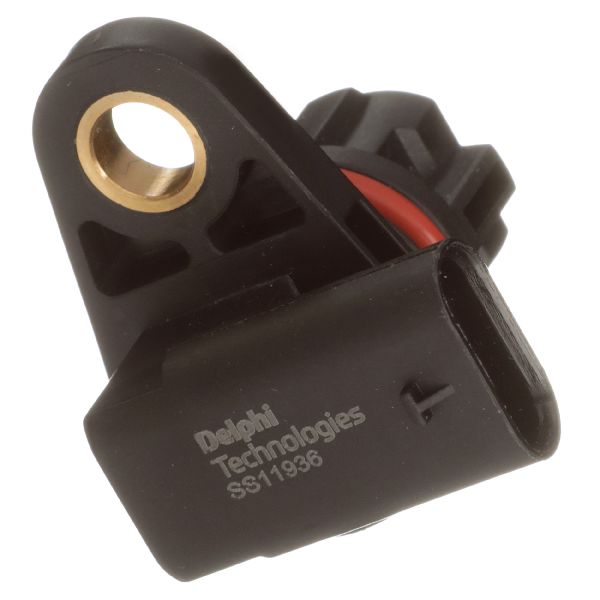
- Replacing the camshaft position sensor. While a sensor can fail, it is much more likely to set a specific sensor circuit code (like P0365/P0366). The P0014 code relates to timing performance, which is controlled by the solenoid and phaser, not just monitored by the sensor.
Most Likely Causes
- Low, Dirty, or Incorrect Viscosity Engine Oil 🔴 High Probability The VVT system is hydraulically operated and extremely sensitive to oil pressure and cleanliness. Infrequent oil changes or using oil other than the specified Dexos-approved 0W-20 can cause sludge to build up and clog the small passages in the solenoids and phasers.
How to confirm: Check the engine oil level on the dipstick and inspect the oil's condition. If it is low, black, or gritty, it needs to be changed. Many owners report that simply performing an oil change resolves the code. 🎬 See why clean oil is the cheapest fix for VVT codes
Typical fix: Perform an oil and filter change using a quality synthetic 0W-20 oil and a new oil filter. In some cases where sludge is suspected, using an engine flush additive like Seafoam before draining the old oil can help clean internal passages.
Est. part cost: $40-$80 - Faulty Exhaust Camshaft Position Actuator Solenoid (Bank 1) 🔴 High Probability These solenoids are a common failure item. They can get clogged with debris, the internal spool valve can stick, or the coil can fail electronically, preventing them from correctly regulating oil flow to the cam phaser. Their screens can become completely blocked by sludge. A manufacturer service bulletin, Bulletin #GCUS-9-3286, notes that the P0014 code may set specifically as a result of a sticking exhaust camshaft position actuator.
How to confirm: A good diagnostic step is to swap the Bank 1 exhaust solenoid with the Bank 1 intake solenoid. Clear the codes and drive the vehicle. If the code changes to P0011 (Intake Cam Position), the solenoid is confirmed to be faulty. Resistance should measure between 8-12 ohms.
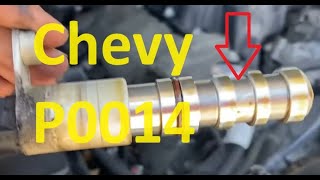
Typical fix: Replace the Bank 1 (driver's side) exhaust camshaft position actuator solenoid. It is located on the front of the cylinder head, typically the lower of the two solenoids, and is held in by a single 10mm bolt.
Est. part cost: $30-$70 - Sticking or Failed Camshaft Phaser ⚪ Low Probability
How to confirm: This is more difficult to diagnose and usually confirmed after replacing the solenoid and performing an oil change with no change in symptoms. A scan tool showing the cam angle not responding to commands, even with a known-good solenoid, points to the phaser.
Typical fix: Replacement of the camshaft phaser, which is a labor-intensive job requiring removal of the valve cover and timing components. This is generally not a DIY-friendly repair.
Est. part cost: $100-$250
Rare But Worth Checking
- Stretched Timing Chain: While not as common as solenoids, a stretched timing chain can cause the camshaft timing to be erratic and out of sync with the crankshaft, triggering P0014 and often other codes like P0016 or P0017.
- Wiring Harness Chaffing: GM has issued TSB 18-NA-307 for some vehicles, indicating that the engine wiring harness can chafe on the camshaft cover or cylinder head, potentially causing a short in the solenoid circuit and triggering this code along with others like P0365 and P0366.
- Shifted Camshaft Reluctor Ring: GM TSB 21-NA-268 notes a rare condition where the exhaust camshaft reluctor can be out of phase, causing timing-related DTCs like P0014 and P0017. This is a significant mechanical failure requiring camshaft replacement and may be caused by a seized vacuum pump on some engines. NHTSA ODI #11488829 describes a similar scenario where P0014 and P0017 codes remained due to a shattered vacuum pump affecting the camshaft.
Diagnosis Steps
- Verify the code with an OBD-II scanner.
- Check the engine oil level and condition. If low or dirty, perform an oil and filter change with the correct Dexos-approved 0W-20 oil. Clear the code and see if it returns. This is the most common and cheapest fix.
- If the oil is fine, inspect the wiring and connector for the Bank 1 (driver's side) exhaust VVT solenoid for any damage, corrosion, or signs of chaffing as noted in TSB 18-NA-307.
- Using a bi-directional scan tool, command the Bank 1 exhaust solenoid to activate and monitor the camshaft angle parameter. An unresponsive angle suggests a problem with the solenoid or phaser.
- A practical DIY test is to swap the Bank 1 exhaust solenoid with the Bank 1 intake solenoid (the upper one). Clear codes and drive. If the code changes to P0011, the solenoid you moved is bad and needs replacement. This is a very common and effective diagnostic step.
- If the code remains P0014 after the swap, the issue is likely not the solenoid. The problem could be a clogged oil passage in the cylinder head, a faulty camshaft phaser, or a base timing issue (stretched chain).
- If the solenoid is removed, inspect its screens for metal shavings or sludge. Heavy contamination indicates a larger engine problem may be present. You can attempt to clean the solenoid with brake cleaner and test it with a 12V source to see if the internal plunger actuates. 🎬 Watch this walkthrough on how to test and replace the solenoid
Parts You'll Likely Need
- Camshaft Position Actuator Solenoid (VVT Solenoid)
(OEM #12679099 (Supersedes: 12628347, 12646783, 12655420))— This is the most common part to fail and cause a P0014 code after oil issues are ruled out. It gets clogged or fails electronically.
Trusted brands: ACDelco, GM Genuine Parts, Dorman
OEM price range: $45-$70
Aftermarket price range: $25-$50 - Engine Oil Filter and 0W-20 Synthetic Oil — Clean oil of the correct viscosity is critical for the VVT system to function. This is the first and most important step in troubleshooting.
Trusted brands: ACDelco PF63E Filter, Mobil 1, Pennzoil Platinum
OEM price range: $60-$100
Aftermarket price range: $40-$80
Related Codes That Often Appear With This One
- P0011 — Intake camshaft timing over-advanced on the same bank. If both appear, it could point to a more severe oil pressure/blockage issue affecting the entire cylinder head. If P0011 appears after swapping solenoids, it confirms the original exhaust solenoid was faulty.
- P0016/P0017 — Crankshaft/Camshaft correlation codes. Seeing these with P0014 strongly suggests a base timing issue, like a stretched timing chain or a shifted reluctor ring, rather than just a VVT component failure.
- P0013 — Exhaust Camshaft Position Actuator Solenoid Control Circuit (Bank 1). This code points specifically to an electrical problem with the solenoid circuit (open, short, etc.), whereas P0014 points to a performance/mechanical timing issue. Seeing both together strongly implicates the solenoid or its wiring. An owner reported in NHTSA ODI #11495760 that their vehicle displayed both P0013 and P0014 for a week prior to a significant oil leak failure.
Technical Service Bulletins (TSBs) & Recalls
- 18-NA-307 - Potential for engine wiring harness to chafe on camshaft cover, causing various DTCs including P0014.
- 21-NA-268 - Crank no start or MIL with DTCs P0014/P0017 due to exhaust camshaft reluctor being out of phase.
- Bulletin #GCUS-9-3286 - Special coverage for sticking exhaust camshaft position actuators causing P0014 or P0024 codes.
Platform-Specific Known Issues
- TSB 18-NA-307: Notes the potential for the engine wiring harness to rub against the camshaft cover, causing shorts to VVT solenoid circuits. An inspection of the harness near the front of the driver's side cylinder head is recommended.
- TSB 21-NA-268: Describes a rare but possible failure where the exhaust camshaft reluctor ring shifts, causing incorrect timing readings and setting codes like P0014. This requires significant mechanical repair.
Mechanic-Grade Diagnostic Values
- VVT Solenoid Coil Resistance — expected: 8 to 12 ohms. Failure: A reading outside this range, especially a very high (mega-ohms) or infinite reading, indicates a failed solenoid coil.
- VVT Solenoid Circuit Resistance (at PCM connector) — expected: Less than 5.0 ohms. Failure: Resistance greater than 5.0 ohms indicates high resistance or an open in the wiring between the PCM and the solenoid.
- Camshaft Position Variance (GDS2 Scan Tool PID) — expected: Close to 0 degrees at idle when not commanded.. Failure: A variance that is consistently high, does not return to zero, or does not change when the solenoid is commanded indicates a stuck phaser or solenoid.
Scan Tool Commands That Help
- GDS2 (GM Global Diagnostic System 2): Camshaft Position Actuator Solenoid Control — This bidirectional control allows a technician to command the solenoid on and off while monitoring the camshaft position sensor data. If the solenoid is commanded but the cam angle doesn't change, it points to a faulty solenoid, a clogged oil passage, or a stuck cam phaser.
- GDS2 (GM Global Diagnostic System 2): Camshaft Position Actuator Variance PID — Monitoring the 'Camshaft Position Variance' PID shows the difference between the desired and actual cam angle in real-time. A consistent, non-zero variance when the system is supposed to be at rest (e.g., idle) is a strong indicator of an over-advanced or retarded condition that the system cannot correct, pointing directly to the cause of P0014.
Wiring & Ground Locations
- G103 — Located at the left rear of the engine compartment on the cowl, above the brake booster.. This ground serves the Engine Control Module (ECM) and the Data Link Connector (DLC). A poor connection here can cause erratic ECM behavior and incorrect sensor readings, potentially leading to false diagnostic codes.
- G101 / G106 — Located at the front of the engine, lower block, and on the front center of the frame cross rail under the crank pulley.. This is a primary ground point for the Engine Control Module (ECM) and Transmission Control Module (TCM). Corrosion or a loose connection can cause a host of engine management issues, including problems with the VVT system.
- VVT Solenoid Connector — On the front of the Bank 1 (driver's side) cylinder head.. The two pins are for the 12V supply and the ECM control ground. Technicians can back-probe here to check for 12V with the key on and check for the control signal from the ECM when commanding the solenoid with a scan tool. The wiring harness in this area is subject to chaffing per TSB 18-NA-307.
Real Owner Repair Stories
- GMTNation forum user (Chevrolet Trailblazer (similar VVT system logic)) — P0014, stalling, rough idle, hard starting.
❌ Tried (didn't work) The user initially replaced the solenoid and performed an oil change, which improved the idle but the hard starting and stored code remained.
✅ What actually fixed it The user had not cleared the code with a scanner after the repair. The check engine light went off on its own, but the code was stored in history, causing confusion. Manually clearing the code with a scanner after the repair resolved the remaining drivability issues, confirming no further relearn procedure was needed. - NHTSA ODI #11540794 — An owner reported a check engine light with P0014, lack of power, and rough idle. Technicians found oil pushed through the Bank 1 cam solenoid actuator, which required replacement.
- NHTSA ODI #11623400 — A report describes reduced engine power and code P0014, where the camshaft actuator oil control valve bolt was found stuck open.
OEM Part Supersession History
12628347, 12646783, 12655420→12679099— Design improvement and consolidation of part numbers.
Heads up: While the part number 12679099 is listed for many GM 4-cylinder engines, it is also the correct service part for the L83 V8. Users should verify fitment, but this is the current OEM replacement.
Model Year Variations Within This Range
- 2014-2019: The base L83 engine remained largely consistent through its production run in the Silverado/Sierra. The primary variations in this period were related to the transmission (6-speed vs. 8-speed) and the eventual introduction of the updated L84 engine in 2019, which used Dynamic Fuel Management (DFM) instead of Active Fuel Management (AFM). However, for the P0014 code, the VVT system diagnosis is consistent across all L83-equipped trucks from 2014-2019.
Diagnostic Flowchart
Other Known Issues on This Vehicle
Issues unrelated to this code that are worth knowing about as an owner of this generation:
- Active/Dynamic Fuel Management (AFM/DFM) Lifter Failure 🔴 High — Very common, especially on 2014-2021 models. Can occur at various mileages, sometimes as early as 60,000 miles. Failure rate increases with poor oil change history. (Ref: Multiple service bulletins exist, including N212353840 for 2021 models, but no widespread recall for the 2014-2019 generation.)
- 8-Speed (8L90/8L45) Transmission Shudder/Hard Shift 🟠 Medium — Widespread on 2015-2019 models equipped with the 8-speed transmission. Often described as a 'rumble strip' feeling between 25-80 mph. (Ref: TSB 18-NA-355 recommends a specific fluid flush with Mobil 1 Synthetic LV ATF HP fluid. If the flush doesn't work, torque converter replacement is often required.)
- A/C Condenser Failure 🟡 Low — Commonly reported issue where the condenser cracks and leaks refrigerant, causing the A/C to blow warm air. (Ref: TSB 18-NA-042 notes that white powder or corrosion on A/C lines might be flux from manufacturing and not necessarily a leak, advising cleaning before replacement.)
- Excessive Oil Consumption 🟠 Medium — Frequently reported by owners, often linked to the AFM system and can lead to carbon buildup on piston rings.
- Cracked Cylinder Heads 🔴 High — Less common than lifter failure but a known issue where cylinder heads can develop cracks, leading to coolant loss and potential engine failure.
Used vs. New Parts: Buying Guide for This Vehicle
When a used part is the smart pick: A used VVT solenoid is generally not recommended. The part is relatively inexpensive new, is a very common failure item, and its internal condition (sludge, wear) is impossible to verify from the outside. The risk of getting a part that is already failing or will fail shortly is high.
Donor-vehicle mileage cap: roughly under 30000 miles for the part to have meaningful remaining life.
What to inspect on the donor part:
- If forced to use a used part, pull it from the lowest-mileage engine possible.
- Inspect the screens on the tip of the solenoid. If they are dark, sludged, or have any visible debris, do not use the part.
- Test the resistance with a multimeter before purchase; it should be between 8-12 ohms.
OEM-only on this vehicle (don't cheap out):
- Camshaft Phaser: This is a critical timing component and a high-labor item. Using a non-OEM phaser is risky and could lead to repeat failures. Stick with GM Genuine or ACDelco.
- Timing Chain Kit: Similar to the phaser, the risk of premature failure with aftermarket timing components outweighs the cost savings.
Aftermarket brands forum-validated for this vehicle:
- ACDelco (GM Genuine Parts): This is the OEM supplier and the most recommended brand.
- Dorman: Generally considered a reliable aftermarket alternative for VVT solenoids, with many positive reviews for fit and function, though some users note minor physical differences like bolt head size.
Brands owners have reported issues with on this vehicle:
- No-name, unbranded solenoids from online marketplaces. While cheap, they have a very high failure rate and often do not perform to OEM specifications, causing the code to return quickly.
Real Owner Stories
Aggregated from forums and TSBs cited above. Mileages and costs reflect what owners reported in those sources.
2014-2019 Chevrolet Silverado 1500 5.3L L83 V8
Symptoms: Check engine light on with code P0014; many owners report the issue is resolved with basic maintenance.
What fixed it: Performing an oil and filter change using Dexos-approved 0W-20 oil.
Source hint: Article Context - Common Causes
2014-2019 Chevrolet Silverado 1500 5.3L L83 V8
Symptoms: Shaking feeling when the engine transitions from V4 to V8 mode, potentially linked to oiling and lifter issues affecting VVT.
What fixed it: Not explicitly stated, but linked to monitoring oiling and lifter performance.
Source hint: GM-Trucks.com - 'L83 5.3 problems?'
2014-2021 Chevrolet Silverado 1500 5.3L L83 V8 — ~60000 miles
Symptoms: Collapsed lifter issues which can contaminate oil and lead to VVT solenoid clogs.
What fixed it: Replacement of AFM lifters to prevent oil contamination.
Source hint: GM-Trucks.com - 'Collapsed lifter AFM issue'
Related OBD-II Codes
Frequently Asked Questions
Could TSB 18-NA-307 be the reason my 2014 Silverado is throwing a P0014 code?
What specific oil should I use in my L83 5.3L V8 to prevent VVT phaser issues?
Is there a TSB for the exhaust camshaft reluctor ring shifting on the 2014-2019 Silverado?
Can I test the Bank 1 exhaust solenoid myself before buying a new one?
I hear a rattling noise from the engine bay along with the P0014 code; what is that?
Does the AFM lifter failure issue on the L83 engine affect the P0014 code?
Helpful Videos


Used OEM Parts in Stock


New Aftermarket Parts Available


The information in this article is provided for general reference and educational purposes only. Vehicle specifications, procedures, and part compatibility can vary by production date, trim level, and region. Always consult your vehicle's factory service manual and verify part numbers before purchasing or performing repairs. Safety-critical components such as airbags, seat belts, and braking systems should be installed by a qualified professional.
- Chevrolet Silverado 1500:
- 🎬 Helpful Videos
- 🛍️ Shop This Part
- What's Unique About the 2014-2019 Chevrolet Silverado 1500
- Symptoms You May Notice
- Most Likely Causes
- Rare But Worth Checking
- Diagnosis Steps
- Parts You'll Likely Need
- Related Codes That Often Appear With This One
- Technical Service Bulletins (TSBs) & Recalls
- Platform-Specific Known Issues
- Mechanic-Grade Diagnostic Values
- Scan Tool Commands That Help
- Wiring & Ground Locations
- Real Owner Repair Stories
- OEM Part Supersession History
- Model Year Variations Within This Range
- Diagnostic Flowchart
- Other Known Issues on This Vehicle
- Used vs. New Parts: Buying Guide for This Vehicle
- Real Owner Stories
- 2014-2019 Chevrolet Silverado 1500 5.3L L83 V8
- 2014-2019 Chevrolet Silverado 1500 5.3L L83 V8
- 2014-2021 Chevrolet Silverado 1500 5.3L L83 V8 — ~60000 miles
- Related OBD-II Codes
- Frequently Asked Questions
- 🎟️ Get 5% Off