

P0014 on 2006-2011 Chevrolet HHR 2.4L: Exhaust Camshaft Timing Causes and Fixes
On a 2006-2011 HHR with the 2.4L Ecotec, P0014 is almost always caused by a faulty exhaust camshaft actuator solenoid. It's a simple, 30-minute DIY fix, with an OEM ACDelco part costing around $40-$60. Before replacing, always check your oil level and condition, as low or dirty oil is a primary cause.
- First, check your oil. Low or dirty oil is a simple fix that can cause this code. Use 5W-30 oil meeting the GM Dexos spec.
- P0014 almost always points to a bad exhaust camshaft actuator solenoid, not the sensor.
- This is a very DIY-friendly repair that takes less than 30 minutes with a 10mm socket.
- It is highly recommended to use an OEM ACDelco replacement solenoid (Part #12679100) for reliability, as aftermarket versions are known to fail quickly.
- If replacing the solenoid doesn't fix the code, especially if you hear a startup rattle or have codes P0016/P0017, you may have a more serious timing chain issue.
What's Unique About the 2006-2011 Chevrolet HHR
The 2.2L and 2.4L Ecotec engines used in the HHR and other GM vehicles are widely known for having the camshaft actuator solenoids as a common failure point. The issue is so prevalent that for many experienced technicians and owners, code P0014 (exhaust) or P0011 (intake) immediately points to these solenoids. The failure is often due to oil sludge or debris clogging the fine mesh screens on the solenoids, which is why regular oil changes with quality, Dexos-approved 5W-30 oil are critical.
Symptoms You May Notice
- Check Engine Light is on
- Rough idle or stalling
- Poor acceleration and engine performance
- Increased fuel consumption
- Harsh or erratic automatic transmission shifting
- Rattling noise from the engine on startup
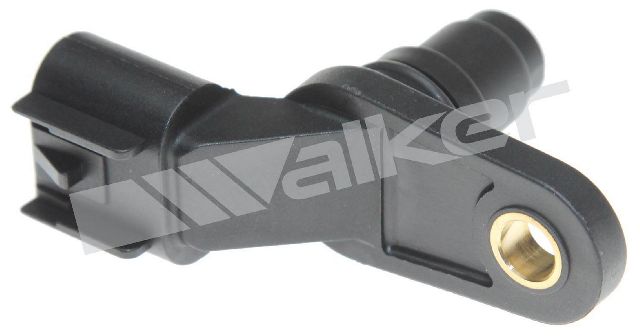
- Replacing the Camshaft Position SENSOR. The code P0014 is almost always caused by the Camshaft Position Actuator SOLENOID, which is a different part. The sensor reads the cam's position, while the solenoid is the oil control valve that moves it. This is a very common mistake made by DIYers.
Most Likely Causes
- Faulty Exhaust Camshaft Position Actuator Solenoid 🔴 High Probability This is a well-documented, high-failure part on Ecotec engines. Internal components fail or the fine mesh screens become clogged or torn with oil debris, causing the solenoid to stick open or closed.
How to confirm: A common diagnostic trick is to swap the exhaust solenoid (rear, black connector) with the intake solenoid (front, gray connector). Clear the codes and drive. If the code changes to P0011 (intake side), the solenoid is confirmed bad. You can also test the solenoid's resistance with a multimeter; a good solenoid should read between 8-13 ohms. Given the low cost and high failure rate, many owners opt to replace it directly.
Typical fix: Replace the exhaust VVT solenoid. It's held in by a single 10mm bolt and is located on top of the valve cover, toward the firewall.
Est. part cost: $25-$60 - Low, Old, or Dirty Engine Oil 🟡 Medium Probability The VVT system is hydraulic and relies on clean oil at the correct pressure to function. Ecotec engines can be sensitive to oil quality and level, and some are known for oil consumption. Using oil other than the recommended 5W-30 or going too long between changes can trigger this code.
How to confirm: Check the oil level on the dipstick and inspect its condition. If the oil is dark, sludgy, or below the 'add' line, this is a likely contributor. Many forum users report the code appearing when the oil life monitor is low (e.g., below 40%).
Typical fix: Perform an oil and filter change using a quality 5W-30 synthetic oil that meets GM's Dexos specification and a new filter. Clear the code and see if it returns.
Est. part cost: $40-$80
Rare But Worth Checking
- Stretched Timing Chain or Failed Tensioner: While less common than a bad solenoid for just a P0014 code, timing chain issues are a known problem on high-mileage Ecotec engines. This is a more serious mechanical issue. This cause becomes more likely if you hear a persistent rattling from the engine on startup or if P0014 is accompanied by codes P0016 or P0017, which point directly to a correlation error.
- Faulty Camshaft Phaser/Actuator: The phaser is the mechanical gear on the end of the camshaft that the solenoid sends oil to. It can fail mechanically, getting stuck in an advanced position. This is much rarer than a solenoid failure and typically requires more extensive engine work to replace. Diagnosis usually involves ruling out the oil and solenoid first.
Diagnosis Steps
- Check the engine oil level and condition. If it's low or dirty, perform an oil and filter change with 5W-30 Dexos-approved oil, clear the code, and drive the vehicle to see if the light returns.
- Inspect the electrical connector and wiring for the exhaust VVT solenoid (the rear solenoid on the valve cover) for any visible damage, corrosion, or loose connections.
- If the oil and wiring are good, swap the intake (front) and exhaust (rear) solenoids. They are physically identical but have different colored connectors (gray for intake, black for exhaust). If the code changes to P0011, you have confirmed the solenoid is faulty.
- Replace the faulty exhaust camshaft actuator solenoid with a new, OEM ACDelco part.
- If a new OEM solenoid does not resolve the code, the issue may be more severe, such as a stretched timing chain or a clogged oil passage, which requires professional diagnosis.
Parts You'll Likely Need
- Exhaust Camshaft Position Actuator Solenoid
(OEM #12679100)— This is the most common failure item for code P0014 on this engine. It gets clogged with oil debris or fails electronically, causing it to stick. The current part number 12679100 supersedes older numbers like 12655421, 12646784, and 12628348.
Trusted brands: ACDelco (OEM), Delphi
OEM price range: $40-$60
Aftermarket price range: $20-$40 - Intake Camshaft Position Actuator Solenoid
(OEM #12679099)— Often replaced as a pair with the exhaust solenoid for preventative maintenance, as it is subjected to the same conditions. Also needed for the diagnostic 'swap test'. The current part number 12679099 supersedes older numbers like 12655420.
Trusted brands: ACDelco (OEM), Delphi
OEM price range: $40-$60
Aftermarket price range: $20-$40
Related Codes That Often Appear With This One
- P0013 — P0013 indicates an electrical circuit fault (open/short) in the same exhaust camshaft actuator solenoid. Seeing P0013 and P0014 together strongly points to a failed solenoid or a problem with its connector/wiring.
- P0011 — This is the equivalent code for the intake ('A') camshaft. If both P0011 and P0014 are present, it suggests a systemic problem like very low/dirty oil affecting both solenoids. It will also appear after performing the 'swap test' if the exhaust solenoid was indeed faulty.
- P0016 / P0017 — These codes indicate a correlation problem between the crankshaft and a camshaft. If you have P0014 and then P0016 or P0017 appears, it is a strong indicator of a stretched or jumped timing chain, which is a much more serious mechanical problem. Do not continue to drive if these codes appear.
Technical Service Bulletins (TSBs) & Recalls
- PIP4716F: Mentions that DTC P0014 can be associated with a short, sharp rattle from the front of the engine at startup, pointing towards timing system issues or VVT actuator problems.
Platform-Specific Known Issues
- The camshaft actuator solenoids are a known weak point on the 2.4L Ecotec engine. Owner forums are filled with reports of these parts failing.
- Using aftermarket solenoids (Dorman, NAPA, store brands) is strongly discouraged by owners. Many have reported premature failure or out-of-the-box defects, causing the code to return. Using the OEM ACDelco part is strongly advised for a lasting repair.
- A user on ChevyHHR.net with a 2011 HHR reported that a P0014 code returned 6 months after replacing solenoids with NAPA parts. The issue was only resolved by swapping them for genuine ACDelco solenoids.
Mechanic-Grade Diagnostic Values
- Camshaft Position Actuator Solenoid Resistance — expected: 8-13 Ohms. Failure: A reading outside this range, or an open/infinite reading, indicates a failed solenoid coil.
- Scan Tool: Desired vs. Actual Camshaft Position Angle — expected: The actual angle should closely match the desired angle commanded by the ECM at various RPMs.. Failure: A difference of more than 8 degrees for over 20 seconds between the desired and actual angle will set the code. A stuck reading on the actual position while the desired position changes also indicates a problem.
- Camshaft Actuator Solenoid Connector Voltage — expected: The ECM sends a Pulse Width Modulated (PWM) signal, so a simple voltage reading is not definitive. However, one pin should have a constant 12V reference, and the other is the ECM-controlled ground.. Failure: Absence of the 12V reference voltage points to a wiring issue upstream of the solenoid.
Scan Tool Commands That Help
- GDS2 / Tech2 (or equivalent professional scanner): Camshaft Position Actuator Control — This is a bidirectional test used to verify the solenoid and phaser operation. While monitoring engine RPM and cam position data, a technician can command the solenoid to activate (e.g., 0% to 100%). A functional system will cause a noticeable change in engine idle, often making it stumble or run rough. If commanding the solenoid has no effect on the engine, it confirms a failure in the solenoid, a clogged oil passage, or a seized cam phaser.
Wiring & Ground Locations
- G103 — On the front of the passenger side cylinder head, as part of the main negative battery cable harness.. This is a primary engine ground. Corrosion or a loose connection here can cause erratic behavior from the ECM and various sensors, potentially leading to incorrect diagnostic codes. A user on chevyhhr.net noted cleaning this ground as part of a comprehensive electrical diagnosis.
- G107 — On the front left corner of the transmission housing, often on a stud.. This is a key ground point for the Engine Control Module (ECM) and Transmission Control Module (TCM). A poor connection at G107 can cause a host of intermittent electrical faults and false sensor readings.
- Exhaust VVT Solenoid Connector — Top of the valve cover, toward the firewall/rear of the engine. It is typically the black connector.. This is the direct electrical connection to the solenoid. The pins are for the 12V power feed and the PWM ground signal from the ECM. Check for oil contamination, corrosion, or pushed-out pins, which would cause a P0013 (circuit fault) in addition to or instead of P0014.
Real Owner Repair Stories
- Chevy HHR Network user 'sleepyzz' (2008 Chevy HHR SS (2.0L Turbo, but VVT system is analogous)) — P0014 code present.
❌ Tried (didn't work) Replaced both intake and exhaust VVT solenoids.
✅ What actually fixed it The timing chain was removed and a broken piece of the black plastic stationary chain guide was found. Replacing the timing chain and guides resolved the code. The slack caused by the broken guide was enough to trigger the over-advanced timing code. - Chevy HHR Network user 'joliettim' (2006 Chevy HHR 2.4L with 170,000 miles) — P0014 code, rough idle, stalling.
❌ Tried (didn't work) Replaced both VVT solenoids with new ACDelco parts., Performed multiple oil changes.
✅ What actually fixed it The camshaft cover (and valve cover) was removed. The oil feed holes for the exhaust cam phaser were found to be completely clogged with sludge. Cleaning the passages and the phaser itself finally resolved the issue. This indicates a history of infrequent oil changes.
OEM Part Supersession History
12628348, 12646784, 12655421→12679100 (Exhaust)— The design of the solenoid, specifically the filter screens, was updated over the years to improve resistance to clogging and debris. Some aftermarket versions mimic older designs with fewer or less robust screens, leading to premature failure.12628347, 12646783, 12655420→12679099 (Intake)— Similar to the exhaust solenoid, the intake version was updated for better durability and resistance to oil contamination.
Model Year Variations Within This Range
- 2006-2008 (LE5 Engine): Early 2.4L LE5 engines may have slightly different initial part numbers for the solenoids, but they all supersede to the same final part numbers (12679100/12679099) as the later 2009-2011 models (LE9 Engine). The diagnostic procedure is identical.
- 2009-2011 (LE9 Engine): The 2.4L LE9 engine was introduced in 2009 and is FlexFuel (E85) capable. However, the VVT system, including the solenoids, phasers, and general diagnosis for P0014, remains the same as the earlier LE5 engine.
Diagnostic Flowchart
Real Owner Stories
Aggregated from forums and TSBs cited above. Mileages and costs reflect what owners reported in those sources.
2011 Chevrolet HHR 2.4L LT — 30500 miles
Symptoms: Check engine light came on. A 'service airbag' warning message also came on but went off. Oil life was at 39%.
What fixed it: The user was advised to check the cam actuator or low/dirty oil, though the final fix was not explicitly stated in the thread.
Source hint: chevyhhr.net - Check Engine Code P0014?
2009 Chevrolet HHR
Symptoms: Check engine light with code P0014. Also had a P0013 code.
What fixed it: P0013 was resolved by replacing the solenoid. However, P0014 remained after replacing the exhaust solenoid and changing the oil. The user was advised to check wiring continuity, as previous owner had cut and reconnected wires.
Source hint: reddit.com - 2009 Chevy HHR P0014
2006 Chevrolet HHR LT 2.4L
Symptoms: About 5 minutes into the first drive after a DIY oil change, the TC (Traction Control) light came on and the transmission started shifting hard. Scanned and found code P0014.
What fixed it: The owner purchased and replaced the exhaust solenoid and cleared the CEL, but the TC light returned shortly after (final resolution not stated).
Source hint: chevyhhr.net
2011 Chevrolet HHR
Symptoms: P0014 code returned 6 months after replacing the original solenoids with aftermarket NAPA parts.
What fixed it: The issue was only resolved by swapping the aftermarket parts for genuine ACDelco solenoids.
Source hint: ChevyHHR.net
Related OBD-II Codes
Frequently Asked Questions
Why does my 2006-2011 HHR shift harshly when the P0014 code is active?
Should I use an aftermarket VVT solenoid like Dorman or NAPA for my 2.4L Ecotec?
Does TSB PIP4716F apply to my Chevy HHR?
How can I confirm if the exhaust VVT solenoid is the actual cause of P0014 on my HHR?
Can low oil life trigger the P0014 code on my HHR?
We Have This Part in Stock



The information in this article is provided for general reference and educational purposes only. Vehicle specifications, procedures, and part compatibility can vary by production date, trim level, and region. Always consult your vehicle's factory service manual and verify part numbers before purchasing or performing repairs. Safety-critical components such as airbags, seat belts, and braking systems should be installed by a qualified professional.
- Chevrolet HHR:
- 🛍️ Shop This Part
- What's Unique About the 2006-2011 Chevrolet HHR
- Symptoms You May Notice
- Most Likely Causes
- Rare But Worth Checking
- Diagnosis Steps
- Parts You'll Likely Need
- Related Codes That Often Appear With This One
- Technical Service Bulletins (TSBs) & Recalls
- Platform-Specific Known Issues
- Mechanic-Grade Diagnostic Values
- Scan Tool Commands That Help
- Wiring & Ground Locations
- Real Owner Repair Stories
- OEM Part Supersession History
- Model Year Variations Within This Range
- Diagnostic Flowchart
- Real Owner Stories
- 2011 Chevrolet HHR 2.4L LT — 30500 miles
- 2009 Chevrolet HHR
- 2006 Chevrolet HHR LT 2.4L
- 2011 Chevrolet HHR
- Related OBD-II Codes
- Frequently Asked Questions
- 🎟️ Get 5% Off