

P0013 on 2016-2020 Kia Sorento 3.3L V6: Causes and Fixes
P0013 on a 2016-2020 Kia Sorento 3.3L V6 almost always points to a faulty exhaust camshaft oil control valve (OCV) on Bank 1. This is often a simple fix, costing between $25 and $75 for the part, and is accessible for DIY replacement.
- P0013 on a 2016-2020 Sorento 3.3L V6 is most commonly caused by a failed Bank 1 (firewall side) exhaust (lower) Oil Control Valve (OCV).
- Before replacing parts, always check the engine oil level and condition first. These engines are known to consume oil, and low oil level is a frequent trigger for timing-related codes.
- The correct OEM part number for the V6 OCV is NOT 24375-2G500; verify the correct part (e.g., 24355-3C200) with your VIN before purchasing.
- This is a highly suitable DIY repair for those with basic tools. A simple resistance test or swapping the solenoid with the one on Bank 2 can confirm the diagnosis without expensive equipment.
What's Unique About the 2016-2020 Kia Sorento
For the Kia Sorento with the 3.3L V6 engine, the P0013 code is a very common and straightforward issue. Unlike some platforms where this code can lead to a complex diagnostic path, on this engine it is highly likely to be a failed oil control valve. Owners frequently report this specific valve as the culprit, often resolving the issue with a simple and inexpensive part replacement. The problem is well-documented across forums and mechanic discussions for Kia and Hyundai vehicles that share this engine family.
Symptoms You May Notice
- Check Engine Light is on
- Rough engine idle
- Reduced engine power and sluggish acceleration
- Decreased fuel economy
- Engine may be difficult to start
- Stalling at low speeds or when stopped
- Replacing the Camshaft Position Sensor (CPS). The P0013 code refers to the actuator *circuit*, not the position sensor itself. While a related code might point to the sensor, P0013 is almost always related to the oil control valve (actuator solenoid) or its wiring.
- Replacing the camshaft phaser. The phaser is the mechanical gear that the OCV controls. It is much more expensive and far less likely to fail than the electronic solenoid that controls it. Phaser failure would typically set performance codes (like P0014) rather than a circuit code like P0013.
Most Likely Causes
- Failed Exhaust Oil Control Valve (OCV) - Bank 1 🔴 High Probability The OCV is an electro-mechanical part that operates in hot engine oil. Over time, the internal coil can develop an open or short, or the valve can become clogged with sludge, especially if oil changes are delayed. This is the most common point of failure for this code.
How to confirm: Test the solenoid's resistance with a multimeter; it should be within the manufacturer's specified range (typically 6.7-7.7 ohms for the Delphi-made valve used in this engine). A reading of infinity (open circuit) or near-zero (short circuit) indicates a bad solenoid. You can also swap the Bank 1 exhaust OCV with the Bank 2 exhaust OCV (on the front/radiator side bank). If the code changes to P0023 (the equivalent code for Bank 2), the valve is definitively faulty.
Typical fix: Replace the Bank 1 exhaust oil control valve.
Est. part cost: $25-$75 - Low or Dirty Engine Oil 🟡 Medium Probability The CVVT system is highly dependent on clean oil of the correct viscosity. The Lambda II 3.3L GDI engine can be susceptible to oil consumption, particularly at higher mileage. An oil level that is even slightly low can reduce the hydraulic pressure needed to operate the cam phasers, triggering timing codes. Sludge from extended oil change intervals can also clog the fine mesh screens on the OCVs.
How to confirm: Check the engine oil level on the dipstick and inspect its condition. If the oil is low, black, or sludgy, this is a likely contributor. Many owners report oil consumption of 1 quart per 1000-3000 miles.
Typical fix: Perform an oil and filter change using a high-quality full synthetic oil of the manufacturer-recommended weight (e.g., 5W-30). Clear the code and see if it returns. Monitor oil level closely between changes.
Est. part cost: $40-$80 - Damaged Wiring or Connector ⚪ Low Probability The wiring harness connector for the OCV is located on top of the engine and is exposed to heat and vibration, which can cause wires to become brittle or the connector pins to corrode or loosen over time.
How to confirm: Visually inspect the wiring and connector for the Bank 1 exhaust OCV for any signs of damage, corrosion, or loose pins. Use a multimeter to check for battery voltage at the connector with the key on, engine off.
Typical fix: Repair the damaged section of the wiring harness or replace the pigtail connector.
Est. part cost: $15-$50
Rare But Worth Checking
- Faulty Powertrain Control Module (PCM): This is extremely rare. The PCM should only be considered after all other possibilities, including the OCV, oil, and wiring, have been thoroughly ruled out. A faulty driver circuit within the PCM can mimic the symptoms of a bad solenoid.
Diagnosis Steps
- Check Engine Oil Level and Condition: Before anything else, ensure the engine oil is full and clean. If it's low or dirty, perform an oil change with the correct viscosity oil. This engine is known to consume oil, so check it regularly.
- Scan for Codes: Use an OBD-II scanner to confirm P0013 is the active code and check for any other related codes like P0014.
- Locate Components: On the 3.3L V6, Bank 1 is the cylinder head near the firewall. You will find two Oil Control Valves on this bank's valve cover; the exhaust ('B') OCV is the one you need to inspect. It is typically the lower of the two solenoids on that cover.
- Inspect Wiring: Carefully examine the electrical connector and wiring going to the Bank 1 exhaust OCV. Look for any breaks, corrosion, or oil contamination.
- Test the OCV: Disconnect the OCV and measure the resistance across its two pins with a multimeter. For the Delphi valve used in this Kia engine, a correct reading is between 6.7 and 7.7 ohms at 68°F (20°C). A reading of infinity (open circuit) or zero (short circuit) indicates a bad solenoid.
- Swap Solenoids (Optional but effective): A simple diagnostic trick is to swap the Bank 1 exhaust OCV with the Bank 2 exhaust OCV (located on the front cylinder bank, radiator side). Clear the codes and drive the vehicle. If the fault code changes to P0023 ('B' Camshaft Position - Actuator Circuit/Open Bank 2), you have confirmed the OCV is the problem.
- Replace the Faulty Part: If the OCV is confirmed to be faulty, replace it with a new one.
Parts You'll Likely Need
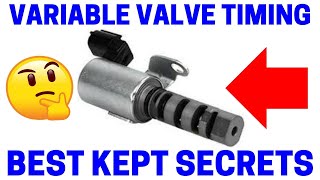
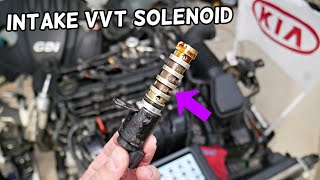
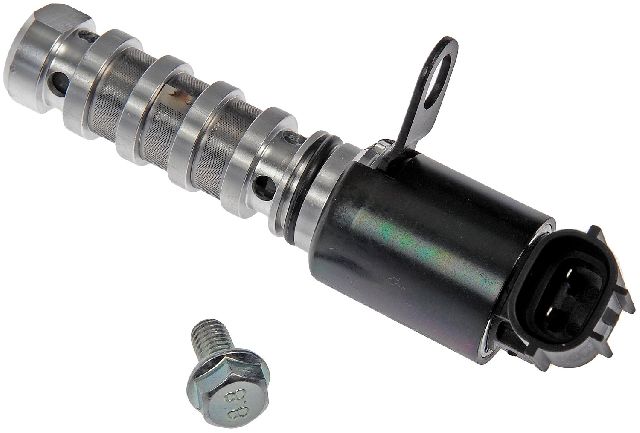
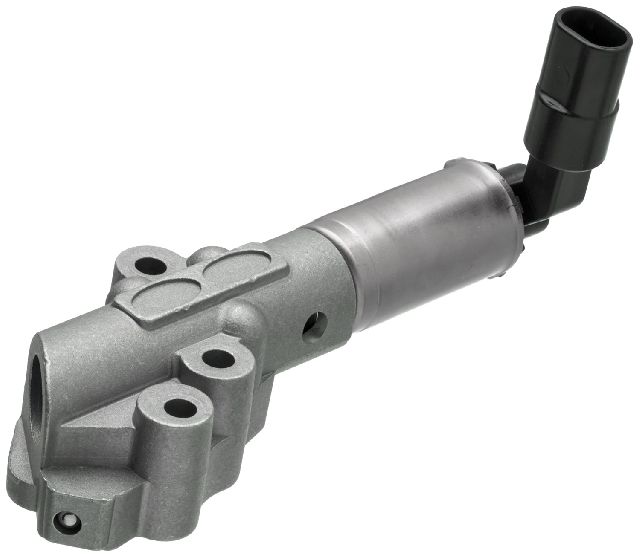
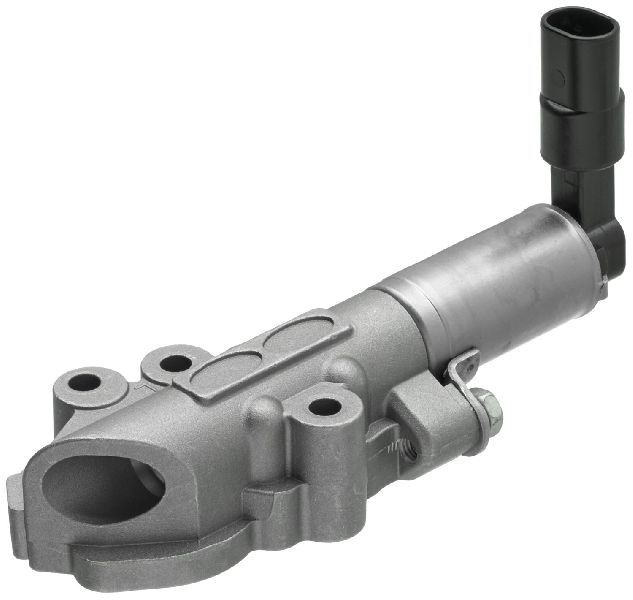
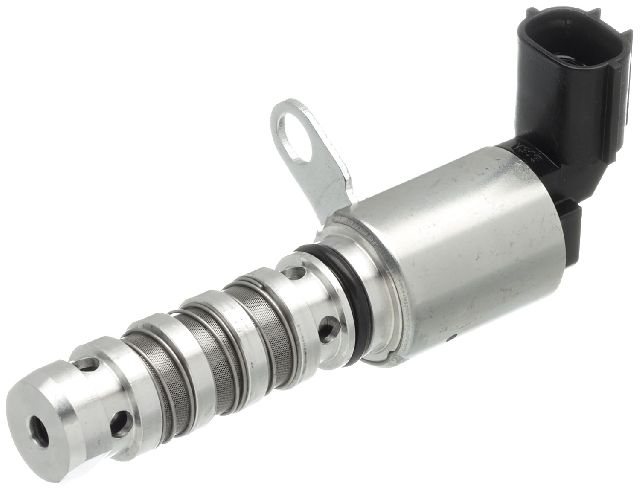
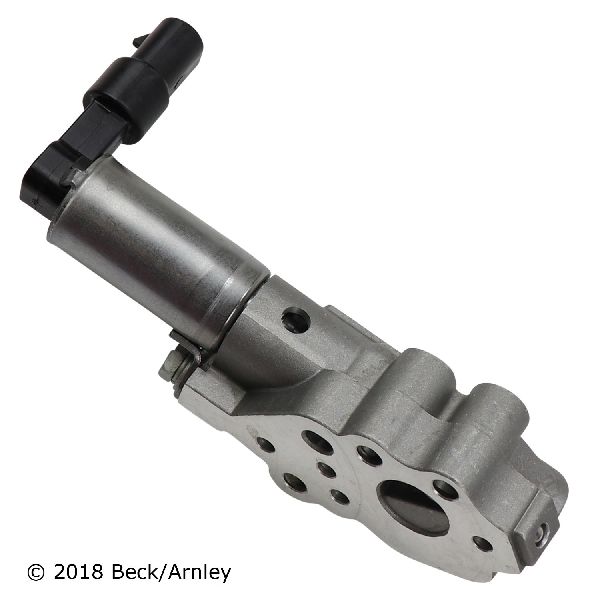
- Engine Variable Valve Timing (VVT) Solenoid / Oil Control Valve (Exhaust, Bank 1)
(OEM #24355-3C200 / 24355-3CAB2 (Verify with VIN))— This solenoid is the most common failure point for a P0013 code. Its internal coil winding is prone to failing, causing an open circuit. NOTE: The part number 24375-2G500 found in some databases is for the 4-cylinder engine and is INCORRECT for the 3.3L V6.
Trusted brands: Kia (Genuine), Hyundai (Genuine), Denso, Delphi, Standard Motor Products (SMP), Dorman
OEM price range: $60-$90
Aftermarket price range: $25-$50
Related Codes That Often Appear With This One
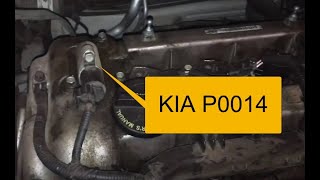
- P0014 — P0014 indicates 'B' Camshaft Position - Timing Over-Advanced or System Performance (Bank 1). It often appears with P0013 because a faulty OCV circuit (P0013) can cause the camshaft to become stuck or respond slowly, leading to a timing performance error (P0014). The NHTSA complaint ODI #11678480 mentions both codes appearing together.
Technical Service Bulletins (TSBs) & Recalls
- TSB SST082: While not directly for code P0013, this service bulletin addresses the 'Piston Noise Sensing System (PNSS) Inspection'. It is relevant because increased oil consumption, a known issue with this engine, can lead to abnormal engine noise and oil pressure warnings, and the PNSS is designed to detect this. This highlights the factory's awareness of underlying oil-related engine issues.
Platform-Specific Known Issues
- In a complaint filed with the NHTSA for a Kia vehicle, codes P0013 and P0014 were diagnosed, leading to the replacement of the camshaft. While this is a severe and unlikely outcome for a simple P0013 code, it highlights the importance of addressing valve timing issues promptly. [NHTSA ODI #11678480]
- Owners on forums frequently confirm that replacing the Bank 1 exhaust OCV resolves the P0013 code, often accompanied by P0014. The repair is considered simple and accessible.
Mechanic-Grade Diagnostic Values
- Oil Control Valve (OCV) resistance — expected: 6.7 - 7.7 Ω at 68°F (20°C) for the Delphi valve used in the 3.3L Lambda engine.. Failure: A reading of infinity (open circuit) or near-zero (short circuit).
- OCV Connector Voltage (Key On, Engine Off) — expected: Battery voltage (~12V) on the power supply pin.. Failure: No voltage or significantly low voltage, indicating a wiring or relay issue.
- Scan Tool OCV Duty Cycle (Live Data) — expected: The actual state should match the commanded state from the ECM.. Failure: Code may set if ECM commands <80% duty cycle and output is 100%, or if ECM commands up to 70% and output is <3%.
Scan Tool Commands That Help
- Kia GDS (Global Diagnostic System): Actuation Test for Exhaust OCV — To functionally test the OCV while it is installed. With the engine idling, activating the solenoid should cause the engine to hesitate, run rough, or stall. If there is no change in engine operation, it points to a clogged OCV, blocked oil passage, or faulty cam phaser.
- Kia GDS (Global Diagnostic System): Resetting Adaptive Values — After replacing a component like the OCV, it is good practice to use this special function to clear the engine control module's learned fuel and timing trims, forcing it to relearn values with the new part.
Wiring & Ground Locations
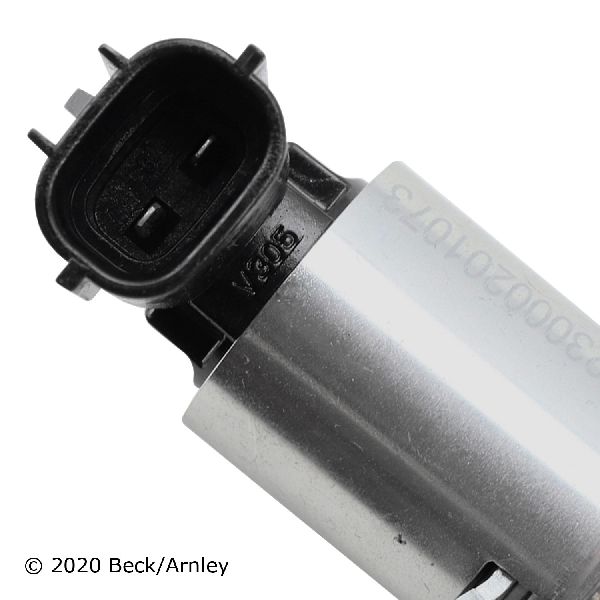
- Bank 1 Exhaust OCV Connector — On the Bank 1 (firewall side) valve cover, typically the lower of the two OCV connectors.. This is the direct connection point for the component flagged by the P0013 code. The two pins are for power (from the main relay) and control (from the PCM). Corrosion or damage here is a primary cause of an open/short circuit.
- Engine Ground Strap — A primary ground strap is often located on the back of the engine block and connects to the vehicle's chassis/body.. A poor engine ground can cause a variety of floating voltages and unpredictable electrical issues, including circuit codes for sensors and actuators. While not a direct cause, it should be checked if multiple electrical faults are present.
Real Owner Repair Stories
- YouTube channel 'said alharthi' (2018 Hyundai Elantra (shares engine logic with Kia)) — Vibration, shaking, stalling, and an exhaust timing code (related to P0013).
❌ Tried (didn't work) Replacing the camshaft position sensor.
✅ What actually fixed it The pin on the exhaust cam gear (phaser) was found to be broken. Replacing the cam phaser resolved the issue.
When the Usual Fixes Don't Work
- While the vast majority of P0013 codes on this engine are fixed by replacing the Bank 1 exhaust Oil Control Valve, there are documented cases where this does not solve the problem. In one instance involving a related Hyundai engine, the root cause was a physically broken pin on the camshaft phaser itself. This is a mechanical failure that prevents the phaser from adjusting correctly, which the system flags as a fault. In such a case, replacing the OCV multiple times will have no effect, and the technician must dig deeper to inspect the mechanical timing components.
OEM Part Supersession History
221103cab0, 221103cab0a, 504r53ca00→24355-3CAB2— Standard part revision and consolidation by the manufacturer.
Heads up: The new part number is the correct replacement for the older numbers on the specified 3.3L/3.5L/3.8L Lambda engines.
Model Year Variations Within This Range
- 2019-2020: For the 2019 model year refresh, Kia paired the 3.3L V6 engine with a new 8-speed automatic transmission, replacing the 6-speed used from 2016-2018. While the engine hardware related to P0013 remained the same, the PCM software was updated to manage the new transmission.
Diagnostic Flowchart
Other Known Issues on This Vehicle
Issues unrelated to this code that are worth knowing about as an owner of this generation:
- Excessive Oil Consumption 🔴 High — Becomes more common after 60,000-80,000 miles. Owners report needing to add a quart of oil every 1,000-3,000 miles. Can lead to premature engine wear or failure if level is not monitored. (Ref: Related TSB SST082 involves a Piston Noise Sensing System (PNSS) inspection which can be triggered by issues stemming from oil consumption.)
- Intake Valve Carbon Buildup 🟠 Medium — A common issue for all Gasoline Direct Injection (GDI) engines, including the Lambda II 3.3L. Can cause rough idle, misfires, and reduced performance, typically noticeable after 50,000 miles.
- Head Gasket Failure / Engine Failure Investigation 🔴 High — A notable number of 2016-2017 models with the 3.3L V6 are part of an NHTSA investigation (PE23-018) for loss of motive power, sometimes diagnosed as head gasket or head bolt failure requiring engine replacement. (Ref: NHTSA Preliminary Evaluation PE23-018)
- Crankshaft Failure Recall (2017 models) 🔴 High — A specific recall was issued for some 2017 models because the engine crankshaft was not properly heat-treated, making it prone to fracture. (Ref: Yes, specific recall exists.)
Used vs. New Parts: Buying Guide for This Vehicle
When a used part is the smart pick: For the primary cause of P0013, the Oil Control Valve (OCV), a used part is not recommended. The failure is often due to internal coil burnout or contamination from oil sludge, both of which are risks with a used part. Given the low cost of a new aftermarket part ($25-$50), the savings from a used part are minimal and not worth the risk of premature failure.
What to inspect on the donor part:
- N/A - New part is strongly recommended.
OEM-only on this vehicle (don't cheap out):
- No components for this specific repair are considered 'OEM-only'. The OCV is a common part available from multiple reputable aftermarket suppliers.
Aftermarket brands forum-validated for this vehicle:
- Denso
- Delphi
- Standard Motor Products (SMP)
- Dorman
Real Owner Stories
Aggregated from forums and TSBs cited above. Mileages and costs reflect what owners reported in those sources.
2016 Kia Sorento 3.3L V6
Symptoms: Check engine light on with codes P0013 and P0014.
What fixed it: Replacing the Bank 1 exhaust Oil Control Valve (OCV).
Source hint: kia-forums.com thread titled '2016 Sorento V6 P0013 and P0014'
2017 Kia Sorento 3.3L V6
Symptoms: P0013 code present; community discussion regarding ease of DIY replacement.
What fixed it: Replacement of the Oil Control Valve (OCV).
Source hint: Reddit r/MechanicAdvice thread titled '2017 Kia Sorento P0013 code'
2016-2017 Kia Sorento 3.3L V6
Symptoms: Codes P0013 and P0014 diagnosed.
What fixed it: Replacement of the camshaft (noted as a severe and unlikely outcome for these codes).
Source hint: NHTSA ODI #11678480
Related OBD-II Codes
Frequently Asked Questions
Does TSB SST082 apply to my 3.3L Sorento if I have code P0013?
I have a 2017 Sorento; is there a recall that could be related to engine codes?
Can I test the Bank 1 exhaust OCV myself on my Kia Sorento?
Where is the Bank 1 exhaust Oil Control Valve located on the 3.3L V6 engine?
Is it true that low oil can cause the P0013 code on this specific engine?
If I swap the OCVs to diagnose the issue, what code should I look for?
Helpful Videos
Used OEM Parts in Stock


New Aftermarket Parts Available

The information in this article is provided for general reference and educational purposes only. Vehicle specifications, procedures, and part compatibility can vary by production date, trim level, and region. Always consult your vehicle's factory service manual and verify part numbers before purchasing or performing repairs. Safety-critical components such as airbags, seat belts, and braking systems should be installed by a qualified professional.
- Kia Sorento:
- 🎬 Helpful Videos
- 🛍️ Shop This Part
- What's Unique About the 2016-2020 Kia Sorento
- Symptoms You May Notice
- Most Likely Causes
- Rare But Worth Checking
- Diagnosis Steps
- Parts You'll Likely Need
- Related Codes That Often Appear With This One
- Technical Service Bulletins (TSBs) & Recalls
- Platform-Specific Known Issues
- Mechanic-Grade Diagnostic Values
- Scan Tool Commands That Help
- Wiring & Ground Locations
- Real Owner Repair Stories
- When the Usual Fixes Don't Work
- OEM Part Supersession History
- Model Year Variations Within This Range
- Diagnostic Flowchart
- Other Known Issues on This Vehicle
- Used vs. New Parts: Buying Guide for This Vehicle
- Real Owner Stories
- 2016 Kia Sorento 3.3L V6
- 2017 Kia Sorento 3.3L V6
- 2016-2017 Kia Sorento 3.3L V6
- Related OBD-II Codes
- Frequently Asked Questions
- 🎟️ Get 5% Off