

P0013 on 2010-2017 GMC Terrain 2.4L: Exhaust Solenoid Causes and Fixes
On a 2010-2017 GMC Terrain with the 2.4L Ecotec engine, code P0013 is almost always caused by a failed exhaust camshaft position actuator solenoid. It's an extremely common issue, often linked to oil quality or consumption problems. The fix is to replace the solenoid, which is a relatively easy and affordable DIY job. It's highly recommended by both mechanics and a GM Technical Service Bulletin to replace both the intake and exhaust solenoids at the same time as a set.
- P0013 on a 2.4L GMC Terrain almost always points to a bad exhaust camshaft actuator solenoid.
- This is a very common, well-documented problem for this specific engine.
- Always check your engine oil level first; low or dirty oil is a major contributing factor.
- The repair is DIY-friendly and can be completed in under an hour with basic tools.
- It is best practice to replace both the intake and exhaust solenoids at the same time, along with an oil change.
What's Unique About the 2010-2017 GMC Terrain

The 2.4L Ecotec engine, used extensively in the GMC Terrain and its sibling, the Chevrolet Equinox, is notoriously prone to this specific issue. The camshaft position actuator solenoids are a very common failure point, especially as the vehicle accumulates mileage over 90,000 miles. The problem is so prevalent that General Motors issued a Technical Service Bulletin (TSB 17-NA-098), which was later updated, recommending the replacement of both intake and exhaust solenoids if this code appears. Manufacturer Bulletin #17NA098 notes that these failures can cause the engine to run rough, hesitate, be hard to start, or stall. The failure is frequently linked to the engine's tendency for higher oil consumption, particularly in 2010-2013 models, which can lead to low or dirty oil. Sludge and debris from contaminated oil clog the fine mesh screens on the solenoids, causing them to stick or fail electrically.
Symptoms You May Notice
- Check Engine Light is on
- Engine runs rough, especially at idle
- Reduced engine power and poor acceleration
- Hesitation or stumbling when trying to accelerate
- Decreased fuel economy
- Engine may stall, particularly when coming to a stop
- Rattling noise from the engine.
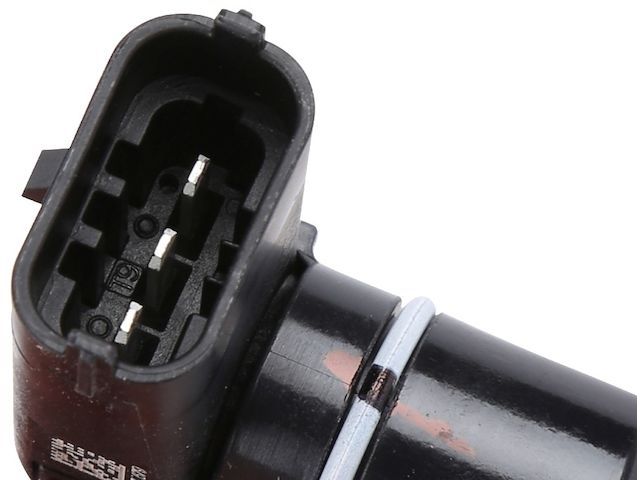
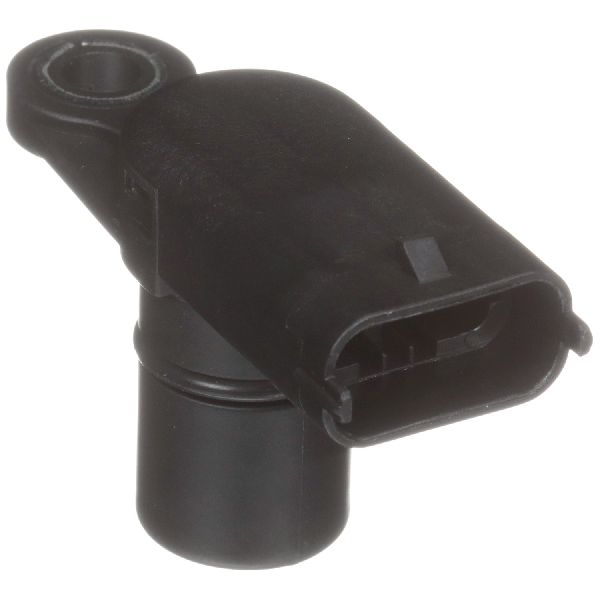
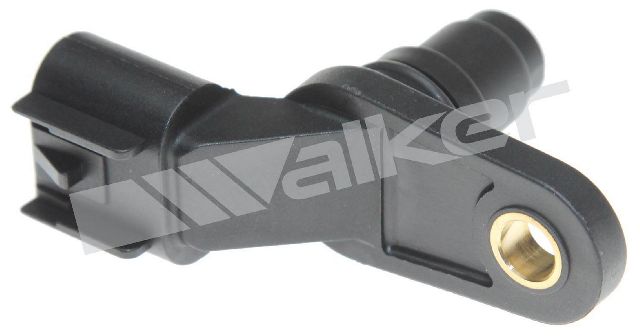
- Replacing the camshaft position *sensor* instead of the camshaft position actuator *solenoid*. The P0013 code specifically points to the actuator solenoid circuit, not the sensor. The sensor reports the position, while the solenoid (actuator) controls it.
Most Likely Causes

- Failed Exhaust Camshaft Position Actuator Solenoid 🔴 High Probability This is the most common failure part for P0013 on the 2.4L Ecotec engine. The solenoids get clogged with engine oil sludge or fail electrically over time, with failures becoming frequent around 100,000 miles.
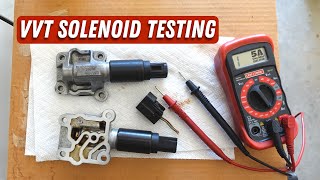
How to confirm: Unplug the solenoid and test the resistance across its two pins with a multimeter. A healthy solenoid should read between 8 and 13 ohms. A reading of thousands of ohms (k-ohms) or infinity (OL) indicates an open circuit and a failed solenoid. You can also compare the reading to the intake solenoid; if they differ significantly, the one with the out-of-spec reading is bad. 🎬 Watch: Three easy ways to test your VVT solenoid
Typical fix: Replace the exhaust camshaft position actuator solenoid. It is highly recommended by GM and experienced technicians to replace the intake solenoid at the same time as a preventative measure.
Est. part cost: $25-$60 for one aftermarket solenoid, $50-$100 for a pair. - Low or Dirty Engine Oil 🟡 Medium Probability These engines are known for oil consumption, and the VVT system is highly sensitive to oil level, pressure, and quality. Low oil pressure or dirty, sludgy oil can clog the fine mesh screens on the solenoids, causing them to malfunction and trigger the code.
How to confirm: Check the engine oil dipstick. The oil level should be full, and the oil should be its normal amber color, not black, thick, or gritty. Upon removing the solenoids, visible sludge or debris on the screens is a clear indicator.
Typical fix: Perform an engine oil and filter change using the manufacturer-specified oil (typically 5W-30 synthetic blend or full synthetic). If the solenoid is clogged but not electrically failed, this may resolve the issue, but often the solenoid will still require replacement.
Est. part cost: $40-$90 for oil and a filter. - Damaged Wiring or Connector ⚪ Low Probability
How to confirm: Visually inspect the wiring harness and connector leading to the exhaust solenoid (the rearward one, typically with a black connector). Look for any signs of brittleness, cracking, corrosion on the pins, or loose connections. Check for oil contamination inside the connector, as a leaking valve cover can cause oil to wick into the harness. NHTSA ODI #11585551 notes that P0013 specifically stands for an "Exhaust 'B' Camshaft Position Actuator Circuit/Open."
Typical fix: Repair the damaged section of wire or replace the pigtail connector.
Est. part cost: $15-$35 for a new pigtail connector.
Rare But Worth Checking
- Stretched Timing Chain or Failed Phaser: While less common than a solenoid failure, the 2.4L Ecotec is also known for timing chain issues. If replacing the solenoids and changing the oil does not fix the issue, especially if accompanied by rattling noises on startup or codes like P0016/P0017, the timing chain system may be at fault. This is a much more involved and expensive repair.
- Faulty Engine Control Module (ECM): This is extremely rare. The ECM should only be considered after all other possibilities, including the solenoids, oil, wiring, and timing components, have been thoroughly tested and ruled out.
Diagnosis Steps

- Check the engine oil level and condition. Top off or change the oil if it is low or dirty. This is the first and easiest check.
- Using a scan tool, confirm the presence of P0013 and note any other codes like P0014, P0010, or P0011.
- Locate the camshaft position actuator solenoids on the top of the engine's valve cover. The exhaust solenoid is the one closer to the firewall (rear of the engine) and typically has a black connector, while the intake is in the front with a gray connector.
- Inspect the electrical connector and wiring going to the exhaust solenoid for any visible damage, corrosion, or oil saturation.
- Disconnect the electrical connector from the exhaust solenoid.
- Using a multimeter set to ohms, measure the resistance between the two pins on the solenoid. The reading should be between 8 and 13 ohms. If the reading is far outside this range (e.g., k-ohms or OL), the solenoid is bad and must be replaced.
- If the solenoid tests good, the problem may be in the wiring. Use the scan tool's bidirectional controls to command the solenoid on and off while checking for voltage and ground at the connector with a test light or multimeter.
- If the solenoid is bad, remove the 10mm bolt holding it in and pull it out. It may be stuck; gentle twisting or prying may be needed.
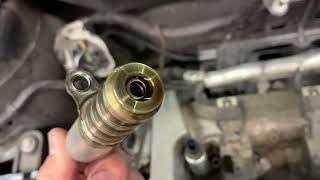
- It is strongly recommended to replace both the intake and exhaust solenoids as a set. Lubricate the O-rings on the new solenoids with fresh engine oil before installation to prevent damage. 🎬 Watch: Step-by-step solenoid replacement on a 2017 Terrain
Parts You'll Likely Need
- Exhaust Camshaft Position Actuator Solenoid
(OEM #12655421 (Superseded by 12679100))— This is the most common failure part for code P0013 on this engine. The part number has been updated by GM.
Trusted brands: ACDelco (OEM), Delphi, Dorman (917-216)
OEM price range: $45-$65
Aftermarket price range: $25-$45 - Intake Camshaft Position Actuator Solenoid
(OEM #12655420 (Superseded by 12679099))— It is highly recommended to replace this at the same time as the exhaust solenoid, as it is also a common failure item and is easily accessible during the repair. TSB 17-NA-098 advises replacing both.
Trusted brands: ACDelco (OEM), Delphi, Dorman (917-215)
OEM price range: $45-$65
Aftermarket price range: $25-$45
Related Codes That Often Appear With This One
- P0014 — P0014 ('B' Camshaft Position - Timing Over-Advanced) often appears with P0013 because the electrical circuit failure (P0013) prevents the ECM from controlling the camshaft's position, leading to a mechanical performance/timing error (P0014). Seeing them together strongly points to a bad exhaust solenoid. 🎬 See this walkthrough for diagnosing and fixing code P0013
- P0010 — This is the circuit code for the intake ('A') camshaft solenoid. If both solenoids are failing around the same time due to age or oil contamination, you may see both P0010 and P0013.
- P0011 — This is the performance code for the intake ('A') camshaft. It may appear alongside P0010 and P0013 if both solenoids are malfunctioning.
Technical Service Bulletins (TSBs) & Recalls
- 17-NA-098: Engine Runs Rough, Hesitates, Hard to Start, Stalls and/or DTCs P0010, P0013, P0011, P0014 Set. This TSB explicitly identifies camshaft position actuator solenoid valve failure as the cause and instructs technicians to replace both intake and exhaust valves and verify ECM software is current.
- Bulletin #17-NA-098 (dated 2017-03-30): This bulletin addresses the need to replace actuators to correct conditions where the engine runs rough, hesitates, is hard to start, or stalls when DTCs P0010, P0013, P0011, or P0014 are stored.
Platform-Specific Known Issues
- GM issued Technical Service Bulletin (TSB) 17-NA-098 for 2010-2012 models with the 2.4L engine, which includes this code. The bulletin, updated in 2019, recommends replacing both camshaft position actuator solenoid valves with updated part numbers and ensuring the ECM software is up to date.
- This engine platform is known for oil consumption issues, which can starve the VVT system of the necessary oil pressure and quality, leading to premature solenoid failure. Keeping the oil level full and changing it regularly is critical.
- On this engine, the intake and exhaust solenoids have different shaped connectors to prevent them from being installed in the wrong position. The exhaust solenoid is typically black, while the intake is gray.
Mechanic-Grade Diagnostic Values
- Camshaft Position Actuator Solenoid Resistance — expected: 8 to 13 Ohms. Failure: A reading of infinity (OL) indicates an open circuit. A reading near zero indicates a short. Some failed solenoids can read high, such as 58 Ohms.
- Scan Tool Live Data: Desired vs. Actual Camshaft Position — expected: At idle, both 'Desired' and 'Actual' angles should be near 0 degrees. When RPM is raised to 2000-3000, the 'Actual' value should follow the 'Desired' value commanded by the ECM.. Failure: If the 'Desired' value changes but the 'Actual' value is stuck or slow to respond, it indicates a fault in the solenoid, oil pressure, or the phaser itself.
- Solenoid Control Circuit Voltage (at connector, unplugged) — expected: With ignition ON, one terminal (power feed) should have 12V. The other terminal (control circuit from ECM) will show a low reference voltage, often between 1.5-4.5V, as it's a pulled-up circuit.. Failure: No voltage on the power feed pin points to a fuse or wiring issue. A test lamp illuminating on the control circuit indicates a short to voltage.
Scan Tool Commands That Help
- GDS2 / Professional Scan Tool: CMP Actuator Test / VVT Solenoid Test — This is a bidirectional control that allows the technician to command the solenoid ON and OFF manually. It is used to verify the electrical circuit's integrity after a resistance test. You can listen for a click from the solenoid or check for voltage changes at the connector while commanding it.
- GDS2 / Professional Scan Tool: Engine Timing Health Check / Live Data Monitoring — Used to monitor the 'Desired' vs. 'Actual' camshaft position angles in real-time. This is crucial for diagnosing if the problem is electrical (P0013) or mechanical/performance-related (P0014), as it shows whether the phaser is physically responding to the ECM's commands.
Wiring & Ground Locations

- G112 — Lower left front of the engine.. This is a primary ground point for the Powertrain Control Module (PCM/ECM). A poor connection here can cause erratic behavior and various engine codes, including circuit faults like P0013.
- G109 — Top rear of the engine, on the cylinder head.. This is a key ground for various engine sensors and components in the engine harness. A loose or corroded ground here can affect sensor readings and actuator performance.
- Exhaust Camshaft Position Actuator Solenoid Connector — Top of the valve cover, toward the firewall (rear of engine). Typically a black connector.. This is the direct connection point for the solenoid. Pin A is the control circuit from the ECM, and Pin B is the low reference circuit (ground supplied by ECM). All electrical tests for the solenoid circuit start here.
Real Owner Repair Stories
- YouTube user 'OldSoulMillennial' (2014 GMC Terrain, 100,000 miles) — Check Engine Light with codes P0013 and P0014.
❌ Tried (didn't work) The user went straight to the common cause.
✅ What actually fixed it Replaced both the intake and exhaust camshaft position actuator solenoids as a set. The video confirms this is the 99% fix for this combination of codes on this vehicle. - AutoZone Reviewer (2017 Chevy Equinox LS 2.4L) — Check Engine Light with codes P0013 and P0014, slight hesitation on acceleration.
✅ What actually fixed it The owner tested the solenoids and found the exhaust solenoid had 58 ohms resistance (bad) while the intake was 10-11 ohms (good). Replacing both solenoids with new OEM parts resolved the issue. - NHTSA ODI #11221891 — An owner reported having to press the gas and brake pedals simultaneously during stops to keep the vehicle from dying. The vehicle was diagnosed with codes P0013 and P0014.
OEM Part Supersession History
12655421→12679100— GM updated the part design for improved durability and reliability, likely to address the high failure rate of the original solenoids.12655420→12679099— GM updated the part design for improved durability and reliability, consistent with the update to the exhaust solenoid.
Model Year Variations Within This Range
- 2010-2011: These model years used the 2.4L LAF engine.
- 2012-2017: These model years used the 2.4L LEA engine, which was an E85-capable version of the LAF. While mechanically very similar, there can be slight differences in software and emissions components. The core issue with the VVT solenoids remains the same across both engine codes.
- 2010-2013: Models from these years were part of a class-action lawsuit and special coverage adjustment from GM for excessive oil consumption due to piston ring issues. This oil consumption is a major contributing factor to the premature failure of VVT solenoids.
Diagnostic Flowchart
Used vs. New Parts: Buying Guide for This Vehicle
When a used part is the smart pick: For this specific repair, buying a used camshaft actuator solenoid is NEVER recommended. The part is a known high-failure item due to internal wear and contamination. The low cost of a new part makes a used one a significant and unnecessary risk.
What to inspect on the donor part:
- Not applicable, do not purchase this part used.
OEM-only on this vehicle (don't cheap out):
- While not strictly 'OEM-only', many technicians report comeback issues with the cheapest no-name aftermarket solenoids. Sticking to OEM (ACDelco) or reputable aftermarket brands is strongly advised for this part to ensure longevity.
Aftermarket brands forum-validated for this vehicle:
- ACDelco (OEM)
- Delphi
- Dorman (e.g., 917-216 for exhaust, 917-215 for intake)
Brands owners have reported issues with on this vehicle:
- Unbranded, 'white-box' solenoids from online marketplaces have a higher reported failure rate according to forum discussions.
Real Owner Stories
Aggregated from forums and TSBs cited above. Mileages and costs reflect what owners reported in those sources.
2011 GMC Terrain 2.4L — 150000 miles
Symptoms: Vehicle had multiple codes, including those related to camshaft position.
What fixed it: Replaced 2 faulty cam actuators (solenoids).
Source hint: Reddit r/MechanicAdvice
2017 Chevrolet Equinox 2.4L L4
Symptoms: Check Engine Light on with codes P0013 and P0014.
What fixed it: Resolved by replacing both intake and exhaust VVT solenoids.
Source hint: equinoxforum.net - Vvt issue
2014 GMC Terrain 2.4L L4 — 100000 miles
Symptoms: Codes P0013 and P0014 were present; sludge was found on the old parts upon removal.
What fixed it: The fix was replacing both solenoids.
Source hint: YouTube - OldSoulMillennial: A detailed DIY video on a 2014 GMC Terrain with 100k miles and codes P0013/P0014.
2011 Chevrolet Equinox 2.4L L4
Symptoms: Diagnosed with P0013, which was described as a 'notorious problem' for this engine.
What fixed it: Replaced both solenoids after an ohm test confirmed the exhaust solenoid was out of specification.
Source hint: YouTube - automotive-tech-vet: A professional technician diagnoses a 2011 Equinox with P0013
Related OBD-II Codes
Frequently Asked Questions
I have a 2011 GMC Terrain with code P0013. Is there a specific TSB I should know about?
My mechanic wants to replace both VVT solenoids on my Terrain, but only the P0013 (exhaust) code is present. Is this necessary?
Why is the P0013 code so common on the 2.4L GMC Terrain?
How can I tell the difference between the intake and exhaust solenoids on my Terrain's 2.4L engine?
What is the very first thing I should check if my GMC Terrain shows a P0013 code?
How can I test the exhaust solenoid myself to confirm it's bad?
Helpful Videos

We Have This Part in Stock


The information in this article is provided for general reference and educational purposes only. Vehicle specifications, procedures, and part compatibility can vary by production date, trim level, and region. Always consult your vehicle's factory service manual and verify part numbers before purchasing or performing repairs. Safety-critical components such as airbags, seat belts, and braking systems should be installed by a qualified professional.
- GMC Terrain:
- 🎬 Helpful Videos
- 🛍️ Shop This Part
- What's Unique About the 2010-2017 GMC Terrain
- Symptoms You May Notice
- Most Likely Causes
- Rare But Worth Checking
- Diagnosis Steps
- Parts You'll Likely Need
- Related Codes That Often Appear With This One
- Technical Service Bulletins (TSBs) & Recalls
- Platform-Specific Known Issues
- Mechanic-Grade Diagnostic Values
- Scan Tool Commands That Help
- Wiring & Ground Locations
- Real Owner Repair Stories
- OEM Part Supersession History
- Model Year Variations Within This Range
- Diagnostic Flowchart
- Used vs. New Parts: Buying Guide for This Vehicle
- Real Owner Stories
- 2011 GMC Terrain 2.4L — 150000 miles
- 2017 Chevrolet Equinox 2.4L L4
- 2014 GMC Terrain 2.4L L4 — 100000 miles
- 2011 Chevrolet Equinox 2.4L L4
- Related OBD-II Codes
- Frequently Asked Questions
- 🎟️ Get 5% Off