

P0012 on 2011-2021 Ford F-150 V6: Cam Timing Over-Retarded Causes and Fixes
On the F-150 V6, P0012 is most often caused by low/dirty engine oil or a failing VCT solenoid. Always check your oil first. Replacing the Bank 1 intake VCT solenoid is the most common repair, costing about $40-$90 for the part and is a relatively simple DIY fix. If a rattling noise is heard on cold starts, the issue is likely a stretched timing chain or bad cam phasers, a much more expensive and common problem on the 3.5L EcoBoost.
- Always check your engine oil level and condition first; this is the easiest and most common fix.
- P0012 on these trucks is very frequently caused by a faulty Bank 1 (passenger side) intake VCT solenoid, which is an affordable and accessible part to replace.
- A rattling noise from the engine on startup is a critical symptom that points towards a much more serious and expensive timing chain or cam phaser problem.
- Do not ignore the code, as continued driving can lead to poor fuel economy, stalling, and potential engine damage.
What's Unique About the 2011-2021 Ford F-150

Ford's Ti-VCT (Twin Independent Variable Camshaft Timing) system, used in both the 3.7L and EcoBoost V6 engines, is highly dependent on clean oil and stable oil pressure to function. These engines are known to be sensitive, and a P0012 code is a very common issue. While a simple VCT solenoid is often the fix, the 3.5L EcoBoost engine, in particular, has a well-documented weakness with premature timing chain stretch (especially 2011-2016 models) and failing cam phasers (especially 2017-2020 models), which can also cause this code and are much more serious repairs often accompanied by a startup rattle.
Generation note: This issue affects the 12th (2011-2014), 13th (2015-2020), and 14th (2021+) generations of the F-150 with these V6 engines. The underlying VCT system design and its common failure points are consistent. However, the 1st Gen 3.5L EcoBoost (approx. 2011-2016) is more prone to timing chain stretch, addressed in TSB 16-0027. The 2nd Gen 3.5L EcoBoost (approx. 2017-2020) is known for cam phaser failure causing a similar rattle and codes, addressed by TSB 23-2143.
Symptoms You May Notice
- Check Engine Light is on
- Rough or choppy idle
- Engine stalling, especially when coming to a stop
- Loss of power and sluggish acceleration
- Reduced fuel economy
- Loud rattling, grinding, or ticking noise from the engine for 2-5 seconds on a cold start.
- Engine sounds like a diesel at idle.
- Replacing the camshaft position sensor when the actual fault is with the VCT solenoid or the oil condition.
- Replacing only the VCT solenoid when a distinct cold-start rattle indicates a more severe timing chain or phaser issue is present.
Most Likely Causes

- Low, Dirty, or Incorrect Viscosity Engine Oil 🔴 High Probability The VCT system uses pressurized engine oil to adjust cam timing. The solenoids and phasers have very small oil passages that are easily affected by low pressure or blockages from sludge and debris. Infrequent oil changes are a primary contributor to VCT system failures.
How to confirm: Check the oil level on the dipstick. Inspect the oil's color and consistency. If it's dark black, gritty, or below the 'add' line, this is the primary suspect. Ensure the oil viscosity matches the manufacturer's recommendation (found on the oil cap, typically 5W-30 for EcoBoost).
Typical fix: Perform an engine oil and filter change using the correct OEM-specified oil grade and a quality filter, such as Motorcraft. In some cases, a few short-interval oil changes may be needed to clean out sludge.
Est. part cost: $40-$100 - Failed VCT Solenoid (Oil Control Valve) 🔴 High Probability The solenoid is an electronic part that lives in a harsh environment. It can fail electrically or, more commonly, get clogged with small debris/sludge from the oil, causing it to stick open or closed. Ford TSB SSM 48423 directly acknowledges that debris can cause the solenoid to stick.
How to confirm: Use a scan tool to monitor desired vs. actual cam angle for Bank 1. You can also command the solenoid on/off to check for a response. A common DIY check is to remove the solenoid (accessible on top of the valve cover) and inspect its screens for debris. You can test its resistance with a multimeter (should be between 7-14 ohms). Swapping the intake and exhaust solenoids (if identical) and seeing if the code changes to P0014 is a definitive test.
Typical fix: Replace the Bank 1 intake VCT solenoid. It is located on the passenger side valve cover. It is often recommended to replace the seal at the same time.
Est. part cost: $40-$90 - Stretched Timing Chain / Failed Cam Phasers 🟡 Medium Probability The 3.5L EcoBoost engines are notorious for timing component failure. Early models (2011-2016) suffer from premature timing chain stretch. Later models (2017+) are known for failing cam phasers. Both issues prevent the VCT system from maintaining correct timing and trigger codes like P0012.
How to confirm: A distinct rattling or grinding noise from the front of the engine for 2-5 seconds on a cold startup is the primary symptom. A technician can use a scan tool to monitor specific PIDs; on early models, aVCT_INT_ACTreading of +6 degrees or more at idle pointed to a stretched chain per a related TSB. Definitive confirmation requires removing the timing cover to physically inspect chain slack and phaser condition, which is a labor-intensive job.
Typical fix: A full timing job is required. For a stretched chain, this includes replacing the primary timing chain, tensioners, and guides. For phaser failure, all four cam phasers are replaced. It is best practice to replace all timing components (chains, phasers, guides, tensioners) and often the water pump at the same time.
Est. part cost: $400-$1200
Rare But Worth Checking
- Failing Camshaft Phaser: The phaser is the gear on the end of the camshaft. It can fail internally, getting stuck in one position. This often produces a rattling or knocking sound and usually requires replacement during a full timing chain service. On 2017+ 3.5L EcoBoosts, this is a primary cause, not a rare one.
- Failed Camshaft Position Sensor (CMP): While far less common than a VCT solenoid failure, the sensor that reads the camshaft's position can fail, sending incorrect data to the PCM. If other VCT-related codes are not present and solenoids test good, this is a possibility.
Diagnosis Steps

- Check Engine Oil: Verify the oil level is correct and the oil is clean. This is the first and most important step. If in doubt, perform an oil and filter change with the manufacturer-specified grade oil (e.g., Motorcraft 5W-30 for EcoBoost).
- Scan for Codes: Use an OBD-II scanner to confirm P0012 and check for any other related codes like P0022, P052B, or P0016.
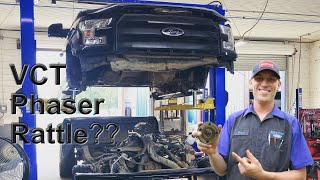
- Listen for Noise: Start the engine when it's cold (after sitting for 6+ hours). Listen carefully for any rattling, ticking, or grinding noises from the front of the engine lasting 2-5 seconds. A rattle strongly 🎬 Watch: Identifying the 3.5L EcoBoost cold start rattle suggests a timing chain/phaser problem.
- Inspect VCT Solenoid: Locate the Bank 1 (passenger side) intake VCT solenoid on the valve cover. Inspect the wiring and connector for damage. Remove the solenoid to check its screens for sludge or debris.
- Test the Solenoid: A DIY mechanic can swap the intake solenoid with the exhaust solenoid on the same bank (if they are the same part number) and see if the code changes to P0014 (Exhaust Over-Retarded), which confirms a bad solenoid. Alternatively, test the solenoid's resistance with a multimeter (should be 7-14 ohms) or apply 12V power to see if it clicks. A professional can use a scan tool to perform the 'HK11' test from TSB SSM 48423, which cycles the solenoid to clear debris.
- Mechanical Timing Check: If the above steps do not resolve the issue, especially if a rattle is present, the next step is a mechanical inspection of the timing chain and phasers. This is an advanced, labor-intensive job (9-15 hours) and almost always requires a professional.
Parts You'll Likely Need
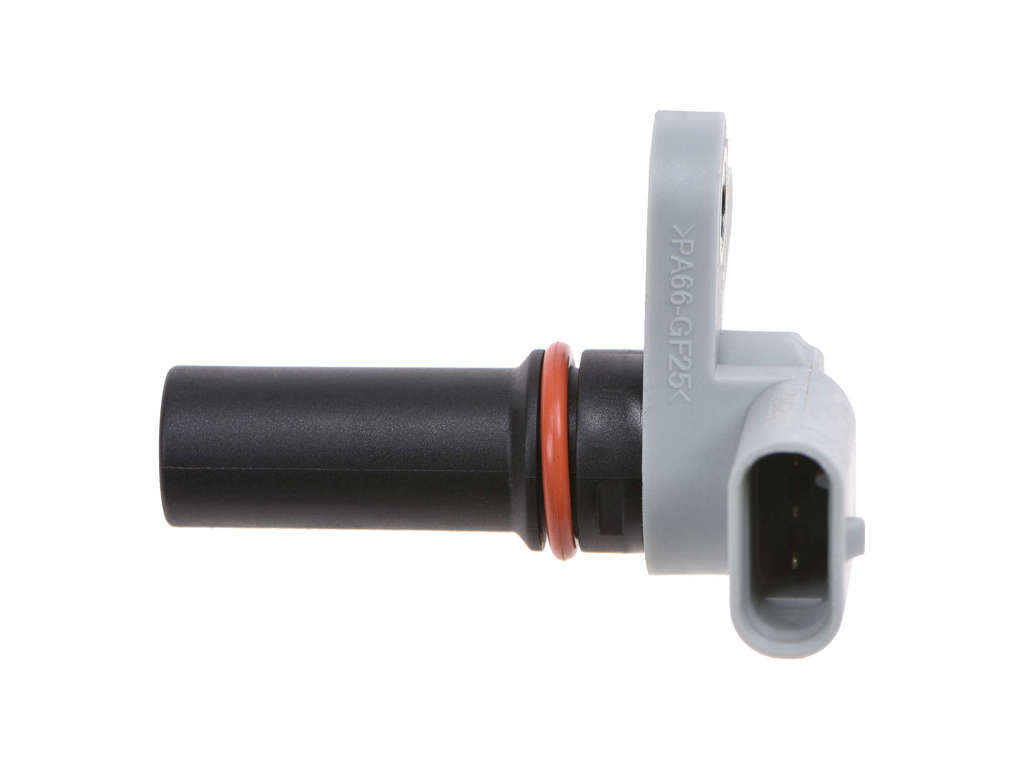
- Variable Camshaft Timing (VCT) Solenoid
(OEM #8L3Z-6M280-B or BL3Z-6M280-B (Motorcraft))— This is the most common component to fail or become clogged, directly causing the over-retarded timing condition.
Related Codes That Often Appear With This One
- P0022 — This is the same 'Over-Retarded' code but for Bank 2 (driver's side). If you see both P0012 and P0022, it strongly points to a global engine issue like low/dirty oil or a stretched timing chain affecting both banks.
- P052B — This code is 'Cold Start 'A' Camshaft Position Timing Over-Retarded Bank 1'. It specifically points to the problem occurring during startup, often seen with a rattling noise, reinforcing the diagnosis of a failing VCT solenoid, cam phaser, or timing chain.
- P0016 — Crankshaft/Camshaft Position Correlation Error. This code often appears alongside timing codes when a timing chain has stretched, as the base timing between the crank and cams is now incorrect.
Technical Service Bulletins (TSBs) & Recalls
- SSM 48423: Notes that P0012 can be caused by small debris sticking in the VCT solenoid and suggests using a scan tool to cycle the solenoid 10 times to clear it before replacement.
- TSB 20-2315: For 2017-2020 F-150s with 3.5L EcoBoost, this addresses a 2-5 second cold start rattle caused by worn VCT units (cam phasers), requiring replacement of all four phasers.
- TSB 15-0131: Superseded earlier TSBs for 2011-2015 F-150s with 3.5L EcoBoost. It identified that failing cam phasers were the root cause of the timing chain stretch and specified replacing the primary chain, tensioner, and all four cam phasers to permanently fix the cold start rattle.
- SSM 47170: Similar to 48423, acknowledges that VCT codes can be caused by debris in the solenoid.
- SSM 54366: Notes that several vehicles may exhibit an illuminated MIL with DTC P0012 and directs technicians to Pinpoint test HK in the Powertrain Control and Emissions Diagnosis manual.
- SSM 49583: Specifically for 5.0L engines, this bulletin notes that P0012 may be stored in the PCM along with noise near the front of the valve covers from the intake VCT.
Platform-Specific Known Issues

- The 1st Gen 3.5L EcoBoost (2011-2016) has a known tendency for the primary timing chain to stretch prematurely, as outlined in TSB 15-0131. This leads to a cold start rattle and codes like P0012.
- The 2nd Gen 3.5L EcoBoost (2017-2020) is known for worn cam phasers causing a cold start rattle, addressed by TSB 20-2315, which requires replacing all four phasers.
- Ford has issued multiple Technical Service Bulletins (TSBs), such as SSM 48423, which note that small debris can cause VCT solenoids to stick and suggest a diagnostic cycling test before replacement.
Mechanic-Grade Diagnostic Values
- VCT Solenoid Internal Resistance — expected: 7 to 14 Ohms. Failure: A reading outside this range, or an open/infinite reading, indicates a failed solenoid coil.
- Ford-Specific PID: VCT_ADV_ERR (Cam Angle Error) — expected: Close to 0 degrees at idle and under steady load.. Failure: A consistently large positive or negative value that does not correspond to PCM commands indicates a timing control problem. For P0012, this value would likely be significantly negative, showing the cam is retarded relative to the command.
Scan Tool Commands That Help
- Ford IDS / FORScan: Pinpoint Test HK11 — As recommended by Ford TSB SSM 48423, this function should be used after checking oil but before replacing a VCT solenoid. It cycles the solenoid 10 times in an attempt to dislodge small debris that may be causing it to stick, which can sometimes resolve the P0012 code without part replacement.
- Ford IDS / FORScan: Live Data Logger - VCT PIDs — Use this to monitor
VCT_INT_CMD1(commanded),VCT_INT_ACT1(actual), andVCT_ADV_ERR(error) PIDs simultaneously during a test drive. This helps confirm if the PCM is commanding a change and the camshaft is failing to respond, isolating the fault to the VCT system.
Wiring & Ground Locations
- PCM Connector C1381E — This is the center of the three main PCM connectors on 2018+ models.. The control circuit for the VCT solenoid originates here. If a solenoid tests good but is unresponsive, checking for pin fitment, corrosion, or damage at this specific connector is a key step in diagnosing a circuit fault (open/short) before it reaches the engine harness.
Real Owner Repair Stories
- Ford Expedition Forum user (2018 Ford Expedition with 3.5L EcoBoost, 51,000 miles) — Check engine light with code P0012, accompanied by a quiet cold start rattle.
❌ Tried (didn't work) The user took the vehicle directly to the dealer for diagnosis.
✅ What actually fixed it The dealership replaced the faulty VCT solenoid that was the direct source of the code and also performed the cam phaser replacement TSB. After the repair, cold starts were quiet and the code was resolved. - Ford F150 Forum user (2014 F-150 Limited 3.5L EcoBoost, 179,000 miles) — Loss of power below 3000 RPM, check engine light with codes P0012, P0022, and P0217, and a 'Low Oil Pressure' warning that appeared at idle.
❌ Tried (didn't work) The user did not report trying any fixes before posting.
✅ What actually fixed it The thread is a diagnostic discussion, but the combination of VCT codes on both banks (P0012 & P0022) plus a low oil pressure warning strongly indicates a systemic oil delivery problem (like a failing oil pump or clogged pickup tube) rather than just a single failed VCT solenoid. - NHTSA ODI #11355199 — An owner reported the check engine light illuminated and a mechanic retrieved fault code P0012. The vehicle remained unrepaired at the time of the report.
- NHTSA ODI #11447828 — An owner reported that the timing chain had no tension, requiring immediate repair of the timing chain and phasers after the check engine light illuminated with codes P0012 and P054C.
OEM Part Supersession History
Various older phaser part numbers (e.g., HL3Z-6256-CD)→ML3Z-6256-A (Intake), ML3Z-6C525-A (Exhaust)— Redesigned to address the common cold start rattle and premature failure of the internal locking pin mechanism in Gen 2 3.5L EcoBoost engines.
Heads up: While some systems may list older 'HL3Z' parts as alternates, it is highly recommended to use the latest 'ML3Z' revision for a long-term repair. Using the new parts is mandated by TSBs like 23-2143.BL3Z-6M280-A / BL3Z-6M280-B (Gen 1 EcoBoost)→HL3Z-6M280-A (Gen 2 EcoBoost)— Updated VCT solenoid design for improved durability and resistance to oil contamination.
Heads up: The newer HL3Z-6M280-A solenoids are specified for 2017+ models. Using them on a Gen 1 (2011-2016) engine may not be possible or could require a PCM calibration update to function correctly. Always verify the correct part by VIN.
Model Year Variations Within This Range
- 2011-2016 (Gen 1 3.5L EcoBoost): These engines are more susceptible to premature timing chain stretch, which can cause P0012. The repair is detailed in TSB 16-0027 and its supersessions, focusing on replacing the primary timing chain and tensioners.
- 2017-2020 (Gen 2 3.5L EcoBoost): These engines are known for cam phaser failure causing a cold start rattle. The fix is outlined in TSB 23-2143, which involves replacing all four VCT phaser units with updated parts. The timing chain is less commonly the primary failure point compared to the phasers themselves.
Diagnostic Flowchart
Real Owner Stories
Aggregated from forums and TSBs cited above. Mileages and costs reflect what owners reported in those sources.
2017 Ford F-150 3.5L EcoBoost — 47000 miles
Symptoms: Experienced a dreaded cold start rattle and the engine sounded like a diesel at idle despite proper maintenance.
What fixed it: Community confirmed it as a known phaser/chain issue requiring a timing job.
Source hint: f150forum.com - Thread 'The dreaded cold start rattle (2017 3.5 EB)'
2018 Ford F-150 3.5L EcoBoost
Symptoms: Required a full timing job to resolve timing component failure.
What fixed it: Replaced cam phasers, timing chains, tensioners, and a water pump at the dealership.
Cost: $4800
Source hint: f150forum.com
2019 Ford F-150 5.0L
Symptoms: Experienced a rough idle and triggered the P0012 code.
What fixed it: Replaced the VCT solenoid, which was confirmed by the dealer as the root issue.
Source hint: f150forum.com
Ford F-150 5.4L
Symptoms: Engine had a rattle and threw codes P0012 and P0022.
What fixed it: Changed the extremely old, low-level oil and drove the truck, which resolved the noise and codes.
Source hint: A YouTube video by 'Shainer's Mechanic Life'
Ford F-150
Symptoms: Faced a massive repair bill for timing components.
What fixed it: Quoted for a full replacement of the timing chain and cam phasers.
Cost: $4000
Source hint: reddit.com/r/f150 - Thread '$4k to replace timing chain and cam phasers or sell my truck?'
Related OBD-II Codes
Frequently Asked Questions
Does TSB 20-2315 apply to my F-150 for the P0012 code?
My 2011-2015 3.5L EcoBoost has a cold start rattle and P0012. What is the likely cause?
Can dirty oil really cause a P0012 code on my EcoBoost?
What is the HK11 test mentioned in Ford SSM 48423?
How much does it cost to fix the timing chain and cam phasers on a 3.5L EcoBoost?
How can I test if the VCT solenoid is the cause of my P0012 code?
Helpful Videos
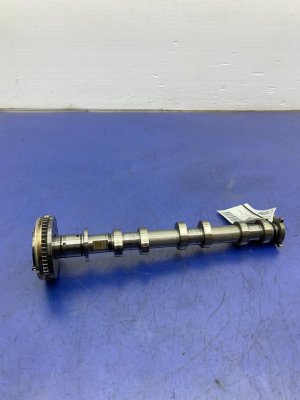
Used OEM Parts in Stock
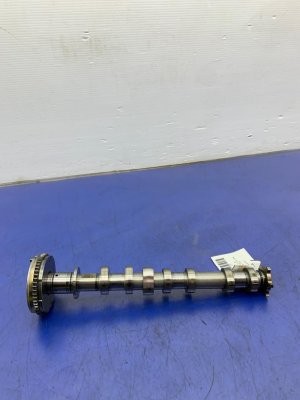
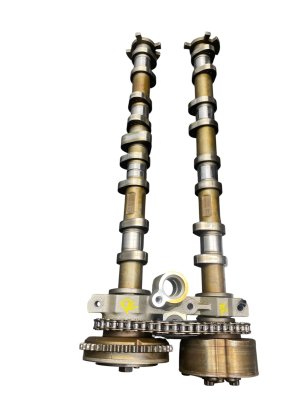
New Aftermarket Parts Available



The information in this article is provided for general reference and educational purposes only. Vehicle specifications, procedures, and part compatibility can vary by production date, trim level, and region. Always consult your vehicle's factory service manual and verify part numbers before purchasing or performing repairs. Safety-critical components such as airbags, seat belts, and braking systems should be installed by a qualified professional.
- Ford F-150:
- 🎬 Helpful Videos
- 🛍️ Shop This Part
- What's Unique About the 2011-2021 Ford F-150
- Symptoms You May Notice
- Most Likely Causes
- Rare But Worth Checking
- Diagnosis Steps
- Parts You'll Likely Need
- Related Codes That Often Appear With This One
- Technical Service Bulletins (TSBs) & Recalls
- Platform-Specific Known Issues
- Mechanic-Grade Diagnostic Values
- Scan Tool Commands That Help
- Wiring & Ground Locations
- Real Owner Repair Stories
- OEM Part Supersession History
- Model Year Variations Within This Range
- Diagnostic Flowchart
- Real Owner Stories
- 2017 Ford F-150 3.5L EcoBoost — 47000 miles
- 2018 Ford F-150 3.5L EcoBoost
- 2019 Ford F-150 5.0L
- Ford F-150 5.4L
- Ford F-150
- Related OBD-II Codes
- Frequently Asked Questions
- 🎟️ Get 5% Off