

P0012 on 2007-2014 Ford Edge 3.5L: Causes and Fixes for Over-Retarded Cam Timing
On the 2007-2014 Ford Edge, code P0012 is almost always caused by low or dirty engine oil, or a failing intake VCT solenoid on Bank 1. The first and cheapest step is always an oil and filter change with the correct 5W-20 oil. If that doesn't work, the VCT solenoid is the next likely culprit, though access on Bank 1 (rear) is labor-intensive.
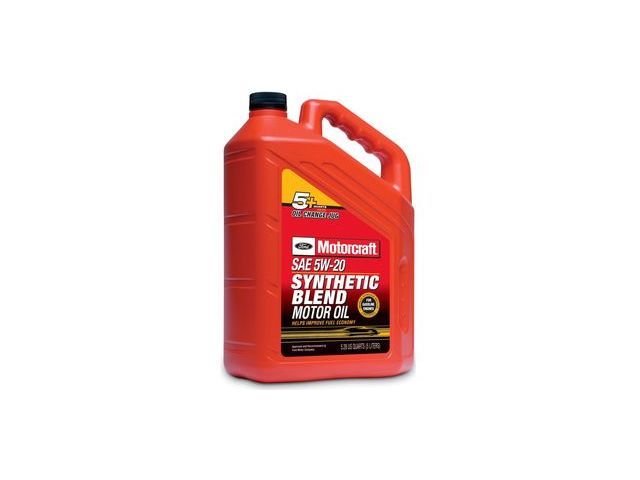
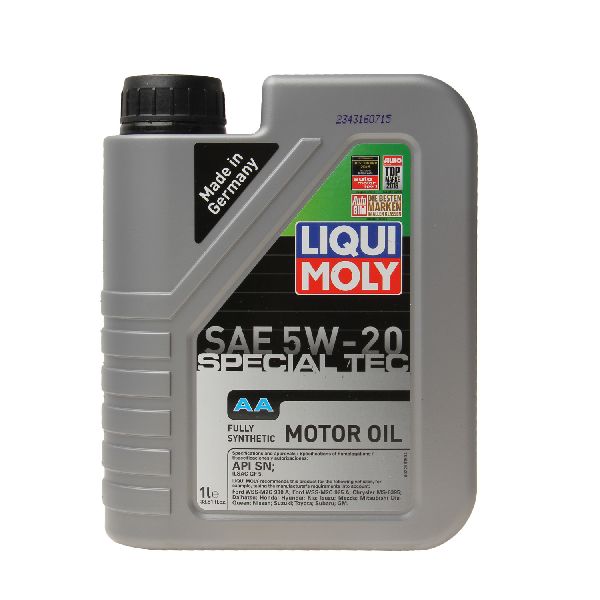
- Always check your engine oil level and condition first. An oil change with 5W-20 full synthetic oil is the cheapest and most common fix.
- P0012 refers to Bank 1, which is the rear cylinder bank against the firewall on a Ford Edge. Accessing these parts is labor-intensive.
- The most likely failed part is the intake VCT solenoid for Bank 1, which often gets stuck due to oil debris.
- A rattling noise from the engine on a cold start indicates a more serious problem with the timing chain that requires immediate attention.
- Do not replace the camshaft position sensor; it is simply reporting the timing fault.
What's Unique About the 2007-2014 Ford Edge

The 3.5L Cyclone V6 in the Ford Edge has a Variable Camshaft Timing (VCT) system that is notoriously sensitive to oil level and cleanliness. Ford has issued multiple Technical Service Bulletins (TSBs), like SSM 48423, acknowledging that small debris from normal engine wear or delayed oil changes can clog the VCT solenoids, causing them to stick and trigger codes like P0012. While the issue is often just a simple solenoid, the location of the Bank 1 (rear) components on this transverse engine requires removing the upper intake manifold for access, turning a simple part swap into a more labor-intensive job. A more severe, known issue with this engine family is the internal, timing-chain-driven water pump, which can fail and leak coolant directly into the oil, causing widespread sludging and VCT system failure.
Generation note: The 2007-2014 year range covers the entire first generation of the Ford Edge, which includes the 2007-2010 models and the facelifted 2011-2014 models. The 3.5L V6 engine was a primary option throughout this period, and the causes and fixes for P0012 are consistent across these years. However, a key difference is that 2011+ models feature Twin-Independent Variable Camshaft Timing (Ti-VCT), controlling both intake and exhaust cams, whereas 2007-2010 models only had VCT on the intake cams.
Symptoms You May Notice
- Check Engine Light is on
- Rough or unstable idle
- Engine stalling, especially when coming to a stop
- Poor acceleration or hesitation
- Decreased fuel economy
- Rattling or ticking noise from the engine, especially on startup.
- Hard starting.
- Replacing the camshaft position sensor. The sensor is accurately reporting that the timing is off; it is almost never the cause of the problem itself. The code indicates a mechanical timing issue, not a sensor failure.
Most Likely Causes

- Low, Dirty, or Incorrect Viscosity Engine Oil 🔴 High Probability The VCT system is hydraulic and extremely sensitive to oil pressure and cleanliness. Ford TSBs confirm that debris in oil is a primary cause of VCT solenoid issues. Forum users frequently report P0012 appearing after an oil change, suggesting dislodged sludge, or being resolved by a fresh oil and filter change.
How to confirm: Check the oil dipstick for level and examine the oil's color and consistency. If it is low, black, gritty, or past its change interval, this is the likely cause. Also check for a 'milkshake' consistency, which indicates coolant contamination from a failing internal water pump.
Typical fix: Perform an oil and filter change using the manufacturer-specified full synthetic or synthetic blend 5W-20 oil and a quality filter like the Motorcraft FL-500S. Clear the code and drive to see if it returns.
Est. part cost: $40-$90 - Sticking or Failing Bank 1 Intake VCT Solenoid 🔴 High Probability The fine mesh screens on the solenoids are easily clogged by oil debris, causing them to stick. This is a well-documented issue acknowledged by Ford in service bulletins like SSM 48423. The solenoids can also fail electrically.
How to confirm: A professional can use a bidirectional scan tool to command the solenoid and check its response, as recommended by Ford. A common DIY method is to swap the Bank 1 intake solenoid with the Bank 2 intake solenoid. If the code changes to P0022 (the code for Bank 2), the solenoid is confirmed faulty. However, this is very labor-intensive for Bank 1 due to the intake manifold removal.
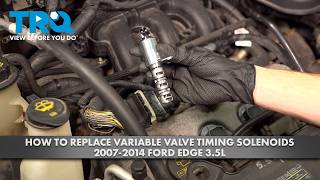
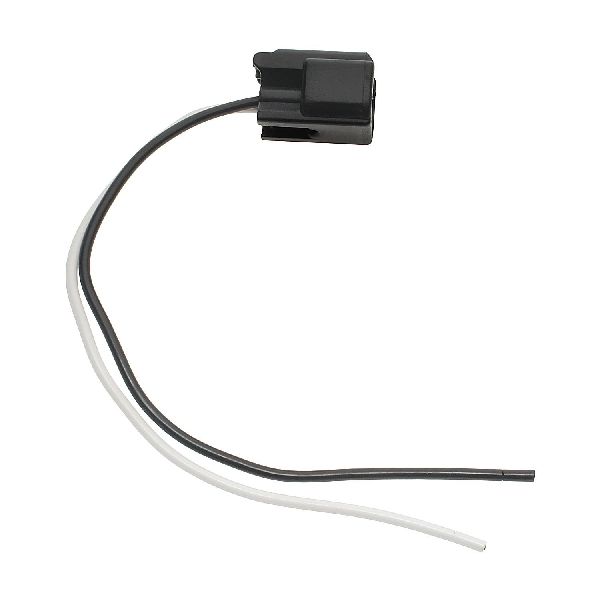
Typical fix: Replace the Bank 1 intake VCT solenoid. Due to the labor involved in accessing it, it is often recommended to replace both intake and exhaust solenoids on Bank 1 🎬 Watch: Step-by-step guide to replacing the VCT solenoids. at the same time. The updated part number often supersedes previous versions.
Est. part cost: $40-$120 - Stretched Timing Chain or Worn Tensioner/Guides 🟡 Medium Probability At higher mileage (typically over 100,000 miles), the timing chain can stretch, or the hydraulic tensioner can weaken, causing incorrect base timing that the VCT system cannot compensate for. This is a known issue for the 3.5L V6 engine family.
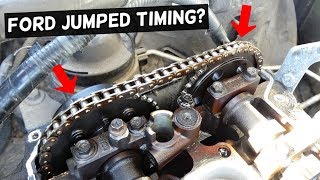
How to confirm: A distinct rattling noise from the front of the engine for 2-5 seconds on a cold start is a classic symptom. Confirmation requires physically inspecting the timing components, which is a major job involving removal of the engine front cover. 🎬 Watch: What happens when the timing chain jumps.
Typical fix: Replace the timing chain, tensioners, and guides. This is a complex and expensive repair, often costing over $2000 at a shop.
Est. part cost: $400-$800
Rare But Worth Checking
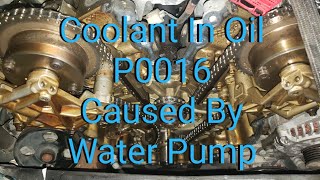
- Failing Internal Water Pump: A known design flaw on this engine family is the internal, timing-chain-driven water pump. When its seal fails, it leaks coolant directly into the engine oil, creating sludge that clogs oil passages and the VCT system. Check for milky, contaminated oil on the dipstick 🎬 See how to diagnose a failing internal water pump. or oil cap. A failure can cause both P0012 and P0022 simultaneously.
- Failed Camshaft Phaser: The mechanical phaser gear that the VCT solenoid controls can fail internally or become stuck. This is less common than a solenoid failure but can cause the same code. TSB 11-6-1 addresses replacing phasers on early build models for VCT codes. A bad phaser was the ultimate cause for one owner after a solenoid swap didn't work.
Diagnosis Steps
- Check Engine Oil: Before doing anything else, check the oil level and condition. If it's low, dirty, or the wrong type, perform an oil and filter change with SAE 5W-20 full synthetic or synthetic blend oil. Check for coolant contamination (milky appearance).
- Scan for Codes: Use an OBD-II scanner to confirm P0012 and check for any other related codes (e.g., P0022, P0016) that could provide more clues.
- Listen for Startup Rattle: On a cold start, listen for a distinct rattling sound from the engine lasting 2-5 seconds. This is a strong indicator of a stretched timing chain or failing tensioners.
- Inspect VCT Solenoid Wiring: Visually inspect the electrical connector and wiring going to the Bank 1 VCT solenoids for any damage, corrosion, or looseness. Bank 1 is near the firewall.
- Test VCT Solenoid: A shop can use a bidirectional scan tool to cycle the solenoid and test its function, as recommended by Ford TSBs. This may clear debris. If the code persists after an oil change and the wiring is good, the solenoid is the most likely faulty part.
- Professional Inspection: If the oil is clean, the solenoid tests good, and a startup rattle is present, the issue is likely mechanical (timing chain/phaser/water pump). This requires significant disassembly and should be diagnosed by a professional.
Parts You'll Likely Need

- Engine Oil and Filter
(OEM #Motorcraft FL-500S (Filter))— Low, dirty, or incorrect viscosity oil is the number one cause of VCT system problems and the code P0012.
Trusted brands: Motorcraft, Mobil 1, Valvoline
OEM price range: $50-$90
Aftermarket price range: $40-$70 - Variable Camshaft Timing (VCT) Solenoid
(OEM #7T4Z-6M280-C (Supersedes 7T4Z-6M280-B))— This is the most common part to fail, typically by getting clogged with debris from the engine oil, as noted in multiple Ford TSBs. The part number has been updated by Ford.
Trusted brands: Motorcraft, Dorman (917-201), NGK
OEM price range: $75-$120
Aftermarket price range: $40-$80
Related Codes That Often Appear With This One
- P0022 — This is the identical 'Over-Retarded' code but for Bank 2. Seeing both P0012 and P0022 together strongly points to a systemic problem like very low/dirty oil, low oil pressure, or a failing internal water pump contaminating the oil, affecting the entire engine.
- P0011 — This is the code for 'Timing Over-Advanced' on Bank 1. Seeing both codes intermittently can indicate a VCT solenoid that is sticking erratically, unable to control its position correctly.
- P0016 / P0017 / P0018 / P0019 — These are crankshaft/camshaft correlation codes. Seeing them alongside P0012 strongly suggests a base timing issue, such as a jumped or stretched timing chain, rather than just a VCT solenoid problem.
Technical Service Bulletins (TSBs) & Recalls

- SSM 48423: Notes that P0011, P0012, and other VCT codes can be caused by small debris causing the VCT solenoid to stick. Advises technicians to use a scan tool to cycle the affected solenoid 10 times to attempt to clear debris before replacement.
- TSB 11-6-1: Addresses multiple VCT codes (including P0012) on 2007-2009 models, and for certain build dates, recommends replacing the camshaft phasers.
Platform-Specific Known Issues

- Access to the Bank 1 (rear) VCT solenoids is difficult and requires the removal of the upper intake manifold, significantly increasing labor time and cost compared to the easily accessible Bank 2 solenoids.
- The 3.5L Cyclone engine family can suffer from internal water pump failure, which leaks coolant into the oil. This contamination is a root cause for widespread VCT system failure and can lead to catastrophic engine damage if not addressed.
Mechanic-Grade Diagnostic Values
- VCT Solenoid Internal Resistance — expected: 5.0 to 15.0 Ohms. Some sources cite a tighter range of 6.9-7.9 Ohms.. Failure: A reading of OL (infinite resistance) indicates an open coil, while a reading near zero indicates a short. Either requires replacement.
- VCT Solenoid Connector Voltage (Key On, Engine Off) — expected: Approximately 12V (Battery Voltage) on the power supply wire (typically Violet/Brown).. Failure: No voltage suggests a break in the wiring or a blown fuse (e.g., F16 in the Battery Junction Box).
- Scan Tool Live Data: VCT Error PID (e.g., VCT_ERR1) — expected: Should be close to 0 degrees at stable idle.. Failure: For P0012, this value will be a persistent, large negative number (e.g., -5 to -15 degrees), indicating the actual cam angle is lagging behind the commanded angle.
- Engine Oil Pressure (at hot idle, in gear) — expected: Minimum 15 PSI, with a healthy engine showing 25 PSI or more.. Failure: Pressure consistently below 15 PSI at hot idle is insufficient for proper VCT operation and points to a systemic issue like a worn oil pump or excessive bearing clearance, not a VCT component failure.
Hidden / Shadow Codes Worth Checking
- Mode $06, TID $81: This is not a separate code but a PCM self-test result. Test ID $81 often corresponds to the VCT System Monitor. A failure of this monitor test for Bank 1 (e.g., Component ID $11) confirms the fault condition that triggers P0012. (see via A professional scan tool capable of reading Mode $06 data.)
Scan Tool Commands That Help

- Ford IDS (or equivalent like FORScan): Variable Cam Timing Control (VCT) — This is a bidirectional control found in the powertrain active commands. It allows the technician to manually command the VCT solenoid duty cycle (e.g., 0%, 25%, 50%) while monitoring the actual cam position PID. If the cam angle doesn't change as commanded, it confirms a fault in the solenoid, phaser, or oil delivery. TSB SSM 48423 specifically advises cycling the solenoid 10 times with this function to try and clear debris before replacement.
Wiring & Ground Locations

- Bank 1 Intake VCT Solenoid Connector — On the rear valve cover, near the firewall. Access requires removing the upper intake manifold.. This is the direct electrical connection to the faulty component. The control wire (often Brown/Green) is ground-side switched by the PCM. Checking for voltage and continuity here is a primary electrical diagnostic step.
- G104 — A common primary engine-to-chassis ground point, often located on the engine block or cylinder head near the front of the engine bay.. A poor ground at this location can cause electrical noise and incorrect readings for multiple sensors, including the Camshaft Position Sensor, potentially complicating the diagnosis of a P0012 code.
Real Owner Repair Stories
- FordEdgeForum.com user (2011 Ford Edge, ~130,000 miles) — P0012 code and a distinct startup rattle.
❌ Tried (didn't work) Engine oil and filter change., Replacement of both Bank 1 (rear) VCT solenoids.
✅ What actually fixed it A complete timing chain service, including new chains, guides, and tensioners. The original primary timing chain was found to be significantly stretched, causing the base timing to be off. - Reddit user post (2013 Ford Edge 3.5L) — Persistent P0012 code.
❌ Tried (didn't work) Replacing the Bank 1 intake VCT solenoid.
✅ What actually fixed it The vehicle was diagnosed with low oil pressure at hot idle. The root cause was found to be worn main bearings, leading to excessive clearances and pressure loss. The ultimate repair was an engine replacement, as the cost of a bottom-end rebuild was prohibitive.
OEM Part Supersession History
7T4Z-6M280-A, 7T4Z-6M280-AA, 7T4Z-6M280-B→7T4Z-6M280-C— Likely revisions to the internal spool valve and filter screens to improve durability and resistance to clogging from oil debris.
Heads up: None. The newest part number (7T4Z-6M280-C) is fully backward compatible and is the recommended replacement for all previous versions.
Model Year Variations Within This Range

- 2011-2014: These facelifted models feature the Twin-Independent Variable Camshaft Timing (Ti-VCT) engine, which has four VCT solenoids and four phasers to control both intake and exhaust camshafts independently. The 2007-2010 models only had VCT on the intake camshafts. This adds complexity but the root cause of P0012 (Bank 1 Intake) remains the same.
- 2007-2010: The primary timing chain on earlier models was a roller-style chain, which was later updated to a quieter inverted-tooth or 'silent-type' chain around 2011. While functionally similar, using the correct chain and sprockets for the specific year is critical during a timing job.
Diagnostic Flowchart
Other Known Issues on This Vehicle
Issues unrelated to this code that are worth knowing about as an owner of this generation:
- Internal Water Pump Failure 🔴 High — A well-known design flaw. Can occur at any mileage but becomes more common over 80,000 miles. Failure leads to coolant mixing with engine oil, potentially destroying the engine.
- Power Transfer Unit (PTU) Failure (AWD Models) 🔴 High — Common on AWD models. The PTU fluid can overheat and break down, leading to failure. Often requires complete replacement. Regular fluid changes are recommended.
- Faulty Brake Booster 🟠 Medium — A tear can develop in the booster's diaphragm, causing a hard brake pedal and a hissing noise. Ford issued a recall (23S12) and an extended warranty program for this. (Ref: Recall 23S12, Customer Satisfaction Program 13N02)
- Door Ajar Sensor Failure 🟡 Low — Extremely common. The sensor within the door latch fails, causing the 'Door Ajar' light to stay on, draining the battery. The entire latch assembly usually needs replacement. (Ref: TSB 18-2013)
- Transmission Shift Quality Issues 🟠 Medium — Some owners of earlier models (2007-2010) report hard shifts, hesitation, or clunking. Software updates and regular fluid changes can help mitigate the issue.
Used vs. New Parts: Buying Guide for This Vehicle
When a used part is the smart pick: For this specific repair, using used parts is not recommended. The cost of new electronic solenoids and mechanical timing components is low compared to the significant labor required for replacement, especially for the timing chain or the Bank 1 solenoids.
Donor-vehicle mileage cap: roughly under 50000 miles for the part to have meaningful remaining life.
What to inspect on the donor part:
- If considering any used engine component, verify the donor vehicle had regular oil changes documented.
- Avoid parts from engines with any signs of oil sludge or coolant contamination.
OEM-only on this vehicle (don't cheap out):
- Timing Chain Kit (Chain, Guides, Tensioners)
- Camshaft Phasers
- Internal Water Pump
Aftermarket brands forum-validated for this vehicle:
- Motorcraft (OEM for all components)
- Cloyes (For timing chain kits)
- NGK/NTK (For VCT Solenoids)
Brands owners have reported issues with on this vehicle:
- Unbranded, 'white-box' VCT solenoids and timing kits from online marketplaces have a high rate of premature failure according to forum reports.
Real Owner Stories
Aggregated from forums and TSBs cited above. Mileages and costs reflect what owners reported in those sources.
2011 Ford Edge 3.5L — 65000 miles
Symptoms: Check engine light (P0012), hard starting, and decreased fuel economy.
What fixed it: The community recommended checking oil type/filter and potentially replacing the VCT solenoids.
Source hint: FordEdgeForum.com - '11 Edge 3.5 P0012'
2014 Ford Edge 3.5L
Symptoms: Codes P0012 and P0022, low engine oil pressure alarm, and a grinding noise.
What fixed it: The symptoms pointed to a severe systemic oiling problem, likely a failed internal water pump.
Source hint: FordEdgeForum.com - 'code p0012 and p0022 with low engine pressure alarm and grinding noise'
2009 Ford Edge 3.5L — 150000 miles
Symptoms: P0012 code persisting even after performing an oil change.
What fixed it: Replacement of the VCT solenoid (oil control valve) on Bank 1 (rear bank).
Source hint: Reddit r/AskMechanics - '09 Ford Edge 150K mi. P0012 code'
2012 Ford Edge 3.5L
Symptoms: Engine overheat followed by codes P0012 and P0017.
What fixed it: The root cause was identified as a failed internal water pump that led to overheating and jumped timing.
Source hint: Car Talk Community - '2012 Ford Edge p0017 & p0012'
Related OBD-II Codes
Frequently Asked Questions
Does Ford have a technical service bulletin for P0012 on my 2007-2009 Edge?
My mechanic says the Bank 1 VCT solenoid is stuck. Can it be fixed without replacement?
Why is the repair cost so much higher for Bank 1 than Bank 2 on my 3.5L Cyclone engine?
I see a 'milkshake' consistency on my dipstick along with the P0012 code. What does this mean?
What specific oil and filter should I use for my Ford Edge to prevent VCT issues?
Is the rattling sound I hear for 2 seconds on startup related to the P0012 code?
Helpful Videos
We Have This Part in Stock




The information in this article is provided for general reference and educational purposes only. Vehicle specifications, procedures, and part compatibility can vary by production date, trim level, and region. Always consult your vehicle's factory service manual and verify part numbers before purchasing or performing repairs. Safety-critical components such as airbags, seat belts, and braking systems should be installed by a qualified professional.
- Ford Edge:
- 🎬 Helpful Videos
- 🛍️ Shop This Part
- What's Unique About the 2007-2014 Ford Edge
- Symptoms You May Notice
- Most Likely Causes
- Rare But Worth Checking
- Diagnosis Steps
- Parts You'll Likely Need
- Related Codes That Often Appear With This One
- Technical Service Bulletins (TSBs) & Recalls
- Platform-Specific Known Issues
- Mechanic-Grade Diagnostic Values
- Hidden / Shadow Codes Worth Checking
- Scan Tool Commands That Help
- Wiring & Ground Locations
- Real Owner Repair Stories
- OEM Part Supersession History
- Model Year Variations Within This Range
- Diagnostic Flowchart
- Other Known Issues on This Vehicle
- Used vs. New Parts: Buying Guide for This Vehicle
- Real Owner Stories
- 2011 Ford Edge 3.5L — 65000 miles
- 2014 Ford Edge 3.5L
- 2009 Ford Edge 3.5L — 150000 miles
- 2012 Ford Edge 3.5L
- Related OBD-II Codes
- Frequently Asked Questions
- 🎟️ Get 5% Off