

P0012 on 2008-2012 Chevrolet Malibu 2.4L: Causes and Fixes for Over-Retarded Cam Timing
On a 2008-2012 Malibu with the 2.4L engine, code P0012 is most often caused by low or dirty engine oil, or a faulty intake camshaft actuator solenoid. These engines are known for oil consumption due to piston ring issues (covered under GM Special Coverage 14882), so checking your oil level is the critical first step. If an oil change doesn't fix it, the next step is to replace the intake solenoid. The original OEM part is ACDelco 12655420, which has been superseded by 12679099. This is a simple
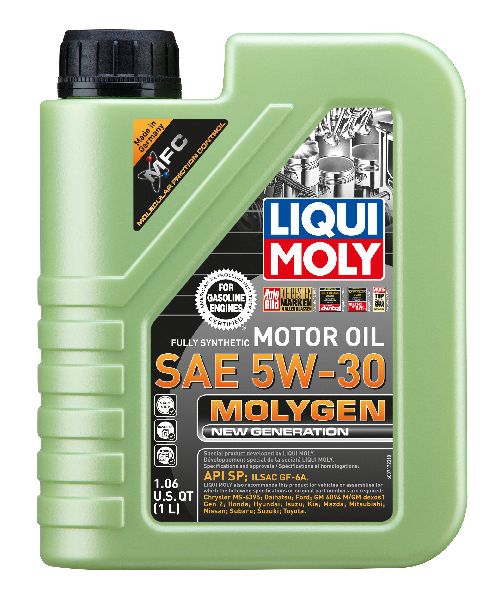
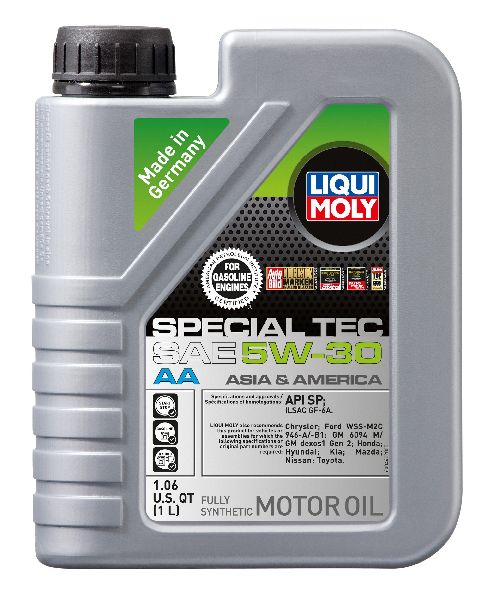
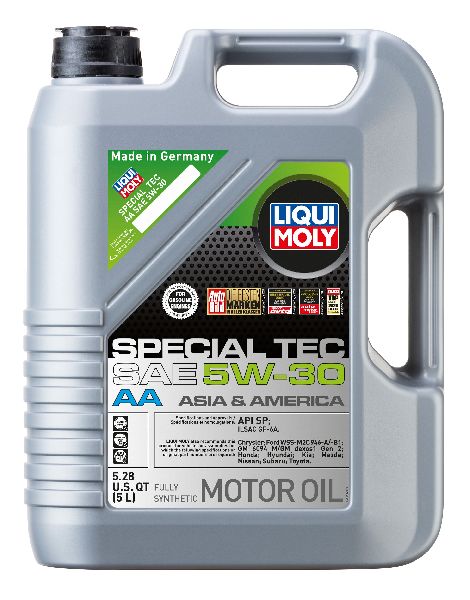
- Always check your engine oil level and condition first. An oil change with the correct 5W-30 Dexos oil fixes P0012 more often than you'd think.
- The most likely failed part is the intake camshaft actuator solenoid (the one at the front). It's affordable and easy to replace.
- Do not immediately assume you have a catastrophic timing chain failure. While possible on this engine, it is much less common than oil or solenoid issues.
- A rattling noise from the engine is a critical symptom. If you hear this, the probability of a timing chain problem increases significantly.
What's Unique About the 2008-2012 Chevrolet Malibu
The 2.4L Ecotec engine in this generation of Malibu is known for a few specific issues that directly relate to code P0012. Firstly, these engines are notorious for excessive oil consumption due to a faulty piston ring design, a defect acknowledged by GM in TSBs for platform mates like the Equinox. This makes low oil level a frequent trigger for this oil-pressure-sensitive code. Secondly, the VVT solenoids themselves are a high-failure item. Lastly, the timing chains and their plastic guides are a known weak point that can wear and stretch over time, though this is a less common cause for an isolated P0012 code than simple oil or solenoid issues.
Symptoms You May Notice
- Check Engine Light illuminated
- Rough or unstable idle
- Engine stalling, especially at low speeds
- Reduced engine power and sluggish acceleration
- Noticeably worse fuel economy
- Engine rattling noise, particularly on a cold start, which may indicate a timing chain issue.
- Replacing the camshaft position sensor instead of the camshaft position actuator solenoid. The sensor reads the position, but the solenoid controls it. P0012 is a control/response problem, not usually a sensor reading problem.
- Assuming a major timing chain failure before checking the oil and replacing the inexpensive VVT solenoids first. Always start with the simplest and most common fixes.
Most Likely Causes
- Low or Dirty Engine Oil 🔴 High Probability The 2.4L Ecotec engine has a documented issue with faulty piston rings causing high oil consumption (burning over a quart in 2,000 miles). This leads to low oil levels. The VVT system is hydraulic and requires correct oil pressure and volume to function; low or sludgy oil is the number one cause of P0012.
How to confirm: Check the oil level on the dipstick. If it's low, this is your likely culprit. Inspect the oil's color and consistency. If it is black, thick, or sludgy, it needs to be changed.
Typical fix: Top off the oil to the correct level. The best course of action is a complete oil and filter change using a quality filter and the manufacturer-specified oil (full synthetic 5W-30 meeting GM's Dexos1 specification).
Est. part cost: $30-$60 - Faulty Intake Camshaft Position Actuator Solenoid 🔴 High Probability These solenoids operate in hot engine oil and are prone to clogging from sludge or electrical failure. It is a very common failure item on Ecotec engines, often failing after 75,000 miles.
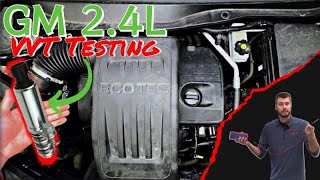
How to confirm: Remove the solenoid (it's the front one on top of the valve cover, marked 'INTAKE') and inspect its screens for sludge or debris. Test its resistance with a multimeter; a good solenoid should read between 8 and 13 ohms. 🎬 Watch: How to test the VVT solenoid with a multimeter. A definitive diagnostic is to swap the intake and exhaust solenoids; if the code changes from P0012 to P0014, the solenoid is confirmed bad.
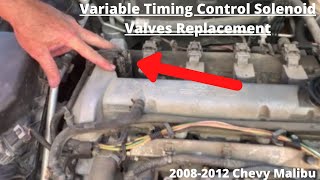
Typical fix: Replace the intake camshaft position actuator solenoid. It is held by a single 10mm bolt, torqued to 89 lb-in (10 Nm). It is highly recommended to replace both the intake and exhaust solenoids at the same time as a pair.
Est. part cost: $25-$80 - Stretched Timing Chain or Failed Tensioner ⚪ Low Probability While not as common as oil or solenoid issues for an isolated P0012, the timing chain components on the 2.4L Ecotec are a known weak point that can lead to various timing-related codes.
How to confirm: A persistent rattling noise from the passenger side of the engine, especially on cold starts that lasts more than a few seconds, is a strong indicator. Confirmation requires partial engine disassembly to physically inspect the chain for slack and check the tensioner's operation. Finding metallic shavings in the oil filter during an oil change is another tell-tale sign.
Typical fix: Replace the timing chain, guides, tensioners, and often the camshaft phasers (VVT gears) as a complete kit. This is a significant repair that requires specialized tools and knowledge.
Est. part cost: $200-$500 for a complete kit
Rare But Worth Checking
- Failed Camshaft Phaser (Actuator Gear): The gear that the solenoid sends oil to can fail mechanically, getting stuck in the retarded position. This is typically diagnosed after replacing the solenoids and verifying timing chain integrity. They are often replaced during a timing chain job.
- Faulty Camshaft Position Sensor: The sensor that reads the camshaft's position can fail, but it's more likely to throw its own specific circuit codes (e.g., P0340). While it can contribute to timing codes, it's not a primary cause for P0012.
- Clogged PCV Orifice: As noted in TSB 14882, the PCV orifice in the intake manifold can clog, leading to excessive crankcase pressure, which can affect oil circulation and contribute to oil leaks and consumption, indirectly impacting the VVT system.
Diagnosis Steps
- Check Engine Oil: Verify the oil level is full and the oil is clean. If low, top it off, clear the code, and drive. If dirty or overdue, perform an oil and filter change using 5W-30 Dexos-rated synthetic oil. This solves the problem a surprising amount of the time.
- Inspect Solenoid Connector: Check the wiring and connector for the intake VVT solenoid (front solenoid) for any damage, corrosion, or loose connection.
- Swap Solenoids (Definitive Test): The easiest and most reliable test. Unplug both solenoids. Unbolt them (one 10mm bolt each). Swap the intake and exhaust solenoids. Clear the codes and drive the vehicle. If the code changes to P0014 (Exhaust Camshaft Position Timing - Over-Retarded), the solenoid you moved to the exhaust position is faulty and must be replaced.
- Test the Solenoid (Optional): If you have a multimeter, unplug the intake solenoid and measure its resistance. The reading should be between 8-13 ohms. An open circuit (OL) or a reading far outside this range indicates a failed solenoid.
- Replace the Solenoid(s): If the solenoid is confirmed bad or highly suspected, replace it. It is best practice to replace both solenoids as a pair. Torque the new bolt to 89 lb-in (10 Nm). 🎬 See this walkthrough for replacing the intake and exhaust solenoids.
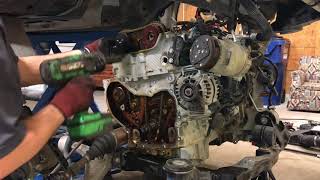
- Listen for Timing Chain Noise: If the code persists after addressing oil and solenoid issues, listen carefully for a rattling or scraping noise from the passenger side of the engine, especially on cold starts. 🎬 Watch: How to diagnose a noisy or stretched timing chain. This indicates a likely timing chain issue.
- Professional Diagnosis: If a timing chain issue is suspected, the next step involves checking mechanical timing, which requires significant disassembly. This is best left to a professional mechanic or experienced DIYer.
Parts You'll Likely Need
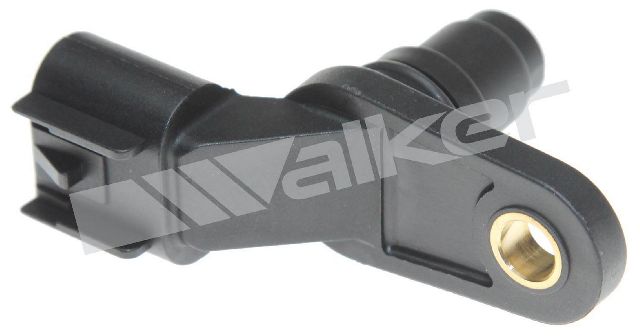
- Intake Camshaft Position Actuator Solenoid
(OEM #12655420 (Superseded by 12679099))— This is the most common part to fail after low oil level has been ruled out. It gets clogged or fails electrically, preventing proper VVT operation.
Trusted brands: ACDelco (OEM), Delphi, Dorman
OEM price range: $40-$70
Aftermarket price range: $20-$45 - Engine Oil and Filter — Low or dirty oil is the number one cause of this code due to the engine's oil consumption issues and the VVT system's reliance on clean oil at the correct pressure.
Trusted brands: ACDelco, Mobil 1, Pennzoil
OEM price range: $40-$70
Aftermarket price range: $30-$60
Related Codes That Often Appear With This One
- P0011 — This is the opposite code, for 'Over-Advanced' timing. Seeing both P0011 and P0012 intermittently can point to a sticking solenoid or erratic oil pressure.
- P0013 / P0014 — These are the codes for the exhaust camshaft ('B' camshaft). If you see P0012 along with P0014 (Over-Retarded Exhaust), it strongly suggests a problem common to both camshafts, like low/dirty oil or a base timing issue from a stretched chain. Seeing P0010/P0013 with P0012/P0014 points directly at the solenoids.
- P0016 — This code indicates a correlation issue between the crankshaft and camshaft. If you see this with P0012, it's a much stronger indicator of a stretched timing chain or a jumped tooth, representing a more severe mechanical timing problem.
Technical Service Bulletins (TSBs) & Recalls
- 14882 - Special Coverage for Plugged PCV Orifice due to High Oil Consumption.
- 12313D - Special Coverage for Stretched Engine Balance Chain and Fuel Pump issues.
- 14404B - Special Coverage for 6T70/6T75 Transmission Wave Plate Fracture.
Platform-Specific Known Issues
- Special Coverage Adjustment 14882: While not a recall, GM issued this for some 2.4L engines for a plugged PCV orifice that can result from high oil consumption, leading to crankcase pressure issues and oil leaks. This highlights the systemic oil-related issues of the engine family.
- Special Coverage Adjustment 12313D: This notice addresses a stretching balance shaft chain on some 2010-2011 2.4L engines. A stretched balance chain can cause engine noise and, in severe cases, can affect overall engine timing and performance.
Mechanic-Grade Diagnostic Values
- VVT Actuator Solenoid Resistance — expected: 8 to 13 Ohms at approx. 68°F (20°C). A new part may read around 10-12 Ohms.. Failure: An open circuit (infinite resistance/OL), a short (near 0 ohms), a very high reading (e.g., 30+ Kilo-ohms or Mega-ohms), or a reading that fluctuates wildly when wiggling the pins.
- VVT Solenoid Connector Voltage (Key On, Engine Off) — expected: Approximately 12V (battery voltage) on the power supply pin in the harness connector.. Failure: No voltage suggests a wiring issue or blown fuse between the fuse block and the solenoid.
- Scan Tool: Desired vs. Actual Camshaft Position Angle — expected: At warm idle, both desired and actual angles should be at or near 0 degrees. When commanded by a scan tool or during acceleration, the 'Actual' PID should follow the 'Desired' PID closely.. Failure: A large, persistent difference between the desired and actual angle values at idle or a failure of the 'Actual' value to change when commanded indicates a problem with the solenoid, oil flow, or the phaser itself.
Scan Tool Commands That Help
- GDS2 / Tech 2 (or equivalent professional scanner): Camshaft Position Actuator Solenoid Control — This bidirectional control allows the technician to command the intake solenoid ON, OFF, or to a specific duty cycle while monitoring the 'Actual Camshaft Position' PID. If the solenoid is commanded ON and the actual position does not change, it confirms a failure in the hydraulic/mechanical part of the system (solenoid, oil passage, or phaser), ruling out a wiring or ECM driver issue.
Wiring & Ground Locations
- Intake VVT Solenoid Connector — On top of the valve cover, toward the front of the engine (radiator side). The connector is typically gray.. This is the primary connection point for the actuator. Corrosion, damage, or a loose connection here will cause circuit codes (like P0010) and performance codes like P0012.
- G107 (2.4L Engine) — On the lower left side of the engine block.. This is a primary engine ground. A loose or corroded connection at G107 can cause unstable voltage and ground references for the entire engine management system, including the ECM and its control over the VVT solenoids, leading to erratic behavior and fault codes.
- G103 — For 2008-2009 models, on top of the driver's side front strut tower. For 2010-2012 models, at the left rear of the engine compartment on the cowl, above the brake booster.. This ground serves the ECM and Body Control Module (BCM). A fault here can cause widespread communication and module errors, which could potentially include or mimic VVT system faults.
Real Owner Repair Stories
- BobIsTheOilGuy forum user 'TXCarGeek' (2012 Chevrolet Malibu, 2.4L LE9 Ecotec) — Car quit running, multiple codes present. After timing chain replacement, a popping noise was heard when turning the engine by hand.
❌ Tried (didn't work) A complete timing chain and guide replacement was performed first to fix a jumped chain.
✅ What actually fixed it The exhaust camshaft phaser was discovered to have about a 1/4 turn of free play before it would engage the camshaft. Replacing the failed cam phaser(s) was the required final fix. - YouTube channel 'Gerard Burke' (2013 Holden Malibu (with 2.4L Ecotec), 281,000 km) — Check Engine Light with codes P0010, P0011, P2089. Live data showed the intake cam angle was flat (no response) when commanded.
❌ Tried (didn't work) Diagnosis confirmed the solenoid was the issue before parts were replaced.
✅ What actually fixed it The intake solenoid was tested and found to have 1.6 mega-ohms of resistance (a failed open circuit). The exhaust solenoid tested good at 12.8 ohms. Both solenoids were replaced due to the high mileage and visible sludge found on the screens. - NHTSA ODI #11615506 — An owner reported that after a yellow warning light appeared with codes P0017 and P0012, a mechanic inspected the vehicle and replaced the timing chain kit and oil pump to resolve the issue.
"I Checked Everything" — The Actual Cause
- The diagnostic equivalent for P0012 is 'solenoids and oil are good, but the code persists.' In one documented case on a 2012 Malibu, a full timing chain replacement was performed, but the root cause of the timing issue was a mechanically failed (loose) camshaft phaser that was only discovered after the initial repair. This highlights that even after addressing the most common causes, the mechanical actuator (phaser) itself can be the point of failure.
OEM Part Supersession History
12655420→12679099— Updated part design from the manufacturer.
Heads up: Part number 12679099 is the current correct OEM replacement for the intake solenoid and also supersedes older numbers 12578517, 12628347, and 12646783. No incompatibility is noted.
Model Year Variations Within This Range
- 2008-2012: The physical location of the G103 ground point differs. For 2008-2009 models, it is on the driver's side strut tower. For 2010-2012 models, it is on the cowl above the brake booster. While the VVT system parts are consistent, checking the correct ground location is important for electrical diagnosis.
Diagnostic Flowchart
Other Known Issues on This Vehicle
Issues unrelated to this code that are worth knowing about as an owner of this generation:
- Excessive Oil Consumption 🔴 High — Very common, especially on 2010+ models. Can start as early as 60,000 miles. Caused by faulty piston ring design. (Ref: GM Special Coverage 14882 (for related PCV issues) and another for piston replacement on some models like the Equinox.)
- Loss of Electric Power Steering (EPS) 🔴 High — Common across this generation, leading to sudden high steering effort. Multiple recalls and special coverage programs were issued. (Ref: Recall 14V153 and others. GM extended warranty coverage for the power steering motor and/or torque sensors.)
- 6T40/6T45 Transmission Wave Plate Failure 🔴 High — A well-documented failure in the 6-speed automatic transmission, typically occurring between 70,000 and 120,000 miles. (Ref: Special Coverage Adjustment 14404B covered the repair, which involves a broken 3-5-R wave plate leading to loss of those gears.)
- Stretched Timing Chain & Worn Guides 🔴 High — Common after 100,000 miles. Often presents as a rattling noise on cold starts before setting timing correlation codes. (Ref: Special Coverage Adjustment 12313D addressed a related balance shaft chain issue on some 2.4L engines.)
- Cracked Exhaust Manifold 🟠 Medium — Fairly common, resulting in a ticking or exhaust leak sound from the engine bay, especially when cold.
Used vs. New Parts: Buying Guide for This Vehicle
When a used part is the smart pick: For this specific P0012 repair, using used parts is generally not recommended due to the high failure rate of the primary components. A used part may be considered for a major structural component like the cylinder head or engine block from a verified low-mileage donor, but not for the VVT components themselves.
Donor-vehicle mileage cap: roughly under 75000 miles for the part to have meaningful remaining life.
What to inspect on the donor part:
- Verify donor vehicle mileage.
- Remove the oil cap on the donor engine to check for heavy sludge or varnish, which indicates poor maintenance.
- If possible, inspect the oil on the donor's dipstick for clarity and signs of metallic particles.
OEM-only on this vehicle (don't cheap out):
- Camshaft Position Actuator Solenoids
- Camshaft Phasers
Aftermarket brands forum-validated for this vehicle:
- Delphi (for VVT Solenoids, as they are often an OEM supplier)
Brands owners have reported issues with on this vehicle:
- Unbranded, low-cost VVT solenoids from online marketplaces are frequently reported by owners to have poor heat resistance and fail within days or weeks of installation.
Real Owner Stories
Aggregated from forums and TSBs cited above. Mileages and costs reflect what owners reported in those sources.
2011 Chevrolet Malibu 2.4L
Symptoms: Vehicle experiencing both P0012 and P0014 codes simultaneously.
What fixed it: The owner checked the oil first as advised by the community, then replaced both the intake and exhaust VVT solenoids, which resolved the issue.
Source hint: Chevy Malibu Forum: P0012 and P0014 codes
2010 Chevrolet Malibu 2.4L
Symptoms: Check engine light on with VVT-related codes.
What fixed it: Diagnosis with a multimeter confirmed the solenoids were 'open circuit' (failed electrically). Replacing the solenoids fixed the problem.
Source hint: YouTube: 2010 Chevy Malibu 2.4 cam solenoid diagnosis and replacement by 'Bailey Creek Rd Adventures'
2008-2012 Chevrolet Malibu 2.4L
Symptoms: Engine throwing codes P0010, P0011, P0013, or P0014.
What fixed it: Removing the engine cover and replacing the VVT solenoids.
Source hint: YouTube: Step-by-step VVT Solenoid Replacement on Malibu 2.4L by 'Backyard Chevy'
Related OBD-II Codes
Frequently Asked Questions
My 2011 Malibu is burning a quart of oil every 2,000 miles; could this be causing my P0012 code?
Does Special Coverage Adjustment 12313D apply to the timing issues on my 2010 Malibu?
Which solenoid should I replace for a P0012 code on my 2.4L Ecotec?
What is the correct torque spec for the VVT solenoid bolt on the Malibu 2.4L?
Is there a specific oil type I should use to prevent VVT codes like P0012 in my Malibu?
I have a P0012 and a rattling noise on cold starts; is this just a solenoid issue?
Helpful Videos
We Have This Part in Stock


The information in this article is provided for general reference and educational purposes only. Vehicle specifications, procedures, and part compatibility can vary by production date, trim level, and region. Always consult your vehicle's factory service manual and verify part numbers before purchasing or performing repairs. Safety-critical components such as airbags, seat belts, and braking systems should be installed by a qualified professional.
- Chevrolet Malibu:
- 🎬 Helpful Videos
- 🛍️ Shop This Part
- What's Unique About the 2008-2012 Chevrolet Malibu
- Symptoms You May Notice
- Most Likely Causes
- Rare But Worth Checking
- Diagnosis Steps
- Parts You'll Likely Need
- Related Codes That Often Appear With This One
- Technical Service Bulletins (TSBs) & Recalls
- Platform-Specific Known Issues
- Mechanic-Grade Diagnostic Values
- Scan Tool Commands That Help
- Wiring & Ground Locations
- Real Owner Repair Stories
- "I Checked Everything" — The Actual Cause
- OEM Part Supersession History
- Model Year Variations Within This Range
- Diagnostic Flowchart
- Other Known Issues on This Vehicle
- Used vs. New Parts: Buying Guide for This Vehicle
- Real Owner Stories
- 2011 Chevrolet Malibu 2.4L
- 2010 Chevrolet Malibu 2.4L
- 2008-2012 Chevrolet Malibu 2.4L
- Related OBD-II Codes
- Frequently Asked Questions
- 🎟️ Get 5% Off