

P0012 on 2006-2011 Chevrolet HHR: Ecotec Camshaft Timing Causes and Fixes
On a 2006-2011 HHR, P0012 almost always means the intake camshaft position actuator solenoid is failing or clogged. It's a $25-$50 part that can be replaced in under an hour with basic tools. Always check your oil level and condition first, as low or dirty oil is the root cause of the VVT system malfunction.
- First, check your oil. Low or dirty oil is a primary cause of P0012.
- The most likely failed part is the intake camshaft position actuator solenoid, an inexpensive and easy part to replace.
- A common symptom is harsh automatic transmission shifting, which can be misleading.
- Always replace the solenoids in pairs to prevent a repeat failure of the opposite solenoid.
- Do not confuse the actuator SOLENOID with the position SENSOR; they are different parts.
What's Unique About the 2006-2011 Chevrolet HHR
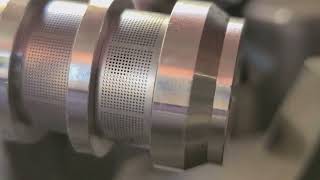
The 2.2L and 2.4L Ecotec engines used across the GM Delta platform are well-known for this issue. The VVT system is operated by oil pressure, making it extremely sensitive to oil level and cleanliness. The camshaft actuator solenoids, which control this system, have fine mesh screens that can easily become clogged by oil sludge, leading to failure. A unique and widely reported symptom on the HHR and its platform mates is that the ECM will command harsh or abrupt shifting from the automatic transmission when VVT fault codes are present, often leading owners to mistakenly suspect a transmission problem.
Symptoms You May Notice
- Check Engine Light is on
- Rough, unstable, or low idle
- Harsh or jerky automatic transmission shifting
- Reduced engine power and sluggish acceleration
- Decreased fuel economy
- Engine stalling at low speeds or when coming to a stop
- Rattling noise from the engine on startup, lasting a few seconds
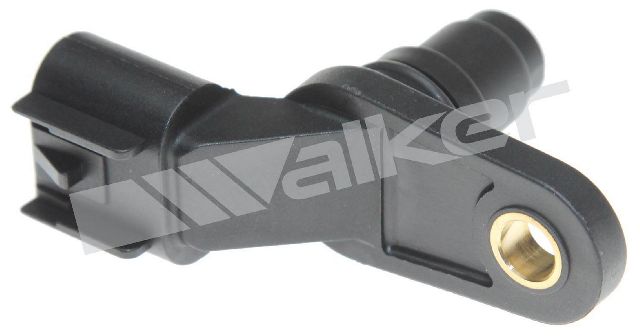
- Replacing the camshaft position SENSOR instead of the solenoid. The codes P0010, P0011, P0012, P0013, and P0014 almost always refer to the actuator SOLENOIDS, which control oil flow, not the sensors that read cam position. This is a very common mistake made by DIYers and even parts store staff.
Most Likely Causes
- Faulty Intake Camshaft Position Actuator Solenoid (VVT Solenoid) 🔴 High Probability This is the most common point of failure. The solenoid's internal passages and fine mesh filter screens are highly susceptible to clogging from oil deposits and sludge. The solenoid can also fail electrically.
How to confirm: After checking oil, this is the next step. A definitive DIY test is to swap the intake solenoid (front of the engine) with the exhaust solenoid (rear). Clear the codes. If the code changes to P0014 (Exhaust Camshaft Position Timing - Over-Retarded), the solenoid is confirmed bad. You can also test the solenoid's resistance with a multimeter; it should be between 8-12 ohms.
Typical fix: Replace the intake camshaft position actuator solenoid. It is highly recommended to also perform an oil and filter change and to replace the exhaust solenoid at the same time 🎬 Watch: Step-by-step guide to replacing both HHR solenoids., as it has been exposed to the same conditions.
Est. part cost: $25-$60 - Low, Dirty, or Incorrect Viscosity Engine Oil 🔴 High Probability The VVT system is entirely dependent on clean oil at the correct pressure to function. Ecotec engines are notoriously sensitive to oil maintenance, and delayed oil changes are a primary contributor to solenoid failure.
How to confirm: Check the oil dipstick. If the oil level is low, or the oil appears dark, sludgy, or gritty, this is a likely cause or a major contributing factor.
Typical fix: Perform an oil and filter change using the manufacturer-specified full synthetic 5W-30 oil. Clear the code and drive to see if it returns before replacing parts.
Est. part cost: $30-$70 - Stretched Timing Chain or Failed Tensioner ⚪ Low Probability While less common than solenoid failure, the timing chains on Ecotec engines can stretch over time, especially with high mileage (>100k miles) or a history of poor oil maintenance. A stretched chain can cause the base camshaft timing to be off.
How to confirm: This often presents with a distinct rattling noise from the side of the engine, especially during a cold start, that lasts for 2-3 seconds. Diagnosis is invasive, requiring removal of the valve cover to physically inspect the chain for slack between the cam gears. If the chain has skipped a tooth, the engine may run very poorly or not at all.
Typical fix: Replace the timing chain, tensioners, and guides. This is a significant and costly repair. 🎬 Watch: Full walkthrough of an Ecotec timing chain replacement.
Est. part cost: $200-$400
Rare But Worth Checking
- Failed Camshaft Phaser (Actuator Gear): The actuator gear itself, which the solenoid directs oil to, can fail mechanically or become stuck. This is rare and usually only considered after solenoids, oil, and timing chain have been ruled out.
- Wiring/Connector Issue: The wiring harness or connector to the intake solenoid could be damaged, loose, or corroded, preventing the solenoid from receiving the correct signal from the ECM. The plastic locking tabs on the connectors are known to become brittle and break.
Diagnosis Steps
- Check the engine oil level and condition. If it is low, old, or dirty, perform an oil and filter change with full synthetic 5W-30 oil. Clear the codes and test drive.
- Scan for any other trouble codes. Address other codes first if present.
- Locate the two camshaft position actuator solenoids on the top of the engine, under the plastic engine cover. The intake solenoid is the one closer to the front of the vehicle (radiator side).
- Inspect the electrical connectors and wiring to both solenoids for any visible damage, oil saturation, or corrosion. Ensure the connectors are seated firmly.
- Perform a solenoid swap test: Disconnect the electrical connectors, unbolt both the intake and exhaust solenoids (10mm bolt), and swap their positions. Lubricate the O-rings with fresh oil before reinstalling. Clear the codes and drive the vehicle. If the code changes to P0014, you have confirmed the original intake solenoid is faulty.
- If the code does not change, you can test the resistance of the suspect solenoid using a multimeter. A healthy solenoid should measure between 8 and 12 ohms. If it's an open circuit or has very high resistance, it has failed electrically.
- If the oil and solenoids are confirmed to be good, the issue may be more severe, such as a stretched timing chain or faulty phaser, which typically requires professional diagnosis.
Parts You'll Likely Need
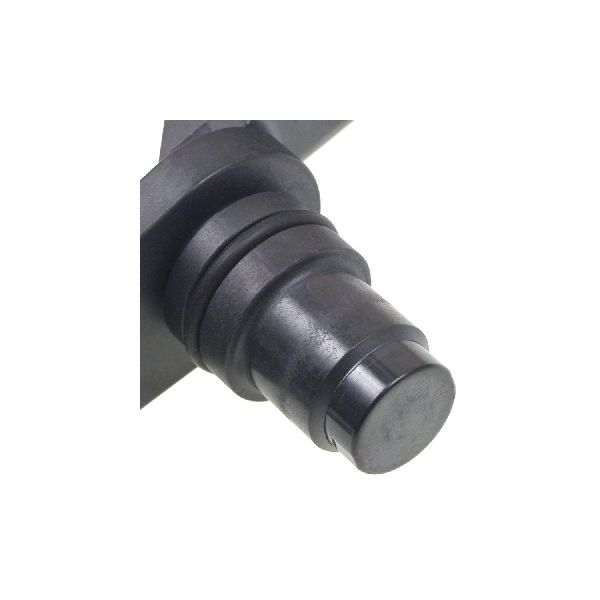
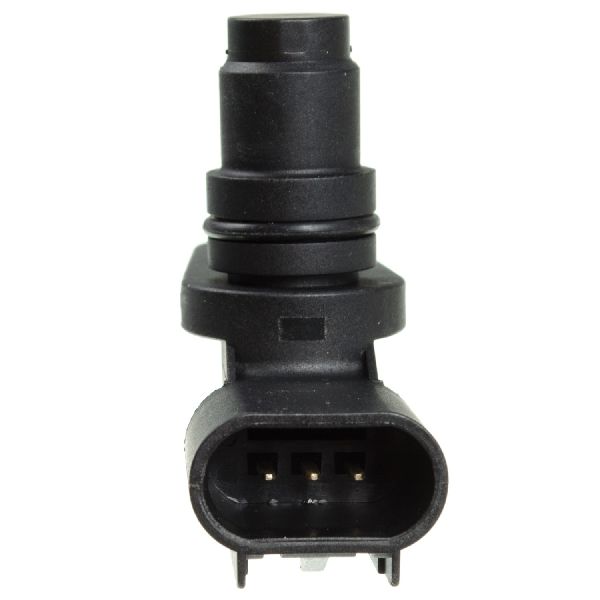
- Intake Camshaft Position Actuator Solenoid
(OEM #12655420 (Superseded by 12679099))— This is the most common failure point for code P0012 on this engine. It gets clogged with oil sludge or fails electrically.
Trusted brands: ACDelco (OEM), Delphi, Dorman (P/N 917-215)
OEM price range: $40-$60
Aftermarket price range: $25-$45 - Exhaust Camshaft Position Actuator Solenoid
(OEM #12655421 (Superseded by 12679100))— Since it operates under the same conditions as the intake solenoid, it's highly recommended to replace both at the same time to prevent future issues.
Trusted brands: ACDelco (OEM), Delphi, Dorman (P/N 917-216)
OEM price range: $40-$60
Aftermarket price range: $25-$45
Related Codes That Often Appear With This One
- P0010 — P0010 ('A' Camshaft Position Actuator Circuit) refers to an electrical circuit fault in the same intake camshaft actuator solenoid. They often appear together if the solenoid has an internal electrical failure or a connector issue.
- P0011 — P0011 ('A' Camshaft Position Timing - Over-Advanced) is the opposite of P0012 but points to the same component—the intake solenoid—being stuck in the wrong position.
- P0013 / P0014 — These codes are for the exhaust camshaft solenoid. It's common for both solenoids to fail around the same time due to shared oil conditions. Many owners and mechanics recommend replacing both as a pair to prevent a repeat failure.
Technical Service Bulletins (TSBs) & Recalls
- While no TSB is specific to P0012 on the HHR, GM TSB 10-06-04-016A was issued for similar Ecotec engines for lack of power with DTCs including P0012, though it was later canceled and directs technicians to standard diagnostic procedures.
- GM TSB 17-NA-098 for other models recommends replacing both VVT solenoids if any VVT codes (P0010, P0011, P0013, P0014) are present, which is a relevant best practice.
Platform-Specific Known Issues
- A primary symptom unique to this platform is the ECM commanding harsh transmission shifts when VVT-related codes like P0012 are present. Many owners first suspect a transmission problem before discovering the engine fault.
- The plastic engine cover must be removed to access the solenoids, which requires removing a hose clamp and disconnecting the Mass Airflow Sensor.
Mechanic-Grade Diagnostic Values
- VVT Solenoid Resistance — expected: 8 to 12 Ohms. Failure: A reading of infinite resistance (open circuit), very high resistance (e.g., megaohms), or a value outside the 8-12 Ohm range indicates a failed solenoid. Wiggling the connector pins while testing can reveal intermittent internal connection issues.
- VVT Solenoid Control Signal — expected: Pulse Width Modulated (PWM) 12-volt signal from the ECM.. Failure: Absence of a PWM signal when commanding the solenoid with a scan tool points to a wiring or ECM issue, not a solenoid failure.
- Solenoid Retaining Bolt Torque — expected: 89 inch-pounds (10 Nm). Failure: N/A - This is an installation specification.
Scan Tool Commands That Help
- Tech2 / GDS2 (or equivalent professional scanner): Camshaft Position Actuator Control — This bidirectional control allows a technician to command the intake and exhaust solenoids to a specific duty cycle (e.g., 25%) while monitoring the desired vs. actual camshaft angle parameters. If the ECM commands a change and the actual angle doesn't respond, it confirms a fault in the hydraulic/mechanical part of the system (solenoid, phaser, oil pressure). If the solenoid clicks but the angle doesn't change, the solenoid is likely clogged or the phaser is stuck.
Wiring & Ground Locations
- G105 — Left front of the engine block.. This is a primary engine block ground. A poor connection here can cause erratic behavior in various engine sensors and actuators that use the block as a ground path.
- G107 — On the front left corner of the transmission.. This ground is for the transmission and is also part of the engine grounding scheme. While less direct, poor grounding here can introduce electrical noise that may affect ECM calculations.
- ECM/TCM Connectors — The Engine Control Module (ECM) is on the left side of the engine compartment, in front of the underhood fuse block.. The signal for the VVT solenoid originates here. The two pins on the solenoid connector are the High Control circuit and the Low Reference circuit, both running directly to the ECM. Damage to these pins or wires at the ECM connector can mimic a failed solenoid.
Real Owner Repair Stories
- chevyhhr.net forum user (2009 Chevrolet HHR 2.0L) — Check Engine Light with codes P0010 and P0011.
❌ Tried (didn't work) Initially replaced the camshaft position SENSOR based on advice from an auto parts store.
✅ What actually fixed it Replacing the correct part: the intake camshaft actuator SOLENOID. The user confirmed this resolved the codes and the car ran much better. - NHTSA ODI #11615506 — A report for a similar GM Ecotec engine noted a yellow warning light with codes P0012 and P0017. In this instance, a mechanic inspected the engine and found that the timing chain kit and oil pump required replacement to resolve the issue.
OEM Part Supersession History
12655420→12679099— Standard part revision and improvement by the manufacturer.
Heads up: The new part number is a direct replacement for the old one.12655421→12679100— Standard part revision and improvement by the manufacturer.
Heads up: The new part number is a direct replacement for the old one.
Model Year Variations Within This Range
- 2009-2011: For the 2009 model year, the 2.2L L61 engine was updated to include Variable Valve Timing (VVT), making it susceptible to this code. Prior to 2009, only the 2.4L LE5 engine in the HHR had VVT. The 2.2L also gained FlexFuel (E85) capability in 2009.
- 2007-2008: The 2.2L L61 engine received significant internal upgrades in 2007, including a stronger Gen II block and a switch to coil-on-plug ignition, but did not get VVT until 2009.
Diagnostic Flowchart
Other Known Issues on This Vehicle
Issues unrelated to this code that are worth knowing about as an owner of this generation:
- Electric Power Steering (EPS) Motor Failure 🔴 High — Very common. Can occur at any mileage, sometimes intermittently. Subject to a major recall. (Ref: NHTSA Recall 14V153000; GM Recall #N140115.)
- Ignition Switch Failure 🔴 High — Extremely common. The key can be removed while not in 'Off' or the switch can move out of the 'Run' position, disabling the engine and airbags. Subject of a major recall. (Ref: NHTSA Recalls 14V047000, 14V171000; GM Recall #14063.)
- Front Lower Control Arm Bushing Wear 🟠 Medium — Commonly occurs between 60,000 and 100,000 miles. Causes clunking noises from the front suspension, poor alignment, and uneven tire wear.
- Transmission Control Module (TCM) Malfunction/Bad Ground 🟠 Medium — Reported by many owners, can cause a loss of power steering, no speedometer reading, and the transmission failing to shift. Often caused by a poor ground connection to the TCM.
- EVAP System Faults (Gas Cap) 🟡 Low — A frequent cause for a Check Engine Light is a worn or loose gas cap seal, leading to EVAP-related codes.
Used vs. New Parts: Buying Guide for This Vehicle
When a used part is the smart pick: A used VVT solenoid is generally not recommended. The part is inexpensive new, and a used part carries a high risk of being clogged or having limited remaining life. The labor to replace it, while minimal, makes it impractical to risk using a used part.
Donor-vehicle mileage cap: roughly under 40000 miles for the part to have meaningful remaining life.
What to inspect on the donor part:
- If considering a used part, visually inspect the mesh screens for any tears, debris, or heavy sludge.
- Test the resistance with a multimeter before purchase; it must be within the 8-12 Ohm specification.
- Ask for the donor vehicle's history; a part from a vehicle with regular oil changes is preferable.
OEM-only on this vehicle (don't cheap out):
- While not strictly OEM-only, using a reputable brand for the VVT solenoids is critical. Cheap, no-name parts from online marketplaces are a common source of immediate or premature failure.
Aftermarket brands forum-validated for this vehicle:
- ACDelco (OEM)
- Delphi (Often the OEM supplier)
- Dorman
Brands owners have reported issues with on this vehicle:
- Unbranded, generic solenoids from marketplaces like eBay or Amazon often have poor quality control and are a frequent cause of repeat failures.
Real Owner Stories
Aggregated from forums and TSBs cited above. Mileages and costs reflect what owners reported in those sources.
2007 Chevy HHR 2.4L Ecotec
Symptoms: The owner experienced harsh shifting from the automatic transmission, which served as the primary motivator for the repair.
What fixed it: Replacement of both the Intake and Exhaust Camshaft Position Actuator Solenoids.
Source hint: YouTube (Sean the Shred) video titled 'Replacing Intake & Exhaust Solenoids - 2.4 Ecotec - '07 Chevy HHR'
2006-2011 Chevy HHR (General) — ~100000 miles
Symptoms: Rattling noise from the engine on startup lasting a few seconds, along with timing codes.
What fixed it: Replacement of the timing chain, tensioners, and guides due to a stretched chain.
Source hint: Article Context - Common Causes (Stretched Timing Chain)
Related OBD-II Codes
Frequently Asked Questions
Why is my HHR's automatic transmission shifting so harshly when the Check Engine Light is on for P0012?
Does GM TSB 10-06-04-016A provide a specific fix for my HHR's P0012 code?
Which solenoid do I need to replace for code P0012, and where is it located?
Can I use any engine oil to clear this code on my 2.4L LE5 engine?
Is there a way to confirm the intake solenoid is bad before I buy a new one?
Should I replace both solenoids even if I only have code P0012?
Helpful Videos
We Have This Part in Stock



The information in this article is provided for general reference and educational purposes only. Vehicle specifications, procedures, and part compatibility can vary by production date, trim level, and region. Always consult your vehicle's factory service manual and verify part numbers before purchasing or performing repairs. Safety-critical components such as airbags, seat belts, and braking systems should be installed by a qualified professional.
- Chevrolet HHR:
- 🎬 Helpful Videos
- 🛍️ Shop This Part
- What's Unique About the 2006-2011 Chevrolet HHR
- Symptoms You May Notice
- Most Likely Causes
- Rare But Worth Checking
- Diagnosis Steps
- Parts You'll Likely Need
- Related Codes That Often Appear With This One
- Technical Service Bulletins (TSBs) & Recalls
- Platform-Specific Known Issues
- Mechanic-Grade Diagnostic Values
- Scan Tool Commands That Help
- Wiring & Ground Locations
- Real Owner Repair Stories
- OEM Part Supersession History
- Model Year Variations Within This Range
- Diagnostic Flowchart
- Other Known Issues on This Vehicle
- Used vs. New Parts: Buying Guide for This Vehicle
- Real Owner Stories
- 2007 Chevy HHR 2.4L Ecotec
- 2006-2011 Chevy HHR (General) — ~100000 miles
- Related OBD-II Codes
- Frequently Asked Questions
- 🎟️ Get 5% Off