

P0011 on 2005-2010 Scion tC: Causes and Fixes for Camshaft Timing Over-Advanced
On a 2005-2010 Scion tC, code P0011 is most often caused by low or dirty engine oil, or a failing Variable Valve Timing (VVT) solenoid, also known as an Oil Control Valve (OCV). The 2AZ-FE engine is known for excessive oil consumption, which is a primary trigger for this code. Start by checking your oil; if it's clean and full, the VVT solenoid is the next likely culprit, costing around $40-$100 for the part.
- First, check your oil. Low or dirty oil is the #1 cause of P0011 on the Scion tC.
- If oil is okay, the next most likely culprit is the VVT solenoid (Oil Control Valve), which is relatively easy and inexpensive to replace.
- Don't forget the small, cheap VVT solenoid filter; it can get clogged and cause the same oil starvation issue.
- A rattling noise on cold starts points directly to a failing VVT cam gear, a more involved but well-documented repair for this engine.
What's Unique About the 2005-2010 Scion tC
The 2AZ-FE engine in the first-generation Scion tC is known for significant oil consumption issues, which can directly lead to VVT-related codes like P0011. Toyota issued Technical Service Bulletin T-SB-0094-11 for 2007-2010 Scion tC models (among others) acknowledging that defective piston assemblies could cause excessive oil use. The VVT system is highly dependent on clean oil and consistent oil pressure to function correctly. Therefore, any oil-related problem, from low levels to sludgy oil, can starve the VVT components and cause them to malfunction, making diligent oil level checks and maintenance particularly critical on this platform.
Symptoms You May Notice
- Check Engine Light is on
- Rough or low idle
- Engine stalling
- Difficulty starting the engine
- Reduced engine power and poor acceleration
- Decreased fuel economy
- Rattling or tapping noise from the engine, especially on startup.
- Replacing the camshaft position sensor immediately. While it's part of the system, it's more likely to be an oil flow or mechanical issue (solenoid, filter, gear) than a failed sensor for this specific code.
Most Likely Causes
- Low or Dirty Engine Oil 🔴 High Probability The 2AZ-FE engine is subject to TSB T-SB-0094-11 for excessive oil consumption due to faulty piston design, making low oil a constant risk. The VVT system is hydraulic and highly sensitive to oil level and quality.
How to confirm: Check the engine oil dipstick for level and inspect the oil's condition. If it's low, top it off. If it's dark, gritty, or sludgy, it needs to be changed immediately.
Typical fix: Perform an oil and filter change using the manufacturer-recommended oil viscosity (5W-20 or 5W-30). Monitor oil levels frequently (e.g., every gas fill-up) due to the engine's known consumption issue.
Est. part cost: $30-$70 - Faulty VVT Solenoid (Oil Control Valve - OCV) 🔴 High Probability The solenoid can get clogged with sludge from old or low oil, or simply fail electronically over time. It is a very common failure point for P0011.
How to confirm: You can test the solenoid's resistance with a multimeter; it should be between 6.9 and 7.9 Ohms at 20°C (68°F). A more definitive test is to remove it, clean it, and apply 12V power to it and listen for a click, indicating it's actuating.
Typical fix: Replace the VVT solenoid/Oil Control Valve. Many owners attempt cleaning first, but replacement is often the permanent fix.
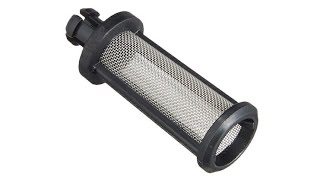
Est. part cost: $40-$150 - Clogged VVT/OCV Filter Screen 🟡 Medium Probability A small, often overlooked filter screen protects the VVT solenoid from debris. If oil changes are neglected or the engine consumes oil and runs sludgy, this screen can become clogged, restricting oil flow to the entire VVT system.
How to confirm: The filter is located in the cylinder head, often near the alternator and below the OCV itself. It must be removed for visual inspection. If it's clogged with sludge or debris, it's a likely cause.
Typical fix: Remove and clean the filter screen with brake cleaner, or replace it with a new one. It is a cheap part and should be replaced or cleaned whenever the OCV is serviced. 🎬 Watch: How to locate and replace the OCV filter screen.
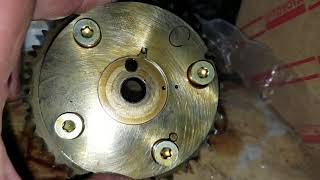
Est. part cost: $5-$15 - Failing VVT Actuator (Cam Gear) ⚪ Low Probability The lock pin mechanism inside the cam gear can wear out or get stuck, especially on higher mileage engines. This is often indicated by a distinct rattle on cold startups that lasts for 1-2 seconds.
How to confirm: This is a more involved diagnosis. A key symptom is a brief (1-2 second) rattle from the top of the engine on a cold start. As the issue progresses, the rattle may occur on warm starts as well. Confirming requires partial engine disassembly to inspect the gear itself.
Typical fix: Replace the intake camshaft timing gear assembly. This is a complex job that involves removing the valve cover and timing components.
Est. part cost: $150-$300
Rare But Worth Checking
- Stretched Timing Chain or Worn Guides: While less common than oil-related issues, a stretched timing chain can cause the physical cam timing to be off, triggering this code. This is usually accompanied by a persistent rattling noise from the timing cover area, not just at startup.
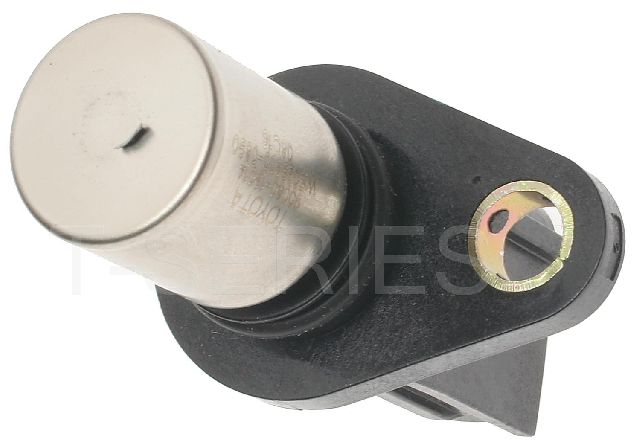
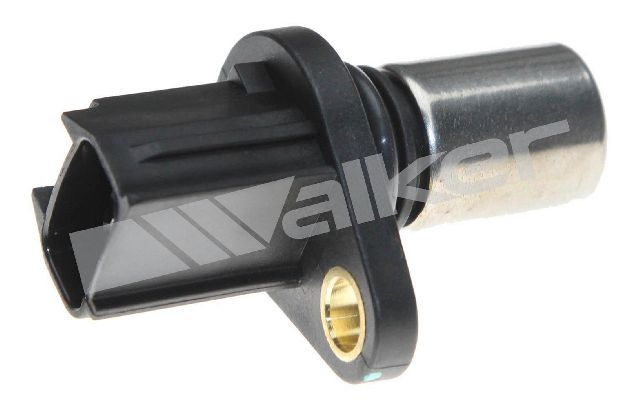
- Faulty Camshaft Position Sensor: It's rare for the sensor itself to cause an 'over-advanced' code without other codes present, but if it sends incorrect data to the ECM, it can lead to a misdiagnosis of the timing position. Usually, a failing sensor would trigger its own specific circuit code.
Diagnosis Steps
- Check Engine Oil: Verify the oil level is correct and the oil is clean. This is the most common and cheapest fix. Due to the 2AZ-FE's known oil consumption, this step is critical. If low or dirty, perform an oil and filter change.
- Inspect VVT Solenoid (OCV): Locate the VVT solenoid on the cylinder head. Check the wiring and connector for damage. Test its resistance (spec: 6.9-7.9 Ω). Remove it and check for sludge or debris. Apply 12V to see if it clicks.
- Inspect VVT Solenoid Filter: Locate and remove the small filter screen for the VVT system, which is near the OCV. Clean or replace it if it is clogged.
- Scan Tool Active Test: If you have an advanced scan tool, use the active test function to command the VVT solenoid on and off while monitoring engine RPM. A lack of change in RPM indicates a problem with the solenoid, oil flow, or cam gear.
- Inspect Cam Gear and Timing Chain: If all previous steps check out, the issue may be mechanical. This involves removing the valve cover to inspect the VVT cam gear for a stuck lock pin (often accompanied by a startup rattle) and checking the timing chain for excessive slack. This step is more advanced and may require a professional.
Parts You'll Likely Need
- VVT Solenoid / Oil Control Valve
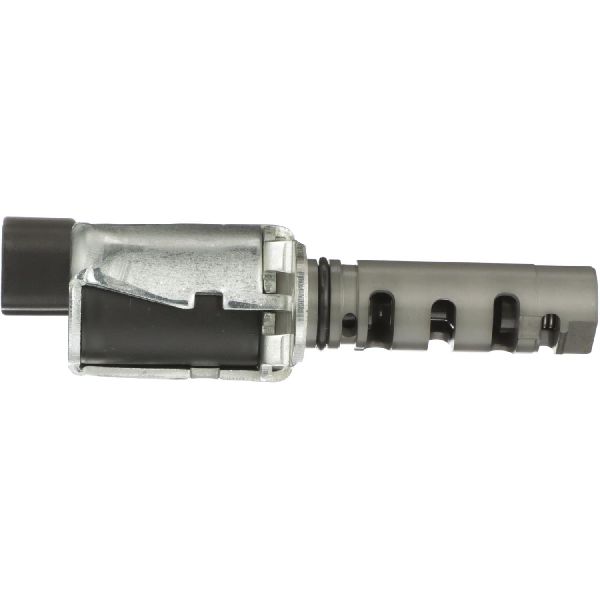
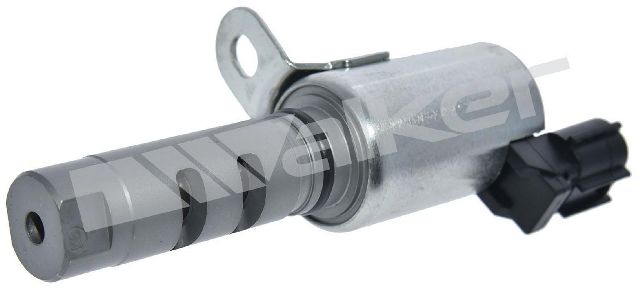
(OEM #15330-28020)— This solenoid controls the oil flow to the VVT actuator and is a very common failure point due to clogging or electronic failure.
Trusted brands: Denso (OEM Supplier), Aisin, Dorman
OEM price range: $90-$150
Aftermarket price range: $40-$100 - VVT Solenoid Filter / OCV Filter
(OEM #15678-21010)— This small screen can get clogged with engine sludge, starving the VVT system of oil pressure. It's a cheap part and a wise replacement when servicing the VVT solenoid.
Trusted brands: Genuine Toyota
OEM price range: $5-$15
Aftermarket price range: $5-$10 - Intake Camshaft Timing Gear Assembly
(OEM #13050-28021)— If the vehicle has a startup rattle, the lock pin mechanism in the original gear has likely failed. This is the ultimate fix for the notorious 'cold start rattle' that can also cause P0011.
Trusted brands: Genuine Toyota, INA
OEM price range: $200-$300
Aftermarket price range: $100-$180
Related Codes That Often Appear With This One
- P0012 — P0012 is for 'Timing Over-Retarded'. Seeing both codes intermittently, as reported by some owners, strongly points to a very sticky or erratically failing VVT solenoid or a severe oil flow problem.
- P0420 — P0420 (Catalyst System Efficiency Below Threshold) is common on the Scion tC. A ScionLife forum user reported having P0011 and P0420 simultaneously. While not directly related, poor engine performance and incorrect timing from a P0011 fault can lead to unburnt fuel, which can damage the catalytic converter over time and trigger a P0420 code.
Technical Service Bulletins (TSBs) & Recalls
- T-SB-0094-11: Issued August 11, 2011, and later revised. This TSB specifically addresses excessive oil consumption in 2007-2010 Scion tC models (and other Toyotas with the 2AZ-FE). It identifies the piston assembly as the cause and outlines the repair procedure, which involves replacing the pistons and rings. This is a critical document for understanding the root cause of many P0011 codes on this platform.
- S-SB-0010-13: While for a later 2AR-FE engine (2011-2012 tC), this TSB describes a brief engine knock/rattle at cold startup caused by the camshaft timing gear assembly, a problem that also commonly affects the 2AZ-FE in the same manner.
Platform-Specific Known Issues
- Excessive Oil Consumption (TSB T-SB-0094-11): Toyota issued a TSB for 2007-2010 Scion tC models with the 2AZ-FE engine for excessive oil consumption. The cause was identified as a faulty piston assembly design. This systemic issue is a primary cause of low oil levels, which directly triggers VVT-related codes like P0011.
- Cold Start Rattle (Failing VVT Gear): The 2AZ-FE engine is known for a 'cold start rattle' which is directly related to a failing VVT intake cam gear. A TSB (S-SB-0010-13) was issued for the later 2AR-FE engine for this exact issue, but the problem and symptom are identical in the 2AZ-FE: a brief 1-2 second rattle upon startup indicates the locking pin in the cam gear is failing.
- Head Bolt Thread Stripping: A notorious issue with the 2AZ-FE is the cylinder head bolts stripping the threads in the aluminum engine block, often leading to coolant leaks and overheating. While not a direct cause of P0011, a major repair for this issue involves removing the cylinder head, which can disturb timing components and potentially lead to timing codes if not reassembled perfectly.
Mechanic-Grade Diagnostic Values
- Camshaft Timing Oil Control Valve (OCV) Signal — expected: Pulse generation (waveform) when checked with an oscilloscope at idle.. Failure: A flat line or absent signal indicates a wiring or ECM driver issue.
- Camshaft Timing Oil Control Valve (OCV) ECM Pins — expected: Signal is measured between pins OC1+ (Pin 100 on connector B30) and OC1- (Pin 123 on connector B30).. Failure: Testing at these specific ECM pins helps isolate a wiring fault from an ECM fault.
- Camshaft Position Sensor (Intake) Signal — expected: Pulse generation (waveform) when checked with an oscilloscope while engine is cranking or running. Measured between pins G2+ and G2- at the ECM.. Failure: An absent or erratic waveform points to a failed sensor or wiring issue.
Hidden / Shadow Codes Worth Checking
- Monitor ID: $35, Test ID: $81: On some Toyota platforms, these Mode $06 identifiers correspond to the VVT system monitor, specifically tracking if the valve timing is stuck. Accessing this data with a capable scan tool can show if the system is on the verge of failing its self-test, even before a P0011 code is permanently set. (see via A professional-grade scan tool with Mode $06 diagnostic capabilities. The specific IDs can vary by model year and ECU calibration, so consulting the vehicle's service manual for the exact TID/CID is recommended.)
Scan Tool Commands That Help
- Toyota Techstream (or equivalent professional scan tool): Active Test: 'Control the VVT System' or 'VVT CTRL B1' — This is a critical diagnostic step after verifying oil level. With the engine idling, commanding the VVT solenoid 'ON' should cause the engine to run rough or stall. If there is no change in engine operation, it confirms a fault in the OCV, the oil passages, or the VVT actuator itself.
Wiring & Ground Locations
- Engine Ground (EC) — On the left side of the cylinder head. A wiring diagram for a 2008 tC shows a primary ground point on the engine block near the intake side.. The ECM and its sensors, including the camshaft position sensor and OCV, rely on a solid engine ground. A poor ground connection can introduce electrical noise or voltage drops, leading to erratic sensor readings and incorrect operation of the VVT system. Some owners have noted generally poor grounding on the tC and added supplementary grounds to solve electrical issues.
- OCV Connector (E6) — The 2-pin connector on the Oil Control Valve solenoid itself, located on the front of the cylinder head.. This is the primary point for testing voltage supply to the solenoid and for performing a direct 12V actuation test. The pins connect to the ECM at terminals OC1+ and OC1-.
Real Owner Repair Stories
- Hyundai Forum user 'cnfsd' (Hyundai with P0011 (Note: Different vehicle, but identical VVT system principle and a common 2AZ-FE failure pattern)) — Persistent P0011 Check Engine Light that would not clear, preventing state inspection. Engine had previously overheated, causing oil to become 'gunky'.
❌ Tried (didn't work) Replacing the timing belt., Replacing the camshaft position sensor., Multiple oil changes., A $500+ visit to the dealer, who could not find the cause and suggested replacing the oil pump next.
✅ What actually fixed it The user found a diagram showing a small, hidden OCV filter screen. After removing the 14mm bolt holding it, they found the screen was completely clogged with sludge from the previous overheating incident. Cleaning this filter finally resolved the P0011 code. - Scion Owner Report (NHTSA ODI #11235071) — An owner reported that as soon as the engine warms up, it sounds like it is being hit by a hammer and throws a P0011 code for advanced cam timing. The report noted oil pressure was 5PSI at idle and 40PSI at 5000RPM.
OEM Part Supersession History
13050-28020, 13050-0H010, 13050-0H030→13050-28021— Part has been updated by the manufacturer for improved reliability, likely to address the locking pin wear that causes the common startup rattle.
Heads up: For the 2005-2010 Scion tC, 13050-28021 is the correct replacement VVT gear assembly. An earlier part, 13050-28012, was used on pre-2005 2AZ-FE engines and should not be used.
Model Year Variations Within This Range
- 2007-2010: These model years are specifically covered under Toyota's Technical Service Bulletin (TSB) T-SB-0094-11 for excessive oil consumption due to piston design. This makes them significantly more prone to oil-level-induced P0011 codes than the 2005-2006 models.
- 2007-2008: For the 2007 model year, the 2AZ-FE engine received a slight update, including a higher compression ratio and revised ECU tuning, which resulted in a minor horsepower increase. While this doesn't directly change the P0011 diagnosis, it's a known engine variation within the generation.
Diagnostic Flowchart
Real Owner Stories
Aggregated from forums and TSBs cited above. Mileages and costs reflect what owners reported in those sources.
Scion tC 2AZ-FE
Symptoms: Triggered a P0011 code accompanied by a tapping noise coming from the head/cam area of the engine.
What fixed it: Owner performed compression and leak-down tests, and tested the OCV resistance (which measured slightly out of spec at 8 Ohms). The diagnostic path led to inspecting the OCV filter and VVT-i cam gear.
Source hint: ScionLife.com thread titled 'anyone experience p0011 trouble code??need help!!!'
2005 Scion tC 2AZ-FE
Symptoms: Check engine light illuminated with both P0011 (over-advanced) and P0012 (over-retarded) codes appearing together.
What fixed it: The combination of codes pointed strongly to an oil flow or solenoid issue, prompting the owner to locate and service the Oil Control Valve (OCV).
Source hint: Reddit (r/SciontC) thread 'P0011 and P0012 DTC. Locatioon of Oil Control Valve?'
2011 Scion tC 2AR-FE
Symptoms: Engine developed a distinct VVT gear rattle that initially happened on cold starts but progressively worsened to occur on warm starts as well.
What fixed it: Replaced the rattling VVTi intake gear assembly, though community members advised checking the cheaper and simpler OCV first before tackling the complex gear replacement.
Source hint: Reddit (r/SciontC) thread 'Swapping out the rattling VVTi intake gear on a 2011 tC'
Related OBD-II Codes
Frequently Asked Questions
Does TSB T-SB-0094-11 apply to my Scion tC, and how does it relate to the P0011 code?
I hear a 1-2 second rattle on cold starts. Is this related to my P0011 code?
What should the resistance be when testing the VVT Solenoid (OCV) on my 2.4L 2AZ-FE?
Where is the VVT/OCV filter screen located on the 2AZ-FE engine?
Can the known head bolt stripping issue on the 2AZ-FE cause a P0011 code?
I have a 2005 tC and my scanner shows both P0011 and P0012 codes. What does this mean?
Helpful Videos
We Have This Part in Stock


The information in this article is provided for general reference and educational purposes only. Vehicle specifications, procedures, and part compatibility can vary by production date, trim level, and region. Always consult your vehicle's factory service manual and verify part numbers before purchasing or performing repairs. Safety-critical components such as airbags, seat belts, and braking systems should be installed by a qualified professional.
- Scion tC:
- 🎬 Helpful Videos
- 🛍️ Shop This Part
- What's Unique About the 2005-2010 Scion tC
- Symptoms You May Notice
- Most Likely Causes
- Rare But Worth Checking
- Diagnosis Steps
- Parts You'll Likely Need
- Related Codes That Often Appear With This One
- Technical Service Bulletins (TSBs) & Recalls
- Platform-Specific Known Issues
- Mechanic-Grade Diagnostic Values
- Hidden / Shadow Codes Worth Checking
- Scan Tool Commands That Help
- Wiring & Ground Locations
- Real Owner Repair Stories
- OEM Part Supersession History
- Model Year Variations Within This Range
- Diagnostic Flowchart
- Real Owner Stories
- Scion tC 2AZ-FE
- 2005 Scion tC 2AZ-FE
- 2011 Scion tC 2AR-FE
- Related OBD-II Codes
- Frequently Asked Questions
- 🎟️ Get 5% Off