

P0011 on 2006-2010 Pontiac G6 2.4L: Causes, Symptoms, and Fixes for Over-Advanced Cam Timing
On a 2006-2010 Pontiac G6 2.4L, code P0011 is almost always caused by low/dirty engine oil or a faulty intake camshaft position actuator solenoid. First, check your oil level and quality. If the oil is fine, replacing the intake VVT solenoid (part #12655420) is the most likely fix, costing about $25-$60 for the part and being a very simple DIY job. It is highly recommended to replace both solenoids at once.
- First, check your oil. Low or dirty 5W-30 oil is the #1 cause of P0011 on this car.
- The most likely failed part is the intake camshaft actuator solenoid (VVT solenoid), which is an easy and affordable DIY replacement on the top of the engine.
- A simple way to confirm a bad solenoid is to swap it with the exhaust solenoid; if the code changes to P0014, the solenoid is faulty.
- If you hear a rattling noise from the engine when you start it, the problem could be a more serious timing chain issue that needs professional diagnosis.
- When replacing one solenoid, it's best practice to replace both the intake and exhaust solenoids as a pair.
What's Unique About the 2006-2010 Pontiac G6
The 2.4L LE5 Ecotec engine in the Pontiac G6 is well-known for having sensitive Variable Valve Timing (VVT) components. These parts, specifically the camshaft actuator solenoids, are highly susceptible to failure from oil contamination or low oil levels. The engine itself can also be prone to some oil consumption, which can starve the VVT system of the oil pressure it needs to operate, making P0011 a very common code for G6 owners. A key design feature of this engine is that the intake and exhaust solenoids are interchangeable, allowing for a simple diagnostic swap. While a stretched timing chain can be the cause, it's far more likely on this engine that the issue is a simple and inexpensive solenoid or an oil-related problem.
Symptoms You May Notice
- Check Engine Light is on
- Rough or unstable idle
- Poor acceleration or engine hesitation
- Reduced fuel economy
- Engine stalling at low speeds or when stopping
- Rattling noise from the engine for a few seconds on cold startup
- Replacing the camshaft position SENSOR. The sensor reads the camshaft's position, but the solenoid/actuator is what controls it. P0011 is a performance code, usually caused by the mechanical control (solenoid) or oil pressure, not the sensor itself.
Most Likely Causes
- Low or Dirty Engine Oil 🔴 High Probability The 2.4L Ecotec engine can consume oil between changes, and the VVT system is extremely sensitive to both oil level and cleanliness. Sludge from infrequent oil changes can clog the tiny screens on the actuator solenoids, starving them of pressure. Using the wrong oil viscosity can also trigger this code.
How to confirm: Check the engine oil dipstick. If the level is low or the oil appears very dark, sludgy, or is past its change interval, this is the primary suspect. This step should always be performed first.
Typical fix: Perform an engine oil and filter change using the correct 5W-30 full synthetic oil that meets GM's dexos1 specification. Clear the code and see if it returns. Many owners report this alone solves the problem.
Est. part cost: $30-$70 - Faulty Intake Camshaft Position Actuator Solenoid 🔴 High Probability This is a very common failure item on the 2.4L Ecotec engine family due to clogging from oil debris or simple electronic failure over time. They are known to fail as early as 40,000-50,000 miles.
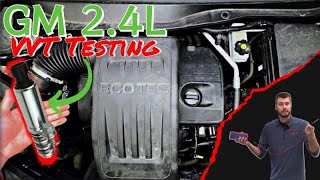
How to confirm: Swap the intake solenoid (front of engine, often a gray connector) with the exhaust solenoid (rear of engine, often a black connector). Clear the codes. If the code changes to P0014 (exhaust camshaft), the solenoid is definitively bad. You can also test the solenoid's resistance with a multimeter; a good one should read between 8-13 ohms. 🎬 Watch: How to test and replace your VVT solenoids.
Typical fix: Replace the intake camshaft position actuator solenoid. It is highly recommended to replace both the intake and exhaust solenoids at the same time as a pair, as they are subjected to the same conditions.
Est. part cost: $25-$60 - Stretched Timing Chain or Faulty Tensioner ⚪ Low Probability While less common than solenoids, Ecotec engines can experience timing chain stretch, particularly after 100,000 miles or with a history of poor oil maintenance. Early LE5 engines had tensioner designs that could be slow to build oil pressure at startup, increasing wear.
How to confirm: A key symptom is a distinct rattling noise from the side of the engine for 2-5 seconds on a cold startup. 🎬 See an example of what Ecotec timing chain rattle sounds like. This code may also appear with P0016 or P0017 if the chain has stretched. Confirmation requires checking camshaft deviation angles with an advanced scan tool or physically inspecting the chain and guides.
Typical fix: Replace the timing chain, tensioners, and guides. This is a significant, labor-intensive repair often requiring professional service.
Est. part cost: $200-$400
Rare But Worth Checking
- Failed Camshaft Phaser (Actuator Gear): Mentioned in GM TSB PIP4716F, the gear itself can fail to park correctly, causing a startup rattle and timing codes. If solenoids and oil are good but a rattle persists, this is the next suspect.
- Clogged Camshaft Position Actuator Solenoid Screens: Sometimes the solenoid itself is functional, but the fine mesh screens are clogged with debris. You can attempt to remove and clean the solenoid with brake cleaner, but given the low cost and high failure rate, replacement is often more reliable and recommended.
Diagnosis Steps
- Check Engine Oil: Verify the oil level is full and the oil is clean. If it's low or past its change interval, perform an oil and filter change with 5W-30 Dexos-rated oil, clear the code, and drive the vehicle to see if the light returns.
- Scan for Other Codes: Note any other codes present, such as P0010, P0014, or P0016, as they provide critical diagnostic clues.
- Inspect Solenoid Wiring: Check the electrical connector and wiring for the intake VVT solenoid (top of the engine, typically with a gray connector) for damage, corrosion, or oil contamination.
- Swap the VVT Solenoids: Remove the 10mm bolts holding the intake and exhaust VVT solenoids. Swap their positions. The intake is at the front, exhaust at the rear. They are interchangeable for diagnostics.
- Analyze Results: If the trouble code changes to P0014 (Exhaust Camshaft Position), the original intake solenoid is confirmed to be faulty and must be replaced.
- Listen for Noise: If the code returns and you hear a distinct rattle on startup, the issue is likely more serious, pointing towards a bad camshaft phaser or a stretched timing chain, which requires further mechanical inspection.
Parts You'll Likely Need
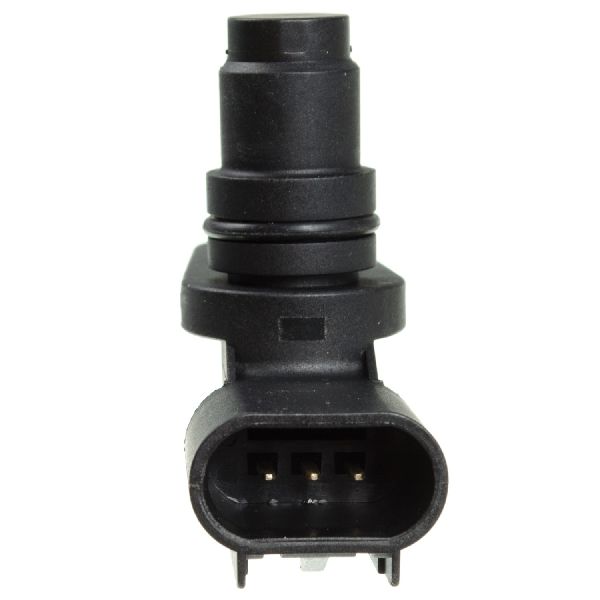
- Intake Camshaft Position Actuator Solenoid
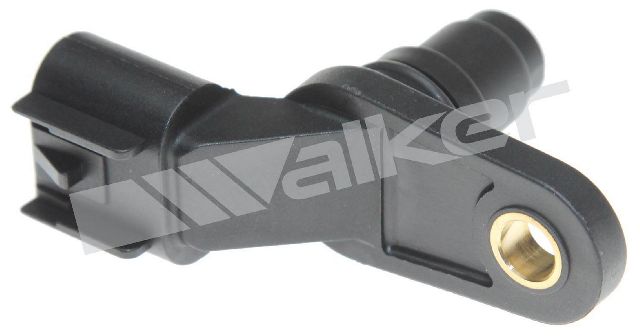
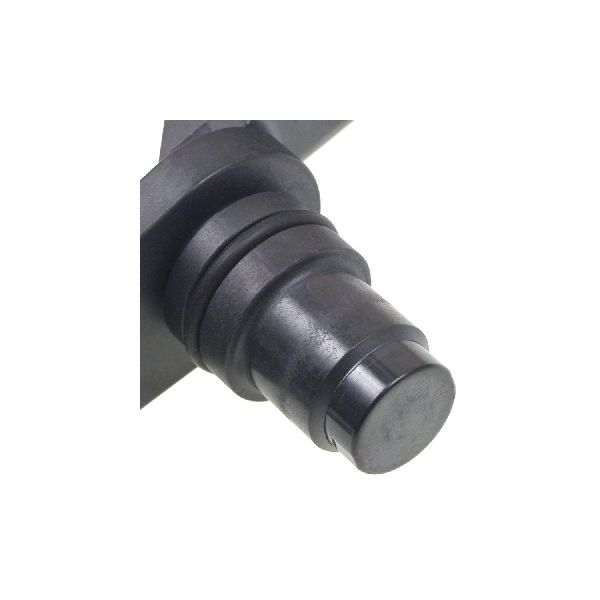
(OEM #12655420)— This is the most common part to fail and cause P0011 on the 2.4L Ecotec engine. It gets clogged with oil debris or fails electronically. Superseded GM part numbers include 12628347, 12646783, and 12679099.
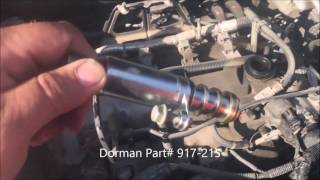
Trusted brands: ACDelco (OEM), Delphi, Dorman (P/N 917-215) 🎬 Watch this walkthrough of the intake camshaft actuator replacement.
OEM price range: $40-$60
Aftermarket price range: $25-$45 - Exhaust Camshaft Position Actuator Solenoid
(OEM #12655421)— It is highly recommended to replace the solenoids in pairs, as they have been subjected to the same operating conditions and the other is likely to fail soon. Superseded GM part numbers include 12628348 and 12646784.
Trusted brands: ACDelco (OEM), Delphi, Dorman (P/N 917-216)
OEM price range: $40-$60
Aftermarket price range: $25-$45
Related Codes That Often Appear With This One
- P0010 — This is an electrical circuit code for the same intake camshaft actuator solenoid. Seeing both P0010 and P0011 together strongly points to a failed solenoid or a problem with its wiring/connector.
- P0014 — This is the equivalent code for the exhaust camshaft. If both P0011 and P0014 appear together, it suggests a systemic problem like low/dirty oil or a timing chain issue affecting both cams. If it appears after swapping the intake and exhaust solenoids, it confirms the original intake solenoid was faulty.
- P0016 — This code indicates a correlation problem between the crankshaft and the intake camshaft. It often appears with P0011 if the timing chain has stretched or jumped a tooth, representing a more serious mechanical timing issue.
Technical Service Bulletins (TSBs) & Recalls
- PIP4716F / PIP4714: Notes that a short, sharp rattle at startup accompanied by codes P0011, P0014, P0016, or P0017 may be caused by cam actuators (phasers) not parking correctly, requiring replacement.
- PIP4469F: Addresses intermittent P0011 codes on 2009 models (including G6, Cobalt, HHR) that could be caused by engine machining debris from the factory clogging VVT components.
- PIP4549B: Relevant for general engine diagnostics, this TSB points out that the engine wiring harness can chafe on the EVAP solenoid bracket, causing shorts for critical sensors like the crankshaft position sensor, which can create confusing diagnostic situations.
- TSB Bulletin #PIP5064C: Specifically addresses the V6 engine variant where rough running, idle surge, or misfires may be accompanied by P0011, P0016, or P0300. This bulletin instructs technicians to verify actual engine oil pressure as part of the diagnostic process.
Platform-Specific Known Issues
- The 2.4L LE5 engine is known for oil consumption, which can lead to low oil levels that trigger VVT codes like P0011. It is critical to check oil levels regularly between changes.
- Some 2009 model year engines were subject to TSB PIP4469F, which noted that machining debris from the manufacturing process could clog VVT components and cause intermittent timing codes.
- A widely documented issue covered by recalls is the failure of the electric power steering system, which can result in a sudden loss of steering assist.
Mechanic-Grade Diagnostic Values
- Camshaft Position Actuator Solenoid Resistance — expected: 8 to 13 Ohms. Failure: A reading outside this range, an open circuit (infinite resistance), or a fluctuating reading when wiggling the connector indicates a faulty solenoid.
- Scan Tool: Desired vs. Actual Camshaft Position Angle — expected: The 'Actual' angle PID should closely track the 'Desired' angle PID within a few degrees as engine RPM changes.. Failure: A persistent difference of more than 6 degrees, or an 'Actual' value that is stuck and unresponsive, points to a problem with the solenoid, phaser, or oil flow.
- VVT Solenoid Connector Voltage (Key On, Engine Off) — expected: Battery voltage should be present at the high control circuit of the solenoid connector.. Failure: Less than battery voltage suggests an open or short in the wiring harness or a fault in the ECM.
Scan Tool Commands That Help
- GM Tech2 / GDS2 (or equivalent): Camshaft Position Actuator Solenoid Control — This bidirectional test allows a technician to manually command the solenoid to a specific percentage (e.g., 10-25%) while the engine is running. If the 'Desired' and 'Actual' cam angle PIDs change accordingly and the engine idle quality changes or stumbles, it confirms the ECM, wiring, and solenoid are electrically functional, pointing the diagnosis toward a mechanical issue like a stuck phaser or oil blockage.
Wiring & Ground Locations
- G105 — On the left rear side of the engine compartment, on an engine-to-transmission stud, below the upper coolant hose.. This is a critical ground point shared by the Engine Control Module (ECM) and Transmission Control Module (TCM). A poor connection here can cause erratic behavior, incorrect sensor readings, and communication issues that could mimic component failure.
- G106 — On the left rear of the engine for the 2.4L LE5.. Provides a ground path for various engine components. While not the primary ECM ground, ensuring it is clean and tight is part of good diagnostic practice to eliminate electrical variables.
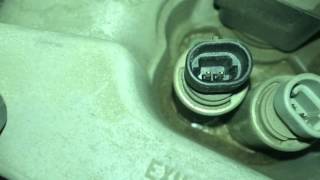
- VVT Solenoid Connectors — On top of the valve cover. The intake solenoid is towards the front of the engine (radiator side) and typically has a gray connector. The exhaust solenoid is towards the rear (firewall side) and typically has a black connector.. These connectors are the primary interface for the solenoids. They are exposed to significant heat and vibration, which can lead to brittle wiring, loose pins, or oil contamination, causing intermittent circuit codes (P0010) or performance codes (P0011).
Real Owner Repair Stories
- LS1TECH forum user 'GaryCa' (2006 Pontiac G6 GTP 3.9L (Note: While a different engine, the code's cause and effect are analogous and relevant)) — P0011 code, hard shifting, and random misfires.
❌ Tried (didn't work) Initial diagnosis and forum discussion.
✅ What actually fixed it Replaced the 'Cam positioner actuator magnet' (the VVT solenoid for that engine) and performed a transmission fluid and filter change. This resolved the P0011 code and the shifting issues. - Reddit user experience (Pontiac G6 (2.4L implied by commonality)) — Check Engine Light with P0011 and rough idle.
❌ Tried (didn't work) Performing an oil and filter change did not resolve the issue.
✅ What actually fixed it The owner swapped the intake and exhaust VVT solenoids. The code changed to P0014, confirming the original intake solenoid was faulty. Replacing the bad solenoid fixed the problem.
OEM Part Supersession History
12628347→12655420, then 12679099— Design improvements for reliability and performance.
Heads up: All listed part numbers for the intake solenoid are generally interchangeable for this application.12628348→12655421, then 12679100— Design improvements for reliability and performance.
Heads up: All listed part numbers for the exhaust solenoid are generally interchangeable for this application.
Model Year Variations Within This Range
- Mid-2007 onward: In mid-2007, the 2.4L LE5 engine switched from GKN forged connecting rods to stronger C70 forged rods. This does not directly affect the P0011 code but is a notable internal engine change.
- 2009+: Later model year Ecotec engines (like the LE9, which is the E85 version of the LE5) used an updated E37 engine controller. While most G6s used the earlier ECM, this change is relevant when sourcing used parts or diagnosing wiring on late-model vehicles.
Diagnostic Flowchart
Other Known Issues on This Vehicle
Issues unrelated to this code that are worth knowing about as an owner of this generation:
- Sudden Loss of Electric Power Steering (EPS) 🔴 High — Very common. Affects a wide range of model years within this generation. (Ref: NHTSA Recall #14V153000 (GM #N140115). Multiple recalls and warranty extensions were issued.)
- 4T45-E Automatic Transmission Failure (Shift Solenoids) 🟠 Medium — Common, especially at higher mileage (130k-180k miles). Often presents as harsh shifting, getting stuck in gear (limp mode), or no 1st/4th gear. (Ref: No specific recall, but a widely documented failure of the 1-2 and 2-3 shift solenoids.)
- Excessive Oil Consumption 🟠 Medium — A known characteristic of the 2.4L Ecotec engine family, often becoming more noticeable with age. Can lead to other issues like VVT codes or timing chain wear if not monitored. (Ref: While later Ecotec engines had special coverage for this, the LE5 was less formally addressed but is a known issue.)
- Chafed Crankshaft Position Sensor Wiring 🟡 Low — Occurs intermittently. Can cause a no-start or stalling condition, often misdiagnosed as a bad sensor. (Ref: TSB #PIP4549B notes that the engine harness can rub against the EVAP purge solenoid bracket, causing a short.)
- Failing Transmission Control Module (TCM) 🟠 Medium — A common cause for erratic shifting, limp mode, and various transmission codes (e.g., P0700, P0750). (Ref: No recall, but a frequent point of failure often caused by heat and voltage spikes in the engine bay.)
Used vs. New Parts: Buying Guide for This Vehicle
When a used part is the smart pick: Given the extremely high failure rate and low cost of new aftermarket VVT solenoids, buying used is generally not recommended. The risk of getting a part that has already failed or is near the end of its service life is very high. A used part only makes sense in an emergency to get the vehicle running for a very short time.
Donor-vehicle mileage cap: roughly under 40000 miles for the part to have meaningful remaining life.
What to inspect on the donor part:
- Ensure the screens on the solenoid are perfectly clean, intact, and not torn.
- Check the connector pins for any signs of corrosion or oil seepage.
- If possible, test the resistance with a multimeter before purchase; it must be between 8-13 ohms.
- Ask for the donor vehicle's history; avoid parts from cars with known sludge issues or infrequent oil changes.
OEM-only on this vehicle (don't cheap out):
- Engine Control Module (ECM) - Used ECMs will require dealership programming (VIN matching) to function, which can be costly and complex.
Aftermarket brands forum-validated for this vehicle:
- ACDelco (OEM)
- Delphi (Often the original equipment manufacturer)
- Dorman (Widely available with a generally positive reputation for this specific part)
Brands owners have reported issues with on this vehicle:
- No-name, unbranded solenoids from online marketplaces can be a gamble, with reports of out-of-box failures or short service life. While they may be cheap, they often do not last.
Real Owner Stories
Aggregated from forums and TSBs cited above. Mileages and costs reflect what owners reported in those sources.
2009 Saturn Aura 2.4L LE5
Symptoms: Owner received a $500 repair quote for P0010 and P0011 codes.
What fixed it: DIY replacement of the intake camshaft position actuator solenoid.
Cost: $25-$60
Source hint: Reddit r/Cartalk - '2009 Saturn Aura - P0010 and P0011 Engine Code'
2006-2010 Chevrolet Cobalt 2.4L LE5
Symptoms: Vehicle experienced both P0010 and P0011 codes; owner initially suspected battery voltage issues.
What fixed it: Replacement of the intake VVT solenoid.
Source hint: Cobalt SS Network - 'Codes P0010 & P0011 - VVT'
2009 Chevrolet Cobalt 2.4L LE5
Symptoms: The P0011 code persisted even after the intake solenoid was replaced.
What fixed it: Investigation into TSB PIP4469F regarding engine machining debris clogging VVT components.
Source hint: Cobalt SS Network - 'P0011 Camshaft problem!'
2006-2010 Pontiac G6 2.4L LE5
Symptoms: The P0011 code appeared immediately after an oil change.
What fixed it: Correcting the oil viscosity, as the VVT system is sensitive to incorrect oil types.
Source hint: Reddit r/MechanicAdvice - 'Just got an oil change and now car is throwing a P0011 code'
2006-2010 Pontiac G6 2.4L LE5 — ~110000 miles
Symptoms: Distinct rattling noise from the side of the engine for 2-5 seconds on cold startup.
What fixed it: Replacement of the timing chain, tensioners, and guides.
Cost: $200-$400
Source hint: Common Causes section - Stretched Timing Chain
Related OBD-II Codes
Frequently Asked Questions
My 2009 Pontiac G6 is throwing a P0011 code intermittently; is there a specific manufacturing issue for this year?
I hear a rattling noise for a few seconds when I start my G6 cold. Does this mean the solenoid is bad?
Can using the wrong oil in my 2.4L Ecotec trigger the P0011 code?
I have a P0011 code and my steering just went out; are these related?
How can I tell if the intake solenoid specifically is the problem on my G6?
Could a wiring problem cause a P0011 code on the LE5 engine?
Helpful Videos
We Have This Part in Stock



The information in this article is provided for general reference and educational purposes only. Vehicle specifications, procedures, and part compatibility can vary by production date, trim level, and region. Always consult your vehicle's factory service manual and verify part numbers before purchasing or performing repairs. Safety-critical components such as airbags, seat belts, and braking systems should be installed by a qualified professional.
- Pontiac G6:
- 🎬 Helpful Videos
- 🛍️ Shop This Part
- What's Unique About the 2006-2010 Pontiac G6
- Symptoms You May Notice
- Most Likely Causes
- Rare But Worth Checking
- Diagnosis Steps
- Parts You'll Likely Need
- Related Codes That Often Appear With This One
- Technical Service Bulletins (TSBs) & Recalls
- Platform-Specific Known Issues
- Mechanic-Grade Diagnostic Values
- Scan Tool Commands That Help
- Wiring & Ground Locations
- Real Owner Repair Stories
- OEM Part Supersession History
- Model Year Variations Within This Range
- Diagnostic Flowchart
- Other Known Issues on This Vehicle
- Used vs. New Parts: Buying Guide for This Vehicle
- Real Owner Stories
- 2009 Saturn Aura 2.4L LE5
- 2006-2010 Chevrolet Cobalt 2.4L LE5
- 2009 Chevrolet Cobalt 2.4L LE5
- 2006-2010 Pontiac G6 2.4L LE5
- 2006-2010 Pontiac G6 2.4L LE5 — ~110000 miles
- Related OBD-II Codes
- Frequently Asked Questions
- 🎟️ Get 5% Off