

P0011 on 2015-2017 Lincoln Navigator: Causes and Fixes for Over-Advanced Cam Timing
On a 2015-2017 Navigator, P0011 is most often caused by low or dirty engine oil, or a failing Bank 1 (passenger side) intake VCT solenoid. Start by checking the oil. If it's clean and full, the VCT solenoid is the next likely culprit, costing around $50-$120 for the part. A cold start rattle is a major red flag for a more serious timing chain issue.
- Always check your oil level and condition first; it's the simplest and most common cause for P0011. Use the specified 5W-30 oil.
- The Bank 1 (passenger side) intake VCT solenoid is the most likely part to have failed. Swapping it with the Bank 2 solenoid is a great diagnostic trick.
- A rattling noise on a cold start is a major red flag for a stretched timing chain or bad cam phasers, a known and expensive issue with this engine detailed in TSB 18-2305.
- Do not immediately assume a major timing chain failure. Diagnose the oil and solenoids first, especially if there is no startup rattle.
What's Unique About the 2015-2017 Lincoln Navigator
The first-generation 3.5L GTDI (EcoBoost) engine in this generation of Navigator is known for being sensitive to oil quality and maintenance. Many issues that trigger a P0011 code are directly related to oil flow and pressure. Furthermore, this engine family has a well-documented history of timing chain stretch and cam phaser issues, which can be a more severe cause for this code, especially on higher-mileage examples. While a simple solenoid is a common fix, the possibility of a stretched timing chain, indicated by a cold start rattle, is a known and significant concern for this specific platform.
Symptoms You May Notice
- Check Engine Light is on
- Rough or unstable idle
- Engine stalling, especially at low speeds or when coming to a stop
- Poor acceleration or hesitation
- Reduced fuel economy
- Rattling or ticking noise from the engine, especially on a cold start for 2-5 seconds
- Difficulty starting the engine
- Replacing the camshaft position sensor when the actual problem is a sticking VCT solenoid or oil issue.
- Assuming a major timing chain failure 🎬 Watch: Why you shouldn't replace parts before watching this diagnostic guide. without first diagnosing the simpler, more common causes like oil level/condition and the VCT solenoid. The absence of a cold-start rattle makes a timing chain issue less likely.
- Replacing only the timing chain without replacing the problematic cam phasers, leading to a return of the noise and codes.
Most Likely Causes
- Low or Dirty Engine Oil 🔴 High Probability The VCT system is hydraulic and extremely sensitive to oil pressure and cleanliness. Extended oil change intervals or using the wrong oil viscosity can cause sludge and blockages in the narrow passages of the VCT solenoids.
How to confirm: Check the oil level on the dipstick and examine the oil's color and consistency. If it is low, black, or sludgy, it needs to be changed. Ensure the correct oil viscosity is being used (5W-30).
Typical fix: Change the engine oil and filter using the manufacturer-specified grade (typically Motorcraft 5W-30 Synthetic Blend) and a quality filter like the Motorcraft FL-500S.
Est. part cost: $40-$80 - Failing VCT Solenoid (Bank 1 Intake) 🔴 High Probability Debris in the oil can cause the solenoid's internal spool valve to stick or clog the fine mesh screens, preventing it from correctly regulating oil flow to the cam phaser. This is a well-documented issue in Ford TSBs and SSMs (Special Service Messages). Manufacturer bulletin SSM 48423 notes that small debris can cause the VCT solenoid to stick, leading to P0011 and related timing codes.
How to confirm: A professional scan tool can command the solenoid to activate and monitor the camshaft position response. A common DIY method is to swap the Bank 1 intake solenoid with the Bank 2 intake solenoid and see if the code follows (changes to P0021).
Typical fix: Replace the Bank 1 (passenger side) intake VCT solenoid. It is often recommended to replace both the intake and exhaust solenoids on the bank at the same time.
Est. part cost: $50-$120 - Stretched Primary Timing Chain 🟡 Medium Probability The first-generation 3.5L EcoBoost engines are known for timing chain stretch over time. This is not due to the metal stretching, but rather wear at the pivot points of each link, which cumulatively lengthens the chain. This causes timing correlation issues and is often first noticed by a distinct startup rattle.
How to confirm: This is a complex diagnosis. It almost always presents with a rattling noise on cold startup that lasts 2-5 seconds. A mechanic can use a scan tool to view camshaft deviation data or perform a physical inspection by removing the front engine cover, where a fully extended tensioner would be visible.
Typical fix: Replace the timing chain, tensioners, guides, and often the cam phasers at the same time. This is a labor-intensive job, often quoted at 9+ hours.
Est. part cost: $400-$800 for a full kit
Rare But Worth Checking
- Failing Camshaft Position Sensor: This sensor reports the cam's position. While not a common failure point for this code, a faulty sensor can send incorrect data to the PCM, leading to a misdiagnosis. It's less likely than a solenoid failure, but can be tested by swapping sensors between banks.
- Worn Camshaft Phasers: The phasers themselves can fail, particularly the locking pins that hold them in the base position for startup. This failure is the primary cause of the cold-start rattle. TSB 18-2305 recommends replacing all four VCT units (phasers) along with the timing chain to resolve the rattle.
- Clogged VCT Solenoid Oil Passages: In cases of severe oil sludging, the oil passages within the cylinder head that feed the VCT solenoids and cam phasers can become restricted, starving the system of oil pressure regardless of solenoid or phaser condition. This typically requires significant engine disassembly to clean. Manufacturer bulletin SSM 47170 confirms that small debris causing the VCT solenoid to stick is a known cause for P0011.
Diagnosis Steps
- Check Engine Oil: Verify the oil level is correct and the oil is clean and of the proper 5W-30 viscosity. If in doubt, perform an oil and filter change with a high-quality synthetic blend or full synthetic oil and a Motorcraft filter.
- Scan for Other Codes: Use an OBD-II scanner to see if any other codes are present that could point to a related issue, such as P0016, P0021, or oil pressure codes. Manufacturer bulletin SSM 54366 indicates that P0011 often appears alongside a suite of correlation codes including P0012, P0014, and P0016 through P0025.
- Listen for Cold Start Rattle: Let the vehicle sit for at least 6 hours. Upon starting, listen for a 2-5 second metallic rattle from the front of the engine. This sound is a strong indicator of a stretched timing chain or failing cam phasers.
- Test the VCT Solenoid: The most effective DIY test is to swap the Bank 1 (passenger side) intake solenoid with the Bank 2 (driver side) intake solenoid. Clear the codes and drive the vehicle. If the code returns as P0021, the solenoid you moved is faulty.
- Inspect VCT Solenoid Connector: Check the electrical connector for the Bank 1 intake solenoid for a secure fit, and look for any signs of corrosion or damaged wires.
- Advanced Diagnostics: If the above steps do not resolve the issue, further diagnosis is needed to check for a stretched timing chain, worn phasers, or clogged oil passages. This typically requires a professional mechanic with tools to measure camshaft deviation and oil pressure at the cylinder head.
Parts You'll Likely Need
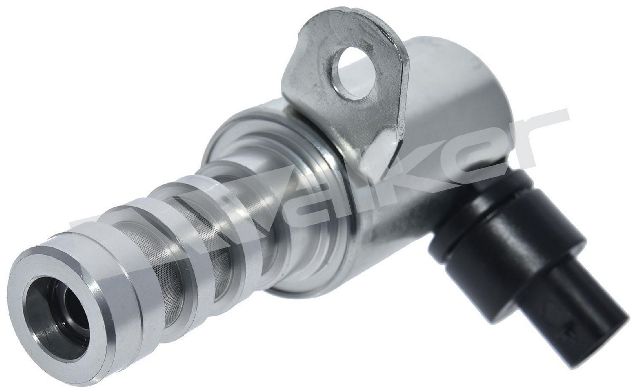
- Engine Variable Valve Timing (VVT) Solenoid
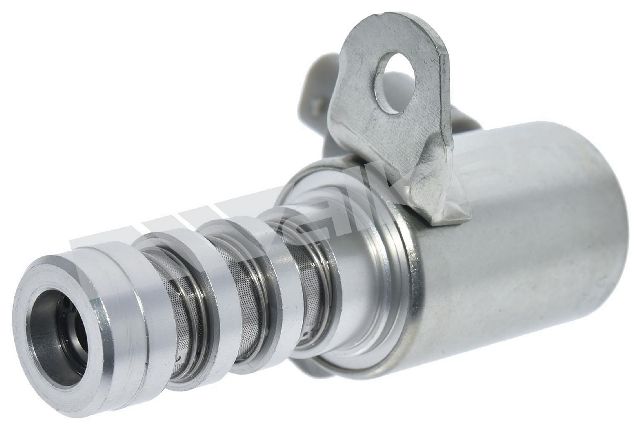
(OEM #HL3Z-6M280-A)— This is the most common mechanical failure for this code, often sticking due to oil contamination. This part number is an updated design.
Trusted brands: Motorcraft, Dorman
OEM price range: $60-$100
Aftermarket price range: $40-$80 - Timing Chain Kit
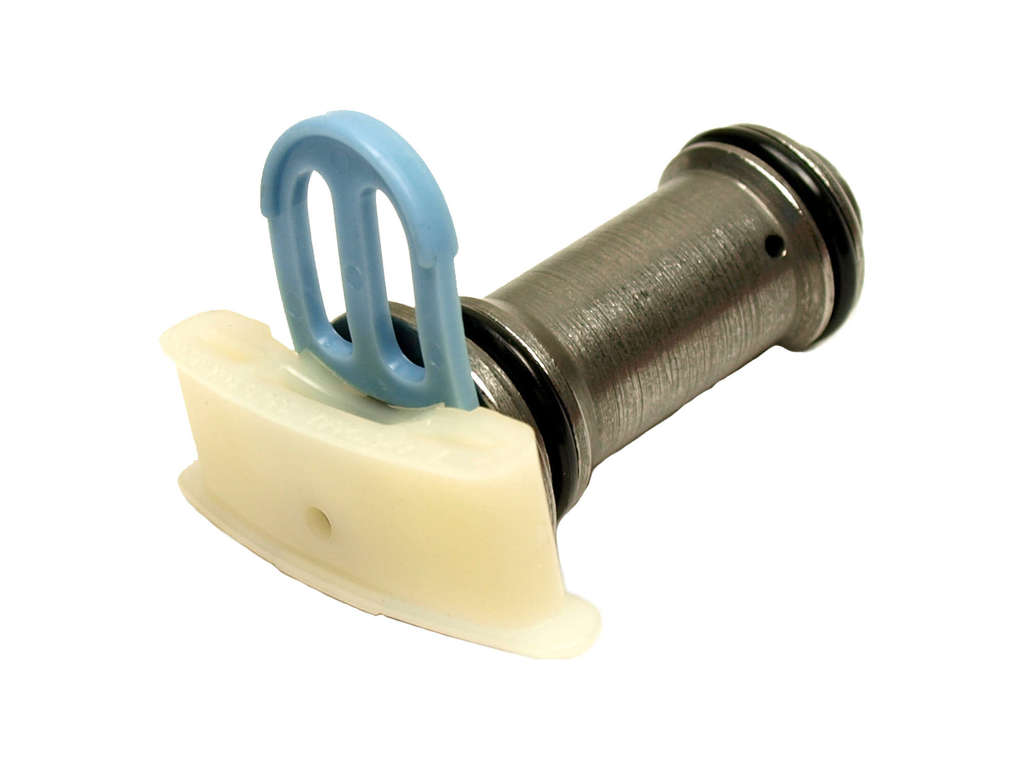
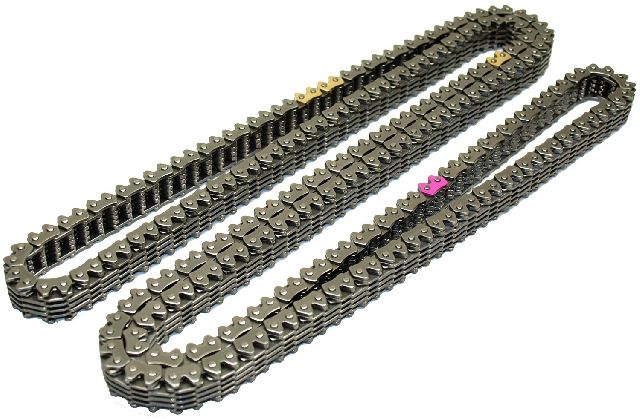
(OEM #BL3Z-6D256-C)— Required if diagnosis confirms a stretched timing chain, which is a known issue on this engine. A full kit includes the primary chain, tensioner, and guides. TSB 18-2305 calls for this repair to fix the associated cold-start rattle.
Trusted brands: Motorcraft, Cloyes
OEM price range: $500-$800
Aftermarket price range: $300-$500
Related Codes That Often Appear With This One
- P0016 — Indicates a crankshaft/camshaft correlation issue on Bank 1. It can appear with P0011 if the timing has become significantly off due to a stretched chain or failed phaser. TSB 16-0093 specifically lists these codes appearing together.
- P0021 — This is the same 'over-advanced' code but for Bank 2 (driver's side). Seeing both P0011 and P0021 together strongly points to a systemic issue like low/dirty oil or low oil pressure affecting the entire engine.
- P0524 — Engine Oil Pressure Too Low. This code directly supports P0011, as the VCT system is entirely dependent on oil pressure. If pressure is too low, the phasers cannot be controlled correctly.
Technical Service Bulletins (TSBs) & Recalls
- TSB 16-0093: For low-mileage 2016 Navigators (and other models) with the 3.5L GTDI engine, this TSB points directly to a faulty VCT solenoid as the cause for a range of timing codes, including P0011.
- TSB 18-2305: Pertains to cold start rattle from a stretched timing chain on 3.5L EcoBoost engines built on or before May 29, 2015. The prescribed fix is replacing the primary timing chain and all four cam phasers (VCT units), a labor-intensive job of over 9 hours.
- Bulletin #TSB160038: Notes that vehicles with the 3.5L GTDI engine and less than 2,000 miles may exhibit an illuminated MIL with P0011 and other correlation codes.
Platform-Specific Known Issues
- TSB 16-0093: Addresses P0011 (and other VCT codes) on low-mileage 2016 model year vehicles, recommending solenoid replacement as the primary fix for vehicles under 2,000 miles.
- TSB 18-2305 (superseding earlier versions): Details the procedure for replacing the timing chain and all four VCT units (phasers) on 2011-2015 F-150s with the 3.5L EcoBoost to fix a cold start rattle, a symptom often associated with the root cause of timing codes. This TSB is directly applicable to the mechanically identical Navigator engine.
- Forum Experience - F150Forum.com: A user with a 2016 3.5L EcoBoost noted that while timing chain issues were rampant on early models, they seemed less frequent on the 2015-2016 models, though still possible. The consensus points to regular, high-quality oil changes as the best preventative measure.
Mechanic-Grade Diagnostic Values
- VCT Solenoid Internal Resistance — expected: 5.0 to 15.0 Ohms. Some sources narrow this to 6.9-7.9 Ohms at 68°F.. Failure: A reading of 0 Ohms (short) or infinite/OL (open circuit) indicates a failed solenoid coil.
- VCT Solenoid Connector Voltage (Key On, Engine Off) — expected: Battery Voltage (~12V) on the power supply pin.. Failure: Low or no voltage points to a wiring issue in the VPWR circuit or a related fuse/relay problem.
- Ford IDS Live Data PID: VCT_ERR1 — expected: Should be close to 0° at a stable, warm idle.. Failure: A sustained deviation of more than +/- 5 degrees indicates a VCT system fault. This error value represents the difference between the PCM's commanded cam angle and the actual angle reported by the sensor.
- Engine Oil Pressure (Hot Idle) — expected: Minimum 15 PSI, ideally 25 PSI or higher.. Failure: Pressure below 15 PSI at hot idle is insufficient for proper VCT operation and can trigger timing codes. This must be checked with a mechanical gauge, not the instrument panel.
Hidden / Shadow Codes Worth Checking
- Mode 6, Test ID $80: This Mode 6 test ID monitors the Bank 1 variable camshaft timing position. A failure here can precede a full-blown Check Engine Light and indicates the system is operating outside of its expected parameters. (see via A professional scan tool capable of reading Mode 6 data.)
Scan Tool Commands That Help
- Ford IDS (Integrated Diagnostic System) or FORScan: VCT Solenoid On/Off Command / Output State Control — This bidirectional control allows a technician to manually cycle the VCT solenoid at idle. If the engine stumbles or runs rough when the Bank 1 intake solenoid is commanded ON, it is likely functioning. If there is no change in engine operation, the solenoid is stuck or there is a blockage. TSB SSM 48423 suggests cycling it 10 times to try and clear debris before replacement.
- Ford IDS (Integrated Diagnostic System): Power Balance Test — While primarily for misfires, this test can help visualize the effect of the incorrect cam timing on individual cylinders. An entire bank showing weaker contribution can support the P0011 diagnosis.
- Ford IDS (Integrated Diagnostic System) or FORScan: KAM (Keep Alive Memory) Reset — This should be performed after replacing VCT components. It clears the PCM's learned adaptive values, forcing it to relearn the new components' operational characteristics immediately, which can prevent the code from returning falsely after a repair.
Wiring & Ground Locations
- Bank 1 Intake VCT Solenoid Connector — On the top of the passenger side (Bank 1) valve cover. It is a 2-pin connector.. This is the primary point for electrical testing (voltage and resistance) of the solenoid. The pins are: Pin 1 (Control from PCM) and Pin 2 (12V+ Power Supply). Check for oil saturation, which can degrade the connection.
- G104 — On the right-hand (passenger) side of the engine compartment, often on the fender apron or near the firewall.. This is a major engine and PCM ground point. A loose or corroded connection at G104 can cause erratic signals and insufficient power for various actuators, including the VCT solenoids, leading to unpredictable behavior and fault codes.
Real Owner Repair Stories
- F150forum.com user (2012 F-150 3.5L EcoBoost (mechanically similar)) — Loss of power, check engine light, misfire at idle, and code P0016.
❌ Tried (didn't work) Initial diagnosis pointed to expensive timing chain or phaser replacement.
✅ What actually fixed it The user manually cycled the suspect VCT solenoid with 12V from the battery about 10 times. The solenoid audibly clicked after a few tries. After this, the connector was replaced, the code was cleared, and the misfire and code did not return, suggesting the solenoid was merely stuck. - Reddit user r/Justrolledintotheshop (Ford F-150 3.5L EcoBoost) — P0016 code returned one year and 8,000 miles after a timing chain replacement.
❌ Tried (didn't work) A full timing job was performed using an aftermarket Cloyes timing chain.
✅ What actually fixed it The aftermarket Cloyes timing chain had stretched prematurely, causing the code to return. The fix was to perform the timing chain replacement again, implying the use of a higher-quality (likely OEM) chain. This highlights the risk of using certain aftermarket timing components on this engine.
OEM Part Supersession History
Various earlier part numbers→HL3Z-6M280-A— The VCT solenoids have been updated multiple times by Ford to improve durability and resistance to sticking from oil debris.
Heads up: It is critical to use the latest available OEM part number (HL3Z-6M280-A) when replacing. Using older stock or incompatible aftermarket versions is a common cause of repeat failures.
Diagnostic Flowchart
Other Known Issues on This Vehicle
Issues unrelated to this code that are worth knowing about as an owner of this generation:
- Leaking Turbo Coolant Lines 🟠 Medium — Common on Gen 1 3.5L EcoBoost engines as they age. The 'jiffy-tite' fittings' O-rings degrade and cause slow coolant leaks at the turbochargers.
- Electronic Throttle Body Failure 🟠 Medium — Fairly common across many Ford models with this engine. Can cause sudden 'limp mode', stalling, and poor acceleration. Often throws codes like P2112.
- Blower Motor Failure / Fire Risk 🔴 High — Subject to a major recall. The front blower motor behind the glove box can fail, potentially causing an interior fire. (Ref: NHTSA Recall 22S56)
- Brake Master Cylinder Leak 🔴 High — Affects 2016-2017 models with the 3.5L EcoBoost. Brake fluid can leak from the master cylinder into the brake booster, reducing braking performance. (Ref: NHTSA Recall 22S11)
- Intake Valve Carbon Buildup 🟡 Low — A known characteristic of all Gasoline Direct Injection (GDI) engines. Over 80k-100k miles, carbon can build up on the back of intake valves, potentially causing misfires or reduced performance. Not unique to Ford, but a long-term maintenance consideration.
Used vs. New Parts: Buying Guide for This Vehicle
When a used part is the smart pick: For this specific repair, sourcing used parts is not recommended for any of the core components. The only exception might be a purely cosmetic part like an engine cover or a valve cover if the original was damaged during the repair, but never any mechanical or electronic timing part.
What to inspect on the donor part:
- Not applicable as used timing components should not be considered.
OEM-only on this vehicle (don't cheap out):
- VCT Solenoids
- Cam Phasers
- Timing Chain
- Timing Chain Tensioners and Guides
Aftermarket brands forum-validated for this vehicle:
- Melling is often cited as an OEM supplier for Ford timing components, but ensure it is their 'professional grade' line, not 'service grade'.
- Cloyes is a well-known timing component brand, but some professional forums and users have reported recent quality control issues and premature failures with their chains on this specific engine platform.
Brands owners have reported issues with on this vehicle:
- Unbranded 'white box' VCT solenoids and cam phasers from online marketplaces are a significant gamble and frequently reported to fail shortly after installation.
- Some recent reports suggest caution with Cloyes timing chains for the 3.5L EcoBoost due to instances of premature stretching.
Real Owner Stories
Aggregated from forums and TSBs cited above. Mileages and costs reflect what owners reported in those sources.
2016 Ford F-150 3.5L EcoBoost — ~1500 miles
Symptoms: Check engine light illuminated with P0011 code on a very low-mileage vehicle.
What fixed it: Replacement of the VCT solenoid as per TSB 16-0093.
Source hint: TSB 16-0093
2015 Ford F-150 3.5L EcoBoost — ~120000 miles
Symptoms: Distinct metallic rattling noise on cold startup lasting 2-5 seconds; timing correlation issues.
What fixed it: Replacement of the primary timing chain, tensioners, guides, and all four cam phasers (VCT units).
Source hint: TSB 18-2305
2016 Ford F-150 3.5L EcoBoost
Symptoms: Owner noted that while timing chain issues were rampant on earlier models, they still experienced concerns regarding VCT system sensitivity.
What fixed it: Strict adherence to regular, high-quality oil changes as a preventative measure.
Source hint: F150Forum.com - 'Are timing chains still an issue?'
Related OBD-II Codes
Frequently Asked Questions
Does TSB 16-0093 apply to my 2016 Lincoln Navigator if it has very low mileage?
My Navigator has a rattle for about 3 seconds when I start it cold; is this related to P0011?
What specific oil and filter should I use to prevent VCT issues in my 2015-2017 Navigator?
Is there a TSB for the timing chain rattle on my 2015 Navigator?
Can I test the VCT solenoid myself before paying for a replacement?
How long does the timing chain replacement take on the 3.5L GTDI V6?
Helpful Videos
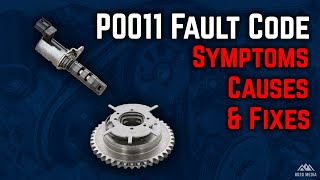
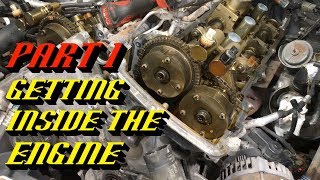
Used OEM Parts in Stock

New Aftermarket Parts Available



The information in this article is provided for general reference and educational purposes only. Vehicle specifications, procedures, and part compatibility can vary by production date, trim level, and region. Always consult your vehicle's factory service manual and verify part numbers before purchasing or performing repairs. Safety-critical components such as airbags, seat belts, and braking systems should be installed by a qualified professional.
- Lincoln Navigator:
- 🎬 Helpful Videos
- 🛍️ Shop This Part
- What's Unique About the 2015-2017 Lincoln Navigator
- Symptoms You May Notice
- Most Likely Causes
- Rare But Worth Checking
- Diagnosis Steps
- Parts You'll Likely Need
- Related Codes That Often Appear With This One
- Technical Service Bulletins (TSBs) & Recalls
- Platform-Specific Known Issues
- Mechanic-Grade Diagnostic Values
- Hidden / Shadow Codes Worth Checking
- Scan Tool Commands That Help
- Wiring & Ground Locations
- Real Owner Repair Stories
- OEM Part Supersession History
- Diagnostic Flowchart
- Other Known Issues on This Vehicle
- Used vs. New Parts: Buying Guide for This Vehicle
- Real Owner Stories
- 2016 Ford F-150 3.5L EcoBoost — ~1500 miles
- 2015 Ford F-150 3.5L EcoBoost — ~120000 miles
- 2016 Ford F-150 3.5L EcoBoost
- Related OBD-II Codes
- Frequently Asked Questions
- 🎟️ Get 5% Off