

P0011 on 2015-2020 Lincoln MKZ: Causes, Fixes, and VCT Solenoid Issues
On a 2015-2020 Lincoln MKZ, code P0011 is most often caused by a sticking Variable Camshaft Timing (VCT) solenoid, frequently due to dirty, low, or incorrect viscosity engine oil. An oil change and replacing the Bank 1 intake VCT solenoid is the most common fix. For the 3.7L V6, this is a significantly more labor-intensive job because Bank 1 is the rear cylinder bank against the firewall.
- Always check your engine oil level and condition first. A simple oil change is the cheapest and often most effective first step.
- The most common part to fail is the Bank 1 intake VCT solenoid, which gets stuck due to oil debris.
- For the 3.7L V6, replacing the Bank 1 solenoid is a labor-intensive job because it's on the rear cylinder bank under the intake manifold.
- Before replacing the solenoid, ask a mechanic about or use a scan tool to perform the TSB-recommended 'cycle test' (HK11/HK12) to potentially clear the debris without replacing parts.
- Do not replace the camshaft position sensor unless it has been specifically diagnosed as faulty; it is rarely the cause of P0011.
What's Unique About the 2015-2020 Lincoln MKZ
For both the 2.0L EcoBoost and 3.7L Cyclone V6 engines in the MKZ, the VCT system is highly sensitive to oil quality and level. Ford has issued multiple Technical Service Bulletins (TSBs) and Special Service Messages (SSMs) acknowledging that debris in the oil can cause the VCT solenoids to stick, triggering a P0011 code. On the 3.7L V6 engine, the repair is more complex because Bank 1 is the rear cylinder bank (closer to the firewall), and accessing its VCT solenoid requires removing the valve cover and the upper intake manifold. This significantly increases labor compared to the 2.0L I4 where the solenoids are more accessible.
Symptoms You May Notice
- Check Engine Light is on
- Rough idle or engine vibration
- Poor acceleration or engine hesitation
- Reduced fuel economy
- Engine stalling, especially at stops
- Hard starting
- Rattling noise from the engine on startup
- Replacing the camshaft position sensor before inspecting the VCT solenoid and engine oil.
- Replacing the camshaft phaser before thoroughly diagnosing the VCT solenoid, which is a much cheaper and easier repair.
- Assuming the fix is easy on a 3.7L V6 without realizing the intake manifold must be removed 🎬 See this walkthrough for replacing the solenoid on V6 engines to access the Bank 1 solenoid.
Most Likely Causes
- Low or Dirty Engine Oil 🔴 High Probability The VCT system is entirely dependent on hydraulic pressure from clean engine oil. Ford/Lincoln TSBs directly cite oil debris as a primary cause of VCT solenoid sticking. EcoBoost engines can be particularly hard on oil, and extended oil change intervals can exacerbate this issue.
How to confirm: Check the oil level on the dipstick and inspect the oil's condition. If it is low, dark/black, or appears sludgy, this is the likely cause. An oil change fixes a significant percentage of P0011 cases.
Typical fix: Perform an engine oil and filter change using the manufacturer-recommended oil viscosity (SAE 5W-30 for 2.0L EcoBoost, SAE 5W-20 for 3.7L V6). Clear the codes and drive to see if P0011 returns.
Est. part cost: $40-$80 - Sticking/Failing Intake VCT Solenoid (Bank 1) 🔴 High Probability Manufacturer TSBs (#SSM 47170, #SSM 48423, and #SSM 50067) directly state that P0011 can be caused by "small debris causing the VCT solenoid to stick." The solenoids have fine mesh screens that are easily clogged by oil contaminants, a very common failure mode.
How to confirm: Use a scan tool to command the solenoid on and off while monitoring camshaft position data. You can also remove the solenoid to inspect for debris or a stuck pintle. Resistance can be checked with a multimeter (typically 5-14 ohms). For V6 models, swapping the Bank 1 and Bank 2 intake solenoids (if accessible) will cause the code to change to P0021 if the solenoid is faulty.
Typical fix: Replace the Bank 1 intake VCT solenoid. It is highly recommended to change the engine oil and filter at the same time to prevent the new solenoid from failing.
Est. part cost: $40-$120
Rare But Worth Checking
- Stretched Timing Chain or Failed Phaser: While less common than oil or solenoid issues, a loose or jumped timing chain can cause this code, often accompanied by rattling noises on startup or other timing correlation codes like P0016. This is a more significant mechanical repair.
- Faulty Camshaft Position Sensor: This is an uncommon cause. The sensor reports the problem but rarely is the problem itself. It should only be replaced if specific sensor circuit codes are present or if it fails electrical tests.
- PCM Software Glitch: On some Ford products, outdated Powertrain Control Module (PCM) software can cause erroneous VCT codes. Checking for available PCM updates with a dealer or capable scan tool can sometimes resolve the issue without parts replacement.
Diagnosis Steps
- Check the engine oil level and condition. If low, dirty, or the wrong viscosity, perform an oil and filter change, clear the code, and re-test. This is the cheapest and most common first step.
- Scan for any other DTCs. Codes for Bank 2 (P0021) or correlation codes (P0016) can point to more widespread issues.
- Using a capable scan tool, monitor the desired vs. actual camshaft position for Bank 1. Command the VCT solenoid on and off to see if the angle changes as expected. 🎬 Watch: How to diagnose VCT solenoid and timing correlation issues
- Per Ford TSBs like SSM 47170 and SSM 50067, run the 'HK11' or 'HK12' pinpoint test with a Ford-specific scan tool. This cycles the solenoid 10 times to attempt to dislodge debris. If the code clears and does not return, the issue may be resolved.
- If the solenoid fails to respond, inspect its wiring and connector for damage, corrosion, or looseness.
- Remove the Bank 1 intake VCT solenoid. Inspect the screens for sludge or debris. Test its resistance with a multimeter (compare to spec, often 5-14 ohms). You can also bench test it with a 12v source to see if the pintle actuates.
- If the solenoid and oil are good, the issue may be mechanical. Listen for timing chain rattle on cold starts. Inspect the camshaft phaser for damage or sticking, and check the timing chain for excessive slack.
Parts You'll Likely Need
- Engine Variable Valve Timing (VVT) Solenoid
(OEM #CJ5Z-6M280-A (2.0L EcoBoost), AT4Z-6M280-B (3.7L V6))— This is the most common point of failure for code P0011 on this platform, often due to sticking from oil debris, as noted in multiple Ford TSBs.
Trusted brands: Motorcraft, Dorman, NTK/NGK
OEM price range: $70-$120
Aftermarket price range: $40-$80 - Engine Oil and Filter — The VCT system is highly dependent on clean oil of the correct viscosity. This is the first and most crucial maintenance step and a common fix.
Trusted brands: Motorcraft
OEM price range: $40-$80
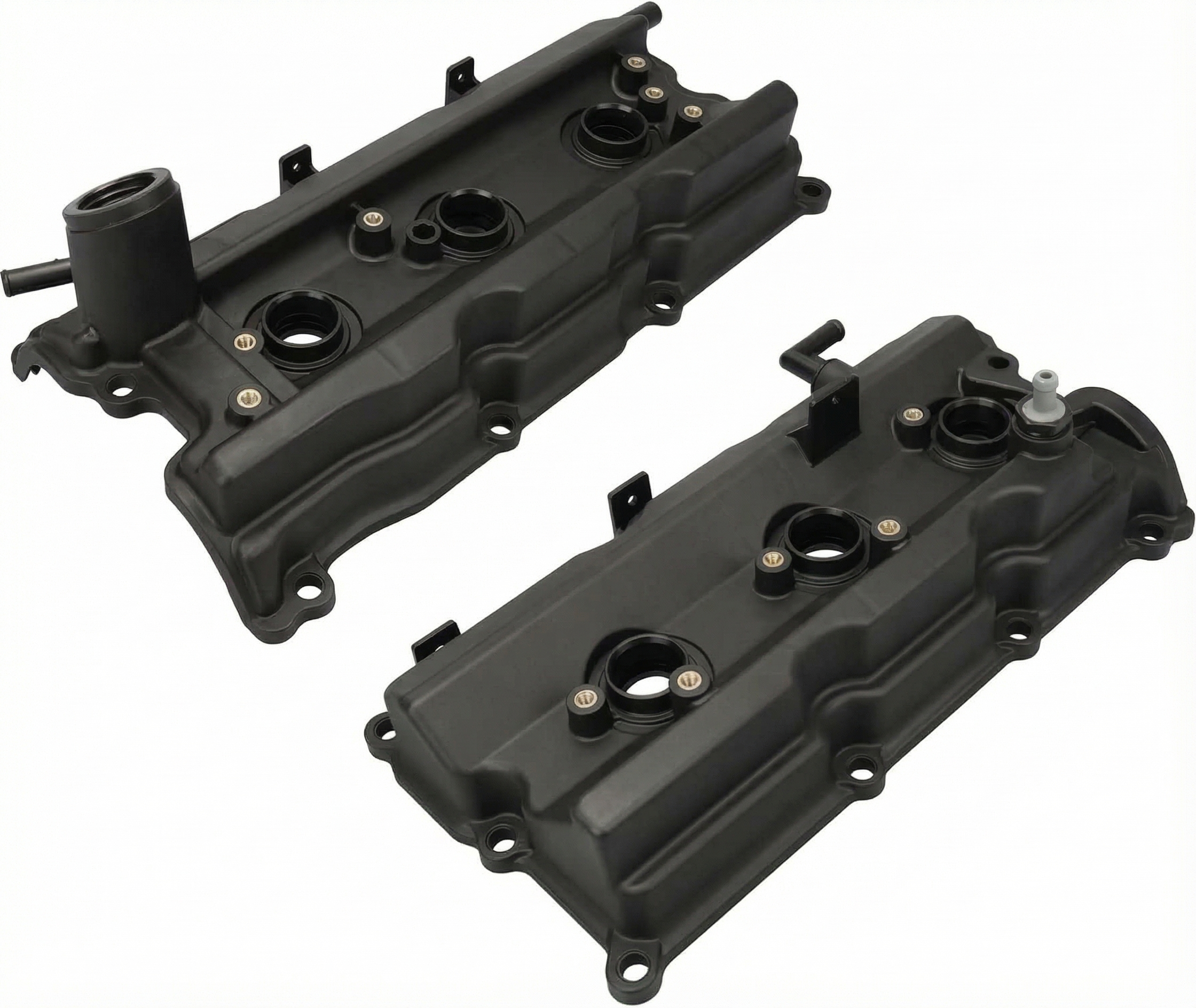
Aftermarket price range: $30-$60 - Valve Cover Gasket / Intake Manifold Gasket (for 3.7L V6) — For the 3.7L V6, accessing the Bank 1 VCT solenoid requires removing the upper intake manifold and valve cover. These gaskets are typically single-use and must be replaced to prevent vacuum and oil leaks.
Trusted brands: Motorcraft, Fel-Pro
OEM price range: $50-$100
Aftermarket price range: $30-$60
Related Codes That Often Appear With This One
- P0021 — This is the same over-advanced code but for Bank 2 (on V6 engines). If both P0011 and P0021 are present, it strongly suggests a systemic issue like low/dirty oil or low oil pressure affecting both banks.
- P0012 — This is the opposite code, indicating over-retarded timing for the same camshaft. Seeing both could point to an erratically behaving VCT solenoid that is sticking in both directions or a severe oil flow problem.
- P0016 — Indicates a correlation issue between the Crankshaft and the Bank 1 Camshaft. A severely mistimed camshaft due to a stuck VCT solenoid or a stretched timing chain can trigger this code, as the cam's actual position drastically differs from what the crank position suggests it should be.
Technical Service Bulletins (TSBs) & Recalls
- SSM 47170 / SSM 48423: For 2015-2020 vehicles, these bulletins note that P0011 and other VCT codes may be caused by small debris causing the solenoid to stick. They recommend running pinpoint test HK11 to cycle the solenoid 10 times to clear it before replacement.
- SSM 50067: Supersedes earlier SSMs for 2015-2021 vehicles, advising a similar solenoid cycle test (now pinpoint test HK12) to clear debris before attempting component replacement. 🎬 Watch: A breakdown of Ford's official VCT solenoid service memos
- TSB 11-6-1: An older TSB for 3.5L/3.7L engines built before late 2008, but relevant for showing a history of VCT phaser and solenoid issues on this engine family, sometimes requiring phaser replacement for these codes.
Platform-Specific Known Issues
- On the 3.7L V6, the Bank 1 (rear bank) VCT solenoid is located under the valve cover and requires removing the upper intake manifold for access, significantly increasing labor time and complexity compared to the 2.0L engine.
- Ford has issued multiple Special Service Messages (SSMs) like SSM 47170, SSM 48423, and SSM 50067, which state that P0011 can be caused by small debris causing the VCT solenoid to stick. They recommend a diagnostic test (pinpoint test HK11 or HK12) to cycle the solenoid before replacement.
Mechanic-Grade Diagnostic Values
- VCT Solenoid Internal Resistance (3.7L V6) — expected: 6.9 to 7.9 ohms at 68°F (20°C), with a broader acceptable range of 5.0 to 14.0 ohms.. Failure: A reading of 0 ohms (short), OL/infinite ohms (open), or outside the specified range indicates a faulty solenoid coil.
- VCT Solenoid Internal Resistance (2.0L EcoBoost) — expected: A general acceptable range of 7 to 14 ohms is cited for similar Ford engines.. Failure: Readings significantly outside this range suggest a faulty solenoid coil.
- VCT Solenoid Connector Voltage (Key On, Engine Off) — expected: Greater than 10.5 volts on the power supply pin.. Failure: Voltage below 10.5V points to an open circuit in the power feed wiring, a blown fuse, or a faulty PCM power relay.
- Scan Tool Live Data: VCT_ADV_ERR PID (VCT Error) — expected: Should be near 0 degrees, with an acceptable variance of +/- 5 degrees during stable, closed-loop operation.. Failure: A consistent error value greater than 5 degrees indicates the camshaft is not reaching its commanded position.
- Engine Oil Pressure at Warm Idle — expected: At least 15-25 PSI.. Failure: Pressure below this range indicates oil starvation, which is a root cause for VCT system malfunctions and can trigger P0011.
Scan Tool Commands That Help
- Ford IDS (or equivalent like FORScan): Pinpoint Test HK11 or HK12 / VCT Solenoid On/Off Cycle Test — This is a specific diagnostic step recommended in Ford TSBs (SSM 50067) to be used before replacing a VCT solenoid. The command cycles the solenoid 10 times to attempt to dislodge small debris that may be causing it to stick. If the code clears and does not return after running this test, it can prevent an unnecessary part replacement.
- Ford IDS (or equivalent like FORScan): Output State Control for VCT Solenoid — This bidirectional command allows a technician to manually activate and deactivate the VCT solenoid while the engine is running at idle. If commanding the solenoid ON causes the engine to run rough or stall, it confirms the solenoid is mechanically capable of moving and affecting timing. If there is no change in engine operation, the solenoid is likely stuck or there is an oil flow issue.
Wiring & Ground Locations
- VCT Solenoid Connector — On the top of the valve cover for the respective cylinder bank. On the 2.0L, it is on top of the engine. On the 3.7L, Bank 1 is on the rear valve cover (firewall side) and Bank 2 is on the front valve cover (radiator side).. This is the primary connection point for testing. The connector has two pins: one for the 12V power supply (often from a PCM power relay-controlled fuse) and one for the ground-side control wire from the PCM. Checking for voltage here is a key first electrical test.
Real Owner Repair Stories
- Go-Parts / Reddit Forum User (2015-2020 Lincoln MKZ (specific year not mentioned)) — Persistent P0011 code for two years.
❌ Tried (didn't work) Likely multiple oil changes, Likely VCT solenoid replacement
✅ What actually fixed it The ultimate cause was a bad/stretched timing chain. This is a rare but possible cause when oil and solenoid issues have been ruled out.
OEM Part Supersession History
AT4Z-6M280-A→AT4Z-6M280-B— The -B revision is the current recommended OEM replacement for the VCT solenoid on the 3.7L V6 and other Ford Cyclone engines.
Heads up: The parts are physically interchangeable, but the -B revision is considered the updated and more reliable part.CM5Z-6M280-C→CJ5Z-6M280-A— CJ5Z-6M280-A is the commonly specified service part for the 2.0L EcoBoost engine in this application.
Model Year Variations Within This Range
- 2017-2020: The Lincoln MKZ received a facelift in 2017. While the 2.0L EcoBoost and 3.7L Cyclone V6 were carried over from 2015-2016, a new 3.0L GTDI V6 became available. The diagnosis for P0011 on the 2.0L and 3.7L engines remains consistent across the 2015-2020 range, but technicians should be aware of the engine change for 2017+ models as the 3.0L has its own specific procedures.
Diagnostic Flowchart
Real Owner Stories
Aggregated from forums and TSBs cited above. Mileages and costs reflect what owners reported in those sources.
2007-2009 Lincoln MKZ 3.5L
Symptoms: Experienced P0011, P0012, P0021, and P0022 codes related to the VCT system.
What fixed it: Followed TSB 09-13-10 diagnostic steps, which included checking oil pressure.
Source hint: BobIsTheOilGuy.com - Thread 'lincoin w/ 3.5L'
2015-2020 Lincoln MKZ
Symptoms: P0011 and other VCT codes triggered by small debris causing the solenoid to stick.
What fixed it: Ran pinpoint test HK11 to cycle the solenoid 10 times to clear it before replacement.
Source hint: SSM 47170 / SSM 48423
Lincoln MKZ 3.5L/3.7L (Built before late 2008)
Symptoms: VCT phaser and solenoid issues triggering timing codes.
What fixed it: Required VCT phaser replacement.
Source hint: TSB 11-6-1
Related OBD-II Codes
Frequently Asked Questions
Does Ford or Lincoln have any TSBs for the P0011 code on my 2015-2020 MKZ?
Why is replacing the VCT solenoid on the 3.7L V6 MKZ so much harder than on the 2.0L EcoBoost?
Can a simple oil change really fix the P0011 code on my MKZ?
How can I test the VCT solenoid on my MKZ before buying a new one?
I have a rattling noise on startup along with the P0011 code. What does this mean?
Helpful Videos
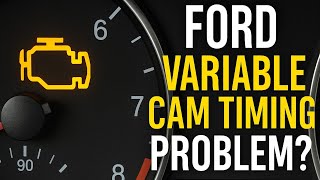
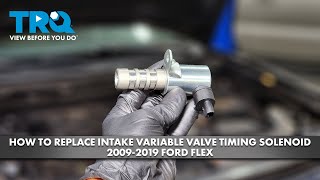
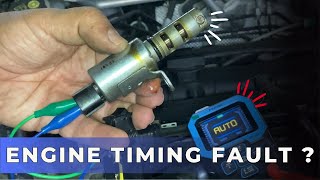
Used OEM Parts in Stock




New Aftermarket Parts Available


The information in this article is provided for general reference and educational purposes only. Vehicle specifications, procedures, and part compatibility can vary by production date, trim level, and region. Always consult your vehicle's factory service manual and verify part numbers before purchasing or performing repairs. Safety-critical components such as airbags, seat belts, and braking systems should be installed by a qualified professional.
- Lincoln MKZ:
- 🎬 Helpful Videos
- 🛍️ Shop This Part
- What's Unique About the 2015-2020 Lincoln MKZ
- Symptoms You May Notice
- Most Likely Causes
- Rare But Worth Checking
- Diagnosis Steps
- Parts You'll Likely Need
- Related Codes That Often Appear With This One
- Technical Service Bulletins (TSBs) & Recalls
- Platform-Specific Known Issues
- Mechanic-Grade Diagnostic Values
- Scan Tool Commands That Help
- Wiring & Ground Locations
- Real Owner Repair Stories
- OEM Part Supersession History
- Model Year Variations Within This Range
- Diagnostic Flowchart
- Real Owner Stories
- 2007-2009 Lincoln MKZ 3.5L
- 2015-2020 Lincoln MKZ
- Lincoln MKZ 3.5L/3.7L (Built before late 2008)
- Related OBD-II Codes
- Frequently Asked Questions
- 🎟️ Get 5% Off