

P0011 on 2007-2009 Lexus RX350: Causes and Fixes for Camshaft Timing Over-Advanced
On the 2007-2009 RX350, code P0011 is most often caused by a faulty Bank 1 Oil Control Valve (VVT solenoid) or a leaking/ruptured VVT-i oil line, a known issue for this engine. Always check oil level first, then inspect the oil line for leaks before replacing parts. A sudden, catastrophic oil leak from this line is a well-documented failure that can destroy the engine.
- When P0011 appears, your first and most urgent check should be the engine oil level and the condition of the Bank 1 VVT-i oil line (rear of the engine). A leak here is dangerous.
- This code is most commonly caused by a hydraulic issue (oil flow) rather than an electronic one. Do not replace sensors before checking the oil, the VVT-i line, and the Oil Control Valves (OCVs).
- Even if it's not currently leaking, replacing the original VVT-i oil line with the updated all-metal version (Part #04004-29131) is a highly recommended preventative repair to avoid potential engine failure.
- Using the correct viscosity engine oil (SAE 5W-30) and maintaining regular oil change intervals is the best way to prevent sludge buildup that leads to VVT system problems.
What's Unique About the 2007-2009 Lexus RX350
The 2GR-FE engine in this specific year range is known for a critical failure point: the VVT-i oil supply line for Bank 1. The original part used a rubber hose section that is notorious for degrading, leaking, and even rupturing, which can cause a sudden, catastrophic loss of oil pressure and lead to complete engine failure. Lexus issued a Limited Service Campaign (LSC 9LH) to replace this with an all-metal line. While the campaign officially expired on December 31, 2021, this potential failure makes inspecting this specific part a top priority when diagnosing P0011.
Symptoms You May Notice
- Check Engine Light is on
- Rough or unstable idle
- Engine stalling, especially when coming to a stop
- Reduced engine power and poor acceleration
- Rattling noise from the engine, especially on cold startup (can be from VVT gear) or a sudden abnormal engine noise (from oil line leak).
- Decreased fuel economy
- Smell of burning oil or visible smoke from the engine bay if the VVT-i line is leaking onto hot components.
- Replacing the camshaft position sensor. A faulty sensor would typically set a different code related to the sensor circuit itself (e.g., P034x). P0011 points to a mechanical or hydraulic timing issue, not a sensor failure.
Most Likely Causes
- Leaking or Ruptured VVT-i Oil Line 🔴 High Probability The original-spec oil line for Bank 1 (rear bank) used a rubber section that degrades and cracks over time, a well-documented factory defect. A leak starves the VVT system of oil pressure and can drain the engine of oil rapidly.
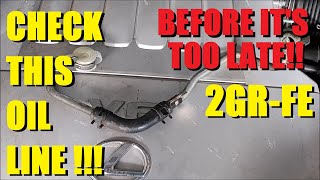
How to confirm: Visually inspect the VVT-i oil line that runs to the rear cylinder head (Bank 1). This can be seen by removing the plastic engine cover and looking down 🎬 Watch: How to visually check your VVT oil line for leaks. the passenger side of the engine. Look for any signs of oil seepage, wetness, or active dripping around the line. A ruptured line will have sprayed oil all over the side of the engine and undercarriage.
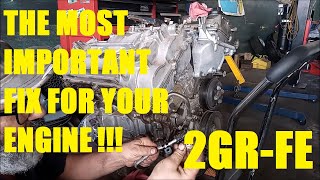
Typical fix: Replace the original rubber/metal hybrid line with the updated, all-metal oil line kit 🎬 See this step-by-step walkthrough for replacing the oil line. (Part No. 04004-29131 or similar). This is a critical preventative repair even if it's not leaking yet.
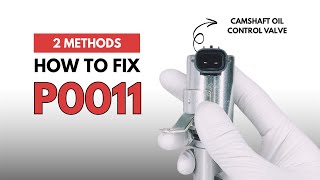
Est. part cost: $40-$70 - Faulty Bank 1 Intake Oil Control Valve (OCV) 🔴 High Probability These solenoids can become clogged with oil sludge or fail electronically, causing them to stick in one position and prevent proper oil flow to the camshaft phaser.
How to confirm: The Bank 1 intake OCV is difficult to access, located under the intake air surge tank (plenum). A common diagnostic step is to swap it with the more accessible Bank 2 OCV. If the code changes to P0021 (for Bank 2), the OCV is confirmed faulty. You can also test its resistance with a multimeter (should be 6.9-7.9 Ohms). A scan tool can also perform an active test to command the solenoid.
Typical fix: Replace the faulty Oil Control Valve. It is often recommended to replace them in pairs (intake and exhaust) or all four while the intake manifold is removed.
Est. part cost: $50-$120 - Low or Dirty Engine Oil 🟡 Medium Probability The entire VVT-i system is hydraulic and highly sensitive to oil level, pressure, and cleanliness. Sludge from infrequent oil changes is a primary cause of VVT system faults, clogging OCVs and their filters.
How to confirm: Check the oil level on the dipstick and inspect the oil's condition. If the level is low or the oil is dark, gritty, or sludgy, this is a likely contributor.
Typical fix: Perform an engine oil and filter change using the manufacturer-specified oil viscosity (SAE 5W-30). In cases of heavy sludge, an engine flush may be considered, but proceed with caution as it can dislodge debris and cause further blockages.
Est. part cost: $40-$80 - Clogged Oil Control Valve Filter Screen ⚪ Low Probability Small mesh filters protect the OCVs from debris. If the engine oil is dirty, these screens can become clogged, restricting oil flow.
How to confirm: The filters are located inside the banjo bolts that feed the oil lines to the cylinder heads or directly below the OCVs themselves. Remove the bolt/OCV and inspect the small screen filters inside for sludge or debris.
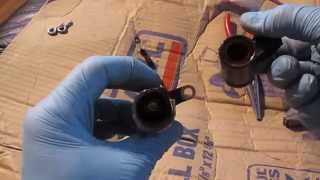
Typical fix: Carefully clean the screens with brake cleaner and compressed air, or replace them if they are damaged or cannot be cleaned. They are inexpensive 🎬 Watch: How to clean your oil control valve and screens. and wise to replace during an OCV service.
Est. part cost: $10-$20
Rare But Worth Checking
- Failed VVT-i Camshaft Gear (Phaser): The actuator gear on the end of the camshaft can fail internally, getting stuck in the advanced position or causing a startup rattle. This is a more complex and expensive repair, sometimes requiring special service tools. A TSB (T-SB-0094-09) exists for a ticking noise related to the exhaust VVT gear.
- Stretched Timing Chain: While less common on these engines compared to others, a significantly stretched timing chain can cause camshaft/crankshaft correlation issues and trigger this code, especially on higher-mileage vehicles (over 200,000 miles). This is usually accompanied by a persistent rattling noise from the front of the engine.
Diagnosis Steps
- Check the engine oil level and condition. Top up or change the oil if it is low, old, or dirty. This is the first and easiest step.
- CRITICAL: Thoroughly inspect the Bank 1 (rear) VVT-i oil line for any signs of oil leakage or rupture. Use a flashlight to view the line below the plastic engine cover. A ruptured line is a catastrophic failure.
- If the oil line is leaking, replace it with the updated all-metal version (Part No. 04004-29131) immediately. Do not continue to drive the vehicle.
- If the oil and line are good, the next likely culprit is the Bank 1 intake Oil Control Valve (OCV). A professional may use a scan tool to command the OCV on and off to check its response.
- For DIY diagnosis of the OCV, the most common method is to swap the suspected faulty Bank 1 OCV with the easily accessible Bank 2 OCV. This requires removing the upper intake manifold (surge tank) to access Bank 1. If the code changes to P0021 (Bank 2), the OCV is bad.
- While servicing the OCVs, inspect and clean or replace the small OCV filter screens located in the oil passages.
- If all the above components are confirmed to be working, the issue may be more severe, such as a failed camshaft phaser (gear) or a stretched timing chain, which typically requires professional diagnosis and significant labor.
Parts You'll Likely Need
- VVT-i Oil Line (All-Metal Update)
(OEM #04004-29131)— This replaces the failure-prone original line that contained a rubber hose section. It is the most critical and specific fix for this engine's known weakness.
Trusted brands: Toyota/Lexus Genuine
OEM price range: $40-$70
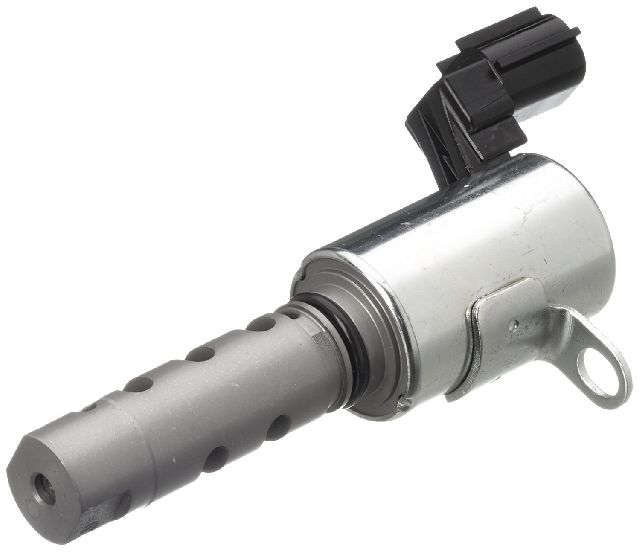
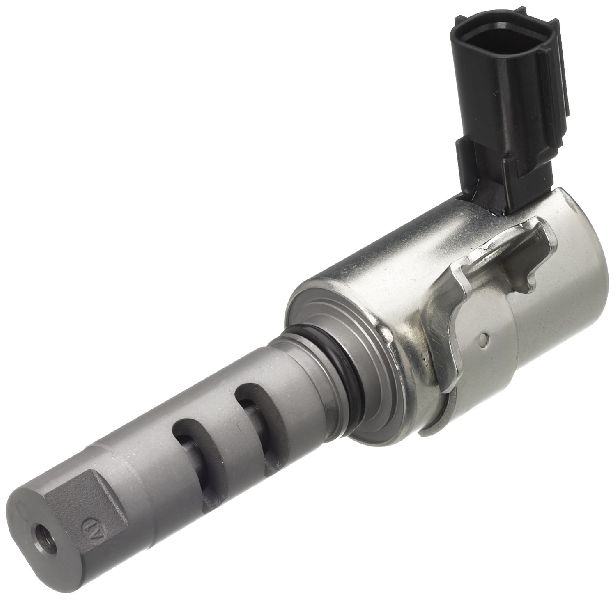
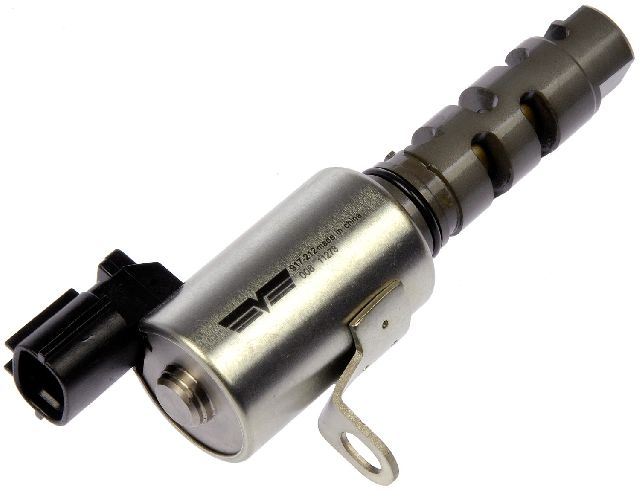
Aftermarket price range: $30-$50 - Engine Oil Control Valve (VVT Solenoid)
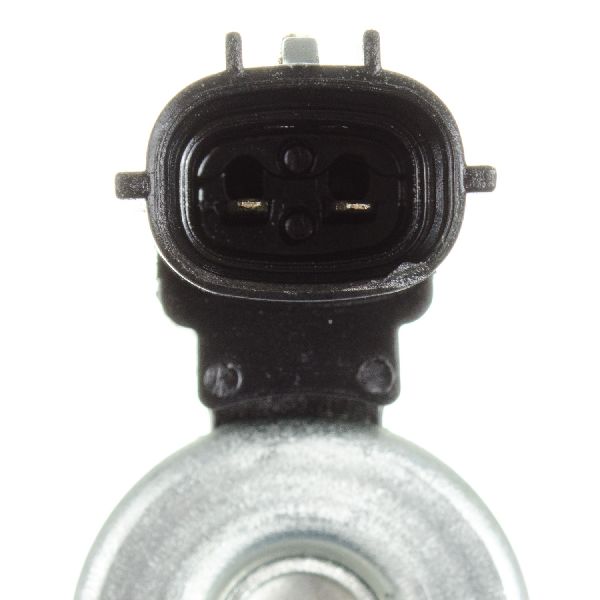
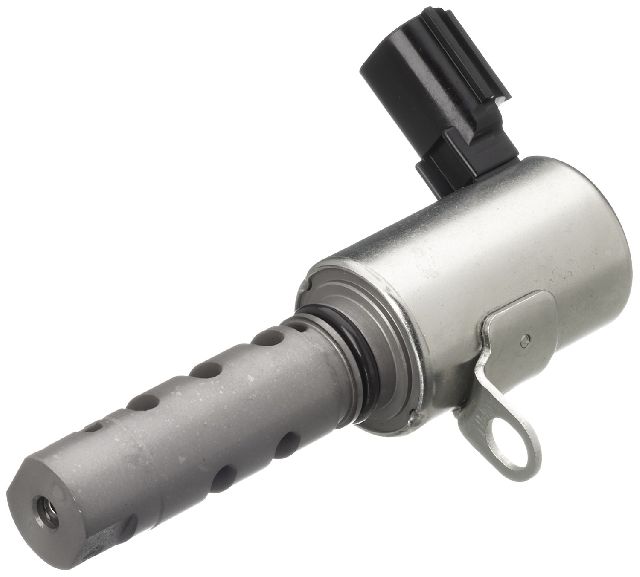
(OEM #15340-0P020)— This solenoid controls oil flow to the cam phaser and is a common failure item due to sludge or electronic malfunction, causing timing to stick. This part number replaces the previous version 15340-31020.
Trusted brands: Denso, Aisin, Dorman
OEM price range: $90-$140
Aftermarket price range: $40-$80 - Oil Control Valve Filter
(OEM #15678-46020)— This small screen can become clogged with debris from dirty oil, blocking oil flow to the OCV and causing timing faults. It's an inexpensive part to replace during an OCV or oil line service.
Trusted brands: Toyota/Lexus Genuine
OEM price range: $10-$15
Aftermarket price range: $5-$10
Related Codes That Often Appear With This One
- P0016 — Crankshaft Position - Camshaft Position Correlation (Bank 1 Sensor A). This code often appears with P0011 because an over-advanced cam creates a mismatch between what the crank and cam sensors are reporting. This is a common combination seen in forum posts.
- P0012 — Camshaft Position 'A' Timing Over-Retarded (Bank 1). This can appear if the OCV is sticking intermittently, causing the timing to be out of range in both directions at different times.
- P0010 — 'A' Camshaft Position Actuator Circuit (Bank 1). This code points to an electrical problem with the OCV solenoid (wiring, connector, or the solenoid's coil itself), rather than a purely mechanical/hydraulic issue.
Technical Service Bulletins (TSBs) & Recalls
- LSC 9LH / LSC 90K - Limited Service Campaign for VVT-i Oil Hose Replacement.
- T-SB-0094-09 - Addresses a ticking noise from the engine, which can be related to the exhaust VVT-i gear assembly.
- TSB Bulletin #L-SB-0096-14 - While specifically for the ES 300h, this bulletin notes that a MIL "ON" condition with DTC P0011 can be caused by the Engine Control Module (ECM) logic.
Platform-Specific Known Issues
- Lexus issued a Limited Service Campaign (LSC 9LH) to address the failing rubber VVT-i oil line on the 2GR-FE engine. This campaign involved replacing the original part with a full metal line at no charge. The campaign was extended but ultimately expired on December 31, 2021, so any repairs now must be paid for by
Mechanic-Grade Diagnostic Values
- Camshaft Timing Oil Control Valve (OCV) Resistance — expected: 6.9 to 7.9 Ω at 20°C (68°F). Failure: Resistance outside this range indicates a faulty solenoid coil.
- Camshaft Position Sensor Resistance — expected: 835 to 1,400 Ω (cold) / 1,060 to 1,645 Ω (hot). Failure: Resistance outside these ranges may indicate a failing sensor, though this is a rare cause for P0011.
- Techstream Live Data - VVT Angle Deviation — expected: Less than 5° Crankshaft Angle (CA) difference between 'Intake VVT Target Angle' and 'Intake VVT Change Angle' for Bank 1.. Failure: A deviation of more than 5° CA for 4.5-5 seconds will trigger the DTC. This indicates the phaser is not responding to the ECM's command.
- OCV Connector Voltage — expected: Battery voltage at one pin with the key on.. Failure: No voltage indicates a wiring or fuse issue upstream of the OCV.
Scan Tool Commands That Help
- Toyota Techstream: Active Test: 'Control the VVT System (Bank 1)' — This command allows the technician to manually activate the Bank 1 intake OCV. While monitoring engine RPM at idle, activating the solenoid should cause the engine to run rough or stall. If there is no change in engine behavior, it points to a stuck OCV, a clogged oil passage, or a failed VVT phaser.
- Toyota Techstream: Data List: Monitor 'Intake VVT Target Angle Bank 1' and 'Intake VVT Change Angle Bank 1' — Used during a test drive or while using the Active Test to see if the actual camshaft angle (Change Angle) is following the ECM's commanded angle (Target Angle). A large, persistent discrepancy confirms the fault condition.
Wiring & Ground Locations
- Bank 1 OCV Connector — On the rear cylinder head (Bank 1), under the intake air surge tank. It is difficult to access without removing the intake plenum.. This is the primary connector to test for power and signal to the Bank 1 intake OCV. A poor connection or damaged wire here will cause P0010 (circuit fault) and can lead to P0011.
- ECM Connector (OC1+ / OC1-) — At the Engine Control Module (ECM). The specific pins for the Bank 1 Intake OCV are labeled OC1+ and OC1-.. These are the pins at the ECM that control the Bank 1 intake OCV. A continuity test from these pins to the OCV connector can diagnose a wiring break or short in the engine harness.
- Engine Harness Grounds — There are multiple ground points on the 2GR-FE. Key locations are on the side of the cylinder heads and from the valve covers to the chassis near the strut towers.. Poor grounding can cause erratic sensor readings and incorrect operation of electronically controlled components like the OCVs. While not a primary cause, verifying clean and tight grounds is a good practice when electrical issues are suspected.
Real Owner Repair Stories
- ClubLexus Forum (2007 Lexus RX350) — Stuttering, high idle, Check Engine Light with codes P0011 and P0016.
❌ Tried (didn't work) Initial diagnosis pointed towards camshaft position sensor, but forum advice suggested otherwise.
✅ What actually fixed it The user was advised to first check/change the oil, then inspect the OCVs. The final post from the user indicated they "bought new Oil Control Valves and installed them where the ODBII codes on my car indicated," implying this resolved the issue.
Diagnostic Flowchart
Real Owner Stories
Aggregated from forums and TSBs cited above. Mileages and costs reflect what owners reported in those sources.
2007 Lexus RX350 3.5L V6 (2GR-FE)
Symptoms: Check Engine Light illuminated with both P0011 and P0016 codes present.
What fixed it: Diagnosing the Bank 1 OCV, which required the removal of the intake surge tank to access the rear bank.
Source hint: ClubLexus forum thread titled '2007 rx350 p0011, p0016, cel'
2007-2009 Lexus RX350 3.5L V6 (2GR-FE)
Symptoms: Received the initial LSC 9LH notice from Lexus regarding the VVT-i oil hose replacement.
What fixed it: Dealership replaced the original rubber VVT-i oil line with the updated metal version under the Limited Service Campaign.
Source hint: ClubLexus forum thread titled 'Limited Service Campaign (LSC) 9LH'
Toyota 3.5L V6 (2GR-FE)
Symptoms: Catastrophic failure mode caused by the original rubber VVT-i line rupturing and spraying oil all over the side of the engine and undercarriage.
What fixed it: Replacing the original rubber/metal hybrid line with the updated, all-metal oil line kit as a critical preventative repair.
Source hint: YouTube video by Frankenstein Motorworks titled 'Prevent Your Engine From Blowing Up - VVTI Fix - Toyota 2GR-FE'
Related OBD-II Codes
Frequently Asked Questions
Does the LSC 9LH campaign for the VVT-i oil line still cover my 2007-2009 Lexus RX350?
How can I tell if my RX350 has the updated VVT-i oil line or the defective rubber one?
Why is the Bank 1 Oil Control Valve (OCV) so difficult to replace on the 2GR-FE engine?
Does T-SB-0094-09 apply to my P0011 code?
What is the part number for the all-metal VVT-i oil line kit?
Helpful Videos
We Have This Part in Stock


The information in this article is provided for general reference and educational purposes only. Vehicle specifications, procedures, and part compatibility can vary by production date, trim level, and region. Always consult your vehicle's factory service manual and verify part numbers before purchasing or performing repairs. Safety-critical components such as airbags, seat belts, and braking systems should be installed by a qualified professional.
- Lexus RX350:
- 🎬 Helpful Videos
- 🛍️ Shop This Part
- What's Unique About the 2007-2009 Lexus RX350
- Symptoms You May Notice
- Most Likely Causes
- Rare But Worth Checking
- Diagnosis Steps
- Parts You'll Likely Need
- Related Codes That Often Appear With This One
- Technical Service Bulletins (TSBs) & Recalls
- Platform-Specific Known Issues
- Mechanic-Grade Diagnostic Values
- Scan Tool Commands That Help
- Wiring & Ground Locations
- Real Owner Repair Stories
- Diagnostic Flowchart
- Real Owner Stories
- 2007 Lexus RX350 3.5L V6 (2GR-FE)
- 2007-2009 Lexus RX350 3.5L V6 (2GR-FE)
- Toyota 3.5L V6 (2GR-FE)
- Related OBD-II Codes
- Frequently Asked Questions
- 🎟️ Get 5% Off