

P0011 on 2018-2022 Ford EcoSport: Causes and Fixes for Over-Advanced Cam Timing
On the 2018-2022 Ford EcoSport, code P0011 is almost always caused by low/dirty engine oil or a sticking intake Variable Camshaft Timing (VCT) solenoid. An oil change and a new solenoid (approx. $30-$90 for the part) is the most common fix. For the 1.0L engine, this code can be a critical early warning of oil pressure loss due to a degrading 'wet belt' for the oil pump.
- P0011 on a 2018-2022 EcoSport indicates the intake camshaft timing is too far advanced.
- The very first step is to check your engine oil. Low, old, or dirty oil is the #1 cause. An oil change may fix the problem.
- If the oil is good, the most likely failed part is the intake VCT solenoid, which gets stuck from oil debris.
- A common DIY diagnostic for the 2.0L engine is to swap the intake and exhaust solenoids to see if the code follows the part (changes to P0014).
- For the 1.0L EcoBoost, this code can be a sign of a more serious issue with the oil-immersed timing belt degrading.
What's Unique About the 2018-2022 Ford EcoSport
Both the 1.0L and 2.0L engines in the EcoSport are known to be sensitive to oil quality and level. Ford has issued multiple Special Service Messages (SSMs) and Technical Service Bulletins (TSBs), including SSM 48423 and SSM 50067, acknowledging that VCT codes like P0011 are often caused by small debris in the oil causing the VCT solenoids to stick. For the 1.0L EcoBoost specifically, this code can be an early symptom of the timing belt-in-oil ('wet belt') or the oil pump belt degrading. This degradation sheds material that clogs oil passages and the oil pump pickup screen, which can lead to oil starvation and catastrophic engine failure.
Symptoms You May Notice
- Check Engine Light is on
- Rough or unstable idle
- Engine stalling, especially at low speeds or when coming to a stop
- Difficulty starting the engine
- Reduced engine power and poor acceleration
- Decreased fuel economy
- Rattling noise from the engine
- Replacing the camshaft position sensor. While possible, a sensor failure is less likely to cause a performance code like P0011 and more likely to cause a circuit code (e.g., P0340). The sensor is just reporting the timing; it's not causing it to be incorrect.
- Replacing the camshaft phaser or timing components before thoroughly diagnosing the VCT solenoid and oil quality. Always start with the simplest and most common causes first.
Most Likely Causes
- Low, Dirty, or Incorrect Viscosity Engine Oil 🔴 High Probability The Ti-VCT system is hydraulic and extremely sensitive to oil pressure and cleanliness. Ford TSBs directly cite oil debris as a primary cause for sticking VCT solenoids on these engines. Using oil thicker than the specified 5W-20 can also restrict flow and trigger this code.
How to confirm: Check the engine oil dipstick. The level should be full, and the oil should be a clear amber/brown color, not black, thick, or gritty. Verify the correct oil viscosity is being used per the owner's manual. A low oil level is a very common trigger for this code.
Typical fix: Perform an engine oil and filter change using the manufacturer-specified oil (e.g., Motorcraft 5W-20 for the 2.0L) and a quality filter. This is the cheapest and easiest first step and often resolves the code.
Est. part cost: $30-$70 - Sticking or Failed Intake VCT Solenoid 🔴 High Probability This is the most common component failure for P0011. Ford TSBs SSM 48423 and SSM 50067 confirm that small debris can cause the solenoid to stick, a known issue on many Ford vehicles including the EcoSport. The solenoid's internal plunger gets clogged and cannot move freely to regulate oil flow.
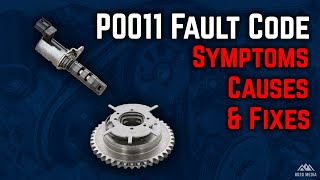
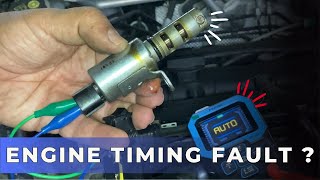
How to confirm: A definitive diagnostic step for the 2.0L engine is to swap the identical intake and exhaust VCT solenoids. They are easily accessible on top of the engine. Clear the codes and drive the vehicle. If the code changes to P0014 (Exhaust Camshaft Position), the original intake solenoid is confirmed to be faulty. You can also test the solenoid's resistance with a multimeter 🎬 Watch: A mechanic explains Ford VCT solenoid diagnostics. or apply 12V to see if it actuates with an audible click.
Typical fix: Replace the Bank 1 intake VCT solenoid and perform an oil and filter change to prevent the new part from failing for the same reason. Per Ford's TSBs, a technician with a high-level scan tool can first try running the 'Pinpoint Test HK12' which cycles the solenoid 10 times to try and dislodge debris before replacement.
Est. part cost: $30-$90
Rare But Worth Checking
- Failing Camshaft Phaser: The phaser is the mechanical gear that actually adjusts the timing. It can become stuck, fail internally, or have its internal lock pin break, but this is much less common than a solenoid issue. This is a more expensive and labor-intensive repair, so rule out oil and solenoid issues first.
- Stretched Timing Chain (2.0L) or Degrading Wet Belt (1.0L): On the 2.0L, a stretched timing chain can cause the base timing to be off. On the 1.0L, a degrading 'wet' timing belt or oil pump belt can shed material, clogging the oil pickup tube and starving the VCT system of pressure. This is a serious issue often preceded by an intermittent oil pressure light or accompanied by rattling noises.
- Wiring or Connector Issue: Damage to the wiring harness or a loose/corroded connection at the VCT solenoid can cause an electrical fault. This would more commonly set a circuit code like P0010, but it's worth a visual inspection for oil saturation or physical damage.
Diagnosis Steps
- Read the code with an OBD-II scanner and document any other codes present.
- Check the engine oil level and condition. If the oil is low, dirty, or the wrong viscosity, perform an oil and filter change with the correct Ford-specified oil. This is the most critical first step. Clear the codes and see if P0011 returns.
- Inspect the electrical connector and wiring for the intake VCT solenoid. Look for any damage, corrosion, or oil contamination.
- For the 2.0L engine, swap the intake VCT solenoid with the exhaust VCT solenoid. They are identical and easily accessible. Clear the codes and drive the vehicle. If the code changes to P0014, you have confirmed the solenoid is bad.
- If the code returns and did not change after the swap, consider testing the solenoid directly by applying 12V power and listening for a click. No click means the solenoid is dead.
- If the solenoid appears to function but the code persists, the issue may be a clogged oil passage in the cylinder head, a failing camshaft phaser, or a base timing issue (chain/belt).
- At this point, more advanced diagnostics like checking oil pressure with a mechanical gauge (especially on the 1.0L) or inspecting the timing components may be necessary, which might require professional help.
Parts You'll Likely Need
- Engine Variable Valve Timing (VCT) Solenoid
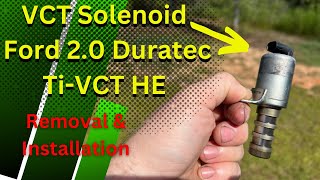
(OEM #CM5Z-6M280-C (for 2.0L Ti-VCT), CM5Z-6M280-G (for 1.0L EcoBoost))— This is the most common part to fail. It gets clogged with oil debris and sticks, preventing correct camshaft timing adjustment. The original part number for the 2.0L was CM5Z-6M280-A, which has been superseded by CM5Z-6M280-C. 🎬 See this walkthrough for removing and installing the solenoid.
Trusted brands: Motorcraft (OEM), Dorman, NGK, Spectra Premium
OEM price range: $60-$90
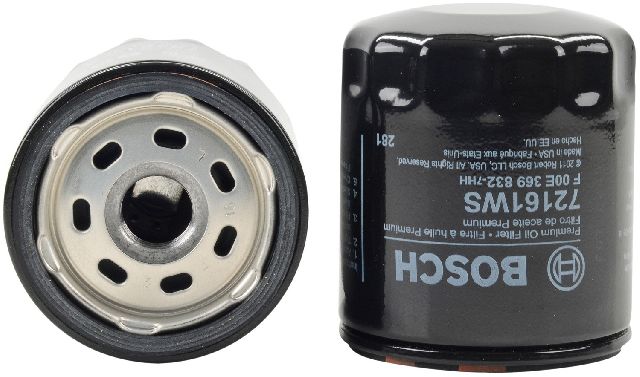
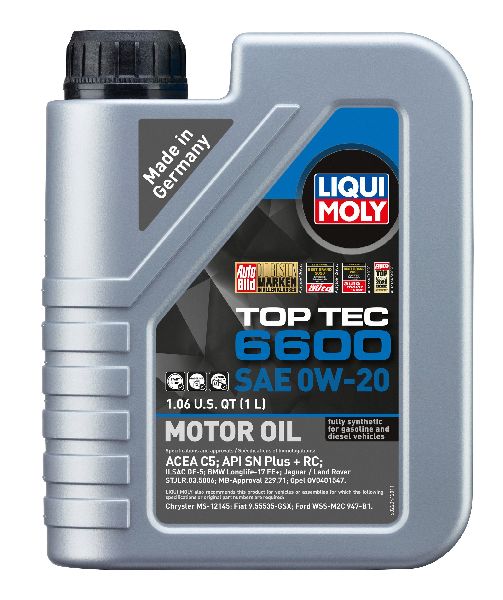
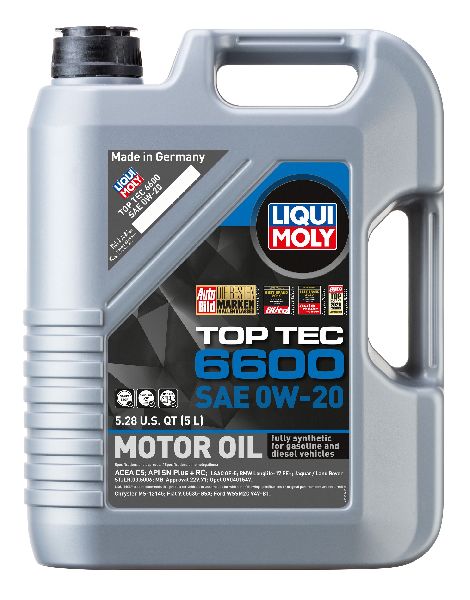
Aftermarket price range: $30-$60 - Engine Oil and Filter — Clean oil of the correct viscosity is critical for the VCT system to function. An oil change is a required first step and often fixes the problem on its own. It's also required when replacing a solenoid to prevent immediate contamination of the new part.
Trusted brands: Motorcraft
OEM price range: $40-$70
Aftermarket price range: $30-$50
Related Codes That Often Appear With This One
- P0012 — This code is for 'Timing Over-Retarded'. Seeing both P0011 and P0012 can indicate an erratic VCT solenoid that is sticking intermittently in both advanced and retarded positions.
- P0014 — This is the equivalent code for the exhaust ('B') camshaft. It may appear if oil contamination is affecting both solenoids, or it will appear if you swap a faulty intake solenoid to the exhaust side for diagnosis.
- P0016 — This indicates a correlation problem between the crankshaft and intake camshaft. It can be triggered by the same root causes, such as a severely stuck VCT solenoid or a jumped timing chain/belt, and points to a more significant timing deviation.
Technical Service Bulletins (TSBs) & Recalls
- SSM 50067 / NHTSA ID 10194428: Affects 2015-2021 Ford/Lincoln vehicles. States that DTCs like P0011 may be caused by small debris causing the VCT solenoid to stick. Recommends running Pinpoint Test HK12 to cycle the solenoid 10 times to attempt to clear debris before replacement.
- SSM 48423 / NHTSA ID 10169986: An earlier TSB for 2015-2020 vehicles with similar advice to SSM 50067, confirming this is a long-standing known issue.
- Recall 23V-905 / Ford 23S64: A safety recall for 2018-2022 EcoSport models with the 1.0L engine. The oil pump drive belt tensioner and/or belt may fracture, leading to a loss of oil pressure. This is a critical root cause for P0011 on this engine.
Platform-Specific Known Issues
- 1.0L EcoBoost Wet Belt Degradation: The 1.0L engine uses a timing belt that runs in oil. This belt, along with a separate oil pump belt, can degrade over time. The resulting rubber debris can clog the oil pickup tube and VCT solenoids, causing oil pressure issues and timing codes like P0011. This is a well-documented issue and is the subject of Ford safety recall 23V-905 for the oil pump belt tensioner.
- Sticking VCT Solenoids: Ford has issued multiple Special Service Messages (SSM 48423, SSM 50067) for a wide range of vehicles, including the EcoSport, acknowledging that VCT codes are often caused by debris in the solenoids. The official procedure suggests cycling the solenoid with a scan tool (Pinpoint Test HK12) to try and clear it before replacement.
Mechanic-Grade Diagnostic Values
- VCT Solenoid Internal Resistance — expected: 6.9 to 14 Ohms.. Failure: A reading of OL (infinite) indicates an open coil; a reading near zero indicates a shorted coil.
- VCT Solenoid Connector Voltage (Key On, Engine Off) — expected: Approximately 12V (Battery Voltage) at the power supply pin.. Failure: No voltage or significantly low voltage points to a wiring issue, blown fuse, or problem with the PCM power relay.
- Scan Tool PID: VCT_ADV_ERR (VCT Advance Error) — expected: Should hover around 0 degrees, with no more than a +/- 5 degree variance at steady RPM.. Failure: A large, persistent positive value indicates the camshaft is over-advanced compared to the PCM's command, which directly triggers code P0011.
- 1.0L EcoBoost Engine Oil Pressure (Mechanical Gauge) — expected: At least 14.5-15 psi at hot idle; 45-65 psi at 3,000 RPM.. Failure: Pressure below these minimums is a strong indicator of a clogged oil pump pickup screen due to wet belt degradation.
- 2.0L Ti-VCT Engine Oil Pressure (Mechanical Gauge) — expected: 29.0 - 38.8 psi at hot idle at 2,000 RPM.. Failure: Pressure below this range indicates an oil delivery problem (e.g., failing oil pump, internal blockage) that will starve the VCT system.
Hidden / Shadow Codes Worth Checking
- Mode $06, Test ID $53: This is not a DTC, but a diagnostic monitor test for the VVT system. It provides raw test data on camshaft timing performance, showing the measured value versus the minimum and maximum allowable thresholds. A value approaching the max limit can indicate a problem before a code is set. (see via This data is accessible in the 'Generic OBD-II' or 'On-Board Monitoring' section of a professional scan tool.)
Scan Tool Commands That Help
- Ford IDS (Integrated Diagnostic System): Pinpoint Test HK12: VCT Solenoid Cycle Test — This is a Ford-specific bidirectional command mentioned in TSBs SSM 50067 and 48423. It cycles the VCT solenoid on and off 10 times to attempt to dislodge small debris causing it to stick. It should be used after an oil change but before replacing the solenoid, as it can sometimes resolve the fault without parts replacement.
- Ford IDS (Integrated Diagnostic System): Datalogger with VCT_ADV_ERR PID — To diagnose an intermittent issue, a technician can datalog the VCT error PIDs while driving the vehicle to replicate the fault conditions. Viewing the data as a histogram can help identify anomalies and confirm if the VCT system is the source of a drivability complaint when no hard codes are present.
"I Checked Everything" — The Actual Cause
- A common scenario is not a failed smoke test, but when the VCT solenoid passes basic electrical tests (resistance is within spec, and it clicks when 12V is applied). The code still returns because the actual cause is insufficient or contaminated oil flow that prevents the solenoid from moving correctly under dynamic engine conditions. On the 1.0L EcoBoost, this points directly to a clogged oil pickup screen from a degrading wet belt, which can only be confirmed with a mechanical oil pressure test.
OEM Part Supersession History
CM5Z-6M280-A→CM5Z-6M280-C— The part was updated for improved durability and resistance to contamination, which is the primary failure mode. The -C revision is the current OEM replacement for the 2.0L Ti-VCT engine.
Model Year Variations Within This Range
- 2018-2021: The 1.0L EcoBoost 3-cylinder engine was available on FWD models. For the 2022 model year, the 1.0L was dropped, and all EcoSport models came standard with the 2.0L 4-cylinder and AWD. Therefore, the wet belt failure mode is not applicable to 2022 models.
Diagnostic Flowchart
Other Known Issues on This Vehicle
Issues unrelated to this code that are worth knowing about as an owner of this generation:
- 1.0L EcoBoost Oil Pump Failure / Wet Belt Degradation 🔴 High — A widely acknowledged issue, particularly as vehicles age. Ford issued recall 23V-905 for the oil pump belt tensioner. Failure can occur without warning and lead to total engine loss. (Ref: Recall 23V-905 / Ford 23S64)
- Automatic Transmission Problems (6F35) 🟠 Medium — Complaints of jerky shifting, hesitation, and sometimes premature failure are noted, particularly for the 2018 and 2019 model years. Problems can appear between 40,000 and 80,000 km.
- Engine Coolant Leaks (1.0L EcoBoost) 🟠 Medium — Early versions of the 1.0L EcoBoost engine family were known for coolant leaks from various points which could lead to overheating and engine damage.
Used vs. New Parts: Buying Guide for This Vehicle
When a used part is the smart pick: For this specific repair, buying a used VCT solenoid is strongly discouraged. The part's primary failure mode is contamination from old or dirty oil. A used part from a salvage yard carries an unknown history and is highly likely to fail for the same reason as the original part.
What to inspect on the donor part:
- Not applicable, as used solenoids are not recommended.
OEM-only on this vehicle (don't cheap out):
- Engine Variable Valve Timing (VCT) Solenoid: Due to the high sensitivity to oil quality and the critical function of the part, using an OEM Motorcraft solenoid is strongly recommended by mechanics to avoid premature failure and repeat repairs.
Aftermarket brands forum-validated for this vehicle:
- NGK/NTK
- Spectra Premium
Brands owners have reported issues with on this vehicle:
- Dorman: While widely available, many professional technicians and forum users report a high failure rate for Dorman electronic components and solenoids, often leading to doing the job twice.
Real Owner Stories
Aggregated from forums and TSBs cited above. Mileages and costs reflect what owners reported in those sources.
2018 Ford EcoSport 1.0L EcoBoost
Symptoms: Discussion regarding the reliability of the engine and the 'wet belt' degradation issue which leads to eventual engine failure.
What fixed it: The issue is addressed by Ford safety recall 23V-905 regarding the oil pump belt tensioner and belt fracturing.
Source hint: FordOwnersClub Forum thread titled 'Are there any issues with the 2018 ecosport 1 litre?'
2015-2021 Ford/Lincoln vehicles (including EcoSport)
Symptoms: DTC P0011 caused by small debris causing the VCT solenoid to stick.
What fixed it: Running Pinpoint Test HK12 to cycle the solenoid 10 times to attempt to clear debris before replacement.
Source hint: SSM 50067 / NHTSA ID 10194428
Related OBD-II Codes
Frequently Asked Questions
My 2018 EcoSport 1.0L has a P0011 code; is there a recall for this?
What does Ford SSM 50067 say about fixing P0011 on my EcoSport?
Can I swap parts to diagnose P0011 on the 2.0L Ti-VCT engine?
Will using the wrong oil viscosity trigger P0011 on my Ford?
Is the 'wet belt' issue related to the P0011 code on the 1.0L EcoBoost?
What is the first thing I should check if my EcoSport throws a P0011?
Helpful Videos
![How to Fix P0011 Engine Code in 4 Minutes [2 DIY Methods / Only $6.95]](https://img.youtube.com/vi/Il4J5NOlYPg/mqdefault.jpg)
Used OEM Parts in Stock

New Aftermarket Parts Available


The information in this article is provided for general reference and educational purposes only. Vehicle specifications, procedures, and part compatibility can vary by production date, trim level, and region. Always consult your vehicle's factory service manual and verify part numbers before purchasing or performing repairs. Safety-critical components such as airbags, seat belts, and braking systems should be installed by a qualified professional.
- Ford EcoSport:
- 🎬 Helpful Videos
- 🛍️ Shop This Part
- What's Unique About the 2018-2022 Ford EcoSport
- Symptoms You May Notice
- Most Likely Causes
- Rare But Worth Checking
- Diagnosis Steps
- Parts You'll Likely Need
- Related Codes That Often Appear With This One
- Technical Service Bulletins (TSBs) & Recalls
- Platform-Specific Known Issues
- Mechanic-Grade Diagnostic Values
- Hidden / Shadow Codes Worth Checking
- Scan Tool Commands That Help
- "I Checked Everything" — The Actual Cause
- OEM Part Supersession History
- Model Year Variations Within This Range
- Diagnostic Flowchart
- Other Known Issues on This Vehicle
- Used vs. New Parts: Buying Guide for This Vehicle
- Real Owner Stories
- 2018 Ford EcoSport 1.0L EcoBoost
- 2015-2021 Ford/Lincoln vehicles (including EcoSport)
- Related OBD-II Codes
- Frequently Asked Questions
- 🎟️ Get 5% Off