

P0010 on 2017-2022 Honda CR-V 1.5L Turbo: VTC Solenoid Circuit Causes and Fixes
On a 2017-2022 Honda CR-V with the 1.5L Turbo, P0010 is almost always caused by low or dirty engine oil, or a faulty intake camshaft position actuator solenoid (VTC solenoid). First, check your oil. If the oil is full and clean, the solenoid is the next likely culprit, costing about $40-$80 for an aftermarket part. This is a common issue on the L15B7 engine due to its sensitivity to oil quality and a known oil dilution problem.
- P0010 on your CR-V points to an electrical problem with the intake VTC solenoid circuit, not a mechanical timing failure.
- ALWAYS check your engine oil level and condition first. Low or dirty oil, often caused by fuel dilution on this engine, is the most common cause and the cheapest fix.
- If the oil is good, the VTC solenoid itself is the most likely failed part. It's a relatively inexpensive and accessible part to replace for a DIYer.
- Do not confuse the VTC solenoid (actuator) with the camshaft position sensor. They are different parts that cause different codes.
What's Unique About the 2017-2022 Honda CR-V
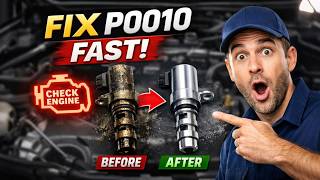
The L15B7 1.5L Turbo engine, particularly in earlier years (2017-2019), has a well-documented issue with fuel diluting the engine oil, especially during short trips in cold weather. This oil dilution degrades the oil's viscosity and lubricating properties faster than usual. Since the VTC system is hydraulic and relies on clean oil of the proper grade and pressure to function, this platform is more susceptible to codes like P0010. The contaminated oil can clog the fine mesh screen on the VTC solenoid, leading to circuit faults or performance issues. 🎬 Watch: What causes a P0010 code and how to fix it Honda has issued software updates and warranty extensions to address the oil dilution problem in some cases.
Symptoms You May Notice
- Check Engine Light is on
- Rough or unstable idle
- Reduced engine power and sluggish acceleration
- Decreased fuel economy
- Engine hesitation
- Rattling noise from the engine on occasion
- Replacing the Camshaft Position SENSOR. P0010 is a circuit code for the ACTUATOR (solenoid), not the sensor. A bad sensor would set a different code, like P0340 or P0341.
- Replacing the VTC Actuator (Cam Phaser). The actuator is the mechanical gear on the camshaft. P0010 is an electrical circuit code. A bad mechanical actuator would typically cause a startup rattle or a performance code like P0011.
Most Likely Causes
- Low or Dirty Engine Oil 🔴 High Probability The VTC system is hydraulic and highly sensitive to oil level and quality. The L15B7 engine can experience oil dilution, which degrades oil faster and can clog the VTC solenoid's screen.
How to confirm: Check the engine oil dipstick. The oil should be within the 'full' range and appear clean (not black, sludgy, or smelling strongly of gasoline). An oil level that is rising over time is a key indicator of fuel dilution.
Typical fix: Perform an oil and filter change using the manufacturer-specified oil (0W-20 full synthetic). This simple step resolves the issue in a significant number of cases.
Est. part cost: $30-$70 - Faulty 'A' (Intake) Camshaft Position Actuator Solenoid (VTC Oil Control Valve) 🔴 High Probability The solenoid can fail electrically (internal short/open) or become clogged with debris from dirty or fuel-diluted oil, leading to a circuit fault.
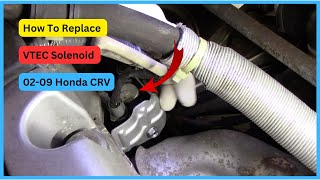
How to confirm: After confirming oil is good, test the solenoid. Disconnect it and measure the resistance between its two pins using a multimeter. A typical reading for a Honda solenoid is between 6.9 and 7.9 ohms at 68°F (20°C). A reading outside this range or an open circuit (infinite ohms) indicates a bad solenoid. A diagnostic swap with the identical exhaust VTC solenoid can also confirm failure 🎬 See how to replace the VTC solenoid in minutes if the code changes to P0013.
Typical fix: Replace the VTC oil control solenoid and its gasket/screen. It is located on the passenger side of the cylinder head.
Est. part cost: $40-$120 - Wiring or Connector Issue ⚪ Low Probability Rodent damage to engine harnesses is a known, though not frequent, issue on this platform. Wires can also become brittle from heat cycles.
How to confirm: Visually inspect the wiring harness and connector going to the VTC solenoid for any signs of damage, corrosion, or loose pins. Use a multimeter to check for continuity and proper voltage at the connector with the key on.
Typical fix: Repair the damaged wire or clean/replace the connector.
Est. part cost: $5-$50
Rare But Worth Checking
- Faulty Powertrain Control Module (PCM): This is extremely rare and should only be considered after all other possibilities (oil, solenoid, wiring) have been exhaustively ruled out by a professional. A stuck VTC duty cycle PID reading on a scanner despite a good solenoid and wiring can point to a PCM driver issue.
Diagnosis Steps
- Read the code using an OBD-II scanner to confirm P0010 is present.
- Check the engine oil level and condition. If it is low, dirty, or smells strongly of fuel, perform an oil and filter change with the correct grade oil (0W-20 Full Synthetic). Clear the code and drive to see if it returns. This is the most critical and cheapest first step.
- If the oil is good, locate the 'A' (Intake) VTC oil control solenoid. On the L15B7, it is on the passenger side of the cylinder head, typically with a grey or black electrical connector.
- Inspect the electrical connector and wiring for any damage, corrosion, or loose connections.
- Disconnect the solenoid's electrical connector. Use a multimeter to measure the resistance across the two pins on the solenoid itself. The reading should be within Honda's specification, typically between 6.9 and 7.9 ohms. If the resistance is out of spec (e.g., infinite for an open circuit or near zero for a short), the solenoid is faulty and must be replaced.
- If the solenoid resistance is good, you can perform a functional test. With the engine idling, briefly apply 12V power and ground to the solenoid pins; you should hear a click and see a change in engine idle. Failure to do so indicates a stuck solenoid.
- If the solenoid tests good, check the wiring. With the ignition ON and engine OFF, check for battery voltage on one pin of the connector and for a good ground signal from the PCM on the other (this may require a wiring diagram).
- A helpful diagnostic trick for this engine is to swap the identical intake and exhaust VTC solenoids. Clear the codes and drive. If the fault code changes to P0013 ('B' Camshaft Position Actuator Circuit), it confirms the solenoid you moved is the bad part.
- If wiring and the solenoid test good, the issue could be an intermittent connection or, very rarely, a problem with the PCM driver circuit.
Parts You'll Likely Need
- 'A' (Intake) VTC Oil Control Solenoid
(OEM #15830-59B-004)— This solenoid is the most common part to fail electrically or become clogged, directly causing the P0010 circuit fault.
Trusted brands: Honda (OEM), Denso, Dorman, Standard Motor Products (SMP)
OEM price range: $70-$120
Aftermarket price range: $40-$80 - Engine Oil and Filter — Low or contaminated oil is a primary cause of VTC system faults and should be addressed before replacing any parts. Fuel dilution is a known issue on this platform, making fresh oil critical.
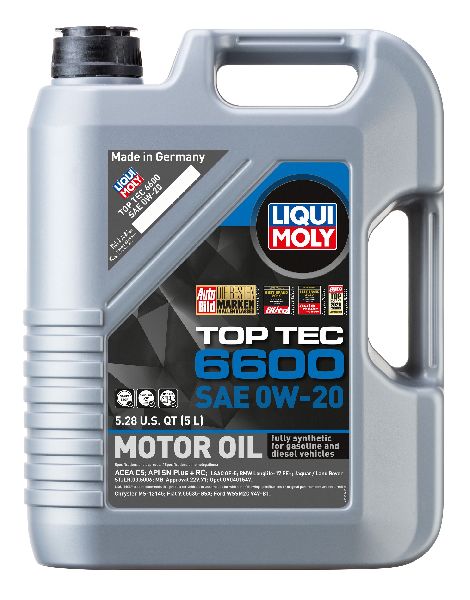
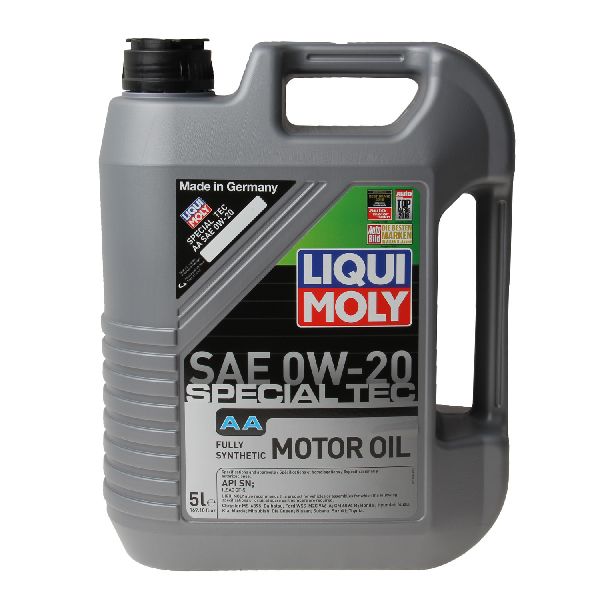
Trusted brands: Mobil 1, Castrol, Valvoline, Idemitsu (Honda OEM supplier)
OEM price range: $50-$70
Aftermarket price range: $30-$50
Related Codes That Often Appear With This One
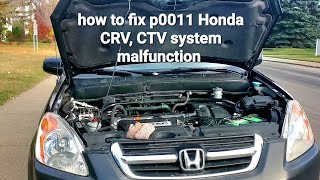
- P0011 — P0011 indicates 'Camshaft Position 'A' - Timing Over-Advanced or System Performance'. An electrical fault in the solenoid (P0010) can prevent it from moving correctly, leading to a mechanical timing performance fault (P0011). 🎬 Watch: How to diagnose and fix Honda VTC system codes
- P0172 — P0172 indicates 'System Too Rich'. This can be a companion code if the root cause of the VTC issue is severe oil dilution, which can also affect the air/fuel mixture.
Technical Service Bulletins (TSBs) & Recalls
- Honda TSB 18-114 / 18-124: While not directly for P0010, these product update bulletins address the oil dilution issue on 2017-18 CR-Vs by updating software to help fuel evaporate from the oil more effectively. This is relevant as oil dilution is a primary cause of VTC faults.
- Honda TSB 22-002: This is a warranty extension for fuel injector issues on some 2017-2019 CR-Vs. While not a direct cause of P0010, faulty injectors can contribute to poor combustion and oil dilution, indirectly affecting the VTC system.
- TSB Bulletin #A18-090: In other Honda models with similar VTC architecture, the manufacturer notes that a variable valve timing control malfunction (P0010) may trigger the MIL, requiring specific software updates.
- TSB Bulletin #ABOM10042018901: Honda documentation indicates that PCM software issues can lead to incorrect operation of the EVTC, causing P0010 to set.
- TSB Bulletin #A18-079: This bulletin identifies that the MIL may come on with P0010 (variable valve timing control malfunction) and was later replaced by updated product guidance for software corrections.
Platform-Specific Known Issues
- Forum discussions on CRVOwnersClub.com frequently link P0010 and related VTC codes (P0011, P0013, P0014) to the oil dilution problem on 2017-2019 models. Owners report that more frequent oil changes (every 3,000-5,000 miles) than the maintenance minder suggests can prevent the code from appearing.
- A user on a Honda Civic forum with the same L15B7 engine reported getting a P0010 code at 60,000 miles. After verifying the oil was clean and full, they replaced the intake VTC solenoid (part #15830-59B-004), which resolved the issue immediately. The repair took approximately 20 minutes.
- Another CR-V owner on Reddit described experiencing a rough idle and P0010 code. The dealership first performed a software update related to the oil dilution campaign, changed the oil, and the code did not return, highlighting the importance of addressing the oil quality first.
Mechanic-Grade Diagnostic Values
- VTC Oil Control Solenoid Resistance — expected: 6.9 to 7.9 Ω at 20°C (68°F). Some sources for similar Honda engines cite a slightly wider range of 6.75-8.25 Ω.. Failure: A reading of infinity (OL) indicates an open internal coil. A reading near zero ohms indicates a short circuit. Any reading outside the specified range suggests the solenoid is electrically faulty.
- PCM Fault Detection Logic (Current vs. Duty Cycle) — expected: The PCM monitors the current draw of the solenoid and expects it to be proportional to the commanded pulse-width modulated (PWM) duty cycle.. Failure: P0010 can be set if the PCM commands a high duty cycle (e.g., >40%) but measures low current (e.g., <200 mA), indicating an open circuit. It can also be set if the PCM commands a low duty cycle (e.g., <5%) but measures high current (e.g., >800 mA), indicating a short circuit.
- Wiring Harness Continuity (Solenoid Connector to PCM) — expected: Less than 1.0 Ω on both the power and control wires between the solenoid connector and the corresponding pins at the PCM connector.. Failure: A resistance reading higher than 1.0 Ω indicates excessive resistance or an open in the wire.
- Wiring Harness Short to Ground Check — expected: 10 kΩ or higher between each wire (at the PCM connector) and body ground.. Failure: A low resistance reading indicates a short to ground in the harness.
Scan Tool Commands That Help
- Honda Diagnostic System (HDS) or equivalent professional scan tool: VTC Test or Active Test (VVT CTRL B1) — This bidirectional test allows the technician to command the VTC solenoid ON and OFF while the engine is idling. When the solenoid is commanded ON, the engine idle should become rough or the engine may stall. If there is no change in idle, it indicates a problem with the solenoid, wiring, or oil pressure, helping to confirm a fault after initial checks.
Wiring & Ground Locations
- VTC Solenoid Connector — On the passenger side of the cylinder head. The intake ('A') solenoid is one of two similar-looking solenoids; it is typically the one closer to the intake manifold.. This is the primary connection point to test the solenoid's resistance and to check for power/ground signals from the PCM. Corrosion or damage here is a direct cause of P0010.
- PCM Connector E (80-pin) — The PCM is typically located in the engine bay. The specific pins for the intake VTC solenoid must be identified using a model-year specific wiring diagram.. This is the termination point for the VTC solenoid circuit. Testing for continuity and shorts between this connector and the solenoid connector is the definitive way to rule out wiring harness faults.
OEM Part Supersession History
15830-59B-003→15830-59B-004— Likely a minor revision for manufacturing improvement or material change. Functionality remains the same.
Model Year Variations Within This Range
- 2017-2019: The base LX trim used a naturally aspirated 2.4L engine. The 1.5L Turbo (L15B7) was standard on EX, EX-L, and Touring trims. These earlier years are more commonly associated with the oil dilution issue that can lead to VTC problems.
- 2020-2022: Following a 2020 model year refresh, the 1.5L Turbo (L15B7) engine became standard across all non-hybrid trims, including the base LX. These models also received updated software and minor design changes, potentially including improvements to mitigate oil dilution.
Diagnostic Flowchart
Other Known Issues on This Vehicle
Issues unrelated to this code that are worth knowing about as an owner of this generation:
- Fuel Dilution of Engine Oil 🔴 High — Common, especially on 2017-2019 models used for frequent short trips in cold climates. Can lead to premature engine wear if not managed. (Ref: Honda TSB 18-114, 18-124 (Software Update), and associated warranty extensions.)
- Fuel Injector Failure 🟠 Medium — Reported frequently enough to warrant a warranty extension, often occurring between 40k-70k miles. Can cause misfires and rough running. (Ref: Honda TSB 22-002 (Warranty Extension).)
- Sticky Steering at Highway Speeds 🔴 High — Widespread issue affecting 2022+ models (and other Honda/Acura models) leading to a major investigation and recall. Feels like the steering wheel momentarily 'catches' or 'locks'. (Ref: NHTSA Recall 24V-744; Honda TSB 23-037.)
- Premature 12V Battery Failure / Parasitic Drain 🟡 Low — Common complaint on 2017-2019 models where the battery dies unexpectedly. Sometimes related to a software issue causing a power draw after shutdown. (Ref: Software updates were issued to dealers to address the parasitic draw.)
- Fuel Pump Failure 🟠 Medium — Affects 2018-2019 models, causing stalling or no-start conditions. The fuel pump impeller can swell and fail. (Ref: Honda TSB A21-031 (Not a full recall, but a service campaign).)
Used vs. New Parts: Buying Guide for This Vehicle
When a used part is the smart pick: A used VTC solenoid from a reputable auto recycler can be a cost-effective option, as it is an external, easily-replaced component. It is not a critical internal engine part that requires significant labor to access.
Donor-vehicle mileage cap: roughly under 80000 miles for the part to have meaningful remaining life.
What to inspect on the donor part:
- Visually inspect the mesh screen on the solenoid. It should be perfectly clean and free of any sludge, metal particles, or debris.
- Check the electrical connector pins for any signs of corrosion, bending, or damage.
- If possible, test the resistance with a multimeter before purchase. It should fall within the 6.9-7.9 ohm range.
- Ask for the donor vehicle's VIN to check its service history for regular oil changes, if possible.
OEM-only on this vehicle (don't cheap out):
- Powertrain Control Module (PCM)
Aftermarket brands forum-validated for this vehicle:
- Denso (often the OEM supplier)
- Standard Motor Products (SMP)
- Dorman
Brands owners have reported issues with on this vehicle:
- No-name, unbranded solenoids from online marketplaces should be avoided, as their internal coil resistance and mechanical tolerances can be inconsistent, leading to the code returning.
Real Owner Stories
Aggregated from forums and TSBs cited above. Mileages and costs reflect what owners reported in those sources.
2017-2019 Honda CR-V 1.5T
Symptoms: Rough idle and Check Engine Light with code P0010.
What fixed it: The dealership performed a software update related to the oil dilution campaign and changed the engine oil.
Source hint: Reddit r/CRV (as cited in vehicle_specific_issues)
2016-2021 Honda Civic 1.5T (L15B7) — 60000 miles
Symptoms: P0010 code triggered despite oil being clean and full.
What fixed it: Replaced the intake VTC solenoid (part #15830-59B-004). The repair took approximately 20 minutes.
Source hint: 10thGenCivic.com forum (as cited in vehicle_specific_issues)
Related OBD-II Codes
Frequently Asked Questions
How does the oil dilution issue on my 2017-2018 CR-V relate to the P0010 code?
Can I use any engine oil to fix this issue on my 1.5T Turbo engine?
Is there a specific part number I should look for if I need to replace the intake VTC solenoid?
Could my fuel injector issues be causing this P0010 code?
Where is the VTC oil control valve located on the CR-V 1.5L Turbo?
How often should I change my oil to prevent VTC codes on this vehicle?
Helpful Videos

Used OEM Parts in Stock

New Aftermarket Parts Available


The information in this article is provided for general reference and educational purposes only. Vehicle specifications, procedures, and part compatibility can vary by production date, trim level, and region. Always consult your vehicle's factory service manual and verify part numbers before purchasing or performing repairs. Safety-critical components such as airbags, seat belts, and braking systems should be installed by a qualified professional.
- Honda CR-V:
- 🎬 Helpful Videos
- 🛍️ Shop This Part
- What's Unique About the 2017-2022 Honda CR-V
- Symptoms You May Notice
- Most Likely Causes
- Rare But Worth Checking
- Diagnosis Steps
- Parts You'll Likely Need
- Related Codes That Often Appear With This One
- Technical Service Bulletins (TSBs) & Recalls
- Platform-Specific Known Issues
- Mechanic-Grade Diagnostic Values
- Scan Tool Commands That Help
- Wiring & Ground Locations
- OEM Part Supersession History
- Model Year Variations Within This Range
- Diagnostic Flowchart
- Other Known Issues on This Vehicle
- Used vs. New Parts: Buying Guide for This Vehicle
- Real Owner Stories
- 2017-2019 Honda CR-V 1.5T
- 2016-2021 Honda Civic 1.5T (L15B7) — 60000 miles
- Related OBD-II Codes
- Frequently Asked Questions
- 🎟️ Get 5% Off