

C1110 on 2016-2021 Honda Civic: Electric Parking Brake Actuator Fault Causes and Fixes
On a 10th generation (2016-2021) Honda Civic, code C1110 almost always indicates a problem with the left rear Electric Parking Brake (EPB) actuator or its wiring. The most common fix is replacing the actuator motor, which costs about $100-$150 for an aftermarket part and is a DIY-friendly job for many. Checking the connector first is critical, especially after a brake job.
- C1110 on a 2016-2021 Civic means there's a problem with the driver's side rear Electric Parking Brake actuator.
- Before buying any parts, physically check the electrical connector on the back of the left rear brake caliper. It is often loose or damaged, especially after a brake job.
- If the connector is secure, the actuator motor itself has likely failed and needs to be replaced. This is a bolt-on part separate from the caliper.
- This fault will trigger a cascade of warning lights, including ABS, VSA, and Brake System, but your primary hydraulic brakes will still work.
- The parking brake function is compromised and should not be trusted until the fault is repaired.
What's Unique About the 2016-2021 Honda Civic

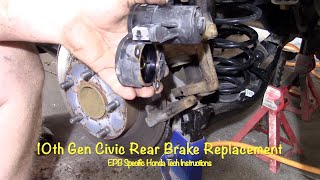
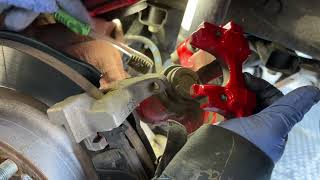
The 10th generation Civic was one of the first mass-market Honda models to feature an Electric Parking Brake (EPB) with an automatic Brake Hold function. This system replaces the traditional hand lever or foot pedal with a switch and two electric motor actuators on the rear calipers. This design makes rear brake service more complex, as the caliper piston cannot be simply compressed. It must be retracted either by using a scan tool to put the system in 'Brake Maintenance Mode' or by manually turning the internal mechanism after removing the actuator motor. Failure to follow the correct procedure is a leading cause of this specific code, as mechanics unfamiliar with the system can easily damage the actuator's fragile connector or internal gearing.
Symptoms You May Notice

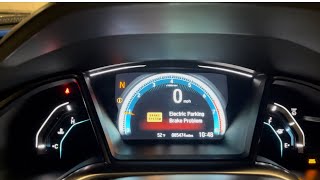
- Primary "Brake System Problem" warning message on the multi-information display
- Illuminated ABS, VSA, and a flashing or solid red "BRAKE" warning light
- Warning lights for related systems may also appear, such as Adaptive Cruise Control (ACC), Lane Keeping Assist (LKAS), and Brake Hold
- The Electric Parking Brake will not engage or disengage via the console switch
- Audible warning chimes when the car is started or the switch is pressed
- Replacing the entire rear brake caliper when only the bolt-on actuator motor is needed.
- Replacing the parking brake switch in the center console, which is not related to a side-specific circuit fault like C1110.
- Assuming the actuator is bad without first meticulously checking that its electrical connector is fully seated and locked, especially right after a brake job.
- Condemning the actuator without checking the intermediate harness connector located in the wheel well, which can become disconnected.
Most Likely Causes

- Faulty Left Rear Electric Parking Brake (EPB) Actuator 🔴 High Probability The actuator is a small electric motor bolted to the rear of the caliper, exposed to road salt, water, and debris. Internal motor failure or gear stripping can occur over time. Water intrusion from a failed O-ring seal between the motor and caliper is a possible failure mode.
How to confirm: After verifying the wiring and connector are secure and have continuity, use a bidirectional scan tool to command the left rear EPB actuator. If it does not respond (no audible whirring or movement) but has power and ground at the connector, the actuator has failed internally.
Typical fix: Replace the left rear parking brake actuator. This is a separate motor that bolts onto the back of the brake caliper with two small bolts. The caliper itself does not need to be replaced.
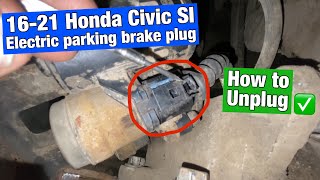
Est. part cost: $80-$150 (Aftermarket), $350-$400 (OEM) - Loose or Damaged Electrical Connector 🟡 Medium Probability This is the most common cause of C1110 immediately following a rear brake service. The two-pin connector on the actuator is often forgotten, not fully seated, or the locking tab is broken by mechanics 🎬 See how to safely unplug the electric parking brake connector. unfamiliar with the EPB system.
How to confirm: Visually inspect the connector at the left rear brake caliper. Disconnect it, check for bent, spread, or corroded pins, and look for damage to the plastic housing or locking tab. Reconnect it firmly, ensuring it clicks securely into place. Clear codes and re-test.
Typical fix: Secure the connector. If the connector or pigtail is damaged, it will need to be repaired or replaced. A zip-tie can be used as a temporary measure if the locking tab is broken but the connection is otherwise sound.
Est. part cost: $0-$30 - Damaged Wiring Harness ⚪ Low Probability The wiring runs along the rear suspension and can be susceptible to road debris, improper jacking, animal damage (rodents chewing soy-based wire insulation), or chafing. A commonly missed failure point is an intermediate connector located in the wheel well, between the main body harness and the pigtail to the actuator.
How to confirm: Perform a continuity test on the two wires running from the VSA modulator control unit to the left rear EPB actuator connector. An open circuit or short to ground will confirm a wiring fault. Visually trace the harness from the wheel well into the car for any obvious damage.
Typical fix: Repair the broken or shorted section of the wiring harness using solder and heat shrink or appropriate automotive connectors.
Est. part cost: $5-$25
Rare But Worth Checking
- VSA Modulator-Control Unit Failure: This is the main computer for the brake system. While it's a possible cause listed in the service manual, it is extremely unlikely to be the issue compared to the actuator or its wiring. This should only be considered after all other possibilities have been exhaustively ruled out by a qualified technician.
- Low Battery Voltage: Hondas are known to exhibit strange electrical behavior when the battery is failing. A weak battery can cause communication errors within the EPB system. While not a direct cause of a side-specific code like C1110, it can be a contributing factor to general EPB faults and should be ruled out if multiple, seemingly unrelated electrical warnings appear.
Diagnosis Steps
- Read the fault codes with an OBD-II scanner capable of reading chassis codes to confirm C1110 and any specific suffix (e.g., -13 for open circuit).
- Ask the owner: Was a rear brake job recently performed? This is the single most important contextual clue.
- Visually inspect the left rear wheel area. Locate the two-pin electrical connector on the back of the left rear brake caliper's actuator motor.
- Firmly press on the connector to ensure it is fully seated. Listen for a 'click'. Clear the codes and see if the fault returns. Many fixes end here.
- If the fault persists, trace the harness from the actuator into the wheel well and locate the intermediate connector. Disconnect, inspect, and reseat this connector as well.
- If the fault persists, disconnect the connector at the actuator. Inspect the pins on both the actuator and the harness side for corrosion, moisture, or damage. Check for spread pins that may not be making good contact.
- If the connector and pins look good, use a multimeter to check for continuity on the two wires in the harness running back toward the main VSA module. Check for shorts to ground and power.
- If wiring is confirmed to be good, the next step is to replace the left rear EPB actuator motor. 🎬 Watch this walkthrough on diagnosing and fixing the EPB system.
- After replacement, the system may need to be recalibrated using a scan tool or a manual reset procedure.
- If replacing the actuator does not fix the issue, the problem may lie with the VSA modulator-control unit, which is a rare and expensive failure.
Parts You'll Likely Need

- Left Rear Parking Brake Actuator
(OEM #43021-TEA-T03)— This is the electric motor that fails most frequently, causing the C1110 code. The original part number 43021-TEA-T02 has been superseded by 43021-TEA-T03.
Trusted brands: Genuine Honda, Standard Motor Products (SMP), Dorman, Cardone, Beck Arnley
OEM price range: $350-$400
Aftermarket price range: $80-$150
Related Codes That Often Appear With This One
- C1100-94 — This code for 'Electric Parking Brake Actuator Malfunction' is a general EPB system fault that often accompanies the more specific C1110 code.
- U3000-49 — A Honda TSB (16-067) notes that a communication error between the VSA and EPB systems can cause this 'ECU Internal Failure' code, though it may not be the root cause of the C1110.
Technical Service Bulletins (TSBs) & Recalls
- ATI-03252026907 (NHTSA 10233389) - While for the 2022-23 Civic, it shows Honda is actively investigating failures of the left rear EPB actuator causing C1110-13, indicating it's a known problem area for the component.
- Honda TSB 16-067 - This TSB is for a 2010 Accord Crosstour and addresses a torque converter judder, not the EPB system on a 2016+ Civic. It is not relevant to this code.
Platform-Specific Known Issues
- This fault is commonly reported by owners immediately after having the rear brake pads replaced by shops unfamiliar with the EPB maintenance mode procedure, strongly suggesting improper service is a primary trigger.
- Owner story from CivicX.com forum: A user reported getting the C1110-13 code after a shop replaced their rear brakes. After taking it back, the shop discovered they had not fully plugged in the actuator connector. Once seated properly, the code was cleared and did not return.
- Owner story from Reddit r/MechanicAdvice: A user performed a DIY rear brake job using a scan tool to enter maintenance mode. After reassembly, codes for open circuit and short to ground appeared. The dealership ended up replacing the harness and actuator, highlighting the fragility of the components if not handled correctly.
Mechanic-Grade Diagnostic Values
- System Operating Voltage — expected: 9 - 16 Volts. Failure: Voltage outside this range can cause various electronic faults, including EPB errors.
- Continuity Test for C1110-13 (Open Circuit) — expected: Continuity should exist between the specified pins.. Failure: No continuity indicates an open circuit (broken wire or disconnected connector). Test between Actuator connector pin 1 and VSA modulator 46P connector pin 8. Then test between Actuator connector pin 2 and VSA modulator 46P connector pin 7.
- Continuity Test for C1110-11 (Short to Ground) — expected: No continuity should exist between the specified pins and body ground.. Failure: Continuity indicates a short to ground. Test between VSA modulator 46P connector pin 8 and a clean chassis ground. Then test between VSA modulator 46P connector pin 7 and a clean chassis ground.
Hidden / Shadow Codes Worth Checking
- C1110-13: Left Rear Electric Parking Brake Actuator Circuit Open. This is the most common variant, indicating a break in the wiring or a disconnected connector. (see via A Honda-compatible OBD-II scanner (e.g., Honda HDS, Autel, Snap-on) that can read Chassis (C) codes and their manufacturer-specific suffixes.)
- C1110-11: Left Rear Electric Parking Brake Actuator Circuit Short to Ground. This indicates one of the wires to the actuator is touching the vehicle's chassis. (see via A Honda-compatible OBD-II scanner that can read Chassis (C) codes and their manufacturer-specific suffixes.)
Scan Tool Commands That Help
- Honda HDS, Autel, Snap-on Solus, or similar professional scanner: Brake Pad Maintenance Mode — This function must be used *before* servicing the rear brake pads. It electronically retracts the caliper piston. Failure to use this mode and manually compressing the piston can damage the actuator and cause this code. The same function is used to return the system to 'Normal Mode' after the job is complete.
- Honda HDS or similar bidirectional scanner: Actuator Application/Release Test — Used during diagnosis to command the specific actuator to operate. If voltage is present at the actuator but it doesn't make any noise or move, the actuator motor is confirmed to be faulty.
Wiring & Ground Locations
- VSA Modulator-Control Unit 46P Connector — Located in the engine bay, this is the main control module for the ABS and VSA systems.. This is the source of the command signals for the EPB actuator. Pins 7 and 8 of this connector run directly to the left rear actuator and are the primary test points for diagnosing open circuits or shorts.
- Intermediate Harness Connector — In the left rear wheel well, between the main body harness and the final pigtail that connects to the actuator.. This connector is a common point of failure. It can be left disconnected after service or become corroded, causing an open circuit (C1110-13). It is often overlooked as technicians focus only on the connector directly at the actuator.
- Fuse B34 (10A) — In the under-dash fuse/relay box on the driver's side.. This fuse provides power to the VSA/ABS control unit. While a failure would likely cause more codes than just C1110, it's a relevant power source to be aware of.
Real Owner Repair Stories
- South Main Auto Repair (YouTube) (2017 Honda Civic) — Flashing red 'BRAKE' light and 'Brake System Problem' message on the dash. Code C1110-13 (Left Rear Parking Brake Actuator Circuit Open) was stored.
❌ Tried (didn't work) The vehicle was taken to another shop first, which diagnosed it as needing two new parking brake actuators without proper diagnosis.
✅ What actually fixed it The technician found an intermediate wiring harness connector in the left rear wheel well that was not fully seated. After properly clicking the 'double donger' connector together, the code was cleared and the fault was resolved without replacing any parts.
OEM Part Supersession History
43021-TEA-T01, 43021-TEA-T02→43021-TEA-T03— Unspecified revision by Honda, likely for improved durability or reliability.
Heads up: These parts are interchangeable for the specified models (primarily hatchback).
Model Year Variations Within This Range
- 2016-2021: The EPB actuator part number may differ between body styles. Part number 43021-TEA-T03 is specified for hatchback models, while 43021-TBA-A03 is listed for sedan/coupe models. Using the wrong part may lead to fitment or communication issues.
- 2016: Early 2016 models were subject to a recall for a software issue in the VSA control unit that could prevent the EPB from applying correctly. This requires a dealer software update, not a hardware replacement.
Diagnostic Flowchart
Other Known Issues on This Vehicle
Issues unrelated to this code that are worth knowing about as an owner of this generation:
- A/C Condenser Leaks 🔴 High — Very common across 2016-2020 models. Can fail at any mileage. (Ref: Honda issued a warranty extension for the A/C condenser to 10 years/unlimited mileage.)
- Fuel in Oil (Oil Dilution) on 1.5L Turbo Engines 🟠 Medium — Most prevalent in colder climates and on vehicles used for frequent short trips. Affects 2016-2018 models most, before a software update was implemented. (Ref: Honda issued software updates (e.g., TSB 19-037) and some warranty extensions to address the issue.)
- Sticky or Notchy Steering Feel 🟠 Medium — Reported by numerous owners, often manifesting as a resistance when making small corrections at highway speeds. (Ref: No universal TSB, but dealers may address it on a case-by-case basis, sometimes involving EPS module software updates or steering rack replacement.)
- Rodent Damage to Soy-Based Wiring Insulation 🟡 Low — Occurs when vehicles are parked outdoors where rodents are present. Can cause a wide variety of electrical issues. (Ref: No TSB or recall; considered an environmental factor. Honda sells rodent-deterrent tape (Part No. 4019-2317) as a countermeasure.)
Used vs. New Parts: Buying Guide for This Vehicle
When a used part is the smart pick: A used EPB actuator from a reputable salvage yard can be a cost-effective repair. As a bolt-on electro-mechanical part that doesn't require programming, it's a good candidate for a used part, especially if sourced from a low-mileage, non-salt-belt vehicle.
Donor-vehicle mileage cap: roughly under 60000 miles for the part to have meaningful remaining life.
What to inspect on the donor part:
- Inspect the electrical connector pins for any signs of green or white corrosion.
- Ensure the plastic housing is not cracked or physically damaged.
- Verify the rubber O-ring that seals the actuator to the caliper is present and pliable.
- Ask about the donor vehicle's history; avoid parts from flood or major collision vehicles.
OEM-only on this vehicle (don't cheap out):
- VSA Modulator-Control Unit
Aftermarket brands forum-validated for this vehicle:
- Standard Motor Products (SMP)
- Cardone (Often remanufactured OEM)
- Beck Arnley
Brands owners have reported issues with on this vehicle:
- While widely available, Dorman has a mixed reputation among professionals; some of their 'OE Solutions' are praised for fixing design flaws, while other parts are criticized for inconsistent quality. Purchase with caution.
Real Owner Stories
Aggregated from forums and TSBs cited above. Mileages and costs reflect what owners reported in those sources.
10th Gen Honda Civic
Symptoms: The C1110-13 code appeared with multiple warning lights immediately after a shop replaced the rear brakes.
What fixed it: The shop found they had not fully plugged in the actuator connector. Once it was seated properly, the code was cleared and did not return.
Source hint: Owner story from CivicX.com forum
10th Gen Honda Civic Type R
Symptoms: After performing a DIY rear brake job, codes for an open circuit and short to ground appeared for the EPB system.
What fixed it: The dealership ultimately had to replace both the wiring harness and the EPB actuator to resolve the issue.
Source hint: Owner story from Reddit r/MechanicAdvice
Related OBD-II Codes
Frequently Asked Questions
I just had my rear brakes replaced on my Civic and now my dashboard is lit up with brake warnings. Is this related to the service?
Does a C1110 code mean I have to replace the entire rear brake caliper on my 2017 Civic?
My parking brake is stuck and won't engage or disengage. Is this a symptom of code C1110?
What is the first thing I should check myself if I get a 'Brake System Problem' message and a C1110 code?
I saw a TSB mentioned for this issue. Does it apply to my 2019 Honda Civic?
Are other Honda models like the CR-V or Accord known to have these same electronic parking brake issues?
Helpful Videos
We Have This Part in Stock


The information in this article is provided for general reference and educational purposes only. Vehicle specifications, procedures, and part compatibility can vary by production date, trim level, and region. Always consult your vehicle's factory service manual and verify part numbers before purchasing or performing repairs. Safety-critical components such as airbags, seat belts, and braking systems should be installed by a qualified professional.
- Honda Civic:
- 🎬 Helpful Videos
- 🛍️ Shop This Part
- What's Unique About the 2016-2021 Honda Civic
- Symptoms You May Notice
- Most Likely Causes
- Rare But Worth Checking
- Diagnosis Steps
- Parts You'll Likely Need
- Related Codes That Often Appear With This One
- Technical Service Bulletins (TSBs) & Recalls
- Platform-Specific Known Issues
- Mechanic-Grade Diagnostic Values
- Hidden / Shadow Codes Worth Checking
- Scan Tool Commands That Help
- Wiring & Ground Locations
- Real Owner Repair Stories
- OEM Part Supersession History
- Model Year Variations Within This Range
- Diagnostic Flowchart
- Other Known Issues on This Vehicle
- Used vs. New Parts: Buying Guide for This Vehicle
- Real Owner Stories
- 10th Gen Honda Civic
- 10th Gen Honda Civic Type R
- Related OBD-II Codes
- Frequently Asked Questions
- 🎟️ Get 5% Off