

OBD-II Code C1111: ABS Pump Motor Fault
The Ultimate Guide to What C1111 Means, Why It Triggers, and How to Fix It
- Code C1111 indicates a fault in the ABS pump motor circuit, instantly disabling your anti-lock brakes and increasing stopping distances on loose surfaces by over 20%.
- The most common cause is a stuck internal relay inside the electronic ABS control module, which causes the pump to run constantly and drain the battery overnight.
- Save $800 to $2,500 by removing your original ABS control module and sending it to a mail-in rebuild service instead of buying a new assembly from the dealer.
- On 2016 and newer Honda and Acura models, C1111 means a short in the right rear electric parking brake, completely unrelated to the main ABS pump.
What Does C1111 Mean?

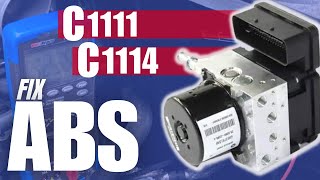
Code C1111 signifies your car's Anti-lock Braking System (ABS) control module detected an electrical fault in the ABS pump motor circuit. This motor generates the hydraulic pressure needed to rapidly pulse the brakes and prevent wheel lock during a sudden stop. The code means the pump motor, or the electronic circuit commanding it, failed.
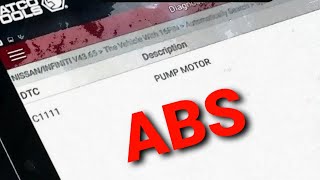
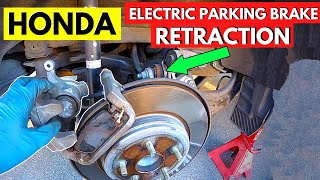
Technical definition: C1111 most commonly indicates an 'ABS Pump Motor Circuit' fault. Ford specifies an 'ABS Power Relay Coil Open Circuit.' Nissan defines it as 'ABS Pump Motor.' Critically, on 2016+ Honda and Acura models, C1111 means 'Right Rear Electric Parking Brake Actuator Circuit Short to Ground' or 'Open,' requiring a completely different diagnostic path.
Can I Drive With C1111?
Yes, But With Caution. You can drive, but it is strongly discouraged. Your Anti-lock Braking System (ABS) and Traction Control are disabled. In a panic stop, wheels lock up, causing complete loss of steering control and increasing stopping distances by over 20% on loose surfaces like gravel or snow. Driving with a known safety defect also carries insurance liability risks in the event of an accident.
Common Causes

- Internal ABS Control Module Failure (Very Common) — The electronic control module attached to the ABS pump fails internally. A power relay soldered to the circuit board sticks closed or its control circuit fails, causing the pump to run constantly or not at all.
- Blown ABS Fuses or Fusible Link (Common) — The ABS system relies on high-amperage fuses (30A-50A). A blown fuse cuts all power to the pump motor. On Nissan/Infiniti models, the fusible link box on the positive battery terminal frequently melts 🎬 Watch: How to diagnose Nissan ABS pump and relay faults., causing severe voltage drops.
- Damaged Wiring or Poor Grounds (Common) — The wiring harness providing high-current power and ground to the ABS module frays or corrodes. A loose or corroded chassis ground point creates high resistance, preventing the motor from receiving adequate power.
- Failed ABS Pump Motor (Less Common) — The electric motor fails due to worn internal brushes, water intrusion, or overheating from running continuously due to a faulty module.
- Software/Firmware Corruption (Rare) — A software glitch within the ABS module triggers false C1110 and C1111 codes, requiring a dealer firmware update.
Symptoms

- ABS and Traction Control Lights Illuminated — The 'ABS' and traction/stability control warning lights illuminate permanently on the dashboard.
- ABS Pump Runs Constantly — A distinct electrical humming or buzzing sound emits from the engine bay that does not stop when the ignition is turned off.
- Dead Battery — The constantly running ABS pump draws massive current, draining the vehicle's battery overnight.
- Wheels Lock Up During Hard Braking — The anti-lock function fails to engage during emergency braking, causing tires to skid.
Diagnostic Flowchart

Tap your situation to follow the diagnostic path that matches what you're seeing on this code.
Common Fixes & Costs
- Rebuild the ABS Control Module — Parts: $150-$300, Labor: $150-$300, ~1.5 hr book time (Intermediate)
- Replace Blown Fuse or Fusible Link — Parts: $10-$50, Labor: $0-$50, ~0.2 hr book time (DIY)
- Replace the ABS Pump and Module Assembly — Parts: $800-$2500, Labor: $300-$600, ~2.5 hr book time (Professional)
- Repair Damaged Wiring or Connectors — Parts: $20-$50, Labor: $150-$300, ~2.0 hr book time (Advanced)
- Temporarily Disconnect ABS Module Power — Parts: $0, Labor: $0, ~0.1 hr book time (DIY)
Used vs. New Parts: Buying Guide
When a used part is worth it: A used ABS pump/module assembly makes sense for vehicles over 10 years old where a new part exceeds 30% of the car's value, or when new OEM parts are discontinued.
Donor-vehicle mileage cap: roughly under 80000 miles for the part to have meaningful remaining life.
Donor quality checklist:
- Match the part number exactly. Different part numbers fail to communicate with the vehicle's CAN bus.
- Buy from a seller offering at least a 90-day warranty and pre-shipment testing.
- Avoid parts from rust-belt regions; saltwater corrosion destroys the aluminum housing and internal seals.
Decision logic:
- If The fault is the electronic module ONLY and it can be removed separately → Send your original module for a mail-in rebuild. This is the cheapest option and requires no dealer reprogramming.
- If Vehicle is less than 8 years old and you plan to keep it long-term → Buy a new OEM or professionally remanufactured unit for the lifetime warranty.
- If The pump motor burned out and budget is tight → Buy a tested used assembly, but budget $150-$300 for dealer programming and bleeding.
Warranty tradeoff: Used parts offer 30-90 days. Remanufactured units offer 1-year to lifetime. New OEM parts carry a 1-year warranty.
Worst-case if a used part fails: $800 if a used part fails, requiring repeat labor, programming, and a second replacement part.
What Happens If You Wait — Timeline
- Immediate: A relay inside the ABS module sticks closed. The ABS pump runs constantly, creating a humming noise. Warning lights illuminate. (MPG impact: 0%% · Added cost: $0)
- 1-12 hours: The constantly running pump drains the vehicle's battery, causing a no-start condition. (MPG impact: N/A% · Added cost: $150-$350 for a new battery or tow.)
- 1-2 weeks of continuous running: The ABS pump motor overheats severely. Internal components of the motor start to melt and fail. (MPG impact: N/A% · Added cost: $0 (but the primary component is being destroyed))
- 2+ weeks of continuous running: The pump motor burns out completely. The entire ABS pump and module assembly must be replaced. (MPG impact: N/A% · Added cost: $1,500-$3,500+ for a new ABS assembly, turning a cheap fix into a major expense.)
Cost of Not Fixing It
- Immediate: Loss of ABS and stability control. Wheels lock in emergencies, causing uncontrolled skids. (Added cost: Potential accident liability.)
- 0-7 days: A constantly running ABS pump drains the battery overnight, causing a no-start condition. (Added cost: $150-$350 for a new battery or tow.)
- 1 week - 3 months: Continuous running overheats and destroys the pump motor, turning a $250 module rebuild into a $1,500+ full assembly replacement. (Added cost: $1,500-$3,500+)
Diagnosis Steps
- Visual Inspection and Listening Test
With the vehicle off, listen for a humming noise from the ABS pump. If heard, the internal module relay is stuck. Visually inspect the ABS module connector and the positive battery terminal's fusible link for melting.
Tools: Flashlight (Beginner) - Check ABS System Fuses
Locate the engine bay fuse box and inspect the large-amperage fuses labeled 'ABS', 'ABS MTR', or 'ABS PMP' (typically 30A-50A). Replace any blown fuses.
Tools: Fuse puller (Beginner) - Scan for All Related Codes
Use an ABS-capable OBD-II scanner. Code C1110 ('Controller Failure') alongside C1111 confirms a failed electronic control module. U-codes indicate CAN bus communication failure.
Tools: OBD-II Scanner (ABS capable) (Beginner) - The 'Tap Test'
If the ABS pump runs constantly, firmly tap the black electronic portion of the ABS module with a plastic mallet. If the pump stops, you confirmed a mechanically stuck internal relay.
Tools: Plastic mallet (Intermediate) - Test Power and Ground at the Module
Disconnect the main ABS connector. Using a wiring diagram, verify battery voltage (12.0V-12.6V) at the main power pins. Measure resistance between the ground pins and the chassis; it must be under 1.0 ohm.
Tools: Multimeter, wiring diagram (Advanced) - Test the ABS Pump Motor Directly
Carefully use fused jumper wires to apply 12V directly to the two large pins powering the ABS motor. If the motor runs, the control module is bad. If it does not run, the motor failed.
Tools: 12V power source, fused jumper wires, wiring diagram (Advanced)
When This Code Triggers (Freeze-Frame Conditions)
- System Voltage: 11.5V - 14.5V (During ignition-on self-test.)
- Vehicle Speed: 0 mph (Code sets immediately at ignition 'ON' as the module performs a power-on self-test.)
- ABS System Status: Self-Test Active (The fault is detected when the module checks the integrity of the pump motor power relay coil and finds an open circuit.)
Related Codes
- C1110 — Controller Failure. When C1110 and C1111 appear together, it definitively confirms the electronic ABS control module failed internally.
- C1112 / C1113 / C1114 — Ford-specific codes indicating shorts in the ABS power relay circuit. They point to wiring issues where electricity is going where it shouldn't.
- U0415 / U0121 — Lost communication codes. The ABS module failed catastrophically and dropped off the CAN bus network.
Climate & Environmental Factors
- Humidity and Moisture: Water ingress through failing seals causes internal circuit board corrosion and shorts.
- Road Salt (Corrosion): Saltwater attacks the module's aluminum housing and chassis ground connections, causing high electrical resistance.
- Heat Cycles: Engine bay thermal cycling stresses solder joints on the circuit board, causing microscopic cracks and relay failures.
How to Talk to a Mechanic About This Code
Say this: "I have an ABS light and a C1111 code. I suspect a fault with the ABS control module's internal relay, not the pump itself. I'd like a diagnosis confirming power and ground, and a quote for the labor to remove the module so I can send it out for a rebuild."
This signals you understand the electronic module is the common failure, preventing the shop from immediately quoting a $2,000 full assembly replacement.
Avoid saying:
- My ABS light is on, can you fix it?
- The car is making a weird buzzing noise.
- Just replace the ABS pump.
Questions to ask before authorizing the repair:
- Did you confirm there is good power and ground at the ABS module connector?
- Did you test the pump motor directly to confirm it operates?
- What is the cost for a new OEM module vs. the labor to R&R my module for a rebuild service?
- If I replace the unit with a new or used part, what is the additional cost for programming?
Where to Take It: Dealer vs Independent vs Chain
- Dealer:
Use only for warranty work or if a new module requires dealer-level programming.
Best for: Vehicles under warranty, Complex cases requiring manufacturer-specific software programming for a new module, Confirming the Honda/Acura electric parking brake quirk
Downsides: Highest cost, with a strong bias toward replacing the entire expensive ABS assembly rather than attempting a module rebuild., Will refuse to install customer-supplied or rebuilt parts. (Typical cost: +75% vs. baseline) - Independent Shop:
Best fit. An independent shop offers the best balance of expertise and cost-effectiveness, especially if they are willing to work with a rebuilt module.
Best for: Out-of-warranty vehicles where cost is a factor., Diagnosing the common module failure and performing a module-only removal for rebuilding., Installing used or remanufactured parts.
Downsides: Quality varies. Ensure the shop has strong electrical diagnostic skills and is ASE certified., May lack the expensive tools to program a new module if needed. (Typical cost: +0% vs. baseline) - Chain Shop:
AVOID. This repair requires specific diagnostic skills that are not the specialty of chain shops. High risk of misdiagnosis.
Best for: Simple jobs like checking fuses.
Downsides: Technicians are rarely equipped for in-depth electrical or module-level diagnostics., High pressure to sell parts leads to recommending a full assembly replacement without proper diagnosis. (Typical cost: -10% vs. baseline)
When to Walk Away From the Repair
If the estimated repair cost exceeds 50% of the car's private-party value, seriously consider not fixing it.
- Car worth $8000, fix is $450: Fix it. A module rebuild is highly cost-effective and well below the threshold.
- Car worth $5000, fix is $2800: Walk away. The dealer quote for a new ABS assembly is over 50% of the car's value. Get a second opinion from an independent shop about a rebuild before making a final decision.
- Car worth $2500, fix is $2000: Walk away. The repair cost is approaching the total value of the car.
What Scan Tool You Need for This Code
Minimum: An OBD-II scanner that reads and clears Anti-lock Braking System (ABS) 'C' codes.
A basic $20 code reader only checks for engine ('P') codes. It will report 'No Codes Found,' completely missing the C1111 code.
Budget: BlueDriver Bluetooth Pro (~$100) — Reads and clears ABS codes for most major brands, providing the essential C1111 code and definition.
Mid-range: Autel MaxiCOM MK808 / Foxwell NT630 Plus (~$250-450) — Offers bi-directional control to command the ABS pump motor on/off for direct testing. Includes the automated 'ABS Bleed' function required after replacing the hydraulic unit.
Professional: Autel MaxiSys MS906 / Launch X431 Series (~$600-1500) — Provides advanced ECU coding and programming necessary if you replace the ABS module with a new one and need to program it to the vehicle's VIN.
Rent vs buy: Some AutoZone locations loan tools that read ABS codes, but verify in-store as many basic loaners cannot. Buying a midrange scanner with bi-directional ABS functions is a worthwhile investment.
How to Clear the Code After You Fix It
- Ensure all connectors are securely fastened and the battery is fully charged.
- Use an ABS-capable OBD-II scan tool to clear the fault codes from the brake control module.
- Perform the scan tool's automated ABS bleed procedure if the hydraulic unit was replaced or brake lines were opened.
- Perform a 10-minute test drive including several moderate stops to allow the system to self-verify the repair.
Drive cycle (~10 minutes): Start the engine and idle for 2 minutes. Drive in mixed conditions above 25 mph. Perform at least 3 normal, smooth stops from over 20 mph. If the repair was successful, the ABS light remains off.
Readiness monitors affected: None
Watch out for:
- Disconnecting the battery temporarily clears the light, but the code returns immediately if the hardware fault remains.
- Using a basic $20 OBD-II scanner cannot communicate with or clear codes from the ABS module.
- Skipping the scan tool-actuated brake bleed after replacing the hydraulic unit leaves air trapped, causing a spongy pedal and dangerous braking.
Will This Fail Emissions / State Inspection?
No — by itself this code doesn't fail OBD inspection (but it can keep readiness monitors from setting, which causes a separate fail).
- California: Smog checks do not include safety inspections. An ABS light does not cause an emissions failure.
- New York: An illuminated ABS warning light is an advisory item and does not cause a safety inspection failure as of 2024.
- Texas: An amber ABS light passes the safety inspection. However, an illuminated red 'BRAKE' warning light results in an automatic failure.
Most Commonly Affected Vehicles
- Nissan Qashqai, Juke, Rogue, X-Trail, Frontier, 350Z (2007-2015) — Extremely common failure of the Bosch 8 ESP control unit. The classic symptom is the ABS pump running constantly.
- Infiniti G35, G37, FX35 (2007-2013) — Shares the same common Bosch 8 ESP module failure as Nissan, frequently causing a continuously running pump.
- BMW 3 Series (E90), 5 Series (E60), X3 (E83), X5 (E70) (2005-2015) — Highly prone to ABS/DSC pump and module failures, triggering a trifecta of ABS, DSC, and brake warning lights.
- Ford Focus, Fusion, Mondeo, Edge (2008-2016) — The code definition specifies a 'Power Relay Coil Open Circuit,' focusing diagnosis on the power supply and internal relay.
- Honda / Acura Accord, Civic, CR-V, ILX (2016-2024) — CRITICAL NOTE: C1111 indicates a fault in the 'Right Rear Electric Parking Brake Actuator Circuit,' NOT the ABS pump.
Manufacturer-Specific Notes
- Nissan / Infiniti: The Bosch 8 ESP module internal relay failure is the overwhelming cause of C1111. The fix is to repair or replace the electronic module, not the pump motor.
- Honda / Acura: For 2016+ models, C1111 means 'Right Rear Electric Parking Brake Actuator Circuit Short.' All diagnostic efforts must focus on the right rear brake caliper.
- Ford: The code definition specifies 'ABS Power Relay Coil Open Circuit,' directing diagnosis strictly toward the power supply side.
Real Owner Stories
2006 Infiniti G35 with constantly running ABS pump
Owner noticed a buzzing sound from the engine bay after turning the car off. The ABS, SLIP, and VDC lights were on. The battery died overnight.
What they tried:
- Bled the brakes, which did not fix the electrical issue.
Outcome: The owner replaced the external ABS relay (Part No. 47605-C9900). This immediately stopped the pump and cleared the lights.
Lesson: On older Nissan/Infiniti models with an external ABS relay, a constantly running pump is often caused by this $30 part, not the $1,500 ABS actuator.
2012 Infiniti G37 with C1111 and non-stop pump noise
The ABS pump would not shut off, even with the key removed. The only code present was C1111.
What they tried:
- Disconnected the battery to stop the pump, but it restarted immediately upon reconnection.
Outcome: The owner performed the 'tap test' with a mallet, which temporarily unstuck the internal relay. They then replaced the entire ABS assembly with a $75 used unit.
Lesson: For modern cars, the pump relay is soldered inside the module. A 'tap test' confirms a stuck relay, requiring a module rebuild or replacement.
2018 Honda CR-V with ABS light and C1111 code
The ABS and VSA warning lights illuminated. A standard scan tool pulled code C1111.
What they tried:
- Almost ordered a $900 main ABS pump assembly based on the generic code definition.
Outcome: A search for Honda-specific definitions revealed C1111 means 'Right Rear Electric Parking Brake Actuator Circuit Short'. The owner found a loose connector at the rear brake caliper.
Lesson: Always verify the code definition for your specific make and year. On modern Hondas, C1111 is completely unrelated to the main ABS pump.
How to Prevent This Code From Triggering
- Flush brake fluid every 2-3 years or 30,000 miles. (Every 2-3 years) — Removes moisture that causes internal corrosion of delicate solenoid valves and pump components.
- Maintain clean and secure electrical connections. (Every 1-2 years) — Inspect and clean the main chassis ground point to prevent voltage drops that damage the sensitive control module.
Frequently Asked Questions
My ABS pump is running constantly and killing my battery. What should I do right now?
Pull the main ABS fuse in the engine bay fuse box or unplug the large electrical connector from the ABS module. This stops the battery drain immediately. Your ABS will not work, but you can drive to a repair shop.
Can a low battery cause a C1111 code?
It is very unlikely. A weak battery triggers a C1109 (Abnormal Voltage) code, but C1111 indicates a persistent hardware fault. More often, the C1111 fault (a constantly running pump) causes the dead battery.
What is the most common mistake when diagnosing C1111?
The most common mistake is immediately replacing the expensive ABS pump assembly. The electronic control module that operates the pump is the actual failure point 90% of the time. Always diagnose the module and its power connections first.
I replaced the ABS pump, but the C1111 code is still there. Why?
The original fault was in the electronic ABS control module, not the pump motor. The faulty module is still unable to correctly control the new pump. The original module needs to be repaired or replaced.
Is it safe to drive with the C1111 code active?
It is not recommended. While your normal brakes work, you have no anti-lock capability. In an emergency stop, your wheels lock, causing you to lose all steering control and skid.
Do I have to buy an expensive new ABS unit from the dealer?
No. You can have your original electronic module rebuilt by a mail-in specialist service for a fraction of the cost.
If I get my module repaired, will it need to be reprogrammed?
No. If you send your original module out for repair, it retains its vehicle-specific programming. If you replace the module with a new or used one, it absolutely requires dealer programming.
Key Takeaways
- Code C1111 indicates a fault in the ABS pump motor circuit, instantly disabling your anti-lock brakes and increasing stopping distances on loose surfaces by over 20%.
- The most common cause is a stuck internal relay inside the electronic ABS control module, which causes the pump to run constantly and drain the battery overnight.
- Save $800 to $2,500 by removing your original ABS control module and sending it to a mail-in rebuild service instead of buying a new assembly from the dealer.
- On 2016 and newer Honda and Acura models, C1111 means a short in the right rear electric parking brake, completely unrelated to the main ABS pump.
Helpful Videos




The information in this article is provided for general reference and educational purposes only. Vehicle specifications, procedures, and part compatibility can vary by production date, trim level, and region. Always consult your vehicle's factory service manual and verify part numbers before purchasing or performing repairs. Safety-critical components such as airbags, seat belts, and braking systems should be installed by a qualified professional.
- 🎬 Helpful Videos
- What Does C1111 Mean?
- Can I Drive With C1111?
- Common Causes
- Symptoms
- Diagnostic Flowchart
- Common Fixes & Costs
- Used vs. New Parts: Buying Guide
- What Happens If You Wait — Timeline
- Cost of Not Fixing It
- Diagnosis Steps
- When This Code Triggers (Freeze-Frame Conditions)
- Related Codes
- Climate & Environmental Factors
- How to Talk to a Mechanic About This Code
- Where to Take It: Dealer vs Independent vs Chain
- When to Walk Away From the Repair
- What Scan Tool You Need for This Code
- How to Clear the Code After You Fix It
- Will This Fail Emissions / State Inspection?
- Most Commonly Affected Vehicles
- Manufacturer-Specific Notes
- Real Owner Stories
- 2006 Infiniti G35 with constantly running ABS pump
- 2012 Infiniti G37 with C1111 and non-stop pump noise
- 2018 Honda CR-V with ABS light and C1111 code
- How to Prevent This Code From Triggering
- Frequently Asked Questions
- My ABS pump is running constantly and killing my battery. What should I do right now?
- Can a low battery cause a C1111 code?
- What is the most common mistake when diagnosing C1111?
- I replaced the ABS pump, but the C1111 code is still there. Why?
- Is it safe to drive with the C1111 code active?
- Do I have to buy an expensive new ABS unit from the dealer?
- If I get my module repaired, will it need to be reprogrammed?
- Key Takeaways
- 🎟️ Get 5% Off