

U3003 on 2011-2019 Ford Explorer: Battery Voltage Fault Causes and Fixes
On a 2011-2019 Ford Explorer, code U3003 almost always means the 12V battery is weak, failing, or has been recently replaced without a proper Battery Management System (BMS) reset. The most likely fix is to replace the battery and perform a BMS reset. Expect to pay $150-$350 for a new AGM battery.
- U3003 on a 2011-2019 Explorer is almost always caused by a weak 12V battery.
- Before replacing any expensive electronics, have your battery and alternator professionally tested.
- If you replace the battery, you MUST perform a Battery Management System (BMS) reset.
- The BMS reset procedure is simple: ignition on, flash high beams 5 times, press the brake pedal 3 times.
- Ignoring this code will likely lead to a no-start situation.
What's Unique About the 2011-2019 Ford Explorer

The 2011-2019 Explorer relies on a sophisticated Battery Management System (BMS) to monitor the battery's state of health and optimize charging, often aiming for an 80% state of charge to improve fuel economy. This system is sensitive and will set a U3003 code as the battery ages and loses its ability to hold a charge. The BMS may also disable non-essential features like remote start, the radio display, or power running boards to conserve power, which can be an early symptom. Unlike some other Ford models where U3003 can point to complex module failures, on the Explorer, the root cause is overwhelmingly the battery itself. A critical and often-missed step is performing a BMS reset after installing a new battery. Failing to do so causes the system to continue charging the new battery as if it were the old, degraded one, leading to persistent issues.
Symptoms You May Notice

- Slow or sluggish engine cranking.
- Check Engine Light or battery warning light may be on.
- Dimming headlights or interior lights, especially at idle or when using accessories.
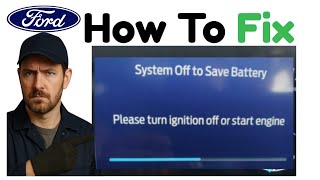
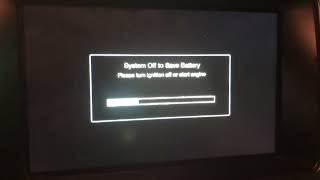
- Electronic accessories (radio, navigation) resetting or behaving erratically, sometimes displaying a 'System Off to Save Battery' message.
- Features like Auto Start-Stop, remote keyless functions, or power-deployable running boards may be disabled by the BMS to save power.
- A clicking sound when trying to start the engine.
- Vehicle enters 'deep sleep mode' frequently, as reported through the FordPass app.
- No Check Engine Light, but the code is found stored in a specific module like the PSCM (Power Steering Control Module) or ABS module when scanned.
- Sudden loss of power steering assist or the steering wheel locking up, as noted in NHTSA ODI #11567087 where U3003-68 was found alongside steering-related faults.
- The appearance of a "Terrain Management System Fault" light on the dashboard, which an owner reported in NHTSA ODI #10905479 occurred in conjunction with code U3003.
- Replacing electronic modules (like the BCM or ABS module) before thoroughly testing the battery and charging system. The U3003 code is almost always a symptom of a power supply problem, not a problem with the module that stored the code.
- Replacing the battery but failing to perform the BMS reset, leading to the code returning and the assumption that the new battery is also bad or that another problem exists.
Most Likely Causes

- Weak or Failing 12V Battery 🔴 High Probability The factory-installed batteries typically have a lifespan of 3-5 years, with failures reported at mileages as low as 20,000 miles. The vehicle's complex electronics and BMS are highly sensitive to the voltage drops that occur as an AGM battery degrades, especially with frequent short trips.
How to confirm: Perform a load test on the battery. A healthy battery should maintain a voltage above 9.6V while the engine is cranking. Many auto parts stores will perform this test for free. Resting voltage should be ~12.4V-12.6V; anything lower suggests a weak charge or failing battery. Even if it passes a simple test, an aging battery can be the culprit.
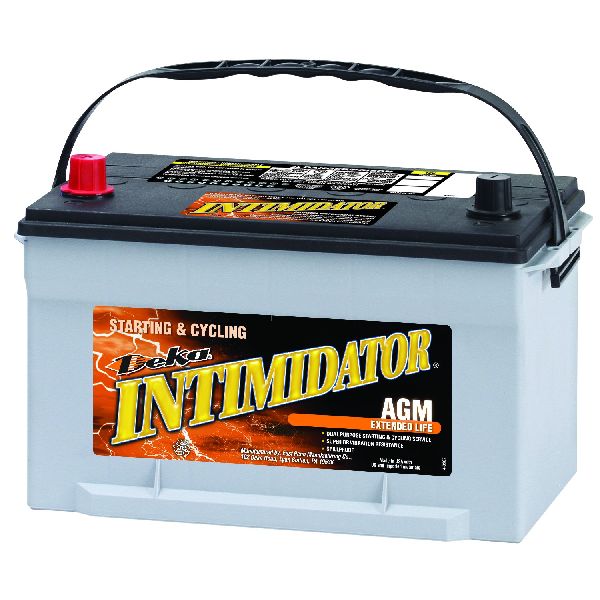
Typical fix: Replace the 12V battery with a new AGM (Absorbent Glass Mat) battery of the correct size (Group 48 / H6). 🎬 See this step-by-step guide for replacing your Explorer's battery. It is critical to perform a Battery Management System (BMS) reset immediately after installation.
Est. part cost: $150-$350 - Battery Management System (BMS) Needs Reset 🟡 Medium Probability This is a required step after battery replacement that is often skipped by DIYers and even some shops. The BMS learns the characteristics of the old battery and will improperly charge a new one if not reset, leading to persistent voltage issues and a recurring U3003 code.
How to confirm: This is diagnosed by exclusion. If a new battery was recently installed but electrical issues and the U3003 code persist, a missed BMS reset is the likely cause.
Typical fix: Perform the BMS reset procedure. With the ignition on (engine off), flash the high beams 5 times, then press the brake pedal 3 times. The battery light on the instrument cluster should flash three times within a few seconds to confirm the reset was successful. Alternatively, a tool like FORScan can be used to perform the reset.
Est. part cost: $0 - Failing Alternator ⚪ Low Probability While not exceptionally common, alternator failure can occur. On 2.3L EcoBoost models, a specific TSB (SSM 48001) notes that a squealing accessory drive belt can be a precursor to alternator pulley damage and charging system failure.
How to confirm: With the engine running, test the voltage at the battery terminals. A healthy alternator should produce a voltage between 13.8V and 14.5V. If the voltage is low, too high (which can set U3003:17), or fluctuates wildly, the alternator or its voltage regulator is likely faulty.
Typical fix: Replace the alternator.
Est. part cost: $250-$500 - Corroded or Loose Battery Terminals/Grounds ⚪ Low Probability The BMS sensor is located on the negative battery terminal. Corrosion on this specific terminal can lead to incorrect readings and trigger voltage-related codes.
How to confirm: Visually inspect the battery terminals for white or blue-green corrosion. Check that both the positive and negative cable clamps are tight and cannot be moved by hand. Pay special attention to the negative terminal where the BMS sensor is located. Inspect the main chassis ground wire for tightness and corrosion.
Typical fix: Disconnect the battery (negative first) and clean the terminals and clamps with a wire brush and a baking soda/water solution. Ensure the BMS sensor connector is clean and secure. Reconnect and tighten securely.
Est. part cost: $0-$10
Rare But Worth Checking
- Faulty Control Module: In very rare instances where the battery, alternator, and all wiring have been confirmed to be in perfect condition, a module itself (like the BCM or PSCM) may have an internal fault causing it to misread the system voltage. This requires advanced diagnostics, often with dealer-level tools.
- Parasitic Draw: A module or component that fails to shut down properly after the vehicle is turned off can slowly drain the battery, causing a low voltage state and a U3003 code upon the next startup. This requires a parasitic draw test with a multimeter to isolate the faulty circuit.
- Mechanical Transmission Failure: While rare, NHTSA ODI #10905479 describes a case where a dealer claimed U3003, in conjunction with other transmission codes, indicated a mechanical failure of the transmission.
Diagnosis Steps

- Read the Codes: Use an OBD-II scanner (FORScan is recommended for Fords) to confirm the presence of U3003 and note any suffixes (:16, :17) and which module(s) stored the code. Manufacturer bulletin #SSM 50151 advises diagnosing any low voltage DTCs (P0562, U3003) in the 12V system before replacing major modules like the SOBDMC or SOBDMB.
- Visually Inspect the Battery: Check for obvious signs of corrosion on the terminals (especially the negative terminal with the BMS sensor), loose connections, or physical damage to the battery case.
- Test the Battery: Perform a professional load test on the battery. The voltage should not drop below 9.6V during cranking. Given the sensitivity of the BMS, a battery older than 3-4 years should be considered suspect even if it passes a basic test. Bulletin #SSM 50151 notes that if low voltage (less than 10V) is observed in the DTC snapshot, the 12V system should be diagnosed first.
- Test the Charging System: With the engine running, measure the voltage at the battery terminals. It should be stable and between 13.8V and 14.5V. Readings above this range point to an alternator issue and may correspond with a U3003:17 code.
- Check Grounds: Ensure the main battery ground cable and other primary ground straps to the chassis and engine block are clean, tight, and free of corrosion.
- Perform BMS Reset: If the battery was recently replaced or if you are installing a new one, perform the BMS reset procedure: With the ignition on (engine off), flash the high beams 5 times, then press the brake pedal 3 times. Watch for the battery light to flash three times to confirm.
- Clear Codes and Test Drive: After performing repairs, clear all DTCs and drive the vehicle to ensure the code does not return. Note that it may take a few drive cycles for the BMS to fully recalibrate.
Parts You'll Likely Need
- 12V AGM Battery
(OEM #BAGM-48H6-760 (Motorcraft))— This is the most common failure item causing code U3003. The original battery often degrades after 3-5 years. An AGM battery is required.
Trusted brands: Motorcraft, Interstate, DieHard, Duralast
OEM price range: $200-$350
Aftermarket price range: $150-$250
Related Codes That Often Appear With This One
- P0562 — This code means 'System Voltage Low' and is the Powertrain Control Module's (PCM) version of U3003. Seeing both confirms a vehicle-wide low voltage event.
- U3003:16 — This is a more specific version of the same code, explicitly stating 'Circuit Voltage Below Threshold'. It is functionally the same diagnosis, pointing to a weak battery or charging issue.
- U3003:17 — This variant means 'Circuit Voltage Above Threshold' and is a strong indicator of a failing alternator or voltage regulator causing an over-voltage condition (typically >16V).
Technical Service Bulletins (TSBs) & Recalls
- SSM 50154: Notes that on various Ford models, including the Explorer platform-mate Lincoln Navig
- Bulletin #SSM 50151: States that U3003 will often occur at vehicle key-on and may be difficult to reproduce. It recommends diagnosing the 12V system first if low voltage (less than 10V) is observed in the DTC snapshot before replacing expensive modules.
Mechanic-Grade Diagnostic Values
- BCM (Body Control Module) Voltage Supply — expected: 9.0 - 16.0 volts. Failure: DTC U3003:16 sets when voltage drops below 9.0 volts. DTC U3003:17 sets when voltage exceeds 15.9 volts.
- ABS Module Voltage Supply — expected: 10.0 - 17.0 volts. Failure: U3003:16 sets below 10.0V; U3003:17 sets above 17.0V.
- RCM (Restraints Control Module) Voltage Supply — expected: 9.5 - 16.0 volts. Failure: U3003:16 sets below 9.5V; U3003:17 sets above 16.0V.
- FORScan PID: Battery State of Charge (BDI_SOC) — expected: Typically maintained around 80% by the BMS.. Failure: A consistently low value (e.g., <60%) after charging, or a value that drops rapidly when the engine is off, indicates a failing battery.
- FORScan PID: Battery Days in Service (BMS_LIFEDAY) — expected: Number of days since the last BMS reset.. Failure: If a new battery was installed but this value is high (e.g., >1000 days), it confirms the BMS reset was not performed.
Hidden / Shadow Codes Worth Checking
- U3003:68: 'Event Information' - This variant is often logged in the PSCM (Power Steering Control Module) after an Auto Start-Stop event strains a weak battery. It indicates the module detected a voltage drop caused by another system's operation. (see via Advanced scanners like FORScan or Ford's IDS.)
Scan Tool Commands That Help
- FORScan: BMS Reset (Battery Management System Reset) — This service function must be performed immediately after installing a new 12V battery. It resets the learned battery parameters and days-in-service counter, ensuring the new battery is charged correctly.
- FORScan: BCM Self-Test — To command the Body Control Module to run an internal diagnostic check. This can help confirm if the U3003 code is actively being detected by the BCM or if it was a historical event.
Wiring & Ground Locations
- BMS Sensor Connector — Located on the negative battery terminal clamp in the engine compartment.. This 3-pin connector provides power, ground, and signal from the battery sensor to the BCM. Corrosion or a loose connection here can cause incorrect battery state of charge readings, leading directly to U3003.
- G106 — On the right side of the engine compartment bulkhead (firewall).. This is a primary ground point for multiple critical modules, including the Power Steering Control Module (PSCM) and Powertrain Control Module (PCM), both of which can log U3003 if they experience a voltage drop due to a poor ground.
- G200 / G201 — Under the center console, G200 on the left and G201 on the right.. These are major interior ground points. G200 grounds the Data Link Connector (OBD-II port) and the All Terrain Control Module. G201 grounds the GPS module. A loose ground here can cause various communication and module errors.
- BCM Connector C2280B — At the Body Control Module (BCM), located in the driver's side footwell, behind the kick panel.. This connector houses many critical inputs and outputs for the BCM, including MS-CAN network lines (Pins 38 & 39) and power feeds. A poor connection here can cause widespread electrical issues, including voltage-related codes.
Real Owner Repair Stories
- Ford Truck Enthusiasts Forums (2018 Ford F-150 (similar BMS to Explorer) with 10,000 miles) — No check engine light or noticeable symptoms. The U3003 code was found 'silently' in the BCM during a routine scan with FORScan. The truck was seeing infrequent use and short trips.
❌ Tried (didn't work) Putting the truck on a trickle charger.
✅ What actually fixed it The user was advised that the code is an early warning from the BMS about impending battery failure, common with low mileage and short trips. The consensus was that the battery would eventually need replacement, followed by a mandatory BMS reset. - NHTSA ODI #11567087 — An owner reported that their steering locked up without warning. Diagnostic scans revealed U3003-68 alongside several other communication and steering fault codes.
- NHTSA ODI #10905479 — A driver experienced a "Terrain Management System Fault" and a check engine light. Along with transmission codes P0756 and P2701, code U3003 was present.
OEM Part Supersession History
BT4Z-14B357-C→KL3Z-10C679-B— Part redesign and consolidation across multiple vehicle platforms.
Heads up: The sensor is integrated with the negative battery cable. While the sensor function is the same, the cable routing and length may differ on older models. It is critical to order the assembly for the specific vehicle year to ensure proper fitment.
Model Year Variations Within This Range
- 2016-2019: A mid-cycle refresh occurred for the 2016 model year. This included a redesigned front end, the replacement of the problematic MyFord Touch infotainment system with the much-improved SYNC 3 (with Apple CarPlay/Android Auto), and the 2.0L EcoBoost was replaced by the more powerful 2.3L EcoBoost. While the U3003 diagnosis remains the same, the infotainment symptoms may present differently.
- 2011-2012 vs 2013-2019: The connector for the battery current sensor may differ. Part catalogs show different part numbers for the pigtail connector for 2011-2012 models versus 2013 and newer models, suggesting a change in the connector design.
Diagnostic Flowchart
Other Known Issues on This Vehicle
Issues unrelated to this code that are worth knowing about as an owner of this generation:
- Internal Water Pump Failure (3.5L V6) 🔴 High — Commonly occurs between 80,000-120,000 miles. A weep hole inside the timing cover allows coolant to leak out near the A/C compressor, but if it fails internally, it can mix coolant with engine oil, leading to catastrophic engine failure. (Ref: Subject of class-action lawsuits, but no recall. Repair is extremely labor-intensive and expensive ($2,000-$4,000).)
- Power Transfer Unit (PTU) Failure (AWD Models) 🔴 High — Fluid is considered 'lifetime' by Ford, but it often overheats and breaks down, leading to PTU failure. Recommended to be changed every 30,000 miles to prevent failure.
- Exhaust Odor in Cabin 🟠 Medium — Widespread issue where exhaust fumes, sometimes smelling of sulfur, can enter the cabin, particularly during heavy acceleration. NHTSA investigated but did not issue a recall for civilian models. (Ref: TSB 16-0166, TSB 17-0044 provide procedures to seal the chassis, but success varies.)
- Electronic Power Steering (EPAS) Rack Failure 🔴 High — Can lead to a sudden loss of power steering assist, sometimes with the steering wheel locking up completely. Early models (2011-2013) were recalled, but failures are still reported on later models. (Ref: Recall 14S06 for 2011-2013 models.)
- A-Pillar Trim Detachment / Rattle 🟡 Low — The exterior trim on the A-pillars can become loose or detach completely at highway speeds. Interior rattles from the same area were also common on early models (2011-2013). (Ref: TSB 19-2150 addresses the loose exterior trim.)
Used vs. New Parts: Buying Guide for This Vehicle
When a used part is the smart pick: For this specific code, using used parts is generally not recommended for the primary failure items. The most common fix is a new battery, which should never be purchased used. A used alternator is a possibility but carries significant risk of premature failure.
Donor-vehicle mileage cap: roughly under 40000 miles for the part to have meaningful remaining life.
What to inspect on the donor part:
- For an alternator: Check for a build date sticker that is as recent as possible. Inspect the pulley for smoothness and lack of wobble. Ensure the electrical connector is not corroded or damaged. Avoid parts from vehicles with visible front-end collision damage.
OEM-only on this vehicle (don't cheap out):
- Battery Management System (BMS) Sensor / Negative Cable Assembly: While aftermarket sensors exist, the OEM Motorcraft part is calibrated for the Ford charging system. Given its critical role, using a non-OEM part can lead to incorrect charging strategies and persistent problems.
Aftermarket brands forum-validated for this vehicle:
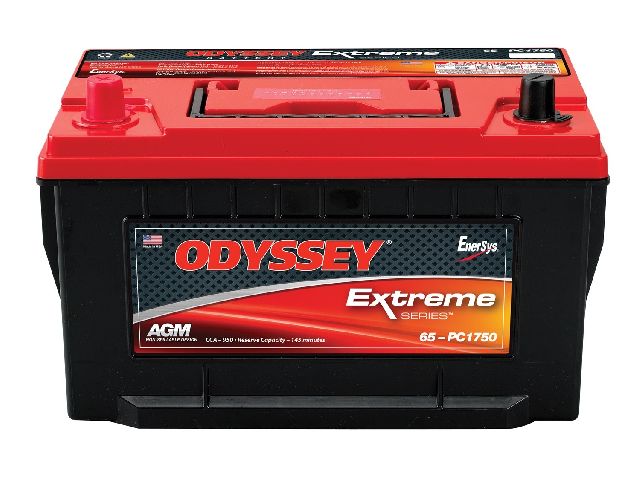
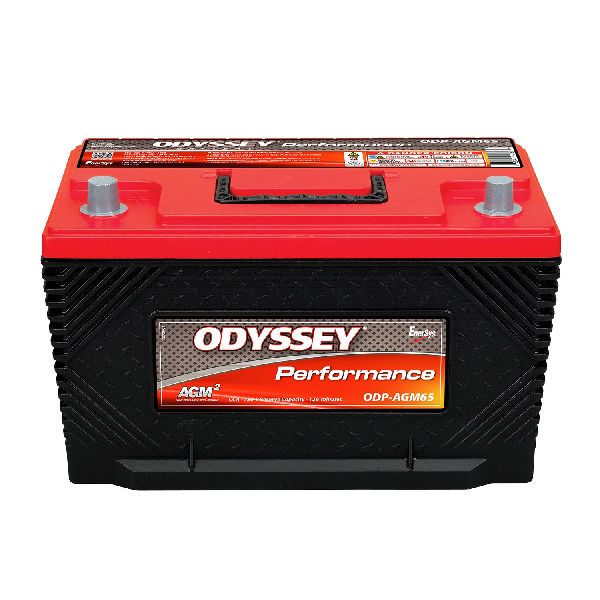
- Battery: Interstate, DieHard, Duralast (Platinum AGM), Odyssey
- Alternator: Bosch (new, not remanufactured), Denso
Brands owners have reported issues with on this vehicle:
- Avoid no-name or 'white box' alternators and batteries from online marketplaces. Remanufactured alternators can be a gamble; a new unit from a reputable brand is often a better long-term value.
Real Owner Stories
Aggregated from forums and TSBs cited above. Mileages and costs reflect what owners reported in those sources.
2017 Explorer
Symptoms: Experienced a complete Electronic Power Assisted Steering (EPAS) failure while driving on the highway, which can be preceded by electrical fault codes.
What fixed it: The issue was diagnosed as a failed steering rack which required replacement.
Cost: $2850-$2850
Source hint: Blue Oval Forums
Ford F-150 (with similar BMS) — ~25000 miles
Symptoms: A stored U3003 code was found, indicating impending battery failure. Another owner reported their 2-year-old battery was junk.
What fixed it: The problem was solved by replacing the failing battery with a high-quality AGM battery and performing a BMS reset with FORScan.
Source hint: Ford Truck Enthusiasts Forums (ford-trucks.com)
Related OBD-II Codes
Frequently Asked Questions
I just replaced the battery in my Ford Explorer, but I still have a U3003 code and electrical issues. What did I miss?
How can I perform the BMS reset on my 2011-2019 Explorer without a special scan tool?
My Explorer's dashboard is showing a 'System Off to Save Battery' message. Is this related to code U3003?
What is the correct replacement battery for a 2011-2019 Ford Explorer?
My scanner shows code U3003, but my Check Engine Light isn't on. Is that normal?
I heard a squealing noise from my 2.3L EcoBoost Explorer's engine, and now I have charging system problems. Could this be the cause of U3003?
Why did my Explorer's Auto Start-Stop and remote keyless entry stop working?
Helpful Videos
![Avoid Expensive Shop Repairs: DIY Reset the Ford Vehicle Battery Monitoring System [BMS]](https://img.youtube.com/vi/QTtb7rKaZTE/mqdefault.jpg)
We Have This Part in Stock
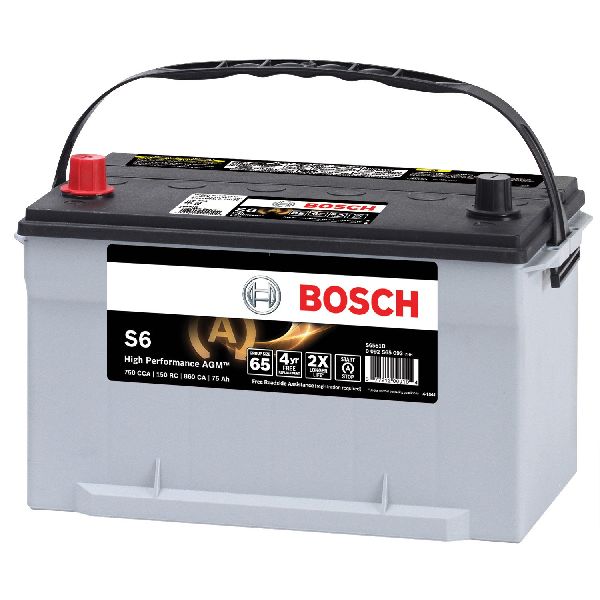

The information in this article is provided for general reference and educational purposes only. Vehicle specifications, procedures, and part compatibility can vary by production date, trim level, and region. Always consult your vehicle's factory service manual and verify part numbers before purchasing or performing repairs. Safety-critical components such as airbags, seat belts, and braking systems should be installed by a qualified professional.
- Ford Explorer:
- 🎬 Helpful Videos
- 🛍️ Shop This Part
- What's Unique About the 2011-2019 Ford Explorer
- Symptoms You May Notice
- Most Likely Causes
- Rare But Worth Checking
- Diagnosis Steps
- Parts You'll Likely Need
- Related Codes That Often Appear With This One
- Technical Service Bulletins (TSBs) & Recalls
- Mechanic-Grade Diagnostic Values
- Hidden / Shadow Codes Worth Checking
- Scan Tool Commands That Help
- Wiring & Ground Locations
- Real Owner Repair Stories
- OEM Part Supersession History
- Model Year Variations Within This Range
- Diagnostic Flowchart
- Other Known Issues on This Vehicle
- Used vs. New Parts: Buying Guide for This Vehicle
- Real Owner Stories
- 2017 Explorer
- Ford F-150 (with similar BMS) — ~25000 miles
- Related OBD-II Codes
- Frequently Asked Questions
- 🎟️ Get 5% Off