

U3000 on 2005-2010 Pontiac G6: Control Module Fault Explained
U3000 indicates an internal failure in a control module. On the Pontiac G6, this is often related to poor connections at the Body Control Module (BCM) or a faulty module itself. Before replacing any parts, check for low battery voltage and inspect BCM connectors, as these are common, cheaper fixes. This issue is also rampant on its platform-mates, the Chevy Malibu and Saturn Aura.
- U3000 on a Pontiac G6 is a serious code that most often points to a problem with the Body Control Module (BCM) or its wiring.
- Before condemning the BCM, always check for simpler fixes: ensure the battery is healthy and fully charged.
- Inspect, clean, and apply dielectric grease to the BCM connectors, as this is a well-known failure point covered by a recall.
- Due to the need for vehicle-specific programming, replacing a BCM is not a simple DIY swap and should be done by a professional.
- Symptoms are often electrical, such as erratic lights, non-functional power accessories, and disabled safety systems.
What's Unique About the 2005-2010 Pontiac G6

The first-generation Pontiac G6 and its Epsilon platform-mates (Chevy Malibu, Saturn Aura) are known for electrical issues stemming from the Body Control Module (BCM). A major recall, NHTSA 14V252000, was issued for increased resistance in the BCM connection that could cause voltage fluctuations and lead to various electrical problems, including brake light malfunctions and disabled stability control. Owners frequently report strange electrical behavior that is often traced back to poor terminal contact at the BCM connectors, making this a primary area of suspicion when a U3000 code appears.
Symptoms You May Notice
- Check Engine Light or other service warning lights illuminated.
- Erratic or non-functional electronics (power windows, locks, interior lights).
- Brake lights illuminating when not pressed, or not illuminating when pressed.
- Difficulty shifting out of 'Park'.
- Loss of power steering assist or "Power Steering" message on the display.
- Vehicle may not start or may stall. 🎬 Watch: Troubleshooting a Pontiac G6 no crank no start condition
- Cruise control disabled.
- "Service ESC" or "Service Traction Control" message on the instrument cluster.
- Replacing other modules (like the ECM or TCM) without confirming which module set the U3000 code first.
- Replacing the brake pedal position sensor when erratic brake light behavior is caused by the BCM connector issue.
- Replacing the battery or alternator without confirming a low voltage condition or performing a parasitic draw test first.
Most Likely Causes

- Poor Connection at the Body Control Module (BCM) 🔴 High Probability The Pontiac G6 was subject to recall NHTSA 14V252000 (GM Campaign #13036, later expanded) for increased resistance in the BCM connection. Corrosion and poor terminal contact are well-documented issues, causing voltage fluctuations in the Brake Apply Sensor (BAS) circuit.
How to confirm: Visually inspect the BCM connectors for corrosion, moisture, or backed-out pins. Wiggling the connector while observing symptoms can sometimes confirm a bad connection. The BCM is located in the passenger-side center console area, accessible by removing the side trim panel.
Typical fix: Disconnect the battery, then disconnect and reconnect the BCM connectors to reseat them. The official recall procedure involves applying dielectric lubricant (GM P/N 12377900) to the BCM and harness connector. In some cases, a spacer or jumper harness is installed. Cleaning the terminals is a common DIY attempt.
Est. part cost: $5-$20 for dielectric grease - Low Battery Voltage or Charging System Fault 🟡 Medium Probability All modern control modules require a stable voltage to operate. Low voltage from a weak battery or failing alternator can cause modules to set internal fault codes like U3000 and trigger unpredictable behavior.
How to confirm: Test the battery voltage with the engine off (should be ~12.4-12.6V) and while running (should be ~13.5-14.5V) using a multimeter. A parasitic drain test may be needed if the battery dies overnight.
Typical fix: Charge or replace the battery. If the charging voltage is low, the alternator may need to be replaced.
Est. part cost: $150-$350 - Faulty Body Control Module (BCM) 🟡 Medium Probability After connection and voltage issues are ruled out, the BCM itself is a common point of failure leading to various electrical gremlins on this platform. Internal solder joint cracks or circuit board failures can cause intermittent problems.
How to confirm: This is typically a process of elimination. After confirming the BCM has good power, ground, and clean connections, but still sets the U3000 code and causes symptoms, the module itself is suspect.
Typical fix: Replace the BCM. This requires programming by a dealer or a properly equipped independent shop using a tool like a GM Tech 2 to configure it with the vehicle's VIN and options.
Est. part cost: $200-$400 for the module - Faulty Power Steering Control Module (PSCM) 🟡 Medium Probability The G6 uses an electric power steering (EPS) system, and the module controlling it is a known failure point, often setting a U3000 code. GM issued recalls for sudden loss of power steering assist related to faulty torque sensors within the steering column assembly.
How to confirm: Use a scan tool to see if the U3000 code is stored in the PSCM. Symptoms are typically limited to loss of power steering and a corresponding warning message.
Typical fix: Sometimes a software reprogram can fix the issue per a TSB. More often, the entire steering column or the PSCM itself needs to be replaced. This is a separate issue from the BCM connector problem.
Est. part cost: $300-$800 for a steering column assembly - Poor Ground Connection ⚪ Low Probability GM vehicles of this era can have issues with main ground connections, particularly the G105 ground pack, breaking down internally where they are crimped. This causes intermittent network and module problems.
How to confirm: Locate the main ground pack (G105) on the transmission stud under the throttle body. Perform a voltage drop test from the ground wire to the battery negative terminal with the key on. Any significant voltage (above 0.1-0.2V) indicates a bad ground.
Typical fix: Repair or replace the faulty ground wire terminal. This often involves cutting off the old terminal, cleaning the wire, and crimping on a new ring terminal.
Est. part cost: $5-$15 for new terminals and wire
Diagnosis Steps

- Use an advanced scan tool capable of reading manufacturer-specific codes to determine which module (BCM, PSCM, ECM, etc.) has stored the U3000 code. Note any suffix codes (e.g., U3000 44).
- Check and record any other DTCs present.
- Test the battery and charging system. Ensure battery voltage is above 12.4V with the engine off and that the alternator is charging correctly (13.5-14.5V) when running.
- If symptoms point to power steering loss, focus diagnosis on the PSCM. Check for relevant TSBs regarding software updates or torque sensor replacement.
- If the BCM is the source of the code, locate it in the passenger-side of the center console.
- Disconnect the negative battery terminal. It's good practice to touch the disconnected cable ends together to discharge any residual system voltage.
- Disconnect the electrical connectors from the BCM. Carefully inspect the pins and terminals on both the module and the connectors for any signs of corrosion (green crust), moisture, or damaged/pushed-out pins.
- Clean the terminals if necessary with electrical contact cleaner and apply a small amount of dielectric grease before securely reconnecting them.
- Reconnect the battery and clear the codes. Test the vehicle to see if the symptoms or code return.
- If the issue persists, perform a voltage drop test on the BCM's power and ground circuits to ensure it's receiving proper power. Specifically check the G105 ground on the transmission stud.
- If all wiring, connections, and power/ground inputs are good, the control module itself is likely faulty and requires replacement and programming.
Parts You'll Likely Need

- Body Control Module (BCM)
(OEM #Varies by year/options. Examples: 15829740, 25866723, 20784397. Always verify with VIN.)— The BCM is a frequent source of electrical problems on the G6 and is often the module at fault when a U3000 code is present after ruling out connection issues.
Trusted brands: ACDelco (OEM), Dorman, Cardone (Remanufactured)
OEM price range: $250-$400
Aftermarket price range: $150-$300 - Low-Voltage Dielectric Grease
(OEM #GM P/N 12377900 or equivalent)— Used to prevent corrosion and ensure good contact at the BCM connectors, which is a very common failure point and a key part of the official recall fix.
Trusted brands: Permatex, CRC
OEM price range: $10-$20
Aftermarket price range: $5-$15
Related Codes That Often Appear With This One
- P0171/P0174 — If a vacuum leak is present from a related issue like a failed intake gasket (common on V6 models), it can cause lean codes alongside other electrical faults.
- U-codes (e.g., U0100, U0140) — Since the root cause is often a BCM or network issue, it's common to see other communication loss codes stored in various modules that are trying to talk to the faulty module.
Technical Service Bulletins (TSBs) & Recalls
- NHTSA Campaign 14V252000 (GM #13036): Addresses voltage fluctuations in the Brake Apply Sensor (BAS) circuit due to increased resistance in the Body Control Module (BCM) connection. Affects G6, Malibu, and Aura.
- NHTSA Campaign 14V153000 (GM #14116B): Addresses sudden loss of electric power steering assist due to a faulty torque sensor.
- NHTSA Campaign 12V460000 (GM #12106): A separate recall for some of the same vehicles concerning a potentially fracturing transmission shift cable end, which could lead to a rollaway risk. This is not directly related to the U3000 code but affects the same vehicle family.
Platform-Specific Known Issues
- NHTSA Recall 14V252000 - BCM Connector Resistance: This recall addresses increased resistance in the Body Control Module (BCM) connection, which could result in voltage fluctuations affecting the Brake Apply Sensor (BAS) circuit. This could cause brake lights to work improperly and disable features like traction control and electronic stability control. The fix involves applying dielectric grease and sometimes adding a harness spacer.
- Owner Experience: Recurring BCM Issue: A user on Reddit's r/MechanicAdvice reported that their 2006 G6 began experiencing the exact same BCM connector symptoms (erratic brake lights, disabled cruise control) just months after the official recall work was performed by a dealer. This highlights that the issue can be persistent and the fix may not always be permanent.
- NHTSA Recall for Power Steering Loss: Separate from the BCM issue, multiple recalls (e.g., 14V153000, GM bulletin 14116B) were issued for sudden loss of electric power steering assist. This is often caused by a faulty torque sensor in the steering column and can also trigger a U3000 code, but the fault would be stored in the PSCM, not the BCM.
Mechanic-Grade Diagnostic Values
- High-Speed CAN Bus Network Resistance — expected: Approximately 60 Ω (Ohms). Failure: A reading of ~120 Ω indicates an open circuit in one of the two terminating resistors (likely in the ECM or BCM) or a break in the wiring. A reading significantly less than 60 Ω suggests a short between the CAN lines.
- High-Speed CAN Bus Voltage (Key On, Engine Off) — expected: CAN High (Pin 6 to ground): ~2.6V. CAN Low (Pin 14 to ground): ~2.4V. The sum of both lines should be ~5V.. Failure: Voltages that are stuck high or low, or that sum to a different value (e.g., 12V), indicate a short to power or ground on one of the lines.
- Module Ground Circuit Voltage Drop — expected: Less than 0.2V (200mV). Failure: A voltage reading higher than 0.2V indicates excessive resistance in the ground circuit, which can starve the module of a proper ground and cause erratic behavior.
Hidden / Shadow Codes Worth Checking
- U3000 with Suffix/Symptom Byte (e.g., 44, 49): GM uses two-digit suffix codes to specify the nature of the U3000 fault. For example, '44' often points to a 'Data Memory Malfunction' and '49' points to an 'Internal Electronic Failure'. This provides critical direction, distinguishing a software/memory issue from a hardware failure. (see via Requires a professional-grade scan tool like the GM Tech 2 or a modern equivalent with manufacturer-specific capabilities. Basic OBD-II readers will only show 'U3000'.)
Scan Tool Commands That Help

- GM Tech 2 / GDS2: Module Replacement/Setup — This function is mandatory when installing a new BCM. It programs the vehicle's VIN and Regular Production Option (RPO) codes into the new module, allowing it to function correctly with the vehicle's specific features.
- GM Tech 2 / GDS2: Brake Pedal Position (BPP) Sensor Calibration — Must be performed after replacing or reprogramming the BCM to ensure the brake light system and stability control systems receive an accurate signal from the brake pedal.
- GM Tech 2 / GDS2: Setup SDM Part Number in BCM — This is required if the Sensing and Diagnostic Module (SDM, the airbag computer) has been replaced, so the BCM can learn and communicate with the new SDM.
Wiring & Ground Locations
- G105 — On a transmission stud, located at the left rear of the engine compartment, often under the throttle body area.. This is a critical ground splice pack for the Engine Control Module (ECM) and Transmission Control Module (TCM). An internal break in this pack can cause a no-start and widespread network communication failures that mimic a faulty module.
- BCM Connectors (X1, X2, etc.) — Behind the passenger side trim panel of the center console.. This is the primary connection point for the BCM. It is the subject of a major recall for poor terminal contact and is the first place to inspect for corrosion or backed-out pins.
- DLC (Data Link Connector) — Under the driver's side dashboard.. This is the main diagnostic access point. Pin 6 (Tan/Black) is the High-Speed CAN High wire, and Pin 14 (Tan) is the High-Speed CAN Low wire. These pins are used to test the resistance and voltage of the entire network.
- G201 — Under the center console.. Provides a ground path for several interior modules and components that communicate with the BCM.
- G301 — On the right rear of the passenger compartment, located under the right rear seat back.. Grounds various rear body components. A fault here could cause communication issues with modules controlling rear vehicle functions.
Real Owner Repair Stories
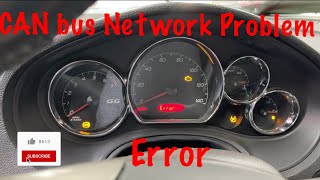
- YouTube channel A2Z Auto Masters (2007 Pontiac G6 3.5L V6) — No crank, no start condition with an 'Err' message on the instrument cluster display, indicating a network communication failure.
❌ Tried (didn't work) The diagnostic process showed that the CAN bus resistance was a perfect 60 ohms, which would normally suggest the network wiring and terminating modules were okay. However, voltage tests on the CAN lines were abnormal.
✅ What actually fixed it The technician found that the G105 ground pack on the transmission had internally broken wires. The wires had corroded and snapped inside the main crimped ring terminal. Repairing the ground by cutting the wires and installing a new ring terminal restored proper module function and fixed the no-start condition.
When the Usual Fixes Don't Work
- While Pass 2 correctly identifies the BCM as a high-probability cause, a documented repair case proves that a faulty G105 ground pack on the transmission can create identical symptoms, including a no-start and network communication errors. The CAN bus resistance test even read correctly at 60 ohms, which would typically rule out a wiring issue. This demonstrates that performing a voltage drop test on module grounds is a critical step that should be performed before condemning the BCM, as a bad ground is a much cheaper repair.
Model Year Variations Within This Range
- 2009.5-2010: A mid-cycle refresh introduced a new 6-speed automatic transmission for the 2.4L engine and an updated center stack with different HVAC and radio controls. These changes to interior modules could potentially alter network diagnostic symptoms compared to earlier models.
- 2005-2010: Engine options (2.4L I4, 3.5L V6, 3.6L V6, 3.9L V6) and trim levels (SE, GT, GTP, GXP) changed frequently. Since the ECM contains one of the CAN bus terminating resistors, the specific ECM part number and its location can vary depending on the engine, which is a key detail for network diagnosis.
Documented NHTSA Reports
While U3000 is a generic control module fault, its implications can vary by manufacturer. For instance, NHTSA ODI Investigation #PE14030 regarding electric power steering failure in other makes noted that when U3000-46, U3000-49, or U3000-96 are stored alongside other communication codes, the recommended repair was the replacement of the entire Electronic Power Assisted Steering (EPAS) system. This reinforces that on the G6 platform, a U3000 stored in the PSCM often necessitates a full steering column or module replacement.
Diagnostic Flowchart
Used vs. New Parts: Buying Guide for This Vehicle
When a used part is the smart pick: A used BCM from a junkyard is a very risky and difficult option for DIY repair. It is electronically locked to the donor car's VIN and security system. It only makes financial sense if you have a professional shop with GM-specific programming tools (like a Tech 2 with security access) that has explicitly agreed to attempt to reprogram a customer-supplied used module. Some mail-in services can 'clone' your old BCM's data to a used one, but this requires your original module to be at least partially functional.
What to inspect on the donor part:
- If attempting a clone, the part number on the used BCM must exactly match the original.
- Visually inspect the pins on the used module's connectors to ensure none are bent, corroded, or pushed in.
- Avoid parts from vehicles with obvious flood, fire, or major electrical damage.
OEM-only on this vehicle (don't cheap out):
- Body Control Module (BCM)
Aftermarket brands forum-validated for this vehicle:
- ACDelco (for the BCM itself)
- Permatex (for dielectric grease)
- CRC (for dielectric grease and electrical contact cleaner)
Brands owners have reported issues with on this vehicle:
- Unbranded, generic BCMs from online marketplaces should be avoided due to the high probability of programming failures and lack of support.
Real Owner Stories
Aggregated from forums and TSBs cited above. Mileages and costs reflect what owners reported in those sources.
2006 Pontiac G6
Symptoms: The vehicle began experiencing erratic brake lights and the cruise control was disabled.
What fixed it: The owner had the official recall work for the BCM connector performed by a dealer, but the symptoms returned just months later, indicating the fix was not permanent in this case.
Source hint: Reddit r/MechanicAdvice
Related OBD-II Codes
Frequently Asked Questions
I heard there was a recall for the BCM on my Pontiac G6. What does it cover?
My power steering suddenly went out on my G6. Is this related to the BCM recall?
Where is the Body Control Module (BCM) located on a 2005-2010 G6?
My mechanic says the BCM is bad. Can I just install a used one from a junkyard?
The dealer performed the BCM recall fix, but my brake light and cruise control problems are back. Is that possible?
Could a bad battery cause all these electrical problems and the U3000 code on my G6?
Helpful Videos
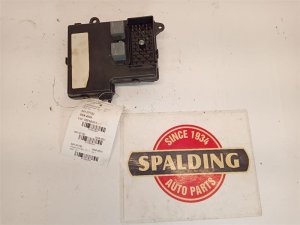
Used OEM Parts in Stock



New Aftermarket Parts Available


The information in this article is provided for general reference and educational purposes only. Vehicle specifications, procedures, and part compatibility can vary by production date, trim level, and region. Always consult your vehicle's factory service manual and verify part numbers before purchasing or performing repairs. Safety-critical components such as airbags, seat belts, and braking systems should be installed by a qualified professional.
- Pontiac G6:
- 🎬 Helpful Videos
- 🛍️ Shop This Part
- What's Unique About the 2005-2010 Pontiac G6
- Symptoms You May Notice
- Most Likely Causes
- Diagnosis Steps
- Parts You'll Likely Need
- Related Codes That Often Appear With This One
- Technical Service Bulletins (TSBs) & Recalls
- Platform-Specific Known Issues
- Mechanic-Grade Diagnostic Values
- Hidden / Shadow Codes Worth Checking
- Scan Tool Commands That Help
- Wiring & Ground Locations
- Real Owner Repair Stories
- When the Usual Fixes Don't Work
- Model Year Variations Within This Range
- Documented NHTSA Reports
- Diagnostic Flowchart
- Used vs. New Parts: Buying Guide for This Vehicle
- Real Owner Stories
- 2006 Pontiac G6
- Related OBD-II Codes
- Frequently Asked Questions
- 🎟️ Get 5% Off