

OBD-II Code P0571: Cruise Control/Brake Switch 'A' Circuit Malfunction
The Ultimate Guide to What P0571 Means, Why It Triggers, and How to Fix It for Good
- Replace the brake light switch first if your brake lights fail; this $15-$70 part is the root cause of code P0571 in over 80% of cases.
- Do not drive the vehicle until repaired, as non-functional brake lights drastically increase your risk of a rear-end collision and carry heavy liability.
- Check the 10A to 20A brake lamp fuse in your interior fuse box before buying any parts, as a simple blown fuse triggers this exact code.
- Use a digital multimeter to verify the switch transitions from infinite resistance (pedal released) to under 1 ohm (pedal pressed) to confirm failure before replacement.
What Does P0571 Mean?

The P0571 code signifies that your car's Powertrain Control Module (PCM) detects a malfunction in the brake switch 'A' circuit. This essential circuit tells the computer when you press the brake pedal, a signal required to activate brake lights, deactivate cruise control, and enable the brake-shift interlock on automatic transmissions.
Technical definition: The official SAE/OBD-II definition for P0571 is "Cruise Control/Brake Switch 'A' Circuit Malfunction." This indicates the Powertrain Control Module (PCM) or Body Control Module (BCM) detects an illogical, abnormal, or missing voltage reading from the brake light switch circuit. The 'A' designates a specific wire or connector portion, requiring a vehicle-specific wiring diagram for precise identification.
Can I Drive With P0571?

No — Do Not Drive. Do not drive the vehicle. A primary symptom of P0571 is the failure of brake lights, making your vehicle an immediate safety hazard and drastically increasing the risk of a rear-end collision. Driving without brake lights is illegal and risks an at-fault accident. The financial risk is not component damage, but the catastrophic cost of a collision.
Common Causes

- Defective Brake Light Switch (Very Common) — This is the most frequent culprit. 🎬 Watch: How to fix the brake switch on Dodge and RAM vehicles. The switch, a small electromechanical part located above the brake pedal, fails internally due to wear and tear, becomes stuck, or suffers from mechanical fatigue, preventing it from sending a correct signal.
- Blown Fuse (Common) — A blown fuse for the brake light, cruise control, or stop lamp circuit interrupts power and triggers the code. This is often a symptom of an underlying short circuit in the wiring.
- Wiring or Connector Issues (Common) — The wiring harness leading to the brake switch frays, breaks, or shorts due to vibration, heat, or rodent damage. Connectors loosen or suffer from corrosion, interrupting the electrical signal.
- Brake Pedal Misalignment, Obstruction, or Worn Bushing (Less Common) — A bunched-up floor mat obstructs the pedal, or a worn plastic bushing in the pedal assembly creates excessive play. This prevents the pedal from making firm, consistent contact with the brake light switch plunger.
- Incorrectly Installed or Failed Brake Light Bulb (Rare) — Using the wrong type of bulb (e.g., LED in a system designed for incandescent) alters the circuit's resistance. Sensitive control modules interpret this as a fault, triggering P0571.
- Faulty Cruise Control Switch (Rare) — The cruise control buttons on the steering wheel fail due to liquid spills or wear, causing a short or open circuit that the PCM associates with the brake switch circuit.
- Low Battery Voltage (Rare) — An undercharged battery causes low system voltage (below 11.5V), leading to erratic behavior in electronic modules and triggering a false P0571 code.
- Aftermarket Accessories or Modifications (Rare) — Improperly installed aftermarket accessories, especially remote start systems or trailer light wiring, interfere with or overload the brake switch circuit.
- Powertrain Control Module (PCM) or Body Control Module (BCM) Failure (Very Rare) — A firmware glitch, corrupted software, or an internal hardware fault within the PCM or BCM causes it to misinterpret a valid signal from the brake switch. Consider this only after exhausting all other possibilities.
Symptoms

- Brake Lights Do Not Work or Stay On — A critical safety failure. Your brake lights fail to illuminate when you press the pedal, or they remain stuck on even when the pedal is released.
- Unable to Shift Out of Park — The brake-shift interlock system requires a signal from the brake switch to allow the gear shifter to move from the 'Park' position.
- Cruise Control Does Not Work or is Erratic — The cruise control fails to engage or disengages unexpectedly while driving. The system disables itself as a fail-safe.
- Check Engine Light is On — The Malfunction Indicator Lamp (MIL) illuminates to indicate the PCM has stored a fault code.
- ABS, Traction Control, or Brake Warning Lights On — Stability systems rely on the brake switch signal. A fault disables these systems and illuminates their respective warning lights on the dashboard.
Diagnostic Flowchart
Tap your situation to follow the diagnostic path that matches what you're seeing on this code.
Common Fixes & Costs
- Replace Brake Light Switch — Parts: $15-$70, Labor: $75-$150 (parts and labor at a shop), ~0.5 hr book time (DIY)
- Replace Blown Fuse — Parts: $1-$5, Labor: $0 (parts only), ~0.1 hr book time (DIY)
- Adjust or Realign Brake Light Switch — Parts: $0, Labor: $40-$80 (labor only at a shop), ~0.5 hr book time (DIY)
- Repair Wiring or Connector — Parts: $10-$30, Labor: $120-$350 (parts and labor at a shop), ~1.5 hr book time (Intermediate)
- Update or Reflash PCM/BCM — Parts: $0, Labor: $100-$250 (dealer/specialist service), ~1 hr book time (Professional)
Used vs. New Parts: Buying Guide
When a used part is worth it: Buying a used brake light switch rarely makes sense. It is a low-cost wear item, and the price difference between a new aftermarket part and a salvage yard part is minimal.
Donor-vehicle mileage cap: roughly under 20000 miles for the part to have meaningful remaining life.
Donor quality checklist:
- Verify the part number exactly, as many switches look identical but have different internal logic.
- Avoid parts from vehicles with flood or fire damage.
Decision logic:
- If The new OEM or quality aftermarket part is under $75 → Always buy new. The labor to replace a failed used part negates any small savings.
- If The vehicle is very old and the specific switch is no longer available new → A tested, used part from a reputable salvage yard is an acceptable option.
Warranty tradeoff: Used parts typically have a 30-90 day warranty. New aftermarket parts carry a 1-year to limited lifetime warranty. A new OEM part provides peace of mind regarding fitment.
Worst-case if a used part fails: $100-$200 if a used switch fails shortly after installation, requiring repeat labor costs.
What Happens If You Wait — Timeline
- Immediate: Code P0571 is stored. Check Engine Light illuminates. Cruise control is disabled. Brake lights become inoperative or stuck on. (MPG impact: 0%% · Added cost: $0)
- 0-1 week: Driver experiences major safety issues: inability to shift from park, disabled ABS and traction control, and constant risk of a rear-end collision. (MPG impact: 0%% · Added cost: $150+ in potential traffic citations for non-functional brake lights.)
- 1-3 months: If the fault is an intermittent short circuit, continued electrical cycling stresses the wiring and blows related fuses. The primary risk remains the severe safety hazard. (MPG impact: 0%% · Added cost: $5-$50 in replacement fuses and diagnostic fees.)
- 3+ months: A short sending incorrect voltage theoretically stresses the input circuits of the connected control module (BCM/PCM). The overwhelming cost is liability from an at-fault accident. (MPG impact: 0%% · Added cost: $500-$1500+ for a control module replacement. Accident liability costs can be thousands.)
Cost of Not Fixing It
- Immediate: Inoperative brake lights create a severe and immediate risk of a rear-end collision. You are held at fault for any accident caused by this failure. (Added cost: Potential for catastrophic accident costs, traffic citations, and legal liability.)
- 0-1 month: Inability to use cruise control, inability to shift out of Park without the manual override, and disabled ABS/Traction Control systems reduce safety. (Added cost: Negligible direct financial cost, but significant safety degradation.)
- 1-6+ months: Continued operation with an underlying short circuit theoretically damages expensive control modules (PCM/BCM), though rare. The primary cost remains the immense safety risk. (Added cost: $800-$1500+ for a new control module in a worst-case scenario.)
Diagnosis Steps

- Read the Trouble Code and Freeze Frame Data
Connect an OBD-II scanner. Confirm P0571 is present and record any other codes. Scrutinize the freeze-frame data to see sensor values at the exact moment the fault occurred.
Tools: ['OBD-II Scanner'] - Perform Functional Test of Brake Lights
Have an assistant observe the brake lights as you press and release the brake pedal. Note if they illuminate, delay, dim, or stay on. This immediately narrows down possibilities.
Tools: ['Assistant (or reflective surface)'] - Check Fuses
Consult the owner's manual to locate the fuse box. Inspect all fuses related to the brake lights, stop lamps, and cruise control. A blown fuse points to an electrical short.
Tools: ['Fuse Puller', "Owner's Manual"] - Visually Inspect Brake Switch and Pedal Area
Look under the dashboard at the top of the brake pedal arm. Inspect the switch for physical damage. Ensure it is securely mounted and properly aligned. Remove any floor mats obstructing the pedal.
Tools: ['Flashlight'] - Pro Tip: Test Brake Switch with Multimeter
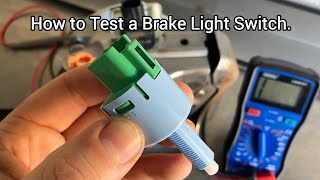
Disconnect the switch's electrical connector. Using a multimeter set to Ohms (Ω), check for continuity across the terminals. With the pedal released, resistance must be infinite (Open Line). With the pedal pressed, resistance must be near zero (<1 Ω). Any other reading confirms a faulty switch.
Tools: ['Digital Multimeter'] - Pro Tip: Check for Voltage and Ground at the Connector
With the switch disconnected and ignition ON, test the connector. One pin must have battery voltage (12V). Another pin leads to the control module. No voltage indicates a problem upstream, like a broken wire.
Tools: ['Digital Multimeter', 'Vehicle Wiring Diagram'] - Pro Tip: Perform a Voltage Drop Test
Connect the positive multimeter lead to the B+ side of the circuit and the negative lead to the B+ pin at the switch connector. With the pedal pressed, a reading above 0.5 volts indicates excessive resistance in the wiring.
Tools: ['Digital Multimeter'] - Advanced: Analyze Live Data with a Scan Tool
Connect a professional scan tool and view live data PIDs for the brake switch. The status must change cleanly from OFF/0% to ON/100% when the pedal is pressed. A static or erratic reading confirms a circuit fault.
Tools: ['Professional OBD-II Scan Tool'] (Advanced) - Advanced: Analyze Signal with Oscilloscope
Graph the voltage signal from the switch in real-time to see noise or slow response. A good switch produces a clean, sharp square wave when the pedal is pressed and released.
Tools: ['Oscilloscope', 'Back-probe pins'] (Advanced) - Clear the Code and Verify the Repair
Clear the P0571 code with an OBD-II scanner. Perform a test drive, operating the brakes and cruise control multiple times. Re-scan to confirm no codes are pending.
Tools: ['OBD-II Scanner']
When This Code Triggers (Freeze-Frame Conditions)
- Engine Coolant Temp: 180-200°F (Fully warmed up)
- RPM: 0 (at startup) or 1500-2500 (during cruise) (The fault is detected at key-on or during steady driving when cruise control is engaged or disengaged.)
- Brake Switch Status: OFF to ON (or vice-versa) (The code triggers at the moment the brake pedal is pressed or released, as the PCM expects a clean signal change that fails to occur.)
- Vehicle Speed: 35-65 mph (Often occurs at highway speeds when cruise control is actively used.)
Related Codes
- P0572 — Means 'Brake Switch A Circuit Low,' indicating a constant low voltage signal (short to ground). While P0571 is a general malfunction, P0572 points specifically to a low voltage condition.
- P0573 — Means 'Brake Switch A Circuit High,' indicating a constant high voltage signal (open circuit or short to power). This is often caused by a switch stuck open or a broken wire.
- P0703 — Indicates a fault in the secondary 'B' brake switch circuit. Many modern cars use redundant circuits for safety, often integrated into the same physical component as the 'A' switch.
- P0504 — Set when the PCM receives conflicting signals from the two separate brake switch circuits (A/B Correlation). This points to a problem with one of the switches or their adjustment.
Climate & Environmental Factors
- High Humidity / Water Ingress: Moisture enters the brake light switch or connector, causing corrosion on internal contacts. This creates high resistance or intermittent short circuits, triggering P0571.
- Road Salt (Winter Climates): Saline solutions sprayed onto the undercarriage accelerate rust and degradation of brake switch wiring, connectors, and ground points, causing open circuits or shorts.
- Extreme Cold: Extreme cold causes plastic components, including the switch housing or pedal bushings, to become brittle and crack, leading to mechanical failure or improper alignment.
How to Talk to a Mechanic About This Code
Say this: "I have an OBD-II code P0571 for the Brake Switch 'A' Circuit. My brake lights may not be working correctly and the cruise control is out. I'd like to schedule a diagnosis. Please test the switch, its connector for power and ground, and check the related fuses before recommending a replacement part."
This signals you understand the multiple potential causes. It directs the technician to perform a proper electrical diagnosis rather than immediately replacing the brake switch, preventing unnecessary spending if the fault is just a fuse or wire.
Avoid saying:
- 'My check engine light is on, can you look at it?'
- 'My cruise control isn't working.'
- 'Just replace the brake light switch.'
Questions to ask before authorizing the repair:
- Did you test the brake switch itself with a multimeter? What were the readings?
- Did you confirm there is 12-volt power and a good ground at the switch's electrical connector?
- If you are recommending a wiring repair, can you show me where the wire is damaged?
- Have you checked for any Technical Service Bulletins (TSBs) related to this code for my vehicle?
Where to Take It: Dealer vs Independent vs Chain
- Dealer:
Recommended only if the issue is a known TSB or if initial diagnosis at an independent shop points to a PCM/BCM failure.
Best for: Vehicles still under warranty., Known manufacturer-specific issues (e.g., Ford instrument cluster fault, PCM software updates)., Complex electrical issues involving multiple control modules (U-codes).
Downsides: Highest labor rates, typically 1.5-2x more than independent shops., May recommend more expensive module replacements when a simpler fix is possible. (Typical cost: +60% vs. baseline) - Independent Shop:
Best fit for the vast majority of P0571 cases. This is a routine electrical fault that competent independent shops diagnose and repair efficiently.
Best for: Most out-of-warranty vehicles., Diagnosing and fixing common causes like a bad brake switch, wiring issue, or blown fuse., Cost-effective diagnosis and repair.
Downsides: Shop quality and diagnostic skill vary; look for ASE certifications and good reviews., May lack specific tools for PCM flashing if that is the root cause. (Typical cost: +0% vs. baseline) - Chain Shop:
Use with caution. Acceptable for a straightforward brake switch replacement, but AVOID for initial diagnosis, as they default to replacing parts without proper circuit testing.
Best for: Simple, clear-cut parts replacement like a fuse or an easily accessible brake switch if you have already diagnosed it yourself.
Downsides: Technician skill varies widely., May lack the diagnostic depth to trace wiring faults or identify less common causes., Higher likelihood of misdiagnosis or upselling unnecessary services. (Typical cost: -10% vs. baseline)
When to Walk Away From the Repair
If the estimated repair cost for the P0571 fault exceeds 40-50% of your car's private-party value, consider selling or trading it in. However, since P0571 involves a critical safety system (brake lights), the decision to fix is heavily weighted toward repair.
- Car worth $4000, fix is $200: Fix it. This is a low-cost repair that restores a critical safety function, making the car sellable and safe to drive.
- Car worth $12000, fix is $350: Fix it. The repair cost is a small fraction of the vehicle's value.
- Car worth $2500, fix is $1200: Walk away. This high cost suggests a rare, complex problem like a failed BCM. The repair cost is nearly 50% of the car's value.
What Scan Tool You Need for This Code
Minimum: An OBD-II scanner that reads codes, clears codes, and displays live data streams.
A $20 code reader only tells you the P0571 code exists. It cannot show the live 'On/Off' status of the brake switch as you press the pedal, which is the most important data for diagnosing this issue without a multimeter.
Budget: Ancel BD310 or similar Bluetooth scanner (~$70) — Connects to your smartphone to read codes, clear them, and display live data for the brake switch PID to confirm if the switch sends a signal to the PCM.
Mid-range: Foxwell NT510 Elite (~$180) — Provides OE-level diagnostics, including reading manufacturer-specific codes and live data with graphing. Offers bidirectional control on some vehicles to test components.
Professional: Autel MaxiCOM MK808S (~$500) — Offers full bidirectional control to command the brake light circuit, making it easier to isolate faults between the switch, wiring, and module.
How to Clear the Code After You Fix It
- Use an OBD-II scan tool to clear the P0571 code.
- Perform a complete drive cycle to allow the vehicle's readiness monitors to run.
- Re-scan for codes to confirm the fix was successful.
Drive cycle (~20 minutes): A general OBD-II drive cycle includes a cold start, warming up to operating temperature, 5-10 minutes of steady highway driving at 55 mph, and a period of stop-and-go city driving.
Readiness monitors affected: Comprehensive Component Monitor (CCM), Misfire Monitor
Before emissions retest: drive at least 50 miles to fully set monitors.
Watch out for:
- Clearing the code by disconnecting the battery resets all readiness monitors to 'incomplete', guaranteeing an emissions test failure.
- The code returns immediately if the underlying electrical or mechanical fault is not properly repaired.
- Failing to perform a varied drive cycle prevents necessary monitors from setting before a re-test.
Will This Fail Emissions / State Inspection?
Yes — this code typically fails an OBD-II emissions inspection.
- California: An illuminated Check Engine Light due to P0571 is an automatic failure of the smog check. All required readiness monitors must be 'complete' before a re-test.
- New York: The NYS DMV vehicle inspection includes an OBD-II scan. A P0571 code results in an emissions test failure.
- Texas: In counties requiring emissions testing, an active P0571 code and illuminated Check Engine Light causes the vehicle to fail the inspection.
Most Commonly Affected Vehicles
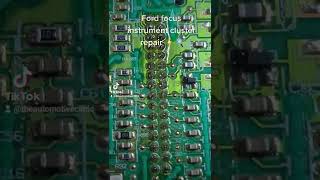
- Ford Focus, Fiesta, Edge, Kuga, Transit (2005-2020) — On Mk2 Focus models (2004-2011), this code is often caused by cracked solder joints on the instrument cluster circuit board, requiring a cluster repair instead of a brake switch.
- Chevrolet / GMC Silverado, Sierra, Cruze, Malibu, Impala (2008-2019) — A known issue on these models, frequently causing the vehicle to lock in park. The replacement switch is the standard repair.
- Dodge / Chrysler / Jeep Grand Caravan, Ram, Charger, Grand Cherokee (1998-2017) — A single brake light switch part number covers a wide range of these vehicles. The fix is an inexpensive DIY replacement that resolves P0571, P0572, and P0573 codes.
- Hyundai Elantra, Sonata, Santa Fe (2011-2017) — These models were subject to a major safety recall for faulty stop lamp switches. Always check for open recalls or TSBs.
- Kia Optima, Sorento, Soul (2007-2018) — Sharing platforms with Hyundai, Kia issued a massive recall (NHTSA Campaign: 13V114000) for many 2007-2011 models for brake switch circuit failures.
- Nissan Altima, Sentra, Rogue (2007-2019) — The P0571 code is a common fault, pointing directly to a faulty brake switch or related wiring.
- Honda Civic, Accord, CR-V, Pilot (2006-2018) — Commonly seen in this range due to brake signal circuit faults.
- Toyota Corolla, Camry, RAV4, Prius (2007-2020) — On models like the Prius, diagnosis requires checking the data list with a scan tool to verify multiple switch signals (STP LIGHT SW1 S, SW2 S).
Manufacturer-Specific Notes
- Chrysler/Jeep/Dodge: A faulty brake light switch is a very common cause for P0571 and triggers ABS and traction control lights. TSB 08-023-08 REV. A addresses intermittent brake lamp issues, recommending switch replacement.
- Ford: On Focus models (2004-2011), P0571 is frequently a symptom of failing solder joints on the instrument cluster's main connector, requiring cluster removal and repair. On Edge/MKX models, TSB 13-6-15 requires a PCM software update.
- Volkswagen/Audi: A faulty brake light switch is a highly common failure item. When replacing it, ensure it is adjusted correctly, as improper installation guarantees the code will return.
- Hyundai/Kia: A massive safety recall (NHTSA Campaign 13V114000) covered over 1.6 million 2007-2011 vehicles for stop lamp switches that failed, causing brake lights to stop working and locking the shifter in park.
Real Owner Stories
2016 Dodge Grand Caravan at 56K miles
Check Engine Light and Traction Control light came on simultaneously. Cruise control was inoperative.
What they tried:
- Replaced the brake light switch as a first step based on forum advice.
Outcome: Replacing the brake light switch, a simple and inexpensive part located under the dash, resolved the P0571 code and associated symptoms.
Lesson: For Chrysler/Dodge vehicles, the brake light switch is a highly common failure point and an excellent first part to replace, especially when accompanied by a traction control light.
2014 Jeep Wrangler JKU
Check Engine Light, intermittent Traction Control light, and cruise control not working. Brake lights were also failing.
What they tried:
- Replaced the brake light switch, but the P0571 code and all symptoms returned.
Outcome: The owner noticed the brake lights flickered when pressing the clutch, indicating a short circuit between the clutch position sensor and the brake light circuit, rather than a simple switch failure.
Lesson: Do not assume replacing the most common part fixes it. A new, unexpected symptom (like the clutch pedal affecting brake lights) is a crucial clue for diagnosing a wiring problem.
Ford Focus Mk2 (2004-2011) with 92K miles
Received 'Engine Systems Fault' and 'Brake Light Fault' messages on the dash with code P0571. However, the brake lights worked normally.
What they tried:
- Suspected an issue with the instrument cluster, which had recently been 'repaired for cheap'.
Outcome: The issue on these Focus models is failing solder joints on the instrument cluster's main connector, which disrupts CAN bus communication. The proper fix is removing the cluster and re-soldering the connector pins.
Lesson: Always check for manufacturer-specific quirks. On the Mk2 Ford Focus, P0571 is a known symptom of an instrument cluster failure that is not solved by replacing brake circuit components.
2010 Dodge Ram 1500
After a mechanic replaced the evaporator core (requiring dash removal), the ESP/BAS, traction control, and Service 4WD lights came on with a P0571 code. The truck was stuck in Park.
What they tried:
- The mechanic replaced the brake switch. The problem persisted and worsened, showing additional communication codes (U0401, U0415).
Outcome: The problem was a damaged wire or loose connector behind the dashboard disturbed during the evaporator core repair. The multiple 'U' codes indicated a communication failure between modules.
Lesson: If a code appears immediately after a major repair, the cause is almost certainly related to the work just done. Hold the original shop accountable for the diagnosis and repair.
How to Prevent This Code From Triggering
- Apply Dielectric Grease to Connectors (Whenever a related part is serviced) — Applying dielectric grease to the brake light switch connector seals out moisture and oxygen, preventing corrosion that leads to high resistance and intermittent signals.
- Periodically Inspect Pedal Area (Every 6 months) — Check that floor mats are not obstructing the brake pedal's full range of motion. Ensure no debris interferes with the brake light switch plunger.
- Secure Wiring Harnesses (During any under-dash or engine bay work) — Ensure the wiring harness leading to the brake switch is properly secured and not rubbing against sharp metal edges. Vibration causes chafing over time, leading to a short circuit.
- Address Water Leaks Promptly (As needed) — Fix water leaks from bad windshield seals or clogged sunroof drains. Water dripping onto fuse boxes and connectors causes widespread corrosion and electrical faults.
Frequently Asked Questions
How much does it cost to fix a P0571 code?
Costs depend entirely on the root cause. A DIY brake light switch replacement costs $15-$70 for the part, while a shop charges $90-$220. Wiring repairs range from $120 to $350, and a PCM reflash costs $100-$250.
Can I fix the P0571 code myself?
Yes, if the cause is a blown fuse or a faulty brake light switch. These are common DIY repairs requiring basic tools and under an hour of time. Stop DIY and consult a professional if you suspect complex wiring shorts or PCM faults.
Will replacing the brake light switch definitely fix the P0571 code?
Not always. While a bad brake switch is the most common cause, blindly replacing it without testing wastes time and money. The problem is sometimes a blown fuse, a broken wire, or a faulty control module.
What are common mistakes when diagnosing P0571?
The biggest mistake is replacing the brake switch without testing the circuit for power, ground, and signal first. Another common error is overlooking mechanical issues like a worn pedal bushing or a misadjusted switch. Always check for Technical Service Bulletins (TSBs) to avoid wasting time on known manufacturer defects.
Can a low battery cause a P0571 code?
Yes, indirectly. A severely discharged battery causes unpredictable behavior in electronic modules, sometimes triggering a false P0571 code. If the code returns after fully charging or replacing the battery, the battery was not the root cause.
Can I clear the P0571 code by disconnecting the battery?
Do not do this. Disconnecting the battery erases important data, including readiness monitors needed for emissions testing, and the code will return immediately if the fault persists. Always use an OBD-II scanner to clear codes after completing a repair.
Why did my ABS and traction control lights come on with the P0571 code?
The Anti-lock Braking System (ABS) and Electronic Stability Control (ESC) rely entirely on knowing when you apply the brakes. Because P0571 indicates an unreliable brake switch signal, the computer disables these safety systems as a precaution. Fixing the P0571 code typically restores these systems and clears the warning lights.
Key Takeaways
- Replace the brake light switch first if your brake lights fail; this $15-$70 part is the root cause of code P0571 in over 80% of cases.
- Do not drive the vehicle until repaired, as non-functional brake lights drastically increase your risk of a rear-end collision and carry heavy liability.
- Check the 10A to 20A brake lamp fuse in your interior fuse box before buying any parts, as a simple blown fuse triggers this exact code.
- Use a digital multimeter to verify the switch transitions from infinite resistance (pedal released) to under 1 ohm (pedal pressed) to confirm failure before replacement.
Helpful Videos



The information in this article is provided for general reference and educational purposes only. Vehicle specifications, procedures, and part compatibility can vary by production date, trim level, and region. Always consult your vehicle's factory service manual and verify part numbers before purchasing or performing repairs. Safety-critical components such as airbags, seat belts, and braking systems should be installed by a qualified professional.
- 🎬 Helpful Videos
- What Does P0571 Mean?
- Can I Drive With P0571?
- Common Causes
- Symptoms
- Diagnostic Flowchart
- Common Fixes & Costs
- Used vs. New Parts: Buying Guide
- What Happens If You Wait — Timeline
- Cost of Not Fixing It
- Diagnosis Steps
- When This Code Triggers (Freeze-Frame Conditions)
- Related Codes
- Climate & Environmental Factors
- How to Talk to a Mechanic About This Code
- Where to Take It: Dealer vs Independent vs Chain
- When to Walk Away From the Repair
- What Scan Tool You Need for This Code
- How to Clear the Code After You Fix It
- Will This Fail Emissions / State Inspection?
- Most Commonly Affected Vehicles
- Manufacturer-Specific Notes
- Real Owner Stories
- 2016 Dodge Grand Caravan at 56K miles
- 2014 Jeep Wrangler JKU
- Ford Focus Mk2 (2004-2011) with 92K miles
- 2010 Dodge Ram 1500
- How to Prevent This Code From Triggering
- Frequently Asked Questions
- How much does it cost to fix a P0571 code?
- Can I fix the P0571 code myself?
- Will replacing the brake light switch definitely fix the P0571 code?
- What are common mistakes when diagnosing P0571?
- Can a low battery cause a P0571 code?
- Can I clear the P0571 code by disconnecting the battery?
- Why did my ABS and traction control lights come on with the P0571 code?
- Key Takeaways
- 🎟️ Get 5% Off