

U3000 on 2010-2012 Ford Fusion: Power Steering Failure Causes and Fixes
On a 2010-2012 Ford Fusion, code U3000 almost always means the electronic power steering has failed due to an internal fault in the steering rack. Before replacing the expensive rack (often $1,500+), check for recalls and rule out a weak battery, as low voltage can also trigger this code. The issue was so widespread it prompted a massive NHTSA investigation and subsequent recalls.
- U3000 on a 2010-2012 Fusion is a critical code indicating a failure in the electronic power steering system.
- Before assuming the worst, always check for open recalls (15S18, 19S26) and thoroughly test the battery and its connections.
- The most common permanent fix is replacing the entire electronic steering rack assembly, which is a costly repair.
- Due to the sudden loss of steering control, this is a serious safety issue and the vehicle should not be driven until repaired.
- Aftermarket or remanufactured steering racks are available and can significantly reduce the part cost compared to OEM.
What's Unique About the 2010-2012 Ford Fusion

The first-generation Ford Fusion (and its platform mates) was equipped with an early version of the rack-mounted Electronic Power Assisted Steering (EPAS) system, designated as TRW Generation I. This system proved to have a high failure rate due to internal electrical connection issues, leading to multiple NHTSA investigations covering nearly a million vehicles. Unlike many vehicles where a U-code can be a simple network glitch, a U3000 on this specific Fusion is a strong indicator of a hard failure in the steering gear itself, which integrates the control module, sensors, and motor.
Symptoms You May Notice

- Sudden and complete loss of power steering, making the steering wheel very heavy to turn.
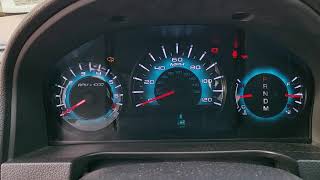
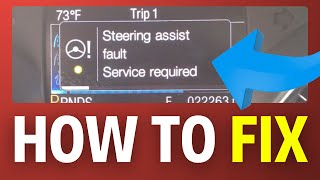
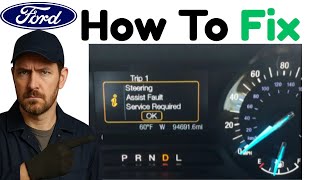
- "Power Steering Assist Fault" or "Service AdvanceTrac" warning message on the dashboard.
- Steering warning light illuminated.
- The problem may happen intermittently at first, sometimes temporarily resolving after restarting the car, 🎬 Watch: How to address the Steering Assist Fault warning message. but it almost always returns.
- In some cases, the steering wheel may jerk or bounce back and forth slightly when the vehicle is stopped but in gear.
- Clearing the code without addressing the root cause. If the code is due to a hard internal failure (U3000:96), it will return immediately upon the next ignition cycle.
- Replacing other suspension components. While worn components like control arms or tie rods should be fixed, they are not the direct cause of the U3000 code and PSCM failure, though dealers have incorrectly suggested this link.
- Assuming a used rack from a scrapyard will not need programming. A replacement rack, new or used, must be programmed to the vehicle to function correctly.
Most Likely Causes

- Internal Failure of the Electronic Power Steering Rack 🔴 High Probability The Power Steering Control Module (PSCM) is integrated into the steering rack assembly. This component, a TRW Gen I EPAS, is a known weak point. Failures are often due to intermittent electrical connections caused by issues like conformal coat contamination and ribbon cable pin misalignment within the steering gear motor.
How to confirm: Use a high-level scan tool (like Ford's IDS) to confirm the U3000 code is stored in the PSCM, often with a :96 suffix. 🎬 Watch: A professional technician diagnoses the U3000:96 internal failure code. If battery voltage and connections are good and the code cannot be cleared or returns immediately, the rack has failed internally.
Typical fix: The entire power steering rack assembly must be replaced. The new unit will also require programming to the vehicle's VIN using a capable scan tool.
Est. part cost: $800-$1800 - Low Battery Voltage or Poor Connection 🟡 Medium Probability The EPAS system is very sensitive to voltage. A weak battery, failing alternator, or corroded terminals can cause the voltage to drop below the PSCM's operational threshold, causing it to shut down and set a U3000 code as a protective measure.
How to confirm: Test the battery's state of charge and perform a load test. Check the alternator output with the engine running (should be 13.5-14.5 volts). Thoroughly inspect and clean the battery terminals, main power, and ground cables for corrosion or damage. Sometimes a temporary fix after a voltage drop is to disconnect the battery for 15 minutes to reset the module.
Typical fix: Replace the weak battery, clean or replace corroded terminals/cables, or replace a failing alternator.
Est. part cost: $150-$400
Rare But Worth Checking
- Incorrect Wheel Alignment: A severe misalignment can cause the steering system to constantly work against a pull, leading to high current draw that can overheat and fault the PSCM. One documented case showed that a proper alignment resolved the recurring power steering failure.
- Corroded Steering Gear Motor Bolts: Ford issued recall 19S26 because the bolts holding the electric motor to the steering gear could corrode and break, causing a loss of assist. While this may not set a U3000 code directly, it's a related and critical failure point to inspect. The recall involved replacing the bolts and applying a sealer.
- Water Ingress: On the related Ford Focus/C-Max platform which uses a similar EPAS system, fault codes U3000-49 and U3000-53 have been linked to water seeping into the torque sensor housing via the bulkhead boot, causing sensor damage. While less documented on the Fusion, it remains a possibility.
- ABS Module Internal Failure: While less common for steering issues, NHTSA ODI #11544907 describes an inspection that showed code U3000 in the ABS system, indicating an internal failure of the module requiring a new Hydraulic Control Unit (HCU) and module.
Diagnosis Steps

- Check for Recalls & Warranty Extensions: Before any diagnosis, check the vehicle's VIN on the Ford or NHTSA website for open recalls, specifically 15S18 (PSCM software/replacement) and 19S26 (steering motor bolts). Also check for Customer Satisfaction Program 15N01, which extended the steering gear warranty. A Ford dealer must perform these repairs for free if the vehicle is eligible.
- Scan for Codes: Use a high-level scan tool capable of reading chassis (C) and network (U) codes. Confirm that U3000 is present in the Power Steering Control Module (PSCM). Note any suffix codes (e.g., :96, :49) as they are critical for diagnosis. NHTSA ODI #11691664 notes that confirmed DTCs U3000:49, U3000:72, and U3000:96 mandate steering gear replacement.
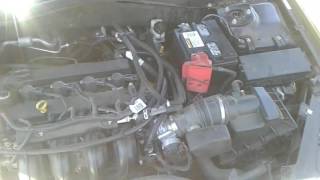
- Inspect Battery and Charging System: This is a critical first step. Test the battery's health and load capacity. Ensure the battery terminals and cables are clean and tight. With the engine running, verify the alternator is charging correctly (13.5-14.5V). A low voltage condition can trigger a shutdown.
- Attempt a Hard Reset: Disconnect the negative battery terminal for at least 15 minutes to reset all modules. Reconnect and see if steering function returns. This is often a temporary fix if it works at all, and usually only works if the fault was triggered by a transient low-voltage event.
- Check Fuses and Connections: Inspect the main fuses related to the EPAS system in the vehicle's fuse boxes. Visually inspect the wiring harness and connectors at the steering rack for any visible damage, corrosion, or looseness.
- Confirm Rack Failure: If all the above steps check out, the battery and charging system are healthy, and a hard code like U3000:96 persists or returns immediately after clearing, the steering rack assembly has failed internally and requires replacement.
Parts You'll Likely Need

- Electronic Power Steering Rack Assembly
(OEM #AE5Z-3504-DE (replaces earlier versions))— This is the primary point of failure. The assembly includes the steering gear, the electric assist motor, and the integrated Power Steering Control Module (PSCM), which is what sets the U3000 code.
Trusted brands: Motorcraft (OEM), Cardone (remanufactured), TRW (Original Manufacturer)
OEM price range: $1300-$2400
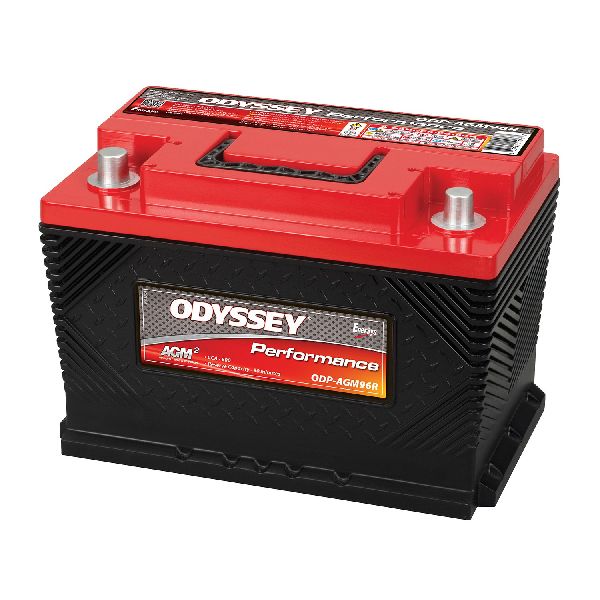
Aftermarket price range: $700-$1100 - Battery — A weak or failing battery is a common secondary cause, as low voltage can cause the sensitive EPAS module to fault. It should always be ruled out before replacing the rack.
Trusted brands: Motorcraft, Interstate, DieHard
OEM price range: $180-$250
Aftermarket price range: $150-$220
Related Codes That Often Appear With This One
- U3000:96 — This is the most common suffix, specifically indicating a 'Component Internal Failure' within the control module itself. It is a strong confirmation that the rack has failed.
- C1277 — This code for 'Steering Wheel Angle 1 and 2 Circuit Failure' can sometimes appear alongside the PSCM failure codes, as noted in NHTSA ODI #10735141.
- U3000:49 — This is another internal electronic failure code. On some Ford platforms, it is triggered by water ingress and is a precursor to the permanent U3000:53 code. NHTSA ODI #11686303 confirms this code indicates internal EPAS rack failure.
Technical Service Bulletins (TSBs) & Recalls
- Ford Recall 15S18 / NHTSA 15V-340: Reprogram Power Steering Control Module or Replace Steering Gear.
- Ford Recall 19S26: Replace steering gear motor bolts and apply sealer.
- Ford Customer Satisfaction Program 15N01: Extended warranty coverage for the power steering gear assembly.
Platform-Specific Known Issues
- Ford Recall 15S18 (NHTSA 15V-340): Issued for 2011-2012 models to address sudden loss of power steering from sensor faults. The remedy was to check for DTCs. If codes were present, the steering gear was replaced. If no codes were found, only the PSCM software was updated.
- Customer Satisfaction Program 15N01: For vehicles that had the software update under 15S18 but didn't get a new rack, Ford provided an extended warranty on the steering gear for one-time replacement up to 10 years or 150,000 miles. Many owners now find their vehicles are outside this extended coverage.
Mechanic-Grade Diagnostic Values
- HS-CAN Bus Resistance at DLC — expected: Approximately 60 Ohms. Failure: A reading of 120 Ohms indicates an open circuit to one of the two terminating resistors (often in the IPC or PCM). A reading near 0 Ohms indicates a short between the CAN High and CAN Low wires.
- Voltage at PSCM Connector C1467A, Pin 1 (YEL/RED wire) — expected: Battery Positive Voltage (B+), typically 12.6V+ with key off.. Failure: Low or no voltage indicates a problem with the main 125A fuse in the Battery Junction Box or the wiring to the PSCM.
- Voltage at PSCM Connector C1467A, Pin 3 (GRN wire) — expected: Battery Positive Voltage (B+) with Key On/Engine Running.. Failure: Low or no voltage indicates a problem with the ignition-switched power supply to the PSCM.
Hidden / Shadow Codes Worth Checking
- U3000:96: Component Internal Failure. This is a primary code listed in Ford's recall 15S18 that mandates the replacement of the steering gear assembly. (see via Ford IDS or a high-level professional scan tool capable of reading manufacturer-specific DTCs from the PSCM.)
- U3000:49: Internal Electronic Failure. Also listed in recall 15S18 as a code requiring steering gear replacement. On other platforms, this can be a precursor to a harder U3000:53 fault, sometimes related to water ingress. (see via Ford IDS or a high-level professional scan tool.)
- U3000:72: Actuator Stuck Open. This is another specific DTC listed in Ford's service actions that requires steering gear replacement. (see via Ford IDS or a high-level professional scan tool.)
- C200D:49: Steering Gear Motor - Internal Electronic Failure. This is another specific DTC listed in Ford's service actions that requires steering gear replacement. (see via Ford IDS or a high-level professional scan tool.)
Scan Tool Commands That Help
- Ford IDS (Integrated Diagnostic System) or equivalent J2534 tool: Programmable Module Installation (PMI) — This function is mandatory after installing a new or used power steering rack. It copies the vehicle's configuration data (As-Built Data) into the new PSCM. Failure to perform PMI will result in the new rack not functioning and may set a U2100 code for initial configuration not complete.
- Ford IDS or equivalent: IVD Initialization — After the PMI process is complete, this function may be required to calibrate the sensors within the new steering rack assembly, such as the steering angle sensor, to the rest of the vehicle's chassis systems (like ABS and AdvanceTrac).
- Ford IDS or equivalent: Clear All DTCs — After programming and initialization, a full-vehicle DTC clear should be performed. This is a critical final step to ensure no residual communication faults remain in other modules from the programming process.
Wiring & Ground Locations
- G105 — On the transaxle assembly (for Hybrid models) or on the right side of the engine compartment near the PSCM (for non-hybrid models).. This is the main ground point for the EPAS motor and PSCM. A loose or corroded connection here can cause intermittent voltage drops, leading to the PSCM shutting down and setting a U3000 code.
- C1467A — The main electrical connector at the Power Steering Control Module, located on the steering rack assembly.. This connector contains the main power, ground, and HS-CAN bus wires for the entire EPAS system. Probing for voltage and CAN bus signals is done here to confirm the module is receiving proper power and communication before condemning the rack.
- Battery Junction Box (BJB) — Under the hood, near the battery.. Contains the high-current mega fuse (typically 125A) that supplies main power to the EPAS motor via the YEL/RED wire at connector C1467A. A failure of this fuse or its connections will cause a complete loss of power to the system.
Real Owner Repair Stories
- Reddit user nkaroluky on r/FordFocus (2011 Ford Focus (uses a similar EPAS system)) — Intermittent power steering error that eventually became permanent. Steering was rock solid when parked. Initially had a U3000:49 code that could be reset, but it progressed to a permanent U3000:53.
❌ Tried (didn't work) Restarting the engine (worked temporarily at first), Clearing codes with an OBD tool (did not work once the U3000:53 hard fault was stored)
✅ What actually fixed it Replaced the entire steering rack with a used unit from a newer facelifted Focus (part number CV6C 3D070). The mechanic had to adapt some wiring (3-pin vs 5-pin connector) but the replacement rack worked flawlessly after installation and alignment. - NHTSA ODI #11031807 — An owner reported that after experiencing steering failure, a dealer pulled codes C200D:49 and U3000:96. The manufacturer recommended replacing the steering gear due to internal failure and performing a 4-wheel alignment.
- NHTSA ODI #11686303 — A driver experienced a loss of power steering assist that posed a safety risk. Diagnostics confirmed internal EPAS rack failure with code U3000:49-08, requiring a full replacement of the steering rack.
OEM Part Supersession History
AE5Z-3504-B, AE5Z-3504-BE, AE5Z-3504-CE, STE-27→AE5Z-3504-DE— Part revisions to address internal component failures and quality issues that led to widespread failures and recalls.
Heads up: While older part numbers may physically fit, installing anything other than the latest revision (AE5Z-3504-DE) is not recommended, as it likely contains the original design flaws.
Model Year Variations Within This Range
- 2011-2012: These model years were the primary target of Safety Recall 15S18. While the 2010 model suffers from the exact same failure, it was not officially included in this specific recall action, though it was covered by other warranty extensions and service programs.
Diagnostic Flowchart
Used vs. New Parts: Buying Guide for This Vehicle
When a used part is the smart pick: Given the extremely high failure rate of this specific part, purchasing a used steering rack is a significant gamble. It only makes sense if the donor vehicle is from a late model year (e.g., 2012), has very low mileage, and the part comes with a warranty from the seller. The risk of the used part failing soon after installation is high.
Donor-vehicle mileage cap: roughly under 50000 miles for the part to have meaningful remaining life.
What to inspect on the donor part:
- Verify the part number is the latest revision (AE5Z-3504-DE).
- Inspect the electrical connector (C1467A) for any signs of corrosion, bent pins, or damage.
- Check the rubber bellows boots for any tears or rips, which could indicate water and debris have entered the rack.
- If possible, get the VIN of the donor car to check its history and confirm it didn't have the same power steering failure.
OEM-only on this vehicle (don't cheap out):
- Electronic Power Steering Rack Assembly. While aftermarket options exist, the complexity and safety-critical nature of this part, combined with the required vehicle-specific programming, make a new OEM (Motorcraft) or a professionally remanufactured OEM unit the most reliable choice.
Aftermarket brands forum-validated for this vehicle:
- TRW (If available, as they were the original equipment manufacturer)
Brands owners have reported issues with on this vehicle:
- Cardone (Remanufactured): While a major player, mechanics and forum users report a high rate of out-of-the-box failures or premature failure for complex electronic parts like this EPAS rack. The lower cost may not be worth the risk of having to do the labor-intensive job twice.
Real Owner Stories
Aggregated from forums and TSBs cited above. Mileages and costs reflect what owners reported in those sources.
2012 Ford Fusion
Symptoms: Intermittent power steering failures. A dealer initially misdiagnosed the problem as being caused by control arms.
What fixed it: The issue was ultimately confirmed to require a steering gear replacement.
Source hint: CarTalk Community - 'Ford Fusion power steering failure'
2012 Ford Fusion
Symptoms: An intermittent 'Power Steering Assist Fault' warning message appeared on the dashboard.
What fixed it: The owner was advised by other mechanics that this was a known EPAS failure, not a suspension component issue as a dealer had claimed. The correct fix is steering rack replacement.
Source hint: Reddit r/MechanicAdvice - '2012 Ford Fusion Power Steering Assist fault. Dealer says to replace suspension components??'
2010-2012 Ford Fusion
Symptoms: A sudden and complete loss of power steering while driving.
What fixed it: Disconnecting the battery provided a temporary fix. The permanent solution was installing a programmed steering rack sourced from a scrapyard, avoiding the high cost of a new OEM part.
Source hint: MyBroadband Forum - 'Fusion power steering saga'
2010 Ford Fusion
Symptoms: Power steering failure that required a full rack replacement.
What fixed it: Replacement of the power steering rack, followed by a wheel alignment and software programming for the new unit.
Cost: $1400-$1400
Source hint: Reddit r/fordfusion - 'Fair Price for Power Steering Rack Replacement.'
2011 Ford Fusion
Symptoms: An owner reported receiving fault codes U3000-49 and U3000-96 for internal module failure, along with code C-1277.
What fixed it: Diagnostic tests pointed to the steering gear failing internally (NHTSA ODI #10735141).
Related OBD-II Codes
Frequently Asked Questions
Is my 2011 Ford Fusion covered by a recall for this power steering failure?
The dealer performed the 15S18 recall software update, but my power steering failed again. What now?
Can a weak battery really cause a total power steering failure?
My mechanic found code U3000:96. What does the ':96' part mean?
Why do I have to replace the entire steering rack? Can't the control module be replaced separately?
Will a power steering rack from a 2011 Lincoln MKZ fit my Fusion?
Is it safe to just keep restarting the car to get the power steering to work again?
Helpful Videos
We Have This Part in Stock

The information in this article is provided for general reference and educational purposes only. Vehicle specifications, procedures, and part compatibility can vary by production date, trim level, and region. Always consult your vehicle's factory service manual and verify part numbers before purchasing or performing repairs. Safety-critical components such as airbags, seat belts, and braking systems should be installed by a qualified professional.
- Ford Fusion:
- 🎬 Helpful Videos
- 🛍️ Shop This Part
- What's Unique About the 2010-2012 Ford Fusion
- Symptoms You May Notice
- Most Likely Causes
- Rare But Worth Checking
- Diagnosis Steps
- Parts You'll Likely Need
- Related Codes That Often Appear With This One
- Technical Service Bulletins (TSBs) & Recalls
- Platform-Specific Known Issues
- Mechanic-Grade Diagnostic Values
- Hidden / Shadow Codes Worth Checking
- Scan Tool Commands That Help
- Wiring & Ground Locations
- Real Owner Repair Stories
- OEM Part Supersession History
- Model Year Variations Within This Range
- Diagnostic Flowchart
- Used vs. New Parts: Buying Guide for This Vehicle
- Real Owner Stories
- 2012 Ford Fusion
- 2012 Ford Fusion
- 2010-2012 Ford Fusion
- 2010 Ford Fusion
- 2011 Ford Fusion
- Related OBD-II Codes
- Frequently Asked Questions
- 🎟️ Get 5% Off