

U2101 on 2006-2014 Ford Transit: Control Module Incompatible Causes and Fixes
Code U2101 on a Ford Transit means a key computer module (like the ABS or Body Control Module) is not configured correctly for the van. This is almost always a programming issue after a module has been replaced, not a broken part. A specialized shop or dealer must reprogram the module using Ford-specific tools (IDS/FDRS) or advanced tools like FORScan to fix it.
- U2101 is a programming problem, not a broken part problem. Do not replace parts until you have confirmed they cannot be fixed by reprogramming.
- A Ford-specific scan tool (like FORScan or a dealer's IDS) is required for diagnosis and repair.
- The most common cause is replacing a major electronic module (like the ABS unit) and failing to program the new part to the van.
- Check the battery and charging system, as low or unstable voltage can set communication codes.
- If you used FORScan to change settings, undo the last change you made, as this is a likely cause.
What's Unique About the 2006-2014 Ford Transit

On the 2006-2014 (Mk7) Ford Transit, this code frequently points to issues with either the Body Control Module (BCM) or the ABS module. Owners using advanced diagnostic tools like FORScan can sometimes inadvertently trigger this code by enabling an option (like keyless start or cruise control) that the van's hardware doesn't support. More commonly, it appears after replacing a major component like the ABS pump or instrument cluster with a used part that hasn't been reprogrammed for the specific van's configuration.
Symptoms You May Notice

- ABS and/or Traction Control (ESP) warning lights are on.
- Airbag warning light is on (if the SRS module is misconfigured).
- Vehicle enters 'limp mode' with reduced power.
- Inability to clear the code with a basic scanner.
- Speedometer does not work (if the ABS module is the source).
- Vehicle may not start (if the instrument cluster or another anti-theft module is the cause).
- Brakes feel off-balanced or lock on during braking if the ABS module has failed internally.
- Multiple other system warnings like 'Hill Start Assist Unavailable' may appear, as these systems rely on the ABS module.
- Replacing sensors (like wheel speed sensors) when the root cause is the ABS module's programming or internal failure.
- Replacing a module a second time without realizing the issue is the need for programming, not a defective part.
- Assuming a used module is plug-and-play. It almost never is on modern Fords.
Most Likely Causes

- Replaced Module Not Programmed 🔴 High Probability Modules like the ABS, BCM, and Instrument Cluster (clocks) are coded to the specific vehicle's features ('As-Built' data). Swapping them, especially with used parts from a different spec vehicle, creates a mismatch that logs U2101.
How to confirm: Scan the vehicle with a Ford-specific tool (like FORScan or IDS) to identify which module is reporting the U2101 code. Review the vehicle's recent repair history for module replacements. A user on the Ford Transit Forum confirmed this after buying a van where the previous owner had swapped the clocks and covered the warning lights with tape to hide the resulting fault.
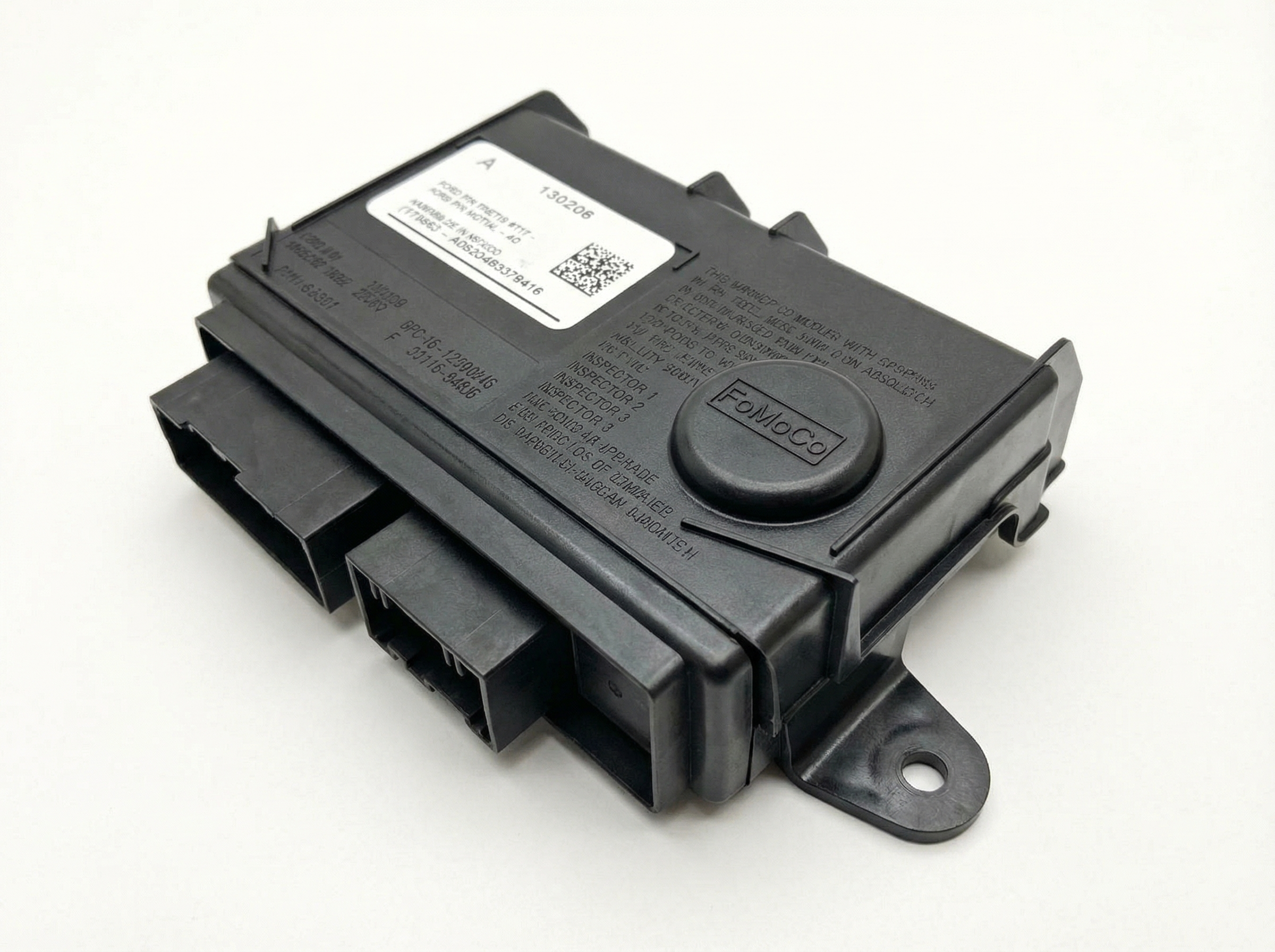
Typical fix: Perform a 'Programmable Module Installation' (PMI) using a compatible scan tool to write the correct As-Built data to the new module. This may require a new module, as used ones can sometimes be locked or incompatible. Ford issued a service bulletin (SSM 47843) reinforcing that U2100/U2101 codes require a PMI procedure. Manufacturer bulletin SSM 49690 warns that installing a new module prior to starting a scan tool session may result in incomplete configuration and DTCs U2100 or U2101.
Est. part cost: $0-$500 - Incorrect Module Configuration 🟡 Medium Probability The availability of powerful diagnostic tools like FORScan allows owners to change vehicle settings. A common mistake is enabling a feature the van doesn't physically have (e.g., 'Keyless entry and start', cruise control), causing a configuration conflict.
How to confirm: Use FORScan to read the BCM or other relevant module's configuration. Compare it to the factory 'As-Built' data, which can be downloaded from Ford's database using the VIN. A forum user identified that 'Keyless entry and start' was enabled on their van without the hardware, causing the code.
Typical fix: Revert the incorrect configuration setting back to its original state. If the original state is unknown, restore the module using the saved As-Built data file.
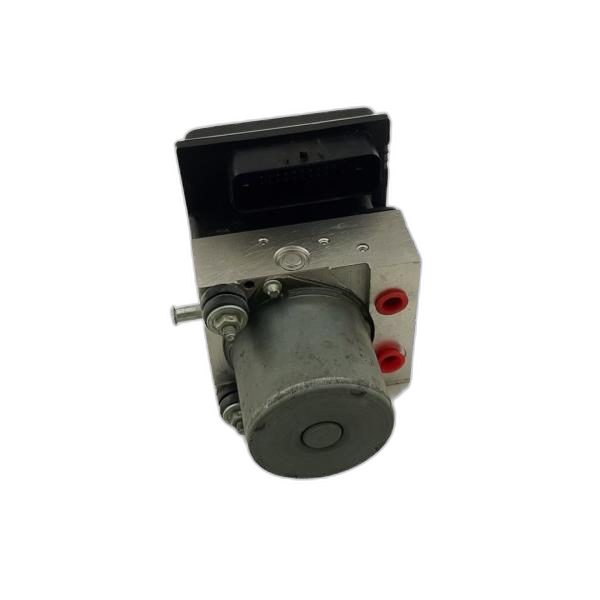
Est. part cost: $0 - Faulty ABS Pump/Module 🟡 Medium Probability The ABS module on Transits, particularly from 2012 onwards, is a known failure point which can cause internal communication errors or a complete loss of communication, triggering U-codes.
How to confirm: A diagnostic scan may show a loss of communication with the ABS module (U0121) or specific ABS-related codes alongside U2101. Symptoms can include brakes locking on or binding. Check for power and ground at the ABS module connector; there are typically two power feeds (a low-amp one for the module, a high-amp one for the pump motor) and a ground. TSB 24-2167 notes that an illuminated stability-traction control indicator with U2101:00 in the ABS module can occur after module software updates.
Typical fix: Repair or replace the ABS pump and module. Companies like ECU Testing specialize in repairing these units. The replacement module, whether new or used, will require programming (PMI) to the vehicle.
Est. part cost: $250-$800 - Low Voltage or Charging System Fault ⚪ Low Probability Sensitive electronic modules can malfunction or store error codes during low voltage events. On Transits, fitting an incorrect or poor-quality aftermarket alternator can cause voltage irregularities that lead to communication codes like U2101.
How to confirm: Test the battery and charging system. Check the alternator's output and ensure it is the correct part number for the vehicle. A Ford Transit Forum member noted, 'I have had issues on a few vans were after fitting after-market alternators for customersthey have caused issues. I now only fit Ford ones.' The PCM commands a desired voltage via a LIN bus signal, which can be monitored with an oscilloscope.
Typical fix: Charge or replace the battery. Replace a faulty or incorrect alternator with an OEM or equivalent quality part that matches the vehicle's specifications.
Est. part cost: $150-$500
Rare But Worth Checking
- Damaged Wiring or Connectors: A break or corrosion in the CAN (Controller Area Network) wiring can prevent modules from communicating. This should be checked if no module configuration issues are found.
- Damaged Rear ABS Wiring Loom: On Transit and Transit Custom models, the rear ABS wiring loom on the axle is exposed and prone to damage from wear or rodents. This can cause a cascade of faults, including ABS/ESP lights and codes, before progressing to a U2101 if communication is disrupted.
- Steering Column Control Module (SCCM) Compatibility: Manufacturer bulletin SSM 54052 notes that U2101 can be stored in the SCCM due to software incompatibility with hardware changes, often appearing when a PMI fails to complete.
Diagnosis Steps
- Connect a Ford-specific scan tool (like FORScan, IDS, or FDRS). A generic reader is not sufficient.
- Perform a full vehicle scan and identify which module is logging the U2101 code (e.g., ABS, BCM, IPC). Note any subtype information (e.g., U2101:68-2B).
- Check repair history. If a module was recently replaced, it is the primary suspect. A 'Programmable Module Installation' (PMI) must be performed.
- If no parts were replaced, use the scan tool to check the module's configuration for any incorrect settings (e.g., a feature turned on that the van doesn't have). Revert to the factory 'As-Built' data if necessary.
- If the ABS module is the source, check all related fuses for power (both the low-amp module fuse and the high-amp pump motor fuse).
- Inspect the wiring harness and connectors to the suspect module for visible damage, corrosion, or loose pins. Pay special attention to the exposed rear ABS loom on the axle.
- If ABS issues are present, inspect the reluctor rings on each wheel hub for rust or damage, as this can cause erratic data even if the module is good.
- Test the battery and charging system to rule out voltage-related issues, especially if an aftermarket alternator has been fitted.
- If all else fails, the module itself may have an internal fault requiring replacement and programming. Be aware that some dealers will not program a customer-supplied used module.
Parts You'll Likely Need
- ABS Pump and Module
(OEM #BK21-2C405-AG (Note: This is one example for Transit Custom 2012-2016; many variations exist. Always verify with VIN.))— This is a common failure point on Transits and its replacement is a frequent trigger for the U2101 code if not programmed correctly.
Trusted brands: Motorcraft, Bosch
OEM price range: $600-$1200
Aftermarket price range: $300-$700 - Body Control Module (BCM)
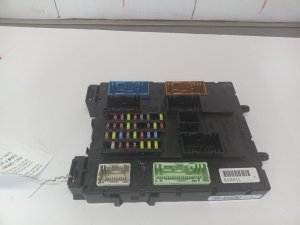
(OEM #BK2T-14B476-AG (Note: This is one example; many variations exist. Always verify with VIN.))— The BCM governs many body and security functions. A mismatch in its configuration is a common cause for U2101, especially if features have been enabled via software that are not physically present on the van.
Related Codes That Often Appear With This One
- U0121 — This code means 'Lost Communication With ABS Control Module', and often appears with U2101 when the ABS module is the source of the configuration conflict or has failed completely.
- U3000 — 'Control Module' with a failure subtype. This can indicate an internal electronic failure in the module that is also causing the U2101 configuration error.
- U2100 — 'Initial Configuration Not Complete'. This is a closely related code that often appears with U2101, indicating the module has not been set up for the vehicle at all.
Technical Service Bulletins (TSBs) & Recalls
- SSM 47843: Specifically addresses DTCs U2100 and U2101, stating they indicate a module has not been properly configured and that a Programmable Module Installation (PMI) procedure must be carried out using a Ford diagnostic scan tool.
- SSM 49690: Advises that installing a new module before starting a scan tool session can result in incomplete configuration and DTCs U2100, U2101, and/or U2200.
- TSB 24-2167: Describes scenarios where U2101:00 may appear in the ABS module following software updates to the PCM.
- SSM 54052: Notes that software/hardware compatibility issues during PMI can lead to U2101 being stored in the Steering Column Control Module.
Platform-Specific Known Issues
- Failure of the ABS module is a widely reported issue on Ford Transits from 2012 onwards, often leading to communication fault codes like U2101 and physical symptoms like binding brakes.
- Previous owners or dishonest sellers may physically remove the warning light bulbs from the instrument cluster to hide persistent ABS/ESP faults, as documented by one owner on a forum.
- Electronic steering rack issues have been linked to U2101 in other Ford platforms (NHTSA ODI #10694215), suggesting that steering-related modules can also trigger this configuration code.
Mechanic-Grade Diagnostic Values
- CAN Bus Network Resistance — expected: Approximately 60 Ohms. Failure: A reading of 120 Ohms indicates one of the two terminating resistors (or the wiring to it) has failed. A reading significantly different from 60 or 120 Ohms suggests a wiring short or faulty module.
- CAN Bus Terminating Resistor Resistance — expected: Approximately 120 Ohms. Failure: A reading significantly different from 120 Ohms indicates the resistor within the module (e.g., PCM or Instrument Cluster) is faulty.
- CAN Bus Voltage (Key On, Engine Off) — expected: CAN High (Pin 6): ~2.5V to 3.5V. CAN Low (Pin 14): ~1.5V to 2.5V.. Failure: Voltages that are stuck high, low, or at battery/ground potential indicate a short in the wiring or a faulty module pulling the bus down.
Hidden / Shadow Codes Worth Checking
- U2101:68-2B: The Failure Type Byte (FTB) '68' translates to 'Event information'. This sub-type is used by a control module to signal that an invalid input or a mismatch has been detected. In this context, it means the ABS module has received configuration data (from the BCM or another central module) that it deems invalid or incompatible with its own hardware or programming. The '-2B' is a counter for the number of occurrences. (see via Ford-specific scan tools like FORScan or IDS are required to read DTCs with their associated Failure Type Bytes.)
Scan Tool Commands That Help

- FORScan / IDS / FDRS: Programmable Module Installation (PMI) — This function is required after replacing a major control module (like ABS, BCM, PCM, or IPC). It copies the As-Built data from the old module (if possible) or from Ford's database and writes it to the new module to ensure it is configured for the specific vehicle's options.
- FORScan / IDS / FDRS: Module Configuration / As-Built Editor — This is used to manually inspect and correct individual configuration parameters within a module. It's the tool needed to fix a U2101 caused by an owner incorrectly enabling a feature the van doesn't have, such as 'Keyless entry and start'.
- IDS / FDRS: Run Module Configuration Application — According to Ford's service bulletin SSM 47843, if a U2101 code persists after a PMI, running this application can re-establish the correct configuration from scratch using As-Built data.
Wiring & Ground Locations
- ABS Module Ground — On a 2012 Transit Connect, the main ground for the ABS module is on Pin 47 of the module connector. The physical chassis ground point itself is typically located on the frame rail near the ABS module in the engine bay.. A poor ground can cause a variety of communication errors and unpredictable module behavior, potentially leading to configuration-related fault codes as the module powers up and down erratically.
- ABS Module Power Feeds — On a 2012 model, there is a constant battery feed at Pin 1 and an ignition feed at Pin 8 of the ABS module connector. These are supplied by fuses in the Battery Junction Box and Central Junction Box.. Loss of either the constant or ignition-switched power can cause the module to lose its configuration memory or fail to initialize correctly with the rest of the network, logging communication faults.
Real Owner Repair Stories
- Ford Transit Forum user 'isupchap' (2010 Mk7 Transit) — ABS and traction control lights were constantly on. FORScan showed code U2101:68-2B in the ABS module.
❌ Tried (didn't work) Checking wheel speed sensors and module connections.
✅ What actually fixed it The user discovered the previous owner had physically cut the wires for the ABS and traction control warning light bulbs in the instrument cluster to hide the fault. After replacing the instrument cluster with a second-hand unit, the lights were correctly illuminated. The underlying cause was suspected to be an incorrectly programmed (non-original) ABS module that was incompatible with the van's configuration, which the previous owner tried to hide. The final fix requires reprogramming the ABS module using a tool like FORScan or IDS. - Ford Transit Forum user 'Stephend161' (Mk7 2.4 RWD 115ps Transit) — Code U2101 'Control Module Configuration Incompatible' present in the BCM since purchasing the van.
❌ Tried (didn't work) User was investigating and had not yet attempted a fix.
✅ What actually fixed it The user correctly identified that a likely cause was an option enabled in the BCM's As-Built data that the van did not physically have. Specifically, they found 'Keyless entry and start' was enabled. The resolution is to use FORScan to connect to the BCM, enter the As-Built editor, and change the parameter for keyless entry/start to 'Not Enabled', which resolves the configuration conflict. - NHTSA ODI #11581420 — An owner reported U2101 appearing alongside several communication codes (U0121, U0140) and a strange beeping noise that sounded like a warning chime, even when no lights were visible.
- NHTSA ODI #10694215 — A driver reported that U2101 was present along with C1B00, resulting in the steering wheel not returning to the center position when turning; the dealer indicated the electronic steering rack required replacement.
OEM Part Supersession History
BK21-2C405-A*→BK21-2C405-AG, FK21-2C405-SB— Part revisions and updates by the manufacturer.
Heads up: For the Transit Custom (2012-2016), part numbers in the BK21-2C405 series (ending in AA, AB, AC, etc.) are generally interchangeable but will always require reprogramming (PMI) to the specific vehicle's VIN and configuration. Installing a used part without reprogramming will result in a U2101 code.CK4Z-2C405-A, EK4Z-2C405-A→FK4Z-2C405-C— Part revisions for later model year Transits.
Heads up: These part numbers are for the later generation Transit and are not compatible with the 2006-2014 models. This highlights the importance of verifying the part number against the vehicle's VIN.
Model Year Variations Within This Range
- 2006+: The 2006 facelift (Mk7) was a significant change, introducing CAN bus electronics to the Transit platform for the first time. This means that pre-2006 models (Mk6) have a much simpler electrical architecture and are not susceptible to this specific network configuration code. The causes and diagnostic procedures for U2101 are only relevant to 2006 and newer models.
Diagnostic Flowchart
Used vs. New Parts: Buying Guide for This Vehicle
When a used part is the smart pick: A used ABS module or BCM is a viable and cost-effective option *only if* you or your mechanic have access to a Ford-specific diagnostic tool like FORScan (with extended license) or Ford's IDS/FDRS. The part itself is often not the failure point, but its programming is. A used part can be successfully reprogrammed to your van.
Donor-vehicle mileage cap: roughly under 150000 miles for the part to have meaningful remaining life.
What to inspect on the donor part:
- Verify the part number from the donor vehicle is in the same family as your original part (e.g., BK21-2C405-xx).
- Ask the seller if the part is guaranteed to be 'unlocked' or not VIN-locked, although this is less of an issue if you can perform a PMI.
- Inspect the electrical connector pins for any signs of corrosion, damage, or moisture intrusion.
- For ABS modules, ensure the pump body has no cracks or signs of leaking brake fluid.
OEM-only on this vehicle (don't cheap out):
- Alternator: Forum users report that aftermarket alternators on the Mk7 Transit can cause difficult-to-diagnose voltage regulation and communication issues with the PCM, leading to various U-codes. Sticking with an OEM Ford/Motorcraft alternator is highly recommended to avoid these problems.
Aftermarket brands forum-validated for this vehicle:
- For ABS module repair services (rebuilding your existing unit), companies like ECU Testing have a positive reputation among owners.
Brands owners have reported issues with on this vehicle:
- Generic, unbranded aftermarket alternators are frequently cited as a source of electrical problems on Ford Transit forums.
Real Owner Stories
Aggregated from forums and TSBs cited above. Mileages and costs reflect what owners reported in those sources.
2006-2014 Ford Transit 2.4L RWD
Symptoms: The owner was diagnosing a U2101 code and found that a setting for 'Keyless entry and start' had been enabled by mistake.
What fixed it: Using FORScan to access the BCM configuration and revert the incorrect setting back to its original state resolved the code.
Source hint: Ford Transit Forum (fordtransit.org) - Thread 'Transit 2.4 rwd error code U2101'
2006-2014 Ford Transit
Symptoms: A U2101 code appeared after an aftermarket alternator was fitted to the van.
What fixed it: The problem was resolved by replacing the aftermarket alternator with a genuine Ford part, which corrected the voltage issues causing the communication fault.
Source hint: Ford Transit Forum (fordtransit.org) - Thread 'ABS U2101 control module cofiguration incompatible'
2006-2014 Ford Transit
Symptoms: After purchasing the van, the new owner found a persistent U2101:68-2B code and discovered the previous owner had physically cut the ABS and Traction Control warning light bulbs out of the instrument cluster to hide the fault, which was caused by swapped, unprogrammed 'clocks' (instrument cluster).
What fixed it: The underlying cause was an unprogrammed module swap. The required fix is to perform a 'Programmable Module Installation' (PMI) on the incorrectly configured instrument cluster.
Source hint: Ford Transit Forum (fordtransit.org) - Thread 'DTCs in ABS Nightmare'
Related OBD-II Codes
Frequently Asked Questions
I replaced the ABS module on my Transit with a used one and now I have a U2101 code. What went wrong?
Is there an official Ford service bulletin for code U2101 on my Transit?
I used FORScan to change some settings and now the ABS light is on with code U2101. How do I fix it?
My Transit's brakes are binding and locking up, and I have a U2101 code. Could the ABS pump be the problem?
Can an aftermarket alternator cause a U2101 code on a Ford Transit?
Why won't my basic OBD-II scanner clear the U2101 code?
We Have This Part in Stock




The information in this article is provided for general reference and educational purposes only. Vehicle specifications, procedures, and part compatibility can vary by production date, trim level, and region. Always consult your vehicle's factory service manual and verify part numbers before purchasing or performing repairs. Safety-critical components such as airbags, seat belts, and braking systems should be installed by a qualified professional.
- Ford Transit:
- 🛍️ Shop This Part
- What's Unique About the 2006-2014 Ford Transit
- Symptoms You May Notice
- Most Likely Causes
- Rare But Worth Checking
- Diagnosis Steps
- Parts You'll Likely Need
- Related Codes That Often Appear With This One
- Technical Service Bulletins (TSBs) & Recalls
- Platform-Specific Known Issues
- Mechanic-Grade Diagnostic Values
- Hidden / Shadow Codes Worth Checking
- Scan Tool Commands That Help
- Wiring & Ground Locations
- Real Owner Repair Stories
- OEM Part Supersession History
- Model Year Variations Within This Range
- Diagnostic Flowchart
- Used vs. New Parts: Buying Guide for This Vehicle
- Real Owner Stories
- 2006-2014 Ford Transit 2.4L RWD
- 2006-2014 Ford Transit
- 2006-2014 Ford Transit
- Related OBD-II Codes
- Frequently Asked Questions
- 🎟️ Get 5% Off