

U2101 on 2015-2018 Ford Edge: Control Module Incompatible Causes and Fixes
Code U2101 on a 2015-2018 Ford Edge almost always means a control module, most often the ABS module, was replaced without being programmed to the vehicle. The fix is not another part, but a software configuration procedure that requires a professional scan tool like Ford's IDS or advanced DIY software like FORScan.
- U2101 is a software problem, not a hardware problem. The fix is programming, not part replacement (though the issue usually starts after a part is replaced).
- The ABS module is the most common cause for this code on a 2015-2018 Ford Edge.
- A professional Ford diagnostic tool (IDS/FDRS) or advanced DIY software (FORScan) is required to fix this code.
- Do not replace the module again if you see this code; focus on getting the currently installed module programmed correctly.
- Driving with this code means key safety systems like ABS, traction control, and potentially airbags are disabled.
What's Unique About the 2015-2018 Ford Edge
The 2015-2018 Ford Edge uses a complex CAN bus network (HS-CAN and MS-CAN) where modules like the ABS, Body Control Module (BCM), and Powertrain Control Module (PCM) are deeply integrated and constantly cross-check information. On this platform, the ABS module is a frequent source of the U2101 code, often after being replaced due to internal failure. While other modules can cause it, diagnostic procedures in Ford's own service manuals point specifically to the ABS module's configuration, making it a primary suspect when this code appears along with ABS and AdvanceTrac warning lights.
Symptoms You May Notice
- ABS warning light is on
- Traction control/AdvanceTrac warning light is on
- Brake warning light may be on
- Airbag warning light is on (if the SRS or RCM module is the cause)
- Inability to clear the code with a basic OBD-II scanner
- Loss of functions related to the specific module (e.g., no ABS, disabled driver aids, non-functional cruise control)
- A cluster of 'Lost Communication' codes (U-codes) for the affected module
- Strange beeping noises or warning chimes without associated dashboard lights, as noted in NHTSA ODI #11581420
- Replacing the module a second time. The problem is not the part itself, but the lack of programming. Swapping in another unprogrammed module will not fix the issue.
- Replacing wheel speed sensors or other ABS components. If U2101 is the primary code accompanied by communication codes, the issue is with the module's central configuration, not the peripheral sensors connected to it.
Most Likely Causes
- ABS Module Replaced Without Programming 🔴 High Probability The ABS module is a common failure point that requires mandatory programming upon replacement. 🎬 Watch: How to replace and program the Ford Edge ABS module. Used modules from a junkyard or even new modules will not work correctly until configured with the vehicle's VIN and specific options.
How to confirm: Use a high-level scan tool (like FORScan or IDS) to check the configuration status of the ABS module. The tool will show a mismatch or an unconfigured state, and the VIN stored in the ABS module may differ from the vehicle's actual VIN.
Typical fix: Perform a 'Programmable Module Installation' (PMI) or 'As-Built' data write to the ABS module using a Ford-specific diagnostic tool. This copies the vehicle's configuration into the replacement module.
Est. part cost: $0 (Programming only) - $700 (New Module) - Other Control Module Replaced Without Programming (BCM, SRS, etc.) 🟡 Medium Probability Common after collision repairs where modules like the SRS (airbag) or BCM are replaced. These modules also store vehicle-specific configuration data and will trigger U2101 if not programmed. Manufacturer bulletin SSM 49690 warns that installing a new module prior to starting a scan tool session may result in incomplete module configuration and DTC U2101.
How to confirm: Review the vehicle's recent repair history. If the BCM, SRS/RCM, or another major electronic module was just replaced, it is the likely source. A full network scan will pinpoint which module is setting the code.
Typical fix: The responsible module must be correctly programmed with the vehicle's As-Built data using a professional scan tool.
Est. part cost: $0 (Programming only) - $700 (New Module) - Corrupted Module Software ⚪ Low Probability A failed software update attempt, a significant voltage drop during operation, or an improper jump-start can corrupt a module's configuration data. TSB 24-2167 notes that U2101:00 can occur in the ABS module immediately after a coordinated module software update to the PCM.
How to confirm: Attempt to re-flash or reconfigure the existing module with a diagnostic tool. If the process completes successfully and the code disappears, the original software was corrupt.
Typical fix: Re-run the 'Programmable Module Installation' (PMI) or 'As-Built' configuration on the original module to restore its correct software.
Est. part cost: $0
Rare But Worth Checking
- CAN Bus Wiring or Connector Issue: While less common, physical damage to the network wiring or a loose connector at the module can sometimes be misinterpreted as a configuration error. This should be checked if programming fails repeatedly.
- Aftermarket Alternator Installation: In some cases, installing an aftermarket alternator that produces unstable voltage can cause communication errors on the CAN bus, leading to codes like U2101. The modules are sensitive to voltage irregularities.
- Steering Column Control Module (SCCM) Hardware Incompatibility: As described in SSM 54052, a software compatibility concern with a hardware change in the SCCM can cause PMI to fail and store DTC U2101.
Diagnosis Steps
- Check and charge the battery. Low voltage can cause a variety of network communication errors. Ensure the battery is healthy (above 12.4V) before proceeding.
- Connect a professional-grade scan tool (Ford IDS, FDRS, or FORScan with an extended license) capable of reading all vehicle modules.
- Perform a full vehicle network scan (DTC scan) to identify which module is reporting the U2101 code. It is most often the ABS, BCM, or SRS (RCM) module.
- Check the repair history of the vehicle. Was the identified module recently replaced? This is the most common scenario.
- Using the scan tool, access the 'Module Programming' or 'Configuration' functions.
- Select the option for 'Programmable Module Installation' 🎬 Watch this walkthrough of the Ford ABS module programming procedure. (PMI). If the original module is available and can communicate, the tool can copy its data. If not, select 'As-Built' configuration for the suspect module.
- Follow the on-screen instructions precisely. For As-Built, this involves loading the factory data for your VIN and writing it to the new module. For PMI, it involves swapping the old and new modules when prompted.
- After programming is complete, go to the 'Service Procedures' menu and perform the 'ABS Service Bleed' if the hydraulic unit was replaced, and the 'IVD Initialization Sequence' to calibrate the sensors.
- Clear all DTCs from all modules. Cycle the ignition off and on, then perform another network scan to confirm that U2101 and any related communication codes have been resolved.
Parts You'll Likely Need
- ABS Control Module
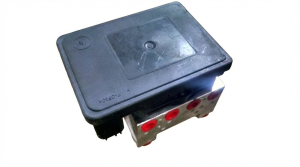
(OEM #F2GZ-2C219-A (or superseding part numbers like F2GZ-2C219-F, F2GZ-2C219-G))— This is the most common module to fail or be replaced, triggering the U2101 code on an Edge if not programmed. The physical part may be fine, but it requires programming to work.
Trusted brands: Motorcraft, Bosch
OEM price range: $450-$700
Aftermarket price range: $250-$450 - Module Programming Service — This is not a physical part, but the required labor to configure the module. This is the actual 'fix' for the code. A Ford dealer or an independent shop with Ford's IDS software will charge for this service.
OEM price range: $150-$300
Aftermarket price range: $100-$180
Related Codes That Often Appear With This One
- U2100 — U2100 (Initial Configuration Not Complete) and U2101 often appear together, as both point to a module that has not been properly set up for the vehicle.
- U0121 — This code means 'Lost Communication With ABS Control Module'. If U2101 is present in another module (like the PCM), it often means the ABS module is improperly configured and cannot talk to the network, leading other modules to report it as missing.
- U0415 — This code means 'Invalid Data Received From Anti-Lock Brake System Control Module'. It indicates that other modules are receiving data from the ABS module, but the data is nonsensical or unexpected, which is a direct result of an incorrect configuration (U2101).
Technical Service Bulletins (TSBs) & Recalls
- SSM 47843 - General guidance for 2010-2019 Ford vehicles, stating that DTCs U2100 and U2101 indicate a module has not been properly configured and requires the PMI procedure with a Ford diagnostic tool (IDS or FDRS). It specifically instructs technicians on how to use the 'As-Built' function if PMI is not possible.
- SSM 54052 - Notes that if a "failed, would you like to retry?" error occurs during programming, the SCCM will not complete PMI and may store DTC U2101 due to software/hardware compatibility issues.
- TSB 24-2167 - Reports that vehicles may exhibit an illuminated stability-traction control indicator with DTC U2101:00 in the ABS module immediately following a software update to the PCM.
- SSM 49690 - Warns that installing a new module prior to starting a scan tool session may result in incomplete module configuration with DTC U2101.
Mechanic-Grade Diagnostic Values
- ABS Module Operating Voltage — expected: 10V - 17V. Failure: Voltage outside this range can cause the module to set DTCs or fail to operate. Overcharging during a jump start is a potential cause.
- CAN Bus Network Resistance — expected: Approximately 60 Ω (with battery disconnected, measured between CAN High and CAN Low pins at the OBD-II port). Failure: A reading of ~120 Ω indicates one of the two terminating resistors is offline (often inside a module). A reading near 0 Ω indicates a short between the CAN lines.
Hidden / Shadow Codes Worth Checking
- U2101:00: Control Module Configuration Incompatible (No Sub Type Information). This is the generic version of the code, often seen when a module is replaced without programming. (see via Ford IDS, FORScan, or other professional-grade scan tools.)
- U2101:55: Not Configured. This subtype explicitly states that the module needs to be programmed with vehicle or sub-system option content. It's a direct command to perform a PMI or As-Built configuration. (see via Ford IDS or FORScan.)
- U2101:56: Invalid or Incompatible Configuration. This indicates the module has a configuration that is impossible, such as mutually exclusive options being enabled at the same time, or a feature enabled that the hardware doesn't support. (see via Ford IDS or FORScan.)
Scan Tool Commands That Help
- FORScan: ABS As-Built Format — This is the primary function used to fix U2101. It allows you to load the factory As-Built data file for your vehicle's VIN directly into a new or used ABS module, overwriting the incorrect configuration.
- FORScan: ABS Module Configuration (not As-Built) — This provides a more user-friendly interface for changing specific parameters. However, for a U2101 code, writing the full As-Built data is the recommended procedure.
- FORScan / Ford IDS: IVD Initialization Procedure / Calibrate ABS Module — After successfully programming the ABS module and clearing the U2101 code, this procedure must be run to calibrate the steering angle and other yaw/rate sensors so the AdvanceTrac stability control system functions correctly.
- Ford IDS/FDRS: Programmable Module Installation (PMI) — This is the official Ford procedure. It first attempts to download the configuration from the old module and then uploads it to the new one. If the old module is unavailable, IDS will prompt for As-Built data.
- Ford IDS: Force As-Built Session (Special Function 53091) — If the standard PMI process does not automatically offer an As-Built option (e.g., if it can't detect a new module), a technician can use this hidden command to force the system into the As-Built data entry screen.
Wiring & Ground Locations
- Under-hood Fuse Box (BJB) — Located in the engine compartment, on the driver's side.. This contains the primary fuses for the ABS module. Specifically, fuse #69 (30A for ABS Valves) and fuse #87 (60A for ABS Pump) are located in a 'hidden' compartment underneath the main fuse tray that must be unclipped and lifted up to access.
- Primary Chassis Ground — On the 2015+ Edge, a main grounding stud is located on the firewall on the driver's side, to the right of the battery.. A poor ground connection can cause low voltage or electrical noise, leading to communication errors like U2101 and other seemingly unrelated electronic issues. This is a critical point to check for corrosion or looseness.
- ABS Module Connector (C135) — The connector plugs directly into the ABS module, which is located under the brake booster, behind the battery. Access requires removing the battery and possibly the airbox.. If programming fails repeatedly, checking this connector for corrosion, moisture, or backed-out pins is a necessary step. A poor connection here can mimic a module configuration failure.
Real Owner Repair Stories
- YouTube video on a 2015 Ford F-150 (similar platform/procedure) (2015 Ford F-150) — ABS light was on, and a scan with FORScan showed a DTC indicating a wrong VIN was programmed into the ABS module.
❌ Tried (didn't work) Clearing the codes with FORScan did not work; the light and code returned immediately.
✅ What actually fixed it Using FORScan, the technician selected the 'ABS As-built format' function. FORScan automatically downloaded the correct factory As-Built data from the internet using the vehicle's VIN. After writing this factory data to the used ABS module, the VIN mismatch was corrected, and the ABS light went out. - NHTSA ODI #10694215 — An owner reported that while turning the steering wheel, the steering would lock up. A dealer inspection found codes C1B00 and U2101 present, leading to a recommendation to replace the electronic steering rack.
OEM Part Supersession History
F2GZ-2C215-A→F2GZ-2C215-B— Revision and update by the manufacturer.
Heads up: The part number for the ABS module/hydraulic unit assembly is different for vehicles with Auto Start-Stop versus those without. For example, F2GZ-2C215-B is a common part number. You must verify compatibility based on this feature, not just the model year, before purchasing a replacement.
Model Year Variations Within This Range
- 2015-2018: While the 2015-2018 range is a single generation, the most significant variation affecting this code is the presence of the Auto Start-Stop feature. The ABS module hardware is different for vehicles equipped with it and is not cross-compatible with non-Start-Stop vehicles, even if they are the same model year.
- All: Ford vehicles do not use a single, dedicated 'Body Control Module' (BCM) in the same way as other manufacturers. The functions are often handled by a Smart Junction Box (SJB) or Generic Electronic Module (GEM). When diagnosing, a technician may need to look for the SJB/GEM in the scan tool module list, not 'BCM'.
Diagnostic Flowchart
Used vs. New Parts: Buying Guide for This Vehicle
When a used part is the smart pick: A used ABS module is a viable, cost-effective option ONLY if you have access to FORScan (with an extended license) or Ford's IDS software and are comfortable with the As-Built programming process. The part itself is often fine, but it is useless without being reprogrammed.
Donor-vehicle mileage cap: roughly under 150000 miles for the part to have meaningful remaining life.
What to inspect on the donor part:
- CRITICAL: Verify if the donor vehicle had Auto Start-Stop and match it to your vehicle. The modules are not interchangeable.
- Match the OEM part number on the module as closely as possible. While superseded numbers may work, an exact match is safest.
- Ensure the donor vehicle was not involved in a fire or flood, as extreme heat or moisture can damage the electronics.
- Inspect the connector pins on the used module for any signs of corrosion, bending, or damage.
OEM-only on this vehicle (don't cheap out):
- While the physical part can be used, the 'Module Programming' service is effectively an OEM-only or specialist procedure. A standard mechanic without Ford-specific tools cannot complete the repair.
Aftermarket brands forum-validated for this vehicle:
- Bosch (Often the Original Equipment Manufacturer)
- Motorcraft (OEM)
Brands owners have reported issues with on this vehicle:
- Unknown/unbranded modules from online marketplaces can be risky, as they may be incompatible or have been improperly handled.
Real Owner Stories
Aggregated from forums and TSBs cited above. Mileages and costs reflect what owners reported in those sources.
2017 Ford Edge Ecoboost Titanium — 285589 miles
Symptoms: The owner had a persistent U2101 code stored in the ABS module but reported having no warning lights on the dashboard.
What fixed it: The owner had not found a fix at the time of posting, but a commenter suggested the problem was due to improper programming and required a 'Programmable Module Installation' (PMI) using As-Built data.
Source hint: Reddit r/FORScan
Owner Reported Issue — NHTSA ODI #11581420
Symptoms: An owner reported that their vehicle makes a strange beeping noise similar to a warning chime, but no lights appear on the dashboard. Diagnostic scans revealed multiple codes including U0121, U0140, and U2101.
Related OBD-II Codes
Frequently Asked Questions
I just replaced the ABS module on my 2017 Edge and now the ABS and traction control lights are on with code U2101. What did I do wrong?
Does Ford's TSB SSM 47843 apply to my 2016 Ford Edge for this code?
Can I clear the U2101 code with my cheap Bluetooth OBD-II scanner?
Is it safe to buy a used ABS module from a junkyard for my Ford Edge?
My airbag light is on along with the ABS light and U2101. Are these related?
What is 'As-Built' data and why does my Edge need it for a new module?
Helpful Videos


We Have This Part in Stock


The information in this article is provided for general reference and educational purposes only. Vehicle specifications, procedures, and part compatibility can vary by production date, trim level, and region. Always consult your vehicle's factory service manual and verify part numbers before purchasing or performing repairs. Safety-critical components such as airbags, seat belts, and braking systems should be installed by a qualified professional.
- Ford Edge:
- 🎬 Helpful Videos
- 🛍️ Shop This Part
- What's Unique About the 2015-2018 Ford Edge
- Symptoms You May Notice
- Most Likely Causes
- Rare But Worth Checking
- Diagnosis Steps
- Parts You'll Likely Need
- Related Codes That Often Appear With This One
- Technical Service Bulletins (TSBs) & Recalls
- Mechanic-Grade Diagnostic Values
- Hidden / Shadow Codes Worth Checking
- Scan Tool Commands That Help
- Wiring & Ground Locations
- Real Owner Repair Stories
- OEM Part Supersession History
- Model Year Variations Within This Range
- Diagnostic Flowchart
- Used vs. New Parts: Buying Guide for This Vehicle
- Real Owner Stories
- 2017 Ford Edge Ecoboost Titanium — 285589 miles
- Owner Reported Issue — NHTSA ODI #11581420
- Related OBD-II Codes
- Frequently Asked Questions
- 🎟️ Get 5% Off