

U1428 on 2014-2023 Jeep Cherokee: 'Inaccurate Engine Torque' Causes and Fixes
On a 2014-2023 Jeep Cherokee, code U1428 is often caused by a faulty electronic throttle body or a large vacuum leak. This code frequently appears with P2172 ('High Airflow/Vacuum Leak Detected'). The most common fix is replacing the throttle body, which costs between $150 and $450 for the part. A software update may also be required.
- U1428 is a network code on your Jeep Cherokee that means the transmission computer doesn't trust the engine's reported power output.
- This code is almost always accompanied by P2172. The problem is not the transmission; it's an engine airflow issue, most commonly a bad throttle body or a vacuum leak.
- Do not drive the vehicle, as it can stall or enter 'limp mode' at any time, which is a serious safety hazard.
- A software update might be required, but the underlying physical fault (throttle body or leak) must be addressed first.
What's Unique About the 2014-2023 Jeep Cherokee
On the Jeep Cherokee KL platform and its relatives like the Chrysler 200, Jeep Compass, and Renegade, U1428 is notoriously linked with code P2172 ('High Airflow/Vacuum Leak Detected'). The combination of these codes almost always points to a problem with un-metered air entering the engine or a failing throttle body. The Powertrain Control Module (PCM) calculates engine torque based on airflow readings; if a vacuum leak or faulty throttle body provides incorrect data, the torque calculation is wrong. The Transmission Control Module (TCM) is programmed to react defensively to this implausible torque data by forcing the vehicle into 'limp mode' to prevent potential transmission damage from erratic engine performance, a common experience for owners.
Symptoms You May Notice
- Check Engine Light is on
- Electronic Throttle Control (ETC) warning light (red lightning bolt) is on
- Vehicle enters 'limp mode', limiting RPM and speed
- Engine stalls or shuts off while driving, sometimes when coming to a stop
- Long crank time before the engine starts
- Hesitation, rough acceleration, or power surging
- Rough or erratic idle
- Start/Stop system becomes unavailable [NHTSA ODI #11243310]
- Replacing the transmission or TCM. While the code is set by the TCM, the problem usually originates from the engine side (throttle body, vacuum leak) providing bad data.
- Replacing the MAP sensor without first checking for vacuum leaks or a faulty throttle body, which are more common causes.
Most Likely Causes
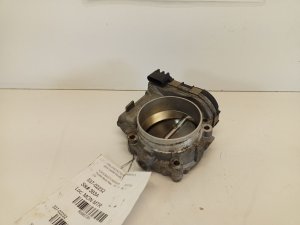
- Faulty Electronic Throttle Body 🔴 High Probability The internal electronics of the throttle body can fail, or the throttle plate can stick due to heavy carbon buildup, providing incorrect airflow data to the PCM. This is a widely reported failure point for this platform, leading directly to the P2172 and U1428 code combination.
How to confirm: With the engine off, remove the intake hose and visually inspect the throttle plate for heavy carbon buildup. Use a scan tool to monitor throttle position sensor voltage; it should move smoothly with no dropouts as the pedal is pressed. A sticking plate is a clear sign of failure.
Typical fix: First, attempt to clean the throttle body thoroughly with a dedicated cleaner and a soft cloth. Do not force the electronic throttle plate by hand. If cleaning does not resolve the issue, replacement of the entire electronic throttle body assembly is the definitive fix.
Est. part cost: $150-$500 - Vacuum Leak 🟡 Medium Probability Plastic and rubber components in the engine bay, such as PCV hoses, intake boots, and intake manifold gaskets, can become brittle and crack over time. A significant leak allows un-metered air into the engine, which the PCM detects as a 'high airflow' condition (P2172), leading to the implausible torque calculation (U1428).
How to confirm: Perform a smoke test on the intake system to visually identify the source of the leak. This is the most effective method. Alternatively, listen for hissing sounds around the engine bay at idle and visually inspect all vacuum lines and the intake manifold gasket area.
Typical fix: Replace the failed hose, intake manifold gasket, or other component that is causing the leak.
Est. part cost: $20-$200 - Outdated PCM/TCM Software ⚪ Low Probability Jeep has issued multiple Technical Service Bulletins (TSBs) for the Cherokee and its platform mates (like the Compass) to update PCM software. These updates revise the logic for detecting torque errors and can prevent false positives for codes like U1428 and P1DD2, especially in response to minor, transient sensor glitches.
How to confirm: A Jeep dealership or a qualified shop with a wiTECH scan tool can check the current software calibration ID against the latest available version for your vehicle's VIN. TSB 18-091-19 is a key bulletin for this issue on related models.
Typical fix: Reprogram (flash) the Powertrain Control Module (PCM) and/or Transmission Control Module (TCM) to the latest software version.
Est. part cost: $100-$250
Rare But Worth Checking
- Failed MAP Sensor:
- Wiring Harness Issues:
Diagnosis Steps
- Scan the PCM and TCM for all diagnostic trouble codes. Note the presence of P2172 or P1DD2 alongside U1428, as this combination is highly indicative of the common causes.
- Check for any applicable Technical Service Bulletins (TSBs) for your vehicle's VIN. TSBs like 18-091-19 for related models suggest a software update may be the first step.
- Perform a smoke test. This is the most effective method to thoroughly check the entire air intake system for vacuum leaks. Inspect all hoses (especially PCV), clamps, and gaskets from the air filter to the intake manifold.
- Remove the intake duct from the throttle body. Inspect the throttle plate and bore for heavy carbon buildup that could cause the plate to stick.
- Clean the throttle body with a dedicated cleaner and a soft cloth. Do not force the electronic throttle plate by hand. Re-check for symptoms after cleaning.
- If no vacuum leaks are found and cleaning the throttle body does not resolve the issue, the throttle body assembly is the most likely failed component and should be replaced.
- After replacement, clear all codes and perform a throttle relearn procedure as specified by the service manual to ensure proper calibration.
- If the issue persists, investigate less common causes like the MAP sensor or wiring harness integrity.
Parts You'll Likely Need
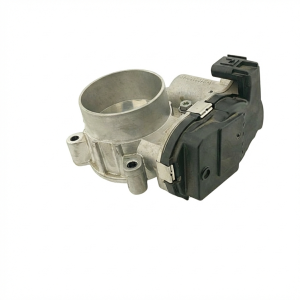
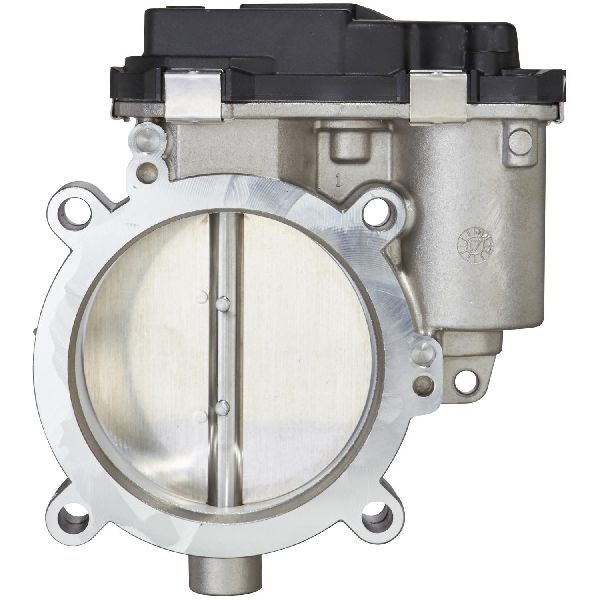
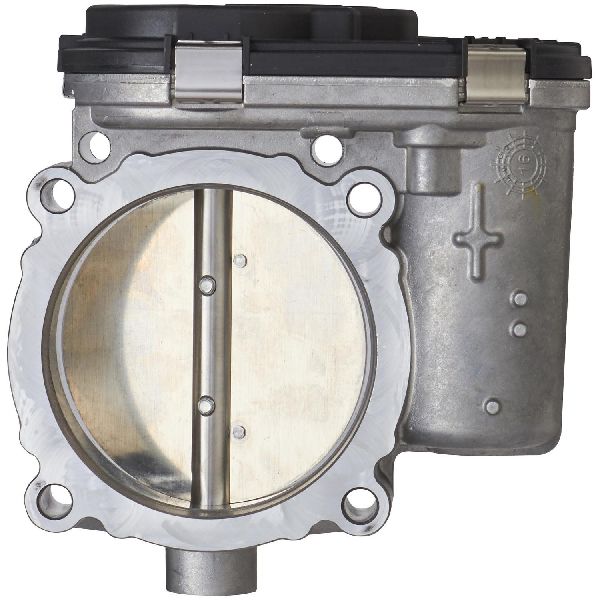
- Electronic Throttle Body Assembly
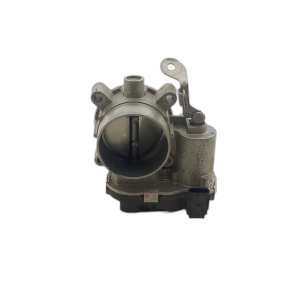
(OEM #5184349AF (for 3.2L V6), 04891970AB (for 2.4L I4))— This is the most common point of failure leading to the combination of codes U1428 and P2172. The internal sensors fail or the mechanics stick, leading to implausible airflow and torque readings.
Trusted brands: Mopar, Bosch, Dorman, Cardone (Remanufactured)
OEM price range: $450-$550
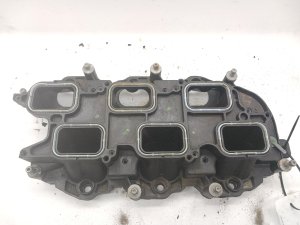
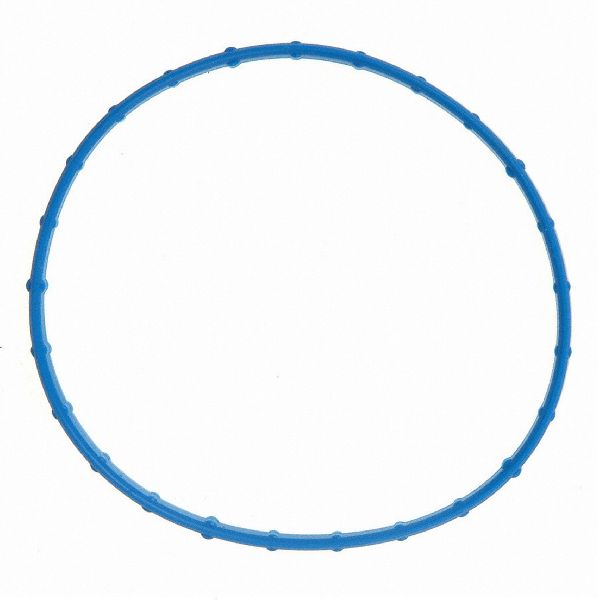
Aftermarket price range: $150-$250 - Intake Manifold Gasket — A common source of a significant vacuum leak that can trigger P2172 and subsequently U1428.
Trusted brands: Fel-Pro, Mahle, Mopar
OEM price range: $30-$50
Aftermarket price range: $15-$30
Related Codes That Often Appear With This One
- P2172 — This code, for 'High Airflow/Vacuum Leak Detected,' is often the root cause. A vacuum leak or a faulty throttle body causes an airflow measurement that the PCM deems too high. The PCM uses this faulty data to calculate engine torque, which the TCM then flags as implausible, setting U1428.
- P1DD2 — This code means 'Torque Request Signal From TCM Denied.' It is often set alongside U1428, indicating the TCM has actively rejected the torque data from the PCM and is taking protective action, like entering limp mode. TSBs confirm this code combination.
Technical Service Bulletins (TSBs) & Recalls
- 18-091-19 - For Jeep Compass, but highly relevant. Addresses MIL illumination with DTCs U1428 and P1DD2, causing limp mode. The fix is to reprogram the PCM with updated software.
- 18-078-20 - Supersedes 18-091-19, adding more DTCs but reinforcing the same PCM flash fix for P1DD2 on the 2.4L engine in the Compass.
- 18-081-19 - For Jeep Renegade, addresses U1424 (a similar implausible torque code) and P1DD2, also fixed by a PCM software update.
Platform-Specific Known Issues
- Owner Experience: Stalling and Limp Mode: An owner of a 2018 Jeep Cherokee reported the car turning off on its own and logging codes P2172 and U1428, with the throttle body being the suspected cause. [NHTSA ODI #11424210]
- Forum Discussion on JeepCherokeeClub.com: A thread titled 'Limp Mode, P2172, U1428' details a 2015 Cherokee owner's experience with stalling at stoplights and going into limp mode. The community consensus pointed towards a faulty throttle body, which ultimately fixed the issue after replacement.
- TSB Confirms Software Fix for Platform Mates: Technical Service Bulletin 18-091-19, issued for the related Jeep Compass, explicitly lists codes U1428 and P1DD2 ('Torque Request Signal From TCM Denied') as being addressed by a Powertrain Control Module (PCM) software update. This confirms that the logic for interpreting torque signals can be a source of the fault.
Mechanic-Grade Diagnostic Values
- MAP Sensor Voltage (Key On, Engine Off) — expected: 4.0V - 5.0V. Failure: Voltage significantly outside this range.
- MAP Sensor Voltage (Hot Idle) — expected: 1.5V - 2.1V. Failure: Voltage significantly lower or higher than this range at a stable idle.
- Throttle Position Sensor (TPS) Supply Voltage — expected: 5.0V +/- 0.5V. Failure: No voltage or voltage outside this range indicates a PCM or wiring issue.
- Throttle Position Sensor (TPS) Signal Voltage — expected: Approx. 0.5V - 1.0V at closed throttle, smoothly increasing to 4.0V - 4.8V at wide-open throttle.. Failure: Voltage is stuck low, does not change smoothly, or has dropouts when the pedal is pressed.
Scan Tool Commands That Help
- wiTECH (Dealer Tool): Reprogram PCM/TCM — Used to apply software updates as specified in Technical Service Bulletins (TSBs) that address false positives for U1428 and P1DD2.
- wiTECH (Dealer Tool): Proxi Configuration Alignment — This routine is often required after reprogramming a major module like the BCM or TCM to ensure all vehicle modules are communicating correctly.
- Professional Scan Tool: Throttle Body Relearn/Calibration — This is a mandatory step after cleaning or replacing the electronic throttle body to reset the learned closed and open positions for the throttle plate.
- Manual Procedure (No Tool): Manual Throttle Relearn — Can be attempted if a scan tool is not available. The general process is: 1) Turn ignition ON (engine off) and wait for dash lights to settle. 2) Slowly press the accelerator pedal to the floor and slowly release it. 3) Turn ignition OFF. 4) Start the engine and let it idle for several minutes to calibrate.
Wiring & Ground Locations
- Engine/Chassis Grounds — While specific diagrams for the Cherokee KL are not readily available, common Jeep ground locations include: studs on the inner fenders, a ground strap from the engine block/head to the firewall, and a primary ground point near the engine dipstick tube stud.. A poor ground connection for the PCM or related sensors can cause erratic voltage signals, leading to implausible data and communication codes like U1428. A common theme in forum diagnostics for electrical issues is to 'check your grounds first'.
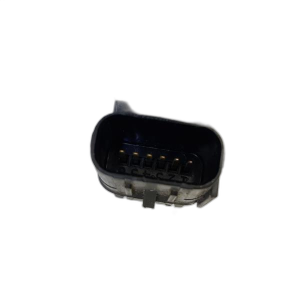
- Throttle Body Connector — The 6-pin electrical connector on the electronic throttle body assembly.. A loose connection, corrosion, or damaged wires at this connector will directly interrupt the signals between the throttle position sensors and the PCM, causing throttle-related codes and limp mode. On some Jeep models, replacement throttle bodies come with a new pigtail that has a different wire color scheme, requiring careful matching to avoid damage.
Real Owner Repair Stories
- Reddit user in r/JeepRenegade (2015 Jeep Cherokee Limited 3.2L AWD, 99,780 miles) — Electronic throttle control warning light, limp mode.
❌ Tried (didn't work) Replaced throttle body, Replaced accelerator pedal
✅ What actually fixed it The root cause was a faulty oil temperature sensor located on an aftermarket aluminum oil filter housing. Replacing the sensor resolved the throttle control light issue. - Reddit user in r/MechanicAdvice (2016 Jeep Cherokee 2.4L) — Rough idle, vehicle dies when slowing to a stop, Check Engine Light with codes P2172, P0123, P0222.
❌ Tried (didn't work) Cleaning the throttle body and performing a relearn procedure (only fixed the issue for 10 minutes).
✅ What actually fixed it The user was advised that given the combination of codes and the temporary nature of the cleaning fix, the electronic throttle body assembly itself was faulty and required replacement. - RamForum.com user (2019 Ram 1500 Classic (different model, but same U1428 code)) — Limp mode, rough running, long crank, codes U1428, P0335, P0339.
❌ Tried (didn't work) Visual inspection for loose wires.
✅ What actually fixed it Replacing the Crankshaft Position Sensor (CPS) resolved all codes and symptoms after clearing them.
"I Checked Everything" — The Actual Cause
- In one documented case for a 2015 Cherokee 3.2L, after replacing the throttle body and accelerator pedal failed to resolve the electronic throttle control light, the actual cause was discovered to be a faulty oil temperature sensor on an aftermarket oil filter housing. This sent bad data that indirectly triggered the throttle system fault.
OEM Part Supersession History
5184349AB, 5184349AC, 5184349AD, 5184349AE→5184349AF— Part revision and improvement by the manufacturer over time.
Heads up: The newest part number (5184349AF) is the correct replacement for all previous versions for the 3.2L V6 engine.
Model Year Variations Within This Range
- 2019-2023: The 2019 model year facelift introduced an optional 2.0L Turbo I4 engine. This engine uses a different throttle body than the 2.4L and 3.2L engines carried over from the pre-facelift models. While the U1428 fault can still occur, the specific part numbers for the throttle body will differ.
Diagnostic Flowchart
Other Known Issues on This Vehicle
Issues unrelated to this code that are worth knowing about as an owner of this generation:
- ZF 9-Speed Transmission Problems 🔴 High — Very common, especially in 2014-2016 models. Symptoms include rough/harsh shifting (especially 2-3 gear), lurching, unexpected shifts to neutral, and premature failure. (Ref: Multiple software updates and recalls (e.g., NHTSA recall 16V-190) have been issued, but problems persist for many owners.)
- Excessive Oil Consumption (2.4L Tigershark Engine) 🔴 High — Widespread issue affecting many vehicles with this engine. Owners report needing to add oil between changes, which can lead to engine stalling if the level gets too low. (Ref: Class-action lawsuits have been filed. FCA issued Customer Satisfaction Notifications (W20, W80) and TSB 09-003-23, which may lead to an engine replacement under an extended warranty if the vehicle fails an oil consumption test.)
- Power Transfer Unit (PTU) Failure 🟠 Medium — A significant number of owners have reported failure of the PTU, which is responsible for the AWD system. This can result in loss of AWD and costly repairs. (Ref: A recall was issued for some 2017-2019 models for an improperly seated PTU input shaft.)
- Leaking V6 Oil Cooler/Filter Housing 🟠 Medium — Common on the 3.2L V6 engine. The plastic housing can crack, leading to significant oil leaks onto the top of the engine.
- Electronic Parking Brake Malfunction 🟡 Low — Some owners report the electronic parking brake engaging randomly or failing to release, sometimes requiring a dealer visit to resolve.
Used vs. New Parts: Buying Guide for This Vehicle
When a used part is the smart pick: For this specific repair, purchasing a used electronic throttle body is generally not recommended. The failure mode is often electronic or due to wear in the internal mechanism, meaning a used part from a junkyard carries a high risk of having the same issue or a short remaining lifespan.
Donor-vehicle mileage cap: roughly under 60000 miles for the part to have meaningful remaining life.
What to inspect on the donor part:
- Verify the part number matches exactly or is a known supersession.
- Inspect the connector pins for any signs of corrosion or damage.
- Check the throttle plate for excessive carbon buildup, which might indicate a rough service life.
- If possible, get a part from a vehicle with the lowest possible mileage.
OEM-only on this vehicle (don't cheap out):
- While not strictly OEM-only, many professional technicians and forum users express a strong preference for OEM (Mopar) sensors like the Crankshaft Position Sensor or MAP sensor, citing that aftermarket versions can sometimes be unreliable or fail prematurely.
Aftermarket brands forum-validated for this vehicle:
- Dorman (specifically part 977-794 for the 3.2L) is a well-documented aftermarket alternative that claims to have improved on the original OEM design with a contactless Hall effect sensor and a better shaft seal to prevent common failures.
Brands owners have reported issues with on this vehicle:
- No specific brands are consistently cited as 'bad,' but caution is advised with unbranded, low-cost parts from online marketplaces, as their quality control can be inconsistent.
Real Owner Stories
Aggregated from forums and TSBs cited above. Mileages and costs reflect what owners reported in those sources.
2018 Jeep Cherokee
Symptoms: The car turned off on its own and logged codes P2172 and U1428.
What fixed it: The throttle body was identified as the suspected cause and required attention.
Source hint: NHTSA ODI #11424210
2015 Jeep Cherokee
Symptoms: Stalling at stoplights and the vehicle entering limp mode.
What fixed it: Replacement of the electronic throttle body assembly.
Source hint: JeepCherokeeClub.com thread titled 'Limp Mode, P2172, U1428'
2015 Jeep Cherokee
Symptoms: Vehicle entered limp mode and threw multiple error codes, including U1428, immediately after a battery change.
What fixed it: The discussion points to the throttle body as the likely culprit following the electrical system reset.
Source hint: cherokeeforums.com thread 'Help: 2015 Jeep Cherokee - New AGM Battery - Limp Mode - 20 Error Codes'
Related OBD-II Codes
Frequently Asked Questions
Does TSB 18-091-19 apply to my 2014-2023 Jeep Cherokee?
Can a dirty throttle body cause my Jeep Cherokee to enter limp mode with code U1428?
Why is my Start/Stop system unavailable when the U1428 code is present?
Is there a specific software update for the P1DD2 and U1428 codes on the 2.4L engine?
Could a vacuum leak be the reason my Jeep is stalling at stoplights?
Used OEM Parts in Stock

New Aftermarket Parts Available


The information in this article is provided for general reference and educational purposes only. Vehicle specifications, procedures, and part compatibility can vary by production date, trim level, and region. Always consult your vehicle's factory service manual and verify part numbers before purchasing or performing repairs. Safety-critical components such as airbags, seat belts, and braking systems should be installed by a qualified professional.
- Jeep Cherokee:
- 🛍️ Shop This Part
- What's Unique About the 2014-2023 Jeep Cherokee
- Symptoms You May Notice
- Most Likely Causes
- Rare But Worth Checking
- Diagnosis Steps
- Parts You'll Likely Need
- Related Codes That Often Appear With This One
- Technical Service Bulletins (TSBs) & Recalls
- Platform-Specific Known Issues
- Mechanic-Grade Diagnostic Values
- Scan Tool Commands That Help
- Wiring & Ground Locations
- Real Owner Repair Stories
- "I Checked Everything" — The Actual Cause
- OEM Part Supersession History
- Model Year Variations Within This Range
- Diagnostic Flowchart
- Other Known Issues on This Vehicle
- Used vs. New Parts: Buying Guide for This Vehicle
- Real Owner Stories
- 2018 Jeep Cherokee
- 2015 Jeep Cherokee
- 2015 Jeep Cherokee
- Related OBD-II Codes
- Frequently Asked Questions
- 🎟️ Get 5% Off