

U1424 on 2018-2024 Jeep Wrangler: Implausible Engine Torque Signal Fixes
This is a network communication error, not a direct mechanical failure. It most often means a software update is needed from a dealer or that another engine sensor has failed. Always diagnose other engine codes first before addressing U1424. Weak main or auxiliary batteries are also a very common cause.
- U1424 is a communication error, not a mechanical failure. Do not replace major components like the transmission.
- The first step in diagnosis should be to scan for all other codes. U1424 is often a symptom of another problem.
- The most common fix is a software update performed by a Jeep dealer or qualified shop.
- Always check the battery's health, as low voltage can cause random network communication faults.
- If you've been off-roading, inspect wiring harnesses for damage, especially near hot or moving parts.
What's Unique About the 2018-2024 Jeep Wrangler
On the Jeep Wrangler JL (and late-model JK), this code is frequently a symptom of a software issue rather than a hardware failure. Multiple Technical Service Bulletins (TSBs) across the Jeep/Stellantis lineup point to software updates (flashes) for the Powertrain Control Module (PCM) as the specific fix. TSB 18-064-20 for the related Jeep Cherokee explicitly acknowledges this, listing the cause as 'U1424 - Implausible Engine Torque Signal Received DTC False Failure'. The vehicle's complex network is also highly sensitive to voltage, and failure of the secondary auxiliary battery is a common trigger for various electrical faults, including U1424. A loose or faulty CAN bus junction block behind the glovebox is another known failure point on the JL platform that can cause this and many other communication errors.
Generation note: The 2018 model year is a transition year, including both the last of the JK generation and the first of the new JL generation. While the code's meaning is the same, specific diagnostic procedures or module locations may differ slightly. This guide is primarily focused on the JL generation (2018-2024) but the principles apply to the late-model JK as well. For the JL, a significant refresh occurred in 2024, introducing a larger standard touchscreen and standard side-curtain airbags, but the core powertrain and network architecture related to this code remained largely the same.
Symptoms You May Notice
- Check Engine Light (Malfunction Indicator Lamp)
- Electronic Stability Control (ESC) warning light
- Vehicle stuck in one gear ('limp mode')
- Harsh or erratic transmission shifting
- Poor acceleration or lack of power
- Service Electronic Throttle Control warning
- Flashing red lightning bolt on the dash (Electronic Throttle Control warning)
- "NO BUS" message on the instrument cluster
- Replacing the transmission or valve body. This is a communication code, not a mechanical transmission failure. The transmission is simply reacting to the bad information it is receiving.
Most Likely Causes
- Outdated Powertrain Control Module (PCM) or Transmission Control Module (TCM) Software 🔴 High Probability Manufacturers frequently release software updates to fix bugs and improve logic. Multiple TSBs for Jeep and Ram vehicles cite software updates as the direct fix for a false U1424 code, with TSB 18-064-20 even calling it a 'DTC False Failure'.
How to confirm: A Jeep dealer or a qualified shop with a wiTECH scan tool can check your vehicle's current software calibration ID against the latest version available from the manufacturer. This is the first step before replacing any parts.
Typical fix: Reprogramming ('flashing') the PCM and/or TCM with the latest software. This is a non-mechanical repair performed with a diagnostic tool.
Est. part cost: $0 - Failure of another Engine Sensor 🔴 High Probability This code is often a secondary or 'ghost' code. A failing sensor (e.g., crankshaft position, camshaft position, MAP) sends bad data to the PCM. The PCM then broadcasts an implausible torque value based on this bad data, triggering the U1424 in another module. As one technician on a forum noted, 'treat the U1424 as a symptom' of other codes like P0300 misfires. TSBs confirm that codes like P0335 (Crankshaft Position Sensor) can accompany U1424.
How to confirm: Scan the vehicle for all Diagnostic Trouble Codes (DTCs). If any other codes, such as P0335 (Crankshaft Position Sensor) or P0344 (Camshaft Position Sensor), are present, they are the primary fault. Diagnose and fix those codes first.
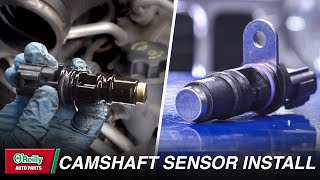
Typical fix: Replace the specific sensor that is causing the primary fault code. For example, if P0344 is present, replacing the Camshaft Position Sensor resolved 🎬 See how to replace a camshaft position sensor yourself the U1424 code for other owners.
Est. part cost: $30-$150 - Weak or Failing Battery (Main or Auxiliary) 🟡 Medium Probability The JL Wrangler uses a dual-battery system for its Engine Stop-Start (ESS) feature. The small auxiliary battery is prone to failure (often within 3 years) and, when it fails, it can drain the main battery and cause widespread, difficult-to-diagnose electrical issues. Low system voltage during startup is a well-known cause of communication glitches between modules, generating spurious network codes like U1424.
How to confirm: Test the main battery with a digital multimeter and a load tester. A healthy, resting battery should be above 12.4 volts. If you receive 'Service Stop/Start' warnings on the dash, the auxiliary battery is the prime suspect.
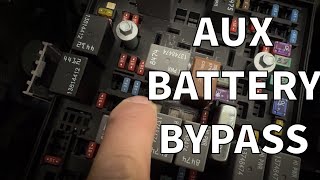
Typical fix: Replace the faulty battery. Many owners choose to perform an 'auxiliary battery bypass' by removing fuse F42 and disconnecting the aux battery's dedicated negative terminal from the main battery post.
Est. part cost: $150-$450 - Damaged Wiring or Poor Connection ⚪ Low Probability Off-roading or exposure to elements can damage the CAN bus wiring harness. A known issue on the JL involves the harness near the transmission rubbing through or getting heat-damaged, causing a short in the CAN wires (yellow for CAN low, violet/white for CAN high) and taking down the network. Additionally, the CAN bus junction blocks (STAR connectors) behind the glove box are a known failure point.
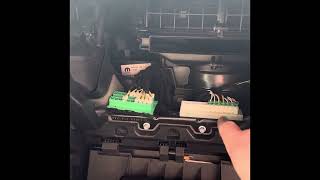
How to confirm: Visually inspect the wiring harnesses between the PCM, TCM, and ABS module for any signs of chafing, corrosion, or heat damage, particularly near the transmission. If network-wide issues occur, inspect the green and white CAN bus connectors behind the glove box for loose connections.
Typical fix: Repair or replace the damaged section of the wiring harness. In cases of a faulty junction block, replacing the block (Part # 68321746AA is cited by owners for the green connector) has resolved the issue.
Est. part cost: $10-$500
Rare But Worth Checking
- Failing Powertrain Control Module (PCM): This is very rare. The PCM should only be considered after all other possibilities, including software, sensors, and wiring, have been definitively ruled out.
Diagnosis Steps
- Scan for all DTCs in all modules. Do not focus only on the U1424 code.
- If other engine sensor codes (P-codes) are present, diagnose and repair them first. Clear the codes and re-test. U1424 is often a symptom, not the root cause.
- If no other codes are present, fully test the battery system. Check the main battery's voltage and load capacity. Investigate the health of the auxiliary battery, as its failure is a known cause of electrical issues on the JL platform.
- Contact a Jeep dealership or qualified shop to check if a PCM or TCM software update is available for your VIN. Multiple TSBs point to this as a fix, even for 'false failures'.
- If software is up-to-date, perform a thorough visual inspection of the wiring harnesses between the PCM, TCM, and ABS module for damage, especially near heat sources or moving parts. Also inspect the CAN bus junction blocks behind the glove box.
- As a last resort, diagnose the PCM itself for failure.
Parts You'll Likely Need
- Software Update — This is not a physical part, but a service. It is the most common and manufacturer-recommended fix for resolving false or overly sensitive U1424 triggers.
Trusted brands: Mopar (via wiTECH)
OEM price range: $150-$250 - Crankshaft Position Sensor
(OEM #5149167AF)— A common cause of primary codes (like P0335) that lead to a secondary U1424. This part is critical for calculating engine torque.
Trusted brands: Mopar, NTK, Bosch
OEM price range: $50-$90
Aftermarket price range: $25-$60 - Auxiliary Battery — The factory auxiliary battery for the stop-start system is a frequent failure point, causing numerous electrical faults including network codes.
Trusted brands: Mopar, Duralast, Super Start
OEM price range: $120-$180
Aftermarket price range: $90-$150
Related Codes That Often Appear With This One
- P0335 — Crankshaft Position Sensor Circuit. A faulty crank sensor provides incorrect engine speed data, a key input for torque calculation. This is mentioned in TSB #18-085-17 and TSB #18-090-16.
- P0101 — Mass Air Flow Sensor 'A' Circuit Performance. Incorrect airflow data leads to an incorrect torque calculation. This is mentioned in TSB #18-110-20.
- U0402 — Implausible Data Received From TCM. This code often appears with U1424, indicating a general breakdown in communication between the engine and transmission modules. TSB #18-014-16 lists both codes as being resolved by a PCM flash.
- P1DD2 — Torque Request Signal From TCM Denied. This indicates the PCM has rejected a torque request from the transmission, often because of the same underlying data conflict that causes U1424.
Technical Service Bulletins (TSBs) & Recalls
- 18-110-20: Mentions U1424-00 - Implausible Engine Torque Signal Received.
- 18-090-16: Mentions U1424 - Implausible Engine Torque Signal Received for a Wrangler.
- 18-085-17: Notes that software has been updated to better address the U1424.
Platform-Specific Known Issues
- Multiple TSBs exist for various Jeep models (including Wrangler, Cherokee, and Renegade) that explicitly name U1424 as a code resolved by a PCM software update. This indicates a pattern of the manufacturer correcting oversensitive diagnostic logic via software flashes.
- TSB #18-090-16 for an earlier model Wrangler specifically lists U1424 as a code addressed by a software update to prevent stalling.
- TSB #18-064-20 for the Cherokee mentions 'U1424-00 - Implausible Engine Torque Signal Received DTC False Failure', directly acknowledging the code can be set in error by the factory software.
Mechanic-Grade Diagnostic Values
- CAN Bus Network Resistance — expected: Approximately 60 Ω. Failure: A reading of 120 Ω indicates a missing terminating resistor. A reading of 40 Ω suggests a third, unwanted resistor is on the network. A reading significantly less than 40 Ω can indicate a short in the harness or a damaged module port. Some owners have measured ~45 Ω on a healthy JL, which may be normal for the platform.
- CAN Bus Voltage (Key On, Engine Off) — expected: CAN High (Pin 6 at OBD-II port) to Ground should be ~2.5-3.0V. CAN Low (Pin 14 at OBD-II port) to Ground should be ~2.0-2.5V. The two voltages are differential and do not sum to a specific number.. Failure: Voltages significantly outside these ranges, or a line that is stuck at 0V or battery voltage, indicates a short to ground or power.
- PCM 5V Reference Voltage Output — expected: 5V at specific sensor supply pins coming from the PCM.. Failure: If the 5V reference is missing or low, it can indicate an internal PCM fault or a shorted sensor/wiring pulling the voltage down.
Scan Tool Commands That Help
- wiTECH (or compatible advanced scanner): Vehicle Scan / View All DTCs — This is the mandatory first step to see which modules have stored the U1424 code and, more importantly, to find any accompanying P-codes (like for a cam/crank sensor) that point to the root cause.
- wiTECH: ECU Flash — Used to perform the software update on the PCM or TCM as specified by a Technical Service Bulletin (TSB). This is a common fix for a false U1424 code.
- wiTECH: Clear all DTCs — This function is used after a software flash or repair to clear any codes that were set during the reprogramming process.
Wiring & Ground Locations
- CAN Bus Junction Blocks (STAR Connectors) — Located behind the glove box. Typically one green and one white connector block where multiple CAN bus circuits meet.. These blocks are a known point of failure on the JL platform. A loose connection or internal fault in the block can interrupt communication across the entire network, causing a flood of U-codes, including U1424, and symptoms like a 'NO BUS' message.
- G905A, G906A/B, G907A — These are primary ground points for the dash and instrument panel harnesses, located in the driver and passenger footwells and behind the dash structure.. A poor ground connection for any of the modules on the CAN bus (PCM, TCM, ABS, Instrument Cluster) can cause communication errors and implausible data faults like U1424.
- CAN Bus Harness at Transmission — The wiring harness that runs down to the transmission.. There are owner reports of this harness chafing or rubbing through against chassis components, causing the CAN High and CAN Low wires to short out. This can take down the entire network and is a specific physical location to inspect if U1424 is present with other communication failures.
Real Owner Repair Stories
- Reddit user in r/JeepWrangler (2018 Jeep Wrangler JL) — Dashboard lit up with every imaginable error, 'NO BUS' message displayed, and the vehicle would not shift out of park.
❌ Tried (didn't work) Wiggling the connectors behind the glove box provided a temporary fix.
✅ What actually fixed it The owner replaced the green CAN bus hub (junction block) located behind the glove box. The issue did not return after the replacement. - DodgeForum.com user (platform-relevant) (2014 Ram 1500 5.7L) — Check engine light, transmission would not shift out of first gear, traction control light on.
❌ Tried (didn't work) Initial scan showed P1DD2, U1424, and P0344 (Camshaft Position Sensor Intermittent).
✅ What actually fixed it The dealership found a bad camshaft position sensor and also reprogrammed the ECM and TCM. The root cause was identified as the faulty cam sensor, which led to the other communication codes. - JLwranglerforums.com user (2019 Jeep Wrangler JLU) — All warning lights going off sporadically, vehicle would not shift out of park.
❌ Tried (didn't work) Shutting off and restarting the vehicle multiple times did not help.
✅ What actually fixed it The owner dropped the glove box and pushed down on the CAN bus wires and plugs to ensure they were seated, which resolved the problem immediately. They then replaced both the green and white CAN bus connectors as a permanent fix and had no further issues.
Model Year Variations Within This Range
- 2018-2024: The dual-battery system (main and auxiliary) for the Engine Stop-Start (ESS) is a major source of electrical issues. Some very early models or specific configurations may have slight differences in the bypass procedure (e.g., presence of fuse F42 or a second negative cable on the main battery post). Owners should visually confirm their specific setup before attempting the bypass.
- 2024+: The 2024 model year refresh introduced a new, standard 12.3-inch Uconnect 5 system. While the underlying CAN bus architecture is similar, any issues related to the infotainment system communicating on the bus would involve this new hardware and software.
Diagnostic Flowchart
Other Known Issues on This Vehicle
Issues unrelated to this code that are worth knowing about as an owner of this generation:
- Premature Steering Gear (Box) Failure 🔴 High — Very common on 2018-2020 models with the original aluminum steering box. Causes loose steering, wandering, and excessive play. (Ref: TSB 08-074-20 (later superseded by 08-003-21 Rev A) advises replacing the aluminum box with an updated steel version.)
- Auxiliary Battery Failure (ESS Battery) 🟠 Medium — Extremely common. The small auxiliary battery for the Engine Stop-Start system fails, causing start-up issues, dashboard warnings, and draining the main battery. Many owners perform a bypass.
- Frame Weld Defects (Front Track Bar Bracket) 🔴 High — Affected a specific batch of early 2018-2019 models, potentially leading to loss of steering control. (Ref: Recall U67 / NHTSA 18V-675 covered inspection and repair of the track bar bracket weld.)
- Galvanic Corrosion on Aluminum Panels 🟠 Medium — Widespread issue where paint bubbles and corrodes on aluminum panels like the doors, hood, and hinges due to contact with steel. (Ref: Multiple TSBs exist for paint and corrosion, but it remains a persistent owner complaint.)
- Axle Locker Sensor Failure 🟡 Low — Common on Rubicon models, where a faulty sensor for the axle locker system triggers a 'Service Axle Locker System' message. Often fixed with an aftermarket bypass connector.
Used vs. New Parts: Buying Guide for This Vehicle
When a used part is the smart pick: For this specific code, buying used parts is generally not recommended for the primary fixes. Software updates must be done at a dealer. Electronic sensors are inexpensive new, and their remaining lifespan is unknown when used. A used PCM or TCM is especially risky as it may be VIN-locked to the donor vehicle and require expensive dealer programming to work, if it works at all.
OEM-only on this vehicle (don't cheap out):
- Powertrain Control Module (PCM): Aftermarket or used PCMs often have compatibility or VIN-locking issues. A new OEM part or a professionally remanufactured unit programmed to your VIN is the only reliable option if the PCM is condemned.
- Software Flashes: This is a service, not a part, and can only be performed by a dealer or a shop with a licensed Mopar wiTECH subscription.
Aftermarket brands forum-validated for this vehicle:
- NTK or Bosch for Crankshaft/Camshaft sensors.
- Duralast, Super Start for main or auxiliary batteries.
Brands owners have reported issues with on this vehicle:
- No-name, ultra-cheap electronic sensors from online marketplaces often have high failure rates and can cause more diagnostic confusion.
Real Owner Stories
Aggregated from forums and TSBs cited above. Mileages and costs reflect what owners reported in those sources.
2018-2024 Jeep Wrangler (JL)
Symptoms: The vehicle displayed a 'Service Stop/Start' warning and experienced widespread electrical issues and communication glitches.
What fixed it: Replacing the failing auxiliary battery or performing an 'auxiliary battery bypass' 🎬 Watch this quick tutorial on performing an aux battery bypass by removing fuse F42 and disconnecting the negative terminal.
Source hint: jlwranglerforums.com thread 'jumperless-aux-battery-bypass'
2018-2024 Jeep Wrangler (JL)
Symptoms: The instrument cluster displayed a 'NO BUS' message, indicating a total network communication failure.
What fixed it: Replacing the green CAN bus junction block (STAR connector) behind the glove box using Part # 68321746AA.
Source hint: Article Context - common_causes (Damaged Wiring or Poor Connection)
2018-2024 Jeep Wrangler (JL)
Symptoms: The vehicle threw a U1424 code alongside a P0344 Camshaft Position Sensor code.
What fixed it: Replacing the Camshaft Position Sensor resolved the primary fault, which in turn cleared the U1424 'ghost' code.
Source hint: Article Context - common_causes (Failure of another Engine Sensor)
Related OBD-II Codes
Frequently Asked Questions
Is there a specific TSB for the Jeep Wrangler regarding the U1424 code and engine stalling?
My 2018-2024 Wrangler is showing a 'Service Stop/Start' warning along with U1424; are these related?
Could a 'False Failure' be triggering the U1424 code on my Jeep?
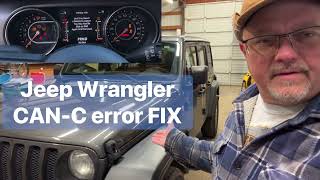
I'm seeing a 'NO BUS' message on my instrument cluster; is this linked to U1424?
Should I replace my transmission if I have U1424 and the vehicle is in 'limp mode'?
Can I bypass the auxiliary battery to stop these electrical codes?
Helpful Videos
Used OEM Parts in Stock


New Aftermarket Parts Available


The information in this article is provided for general reference and educational purposes only. Vehicle specifications, procedures, and part compatibility can vary by production date, trim level, and region. Always consult your vehicle's factory service manual and verify part numbers before purchasing or performing repairs. Safety-critical components such as airbags, seat belts, and braking systems should be installed by a qualified professional.
- Jeep Wrangler:
- 🎬 Helpful Videos
- 🛍️ Shop This Part
- What's Unique About the 2018-2024 Jeep Wrangler
- Symptoms You May Notice
- Most Likely Causes
- Rare But Worth Checking
- Diagnosis Steps
- Parts You'll Likely Need
- Related Codes That Often Appear With This One
- Technical Service Bulletins (TSBs) & Recalls
- Platform-Specific Known Issues
- Mechanic-Grade Diagnostic Values
- Scan Tool Commands That Help
- Wiring & Ground Locations
- Real Owner Repair Stories
- Model Year Variations Within This Range
- Diagnostic Flowchart
- Other Known Issues on This Vehicle
- Used vs. New Parts: Buying Guide for This Vehicle
- Real Owner Stories
- 2018-2024 Jeep Wrangler (JL)
- 2018-2024 Jeep Wrangler (JL)
- 2018-2024 Jeep Wrangler (JL)
- Related OBD-II Codes
- Frequently Asked Questions
- 🎟️ Get 5% Off