

U1002 on 2005-2012 Nissan Frontier: CAN Communication Causes and Fixes
U1002 on a Nissan Frontier indicates a CAN communication network error. This is often caused by a poor ground connection, a failing control module (like the TCM or IPDM), or a wiring issue. Diagnosis can be complex, but checking battery voltage and all major ground connections, particularly the main body ground on the passenger-side inner fender, is the best place to start.
- U1002 is a serious network communication error, not a problem with a single sensor.
- Before attempting complex diagnostics, always check the simplest things first: battery health, fuses, and clean, tight ground connections.
- On the 2005-2012 Frontier, a faulty Transmission Control Module (TCM) is a significant and well-documented cause of this code.
- Diagnosing this code correctly almost always requires professional-level tools to avoid replacing expensive modules unnecessarily.
- Do not automatically replace the module that stored the code; it is usually the messenger, not the cause of the problem.
What's Unique About the 2005-2012 Nissan FRONTIER

On the second-generation (D40) Nissan Frontier and its platform mates, the Xterra and Pathfinder, CAN bus issues are a well-documented and often tricky problem. A notable characteristic of this platform is the location of the Transmission Control Module (TCM) inside the transmission, mounted to the valve body. This makes the TCM and its wiring susceptible to heat, vibration, and contamination from transmission fluid, potentially leading to internal shorts that corrupt the entire CAN bus and trigger a U1002 code. 🎬 See common reasons why Nissan vehicles throw U1000 trouble codes Furthermore, general electrical issues, like poor grounds (specifically the main body ground on the passenger fender) or problems with the Intelligent Power Distribution Module (IPDM), are frequent culprits for network codes on these trucks.
Diagnostic Flowchart

Tap your situation to follow the diagnostic path that matches what you're seeing on this vehicle.
Symptoms You May Notice

- Check Engine Light is on
- Multiple warning lights on the dashboard (ABS, VDC, 4WD, etc.)
- Engine cranks but will not start
- Engine stalls intermittently, sometimes while driving
- Erratic or non-functional gauges (e.g., RPM needle drops to zero)
- Transmission shifting problems or getting stuck in one gear
- Cooling fans running constantly at high speed when the engine is on
- No communication with scan tool, or only able to communicate with some modules
- Replacing the Engine Control Module (ECM) without proper diagnosis. The ECM is often the module reporting the code, but it's rarely the cause. TSB NTB10-066a states that a module reporting a U-code is typically operating normally.
Most Likely Causes

- Poor Ground Connections 🔴 High Probability Corrosion can build up on main ground points over time, creating resistance and disrupting sensitive electronic module communication. A key failure point on the Frontier is the main body ground on the passenger-side inner fender panel, where Nissan used a "strip-and-clip" method that is prone to corrosion. Other problematic grounds include braided straps on the engine/firewall and exhaust.
How to confirm: Inspect and clean the main battery ground cable connection to the chassis and the engine block ground straps. Pay special attention to the ground on the passenger-side inner fender. Check for corrosion, looseness, or damage. A voltage drop test across the ground connection is the most effective way to confirm a bad ground; a good working limit is 0.50 volts or less with the engine running and accessories on.
Typical fix: Remove, clean all mating surfaces to bare metal, and securely re-tighten all affected ground connections. Apply dielectric grease to prevent future corrosion. Replace corroded cables if necessary. Some owners add a supplementary ground strap from the body to the engine or battery negative terminal.
Est. part cost: $5-$50 - Failing Transmission Control Module (TCM) 🟡 Medium Probability The TCM is located inside the transmission pan, mounted to the valve body, where it is exposed to constant heat and vibration. Failures can cause it to short out the CAN bus, bringing down communication for multiple modules. This is a widely reported issue on Frontier, Xterra, and Pathfinder forums.
How to confirm: A technician would use an oscilloscope to observe the CAN bus voltage. If the voltage is abnormal (e.g., biased high or corrupted signal), they would disconnect the TCM harness connector at the transmission. If the CAN voltage returns to normal (around 2.5V) and communication with other modules is restored, the TCM is the culprit.
Typical fix: Replace the TCM, which is typically sold as part of the valve body assembly inside the transmission. This requires draining the transmission fluid, removing the pan, and replacing the unit. The new module must be programmed to the vehicle.
Est. part cost: $500-$1000 - Low Battery Voltage or Failing Alternator 🟡 Medium Probability
How to confirm: Test the battery voltage with the engine off (should be >12.4V) and with the engine running (should be 13.5V-14.5V). Nissan TSB NTB13-027C notes that in a low voltage situation (under 10V), modules will stop communicating. A failing alternator can cause intermittent voltage drops that create network errors.
Typical fix: Charge or replace the battery. If the charging voltage is low, test and replace the alternator.
Est. part cost: $150-$400 - Damaged Wiring Harness ⚪ Low Probability
How to confirm: Visually inspect the wiring harnesses, especially around the engine, transmission, and under the vehicle, for any signs of chafing, melting, or rodent damage. A continuity check with a multimeter may be needed to find an open or short in the CAN H or CAN L wires. Pay close attention to the harness near the transmission and where it passes through the firewall.
Typical fix: Repair the damaged section of the wiring harness. This can be very labor-intensive.
Est. part cost: $20-$200 - Faulty Intelligent Power Distribution Module (IPDM) ⚪ Low Probability The IPDM is a smart fuse/relay box that powers many other modules. Internal failures, particularly of the non-serviceable ECM relay on some models, can disrupt power to a module, causing it to drop off the CAN network. This is a known issue on several Nissan platforms from this era.
How to confirm: Diagnosis involves checking power feeds from the IPDM to the non-communicating module. A Nissan-specific scan tool may be able to communicate directly with the IPDM to check its status. Some IPDMs have a self-test function that can be initiated. Swapping the ECM relay with another relay (like the fog lamp relay) can be a quick diagnostic test, though Nissan officially advises against it.
Typical fix: Replace the IPDM assembly. Some may require programming. For 2005-2006 models with a white IPDM, Nissan issued a service bulletin to replace just the ECM relay (Part No. 284B7-CW29E).
Est. part cost: $200-$500
Rare But Worth Checking
- Faulty Aftermarket Electronics: Poorly installed remote starters, alarms, or audio equipment can interfere with the CAN network and cause communication codes. Removing these devices is a valid diagnostic step.
- Failed ABS Control Module: While less common than the TCM, the ABS module can also fail and disrupt CAN communication, sometimes triggering U1002 along with ABS-specific codes. A technician in an ALLDATA case study confirmed a bad ABS motor/module caused a no-communication issue on a Frontier.
- Failed Instrument Cluster: The instrument cluster (or Unified Meter) is a module on the CAN network. A failure within the cluster's circuit board can disrupt network communication. In some cases, owners have reported that disconnecting and reconnecting the cluster temporarily resolves the issue, pointing to an internal fault or poor connection at the cluster itself.
Diagnosis Steps
- Check and record any other stored DTCs. According to Nissan TSBs, always diagnose U-codes first. 🎬 Watch: A step-by-step guide to fixing the Nissan U1000 code
- Check the battery voltage and charging system performance. Ensure voltage is above 12.4V with the engine off and that it doesn't drop below 10V during cranking.
- Inspect all fuses related to control modules (ECM, TCM, BCM, ABS) in both the interior and engine bay fuse boxes (IPDM).
- Thoroughly inspect and clean the main battery ground, the engine/chassis ground straps, and especially the body ground point on the passenger side inner fender.
- If you have an advanced scan tool, perform a full network scan to see which modules are not communicating.
- Visually inspect wiring harnesses for obvious damage, especially the main harness going to the transmission and around the exhaust manifolds.
- If a specific module is suspected (like the TCM), a professional will disconnect it while monitoring the CAN bus with an oscilloscope to see if communication is restored.
- With the battery disconnected and the network asleep, measure the resistance between Pin 6 (CAN-H) and Pin 14 (CAN-L) at the OBD-II port. A healthy network should read approximately 60 ohms. A reading of 120 ohms indicates a missing terminating resistor or a break in the circuit, while a reading near 0 ohms indicates a short between the CAN lines.
Parts You'll Likely Need
- Transmission Control Module (TCM) / Valve Body Assembly
(OEM #31036-4S100 (example, varies by year/model))— A common point of failure on this platform due to its location inside the transmission, leading to heat-related shorts that disrupt the CAN bus.
Trusted brands: Hitachi, Rostra, Nissan OE
OEM price range: $800-$1200
Aftermarket price range: $400-$700 - Intelligent Power Distribution Module (IPDM)
(OEM #284B7-EA00B (example, varies by year/model))— The IPDM controls power to many modules, and an internal fault can cut power to one of them, causing a communication loss. This is a known issue, especially the ECM relay on 2005-2006 models.
Trusted brands: Nissan OE
OEM price range: $300-$500
Aftermarket price range: $150-$300 - Ground Cables/Straps — Factory ground points, especially the main body ground, are prone to corrosion and can cause a host of difficult-to-diagnose electrical issues, including CAN faults.
Trusted brands: Standard Motor Products, Dorman, Nissan OE
OEM price range: $25-$75
Aftermarket price range: $10-$40
Related Codes That Often Appear With This One
- U1000 — Both are general CAN communication failure codes. U1002 has a tighter timing specification for setting the fault, but they point to the same underlying network problem.
- U1001 — This is a CAN communication code specifically related to the ECM. It often appears with other U-codes when a network-wide problem exists.
- P07xx (Transmission Codes) — If the TCM is the source of the CAN failure, it will often store transmission-specific fault codes alongside the U1002.
- U0101 — This code specifically means 'Lost Communication with TCM'. It is a more direct pointer to a TCM-related network issue and is often seen in forum discussions about this problem.
Technical Service Bulletins (TSBs) & Recalls
- NTB10-066A: CAN Communication Codes - Diagnostic Tips & Guidelines. Explains the meaning of U1000/U1002 codes and general diagnostic strategy.
- NTB13-027C: CAN Communication – Network Diagnostic Flow Chart. Provides a diagnostic flowchart and helpful tips, such as noting that modules drop off the network below 10V.
- NTB10-145B: ABS/VDC CAN Diagnosis Information. Provides guidance when U1000 is stored in the ABS module.
Platform-Specific Known Issues
- IPDM ECM Relay Exception: For 2004-2006 models (including the Frontier) with a white-colored IPDM, Nissan issued a service bulletin allowing for the replacement of just the ECM relay (Part No. 284B7-CW29E) to fix stalling issues, an exception to their general rule of replacing the entire IPDM.
- Corroding Body Ground: The primary body ground on the passenger-side inner fender is a known weak point. Nissan's design of stripping the insulation from the main negative cable and strapping it to the body creates a point for moisture to enter and cause corrosion, leading to high resistance and network faults.
Mechanic-Grade Diagnostic Values
- CAN Bus Resistance (Network Health) — expected: Approximately 60 Ohms. Failure: 120 Ohms suggests an open circuit or a disconnected terminating module. Near 0 Ohms indicates a short between CAN-H and CAN-L wires.
- CAN Bus Resistance (Single Terminating Module) — expected: Approximately 120 Ohms. Failure: A reading significantly different from 120 Ohms when a single terminating module (like the ECM or IPDM) is isolated suggests a fault in that module's internal resistor.
- CAN-H Voltage (Key On, Engine Off) — expected: Switches between 2.5V and 3.5V (approx.). Failure: A static voltage, or a voltage biased significantly higher (e.g., 6-7V), indicates a module is shorting the bus.
- CAN-L Voltage (Key On, Engine Off) — expected: Switches between 2.5V and 1.5V (approx.). Failure: A static voltage, or a voltage biased significantly higher than 2.5V, indicates a module is shorting the bus.
- Body Ground Voltage Drop — expected: 0.10V to 0.50V or less. Failure: A reading above 0.50V with the engine running and electrical accessories turned on indicates excessive resistance in the body ground connection.
Scan Tool Commands That Help
- Nissan CONSULT-III / CONSULT-III plus: CAN Diagnosis Support Monitor — This is the primary function used to automatically identify which modules on the CAN network are not communicating. It is the first step recommended by Nissan TSBs for any U-code diagnosis.
- Nissan CONSULT-III / CONSULT-III plus: Self-Diagnosis — To query individual modules for stored DTCs. This can help identify which modules are reporting the U1002 code and which ones are completely offline.
- Nissan CONSULT-III / CONSULT-III plus: Data Monitor — To view live data from various modules simultaneously. This can help confirm if a module is online and reporting sensible data, even if it has stored communication codes.
Wiring & Ground Locations
- Main Body Ground — On the passenger-side inner fender panel, near the battery.. This is a critical ground point for numerous electronic systems. Nissan's 'strip-and-clip' design for this ground is highly susceptible to corrosion, which creates resistance and is a very common cause of CAN communication errors.
- OBD-II DLC Connector — Under the driver's side dashboard.. This is the primary access point for network diagnostics. CAN-H is on Pin 6 and CAN-L is on Pin 14. Technicians use these pins to measure network resistance and voltage with a multimeter or oscilloscope.
- IPDM E/R (Intelligent Power Distribution Module Engine Room) — In the engine compartment, on the right (passenger) side, near the battery.. The IPDM is a terminating module for the CAN bus on many models, meaning it contains one of the two 120-ohm resistors. It also controls power to many other modules, so its failure can cause widespread communication loss.
- TCM Connector — The main electrical connector for the transmission, typically on the side of the transmission case.. Disconnecting this harness is a key diagnostic step. If the CAN bus signals return to normal after unplugging it, the fault is almost certainly inside the transmission, most likely a failed TCM.
Real Owner Repair Stories
- BL Automotive, YouTube (2016 Nissan Frontier 4.0L V6) — Multiple U-codes, no communication with most modules except TCM and 4WD. CAN bus voltage was biased high to 6-7 volts instead of the normal 2.5V.
❌ Tried (didn't work) Disconnecting the ABS module fuse., Disconnecting the airbag module fuse.
✅ What actually fixed it The TCM was identified as the cause. After pulling the 10A fuse for the Automatic Transmission Control System, the CAN bus voltage returned to a perfect 2.5V bias with clean square waves, and communication was restored with all other modules. The diagnosis concluded the internal circuitry of the TCM had failed, shorting the bus. The fix required replacing the TCM/valve body inside the transmission. - YouTube user 'Adam's Frontier' (Nissan Frontier (year not specified, D40 generation)) — Instrument cluster gauges suddenly dropped to zero, truck seemed to die but was still running. Would restart but only drive at very low speed. No power to the instrument panel.
❌ Tried (didn't work) Initial roadside diagnosis was inconclusive.
✅ What actually fixed it The problem was traced to faulty relays within the IPDM (Intelligent Power Distribution Module). Replacing the specific relays, which were available separately on eBay, resolved the instrument cluster failure and drivability issues without needing to replace the entire expensive IPDM assembly.
OEM Part Supersession History
284B6-ZE03A→284B6-ZE03B— Standard part revision by manufacturer.
Heads up: These parts are generally interchangeable for the specified models, but it's always critical to verify with VIN.284B7-7S002→N/A— This is the IPDM for early models (approx. 2005-2006).
Heads up: This early style IPDM is different from the later style (e.g., 284B7-ZC00A) used from mid-2006 onward. They are not interchangeable.
Model Year Variations Within This Range
- 2005 - mid-2006 vs mid-2006 - 2012: The design of the Intelligent Power Distribution Module (IPDM) changed. Early models (approx. 2005-May 2006) used a different IPDM (e.g., part number 284B7-7S002) than later models (e.g., 284B7-ZC00A). This is critical when sourcing a replacement part.
- 2010+: Vehicle Dynamic Control (VDC) became standard on all V6 models, adding another module to the CAN network that could potentially be a source of failure.
Helpful Videos

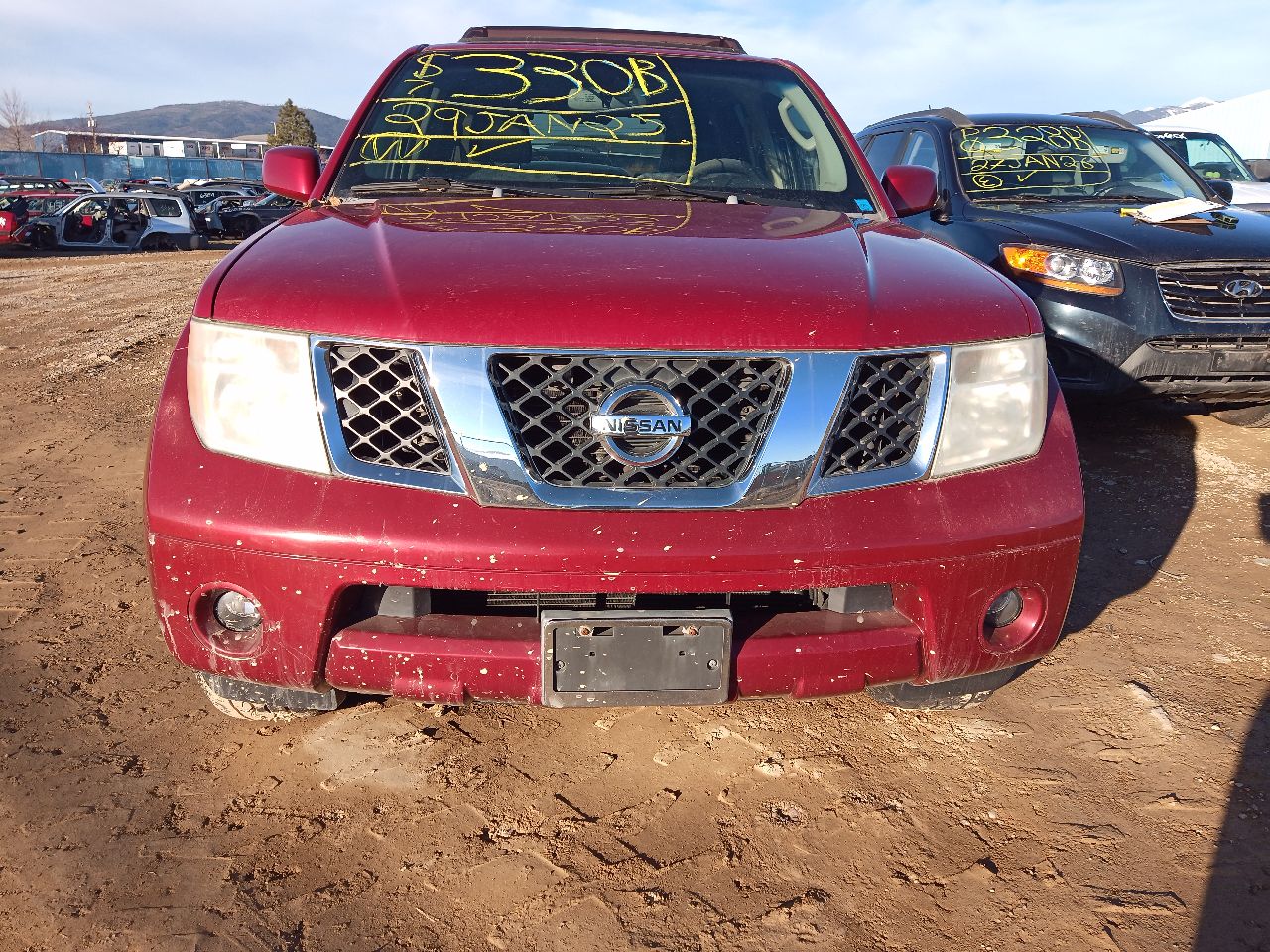
Used OEM Parts in Stock



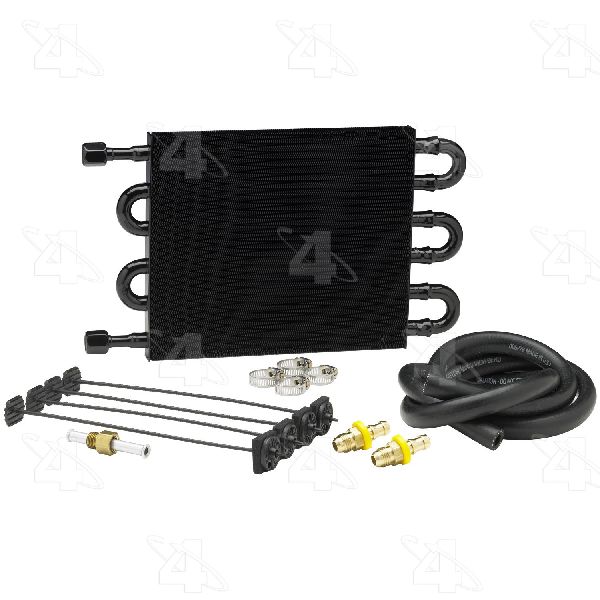
New Aftermarket Parts Available

The information in this article is provided for general reference and educational purposes only. Vehicle specifications, procedures, and part compatibility can vary by production date, trim level, and region. Always consult your vehicle's factory service manual and verify part numbers before purchasing or performing repairs. Safety-critical components such as airbags, seat belts, and braking systems should be installed by a qualified professional.
- Nissan FRONTIER:
- 🎬 Helpful Videos
- 🛍️ Shop This Part
- What's Unique About the 2005-2012 Nissan FRONTIER
- Diagnostic Flowchart
- Symptoms You May Notice
- Most Likely Causes
- Rare But Worth Checking
- Diagnosis Steps
- Parts You'll Likely Need
- Related Codes That Often Appear With This One
- Technical Service Bulletins (TSBs) & Recalls
- Platform-Specific Known Issues
- Mechanic-Grade Diagnostic Values
- Scan Tool Commands That Help
- Wiring & Ground Locations
- Real Owner Repair Stories
- OEM Part Supersession History
- Model Year Variations Within This Range
- 🎟️ Get 5% Off