

U0672 on 2020-2024 Cadillac CT4: Lost Communication With Coolant Pump Causes and Fixes
On a 2020-2024 Cadillac CT4, code U0672 almost always points to a poor electrical connection at the Electric Engine Coolant Pump. Before replacing the pump, inspect and cycle the wiring connector as advised by GM's technical service bulletin PIP5863C, a fix that often resolves the issue immediately.
- U0672 means the main computer has lost communication with the electric water pump.
- Do not drive the vehicle, as this code indicates a high risk of engine overheating.
- The most common cause is a bad electrical connection at the pump itself; always check this first as per GM's own service bulletins.
- If the connection is good, the electric water pump assembly likely needs to be replaced.
What's Unique About the 2020-2024 Cadillac CT4
The Cadillac CT4, along with other GM vehicles using the 2.0L LSY and 2.7L L3B engines, relies on an advanced 'Active Thermal Management' system with an electric, not belt-driven, water pump. This design allows for better efficiency but introduces a specific point of failure: the communication link to the pump. GM has acknowledged this sensitivity by issuing service bulletins that point directly to the pump's electrical connector as a frequent source of the problem. TSB PIP5863C explicitly recommends a simple 'connector cycle' (unplugging and replugging) as the first diagnostic step, even allocating a specific labor operation (4088838) and time (0.3 hr) for this inspection.
Diagnostic Flowchart
Tap your situation to follow the diagnostic path that matches what you're seeing on this vehicle.
Symptoms You May Notice
- Check Engine Light (Malfunction Indicator Lamp) is on.
- Engine temperature gauge rises rapidly or reads high.
- Warning message on the driver information center (e.g., 'Engine Overheated, Idle Engine').
- Engine enters reduced power mode ('limp mode').
- Cooling fans running at maximum speed.
- Loss of cabin heating.
- Replacing the thermostat. The CT4's Active Thermal Management system uses a more complex Coolant Flow Control Valve in conjunction with the electric pump, not a conventional thermostat, so a simple thermostat replacement is not applicable.
Most Likely Causes
- Poor Connection at Electric Engine Coolant Pump 🔴 High Probability This is a widely known issue documented by GM in Technical Service Bulletins PIP5863B and PIP5863C. The 4-pin connector can suffer from poor terminal tension, contamination, fretting corrosion, or not being fully seated.
How to confirm: Visually inspect the wiring harness and the 4-pin connector at the electric coolant pump for damage, dirt, or loose pins. Per TSB PIP5863C, the primary diagnostic step is to disconnect the connector, inspect the terminals, and reconnect it securely ('cycling the connection'). Clear the code and see if it returns.
Typical fix: Clean the connector terminals with electrical contact cleaner and apply a small amount of dielectric grease 🎬 See how to inspect and repair a corroded pump connector before reconnecting. If terminals are damaged or show poor tension, the connector pigtail may need to be replaced.
Est. part cost: $0-$50 - Failed Electric Engine Coolant Pump Assembly 🟡 Medium Probability The control module is integrated into the pump assembly. An internal failure of the module's electronics will prevent it from communicating, triggering U0672. A TSB also noted that some early pumps had incorrectly manufactured internal circuit boards.
How to confirm: If the wiring, connector, and power/ground to the pump are verified to be good, but the code persists, the pump assembly itself is faulty. A bi-directional scan tool can attempt to command the pump on; if it doesn't respond, it has failed.
Typical fix: Replace the entire electric engine coolant pump assembly.
Est. part cost: $160-$450 - Chafed Engine Wiring Harness ⚪ Low Probability GM TSB #21-NA-149 warns of potential 🎬 Watch: Diagnosing LIN bus communication and harness routing issues engine harness chafing issues on vehicles with the 2.7L engine. Specific chafe points include where the harness crosses the camshaft carrier cover, near the generator bracket, and the left front upper control arm bushing. Another TSB, 23-NA-074, notes wiring can chafe on the battery tray support bracket, causing a host of communication codes including U0672.
How to confirm: Carefully inspect the engine wiring harness in the locations specified by the TSBs. This may require removing covers or repositioning the harness to see contact points. Look for shiny, rubbed-through spots on the loom or exposed copper wire.
Typical fix: Repair the damaged wires using approved methods (splicing, sealing) and protect the harness from further chafing using anti-abrasion tape, convoluted loom, or by rerouting it slightly. TSB 23-NA-074 recommends applying deadener strips to the sharp edges of the battery tray bracket.
Est. part cost: $5-$50
Rare But Worth Checking
- Faulty Engine Control Module (ECM): While rare, the ECM's internal driver for the coolant pump's communication line (LIN bus) can fail. This should only be considered after all other possibilities, including wiring and the pump itself, have been exhaustively ruled out.
Diagnosis Steps
- Read the fault codes with an OBD-II scanner capable of reading manufacturer-specific 'U' codes.
- Per TSB #PIP5863C, the first step is to locate the Electric Engine Coolant Pump and its 4-pin electrical connector.
- Visually inspect the connector and harness for any obvious signs of damage, corrosion, or contamination.
- Disconnect the connector. Inspect the male and female terminals for good pin tension, corrosion, or pushed-out pins. This is known as 'cycling the connection'.
- If the terminals look clean and undamaged, apply a small amount of dielectric grease and reconnect securely, ensuring it clicks into place.
- Clear the fault codes and perform a test drive or let the engine run to see if U0672 returns.
- If the code returns, use a multimeter to check for proper power (12V) and ground at the pump's connector with the ignition on.
- If power and ground are good, thoroughly inspect the engine wiring harness for any signs of chafing, especially in the areas noted in TSBs 21-NA-149 and 23-NA-074 (across the top of the engine, near the battery tray).
- If power, ground, and wiring integrity are confirmed, the Electric Engine Coolant Pump assembly is the likely culprit and should be replaced.
Parts You'll Likely Need
- Electric Engine Coolant Pump
(OEM #12738953)— This is the part that fails if the cause is not a simple wiring connection. The control module is integrated into the pump, so the entire assembly must be replaced. This part number supersedes 12724522, 55506790, 55508939, 55510113, and 55515497.
Trusted brands: ACDelco, GM Genuine Parts
OEM price range: $250-$450
Aftermarket price range: $160-$300 - Electrical Connector Pigtail
(OEM #PT3765 (or similar 4-pin connector))— If the connector itself or its terminals are damaged from heat, corrosion, or poor pin tension, replacing the pigtail is the proper repair instead of replacing the entire harness. A generic ACDelco 4-pin connector like PT3765 may fit.
Trusted brands: ACDelco, Dorman
OEM price range: $25-$50
Aftermarket price range: $15-$30
Related Codes That Often Appear With This One
- U1348 — This code indicates a fault on LIN Bus 1, the same communication network the coolant pump uses. A failing pump module can disrupt the entire bus, causing this code to appear alongside U0672.
- P26BB — This code relates to the 'Engine Coolant Flow Control Valve', which works with the electric pump to manage engine temperature. A communication failure with the pump can lead to faults related to this associated component.
Technical Service Bulletins (TSBs) & Recalls
- PIP5863C / PIP5863B: Malfunction Indicator Lamp (MIL) Illuminated due to a U0672 setting. Advises inspecting and cycling the Electric Engine Coolant Pump connection. It lists a wide array of affected GM models with 2.0L LSY and 2.7L L3B engines.
- 21-NA-149: Warns of potential engine harness chafing issues on 2.7L engines that can lead to various electrical fault codes, including U0672. Provides specific inspection locations.
- 23-NA-074: Points to wire chafing on the battery tray support bracket as a potential cause for a wide range of communication and sensor codes, including U0672. The fix involves applying deadener material to the bracket's sharp edges.
Platform-Specific Known Issues
- GM Technical Service Bulletin #PIP5863C directly addresses code U0672, advising technicians to inspect the Electric Engine Coolant Pump connection before performing any other repairs, as simply cycling the connection often resolves the fault. The bulletin covers a wide range of GM vehicles with the LSY and L3B engines.
- A separate TSB, #21-NA-149, notes that engine harness chafing can be a cause for this and other electrical codes on models with the 2.7L engine, detailing specific inspection points like the camshaft carrier cover.
- TSB #23-NA-074 identifies a wire chafing point on the battery tray support bracket that can cause numerous communication DTCs, including U0672, on vehicles like the Blazer, Acadia, XT5, and XT6.
Mechanic-Grade Diagnostic Values
- LIN Bus Voltage at Rest (Key On, Engine Off) — expected: ~11-12 Volts (approximately 1V less than battery system voltage). Failure: Voltage is 0V, stuck at full battery voltage, or significantly lower than 11V. This can indicate a short to ground or a faulty module pulling the bus down.
- LIN Bus Voltage During Active Communication — expected: Rapidly toggling between ~1V (dominant) and ~11-12V (recessive). Requires a multimeter with a fast (1ms) peak min/max setting to capture accurately.. Failure: A steady, non-toggling voltage indicates a lack of communication from either the ECM or the pump module. A reading stuck between 7-9V on a standard DMM can also indicate a problem.
- Ground Resistance at Pump Connector — expected: Below 0.1 Ω. Failure: Resistance higher than 0.1 Ω indicates a poor ground connection, which can cause a variety of issues including communication loss.
Scan Tool Commands That Help
- GDS2 (GM Global Diagnostic System 2): Hybrid/EV Battery Pack Coolant Pump Bleed Procedure — After replacing the electric coolant pump or draining the cooling system, this procedure must be run to purge air from the system. Failure to do so can cause overheating, DTCs, and misdiagnosis. The procedure involves using a vacuum-fill tool while the GDS2 commands the pump to cycle.
Wiring & Ground Locations
- G59 Electric Engine Coolant Pump Connector — On the electric engine coolant pump assembly, typically located on the front of the engine.. This is the 4-pin connector that is the subject of TSB PIP5863C. Poor terminal tension, corrosion, or backed-out pins at this connector are the most common cause of U0672.
- G59 Connector - Pin 1 — Pin 1 of the 4-pin coolant pump connector.. This is the LIN Bus (Local Interconnect Network) data wire. Technicians test for correct voltage signals on this pin to diagnose communication problems between the ECM and the pump module.
- G59 Connector - Pin 2 — Pin 2 of the 4-pin coolant pump connector.. This is the main power supply circuit for the pump module. A voltage drop test should be performed on this circuit if a problem is suspected.
- G59 Connector - Pin 3 — Pin 3 of the 4-pin coolant pump connector.. This is the ground circuit for the pump module. High resistance on this circuit can cause communication loss.
Real Owner Repair Stories
- YouTube channel 'PAULY'S AUTO' (2019+ GM Truck with 2.7L L3B Engine) — Check Engine Light, LIN Bus 4 codes, U0672.
❌ Tried (didn't work) Initial inspection pointed towards a bad coolant pump or chafed wiring harness.
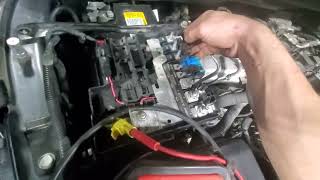
✅ What actually fixed it A voltage drop test on the main power feed to the pump revealed a nearly 7-volt drop across a fuse on the battery-top fuse block. The fuse had a poor internal connection, causing an open circuit under load. Replacing the faulty fuse/fuse block assembly resolved the communication code.
OEM Part Supersession History
55506790, 55508939, 55510113, 55515497, 12724522→12738953— Part has been updated multiple times by the manufacturer to improve reliability.
Heads up: Using the latest part number (12738953) is highly recommended to get the most recent design revisions. The assembly includes the pump, pulley, and housing.
Helpful Videos
We Have This Part in Stock



The information in this article is provided for general reference and educational purposes only. Vehicle specifications, procedures, and part compatibility can vary by production date, trim level, and region. Always consult your vehicle's factory service manual and verify part numbers before purchasing or performing repairs. Safety-critical components such as airbags, seat belts, and braking systems should be installed by a qualified professional.
- Cadillac CT4:
- 🎬 Helpful Videos
- 🛍️ Shop This Part
- What's Unique About the 2020-2024 Cadillac CT4
- Diagnostic Flowchart
- Symptoms You May Notice
- Most Likely Causes
- Rare But Worth Checking
- Diagnosis Steps
- Parts You'll Likely Need
- Related Codes That Often Appear With This One
- Technical Service Bulletins (TSBs) & Recalls
- Platform-Specific Known Issues
- Mechanic-Grade Diagnostic Values
- Scan Tool Commands That Help
- Wiring & Ground Locations
- Real Owner Repair Stories
- OEM Part Supersession History
- 🎟️ Get 5% Off