

U0442 on 2011-2016 Chevrolet Cruze: BCM Communication Error Causes and Fixes
This is a rare code on a Chevy Cruze. It most likely indicates a problem with the battery, a bad ground, or a faulty negative battery cable causing the Body Control Module (BCM) to send corrupt data. A known defect in the negative battery cable is a primary suspect for any electrical issue on this car. Always test the battery and check the negative battery cable per TSB 14311B before suspecting the BCM itself.
- U0442 is a rare network code on a Cruze, indicating a data problem with the Body Control Module (BCM).
- Do not confuse this with the very common P0442 EVAP code.
- The most likely cause is not the BCM itself, but a foundational electrical issue. Thoroughly test the battery and inspect/replace the negative battery cable (per TSB 14311B) before any other repairs.
- Replacing the BCM is a last resort and requires professional programming to function correctly.
What's Unique About the 2011-2016 Chevrolet Cruze
Code U0442 is not a common or widely-documented issue on the 2011-2016 Chevrolet Cruze. Unlike some other manufacturers that have specific software glitches causing this code, its appearance on a Cruze typically points to a more fundamental electrical system problem rather than a specific, known component failure. Diagnosis should focus heavily on the battery and its connections, especially the negative battery cable, which is a known failure point covered by GM Service Bulletin 14311B. This cable's poor crimp can cause widespread electrical issues and communication codes.
Symptoms You May Notice
- Check Engine Light is on
- Other warning lights may illuminate intermittently (e.g., ABS, Traction Control, Service Stabilitrak)
- Erratic operation of interior or exterior lights
- Power windows, door locks, or remote keyless entry may malfunction
- Instrument cluster gauges behaving erratically
- Transmission may not shift properly or may enter a 'limp mode'
- Radio may turn on and off by itself
- Rough or unstable idle
- Intermittent no-start or no-crank condition
- Key may get stuck in the ignition
- Replacing the Engine Control Module (ECM) or Transmission Control Module (TCM) when they are simply the messengers reporting the bad data from the BCM.
- Confusing U0442 with P0442 and attempting to fix the EVAP system, which is unrelated. The P0442 code on a Cruze is very common and almost always caused by a bad EVAP purge solenoid.
Most Likely Causes
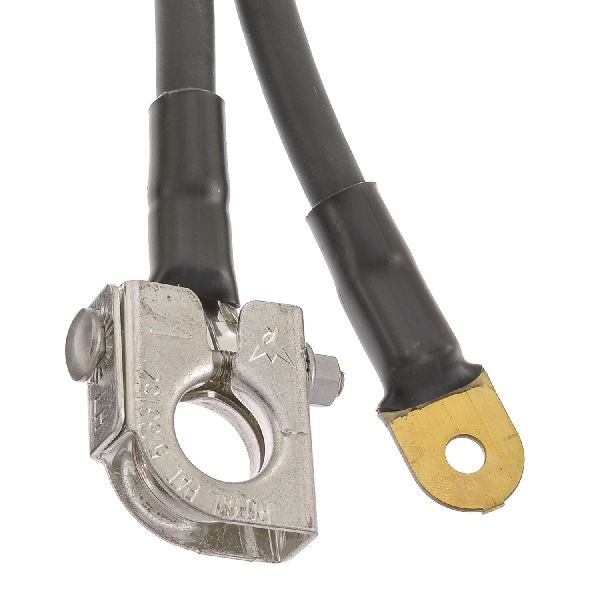
- Faulty Negative Battery Cable/Terminal 🔴 High Probability First-generation Cruze models are known to have issues with the negative battery cable terminal design, which can lead to poor connections, voltage drops, and numerous random electrical faults. GM issued Service Bulletin 14311B for an insufficient crimp on the terminal, which increases internal resistance over time.
How to confirm: Inspect the negative battery terminal for looseness, corrosion, or signs of arcing. Perform a voltage drop test on the ground side of the starting circuit. A reading of more than 0.2 volts indicates a problem. Wiggling the cable may cause electrical systems to flicker or the engine to stumble.
Typical fix: Replace the negative battery cable assembly. The updated GM part has a revised design. This is a common and relatively easy DIY fix.
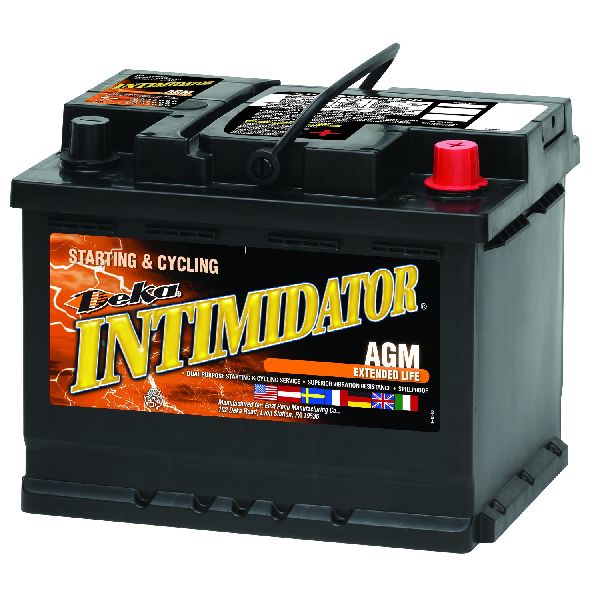
Est. part cost: $25-$60 - Weak or Failing Battery 🟡 Medium Probability Low system voltage during engine cranking is a primary cause of data corruption between modules. A battery that is weak but still able to start the car can cause this issue.
How to confirm: Perform a load test on the battery. A simple voltage check is not sufficient. Most auto parts stores can do this for free. The voltage should not drop below 10V during cranking.
Typical fix: Replace the battery.
Est. part cost: $150-$250 - Poor BCM Ground Connection 🟡 Medium Probability All modules require a clean ground to operate. Corrosion or looseness at the BCM's grounding point can cause it to malfunction and send invalid data. The main BCM ground is G303 on the left side of the cowl.
How to confirm: Locate the BCM ground point(s) by consulting a service manual. The BCM is located behind the right side of the center console. The primary ground is G303. Disassemble, clean, and re-secure the ground connection. Check for voltage drop between the BCM ground wire and the chassis.
Typical fix: Clean and tighten the ground connection.
Est. part cost: $0-$5 - Faulty Body Control Module (BCM) ⚪ Low Probability While less common than external electrical issues, the BCM can fail internally, causing it to send corrupt data.
How to confirm: This is a diagnosis of exclusion. If the battery, charging system, all power/ground connections (especially the negative battery cable), and wiring to the BCM are confirmed to be good, the BCM itself is the likely culprit. This requires a high-end scan tool to verify communication integrity.
Typical fix: Replace the BCM and have it programmed by a dealer or qualified shop using the SPS (Service Programming System).
Est. part cost: $200-$400
Rare But Worth Checking
- Corroded BCM Connectors: Water intrusion into the cabin, particularly near the passenger side footwell, could potentially corrode the BCM connectors, leading to communication issues.
- Aftermarket Electronics Interference: Poorly installed aftermarket devices like remote starters, alarms, or audio equipment can interfere with the CAN bus network and cause communication codes.
- Wiring Harness Chafing: In some GM vehicles, unrelated electrical shorts from chafed wiring can disrupt network communication and trigger StabiliTrak warnings and U-codes, even if the short is not on the CAN bus itself.
Diagnosis Steps
- Scan for all diagnostic trouble codes in all modules. Note any other codes that are present, especially other 'U' codes.
- Perform a comprehensive battery and charging system test. The battery must be load-tested, not just checked for static voltage. Ensure voltage does not drop below 10V during cranking.
- CRITICAL STEP FOR CRUZE: Thoroughly inspect the negative battery cable and its terminal for any signs of looseness, damage, or corrosion. This is a known weak point covered by GM TSB 14311B. Perform a voltage drop test on the cable. Replacement is often the best course of action if any doubt exists.
- Locate the Body Control Module (BCM), which is typically behind the right side of the center console, accessible by removing the passenger side trim panel.
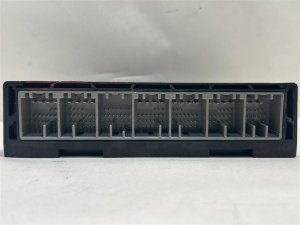
- Disconnect the BCM electrical connectors (X1 through X7) and inspect them carefully for any corrosion, moisture, or bent/damaged pins. Clean with electrical contact cleaner if necessary.
- Locate, disassemble, and clean the main BCM ground point, G303, located on the left side of the cowl. Ensure it has a clean, tight connection to the chassis.
- If aftermarket accessories are installed, temporarily disconnect them to see if the code clears and stays away.
- If all of the above checks pass, the issue may be an internal failure of the BCM. This step should be confirmed by a professional with advanced diagnostic tools (like a scope to check the CAN signal) before replacing the module.
- If the BCM is replaced, it must be programmed to the vehicle's VIN and specific options using GM's Service Programming System (SPS).
Parts You'll Likely Need
- Negative Battery Cable
(OEM #95388623)— The original cable terminal is a known failure point on this platform, causing a wide range of electrical issues. GM issued TSB 14311B for this exact problem.
Trusted brands: ACDelco (GM Genuine), Dorman
OEM price range: $40-$60
Aftermarket price range: $25-$45 - Battery — A weak battery is a very common cause of module data corruption and communication codes across all modern vehicles.
Trusted brands: ACDelco, Interstate, DieHard
OEM price range: $200-$275
Aftermarket price range: $150-$250 - Body Control Module (BCM)
(OEM #13586235)— If all electrical inputs (power, ground, wiring) are good, the module itself may have failed internally. Note: This part number can vary; always verify with VIN.
Trusted brands: ACDelco
OEM price range: $250-$400
Aftermarket price range: $200-$350
Related Codes That Often Appear With This One
- U0140 - Lost Communication With Body Control Module
- U0401 - Invalid Data Received From ECM/PCM
- Various 'C' codes related to ABS and StabiliTrak, as these systems rely on BCM data.
Technical Service Bulletins (TSBs) & Recalls
- TSB 14311B / SB-10057574-8899: Addresses an insufficient crimp on the negative battery cable terminal, leading to increased resistance and various electrical faults. This is a primary suspect for code U0442.
Platform-Specific Known Issues
- A known high failure rate of the negative battery cable terminal can cause intermittent and difficult-to-diagnose electrical problems, including communication codes like U0442. GM Service Bulletin 14311B addresses this.
Mechanic-Grade Diagnostic Values
- High-Speed GMLAN Bus Resistance — expected: Approximately 60 Ω (with battery disconnected, measured between Pin 6 and Pin 14 of the DLC).. Failure: A reading of 120 Ω indicates a break in the bus or a faulty terminating resistor in one of the modules (ECM or BCM). A reading of 0 Ω indicates the CAN High and CAN Low wires are shorted together.
- High-Speed GMLAN Bus Voltage (Key On, Engine Off) — expected: CAN High (Pin 6 at DLC) should be ~2.6V. CAN Low (Pin 14 at DLC) should be ~2.3V. Both should toggle when data is present.. Failure: CAN High stuck at 0V or 5V, or CAN Low stuck at 0V or 5V indicates a short to ground or power. Voltages that don't mirror each other indicate a wiring fault or module issue.
- BCM Power Supply Voltage — expected: Battery voltage (12.6V KOEO, ~14.4V Engine Running) should be present at multiple pins on the BCM connectors.. Failure: Significant voltage drop (more than 0.5V less than battery voltage) indicates a wiring or fuse block issue. No voltage indicates a blown fuse or open circuit.
- BCM Ground Circuit Voltage Drop — expected: Less than 0.1V. Failure: Voltage greater than 0.1V between the BCM ground pins (e.g., X2 Pin 2) and a clean chassis ground point indicates high resistance in the ground circuit.
Scan Tool Commands That Help
- GDS2 (Global Diagnostic System 2): BCM Programming and Setup — This is required after replacing the BCM. The tool connects to GM's Service Programming System (SPS) to download the correct software and vehicle configuration.
- GDS2 or equivalent professional scan tool: Setup SDM Primary Key in BCM — This procedure is necessary if the airbag warning light is on after BCM replacement. It re-establishes the security handshake between the new BCM and the existing SDM (airbag module).
- GDS2: Data Bus Diagnostic Tool — This function within GDS2 actively polls modules on the CAN bus to see which ones are communicating, helping to isolate a non-responsive module or a break in the wiring harness.
Wiring & Ground Locations
- K9 (BCM) — Behind the passenger side of the center console, accessible by removing the side trim panel.. This is the source module for the invalid data. Its power, ground, and network connections are the primary focus of diagnosis.
- G303 — On the left rear of the engine compartment, on the cowl, above the brake booster.. This is a major ground point that serves the BCM, Instrument Panel Cluster (IPC), and Data Link Connector (DLC). A poor connection here can cause widespread communication and electrical issues.
- BCM Connector X1 — One of the seven main connectors on the BCM.. Contains a primary ground on Pin 1 (BK wire) and multiple battery positive voltage feeds on Pins 2, 3, and 4. Also contains the High Speed GMLAN (-) and (+) wires on Pins 24 and 25 respectively.
- BCM Connector X2 — One of the seven main connectors on the BCM.. Contains another primary ground on Pin 2 (BK wire) and multiple battery positive voltage feeds. A fault here can cause the BCM to lose power or ground.
Real Owner Repair Stories
- Reddit user on r/cruze (2012 Chevrolet Cruze) — Intermittent total loss of electricity, no-crank/no-start, key stuck in ignition, flickering driver display, 'Service Stabilitrak' message had been on for years.
❌ Tried (didn't work) The owner had previously installed a PCV fix kit for a lean code, but the electrical issues persisted.
✅ What actually fixed it While the final resolution isn't posted by the original author, the overwhelming community response and linked diagnostic videos point directly to performing a voltage drop test on the negative battery cable and replacing it as the first and most likely solution for this exact cluster of symptoms. - YouTube video by 'cruiseman central' (2012 Chevrolet Cruze 1.4L Turbo) — Multiple random codes appearing even after parts were replaced, underboost codes, multiple misfire codes, Stabilitrak/Traction Control warnings, stalling.
❌ Tried (didn't work) Replacing coil packs, spark plugs, and even the negative battery cable did not solve the issue. The problem was extremely sensitive to the tightness of a specific ground screw.
✅ What actually fixed it The issue was a poor ground connection at the engine block for the harness that runs to the ignition coil pack. The factory ground point was faulty. The fix was to cut the old terminal and run a new 16-gauge ground wire from that harness to a clean, secure ground point on the engine, which resolved all the random codes and running issues.
Model Year Variations Within This Range
- 2016: The 2016 model year was an overlap. The first-generation body style was sold as the 'Cruze Limited' and is mechanically similar to the 2011-2015 models. The all-new second-generation 2016 Cruze has a different BCM and electrical architecture. It is critical to distinguish between a '2016 Cruze' and a '2016 Cruze Limited' when sourcing parts like the BCM.
Diagnostic Flowchart
Other Known Issues on This Vehicle
Issues unrelated to this code that are worth knowing about as an owner of this generation:
- PCV System Failure (1.4L Turbo) 🔴 High — Extremely common. A failed check valve in the intake manifold pressurizes the crankcase, rupturing the diaphragm in the valve cover. Often occurs between 60k-100k miles. (Ref: GM Special Coverage 18232 / N182202780 covers some model years for the valve cover diaphragm.)
- Chronic Coolant Leaks (1.4L Turbo) 🔴 High — Very common. Leaks frequently develop from the water pump, thermostat housing, and oil cooler seals. Multiple repairs are often needed. (Ref: GM Special Coverage 14371 extends the warranty on the water pump for 10 years/150,000 miles.)
- 6T40/6T45 Automatic Transmission Problems 🟠 Medium — Common on earlier models (2011-2014). Issues include hard shifting, slipping, and complete failure, often related to internal components like the 3-5-R wave plate or solenoids.
- Oil Leaks from Cooler Lines & Seals 🟠 Medium — Widespread issue. The seals and O-rings for the engine oil cooler and its lines degrade, causing significant oil leaks. (Ref: Service Update 43210 was issued to address leaking oil cooler pipe O-rings on some models.)
- Faulty Turbocharger Bypass Valve (1.4L Turbo) 🟠 Medium — A common failure where the integrated bypass valve weakens, causing a loss of boost pressure and setting a P0299 (Turbo Underboost) code.
Used vs. New Parts: Buying Guide for This Vehicle
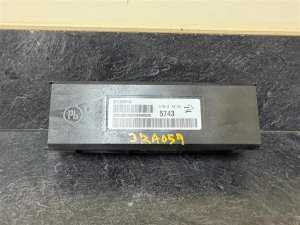
When a used part is the smart pick: A used BCM from a salvage yard can be a cost-effective option IF you use a cloning/programming service. Buying a used BCM and installing it directly will not work, as it is coded to the donor car's VIN and options. Other simple mechanical parts or connectors are generally safe to source from a donor vehicle.
Donor-vehicle mileage cap: roughly under 120000 miles for the part to have meaningful remaining life.
What to inspect on the donor part:
- For a BCM, ensure there is no physical damage, bent pins, or signs of water intrusion/corrosion on the case or connectors.
- Verify the donor vehicle was not involved in a flood.
- Match part numbers exactly, but be aware that several part numbers may be compatible. Verify with the seller or a parts catalog.
OEM-only on this vehicle (don't cheap out):
- Body Control Module (BCM): While a used OEM module can be cloned, avoid aftermarket 'new' BCMs from unknown brands, as they can have programming and compatibility issues. Stick with a new GM/ACDelco part or a cloned used OEM part.
- Negative Battery Cable: Given the low cost and high failure rate of the original, it is strongly recommended to buy a new, updated ACDelco or reputable aftermarket (e.g., Dorman) cable rather than a used one.
Aftermarket brands forum-validated for this vehicle:
- Dorman (for Negative Battery Cable)
Brands owners have reported issues with on this vehicle:
- Unbranded or no-name electronic modules found on marketplace sites.
Real Owner Stories
Aggregated from forums and TSBs cited above. Mileages and costs reflect what owners reported in those sources.
2011-2016 Chevrolet Cruze
Symptoms: Service Stabilitrak warnings and myriad electrical problems.
What fixed it: Replacing the negative battery cable with the updated GM part.
Source hint: CruzeTalk.com threads regarding Service Stabilitrak and communication codes
2013 Chevrolet Cruze
Symptoms: Complexity in diagnosing drivetrain and transmission issues on the 6T40 platform.
What fixed it: Advanced diagnosis of the 6T40 transmission and electronic communication integrity.
Source hint: Reddit r/transmissionbuilding
2011-2016 Chevrolet Cruze 1.4L Turbo — ~80000 miles
Symptoms: Check engine light, rough idle, and ruptured diaphragm in the valve cover.
What fixed it: Replacement of the valve cover/PCV system under GM Special Coverage 18232.
Source hint: vehicle_specific_issues: PCV System Failure (1.4L Turbo)
Related OBD-II Codes
Frequently Asked Questions
My 2011-2016 Chevrolet Cruze is showing 'Service Stabilitrak' and a U0442 code; is there a specific TSB for this?
Can a bad negative battery cable really cause my Cruze's radio to turn off and the key to get stuck?
Where is the BCM ground located on a first-generation Cruze if I want to clean it to fix U0442?
Is there a warranty extension for the water pump on my Cruze if I'm seeing coolant leaks alongside electrical codes?
Does the Buick Verano suffer from the same U0442 communication issues as the Cruze?
Helpful Videos
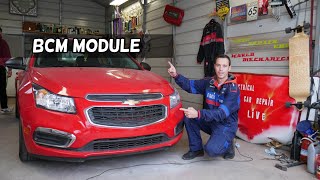

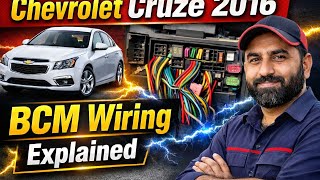
Used OEM Parts in Stock


New Aftermarket Parts Available


The information in this article is provided for general reference and educational purposes only. Vehicle specifications, procedures, and part compatibility can vary by production date, trim level, and region. Always consult your vehicle's factory service manual and verify part numbers before purchasing or performing repairs. Safety-critical components such as airbags, seat belts, and braking systems should be installed by a qualified professional.
- Chevrolet Cruze:
- 🎬 Helpful Videos
- 🛍️ Shop This Part
- What's Unique About the 2011-2016 Chevrolet Cruze
- Symptoms You May Notice
- Most Likely Causes
- Rare But Worth Checking
- Diagnosis Steps
- Parts You'll Likely Need
- Related Codes That Often Appear With This One
- Technical Service Bulletins (TSBs) & Recalls
- Platform-Specific Known Issues
- Mechanic-Grade Diagnostic Values
- Scan Tool Commands That Help
- Wiring & Ground Locations
- Real Owner Repair Stories
- Model Year Variations Within This Range
- Diagnostic Flowchart
- Other Known Issues on This Vehicle
- Used vs. New Parts: Buying Guide for This Vehicle
- Real Owner Stories
- 2011-2016 Chevrolet Cruze
- 2013 Chevrolet Cruze
- 2011-2016 Chevrolet Cruze 1.4L Turbo — ~80000 miles
- Related OBD-II Codes
- Frequently Asked Questions
- 🎟️ Get 5% Off