

U0401 on 2015-2020 Ford F-150: Invalid ECM/PCM Data Causes and Fixes
On a 2015-2020 F-150, code U0401 is most often caused by a faulty transmission molded lead frame, a well-documented issue. This part contains sensors that fail, causing erratic shifting and communication errors. Expect a repair cost of $800-$1,700 at a shop.
- U0401 on a 2015-2020 F-150 means 'Invalid Data from ECM/PCM' and is a serious communication error.
- The most likely cause is a faulty transmission molded lead frame, a known weak point on this truck.
- Check for accompanying codes like P0720 or P0722, as they strongly point to the lead frame.
- Thoroughly inspect the transmission wiring harness for chafing or damage, as this is another common cause identified in TSBs.
- Due to the complexity of the diagnosis and repair, professional service is strongly recommended.
What's Unique About the 2015-2020 Ford F-150

For the 13th generation F-150, the U0401 code is frequently a symptom of a deeper, well-known problem: the failure of the transmission's molded lead frame. This component, which houses the output shaft speed (OSS) sensor and transmission range sensor, is a known weak point in the 6R80 transmission used in 2015-2017 models and some 2018-2020 models with the 3.3L V6. When the sensors within the lead frame fail, they send bad data to the PCM, which then broadcasts this invalid information across the network, triggering the U0401 code in other modules. Several Ford Technical Service Bulletins (TSBs) also point to specific wiring harness problems that can cause this and other network codes.
Diagnostic Flowchart

Tap your situation to follow the diagnostic path that matches what you're seeing on this vehicle.
Symptoms You May Notice

- Check Engine Light or Malfunction Indicator Lamp (MIL) is on
- Powertrain Malfunction Indicator (wrench) light is on
- Transmission shifts erratically, harshly, or gets stuck in one gear.
- Sudden, unexpected downshifts, sometimes into first gear at speed, causing wheel lockup.
- Vehicle enters 'limp mode' with severely limited power.
- Loss of speedometer or gear indicator on the instrument panel.
- Warning messages like 'Service AdvanceTrac' or 'Hill Descent Fault'.
- No-crank/no-start condition.
- A/C system may be disabled by the PCM as a protective measure.
- Replacing the entire transmission when only the lead frame is faulty.
- Replacing the PCM before thoroughly inspecting the wiring harnesses and checking for a faulty lead frame.
- Replacing the throttle body, as limp mode can sometimes be mistaken for a throttle issue.
- Ignoring the U0401 code and only focusing on other codes, when the U0401 is pointing to the root communication problem. 🎬 Watch: A helpful overview of U0401 causes and fixes.
Most Likely Causes

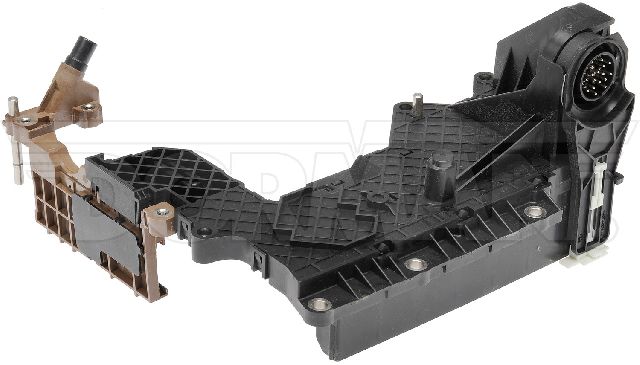
- Faulty Transmission Molded Lead Frame (6R80 Transmission) 🔴 High Probability This is a widely documented failure point on Ford's 6R80 transmission. The internal sensors, particularly the Output Shaft Speed (OSS) and Transmission Range Sensor (TRS), are known to fail due to heat and vibration causing degradation of electrical connections. Ford issued extended warranties (like Customer Satisfaction Program 19N01) for this part on earlier models due to the high failure rate, acknowledging the design flaw.
How to confirm: Scan for other transmission-specific codes, especially P0720 (Output Speed Sensor Circuit) or P0722 (Output Speed Sensor Circuit No Signal), which are often present alongside U0401. This combination strongly indicates lead frame failure. A diagnostic scan tool like FORScan can monitor the OSS sensor data for dropouts.
Typical fix: Replace the molded lead frame assembly inside the transmission oil pan. This involves draining the fluid, removing the valve body, and replacing the lead frame. 🎬 Watch: How to fix P0720 and P0722 sensor codes. 🎬 See this step-by-step 6R80 lead frame replacement walkthrough. The valve body separator plate and connector sleeve are often replaced at the same time as preventative maintenance.
Est. part cost: $200-$450 - Damaged or Chafed Wiring Harness 🟡 Medium Probability Ford TSBs #SSM 47097 and #SSM 48563 specifically mention that the '15525 transmission wire harness' can be improperly seated or chafe, causing network communication DTCs like U0401. The harness can rub against the rear of the engine, crossmembers, or near hot exhaust components.
How to confirm: Visually inspect the main transmission wiring harness (part of the 15525 harness group) and other harnesses for signs of rubbing, melting, or corrosion, particularly where they pass near the frame or exhaust components. Check connectors for pushed-out pins or corrosion. A wiggle test on the harness while monitoring network data can help pinpoint an intermittent connection.
Typical fix: Repair the damaged section of the wire or replace the entire harness if the damage is extensive. Ensure the harness is properly routed and secured with zip ties to prevent future damage.
Est. part cost: $50-$800 - Low Battery Voltage or Charging System Issue ⚪ Low Probability Modern trucks like the F-150 are highly sensitive to voltage. A weak or failing battery can cause dozens of unrelated, intermittent communication codes as modules fail to initialize or operate correctly. This is often a root cause for a cluster of 'U' codes.
How to confirm: Test the battery's state of charge and health with a proper load tester. With the engine running, check the alternator output to ensure it's within the specified range (typically 13.5-14.5 volts). Check for corrosion on battery terminals.
Typical fix: Charge or replace the battery. Repair or replace the alternator if it is not charging correctly. Ensure battery management system (BMS) is reset after a new battery installation.
Est. part cost: $150-$500
Rare But Worth Checking
- Failing Powertrain Control Module (PCM): A PCM failure is rare but possible. It should only be considered after all other potential causes, especially the lead frame and wiring, have been definitively ruled out. A PCM replacement requires programming specific to the vehicle's VIN.
- Excessive CAN Bus Network Traffic: As noted in TSB #SSM 46902, a faulty module can sometimes 'spam' the network with messages, causing communication errors. This requires advanced diagnostics with an oscilloscope to isolate the offending module.
- Faulty Valve Body (10R80 Transmission): On models with the 10-speed 10R80 transmission, U0401 can be a symptom of internal valve body issues, such as sticking solenoids or cross-leaks, which are known problems for this unit. This often presents with harsh shifting complaints.
Diagnosis Steps
- Perform a full diagnostic scan of all vehicle modules, not just the PCM. Record all present DTCs. Note which module is setting the U0401 code.
- Analyze the codes. If P0720, P0722, or other transmission sensor codes are present with U0401 on a 6R80-equipped truck, prioritize diagnosing the molded lead frame.
- Check for any applicable TSBs or recalls for your vehicle's VIN. TSBs #SSM 48563 and #SSM 47097 are highly relevant for wiring issues.
- Inspect the battery and charging system to ensure stable voltage above 12.4V with the engine off.
- Perform a thorough visual inspection of the '15525 transmission wire harness'. Look for chafing, melting, corrosion, or loose connections as described in TSBs, especially near the engine block, crossmember, and exhaust.
- If the lead frame is suspected, a technician will drop the transmission pan to access and replace it. This is a 3.5-6 hour job.
- If no wiring or lead frame issues are found, advanced CAN bus network diagnostics (e.g., checking bus resistance, using an oscilloscope) may be needed to check for a faulty module or PCM.
Parts You'll Likely Need
- Transmission Molded Lead Frame (6R80)
(OEM #AL3Z-7G276-D (Motorcraft P/N: FL3Z-7A100-E))— This is the most common point of failure leading to code U0401 on this platform. It contains the sensors that fail and send invalid data. Part number can vary, so always confirm with VIN.
Trusted brands: Motorcraft
OEM price range: $250-$450
Aftermarket price range: $180-$350 - Valve Body Assembly (10R80)
(OEM #HL3Z-7A100-B)— For trucks with the 10-speed transmission, the entire valve body with integrated TCM is often replaced to address shifting issues and communication faults.
Trusted brands: Motorcraft
OEM price range: $700-$1200
Aftermarket price range: $500-$900 - Transmission Wiring Harness — Chafing or damage to the harness can interrupt CAN bus communication, triggering this code. The specific harness is often part of the larger 12C508 or 15525 harness groups.
Related Codes That Often Appear With This One
- P0720 / P0722 — These codes directly indicate a fault with the Output Speed Sensor (OSS), which is located in the molded lead frame. Their presence with U0401 is a strong indicator the lead frame is the root cause.
- U0100 / U0101 — These codes indicate a total loss of communication with the ECM/PCM or TCM, respectively. They can appear with U0401 if a wiring issue becomes severe enough to cause a complete communication breakdown.
- U0140 / U0155 — These codes indicate communication loss with the Body Control Module (BCM) and Instrument Panel Cluster (IPC). They can be set alongside U0401 when network-wide communication is disrupted by a primary fault, such as a bad lead frame or chafed harness.
Technical Service Bulletins (TSBs) & Recalls

- SSM 48563: Mentions U0401 in a list of DTCs related to transmission shift concerns and various module communication issues.
- SSM 46902: Cites U0401 as a possible result of excessive network traffic on the CAN bus.
- SSM 47097: Links U0401 to transmission shift issues potentially caused by an improperly seated transmission wire harness.
Platform-Specific Known Issues
- Molded Lead Frame Failure (6R80): This is the most significant issue. The internal Output Shaft Speed (OSS) sensor fails, causing erratic shifting, limp mode, and a cascade of communication codes, including U0401. Ford issued Customer Satisfaction Program 19N01 for earlier models, extending the warranty on this part, highlighting how common the problem is. Owners report sudden, dangerous downshifts at highway speeds.
- Transmission Harness Chafing: TSB #SSM 47097 and #SSM 48563 point to the '15525 transmission wire harness' not being properly seated or secured, leading to chafing and communication faults on 2017-2020 models. This can cause a no-start condition or multiple network codes.
- 10R80 Valve Body Concerns: F-150s from 2017 onward equipped with the 10-speed 10R80 transmission can also set a U0401 code, but the cause is more likely related to internal valve body problems or software issues causing harsh shifting, rather than a separate lead frame.
Mechanic-Grade Diagnostic Values
- HS-CAN Bus Network Resistance — expected: Approximately 60 Ω. Failure: A reading of 120 Ω indicates an open circuit or a missing termination resistor in one of the modules (e.g., PCM or IPC). A reading significantly lower than 60 Ω (e.g., 40 Ω) could indicate an extra termination resistor or a shorted module. An 'OL' reading indicates a complete open in the circuit.
- HS-CAN Bus Voltage (Key On, Engine Off) — expected: CAN High (Pin 6): ~2.6V, CAN Low (Pin 14): ~2.4V. Failure: Voltages that are stuck high, low, or at battery/ground potential indicate a short in the wiring. For example, if both lines are at 0V, check for a short to ground. If both are at 2.5V and not changing, the bus is idle.
Hidden / Shadow Codes Worth Checking
- U0401-82: Invalid/Sequence Counter Incorrect. This specific sub-type indicates that a module received a network message from the PCM that was out of the expected sequence or failed a data integrity check. This is more specific than a general loss of communication and points directly to corrupted data, strengthening the diagnosis of a failing sensor (like the lead frame's OSS) feeding bad information to the PCM. (see via Professional scan tools like Ford's IDS or high-end aftermarket scanners can read these manufacturer-specific sub-codes.)
- U0401-00: No Subtype Information. This is a general failure flag for U0401. While less specific than an '-82' code, it still indicates the PCM is sending invalid data. It's often set by multiple modules simultaneously when the lead frame fails. (see via Most standard OBD-II scanners will show this code.)
Scan Tool Commands That Help
- Ford IDS / FORScan: PCM/TCM Self-Test (KOEO/KOER) — Run Key-On-Engine-Off (KOEO) and Key-On-Engine-Running (KOER) self-tests to check for DTCs in all modules. This helps confirm which modules are logging the U0401 and if other related codes (like P0722) are present.
- Ford IDS / FORScan: Clear Transmission Adaptive Tables — This function should be performed after replacing the transmission lead frame or valve body. It resets the transmission's learned shift strategy, allowing it to relearn shift points and pressures with the new components, which is critical for proper operation.
- Ford IDS: Module Reprogramming (PMI) — Only use when directed by a Technical Service Bulletin (TSB). If a TSB indicates a software update can fix a communication glitch causing U0401, this function is used to flash the PCM or other modules with the new calibration.
Wiring & Ground Locations
- PCM Grounds — Located on the firewall in the engine compartment. There may be one or two ground points depending on the model year and engine.. A poor ground connection for the PCM can cause it to operate erratically, leading to the generation of invalid data sent across the CAN bus. This is a crucial check before condemning the PCM itself.
- C175T — This is the transmission connector at the Powertrain Control Module (PCM).. This connector carries signals from the transmission sensors (via the main harness) to the PCM. A loose pin, corrosion, or wire damage at this specific connector can corrupt the data from the transmission before it's even processed by the PCM, leading to a U0401 code being broadcast to other modules. It is part of the 15525 harness group mentioned in TSBs.
- Main Battery Ground — Located on the body just in front of the washer fluid reservoir in the engine bay.. The primary vehicle ground is the foundation for the entire electrical system. Corrosion or a loose connection here can cause floating voltages and unpredictable behavior in multiple control modules, leading to a flurry of communication codes including U0401.
- G104 / G103 — On the right side of the engine compartment, sometimes near the rear of the engine. Location can vary slightly by engine.. These are primary engine compartment grounds. A wiring diagram for the specific year/engine should be consulted to confirm which sensors or modules rely on these grounds. A fault here can cause sensor data to become unreliable.
Real Owner Repair Stories
- Reddit user in r/f150 (2016 F-150 5.0L 4WD with 6R80 transmission) — Transmission went into 'limp mode', scanner showed an output shaft sensor error.
❌ Tried (didn't work) The user took the truck directly to a dealer for diagnosis.
✅ What actually fixed it The Ford dealer diagnosed the issue and replaced the molded lead frame. The total quoted cost was approximately $2,200, which included diagnosis, labor, parts, and fees. - f150forum.com user (2017 F-150 XLT SuperCrew (6-speed)) — Wrench icon appeared, truck was stuck in 1st gear and would not shift.
❌ Tried (didn't work) The dealer initially attempted to 'reprogram' the transmission, which did not solve the problem.
✅ What actually fixed it After a long delay waiting for the part, the issue was confirmed to be the molded lead frame. The user eventually had it replaced, with a quoted cost of $1,700 for parts and labor at the dealership.
OEM Part Supersession History
AL3Z-7G276-A, AL3Z-7G276-B→AL3Z-7G276-D— Revisions to improve reliability and address the known failure modes of the internal sensors.
Heads up: The 'D' revision replaces the earlier versions and is the correct part to use for repairs. While older stock ('A' or 'B') might be found, installing them is not recommended as they are prone to the original defect.
Model Year Variations Within This Range
- 2018-2020: While most 2018+ F-150s moved to the 10-speed (10R80) transmission, models equipped with the base 3.3L V6 engine continued to use the 6-speed (6R80) transmission. Therefore, these specific 2018-2020 trucks are still highly susceptible to the molded lead frame failure that was common on 2015-2017 models.
- 2017-2020: Models equipped with the 10-speed (10R80) transmission can also set a U0401 code, but the cause is more likely related to internal valve body issues or software calibration problems, as outlined in TSBs like 21-2145, rather than a lead frame failure.
Helpful Videos

Used OEM Parts in Stock


New Aftermarket Parts Available


The information in this article is provided for general reference and educational purposes only. Vehicle specifications, procedures, and part compatibility can vary by production date, trim level, and region. Always consult your vehicle's factory service manual and verify part numbers before purchasing or performing repairs. Safety-critical components such as airbags, seat belts, and braking systems should be installed by a qualified professional.
- Ford F-150:
- 🎬 Helpful Videos
- 🛍️ Shop This Part
- What's Unique About the 2015-2020 Ford F-150
- Diagnostic Flowchart
- Symptoms You May Notice
- Most Likely Causes
- Rare But Worth Checking
- Diagnosis Steps
- Parts You'll Likely Need
- Related Codes That Often Appear With This One
- Technical Service Bulletins (TSBs) & Recalls
- Platform-Specific Known Issues
- Mechanic-Grade Diagnostic Values
- Hidden / Shadow Codes Worth Checking
- Scan Tool Commands That Help
- Wiring & Ground Locations
- Real Owner Repair Stories
- OEM Part Supersession History
- Model Year Variations Within This Range
- 🎟️ Get 5% Off