

U0141 on 2015-2019 Subaru Outback: Lost BCM Communication Causes and Fixes
On a 2015-2019 Outback, this code, along with a flashing brake light and disabled EyeSight, is almost always caused by a broken plastic clip on an Electronic Parking Brake (EPB) connector at a rear wheel. The loose connector disrupts the CAN bus network. Subaru has a 15-year/unlimited-mileage warranty extension (TSB 06-87-22R) for this specific issue, but a simple zip tie or an inexpensive clip kit can provide a permanent fix.
- Before any complex diagnosis, check the electrical connectors on both rear electronic parking brake actuators. A loose connector is the #1 cause.
- This specific connector failure is covered under a 15-year warranty extension from Subaru (TSB 06-87-22R).
- A simple, high-quality zip tie can be a quick and permanent DIY fix if you don't want to go to the dealer.
- If the connectors are secure, your next step should be to thoroughly test the battery, as these Outbacks are sensitive to low voltage.
What's Unique About the 2015-2019 Subaru Outback
For the 5th generation Outback (2015-2019) and its platform-mate, the Legacy, the U0141 code is overwhelmingly linked to a specific, well-documented design flaw. The plastic locking tabs on the electrical connectors for the Electronic Parking Brake (EPB) actuators at the rear wheels become brittle and break. Hitting a bump can be enough to jiggle the connector loose, which disrupts the entire CAN bus network, triggering a cascade of warning lights and communication codes like U0141. Subaru acknowledged this widespread problem and issued TSB 06-87-22R, extending the warranty on this specific part to 15 years with unlimited mileage.
Generation note: The 2015-2019 Subaru Outback models all belong to the 5th generation. The primary cause, related to the Electronic Parking Brake connector, is specific to this generation and its platform mates (Legacy, WRX) and is covered by the same TSB 06-87-22R.
Symptoms You May Notice
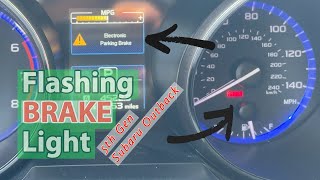
- Flashing 'BRAKE' light on the instrument cluster.
- Warning message for 'Electronic Parking Brake' system.
- EyeSight system disabled with a corresponding warning light.
- Hill Holder warning light may illuminate.
- Electronic Parking Brake will not engage or disengage, or makes noise but fails to hold.
- Other seemingly unrelated electrical issues (e.g., power locks, interior lights).
- Audible chimes and multiple warning lights on the dashboard upon starting the vehicle or hitting a bump.
- Replacing the entire Electronic Parking Brake actuator or caliper when only the connector is loose.
- Replacing the Body Integrated Unit (BIU) before checking for the broken EPB connector clip, a weak battery, or blown fuses.
- Assuming the EyeSight system is faulty, when it is merely disabled due to the loss of communication with the brake system.
Most Likely Causes
- Broken Electronic Parking Brake (EPB) Actuator Connector Clip 🔴 High Probability The original plastic locking tabs on the connectors at the rear brake calipers are known to become brittle and fail. Subaru issued TSB 06-87-22R and a 15-year, unlimited mileage warranty extension specifically for this part failure.
How to confirm: Visually inspect the electrical connectors on both rear brake calipers. The connector will likely be loose and can be easily pulled off the actuator by hand. Wiggling the loose connector with the car running will almost instantly trigger the dashboard warning lights, confirming the loose connection is the fault.
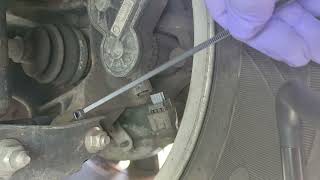
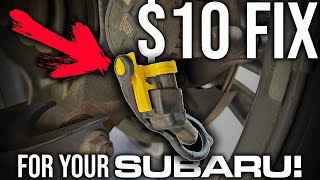
Typical fix: Secure the connector. The official Subaru fix involves installing a redesigned retaining clip kit (Part No. X9904AL110). Many owners achieve a permanent, low-cost repair by tightly securing the connector to the actuator with one or two high-quality, UV-resistant zip ties. 🎬 Watch: This simple 10-cent zip tie fix saves you hundreds.
Est. part cost: $1-$20 - Weak or Failing Battery 🟡 Medium Probability Subarus from this era are known for having undersized batteries and sensitive charging systems that can lead to low voltage conditions. A parasitic drain from the Starlink/DCM module is also a well-documented issue that can drain the battery, especially after the 3G network shutdown. Low voltage is a common trigger for a flood of network communication codes across all modern cars.
How to confirm: Test the battery with a multimeter or a digital battery tester. A healthy, resting battery should be at or above 12.4 volts. If the voltage is low, or drops significantly during cranking, the battery is a likely culprit. Also check for parasitic draw if the battery dies repeatedly.
Typical fix: Recharge or replace the battery. If the battery is more than 3-4 years old, replacement is recommended. Consider an AGM (Absorbent Glass Mat) battery for better durability. If a parasitic drain from the DCM is confirmed, a bypass harness is available or the module may need replacement. 🎬 Watch: How to fix the DCM parasitic battery drain yourself.
Est. part cost: $150-$300 - Wiring Harness Damage ⚪ Low Probability While less common than the EPB connector, wires leading to the rear wheels can be damaged by road debris, improper jacking, or rodents. The harness can chafe against suspension components if not properly secured.
How to confirm: Visually inspect the wiring harnesses leading to the rear EPB actuators and the main harness going to the Body Integrated Unit (BIU) under the driver's side dash. Look for any signs of chafing, breaks, corrosion, or rodent damage.
Typical fix: Repair the damaged section of the wiring harness by soldering and heat-shrinking the affected wires. 🎬 See this walkthrough for repairing a damaged parking brake harness.
Est. part cost: $5-$50
Rare But Worth Checking
- Faulty Body Integrated Unit (BIU): This is the BCM itself. It's very rare for the module to fail outright. This should only be considered after all wiring, connector, and power supply issues have been definitively ruled out. A replacement BIU requires programming by a dealer or a specialized shop with the correct software.
- Faulty Brake Light Switch: A failing brake light switch can sometimes cause a cascade of seemingly unrelated brake and stability control warnings. While less likely to cause U0141 specifically, it can contribute to the overall electrical noise and faults in the brake system network.
Diagnosis Steps
- Read all codes from all modules with a capable OBD-II scanner. Note any other 'U' codes or brake system 'C' codes, especially C1956 or C1957.
- Go to the rear of the vehicle and locate the electrical connectors on the parking brake actuators on both rear wheels. They are on the back of the brake calipers.
- Gently tug on each connector. If one or both pull off easily or are visibly loose, you have found the most likely problem.
- If the connectors are secure, test the vehicle's battery. Ensure it has at least 12.4V at rest and that the charging system is working correctly (typically 13.5-14.5V when running).
- If the battery is healthy, consider testing for a parasitic draw, as the DCM is a known culprit.
- Inspect the fuses related to the Body Control Module / Body Integrated Unit in the interior fuse panel.
- If the above steps do not reveal the issue, perform a detailed visual inspection of the wiring harness from the rear wheels forward, and around the BIU under the driver's dash, looking for damage.
- If no external faults are found, the issue may be an internal failure of the BIU, which requires professional diagnosis.
Parts You'll Likely Need
- Electronic Parking Brake (EPB) Connector Retaining Clip Kit
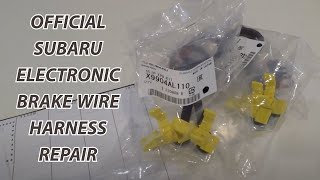
(OEM #X9904AL110)— This is the official Subaru repair part to fix the broken locking tab on the EPB actuator connector, which is the most common cause of this code. The kit includes a new clip and tether.
Trusted brands: Subaru (OEM)
OEM price range: $10-$20
Aftermarket price range: N/A - High-Quality Zip Ties — A common, effective, and near-zero-cost DIY alternative to the official clip kit. Used to tightly secure the loose connector to the EPB actuator. Use UV-resistant ties for longevity.
Trusted brands: Any reputable brand
OEM price range: N/A
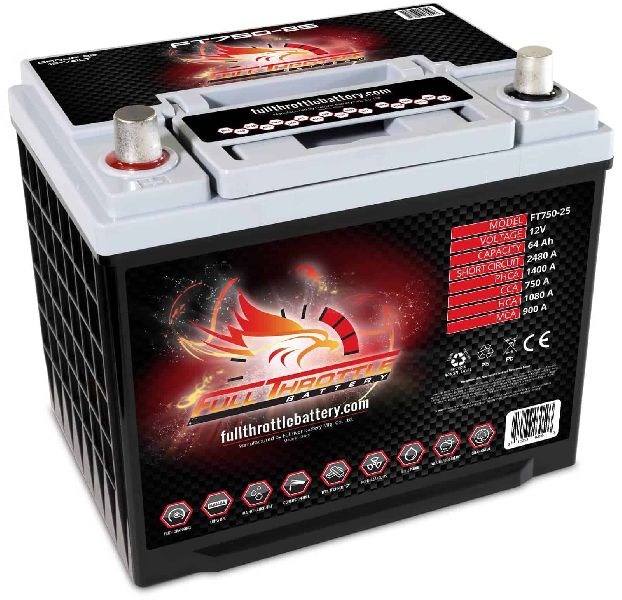
Aftermarket price range: $1-$5 - Car Battery (AGM Recommended) — If the cause is a weak or failing battery, a replacement is necessary. These vehicles are sensitive to low voltage, and the original equipment batteries are often cited as being undersized.
Trusted brands: Interstate, DieHard, Deka, Odyssey
OEM price range: $250-$400
Aftermarket price range: $150-$300
Related Codes That Often Appear With This One
- C1956 — This code specifically points to a fault in the 'Right Hand EPB Actuator Circuit Open'. It is frequently the companion code when the right rear EPB connector comes loose.
- C1957 — This code specifically points to a fault in the 'Left Hand EPB Actuator Circuit Open', triggered when the left rear EPB connector is the one that has failed.
- B2803 — An EyeSight code for 'Electronic Parking Brake Operation Prohibit', which is set when the EyeSight system loses communication with the EPB system due to the network fault. This is a secondary code resulting from the primary fault.
- U0122 — Lost Communication With Vehicle Dynamics Control Module. This can also be triggered by the CAN bus disruption originating from the EPB circuit.
Technical Service Bulletins (TSBs) & Recalls
- 06-87-22R: Acknowledges the cracking of the EPB connector lock tabs and extends the warranty to 15 years/unlimited miles. It provides a procedure to install a redesigned retaining clip (Part No. X9904AL110).
- 11-174-17R: Announces a reprogramming file for the ECM to optimize charging system logic and address issues with battery discharge after repeated short-trip driving.
- 15-308-23: Provides diagnostic information for testing the Telematics system (DCM) as a source of parasitic battery drain.
Platform-Specific Known Issues
- Subaru has extended the warranty on the EPB connector lock tab to 15 years with unlimited mileage under TSB 06-87-22R. Owners may be eligible for a free repair at a Subaru dealership. It is worth calling a dealer with your VIN to check for eligibility.
Mechanic-Grade Diagnostic Values
- CAN Bus Voltage (at BIU connector) — expected: CAN High: ~2.5 V, CAN Low: ~2.5 V (Key On, Engine Off). Failure: A difference greater than 0.5 V between the two lines, or voltages that are stuck high or low, indicates a bus fault.
- BIU Power Supply Voltage — expected: 10 V or more (typically 12.0-12.6V with Key On, Engine Off). Failure: Voltage below 10V indicates a power supply issue to the module, not necessarily a faulty module.
- BIU Ground Resistance — expected: Below 5 mΩ. Failure: Higher resistance indicates a poor ground connection, which can cause intermittent communication issues.
Scan Tool Commands That Help
- Subaru Select Monitor (SSM4): Each System Check > Integ. Unit > Clear Memory — To clear historical faults from the BIU after a repair has been completed.
- Subaru Select Monitor (SSM4): All System Scan — To capture all current and past Diagnostic Trouble Codes (DTCs) with Freeze Frame Data from every module on the vehicle, which is critical for diagnosing network-wide faults like U0141.
- Subaru Select Monitor (SSM4): Data Comparison — This function allows a technician to compare live data from the malfunctioning vehicle against data from a known-good vehicle, which can help identify abnormal readings on the CAN bus.
Wiring & Ground Locations
- Body Integrated Unit (BIU) — Located in the driver's side footwell, up under the dashboard, often attached to or near the interior fuse box.. This is the module that has lost communication. All power, ground, and CAN bus wiring terminate here, making it a central point for testing.
- EPB Actuator Connectors (R153, R154) — On the back of each rear brake caliper, connecting to the electronic parking brake motor.. This is the most common failure point. The connector's locking tab breaks, causing it to come loose and disrupt the entire CAN bus network, triggering U0141.
- BIU Harness Connector B280, Terminal 1 — This is the ignition power supply pin on one of the main connectors to the Body Integrated Unit.. This pin should have 10V+ with the ignition ON. A lack of voltage here points to a power supply problem (fuse, wiring) rather than a faulty BIU.
Real Owner Repair Stories
- YouTube user VHIX411 (2017 Subaru Impreza (platform shares BIU architecture)) — Vehicle was in a flood, multiple electrical issues, no communication with the original BIU.
❌ Tried (didn't work) Cleaning the original, corroded BIU.
✅ What actually fixed it The original, water-damaged BIU was replaced with a used donor unit. Critically, the EEPROM chip from the original BIU was read and its data (key info, immobilizer, VIN) was written to the donor BIU. This 'cloning' process made the used part plug-and-play, avoiding expensive dealer programming. - Reddit user peach_pit_pal (Subaru Outback (year not specified, but within generation)) — Slow engine crank, followed by EyeSight disabled warning, flashing BRAKE light, and EPB warning message. The next morning, the battery was completely dead.
❌ Tried (didn't work) Driving the car around the block (warnings initially disappeared but returned).
✅ What actually fixed it The root cause was a dying battery. Low voltage was causing the various control modules to malfunction and throw communication error codes. Replacing the battery resolved the warnings.
OEM Part Supersession History
82201AL30C, 82201AL31C→82201AL30D, 82201AL31D— Logic update for the automatic door lock/unlock feature.
Heads up: While these BIUs for a 2018MY Outback are physically interchangeable, they contain different software logic. A replacement BIU, new or used, must be programmed/cloned to the vehicle to function.82201AL40A, 82201AL41A→82201AL40B, 82201AL41B— Logic update for the automatic door lock/unlock feature.
Heads up: Applies to 2019MY Outback. As with other BIUs, programming or cloning is mandatory for the vehicle to start and function correctly.
Model Year Variations Within This Range
- 2017-2019: A mid-generation refresh for the 2017 model year introduced several changes. All 2.5i models received a larger battery with more cold cranking amps. The optional EyeSight system was enhanced with Reverse Automatic Braking and High Beam Assist. While the root cause of U0141 (EPB connector) remains the same, these electrical system updates mean BIU part numbers and software can differ from the 2015-2016 models.
Diagnostic Flowchart
Other Known Issues on This Vehicle
Issues unrelated to this code that are worth knowing about as an owner of this generation:
- Continuously Variable Transmission (CVT) Issues 🔴 High — Widespread enough that Subaru extended the original powertrain warranty for the CVT to 10 years / 100,000 miles for many models, including the 2015-2019 Outback. Issues can include shuddering, hesitation, or complete failure. (Ref: TSB 16-115-18, TSB 16-107-17R)
- Cracked Windshields 🟠 Medium — Numerous owners report windshields cracking spontaneously or from very minor impacts. This led to a class-action lawsuit. The issue is particularly problematic as the windshield houses the EyeSight camera system, making replacement more complex and expensive. (Ref: Class-action lawsuit (Powell, et al. v. Subaru))
- Parasitic Battery Drain 🔴 High — A very common complaint. The battery drains overnight or after a few days of not driving. The primary culprit is often the Data Communications Module (DCM) for the Starlink system, which can fail to go into a 'sleep' mode. Subaru has issued multiple TSBs and a battery warranty settlement. (Ref: TSB 11-174-17R, TSB 15-308-23, TSB 07-207-22R)
- Infotainment System Failures 🟠 Medium — The Starlink head unit is known for freezing, rebooting, phantom touches, and becoming unresponsive. This has been the subject of multiple class-action lawsuits. Problems can range from minor annoyances to loss of the backup camera display. (Ref: Multiple software update TSBs (e.g., 15-211-17R) and class-action lawsuits.)
- Failing Wheel Bearings 🟡 Low — A noticeable humming or grinding noise at highway speeds often indicates a failing wheel bearing, a fairly common issue for this generation. Typically requires replacement of the hub assembly.
Used vs. New Parts: Buying Guide for This Vehicle
When a used part is the smart pick: A used Body Integrated Unit (BIU) is a very smart choice if the original has failed due to internal issues like water damage. It is significantly cheaper than a new OEM unit. However, it is absolutely critical to factor in the cost and logistics of 'cloning'.
Donor-vehicle mileage cap: roughly under 150000 miles for the part to have meaningful remaining life.
What to inspect on the donor part:
- MUST match the OEM part number EXACTLY to your original BIU.
- Inspect the donor unit's connectors for any signs of corrosion, bent pins, or water staining.
- Source the part from a vehicle that was not in a flood or fire.
- Confirm the return policy of the salvage yard or seller in case the unit is faulty.
OEM-only on this vehicle (don't cheap out):
- Body Integrated Unit (BIU) - While a used OEM unit is fine, avoid any 'new' aftermarket BIUs. They are unlikely to be programmable to the vehicle's immobilizer system.
Brands owners have reported issues with on this vehicle:
- Any non-OEM Body Integrated Unit. The integration with the immobilizer makes aftermarket compatibility nearly impossible.
Real Owner Stories
Aggregated from forums and TSBs cited above. Mileages and costs reflect what owners reported in those sources.
2015 Subaru Outback
Symptoms: Multiple warning lights appeared at once, including the 'BRAKE' light flashing, an 'Electronic Parking Brake' system warning, and the EyeSight system being disabled.
What fixed it: Secured the loose electrical connector on the rear electronic parking brake actuator with a high-quality zip tie. The connector's original plastic clip had broken off.
Cost: $0-$1
Source hint: YouTube video titled 'Simple 10 Cent Fix - 2015 Subaru Outback Emergency E-Brake Eyesight Error, Easy Repair'
2015-2019 Subaru Outback
Symptoms: A sudden cascade of warning lights on the dashboard, including EyeSight and Electronic Parking Brake faults, sometimes triggered by hitting a bump.
What fixed it: The owner discovered the electrical connector on one of the rear brake calipers was loose. Securing it tightly resolved all the warning lights.
Cost: $1-$10
Source hint: YouTube video titled 'Subaru Quick Fix! 10 Mins & $10. Fix That Eyesight & Electronic Parking Brake Fault! Easy DIY!'
2015-2019 Subaru Outback
Symptoms: The dashboard lit up with 'lots of warning lights all at once,' accompanied by audible chimes.
What fixed it: The root cause was identified as the common brittle plastic clip on the electronic parking brake connector, allowing it to come loose. Re-securing the connector fixed the issue.
Source hint: subaruoutback.org thread titled 'lots of warning lights all at once'
2015-2019 Subaru Legacy
Symptoms: The electronic parking brake warning light illuminated, and the EyeSight system was disabled.
What fixed it: The problem was traced to the same brittle EPB actuator connector clip that affects the Outback. The fix was to secure the connector, either with the official Subaru clip kit (X9904AL110) or a zip tie.
Source hint: Reddit r/subarulegacy thread titled 'cause of this/'
Related OBD-II Codes
Frequently Asked Questions
My 2018 Outback has a flashing brake light and the dealer says the EPB connector clip is broken. Is this a known issue and is it covered by a warranty?
I used a zip tie to fix the loose parking brake connector on my Outback, but the U0141 code and warning lights came back. What should I check next?
My Subaru's battery keeps dying and now I have a U0141 code with multiple warning lights. Are these problems related?
What is the official Subaru part number to fix the loose Electronic Parking Brake connector?
I have a 2017 Subaru Legacy with the exact same symptoms and U0141 code. Does the same connector issue apply to my car?
The EPB connectors on my Outback are tight and the battery is new, but the U0141 code persists. What's the next step?
Helpful Videos
We Have This Part in Stock

The information in this article is provided for general reference and educational purposes only. Vehicle specifications, procedures, and part compatibility can vary by production date, trim level, and region. Always consult your vehicle's factory service manual and verify part numbers before purchasing or performing repairs. Safety-critical components such as airbags, seat belts, and braking systems should be installed by a qualified professional.
- Subaru Outback:
- 🎬 Helpful Videos
- 🛍️ Shop This Part
- What's Unique About the 2015-2019 Subaru Outback
- Symptoms You May Notice
- Most Likely Causes
- Rare But Worth Checking
- Diagnosis Steps
- Parts You'll Likely Need
- Related Codes That Often Appear With This One
- Technical Service Bulletins (TSBs) & Recalls
- Platform-Specific Known Issues
- Mechanic-Grade Diagnostic Values
- Scan Tool Commands That Help
- Wiring & Ground Locations
- Real Owner Repair Stories
- OEM Part Supersession History
- Model Year Variations Within This Range
- Diagnostic Flowchart
- Other Known Issues on This Vehicle
- Used vs. New Parts: Buying Guide for This Vehicle
- Real Owner Stories
- 2015 Subaru Outback
- 2015-2019 Subaru Outback
- 2015-2019 Subaru Outback
- 2015-2019 Subaru Legacy
- Related OBD-II Codes
- Frequently Asked Questions
- 🎟️ Get 5% Off