

OBD-II Code C1956: Steering Angle Sensor Circuit Failure
What C1956 means, why it triggers, and how to fix it
- Code C1956 disables your ABS and Electronic Stability Control, significantly increasing your risk of skidding during emergency maneuvers.
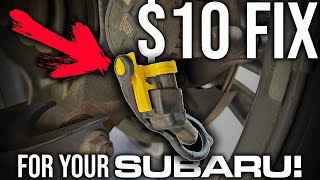
- On 2015-2018 Subaru Legacy and Outback models, a broken $10 plastic Electronic Parking Brake (EPB) connector at the rear wheel triggers this code 99% of the time.
- If the code appears immediately after a wheel alignment or battery replacement, a 10-minute Steering Angle Sensor calibration using a bidirectional scan tool fixes the issue.
- Replacing a faulty steering angle sensor costs between $250 and $850 and requires removing the airbag, making it a dangerous DIY job for beginners.
What Does C1956 Mean?

The trouble code C1956 means your car's Anti-lock Brake System (ABS) module has detected an electrical circuit failure related to the steering angle sensor (SAS). This sensor precisely measures the steering wheel's position, rate of turn, and direction. This data is essential for Electronic Stability Control (ESC), ABS, and Electric Power Steering to function correctly. When the circuit fails, the vehicle disables these systems as a safety precaution.
Technical definition: The official SAE/OBD-II definition for code C1956 is "Steering Angle Sensor Circuit Failure." This indicates that the Anti-lock Brake System (ABS) module has detected an open circuit, a short to ground, or a short to voltage in one of the steering angle sensor's signal or power circuits. The module cannot trust the data it receives from the sensor.
Can I Drive With C1956?
Yes, But With Caution. Yes, but drive with extreme caution. Your electronic stability control (ESC) and anti-lock braking (ABS) systems are disabled, significantly increasing the risk of skidding on wet or gravel surfaces. Do not drive long distances or at highway speeds. If the red 'BRAKE' warning light is also illuminated, do not drive the vehicle; this indicates a critical failure in the primary braking system.
Common Causes

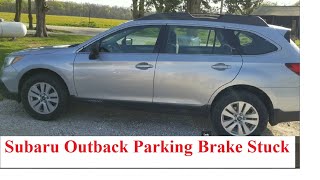
- Faulty Electronic Parking Brake (EPB) Connector (Subaru) (Very Common) — On 2015-2018 Subaru models, this code is famously triggered by a faulty electrical connector on the rear EPB actuator, not the steering sensor. The plastic locking tab becomes brittle, breaks, and causes a loose connection. Securing the connector with a zip tie or replacing the clip resolves it.
- Lost Calibration (Common) — The SAS requires calibration to establish the steering wheel's exact center. This calibration is frequently lost after a wheel alignment, battery replacement, or suspension repair. The sensor is physically fine, but provides data the computer deems illogical.
- Faulty Steering Angle Sensor (SAS) (Common) — Internal electronic components wear out over time or suffer damage from physical shock, causing a complete loss of signal.
- Damaged Wiring or Connectors (Common) — Wires in the steering column fray, chafe, short, or corrode over time. Connector pins bend, loosen, or accumulate contamination, causing an intermittent or total loss of connection.
- Blown Fuse or Poor Ground (Less Common) — The sensor's circuit is protected by a fuse. A blown fuse or a corroded ground connection interrupts power and triggers the code.
- Faulty Control Module (ABS/PSCM) (Rare) — In rare instances, the fault lies with the module receiving the sensor's data, such as the ABS or Power Steering Control Module (PSCM). The module fails to provide the necessary 5V reference voltage or properly interpret the incoming signal.
- Improper Reassembly After Repair (Rare) — If work was recently performed on the steering column, airbag, or dashboard, the sensor or its 'clock spring' wiring was likely damaged, pinched, or reinstalled incorrectly.
- Software Glitches (Rare) — Occasionally, the issue is a software glitch within the ABS module. This is resolved by a software update (re-flash) performed by a dealership. Low battery voltage also causes temporary communication errors between modules.
Symptoms

- ABS Light On — The Anti-lock Braking System (ABS) warning light illuminates on your dashboard.
- Traction or Stability Control Light On — The light for the Traction Control System (TCS) or Electronic Stability Control (ESC) remains on, often showing an icon of a car with squiggly lines.
- Power Steering Malfunction Warning — A message appears on the dash indicating a 'Power Steering Malfunction' or 'Service AdvanceTrac', especially on Ford vehicles. 🎬 Watch: What 'Service AdvanceTrac' means and how to fix it.
- Brake Warning Light Flashing (Subaru) — On affected Subaru models, the red 'BRAKE' light on the dashboard flashes when this code is triggered by the EPB connector fault.
- Changes in Steering Feel — While the vehicle often drives normally, the steering becomes heavy or less responsive if the fault affects the electric power steering system.
- Steering Wheel Controls Not Working — In vehicles where the steering angle sensor is integrated with the clock spring, a failure interrupts the connection to steering wheel-mounted buttons for the radio, cruise control, or horn.
Diagnostic Flowchart
Tap your situation to follow the diagnostic path that matches what you're seeing on this code.
Common Fixes & Costs
- EPB Actuator Connector Repair/Replacement (Subaru) — Parts: $10-$50, Labor: $80-$150, ~0.5 hr book time (Beginner)
- Steering Angle Sensor Calibration — Parts: $0, Labor: $100-$180, ~0.8 hr book time (Intermediate)
- Steering Angle Sensor Replacement — Parts: $100-$350, Labor: $150-$500, ~1.5 hr book time (Professional)
- Wiring Harness or Connector Repair — Parts: $20-$100, Labor: $100-$300, ~2.0 hr book time (Intermediate)
- ABS Module Replacement — Parts: $600-$1500, Labor: $200-$400, ~1.8 hr book time (Professional)
Used vs. New Parts: Buying Guide
When a used part is worth it: For a complex electronic part like a steering angle sensor, buying used is rarely recommended. It makes sense only if the vehicle is very old, the new part is prohibitively expensive, and you accept a significant risk.
Donor-vehicle mileage cap: roughly under 50000 miles for the part to have meaningful remaining life.
Donor quality checklist:
- Verify the used part comes with a warranty (at least 90 days).
- Ensure the part number matches exactly; electronic modules are not forgiving.
- Avoid parts from vehicles with flood or heavy front-end collision damage.
Decision logic:
- If The part is under $400 new and requires airbag removal for installation → buy new. The labor is too intensive to risk using a part that fails quickly.
- If The vehicle is over 15 years old and the budget is extremely tight → a used part from a reputable salvage yard with a warranty is a possibility, but new is strongly preferred.
- If The part is electronic and critical for safety → favor new OEM or high-quality aftermarket parts to ensure reliability and safety.
Warranty tradeoff: Used parts typically offer a 30-90 day warranty on the part only, not labor. Aftermarket new parts often come with a 1-year to limited lifetime warranty. OEM new parts carry a 1-2 year warranty, which includes labor if installed by a dealer.
Worst-case if a used part fails: $300-$600 if a used part fails after installation, as you pay for the labor a second time plus the cost of another part.
What Happens If You Wait — Timeline
- Immediately: Code C1956 is set. ABS and Electronic Stability Control (ESC) warning lights illuminate. Both safety systems are immediately disabled. (MPG impact: 0%% · Added cost: $0 (unless an accident occurs))
- 0-1 month: The vehicle operates with no active skid or traction control. The risk of losing control in an emergency maneuver or on a slippery surface is significantly increased. Steering feels normal. (MPG impact: 0%% · Added cost: Increased risk of a major accident, potentially costing thousands.)
- 1-6 months: If the root cause is a wiring short or moisture intrusion, the intermittent electrical fault stresses the ABS or Power Steering Control Module. (MPG impact: 0%% · Added cost: Potential escalation from a $200 wiring fix to a $1500+ module replacement.)
- 6+ months: Continued operation poses a severe, ongoing safety hazard. The vehicle fails the annual safety inspection in an increasing number of states. The risk of an eventual module failure due to a persistent circuit fault remains. (MPG impact: 0%% · Added cost: Ongoing extreme safety risk, plus potential fines or inability to register the vehicle.)
Cost of Not Fixing It
- Immediately: Disabled ABS and Electronic Stability Control (ESC). This significantly increases the risk of losing control and having an accident, especially in emergency maneuvers or on wet, snowy, or gravel roads. (Added cost: Increased risk of a costly accident.)
- 0-6 months: If the root cause is a wiring short, it leads to further damage to the control module (ABS or PSCM), turning a sensor or wiring repair into an expensive module replacement. (Added cost: $800-$2000)
- 6+ months: Continued operation with disabled safety systems poses an ongoing, severe safety hazard. It also leads to a failed state safety inspection. (Added cost: Potential for fines and inability to legally operate the vehicle.)
Diagnosis Steps
- Read All Trouble Codes
Use an OBD-II scanner capable of reading Chassis (C-codes) and Network (U-codes) to confirm C1956 is active. Document all other codes present. For example, a C1957 on a Subaru points to the other EPB actuator, while U-codes indicate a network problem.
Tools: OBD-II Scanner (Chassis/Network capable) (Beginner) - Perform Visual Inspection (Vehicle Specific)
For 2015-2018 Subaru models, inspect the electrical connectors at both rear Electronic Parking Brake (EPB) actuators for broken locking tabs. On other vehicles, visually inspect the steering angle sensor wiring under the dashboard for chafing, pinching, or loose connectors.
Tools: Flashlight (Intermediate) - Check Fuses and Battery Voltage
Check the vehicle's fuse box for fuses related to the ABS, steering column, or stability control systems. Use a multimeter to ensure the vehicle battery has a stable voltage above 12.4V with the engine off. Low voltage causes unpredictable electronic module errors.
Tools: Fuse puller, Multimeter (Beginner) - Attempt Recalibration
If the code appeared after an alignment or battery change, a recalibration is the fix. Use a bidirectional scan tool to perform the 'Steering Angle Sensor Calibration' function. If the procedure fails or the code returns instantly, the sensor or circuit has failed.
Tools: Advanced OBD-II Scanner (Intermediate) - Analyze Live Sensor Data
Using an advanced scan tool, view the live data stream for the 'Steering Angle Sensor' PID. The reading must be close to 0.0° when the wheel is straight. Turn the wheel lock-to-lock. The angle must change smoothly without jumping or freezing. If the value is stuck or erratic, the sensor or circuit is faulty.
Tools: Advanced OBD-II Scanner (Intermediate) - Test Circuit Voltage and Resistance
With the sensor connected and ignition on, backprobe the connector using a multimeter and a vehicle-specific wiring diagram. Confirm the sensor receives its required 5V reference voltage and has a solid ground (less than 0.1V). The signal wires must show changing voltage as you turn the wheel. No reference voltage or a bad ground proves a wiring or module issue, not a bad sensor.
Tools: Multimeter, T-pins, Vehicle-specific wiring diagram (Advanced) - Scope the Signal Wires
For intermittent issues, connect an oscilloscope to the sensor's signal and ground wires. As you turn the steering wheel, you must see a clean, square digital waveform. Dropouts, glitches, or excessive noise definitively prove a failing sensor or a wiring integrity problem.
Tools: Oscilloscope, Wiring diagram (Professional) - Isolate the Fault to the Module
If the sensor has good power and ground, and a known-good sensor does not fix the issue, the problem is the ABS or PSCM module. Diagnosis involves checking for signal at the module's connector pins to confirm the wiring is intact between the sensor and the module.
Tools: Multimeter, Advanced OBD-II Scanner, Wiring diagram (Professional)
When This Code Triggers (Freeze-Frame Conditions)
- Vehicle Speed: 0-15 mph (The code sets during the ABS module's power-on self-test, which occurs at key-on or during initial low-speed movement.)
- Steering Wheel Angle: Any (often non-zero) (The fault logs when the vehicle is turning and the sensor signal becomes erratic or is lost entirely.)
- Battery Voltage: 11.5-14.5V (Freeze frame data rules out a low-voltage event that causes a temporary communication error.)
- Time Since Engine Start: 0-5 minutes (Faults related to self-tests or intermittent connections are captured shortly after starting the vehicle.)
Related Codes
- C1963 — Means 'Stability Control Inhibit Warning.' This code is a direct result of C1956. The stability system sets this code because it cannot trust the steering angle data it receives. Fixing C1956 resolves C1963.
- C1957 — The companion code to C1956 on Subaru vehicles. While C1956 indicates a fault in the right-hand EPB actuator circuit, C1957 points to the left-hand circuit. They share the same cause (faulty connector) and are addressed by the same TSB.
- U0428 — This network code means 'Invalid Data Received From Steering Angle Sensor Module.' Seeing this alongside C1956 strongly suggests a communication breakdown, pointing towards a wiring issue, a bad connection, or a faulty sensor.
- C1278 — Often appears with C1956 on Fords. C1278 specifically points to a fault in the sensor's power or ground circuits. If you have both codes, a full circuit test is necessary.
Climate & Environmental Factors
- Cold Weather: Low temperatures are a primary contributor to the failure of the Subaru EPB connector. The plastic locking tab becomes rigid and brittle in the cold, making it susceptible to cracking and breaking. This leads to a loose connection and triggers the C1956 code.
- Temperature Cycling: Repeated changes from hot to cold cause materials in all electrical connectors to expand and contract at different rates. This thermal cycling leads to material fatigue, the loosening of terminal pins, and the eventual failure of the connection over time.
- Humidity and Moisture: In humid climates or areas with significant road salt use, moisture penetrates unsealed or damaged connectors. This leads to corrosion on the connector pins and wiring, increasing electrical resistance or causing a short circuit.
How to Talk to a Mechanic About This Code
Say this: "I have a C1956 code and my ABS/ESC lights are on. I'd like to schedule a diagnostic. For a Subaru, please start by inspecting the rear EPB connectors per TSB 06-87-22R. For other cars, please check live data from the steering angle sensor and attempt a calibration before recommending a sensor replacement."
This signals you have done research and understand the common, inexpensive causes. It directs the technician to follow a logical diagnostic path, preventing them from immediately quoting an expensive sensor replacement and showing you know about the specific misdiagnosis on Subaru models.
Avoid saying:
- 'My traction control light is on, can you fix it?' (This is too vague and invites a costly, open-ended diagnosis).
- 'Just replace the steering angle sensor.' (This is the most common misdiagnosis on a Subaru and is often not the problem on other cars).
- 'Do whatever you think is best.' (This gives up all control and leads to unnecessary up-sells).
Questions to ask before authorizing the repair:
- Did you check for any Technical Service Bulletins (TSBs) for this code on my vehicle?
- What did the live data for the steering angle sensor show when you turned the wheel? Was the signal smooth or erratic?
- Did you confirm the sensor is receiving correct power and ground before condemning the sensor itself?
- If you are recommending a sensor replacement, does the estimate include the mandatory steering angle sensor calibration after installation?
- Can you provide a written estimate that breaks down the cost of parts and labor?
- What is the warranty on the proposed parts and your labor?
Where to Take It: Dealer vs Independent vs Chain
- Dealer:
Best for: Vehicles under warranty (especially the 15-year extended warranty for the Subaru EPB connector)., Known software issues that require a manufacturer-specific re-flash., Complex electrical issues after an independent shop has been unable to diagnose the fault.
Downsides: Highest labor rates, often 1.5-2x more than independent shops., Often defaults to replacing an entire assembly (e.g., steering column) when a smaller component has failed. (Typical cost: +50% vs. baseline) - Independent Shop:
Best choice for most situations. A good independent shop diagnoses and repairs C1956 effectively and affordably, as long as they are properly equipped. Ask if they have the tools to perform a steering angle sensor calibration before you commit.
Best for: Out-of-warranty vehicles where cost is a factor., Diagnosing common failures like a bad sensor, wiring issue, or performing a calibration., Shops that specialize in your vehicle's brand (e.g., a trusted local Japanese auto specialist for a Subaru).
Downsides: Shop quality and diagnostic equipment vary widely; ensure they have a modern, bidirectional scan tool capable of SAS calibration., Does not always have access to the latest manufacturer-only TSBs or software updates. (Typical cost: +0% vs. baseline) - Chain Shop:
Avoid for this code. The diagnostic complexity and requirement for specific calibration tools make chain shops a poor choice. The risk of paying for an incorrect repair is very high.
Best for: Simple, unrelated services like oil changes or tires.
Downsides: Technicians are often less experienced and follow a 'replace the part for the code' approach, leading to high misdiagnosis rates., Unlikely to have the advanced bidirectional scanners needed for proper calibration or in-depth electrical testing., High pressure to upsell unnecessary services. (Typical cost: -10% vs. baseline)
When to Walk Away From the Repair
If the estimated repair cost for the C1956 code exceeds 40-50% of your car's private-party market value, it is time to pause and weigh your options.
- Car worth $3500, fix is $1800: Walk away. A repair cost this high (likely for a module replacement) is over 50% of the car's value. It is not a sound financial decision.
- Car worth $10000, fix is $750: Fix it. A standard sensor replacement at this price is well under the threshold and restores critical safety features, preserving the car's value.
- Car worth $8000, fix is $150: Fix it immediately. This low cost is likely for a simple calibration or a DIY connector fix, representing a huge return on investment by restoring safety systems.
What Scan Tool You Need for This Code

Minimum: A scanner that reads and clears Anti-Lock Brake System (ABS) / Chassis (C) codes and displays live sensor data for the steering angle sensor.
A basic $20 engine code reader cannot see Chassis codes like C1956 at all. You need a tool that accesses the ABS module. Without live data, you cannot see if the sensor is working, and without calibration functions, you cannot complete the repair.
Budget: BlueDriver Pro Scan Tool (~$100) — Reads and clears ABS codes like C1956, provides freeze-frame data, and graphs live steering angle sensor data on your smartphone. It does NOT perform the SAS calibration, but it is excellent for initial diagnosis.
Mid-range: Foxwell NT510 Elite / Autel MaxiCheck MX808S (~$150) — This is the sweet spot for DIY. These tools offer full-system diagnostics, live data, and crucially, the bidirectional 'Steering Angle Sensor Calibration' function required to reset the sensor after replacement or alignment.
Professional: Launch X431 Series / Autel MaxiCOM MK906BT (~$500-1200) — Provides full professional, dealer-level diagnostics. Includes bidirectional control, SAS calibration, ECU coding, and advanced features like topology mapping to visualize module communication, which is useful for diagnosing complex network issues.
Rent vs buy: Most auto parts stores (like AutoZone) offer free scanner services or rentals, but their tools are typically basic code readers that CANNOT perform the necessary SAS calibration. For this specific code, if you plan to do the repair yourself, you must buy or borrow a bidirectional tool with calibration functions.
How to Clear the Code After You Fix It
- Perform the specific repair (e.g., replace sensor, fix wiring).
- If the sensor was replaced or an alignment was performed, a Steering Angle Sensor Calibration using a bidirectional scan tool is mandatory.
- Use an OBD-II scan tool to clear all Chassis (C) codes from the ABS module.
- Perform a test drive that includes several turns to allow the ABS module to verify the repair.
Drive cycle (~15 minutes): There is no universal drive cycle for ABS codes. After clearing the code, a 15-minute test drive including city speeds (25-40 mph) and several left and right turns is sufficient for the system to re-run its self-test and confirm the fault is gone. The warning lights extinguish and remain off.
Readiness monitors affected: This is a Chassis (C) code and does not directly affect emissions readiness monitors like the Catalyst or O2 sensor monitors.
Watch out for:
- Clearing the code with a scanner without performing a repair results in the code returning almost immediately.
- Forgetting to perform the SAS calibration after replacing the sensor prevents the warning lights from turning off.
- Disconnecting the battery does not reliably clear this type of fault code from the ABS module's memory.
Will This Fail Emissions / State Inspection?
No — by itself this code doesn't fail OBD inspection (but it can keep readiness monitors from setting, which causes a separate fail).
- California: An illuminated ABS light does NOT cause a failure of the emissions (smog) test itself. However, it fails a separate brake and lamp safety inspection required for revived salvage vehicles.
- New York: An illuminated ABS warning light is grounds for failing the annual safety inspection.
- Texas: An illuminated ABS light is NOT a cause for rejection in the Texas safety inspection. The inspection only fails if the primary red 'BRAKE' warning light is on.
Most Commonly Affected Vehicles
- Ford Focus (2012-2018) — Extremely common code, often related to the Electronic Power Assist Steering (EPAS) system. TSB 18-2062 addresses wiring issues that cause various DTCs.
- Ford F-150 (2009-2019) — A frequent issue on these trucks. Some scan tools incorrectly define C1956 as a 'Brake Pressure Sensor' fault on these models.
- Subaru Legacy / Outback (2015-2018) — TSB 06-63-18R and 06-87-22R identify the primary cause as a broken locking tab on the rear Electronic Parking Brake (EPB) actuator connector. Subaru extended the warranty on this part to 15 years/unlimited miles under campaign WI22-015.
- Ford Escape (2013-2019) — The steering angle sensor is a known failure point, often triggering 'Service AdvanceTrac' warnings.
- Ford Fusion (2013-2020) — Shares platform components with other affected Fords and is commonly reported for this code.
- Mazda Mazda3 / Mazdaspeed6 (2006-2013) — On some models, the code is caused by debris interfering with the sensor inside the combination switch or a failure of the DSC/ABS control unit.
- Ford C-Max (2013-2018) — Owners often report a 'Power Steering Malfunction' message at startup, even when steering feels normal. The cause is a faulty sensor or the connecting wiring loom.
- Lincoln MKZ / MKS / MKT (2013-2019) — Sharing platforms with the Fusion, Taurus, and Flex, these models are susceptible to C1956 due to failures in the steering angle sensor or related wiring.
Manufacturer-Specific Notes

- Ford: On many Ford products, this code is tightly linked to the Electronic Power Assist Steering (EPAS) and AdvanceTrac systems. A failure frequently triggers a 'Power Steering Malfunction' or 'Service AdvanceTrac' warning.
- Subaru: A Technical Service Bulletin (TSB 06-87-22R) confirms that for 2015-2018 models, C1956 is almost always caused by a damaged connector on the Electronic Parking Brake (EPB) actuator, not the steering sensor. Under campaign WI22-015, Subaru extended the warranty for this specific part to 15 years.
- Mazda: A TSB for 2006-2007 Mazdaspeed6 models notes that C1956 is set by manufacturing debris from the combination switch falling into and interfering with the sensor. The official fix is to replace the combination switch body with a modified part.
- General Motors (GM): On some GM vehicles, a similar part number (like ALS1956) references an ABS wheel speed sensor, not the steering angle sensor. It is crucial to verify the code definition with a GM-specific scan tool to avoid misdiagnosis.
Real Owner Stories
2016 Subaru Outback with 130K miles - The Classic EPB Fix
Owner experienced intermittent flashing 'BRAKE' light and 'Eyesight Disabled' warnings. The parking brake would sometimes not engage or disengage properly. Codes pulled included C1956 (Right Hand Actuator Circuit).
Outcome: Instead of replacing the harness, the owner secured the loose connector to the actuator body with a simple zip tie, ensuring a tight connection. After clearing the codes, the faults did not return.
Lesson: For any 2015-2018 Subaru with C1956, ALWAYS inspect the rear EPB connectors before considering a steering angle sensor replacement. A $0.10 zip tie or a $10 repair kit saves you from a $500+ misdiagnosis.
2012 Ford F-150 with 140K miles - A Misleading Warning
The 'Service AdvanceTrac' warning light appeared intermittently, usually when backing up and turning the wheel. The turn signals stopped self-canceling when the light was on. Codes found were C1963 and U0428.
Outcome: Further diagnosis with a Ford-specific scan tool revealed the underlying code C1956, pointing to a steering angle sensor circuit failure. Replacing the steering angle sensor and performing the subsequent calibration resolved all symptoms.
Lesson: On Fords, a 'Service AdvanceTrac' warning is often the primary symptom of a C1956 fault. Do not get distracted by related codes like C1963 or U0428; they are consequences of the primary C1956 failure.
2007 Mazdaspeed6 - An Unusual Root Cause
The TCS/DSC (Traction/Stability Control) warning light came on, and the only code stored was C1956.
Outcome: The owner found Mazda TSB 09-004/08, which described a specific manufacturing issue for 2006-2007 models. Debris from the combination switch assembly falls into the steering angle sensor, causing abnormal signals. The official repair was to replace the combination switch body with a modified part.
Lesson: Always search for Technical Service Bulletins (TSBs) specific to your vehicle's year and model. A common code often has a very uncommon, but well-documented, cause.
2013 Ford C-Max - The 'Do-Nothing' Fix
A 'Power Steering Malfunction' message appeared at every startup, and code C1956 was present. However, the steering felt perfectly normal, and all other systems worked.
Outcome: The owner had a wheel alignment performed, which was slightly out of spec. After the alignment, the shop performed a steering angle sensor calibration with a scan tool. This cleared the code, and it did not return.
Lesson: If the code appears without any other symptoms, and especially if it has been a while since your last alignment, a simple recalibration is often the only fix needed.
How to Prevent This Code From Triggering
- Proactively Secure Subaru EPB Connectors (Once, during a brake job or tire rotation.) — On affected 2015-2018 Subarus, the EPB connector tab eventually becomes brittle and breaks. Proactively securing the connector with a zip tie or the official Subaru clip kit (X9904AL110) during other maintenance prevents the failure from ever happening.
- Apply Dielectric Grease to Critical Connectors (Whenever a connector is disconnected for service.) — Applying a small amount of dielectric grease to the connector seal (not the pins) helps keep moisture and oxygen out. This prevents the corrosion that leads to high resistance and circuit failure codes like C1956.
- Maintain a Healthy Battery and Clean Terminals (Annually) — Low system voltage during startup is a common cause of temporary communication glitches between modules, which sets a C1956 code. Ensuring your battery is strong (>12.4V at rest) and terminals are clean prevents these random electronic faults.
- Request SAS Calibration After Every Alignment (After any wheel alignment.) — Many alignment shops do not perform a steering angle sensor calibration unless you ask. After adjusting toe, the steering wheel's center point changes. Failing to recalibrate the sensor to this new center is a primary cause of C1956.
Frequently Asked Questions
Is it safe to drive with code C1956?
You can drive for short distances with caution, but it is not safe. Your ABS and stability control are disabled, which dramatically increases the risk of skidding and losing control in an emergency. Repair it promptly.
What is the most common misdiagnosis for C1956?
On a 2015-2018 Subaru, the most common mistake is replacing the expensive steering angle sensor when the actual problem is the cheap Electronic Parking Brake (EPB) connector at the rear wheel.
Can a bad battery or wheel alignment cause code C1956?
Yes. A weak battery causes low voltage, leading to communication errors between modules that trigger C1956. After a wheel alignment, the sensor's stored 'center' position no longer matches the wheels, requiring a simple recalibration.
What's the difference between a clock spring and a steering angle sensor?
The clock spring is a set of wound-up wires that allows electrical contact for the airbag and steering wheel buttons while the wheel turns. The steering angle sensor is a separate sensor that measures the wheel's position. In many modern cars, the two are integrated into a single assembly.
Can I replace the steering angle sensor myself?
This is an advanced repair. It requires removing the steering wheel and airbag, which is dangerous if done incorrectly due to the risk of accidental airbag deployment. After installation, the new sensor must be calibrated with a specific scan tool.
How do I reset the steering angle sensor after changing my battery?
With the car on a level surface and the engine running, slowly turn the steering wheel all the way to the left lock, then all the way to the right lock, and return to center. If the warning lights remain, a scan tool is needed to perform the official calibration procedure.
My steering feels fine. Can the sensor still be bad?
Yes. The steering angle sensor's main job is to feed data to the ABS and stability control systems. Your power steering uses a different sensor or operates independently. It is very common for the steering to feel perfectly normal while the C1956 code is active.
Key Takeaways
- Code C1956 disables your ABS and Electronic Stability Control, significantly increasing your risk of skidding during emergency maneuvers.
- On 2015-2018 Subaru Legacy and Outback models, a broken $10 plastic Electronic Parking Brake (EPB) connector at the rear wheel triggers this code 99% of the time.
- If the code appears immediately after a wheel alignment or battery replacement, a 10-minute Steering Angle Sensor calibration using a bidirectional scan tool fixes the issue.
- Replacing a faulty steering angle sensor costs between $250 and $850 and requires removing the airbag, making it a dangerous DIY job for beginners.
Helpful Videos


The information in this article is provided for general reference and educational purposes only. Vehicle specifications, procedures, and part compatibility can vary by production date, trim level, and region. Always consult your vehicle's factory service manual and verify part numbers before purchasing or performing repairs. Safety-critical components such as airbags, seat belts, and braking systems should be installed by a qualified professional.
- 🎬 Helpful Videos
- What Does C1956 Mean?
- Can I Drive With C1956?
- Common Causes
- Symptoms
- Diagnostic Flowchart
- Common Fixes & Costs
- Used vs. New Parts: Buying Guide
- What Happens If You Wait — Timeline
- Cost of Not Fixing It
- Diagnosis Steps
- When This Code Triggers (Freeze-Frame Conditions)
- Related Codes
- Climate & Environmental Factors
- How to Talk to a Mechanic About This Code
- Where to Take It: Dealer vs Independent vs Chain
- When to Walk Away From the Repair
- What Scan Tool You Need for This Code
- How to Clear the Code After You Fix It
- Will This Fail Emissions / State Inspection?
- Most Commonly Affected Vehicles
- Manufacturer-Specific Notes
- Real Owner Stories
- 2016 Subaru Outback with 130K miles - The Classic EPB Fix
- 2012 Ford F-150 with 140K miles - A Misleading Warning
- 2007 Mazdaspeed6 - An Unusual Root Cause
- 2013 Ford C-Max - The 'Do-Nothing' Fix
- How to Prevent This Code From Triggering
- Frequently Asked Questions
- Is it safe to drive with code C1956?
- What is the most common misdiagnosis for C1956?
- Can a bad battery or wheel alignment cause code C1956?
- What's the difference between a clock spring and a steering angle sensor?
- Can I replace the steering angle sensor myself?
- How do I reset the steering angle sensor after changing my battery?
- My steering feels fine. Can the sensor still be bad?
- Key Takeaways
- 🎟️ Get 5% Off