

U0131 on 2015-2022 Chevrolet Trax: Power Steering Communication Loss Causes & Fixes
On a 2015-2022 Chevy Trax, code U0131 means the Power Steering Control Module (PSCM) has stopped communicating, causing a loss of power steering. The most common causes are wiring issues, especially the engine harness chafing on the G100 ground stud (per TSB 18-NA-114), a bad ground connection, a blown fuse, or an internal BCM failure that also destroys the PSCM (per TSB 20-NA-206).
- U0131 on a 2015-2022 Trax means a serious power steering system fault; do not drive the vehicle.
- For 2018-2020 models, the first and most important check is the engine wiring harness for chafing against the G100 ground stud (TSB 18-NA-114).
- For 2017-2022 models, if the code won't clear, a complex failure involving both the BCM and PSCM is likely (TSB 20-NA-206), requiring professional service.
- Do not replace any expensive modules until all related wiring, grounds, and fuses have been thoroughly inspected.
- Check for open recalls, especially Recall #15168 if you own a 2015 model.
What's Unique About the 2015-2022 Chevrolet Trax
For the first-generation Trax and its platform-mate, the Buick Encore, this code is frequently linked to specific, documented wiring problems. GM issued a Technical Service Bulletin (TSB 18-NA-114) for 2018-2020 models pointing to the engine wiring harness rubbing through on a ground stud, causing a short that can set U0131 among many other codes. Another critical TSB for 2017-2022 models, #20-NA-206, indicates that an internal BCM failure can damage the PSCM, requiring both modules to be replaced. This often leaves an un-clearable U0100 code in the new PSCM until the BCM is also replaced. These known issues make diagnosing U0131 on a Trax more specific than just a generic network problem.
Symptoms You May Notice
- Sudden loss of power steering assist (steering becomes very heavy)
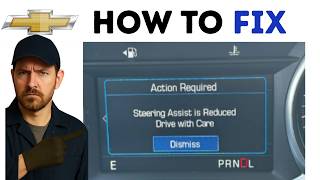
- "Service Power Steering" message on the driver information center (DIC)
- Check Engine Light illuminated
- Service Stabilitrak/ESC warning light may also appear
- In some cases, multiple warning lights and gauge failures can occur if the network issue is widespread
- Steering wheel vibration may be felt when the assist fails
- Replacing the battery. While a low or discharged battery can cause various electrical issues and even trigger the U0100 code in the PSCM, it's rarely the root cause of a persistent U0131 code unless it has led to module damage.
- Replacing the PSCM without checking wiring first. Given the high probability of a wiring fault from TSB 18-NA-114, replacing the expensive module without a thorough harness inspection is a common and costly mistake.
- Replacing only the PSCM when the BCM is at fault. Per TSB 20-NA-206, if the BCM has failed and damaged the PSCM, replacing the steering column alone will not solve the problem; the new PSCM will remain in a fault state.
Most Likely Causes
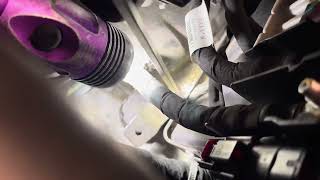
- Engine Harness Chafing on G100 Ground Stud 🔴 High Probability This is a known issue documented in GM TSB #18-NA-114 for 2018-2020 Trax and Encore models. The harness routing brings it too close to the stud on the left side of the engine, and vibrations cause it to wear through, shorting out one or more circuits.
How to confirm: Visually inspect the engine wiring harness where it passes the G100 ground stud on the left side of the engine compartment. Look for signs of abrasion, exposed wires, or electrical tape that has been rubbed through. The TSB notes this can cause a wide variety of codes, not just U0131.
Typical fix: Repair the damaged wires and re-wrap the harness with durable Woven Polyester Electrical Tape (PET), applied in a double layer per the TSB. Reroute the harness to ensure it no longer contacts the stud.
Est. part cost: $5-$20 - Failed Body Control Module (BCM) Damaging PSCM 🟡 Medium Probability TSB #20-NA-206 (for 2017-2022 Trax/Encore) states an internal BCM failure can short a circuit (5985), which in turn damages the PSCM. This is a chain reaction failure.
How to confirm: The key symptom is a persistent 'Service Power Steering' message and a communication code (typically U0100) that is 'latched' or 'unrecoverable' in the PSCM. Even if you replace the PSCM, the code will not clear until the faulty BCM is also replaced. A 'Rejected by Control Module' error may appear on the scan tool when trying to clear the code.
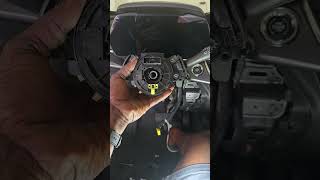
Typical fix: Both the Body Control Module (BCM) and the steering column (which contains the PSCM) must be replaced and programmed by a dealer or qualified shop. Replacing only one part will not fix the issue.
Est. part cost: $600-$1200 - Poor Power/Ground Connection to PSCM 🟡 Medium Probability Corrosion at ground points or loose connectors are common failure points. GM and other manufacturers have issued bulletins for other models regarding issues like weld spatter or glue on ground eyelets preventing a good connection, which can cause intermittent communication loss.
How to confirm: Using a multimeter, check for battery voltage at the PSCM power feed wire and for near-zero resistance between the PSCM ground wire and the chassis. Inspect ground eyelets for corrosion, paint, or other contaminants and ensure they are tight.
Typical fix: Disassemble, clean corroded ground points to bare metal, tighten loose connections, or repair the damaged section of the wiring harness.
Est. part cost: $0-$50 - Failed Power Steering Control Module (PSCM) ⚪ Low Probability Internal electronic failure of the module can occur over time due to heat, vibration, or voltage spikes. However, this should only be suspected after ruling out the more common wiring and BCM-related issues.
How to confirm: If all wiring, fuses, and power/ground connections to the PSCM are verified to be good, and the BCM is confirmed to be functioning correctly, but the module still does not communicate with a scan tool, the module itself has likely failed.
Typical fix: Replace the PSCM. On the Trax, this is integrated into the steering column and requires replacement as an assembly, followed by programming.
Est. part cost: $500-$1000
Rare But Worth Checking
- Steering Column Circuit Board Wear (2015 models): GM Recall #15168 was issued for some 2015 Trax vehicles where the steering column housing could rub against and damage the power steering circuit board, causing a sudden loss of assist. While not explicitly a U0131 cause, it's a related failure that could trigger communication codes.
- Poor Ground Connection from Weld Spatter/Glue: A known issue on other platforms (documented by Stellantis) that can cause intermittent U0131 is a poor ground connection not from corrosion, but from weld spatter on the stud or excess glue from heat-shrink tubing on the eyelet. This prevents a flat, clean metal-to-metal contact. The fix is to file down the spatter and clean the eyelet.
- Open/High Resistance in Communication Enable Circuit 5986: TSB PIT5457D points to a potential open or high resistance in the Communication Enable circuit (5986) which the BCM uses to 'wake up' modules like the PSCM. This can be caused by damaged wiring under the driver's or passenger's sill plates.
Diagnosis Steps
- Connect a professional scan tool capable of reading all vehicle modules. Check for U0131 and any other communication (U-prefix) codes in the ECM, BCM, and ABS modules.
- Attempt to communicate directly with the Power Steering Control Module (PSCM). If it does not respond, a power, ground, or network wiring issue is likely.
- Check all relevant fuses. TSB 18-NA-114 mentions fuse F18UA may be open, and TSB 20-NA-206 mentions fuse F9DA (later revised to F6DA) may be blown.
- Perform a thorough visual inspection of the engine wiring harness, paying close attention to the G100 ground stud area on the left side of the engine as detailed in TSB 18-NA-114.
- If no visible damage is found, use a multimeter to test for proper voltage and ground at the PSCM connector. Inspect ground connections for tightness and cleanliness, removing any paint or spatter.
- Test the CAN bus network. With the key off, measure the resistance between pins 6 and 14 at the OBD-II port. A healthy network should read approximately 60 ohms.
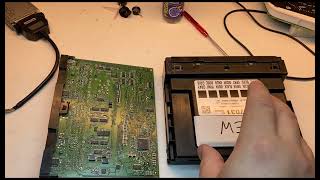
- If a U0100 code is latched in the PSCM and will not clear (scan tool may show 'Rejected by Control Module'), suspect a failed BCM as per TSB 20-NA-206 and prepare for BCM and steering column replacement. 🎬 See how a GM BCM replacement and cloning process works
- If all wiring and power sources are confirmed good, the PSCM itself is the most likely point of failure.
Parts You'll Likely Need
- Steering Column Assembly
(OEM #42622461 or 42595687)— The PSCM is integrated into the steering column. If the PSCM fails or is damaged by a faulty BCM (per TSB 20-NA-206), the entire column is replaced. Part number depends on vehicle options.
Trusted brands: ACDelco, GM Genuine
OEM price range: $500-$900
Aftermarket price range: $350-$700 - Body Control Module (BCM)
(OEM #13534185 or 13599318)— Required if a faulty BCM has damaged the PSCM, per TSB 20-NA-206. The BCM must be replaced along with the steering column. Part number varies by year and options.
Trusted brands: ACDelco, GM Genuine
OEM price range: $100-$250
Aftermarket price range: Not Recommended
Related Codes That Often Appear With This One
- U0073 — Control Module Communication Bus 'A' Off. This is a general network code often set alongside U0131 when the harness chafing issue from TSB 18-NA-114 occurs.
- U0100 — Lost Communication with ECM/PCM. This code often appears with U0131. Critically, if found latched in the PSCM, it points directly to the BCM-induced failure described in TSB 20-NA-206.
- U0121 — Lost Communication with ABS Control Module. Like U0073, this indicates a wider network problem, often caused by the same wiring harness issue that triggers U0131.
- U0140 — Lost Communication with Body Control Module. This is a strong indicator that the BCM may be the source of the problem, as described in TSB 20-NA-206.
- P0641 — 5V Reference 1 Circuit. This code can also be set by the harness chafing issue described in TSB 18-NA-114, indicating the short has affected a sensor reference voltage circuit.
Technical Service Bulletins (TSBs) & Recalls
- 18-NA-114: Documents engine harness chafing against the G100 ground stud, causing various electrical faults including communication codes like U0131.
- 20-NA-206: Details a condition where a failed BCM damages the PSCM, resulting in a non-clearable code and requiring replacement of both modules.
- PIT5755: Notes that on some GM vehicles, the EBCM can incorrectly map a U0126 code as a U0131.
- PIT5713A: Lists U0131 as one of many codes that can be set by network communication issues.
- PIT5457D: Mentions U0131 in a list of communication codes that can result from damaged wiring in the sill plate area.
Platform-Specific Known Issues
- TSB #18-NA-114: On 2018-2020 models, the engine harness is known to chafe against the G100 ground stud, causing shorts that can lead to U0131 and other communication codes.
- TSB #20-NA-206: On 2017-2022 models, an internal BCM failure can cause a latched communication code in the PSCM, necessitating the replacement of both the BCM and the steering column assembly.
- Recall #15168: Affects certain 2015 Trax models where the steering column housing can wear down the power steering circuit board, causing a loss of steering assist.
Mechanic-Grade Diagnostic Values
- High-Speed CAN Bus Resistance — expected: ~60 Ω (with key off, measured between pins 6 and 14 of the OBD-II port). Failure: >60 Ω indicates an open circuit or missing termination resistor; <60 Ω suggests a short between CAN lines or an extra terminator.
- High-Speed CAN Bus Voltage (Key On) — expected: CAN High and CAN Low should both be at ~2.5V relative to ground when idle. When active, CAN High transitions to ~3.5V and CAN Low transitions to ~1.5V.. Failure: Voltages stuck high or low, or not showing the correct differential, indicate a bus fault or a module dragging down the network.
- Communication Enable Circuit 5986 Voltage — expected: Approximately 12V (battery voltage) when the BCM is awake (e.g., ignition ON).. Failure: Low or no voltage on this circuit at the PSCM connector when the BCM should be active points to a wiring issue, often under the sill plates, as per TSB PIT5457D.
- Battery Cable Voltage Drop (during cranking) — expected: Less than 100 mV.. Failure: A voltage drop greater than 100 mV on either the positive or negative battery cables during cranking indicates high resistance, which can cause widespread communication issues.
Scan Tool Commands That Help
- GM GDS2 / Tech2: Power Steering Control Module Programming and Setup — This function is required after replacing the steering column/PSCM. It programs the module with the correct software/calibration and links it to the vehicle's VIN.
- GM GDS2 / Tech2: Body Control Module Replacement — Required after installing a new BCM. This procedure programs the BCM with the vehicle's specific configuration (RPO codes) and VIN.
- GM GDS2 / Tech2: Clear Codes (from all modules) — After a BCM and PSCM replacement due to TSB 20-NA-206, a specific drive cycle (10+ minutes over 10 kph) followed by a 5-minute shutdown is required before codes can be successfully cleared.
- Professional Scan Tool: Re-initialize Communication — As a basic diagnostic step, attempting to force communication with the PSCM can help determine if the module is completely dead or just intermittently failing.
Wiring & Ground Locations
- G100 — On the left front of the engine block. TSB 18-NA-114 identifies this as the specific stud where the engine harness is prone to chafing.. This is the location of the most common documented cause for U0131 on this platform: the engine wiring harness rubbing through on the ground stud, causing shorts.
- G218 — A body ground point, likely under the dashboard or in a kick panel area.. TSB PIT5405C on other GM models lists a poor ground at G218 as a cause for a host of communication DTCs, including U0131, especially when electrical load is high (e.g., turning the wheel at low speeds).
- Driver and Passenger Sill Plates — The wiring channels running along the floor under the plastic door sill trim plates.. TSB PIT5457D identifies this area as a location where the Communication Enable Circuit (5986) can be damaged, leading to loss of communication with the PSCM and other modules.
- PSCM Connector — On the Power Steering Control Module, which is part of the steering column assembly under the dashboard.. This is the primary connection point for power, ground, and CAN bus signals to the module. It must be checked for voltage, ground, and network signals during diagnosis.
OEM Part Supersession History
13591222, 13594571→13534185— Standard part revision and consolidation.
Heads up: These are BCM part numbers. While they may physically connect, the internal hardware and software can differ. A replacement BCM must be programmed for the specific vehicle's VIN and options (RPOs).13599317→13599318— Standard part revision.
Heads up: This is the Serial Data Gateway Module, which is sometimes replaced with the BCM. It also requires programming to function correctly.
Model Year Variations Within This Range
- 2018-2020: These years are specifically called out in TSB 18-NA-114 regarding the engine harness chafing on the G100 ground stud.
- 2017-2022: These years are covered by TSB 20-NA-206, which describes the failure cascade where a faulty BCM damages the PSCM, requiring replacement of both modules.
- 2013-2014: An early service bulletin (SB-10057066-9179) for the first Trax models highlights the importance of matching the steering gear hardware part number to the correct EPS calibration file during programming to prevent mismatches.
Diagnostic Flowchart
Other Known Issues on This Vehicle
Issues unrelated to this code that are worth knowing about as an owner of this generation:
- PCV System Failure (Valve Cover/Intake Manifold) 🔴 High — Very common. A diaphragm in the valve cover tears or a check valve in the intake manifold fails, causing a large vacuum leak. Symptoms include a rough idle, hissing noise, and lean codes like P0171.
- Turbocharger Failure / P0299 Underboost Code 🔴 High — Common, typically between 30,000-60,000 miles. Often caused by a stuck wastegate actuator, leading to a significant loss of power. Oil starvation from extended oil change intervals can also cause premature turbo wear.
- Cracked Plastic Coolant Outlet Housing 🟠 Medium — Frequently reported. The plastic housing and connectors become brittle over time and crack, causing significant coolant leaks that can lead to overheating.
- Excessive Oil Consumption 🟠 Medium — Reported in higher-mileage (60k+) engines. Carbon buildup can cause piston rings to stick, leading to oil blow-by and consumption. Often noticed by low oil levels between changes and soot on the tailpipe.
Used vs. New Parts: Buying Guide for This Vehicle
When a used part is the smart pick: A used steering column assembly (with integrated PSCM) from a low-mileage, accident-free donor vehicle can be a cost-effective option. However, it absolutely requires professional reprogramming to link it to your vehicle's VIN and BCM.
Donor-vehicle mileage cap: roughly under 60000 miles for the part to have meaningful remaining life.
What to inspect on the donor part:
- Verify the donor vehicle was not in a major front-end collision.
- Check for any signs of water damage or corrosion on the module's connectors.
- Obtain the VIN of the donor vehicle if possible, as it can sometimes help with programming.
- Ensure the part number matches the original part being replaced, if possible.
OEM-only on this vehicle (don't cheap out):
- Body Control Module (BCM)
Brands owners have reported issues with on this vehicle:
- Used Body Control Modules (BCMs): A used BCM is VIN-locked to the donor car. Installing it will cause a no-start condition, security lock-out, and numerous other faults. While some specialists claim to be able to 'virginize' or reprogram them, it's a significant risk and not recommended over a new, properly programmed OEM unit.
Real Owner Stories
Aggregated from forums and TSBs cited above. Mileages and costs reflect what owners reported in those sources.
2015 Chevrolet Trax
Symptoms: Loss of power steering assist caused by the steering column housing wearing down the power steering circuit board.
What fixed it: Replacement of the steering column assembly under recall protocols.
Source hint: Recall #15168
2018-2020 Chevrolet Trax
Symptoms: Sudden loss of power steering assist, 'Service Power Steering' message, and various communication codes including U0131 due to wiring harness damage.
What fixed it: Repaired damaged wires near the G100 ground stud, re-wrapped the harness with a double layer of Woven Polyester Electrical Tape (PET), and rerouted the harness away from the stud.
Cost: $5-$20
Source hint: TSB #18-NA-114
2017-2022 Chevrolet Trax
Symptoms: Persistent 'Service Power Steering' message and a latched U0100/U0131 communication code that the scan tool would not clear, showing 'Rejected by Control Module'.
What fixed it: Simultaneous replacement and programming of both the Body Control Module (BCM) and the steering column assembly.
Cost: $600-$1200
Source hint: TSB #20-NA-206
Related OBD-II Codes
Frequently Asked Questions
My 2019 Chevrolet Trax has a 'Service Power Steering' message; could this be the wiring harness issue mentioned in TSB #18-NA-114?
I replaced the steering column on my 2018 Trax, but the U0131 code won't clear. What is wrong?
Is there a recall for power steering failure on the 2015 Chevrolet Trax?
Which fuses should I check for a U0131 code on a 2017-2022 Trax?
Can a bad ground connection cause the U0131 code on my Trax?
Why does my scan tool say 'Rejected by Control Module' when I try to clear the power steering code?
Helpful Videos
We Have This Part in Stock





The information in this article is provided for general reference and educational purposes only. Vehicle specifications, procedures, and part compatibility can vary by production date, trim level, and region. Always consult your vehicle's factory service manual and verify part numbers before purchasing or performing repairs. Safety-critical components such as airbags, seat belts, and braking systems should be installed by a qualified professional.
- Chevrolet Trax:
- 🎬 Helpful Videos
- 🛍️ Shop This Part
- What's Unique About the 2015-2022 Chevrolet Trax
- Symptoms You May Notice
- Most Likely Causes
- Rare But Worth Checking
- Diagnosis Steps
- Parts You'll Likely Need
- Related Codes That Often Appear With This One
- Technical Service Bulletins (TSBs) & Recalls
- Platform-Specific Known Issues
- Mechanic-Grade Diagnostic Values
- Scan Tool Commands That Help
- Wiring & Ground Locations
- OEM Part Supersession History
- Model Year Variations Within This Range
- Diagnostic Flowchart
- Other Known Issues on This Vehicle
- Used vs. New Parts: Buying Guide for This Vehicle
- Real Owner Stories
- 2015 Chevrolet Trax
- 2018-2020 Chevrolet Trax
- 2017-2022 Chevrolet Trax
- Related OBD-II Codes
- Frequently Asked Questions
- 🎟️ Get 5% Off