

U0121 on 2004-2009 Toyota Prius: Lost Communication With ABS Module Causes and Fixes
On a 2004-2009 Toyota Prius, code U0121 almost always points to a failing ABS brake actuator assembly. This is a very common and well-documented issue for this generation, acknowledged by Toyota with a now-expired warranty enhancement program (ZG1). Expect to see ABS, VSC, and BRAKE warning lights, often with a loud, repetitive buzzing or honking noise from the engine bay. The repair is expensive, often costing over $1,500-$2,800 for a new OEM part and labor, which includes a complex, computeriz
- U0121 on a Gen 2 Prius is a critical safety issue that almost always means the ABS brake actuator has failed.
- Do not drive the vehicle. The failure can lead to a loss of braking assist, making the car very difficult to stop.
- Always check the 12V auxiliary battery and ABS-related fuses first, as these are simple and inexpensive potential fixes.
- The repair involves replacing the expensive ABS actuator and requires a specialized brake bleeding procedure that is not DIY-friendly.
- Due to the high cost of OEM parts, many owners opt for warrantied remanufactured units or used parts from a reputable source to make the repair more affordable.
What's Unique About the 2004-2009 Toyota Prius

The second-generation Prius is known for a high failure rate of its ABS brake actuator assembly. This component is complex, combining the electronic control unit (Skid Control ECU), a hydraulic pump, and a pressure accumulator. Over time, internal seals can fail or the pump motor's carbon brushes can wear out, leading to a loss of hydraulic pressure and electronic communication failures that trigger U0121 and other related codes like C1256 or C1391. Toyota acknowledged this widespread issue by issuing a Warranty Enhancement Program (ZG1) which extended coverage but has since expired for all vehicles. While any car can have a wiring issue, on this specific Prius, the actuator assembly itself is the overwhelmingly common point of failure.
Symptoms You May Notice

- Multiple warning lights on the dashboard, including ABS, VSC, and the red 'BRAKE' light.
- A long, continuous beep when starting the car or opening the door.
- A loud or frequent buzzing, 'honking', or rattling noise from the driver's side of the engine bay, which is the ABS pump motor running excessively to build pressure.
- A hard brake pedal that requires significantly more effort to stop the car.
- A soft or spongy brake pedal that goes nearly to the floor with little effect.
- Loss of regenerative braking, which may result in a noticeable decrease in fuel economy (MPG).
- Wheels may lock up during hard braking since the anti-lock function is inactive.
- Replacing wheel speed sensors. U0121 is a communication code, not a sensor performance code. While a bad wheel speed sensor will trigger an ABS light, it will set a different 'C' code and will not cause a total loss of communication with the module.
Most Likely Causes

- Failed ABS Brake Actuator Assembly 🔴 High Probability This is a widely documented failure point on the 2004-2009 Prius, acknowledged by Toyota's Warranty Enhancement Program ZG1. The internal components of the actuator, including the pump motor brushes and accumulator seals, wear out, leading to both hydraulic and electronic faults.
How to confirm: Listen for the actuator pump running for extended periods (more than 10-15 seconds at a time) or cycling on and off frequently when the car is stationary. Use a diagnostic tool like Toyota Techstream to check for related codes such as C1252 (Pump Motor Malfunction), C1256 (Low Accumulator Pressure), or C1391 (Abnormal Leak in Accumulator). If the scan tool cannot communicate with the Skid Control ECU at all, the module has likely failed.
Typical fix: Replace the entire ABS brake actuator assembly. This must be followed by a specific, complex brake bleeding procedure using a compatible diagnostic scan tool. 🎬 Watch: How to bleed the brakes using Techstream software.
Est. part cost: $1100-$2000 for a new OEM unit, $350-$800 for a used or remanufactured unit. - Low 12V Auxiliary Battery Voltage 🟡 Medium Probability Like many modern cars, the Prius is sensitive to low voltage from the 12V AGM battery located in the trunk. Insufficient voltage (below 12.4V at rest) can cause random communication errors between modules, including U0121, before any 'dead battery' symptoms appear.
How to confirm: Use a multimeter to test the 12V battery at its terminals in the trunk after the car has been off for several hours. A healthy battery should read at least 12.4V. If the voltage is low, charge or replace the battery, clear the codes, and see if U0121 returns.
Typical fix: Charge or replace the 12V auxiliary battery.
Est. part cost: $150-$250 - Blown ABS Fusible Link or Fuse ⚪ Low Probability
How to confirm: Check the main fuse box in the engine compartment. A failing actuator motor can draw excessive current and blow the 30A 'ABS MTR 2' fuse or the main 'ABS-2' fusible link, which is located in a white plastic carrier within the fuse box. If this fuse or link is blown, it is almost always a symptom of a shorted actuator motor, not the root cause.
Typical fix: Replace the blown fuse or fusible link. If it blows again, the underlying problem is a shorted actuator motor, which requires replacing the entire actuator assembly.
Est. part cost: $5-$30 for fuses, though the fusible link assembly can be more expensive from a dealer.
Rare But Worth Checking
- CAN Bus Wiring Fault: While less common than actuator failure, damage to the CAN bus wiring harness can interrupt communication. Check for corrosion on the ABS module connector or physical damage to the wiring harness, especially if the vehicle has been in an accident or has rodent damage.
Diagnosis Steps
- Scan for all DTCs: Use a capable OBD-II scanner to read codes from all vehicle modules, not just the engine. Note any other 'U' codes or ABS-specific 'C' codes like C1256, C1391, or C1252.
- Check 12V Battery Health: Test the auxiliary 12V battery in the trunk with a multimeter after it has rested. Voltage should be above 12.4V. A weak battery is a known cause of spurious electronic faults.
- Inspect Fuses and Fusible Link: In the engine bay fuse box, check the 'ABS MTR 2' (30A) fuse and visually inspect the 'ABS-2' fusible link inside the white plastic carrier for breaks. A blown fuse here strongly suggests a failed actuator.
- Listen to the ABS Actuator: Turn the car to the 'Ready' state. Listen for the ABS pump motor under the hood (driver's side). If it runs constantly, for long periods ('honking' or 'buzzing'), or cycles frequently without brake application, the actuator is highly suspect.
- Attempt Communication: Using an advanced scan tool (like Toyota Techstream), try to communicate directly with the 'ABS/VSC/TRAC' module. If the module does not respond, and power/ground are confirmed at the connector, the module itself (part of the actuator assembly) has failed.
- Inspect Wiring: If the actuator seems okay and the battery is good, perform a visual inspection of the wiring harness and connector at the ABS actuator for any signs of corrosion, moisture, or physical damage.
Parts You'll Likely Need

- ABS Brake Actuator Assembly
(OEM #44510-47050, 44050-47080 (check VIN for exact fitment; part numbers may have been superseded, e.g., 04003-44647 for 2007-2009 models under warranty program).)— This is the most common failure point for the U0121 code on this specific vehicle, containing the electronic control unit that loses communication.
Trusted brands: Toyota (OEM), Cardone (Remanufactured), Dorman (Remanufactured)
OEM price range: $1200-$2000
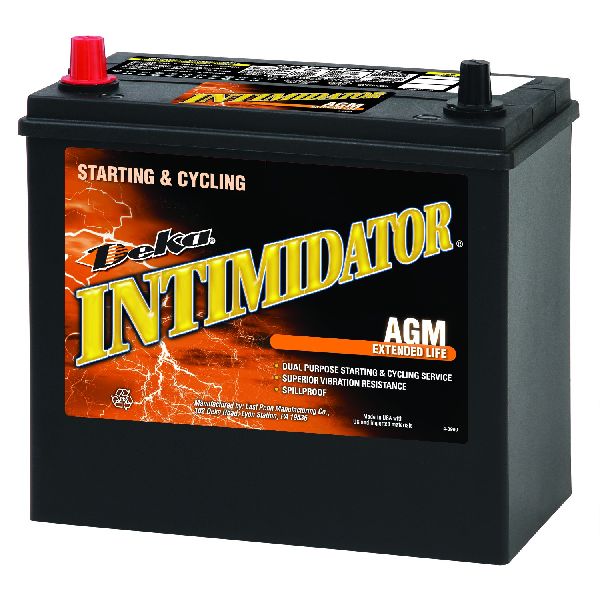
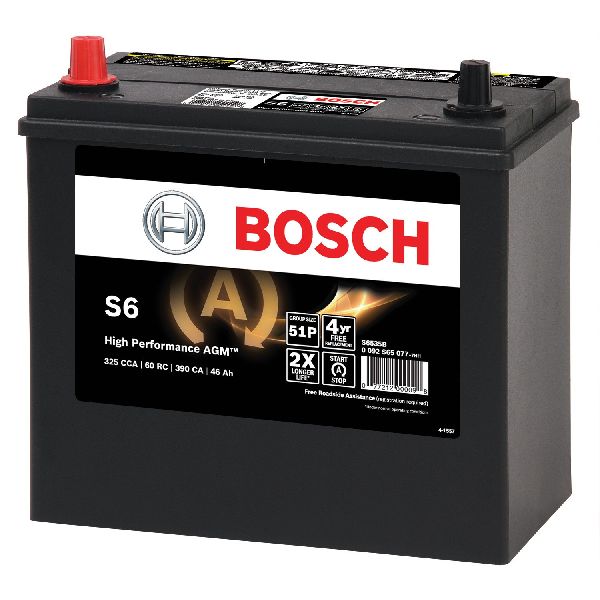
Aftermarket price range: $350-$825 (Used/Remanufactured) - 12V Auxiliary Battery — A weak 12V battery can cause a variety of communication fault codes, including U0121. The Prius uses a specific AGM type battery.
Trusted brands: Toyota TrueStart, Optima (YellowTop DS46B24R), Bosch
OEM price range: $200-$280
Aftermarket price range: $150-$220
Related Codes That Often Appear With This One
- C1256 — Indicates low pressure in the brake fluid accumulator, a common internal failure of the ABS actuator assembly.
- C1391 — Indicates an abnormal leak in the accumulator, another primary sign of internal ABS actuator failure.
- C1252 — Indicates the brake booster pump motor has been running for an abnormally long time, trying to build pressure that is leaking away internally due to a worn motor or leaking accumulator.
Technical Service Bulletins (TSBs) & Recalls
- ZG1 - Warranty Enhancement Program: Extended warranty coverage for the Brake Actuator Assembly due to internal malfunctions. Now expired.
- T-SB-0032-16: Provided repair instructions for the ZG1 program.
Platform-Specific Known Issues
- The brake actuator on the 2004-2009 Prius has a known high failure rate. Toyota issued Warranty Enhancement Program ZG1, which extended coverage to 10 years or 150,000 miles, or until December 31, 2017, whichever came first. This program has now expired for all eligible vehicles. Owners should always check with a Toyota dealer using their VIN to see if any coverage is still active, but it is highly unlikely.
- A squeaking noise from the brake actuator when the pedal is pressed or released while stationary was an early symptom addressed by TSB BR001-07. While the TSB stated performance was not affected, it was often a precursor to eventual failure.
Mechanic-Grade Diagnostic Values
- CAN Bus Resistance — expected: 54 to 69 Ω. Failure: Resistance below 54 Ω indicates a short circuit between the CANH and CANL lines. Resistance of 1 MΩ or more with a specific module disconnected can help isolate the faulty component.
- Skid Control ECU Power Supply Voltage — expected: 10 to 14 V. Failure: Voltage below 10V indicates a power supply issue to the module.
- Skid Control ECU Ground Connection — expected: Below 1 Ω. Failure: Resistance above 1 Ω indicates a poor ground connection, which can cause communication faults.
Hidden / Shadow Codes Worth Checking
- INF Codes (Freeze Frame Data): When a primary ABS/VSC code like U0121 is stored, the Skid Control ECU also stores more detailed sub-codes, called INF codes, within the freeze frame data. These provide more specific information about the failure condition. (see via These are accessible using a professional scan tool like Toyota Techstream by viewing the Freeze Frame Data associated with the main DTC.)
Scan Tool Commands That Help

- Toyota Techstream: ABS/VSC/TRAC -> Utility -> Reset Memory — This function is used to clear stored calibration data before installing a new ABS actuator. It is a necessary first step before performing the linear valve offset calibration.
- Toyota Techstream: ABS/VSC/TRAC -> Utility -> Linear Valve Offset — This is a mandatory calibration procedure after replacing the ABS actuator assembly. It learns the characteristics of the solenoid valves. Failure to perform this will result in a C1345 code and an inoperative system.
- Toyota Techstream: ABS/VSC/TRAC -> Utility -> ECB Utility (Brake Bleed) — This is the required, electronically-assisted brake bleeding procedure. It activates the ABS pump and solenoids in a specific sequence to purge all air from the new actuator and brake lines. A manual bleed is not sufficient.
- Toyota Techstream: ABS/VSC/TRAC -> Test Mode -> Zero Point Calibration of Yaw Rate and Acceleration Sensor — This must be performed after the actuator replacement and linear valve offset calibration to re-learn the vehicle's zero point for the stability control system.
Wiring & Ground Locations
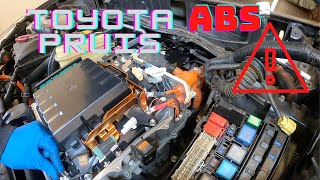
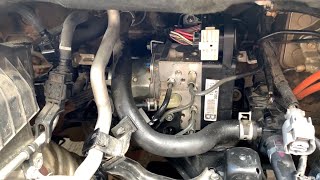
- Skid Control ECU — For the 2004-2009 Prius, the Skid Control ECU is not a separate module; it is integrated into the ABS Actuator Assembly located on the driver's side of the engine bay, behind and to the left of the inverter.. This is the module that has lost communication. All diagnostic tests for power, ground, and CAN signals are performed at the large electrical connector on this assembly.
- DLC3 Connector — The Data Link Connector (DLC3) is located under the driver's side dashboard, typically above the driver's left knee.. This is the primary diagnostic port. CAN bus resistance is measured between Pin 6 (CANH) and Pin 14 (CANL) to test the integrity of the entire network.
- Skid Control ECU Connector (A19) — The main electrical connector on the ABS Actuator Assembly in the engine bay.. This is the connector where you test for power (Pin 46, IG1), ground (Pins 1 and 32), and CAN signals (Pins 11 and 25) directly at the module to determine if the fault is in the module or the vehicle wiring.
Real Owner Repair Stories
- PriusChat Forum User (2008 Toyota Prius, 107,000 miles) — ABS, VSC, BRAKE lights on. Codes C1256, C1391, and U0121.
❌ Tried (didn't work) Initially considered a remanufactured unit but was wary of quality., Considered a used part from a junkyard but felt it was risky due to the high failure rate of the part and the amount of labor involved.
✅ What actually fixed it The owner purchased a new OEM ABS actuator from an online Toyota dealer for $1,134. After a 5-hour installation, the brakes had to be bled by a dealer using Techstream, as the owner did not have the tool. This resolved all codes and symptoms. - Reddit User r/prius (2008 Toyota Prius Touring, ~250,000 miles) — ABS, BRAKE, VSC lights, and the 'honking' noise from the actuator.
❌ Tried (didn't work) Looked at refurbished parts from China ($700-$900) and new OEM parts ($1500) but found them too expensive.
✅ What actually fixed it The owner purchased a used ABS actuator and performed the replacement themselves over several days. The key to success was removing the windshield wiper cowl and assembly for better access. The total job took about 36 hours, including other maintenance tasks. The final fix required a proper brake bleed procedure. The owner noted the job was tedious but achievable for a focused DIYer.
OEM Part Supersession History
44510-47050 (Stamped on original factory part)→44500-47141 (Orderable part number from Toyota, may have 44510-47051 stamped on it)— Internal design improvements to address the high failure rate.
Heads up: The number stamped on the unit (e.g., 44510-47050) is an engineering number, not the orderable part number. The correct replacement part to order for the Gen 2 Prius is typically 44500-47141.
Model Year Variations Within This Range
- 2004-11/2005: The orderable part number for the ABS actuator is 44500-47090.
- 11/2005-2009: The orderable part number for the ABS actuator is 44500-47140 (later superseded by 44500-47141). Despite the different part numbers, some owners have successfully installed actuators from later years (e.g., an '05 unit into an '09) without issue, suggesting they may be physically and electronically interchangeable, though using the correct part for the VIN is always recommended.
Diagnostic Flowchart
Other Known Issues on This Vehicle
Issues unrelated to this code that are worth knowing about as an owner of this generation:
- Combination Meter (Speedometer) Failure 🔴 High — Very common. The central digital display goes blank intermittently or permanently, making it impossible to see speed, fuel level, or gear. Can also prevent the car from shutting off normally.
- Excessive Oil Consumption 🟠 Medium — Common, especially on higher mileage vehicles. Can be caused by stuck piston rings or a clogged PCV valve. Owners report consuming a quart of oil every 1000-2000 miles.
- Inverter Coolant Pump Failure 🔴 High — A common failure point. The electric pump that cools the hybrid system inverter fails, which can lead to overheating and shutdown of the hybrid system. Toyota issued a recall for this on some model years. (Ref: Recall for some model years exists.)
- HID Headlight Failure/Flickering 🟡 Low — Common on models equipped with High-Intensity Discharge (HID) headlights. The bulbs or ballasts fail, causing flickering or complete loss of a headlight. It is often an expensive repair compared to halogen bulbs.
- Hybrid Battery (HV) Degradation 🔴 High — Inevitable with age and mileage, typically after 10-15 years or 150,000+ miles. Symptoms include poor fuel economy and the 'red triangle of death'. Individual cells can fail, and a robust aftermarket for cell replacement and full pack refurbishment exists.
Used vs. New Parts: Buying Guide for This Vehicle
When a used part is the smart pick: A used OEM actuator is a very common and practical repair strategy for this vehicle due to the extremely high cost of a new OEM part (often $1200+). Given the age of the vehicle, a used part costing $150-$400 makes economic sense, even with the risk of premature failure.
Donor-vehicle mileage cap: roughly under 150000 miles for the part to have meaningful remaining life.
What to inspect on the donor part:
- Source from a vehicle with the lowest possible mileage.
- Preferably source from a donor vehicle that was rear-ended, reducing the chance of damage to front-end components.
- Ensure the seller capped all brake line ports immediately after removal to prevent dirt and moisture contamination, which is critical for this part.
- Verify the part number is compatible with your vehicle's year range (2004-11/2005 vs 11/2005-2009).
OEM-only on this vehicle (don't cheap out):
- ABS Brake Actuator Assembly
Aftermarket brands forum-validated for this vehicle:
- Toyota (New OEM) - The most reliable but most expensive option.
Brands owners have reported issues with on this vehicle:
- Dorman (Remanufactured) - Multiple forum members have reported very poor experiences and premature failures with Dorman remanufactured units for this specific application.
- Unbranded Chinese Remanufactured Units (eBay/Amazon) - Generally considered a high-risk purchase with mixed results and difficult warranty support.
Real Owner Stories
Aggregated from forums and TSBs cited above. Mileages and costs reflect what owners reported in those sources.
2009 Toyota Prius
Symptoms: The vehicle displayed codes C1256 and C1391, indicating the ABS actuator was failing. The owner confirmed they had missed the ZG1 warranty extension deadline by two months.
What fixed it: Replacement of the ABS brake actuator assembly.
Source hint: PriusChat.com: Thread 'The dreaded C1256 and C1391. Actuator failing.'
2009 Toyota Prius
Symptoms: The brake actuator failed, which also caused a hidden fusible link in the engine bay fuse box to blow.
What fixed it: The owner performed a DIY replacement of the entire brake actuator assembly and also replaced the blown fusible link.
Source hint: Reddit (r/prius): Thread 'Diagnosing and Fixing a Bad Brake Actuator – My Experience & Advice'
2008 Toyota Prius — 93000 miles
Symptoms: Brake system failure requiring major component replacement.
What fixed it: The owner was quoted for a repair that included replacing both the ABS actuator and the master cylinder.
Source hint: PriusChat.com: Thread 'How much should I pay to repair the brake system?'
2004-2009 Toyota Prius
Symptoms: A failed ABS actuator motor drew excessive current, blowing the main 'fusible link' assembly, not just a simple fuse.
What fixed it: The required repair is to replace the failed actuator assembly first, then replace the blown fusible link assembly.
Cost: $200-$400
Source hint: PriusChat.com: Thread 'abs main fuse'
Related OBD-II Codes
Frequently Asked Questions
My 2008 Prius has the U0121 code. Is the brake actuator failure still covered by a warranty?
I hear a loud, long buzzing or 'honking' noise from the driver's side of the engine bay. Is this related to the U0121 code?
Can a weak 12V battery really cause all these brake warning lights and a U0121 code on my Prius?
I found a blown 'ABS MTR 2' fuse. If I replace it, will that fix the problem?
My mechanic quoted me over $2,000 to replace the ABS actuator. Is that a normal price?
I hear a squeaking noise from the brake actuator when I press the pedal while stopped. Is this a serious problem?
Helpful Videos


![[EN] Toyota Prius Brake Bleed Process](https://img.youtube.com/vi/ksqFZGQQF7M/mqdefault.jpg)
Used OEM Parts in Stock


New Aftermarket Parts Available

The information in this article is provided for general reference and educational purposes only. Vehicle specifications, procedures, and part compatibility can vary by production date, trim level, and region. Always consult your vehicle's factory service manual and verify part numbers before purchasing or performing repairs. Safety-critical components such as airbags, seat belts, and braking systems should be installed by a qualified professional.
- Toyota Prius:
- 🎬 Helpful Videos
- 🛍️ Shop This Part
- What's Unique About the 2004-2009 Toyota Prius
- Symptoms You May Notice
- Most Likely Causes
- Rare But Worth Checking
- Diagnosis Steps
- Parts You'll Likely Need
- Related Codes That Often Appear With This One
- Technical Service Bulletins (TSBs) & Recalls
- Platform-Specific Known Issues
- Mechanic-Grade Diagnostic Values
- Hidden / Shadow Codes Worth Checking
- Scan Tool Commands That Help
- Wiring & Ground Locations
- Real Owner Repair Stories
- OEM Part Supersession History
- Model Year Variations Within This Range
- Diagnostic Flowchart
- Other Known Issues on This Vehicle
- Used vs. New Parts: Buying Guide for This Vehicle
- Real Owner Stories
- 2009 Toyota Prius
- 2009 Toyota Prius
- 2008 Toyota Prius — 93000 miles
- 2004-2009 Toyota Prius
- Related OBD-II Codes
- Frequently Asked Questions
- 🎟️ Get 5% Off